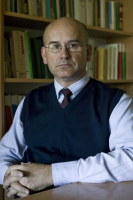
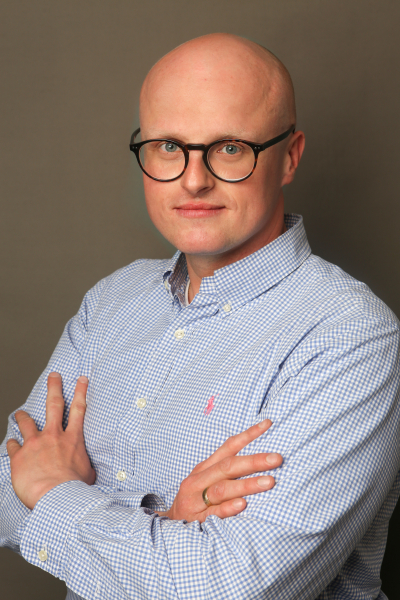
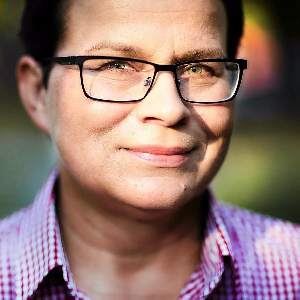
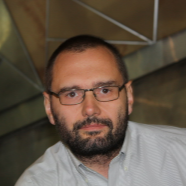
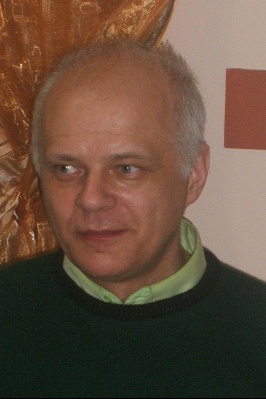
Monika Gabryś-Sławińska is a Professor at the Department of Polish Literary History , part of the Faculty of Languages, Literatures and Cultures at the University of Maria Curie-Skłodowska (UMCS). Her research spans 19th- and 20th-century Polish literature , focusing on Stefan Żeromski , historical journalism , text editing , voice emission , and museology . MA in Polish Philology (1998, UMCS) PhD in Literary Studies (2007, UMCS) Habilitation in Literary Studies (2016, UMCS) Her research interests include political commentary in historical press , media's role in cultural identity , and sociolinguistic trends . She has edited over 29 academic volumes and authored 5 monographs. Scientific awards: Bronze Cross of Merit KEN Medals (Bronze, Silver) 8 Rector's Awards (UMCS) Lublin Mayor's Medal (2019) She has participated in 5 research grants , organized 35 academic conferences , and contributed extensively to Annales UMCS as a scientific editor.
Dr. Mirosława Podhajecka is an Associate Professor of Linguistics at the University of Opole's Institute of Linguistics. Her research focuses on lexicography (especially its historical dimensions), contact linguistics, corpus linguistics, translation studies, and biographical linguistic research. Current projects include a book on English language teaching in Lviv and a comparative study of post-war Polish-English/English-Polish lexicography. She has published extensively on historical dictionaries, bilingual lexicons, and lexical borrowing phenomena, with over 117 documented publications. Her work spans interdisciplinary approaches, utilizing digital corpora (e.g., Google Books) and archival materials to trace linguistic developments. Notable research areas include analysis of Russian loanwords in English, methodology of historical lexicography, and comparative studies of 19th-20th century bilingual dictionaries. She actively engages in lexicographic theory and practice, bridging historical and contemporary linguistic studies.
Dorota Jarecka is an Adjunct Professor at the Institute of Literary Research of the Polish Academy of Sciences (PAN), specializing in the social history of art and visual culture. She is also the director of Warsaw’s Galeria Studio since 2016, and a renowned curator and author. Her work focuses on 20th-century art, surrealism, and gender studies in Eastern Europe. Key professional roles include: Adiunkt (Adjunct Professor) at PAN’s Institute of Literary Research Kurator of major exhibitions including the Erna Rosenstein series (2011–2014) Editor of monographs on artists like Krystiana Robb-Narbutt, Natalia LL, and Ewa Zarzycka Research highlights include her 2021 monograph analyzing surrealism, realism, and Marxism in post-war Polish art, and a 2013 interview with Anda Rottenberg. Her 2022 article on Helena Berlewi explores avant-garde movements and gendered artistic identity. Her exhibitions and publications emphasize underrepresented female artists and political contexts shaping art production in communist Poland.
Rev. Dr. hab. Waldemar Żurek, Professor at the John Paul II Catholic University of Lublin, serves at the Center of Ecclesiastical Archives, Libraries and Museums (ABMK) within the Faculty of Theology. His academic career spans decades of dedicated research and publication in church history, particularly focusing on Eastern European Catholicism and the Salesian Order. As an active scholar, he continues to contribute significantly to ecclesiastical documentation and historical research. Professor Żurek's research interests center on ecclesiastical archives, parish documentation, and the history of religious orders, with particular emphasis on the Salesian Order's activities in Poland and Eastern Europe. His work explores the intersection of religious life with historical events, particularly during challenging periods like the communist era in Poland. He has developed expertise in analyzing parish inventories, visitation records, and chronicles to reconstruct religious life and administration across different historical periods. His extensive publication record demonstrates a consistent focus on documenting church history through meticulous examination of primary sources. The most recent works reveal trends toward comprehensive chronicles of religious institutions, detailed parish records analysis, and biographical studies of clergy members. His research spans multiple disciplines including religious studies, historical documentation, and Eastern European studies, with particular attention to regions like Pinsk, Lutsk, and Volhynia that have complex religious histories across changing political borders. Scientific Awards: Gold Medal for Long Service Professor Żurek has supervised numerous diploma theses including master's work on topics such as 'Social activities of Bishop Adolf Piotr Szelążek.' His editorial work includes significant publications like 'Kult Matki Bożej Ostrobramskiej w historii narodu polskiego' (The Cult of Our Lady of the Gate of Dawn in the History of the Polish Nation) and 'Ojciec Profesor Henryk Damian Wojtyska 1933-2009. Pasjonista, historyk Kościoła i dydaktyk' (Father Professor Henryk Damian Wojtyska 1933-2009. Passionist, Church Historian and Educator). He serves on the Scientific Council of the biannual journal 'Archives, Libraries and Church Museums' and is a member of the Theological Society of Józef Bilczewski in Ukraine. His work with the Center of Ecclesiastical Archives, Libraries and Museums represents a significant contribution to preserving and analyzing religious heritage. Through his leadership and scholarship, Professor Żurek has helped establish important methodologies for working with ecclesiastical documentation and has fostered international collaboration in church historical studies, particularly between Polish and Ukrainian scholars.
Gabriela Jarzębowska-Lipińska is an Assistant Professor at the School of Liberal Arts, University of Warsaw, specializing in Critical Animal Studies and Environmental Humanities. Her work examines interspecies relations through historical, cultural, and sociological lenses. Education: PhD in Cultural and Religious Studies (2020, University of Warsaw) International Experience: Fulbright Junior Fellow (2018–2019), visiting scholar at Linköping University (2016) and UC Santa Cruz (2019) Research focuses on animal representation in culture, environmental conflict rhetoric, and modernity's impact on human-animal relations. She explores topics like rat extermination as cultural practice, interspecies ethics in state socialism, and posthumanist collectives. Her recent publications address factory farming as capitalist imagination failure, animal biographies, and urban rodent media narratives. Key scientific contributions include the concept of "species cleansing" and critical analysis of sanitary discourse in totalitarian regimes. She advocates for animal welfare frameworks that challenge anthropocentric policies.
Grzegorz Berendt is an Associate Professor at the University of Gdańsk, where he is affiliated with the Faculty of History and the Institute of History. His research focuses on Eastern European history, particularly the experiences of Jewish communities in Poland during the 20th century. Key aspects of his work include Polish-Jewish relations during the Holocaust, the extermination of Jews in Polesie, and the policies of the Polish People's Republic toward Jewish populations. Berendt's scholarly output examines themes such as Jewish cultural associations under communist rule, regional histories (e.g., Gdańsk Pomerania), and post-WWII societal transformations. His publications analyze political regimes, diaspora dynamics, and identity preservation, reflecting a consistent emphasis on: Socio-political impacts of totalitarian regimes Jewish organizational resilience State-minority relations in Eastern Europe
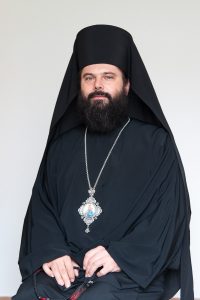
His Excellency Bishop Andrzej Borkowski (born 1974) is a Polish Orthodox hierarch, theologian, and historian. He serves as Bishop of Supraśl and Vicar of the Białystok-Gdańsk Diocese since 2017. Since 2012, he has been an Assistant Professor at the Department of Orthodox Theology, University of Białystok, where he teaches courses on Byzantine civilization, monasticism, and liturgical history. Education: Habilitacja (2017), University of Białystok PhD in Theological Sciences (2009), University of Athens Master of Theology (2005, University of Athens; 2001, Christian Theological Academy in Warsaw) Greek language studies (2001-2002), University of Athens Research Interests: Specializes in the history of Eastern patriarchates in post-Byzantine Poland-Lithuania, Orthodox autocephaly movements (1919-1927), Union of Brest controversies, monasticism, canon law, and Byzantine-Balkan cultural influences in Poland. His work examines liturgical reforms, interfaith dialogues, and diplomatic exchanges between Orthodox churches and European powers. Academic Contributions: Authored three monographs and over 40 articles on Orthodox Church-state relations, including Patriarchaty Wschodu w dziejach Rzeczypospolitej (2014) and Między Konstantynopolem a Moskwą (2015). His research spans 16th-20th century Orthodox history in Poland, Ukraine, and the Balkans. Scientific Awards: Rektor's Award (2013), University of Białystok Leadership Roles: Promotes Orthodox theological education through international conferences, expert teams for heritage restoration, and supervision of theological licentiate theses. Currently chairs expert commissions for monastery renovations and participates in Pan-Orthodox Council initiatives.
Prof. Tomasz Torbus is an Associate Professor at the University of Gdańsk's Faculty of History, Institute of Art History. His research focuses on medieval and early modern architecture in Central Eastern Europe, particularly Teutonic Order castles, Jagiellonian dynasty residences, and post-1945 monument reconstruction. He has directed the Institute of Art History since 2010. Fields of Interest: Medieval Architecture, Early Modern Architecture, Teutonic Order Studies, Nationalism in Art, Post-War Reconstruction Key Projects: Jagiellonian Residences Project (1990-1997), Saxon-Polish Union Architecture (2006-2011), Mannerist/Baroque Public Architecture Research His publications include monographs on Teutonic castles and collaborations on Polish-German cultural history. Current work includes synthesizing research on Golden Age public architecture through archival analysis. Contact: t.torbus@ug.edu.pl | Office: Room 52, Faculty of History
Dr. Tomasz Woźniakowski is an Assistant Professor in the Department of Political and Administrative Systems at the Institute of Political Science, University of Wrocław. His academic profile combines expertise in political science and history, with research focusing on comparative federalism, EU fiscal policy, and historical institutional analysis of economic governance systems. Woźniakowski earned his doctoral degree in political and social sciences in 2018 from the European University Institute in Florence. His dissertation, "Towards Fiscalization of the European Union? The European and American Fiscal Unions in a Comparative Historical Perspective," was supervised by Professor Alexander H. Trechsel. He also holds undergraduate degrees in both political science and history from the University of Wrocław, which inform his interdisciplinary research approach. His research interests center on comparing the fiscal policies of the European Union and the United States from a historical perspective, with particular focus on developing comparative federalism studies. A second major research area examines the role of national parliaments in European economic governance. His work introduced the innovative concept of "fiscalization" to the academic literature, filling a gap in research on tax authority in multidimensional political systems. Woźniakowski's publications demonstrate a consistent trajectory examining fiscal integration processes, with recent work focusing on post-COVID EU fiscal mechanisms, Next Generation EU solidarity, and the historical development of fiscal capacity. His research combines historical institutional analysis with contemporary policy challenges, drawing valuable lessons from American federal development for European integration. College of Europe-Arenberg European Prize 'Exploring Federal Solutions' (for article) Supranational Political Economy Prize (for doctoral dissertation) Woźniakowski currently leads two significant research projects: one funded by the National Science Center (Sonata grant) and another by the National Agency for Academic Exchange (Bekker grant at LUISS in Rome). Previously, he has collaborated with the Institute for the International Education of Students (IES Abroad) and Stanford University teaching in Berlin, and worked under a European Research Council grant at the Hertie School as a research package manager. His international experience includes Fulbright-Schuman scholarship at UC Berkeley, Henri Rieben scholarship at the Jean Monnet Foundation, and Laufer scholarship at the University of Munich.
Jakub Zamorski is a researcher at the Department of Comparative Civilization Studies within Jagiellonian University , specializing in the history of Buddhist religion and philosophy in China and Japan. His work integrates Buddhist studies with broader East Asian 'history of thought' (思想史), examining how classical Chinese civilization influenced regional traditions. Focus on demythologization of Pure Land Buddhism Investigates Buddhist impact on modern European thought reception (19th-20th c.) Expert in East Asian Buddhist logic (hetu-vidyā/yinming) Zamorski's publications span comparative Buddhist studies, including collaborations on dharmadhatu analysis and translations of early Mahayana texts. He has received prestigious fellowships from Jōdo-shinshū Higashi Honganji and Sheng Yen Education Foundation, and participates in international conferences like International Association of Buddhist Studies and American Academy of Religion. 2020-2023: Collaborator on Japanese government-funded project analyzing Early Mahayana Sutras 2016: Foguang University research on early modern East Asian Buddhist texts 2011: Participant in study of 6th-7th century Chinese Buddhist thought
Dr. Ewa Wiatr serves as Assistant Professor at the Philip Friedman Centre for Jewish Studies within the Institute of History, Faculty of Philosophy and History at the University of Lodz. Her academic work centers on Holocaust historiography with specialized focus on the Łódź Ghetto and Jewish cultural heritage in Poland. Her research interests encompass Holocaust studies, Jewish history in Eastern Europe, and the socio-cultural dynamics of the Łódź Ghetto during World War II. She investigates primary sources including ghetto administration documents, survivor testimonies, and Yiddish literature to reconstruct Jewish life under Nazi occupation and post-war revival efforts. Her work particularly examines Jewish resistance mechanisms, cultural preservation, and the administrative structures within the Łódź Ghetto. Analysis of her 41 publications reveals consistent thematic concentration on Łódź Ghetto documentation, with recent works expanding into institutional histories of Jewish studies centers and post-war cultural anthologies. Her scholarship demonstrates methodological emphasis on archival excavation, oral history, and interdisciplinary approaches connecting history with literary studies. Dr. Wiatr maintains active academic engagement through the Philip Friedman Centre for Jewish Studies, where she contributes to research initiatives documenting Jewish life in Łódź. Her work supports institutional efforts in Holocaust education and preservation of Jewish cultural memory through primary source publication projects.
Prof. Piotr Lorens is a distinguished academic at Gdańsk University of Technology, where he serves as Professor and Head of the Department of Urban and Regional Planning within the Faculty of Architecture. With extensive expertise in urban planning and spatial development, he leads significant research projects including ENACT 15mC focused on the 15-minute city concept and community co-creation. His academic credentials include: dr hab. inż. arch. (2007) from the Faculty of Architecture of Warsaw University of Technology dr inż. arch. (2001) from the Faculty of Architecture Prof. Lorens specializes in urban and spatial planning , with particular focus on urban regeneration and public space design . His research addresses critical issues in post-socialist urban development, waterfront regeneration, and the evolving concept of the 15-minute city. He has made significant contributions to understanding how historical contexts shape contemporary urban planning approaches in Central and Eastern Europe. His recent publications demonstrate a strong focus on urban identity, planning instruments for the 15-minute city concept, and post-war reconstruction of Polish cities. His work often bridges theoretical urban planning concepts with practical case studies from Gdańsk and other post-socialist cities, examining how political, economic, and environmental factors influence urban development trajectories. Prof. Lorens leads the ENACT 15mC project focused on shaping neighborhoods and co-creating thriving local communities in the context of the 15-minute city concept, funded by the Driving Urban Transitions Partnership. He has also contributed to the TELOS project on sustainable urban development and led initiatives to develop new educational offerings in spatial management at the Faculty of Architecture.
Prof. Marian Surdacki serves as Head of the Department of the History of Education and Social Welfare at the Catholic University of Lublin 's Faculty of Social Sciences. A historian specializing in early modern social history, his work bridges Polish and Italian archival studies, with 200+ publications including 7 monographs. PhD: History (KUL, 1987) Habilitation: Modern Social History (1998) Full Professor: 2008 His research spans child welfare systems , charitable institutions , and urban development , exemplified by works on Rome's Hospital of the Holy Spirit and Urzędów's 400-year history. He has directed 18 Ministry of Science publishing grants and mentored 8 PhD graduates. Key article themes include: Foundling homes in Enlightenment Europe Polish-Lithuanian hospital networks Religious charity in Catholic/Protestant contexts Regional governance in pre-partition Poland Scientific Recognition : Recipient of Silver Cross of Merit (2006) Multiple Rectoral Awards for monographs International publications in Italian/French journals Active in regional revitalization, he co-founded cross-border collaborations with Hungarian/Ukrainian towns and led Urzędów's 600th anniversary celebrations that restored its city status (2015).
Dr hab. Wojciech Janicki is a full Professor at the Institute of Social and Economic Geography and Spatial Management within the Faculty of Earth Sciences and Spatial Management at Maria Curie-Skłodowska University (UMCS) in Lublin, Poland. He serves as Director of the Institute and Head of the Department of Social and Economic Geography. Current affiliations: Governmental Council on Population (since 2024), Polish Academy of Sciences Committee on Demographic Sciences (since 2019), Polish Geopolitical Society Scientific Council (since 2024) Editorial role: Global Population Perspectives (since 2025) Research interests focus on political geography, demography, and regional development , with particular emphasis on migration studies, national/ethnic minorities, international border conflicts, and global population challenges. His work addresses demographic policy formation, migration management, and the socioeconomic impacts of population shifts in Eastern and Central-Eastern Europe. Recent publications demonstrate interdisciplinary engagement with migration policy implementation (2025), adaptive geofencing technology for transport security (2024), and demographic anxiety analysis through edited volumes (2024). Article trends show consistent focus on EU integration challenges, borderland development, and population policy contradictions. Scientific recognition includes: Governmental Council on Population membership Polish Academy of Sciences demography committee Editorial board of international journal Strategic advisory roles Advising involves directing research on migration legality frameworks, coal region transitions, and spatial management projects. Grants likely relate to EU cohesion policy and cross-border development initiatives given his publication patterns.
Zbigniew Landowski is an Adjunct Professor at the University of Gdańsk within the Faculty of History , specifically the Division of Methodology of History, History of Historiography and Archival Science . His research focuses on the intersection of Islamic political thought with constitutional practices in the 19th and 20th centuries, the ideology and history of Hizb ut-Tahrir, and the integration of Islam into multicultural societies such as the Balkans, Southeast Asia, and China. Email: zbigniew.landowski@ug.edu.pl Research Interests include: History of Islamic Political Thought Constitutional Integration of Islam Hizb ut-Tahrir Ideology Islam in Multicultural Contexts Historiography of the Balkans, Southeast Asia, and China Recent Publications highlight his exploration of: Medieval Islamic bestiaries and cultural symbolism Polish Orientalist networks in interwar Vilnius and Gdańsk Historical epidemiology of cholera in Tsarist Russia Identity dynamics in Arab literature State-Islam relations in post-Soviet Kazakhstan Sociopolitical transformations in Ottoman-era women's daily life