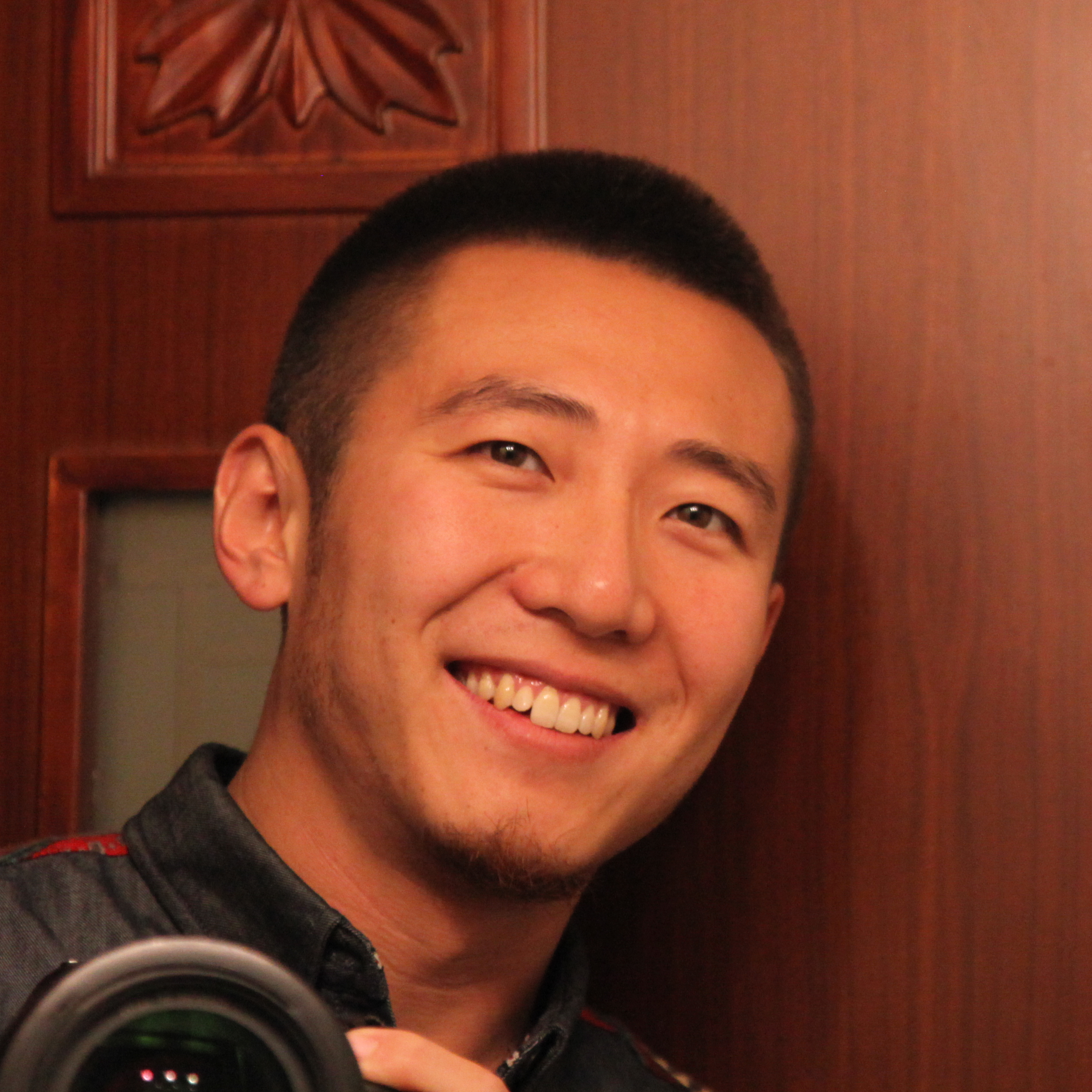
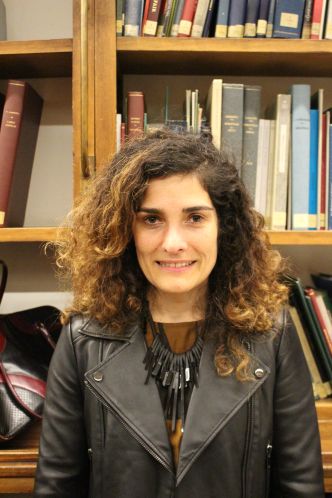
Alessandro Masetti is a PhD candidate in Museum Studies at the IMT School for Advanced Studies Lucca, funded by the Museo Egizio in Turin. He holds a background in architecture (2014) and has served as a curator at Fondazione Giovanni Michelucci in Fiesole (2015–2022). As a researcher in the LYNX Research Unit at IMT Lucca, he focuses on museum accessibility, cultural heritage curation, and digital communication. His work spans European-funded projects, including studies on women in photography (PRIN-funded) and initiatives to digitize Lucca’s photographic heritage. His academic contributions include editorial work for Predella. Journal of Visual Arts and co-authorship of publications on architect Giovanni Michelucci. He has also produced a bilingual podcast episode ( Lucca Stories & Tales ) and authored catalog entries for the ARCHIVI IN RETE project. His research bridges historical analysis, cultural policy, and digital innovation in cultural institutions. Key projects include Fotografiste: Women in Photography from Italian Archives , exploring underrepresented female photographers, and the digitization of Lucca’s photographic archives. His work emphasizes accessibility, historical recovery, and the intersection of technology with cultural preservation.
Ursula Zich is an Associate Professor at the Polytechnic of Turin's Department of Architecture and Design (DAD), where she serves as a member of the Student Discipline Commission. Born in Turin on July 16, 1969, she holds a Doctor of Architecture degree with highest honors from the Polytechnic of Turin (1994) and a Doctor of Research in Surveying and Representation of Architecture and the Environment from the University of Genoa. Her research interests focus on critical reading of drawing, descriptive geometry, history of representation, and physical models. She leads the MAG.IA (Mathematics, Architecture, Geometry. Application Interconnections) research line and the POLIMADE project exploring scientific applications of origami. Her work spans multiple ERC sectors including application of mathematics in sciences, computational modeling in cultural spheres, cultural studies, history of art and architecture, and museum studies. Zich has published extensively on architectural representation, with recent publications examining tangible geometries for inclusive game design, architectural heritage accessibility, and interdisciplinary approaches to architectural representation. Her research demonstrates consistent integration of mathematical principles with architectural representation techniques. Effective member of Study Group on Environmental Color Design (ECD) of the International Color Association (AIC), United States (2021-) Effective member of Italian Design Union (UID), Italy (2001-) She has served on the Program Committee for multiple Italian Conferences on Origami, Educational Dynamics and Teaching since 2014. Zich also co-invented a patent for a foldable aluminum foil food tray, demonstrating practical applications of her origami research. At the Polytechnic of Turin, she teaches architectural drawing, surveying, and geometric modeling courses across multiple academic years, maintaining an active teaching schedule through the 2025/26 academic year.
Chiara Franceschini is a Full Professor of Art History at IMT School for Advanced Studies, Lucca and University Professor for Early Modern Art History at LMU Munich. She holds joint appointments in both institutions, specializing in pre-modern art with a focus on religious imagery, transcultural encounters, and the social role of art. Her academic career includes fellowships at the Warburg Institute, Columbia University, and EHESS. Education: PhD in Art History, Scuola Normale Superiore (2008) Laurea in Letters and Philosophy, Università di Pisa (1997) Research Interests: Visual norms in sacred images Art and the Inquisition Early Modern hospitals' architectural and artistic heritage Cross-cultural exchanges between Europe and Japan Grants & Projects: ERC-StG SACRIMA (2016-2022) ERC-AdG ARCHIATER (2024-2029) DAAD-Waseda University partnership (2019-2021) Awards: I Tatti Prize (2012) Newton Fellowship (2009) Her current research explores the visual and architectural heritage of early modern hospitals, while her upcoming monograph examines art's role in Inquisition processes. She advises doctoral projects on cultural heritage and visual cultures of late medieval/early modern Europe.
Luciano Lavagno is a Full Professor at the Department of Electronics and Telecommunications, Polytechnic University of Turin, with over two decades of academic and research contributions. His work bridges hardware acceleration, low-power electronics, and intelligent system design. Research Focus: Hardware-accelerated machine learning, high-level synthesis (HLS) for FPGA/ASIC, heterogeneous CPU/GPU/FPGA platforms Key Projects: SPACE (predictable acceleration), REBECCA (secure AI acceleration), HPC-National Center (quantum computing), and oral history preservation via "Ti racconto una storia" initiative His recent publications analyze CNN inference optimization, subgraph isomorphism, and superword-level parallelism exploitation. Lavagno supervises multiple PhD students working on FPGA acceleration, neural network hardware, and embedded systems. As Principal Investigator for national and EU-funded projects (PRIN, JTI-ECSEL, PNRR), he drives advancements in sustainable computing infrastructure. His patented technologies include MIx&Latch timing methodology, capacitive sensing innovations, and 5G acceleration frameworks.
Elisa Chazal is a Researcher in the Department of History at the European University Institute . Her doctoral research focuses on "The Industry of Anachronism: (Re)producing the Past in the Immersive Historical Reconstructions in Fin-de-siècle London, Vienna, Budapest, and Paris" , supervised by Giorgio Riello and Pieter M. Judson. She is affiliated with EUI's academic community as a 2020 cohort member. Research Themes : Visual history, Cultural history, History of consumption and fashion, Material history, Urban history, 19th century, Material and visual culture Elisa's recent research output includes a 2024 contribution to a book analyzing competing historical reconstitution projects for the 1900 Exposition universelle in Paris. Her work explores how material and visual culture shaped historical memory in fin-de-siècle urban contexts, particularly through architectural reconstructions and exhibition practices.
Sabrina Rastelli is a Full Professor and Director of the Confucius Institute of Venice at Ca' Foscari University of Venice . She is affiliated with the Department of Asian and North African Studies and contributes to the Confucius Institute of Venice . Her academic career spans roles as Associate Professor (2010–present) and Lecturer (1999–2010) at Ca' Foscari University, with additional teaching experience at SOAS and Peking University. Current Position: Full Professor & Confucius Institute Director Previous Roles: Lecturer at Ca' Foscari (1999–2010), Tutor at SOAS (1998–99) Research Interests focus on Chinese ceramics, archaeology, and art history, particularly the Song and Jin dynasties. Her work explores the technological evolution of Yaozhou kilns, cultural exchanges through porcelain maritime routes, and transcultural dialogues in contemporary Chinese art. Scientific Contributions include co-authored studies on ancient ceramic technologies and leadership in EU-funded projects like Chinese narratives and the narration of China in Italy . She has curated major exhibitions including Dall’antica alla nuova via della seta (2016) and I due imperi. L’aquila e il dragone (2010). Academic Service encompasses editorial roles (e.g., Annali di Ca’ Foscari - Serie Orientale ), conference organization, and PhD examination committees. She serves on the scientific board of the Marco Polo Research Centre and advises institutions like the Museum of Oriental Art, Venice.
Marina Pucci is an Associate Professor of Near Eastern Archaeology at the University of Florence's Department of History, Archaeology, Geography, Arts and Entertainment (SAGAS). She specializes in the Late Bronze Age and Iron Age periods in Syria and Anatolia, with particular expertise in ceramic analysis, spatial studies, and cultural contact during these historical periods. Her extensive fieldwork includes directing excavations at key sites such as Kınık Höyük in Turkey and participating in major projects at Alalakh, Zincirli, and Tell Shech Hamad. Her academic background includes a PhD summa cum laude from Freie Universität Berlin and a Master's degree from the University of Pisa. She has held numerous academic positions including Fixed-term Researcher under the Rita Levi Montalcini program and currently serves as an Associate Professor at the University of Florence. Pucci's research focuses on material culture of the Late Bronze Age and Iron Age in Anatolia, the Levant, Central Syria, and Northern Mesopotamia. She examines group identity, migration theories, center-periphery relationships in the Neo-Assyrian and Hittite Empires, functional analysis of pottery, social archaeology, architectural space, and Syrian archaeology. Her work often explores cultural encounters, technological transfers, and the impact of political changes on material culture across the ancient Near East. Her recent publications demonstrate a consistent focus on the Amuq region, ceramic analysis, and Iron Age material culture. Her work increasingly incorporates digital documentation methods and addresses cultural heritage preservation in conflict zones. She examines transitions between historical periods, particularly the Late Bronze to Iron Age transition, analyzing how material culture reflects social, political, and economic changes. Her research connects specific archaeological findings to broader historical narratives about cultural contacts and transformations in the ancient Near East. As an academic advisor, Professor Pucci supervises undergraduate, master's, and doctoral students, guiding thesis work on Near Eastern archaeology. She has secured significant research funding including MAECI grants, OrMe Foundation support, Prin projects, and Rita Levi Montalcini funding. Her international collaborations span institutions in Turkey, Syria, Iran, Israel, Germany, and the United States. Professor Pucci leads archaeological field teams at Kınık Höyük in Niğde, Turkey, directing a group of 6-7 students and postdocs from the University of Florence. She coordinates international collaborations with the Oriental Institute at Chicago, Freie Universität Berlin, and various Turkish and Syrian universities on excavation and preservation projects. Her work has significant implications for understanding cultural heritage in conflict areas and developing preservation strategies for endangered archaeological sites.
Marco Maretto is Associate Professor of Architecture and Urban Design at the Department of Engineering and Architecture, University of Parma, Italy. He has held academic positions at Sapienza University of Rome and the University of Florence, and is a founding member and Vice-President of ISUFItaly, the Italian chapter of the International Seminar on Urban Form. He co-directs the international journal U+D. Urban form and Design and serves on multiple scientific committees and editorial boards. Ph.D. in Architecture, University of Genoa (2002) 5-Year Degree in Architecture, Sapienza University of Rome (1998) His research focuses on Urban Morphology , Sustainable Urban Design , and Environmental Urban Design , emphasizing the integration of urban form, sustainability, and societal well-being. He investigates how urban fabrics influence climate resilience, public space quality, and neighborhood identity, often employing GIS, pedestrian tracking, and 3D urban surveying. His work bridges historical analysis with contemporary design challenges, particularly in medium-sized European cities and historic urban centers like Venice. His most recent publications explore sustainable neighborhoods, thermal resilience of open spaces, and pedagogical approaches to urban morphology. These works reflect a cohesive trajectory toward evidence-based, environmentally responsive urban design. Key themes include smart living integration, urban regeneration, and the redefinition of urban beauty through sustainability. Scientific Referee: Urban Morphology , Urban Design International , Sustainability , Buildings , Urban Science , City, Territory and Architecture Advisory Editor: The Urban Book Series , Springer Founder and Co-Director: U+D. Urban form and Design Council Member: ISUF (2010–2016), CISPUT (2017–present) Maretto has advised over 25 Master’s theses and multiple PhD students, primarily at the University of Parma and Sapienza University of Rome. He leads and contributes to major international research projects, including EU-funded initiatives such as KAEBUP (Erasmus+) and ARCHEA , focusing on evidence-based urban practices and sustainable urban development. He also organizes international design workshops (WAM) and conferences on urban regeneration, involving institutions like ETSAB Barcelona, UPV Valencia, and FEUP Porto. He is a member of the U.A.L. (Urban and Architectural Laboratory) at the University of Parma, where he leads participatory urban regeneration projects in the Emilia-Romagna region, including Casina Collaborator and Collaboratorio Vetto. His work demonstrates a strong commitment to public engagement, interdisciplinary collaboration, and the practical application of urban research.
Jinze CUI is an Adjunct Professor at the Department of Humanities, University of Catania (Italy), specializing in Chinese Philology. With a PhD candidacy at KU Leuven (Belgium) in Architectural Heritage Conservation and a Master's in Cultural Relic Architecture from Peking University, he bridges architectural history, cultural preservation, and public engagement. His career spans roles as a lecturer, exhibition curator, and advocate for heritage conservation in China. PhD Candidate: KU Leuven (2014–2020) Master's: Peking University (2009–2012) Bachelor's: North China University of Technology (2002–2007) His research focuses on architectural heritage conservation , analyzing wooden structures, adaptive reuse of religious buildings, and controversies in restoration practices. Articles like 'The Totem of Ideal Human Habitat' and 'Inspirations on the Adaptive Reuse of Religious Architecture' highlight his interdisciplinary approach. He actively campaigns for civil-led heritage protection, exemplified by his 2013–2014 campaign to save Chen Baochen’s residence in Beijing. Recent works explore global heritage debates , including Notre Dame de Paris restoration and Dresden’s cultural memory. His articles span journals such as ThePaper.cn and edited volumes like Chinese Heritage in the Making (Amsterdam University Press, 2018). Member: ICOMOS China Member: Beijing Cultural Relic Protection Association CUI leads international cultural relic rescue campaigns and lectures on Beijing’s architectural history, including at the 2012 Walmart China Women in Leadership Forum. He also participated in EU-funded projects like Asia Urbs Chn5-08 in Beijing (2004–2005).
Roberta Spallone is a Full Professor in the Department of Architecture and Design (DAD) at Politecnico di Torino, where she conducts research and teaches in architectural representation, digital modeling, and cultural heritage. Her work bridges historical architectural theory with cutting-edge digital technologies like AR, VR, and AI. Research Interests: Her research focuses on 3D and reconstructive modeling, augmented and virtual reality (AR/VR) for cultural heritage, descriptive geometry, history of architectural representation, and the study of architectural treatises—especially those on military engineering. She explores digital technologies for the survey, representation, and communication of cultural heritage, with a strong emphasis on geometric analysis and historical accuracy. The trends in her recent publications reflect a consistent focus on the digital interpretation of early modern military architecture, particularly through parametric modeling and geometric analysis of treatises by figures like Guarini. She applies AR and VR to enhance accessibility and storytelling in museum and urban heritage contexts, emphasizing inclusive and sustainable cultural tourism. Scientific Awards: Best paper award, Italian Union for Drawing - UID (2021) Best Paper, 40th International Conference of Teachers of Representation Disciplines UID (2018) Best paper, FORTMED Conference 2015 (Historical Research) UID Silver Plaque (1997) PhD 1st prize ex aequo, Italian Design Union (1997) Advising and Grants: She supervises PhD students including Enrico Pupi and Fabrizio Natta. She leads the national PRIN research project INFORTREAT and multiple applied research contracts involving AR/VR for heritage sites like Palazzo Carignano and Mirafiori Castle. She is the Scientific Responsible for collaborative agreements with Fondazione Torino Musei and the Regional Directorate of Museums in Piedmont. Labs, Teams, and Collaborations: She is a key member of the scientific committees of FORTMED, UID, and Nexus Architecture and Mathematics. She serves on editorial boards for journals such as Nexus Network Journal and Diseñar Con... , and has guest-edited special issues. She frequently collaborates with researchers across Europe on projects linking architecture, mathematics, and digital heritage.
Stefania De Vincentis is an Associate Professor of History of Contemporary Art at the Department of Humanities, Ca' Foscari University of Venice. She teaches across multiple degree programs including History of Contemporary Art, Digital and Public Humanities, and Economics and Management of Arts and Cultural Activities. Her office is located at Malcanton Marcorà (VeDPH, second floor) where she holds student office hours on Wednesdays from 4:00 PM to 6:00 PM. Dr. De Vincentis earned her PhD with honors in Human Sciences from the University of Ferrara. Her educational background includes studies in video art and visual arts at the Academy of Fine Arts in Bologna, the IUAV-Institute of Architecture at the University of Venice, and a Master's Degree in Cultural Heritage Management (MuSeC) at the University of Ferrara. She was a Visiting Student at the Getty Research Institute in Los Angeles and a fellow at the Ermitage Italia Center for Art History. Her research focuses on the intersection of art history and digital technologies, particularly examining how digital tools transform museum experiences and art historical scholarship. Dr. De Vincentis investigates digital museum applications, virtual reality approaches to art collections, and the impact of technologies like IIIF (International Image Interoperability Framework) on art historical research. Her work explores how AI, VR, and other digital methodologies can enhance engagement with cultural heritage while raising critical questions about the nature of digital art history as a discipline. Analysis of her recent publications reveals a consistent focus on practical digital applications in museum contexts, particularly at institutions like the Galleria Borghese in Rome. Her work spans from theoretical reflections on digital art history methodology to hands-on implementations of virtual reality and AI technologies for museum collections. As a founding member of the DiDiART laboratory (Diagnostics and Digital for Art) at the University of Ferrara and a member of the Venice Center for Digital and Public Humanities (VeDPH), Dr. De Vincentis actively contributes to digital humanities initiatives. She has collaborated extensively with cultural institutions including the Ferrara Arte Foundation, Pinacoteca Nazionale di Ferrara, and Estense Castle, bridging academic research with practical museum applications. Her teaching portfolio demonstrates a commitment to preparing students for careers at the intersection of art, technology, and cultural heritage management. She offers specialized courses that equip students with both theoretical frameworks and practical skills for engaging with digital transformations in the cultural sector.
Carlo Frappi is a Contract Lecturer at the Department of Asian and North African Studies, Ca' Foscari University of Venice. He is also a member of the Steering Committee of the Observatory of Politics and International Relations (OPRI). With a Ph.D. in European History from the University of Rome 'La Sapienza' and an M.A. in Political Sciences from the University of Perugia, Frappi has built a distinguished career at the intersection of academia and policy research. His research focuses on energy security, Turkish foreign policy, the politics of the South Caucasus—especially Azerbaijan—and the geopolitics of the Caspian and Black Sea regions. He has held research and teaching roles at institutions including ISPI, Università Cattolica del Sacro Cuore, and the University of Milan. Frappi's scholarly output spans monographs, journal articles, book chapters, and policy reports. Since 2010, he has co-authored the ISPI quarterly monitoring on Energy Security for the Italian Parliament and Ministry of Foreign Affairs. His recent publications analyze Armenia's geopolitical challenges, Turkish-Azerbaijani energy alliances, and the impact of the Ukraine war on European energy security. His work consistently bridges academic rigor and policy relevance, with a strong emphasis on international relations, regional cooperation, and energy diplomacy in Eurasia. Ph.D. in European History, University of Rome 'La Sapienza' M.A. in Political Sciences (International Politics), University of Perugia Specialization in 'Democratization and Political Affairs', Austrian Study Center for Peace and Conflict Resolution Frappi's research interests include energy security, geopolitical competition in Central Asia, Turkish foreign policy, and post-bipolar regional dynamics. His articles explore themes such as pipeline politics, regional stability, and external influence in the South Caucasus. His recent publications reflect a sustained focus on energy geopolitics, conflict analysis, and regional cooperation. Key trends include the impact of global instability on the South Caucasus, evolving energy strategies in Turkey and Azerbaijan, and the transformation of European energy security in the wake of the Ukraine war. Frappi has not received any scientific awards that are publicly listed in the provided texts. He has contributed to significant research projects and policy monitoring initiatives, including long-term collaboration with ISPI and leadership roles in joint research with institutions in Azerbaijan. He has supervised or co-edited several academic volumes and policy reports, often in collaboration with Italian and international scholars. Frappi is actively involved in academic and policy networks, contributing to research groups and observatories focused on international politics and energy security.
Gerhard Wolf is a Professor and Managing Director of the Kunsthistorisches Institut in Florenz (KHI), a research institute of the Max Planck Society since 2002. He has served as director of the KHI since 2003. Wolf leads the Department Gerhard Wolf, which focuses on Image, Object, Site. Mediterranean / Transcultural Art Histories , exploring concepts and practices of images and things in transcultural perspectives. Wolf earned his PhD in art history, Christian archaeology, and philosophy from the University of Heidelberg in 1989, and completed his habilitation at the Free University of Berlin in 1995. He previously held a professorship in art history at the University of Trier until 2003. His academic career includes numerous honorary professorships at institutions including EHESS in Paris, Bibliotheca Hertziana in Rome, and Columbia University in New York. Wolf's research spans transcultural art history, material culture studies, and ecological approaches to art history. His department investigates how objects and images participate in the formation and transformation of environments, with focus on migratory and transcultural dynamics, locative practices, and the interrelations between heritage and environment. His long-term projects include 'The Art of Containment' (studying vessels and containers across cultures), 'Ecology and Aesthetics,' and research on sacred topographies. His publications reveal a consistent engagement with transcultural object studies, particularly focusing on vessels, material metaphors, and the relationship between images and objects. His work bridges historical analysis with contemporary ecological and political concerns, demonstrating art history's relevance to current debates about heritage, environment, and cultural exchange. Wolf has received significant recognition including honorary memberships in CAIA (Centro Argentino de Investigadores de Arte), Amici delle Pietre Dure in Florence, and the Accademia delle Arti del Disegno. He was awarded the 'Hanno und Ilse Hahn' Award in 1994. As director, Wolf mentors numerous doctoral candidates and postdoctoral researchers, fostering the next generation of art historians. His department hosts extensive research projects examining the intersection of art history with environmental studies, catastrophe theory, and transcultural exchange. The department maintains active collaborations with international institutions and regularly organizes conferences addressing contemporary challenges in art historical research.
Matteo Robiglio is a Full Professor at the Department of Architecture and Design (DAD) , Polytechnic University of Turin, and serves as Project Manager for the Future Urban Legacy Lab (FULL) . His work focuses on the intersection of architectural design, urban regeneration, and sustainable development. Research Themes : Adaptive reuse of built heritage, cohousing models, cultural heritage conservation, and sustainable urban policies. Awards : Recognized internationally with the World Architecture Award (WACA, 2018) and Solar Decathlon China (2018), alongside multiple Italian accolades (Revealed Architecture Awards, CASACLIMA AWARD). Key Projects include ResQ - Re-school (2021-2022) addressing pandemic-era school spaces, and collaborative agreements with public institutions for urban regeneration in Turin and Lombardy. His recent articles emphasize incremental strategies for heritage reuse, daylighting metrics, and social innovation tools. Teaching Roles span Architecture PhD and Master’s programs, where he oversees design studios on adaptive reuse, green architecture, and transdisciplinary research. He has supervised doctoral research on topics like post-earthquake temporality and community-led housing.
Prof. Sinem Casale is an Associate Professor in the Department of Art History at the University of Minnesota and currently serves as an Academic Assistant at the Kunsthistorisches Institut in Florenz (Max Planck Institute). Her research focuses on Islamic art and architecture with an emphasis on the Ottomans, Safavids, and Mughals. She explores the intersection of art, diplomacy, religion, and trade in early modern Muslim empires, particularly through material exchanges and courtly rituals. Her book Gifts in the Age of Empire: Ottoman-Safavid Cultural Exchange, 1500–1639 (2023) reinterprets inter-imperial relations through artistic objects. Casale holds a Max Weber Postdoctoral Fellowship and has been supported by institutions like the ACLS and SSRC. Current Projects : Investigating food culture and entertainment in early modern diplomatic encounters, and representations of war in cross-cultural contexts. Previous Roles : Taught at McGill University's Institute of Islamic Studies; held fellowships at the European University Institute and the National Gallery of Art. Her work bridges material culture studies with transcultural history, emphasizing how art mediated political and cultural interactions in the pre-modern world.