Monica Barni is a Full Professor at the Department of Modern Literature and Culture, Sapienza University of Rome, specializing in Educational Linguistics and Multilingualism. She serves as the President of the Degree Course in Communication and Interpreting in Italian Sign Language (LIS and LIST) and directs the Ateneo Linguistic Center. Her research spans language policy, Italian L2 education, and the sociolinguistics of migration. Research Interests: Analysis of linguistic policies in Italy and Europe Assessment of language competencies Plurilingual and intercultural education Linguistic landscapes in multicultural urban contexts Translation theory and practice Recent Article Trends: Her 2025 and 2024 publications focus on urban multilingualism, language transmission in migrant families, and policy intersections in education. Earlier works (2022-2023) examine Italian certifications, museum semiotics during pandemics, and European linguistic frameworks like CEFR. Labs & Teams: She leads the Ateneo Linguistic Center and contributes to the GISCEL research network. Her work intersects with projects like Lingua e cittadinanza (Language and Citizenship) and international collaborations in Italian language education.
Marianne Turner is an Associate Professor in Bilingual Education and TESOL at Monash University's School of Curriculum Teaching & Inclusive Education. Her research focuses on developing socially equitable understandings of language and building capacity for multilingual approaches across educational settings. She has established significant collaborations with Victorian Department of Education and Catholic Education through funded research projects. Her primary research interests include: Translanguaging as a framework addressing social inequity Integration of EAL and content-based learning in English-speaking contexts Language teacher pre-service education and professional development Content and language integrated pedagogies (CLIL) Educating for diversity and inclusion through multilingual strategies Recent publications demonstrate a clear trajectory toward practical implementation of translanguaging in Australian classrooms, with emphasis on teacher development, digital multimodal approaches, and policy frameworks. Her work consistently bridges theoretical concepts like trans-semiotizing with classroom applications through projects involving Home Languages in English Classrooms and Plurilingual Pedagogy initiatives. Turner actively disseminates research through teacher associations (VicTESOL, MLTAV), government resources, and media engagement. Current projects include English as an Additional Language (EAL) pedagogy development for secondary classrooms (2025) and Home Languages in the English Classroom research (2021-2022). She has supervised PhD students focusing on translanguaging approaches but is currently not accepting new candidates. Her research contributes to UN Sustainable Development Goals through advancing educational equity and inclusive language practices.
Steven Zhou is an Assistant Professor of Psychological Science at Claremont McKenna College, where he leads the STATS Lab (www.statslabatcmc.com). His academic work bridges quantitative methods with psychological research, focusing on leadership, personality, and vocational psychology. With methodological expertise in psychometrics, machine learning, and data visualization, he actively contributes to both academic and practitioner communities through research, teaching, and consulting. Dr. Zhou's educational background includes: PhD in Organizational Psychology + Certificate in Computational Social Sciences from George Mason University BA in Organizational Psychology + Certificate in Conflict Resolution from Pepperdine University His research program centers on developing and refining psychological assessments while investigating bias in measurement systems. Dr. Zhou specializes in forced-choice personality assessments, leadership evaluation methodologies, and career calling research. His work consistently addresses the gap between academic research and practical application in organizational settings, with recent projects incorporating large language models and agent-based simulations to study complex behavioral phenomena. Dr. Zhou's publication record shows a clear trajectory toward increasingly sophisticated methodological approaches to organizational psychology questions. His recent work demonstrates growing integration of computational techniques (machine learning, NLP) with traditional psychological research, while maintaining strong connections to practical organizational applications. The research consistently addresses measurement challenges in leadership assessment and career development. His notable scientific achievements include: 2025 Jablin Dissertation Award from the International Leadership Association and Jepson School of Leadership Studies 2025 Chapman Dissertation Award from the Network of Leadership Scholars and Academy of Management 2023 Dissertation Research Award from the American Psychological Association 2022 Free Inquiry Grant from the Foundation for Individual Rights and Expression 2022 Graen Grant for Student Research on Leaders and Teams from SIOP 2021 Kenneth E. Clark Student Research Award from ILA and Center for Creative Leadership 2021 Outstanding Graduate Student Instructor from GMU Department of Psychology Dr. Zhou actively mentors both graduate and undergraduate students, with numerous student co-authors across his publication record. He has secured nearly $40,000 in external research funding to support his work on leadership assessment and psychometric methodology. His professional service includes editorial roles for multiple journals and leadership positions within the Society for Industrial and Organizational Psychology. As director of the STATS Lab, Dr. Zhou leads a research team focused on applying quantitative methods to understand leadership, career development, and personality. The lab's five research pillars include Psychometrics & Measurement Science, Bias in Measurement & Analytics, Leadership Assessment & Team Dynamics, Integrating Novel Methods into Research, and Career Development & Vocational Psychology, all emphasizing both methodological rigor and practical application.
Robert Ziegler serves as Associate Professor at the Institute of Philosophy within the Faculty of Human Sciences at the University of Würzburg, Germany. His academic career spans over 20 years with significant contributions to continental philosophy, evidenced by numerous monographs and peer-reviewed publications. He maintains active research leadership in three university research clusters while teaching courses such as War and Peace (Winter Semester 2025/26). His educational trajectory includes: Philosophy, Classical Philology (Latin), and History studies at Würzburg (2000-2003) Advanced philosophy studies at Sorbonne University (2003-2005) Master's thesis on Husserl and Cavaillès (2004) Doctorate on Pascal from Würzburg/Paris IV-Sorbonne (2009) Habilitation at Würzburg (2015) Ziegler's research centers on metaphysical immanence, early modern rationalism, and 20th-century phenomenology. His work critically engages Pascal's religious philosophy, Spinoza's ontology, and Levinas' ethics while bridging psychoanalysis and political theory. Recent scholarship examines reactionary political strategies, affective structures in social crises, and the emergence of novelty through materialist frameworks. His interdisciplinary approach connects historical analysis with contemporary philosophical challenges. Analysis of his 15 most recent publications reveals consistent thematic threads: the phenomenology of affect in political contexts, reconceptualizations of rationality through embodied practices, and critical examinations of reactionary thought. His publications demonstrate methodological diversity—integrating textual analysis of historical figures with original contributions to ontology, political philosophy, and the philosophy of science—while maintaining focus on immanence as a unifying metaphysical framework. His scientific recognition includes: Research Prize of the Faculty of Human Sciences (2019) Bavarian Elite Fund Doctoral Scholarship (2005/6) DAAD Scholarship (2003/4) Professor Ziegler has secured substantial research funding including multiple DFG projects on Cicero's Tusculanae disputationes , non-object-directed intentionality, and practical reasons before Kant, plus a Fritz Thyssen Foundation project on intention formation. As a lecturer since 2005, he has supervised numerous doctoral and master's students, contributing to graduate education through seminars on political philosophy and metaphysics. His editorial work includes co-editing The Inner Logic of Creativity (2013). He actively participates in the Institute's Research Focus on Phenomenology, Research Focus on the Greek-Arabic-Latin Tradition, and Research Focus on Social Philosophy and Ethics. These groups organize the Phenomenological Colloquium, lecture series on philosophical research, and interdisciplinary workshops that foster cross-traditional dialogue in contemporary philosophy.
Dr. Gillian Pink is a Senior Researcher at the Voltaire Foundation , University of Oxford, specializing in the digitization and analysis of Voltaire's marginalia , notebooks , and working manuscripts . Her research spans French Enlightenment literature , manuscript studies , and book history . Deputy General Editor of the Digital Voltaire project Member of Société des études voltairiennes Associated with Équipe Écritures et Lumières (ITEM, Paris) Her work integrates digital humanities with traditional textual criticism , focusing on the genesis of literary texts and authorial reading practices . Recent publications and conference papers analyze Voltaire's annotation systems , textual reuse , and collaborative manuscript production . She contributes to critical editions of Voltaire's posthumous works and marginalia .
Giorgio Politi serves as Senior Researcher in Modern History (M-STO/02) at Ca' Foscari University of Venice's Department of Humanities, where he has been a core member since the department's inception. He previously taught at Milan's Academy of Fine Arts and University of Milan from 1975-1980 while pioneering academic IT infrastructure as departmental webmaster, IT manager, and faculty IT committee coordinator. Politi earned his Philosophy degree from the University of Milan in 1971. His scholarly trajectory bridges traditional historiography with digital innovation, reflecting early adoption of microcomputers for historical text processing and desktop publishing in the 1980s-90s. His research centers on Early Modern European social dynamics, particularly peasant revolts like the 1525 Tyrolean uprising led by Michael Gaismair and urban history of Spanish-era Cremona. Later work explores historical epistemology, cultural memory, and digital humanities methodologies, evidenced by his co-founded academic series em-studi di storia europea protomoderna with Reinhold C. Mueller. Analysis of his 66+ publications (1976-2016) reveals three thematic clusters: foundational studies on Gaismair and Tyrolean revolts (1980s-90s), methodological critiques of historical practice ( History as a Dead Language , 2009), and interdisciplinary explorations of cultural memory ( The Chosen People , 2015). His 2009 thesis-writing manual remains widely used in Italian academia. Though no formal awards are documented, Politi's institutional impact is evident through his leadership in academic technology and the influential publication series he co-directs. His advisory roles are reflected in collaborative editorial projects rather than formal student supervision. Politi co-founded and directs the em-studi di storia europea protomoderna series, creating a dedicated platform for early modern European historical research that bridges Italian and international scholarship through digital publishing frameworks he developed.
Oberto Marrama is a Marie Skłodowska-Curie Postdoctoral Fellow at Ca' Foscari University of Venice's Department of Philosophy and Cultural Heritage. He holds a PhD in Philosophy from the University of Groningen and Université du Québec à Trois-Rivières, with a focus on Spinoza’s theory of the human mind. His academic career includes postdoctoral roles at the University of Oulu and Bar-Ilan University, alongside teaching positions in Canada and Italy. Educational Background: PhD in Philosophy (cum Laude, 2014–2019), University of Groningen/Université du Québec à Trois-Rivières MLitt by Research (with Distinction, 2013–2015), University of Aberdeen Master's Degree in Philosophical Sciences (with honors, 2009–2012), Ca' Foscari University of Venice Bachelor of Philosophy (with honors, 2003–2008), Ca' Foscari University of Venice Research Interests: Marrama specializes in 17th/18th-century philosophy of mind, with a focus on Spinoza, Margaret Cavendish, and Hobbes. His work explores panpsychism, consciousness, memory, and the intersection of rationality and affective states. He investigates how early modern thinkers conceptualized mind-body relationships and the ethical implications of deterministic frameworks. Article Trends: His publications emphasize comparative analyses of early modern philosophies, particularly Spinoza’s panpsychist materialism, Cavendish’s universal self-knowledge, and Hobbes’ materialist anthropology. Recent work addresses memory’s role in virtuous behavior and the historical networks surrounding the Cavendish Circle. Scientific Awards: Marie Skłodowska-Curie Postdoctoral Fellowship (2023–2025) Jenny and Antti Wihuri Foundation Grant (2021–2023) FRQSC Doctoral Scholarship (2016–2018) Advising and Grants: Marrama has co-organized workshops and conferences, including the Cavendish Circle and Hobbes collaborative events. He has curated digital archives like PhilPapers and served as a reviewer for journals such as British Journal for the History of Philosophy and Philosophies . Labs and Teams: He is affiliated with the Center for Renaissance and Early Modern Thought , New Voices on Women in the History of Philosophy , and the Groningen Centre for Medieval and Early Modern Thought , contributing to early modern philosophical discourse and collaborative research projects.
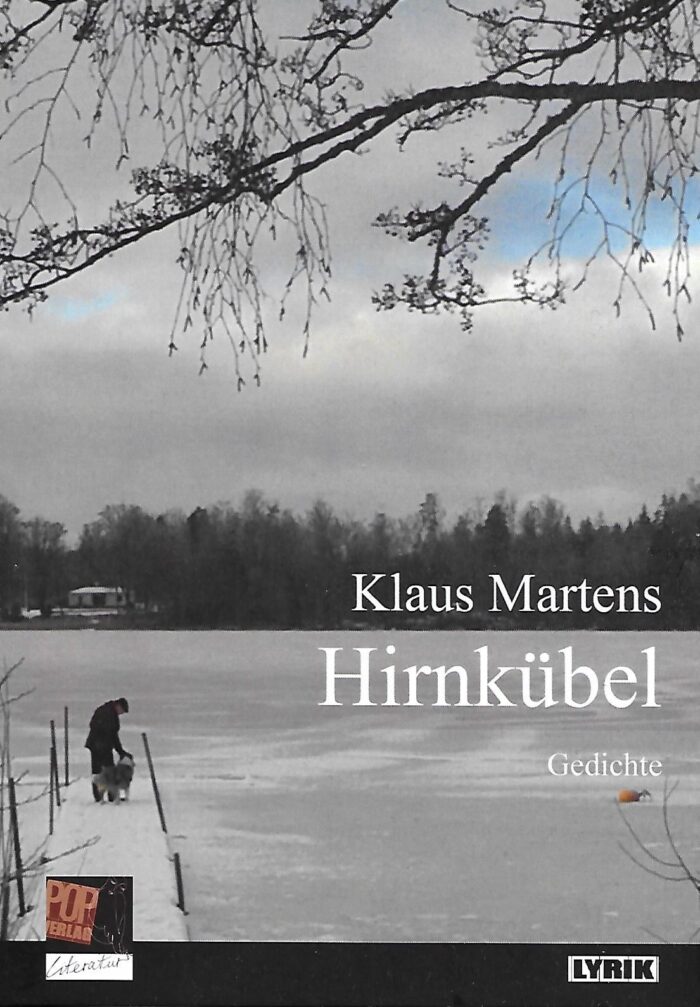
Klaus Martens is a German poet and former professor of American Studies at Saarland University. His work bridges academic rigor and poetic expression, often characterized by understatement and attention to inner connections. His poetry explores themes such as childhood memories, existential struggles, and the interplay between science and art. Academic affiliation: Saarland University (American Studies) Poetic focus: Reduction, melancholy, and timeless human experiences His publications span decades, reflecting a commitment to lyrical precision and intellectual depth. Notable works include The Ferry (2006), Old Bone Speaks (2011), and Gooseberry Gardens (2022), which showcase his exploration of memory, identity, and philosophical inquiry. Martens also engaged in editorial and translation work, notably for Dylan Thomas and Frederick Philip Grove. Martens' critical studies include analyses of Wallace Stevens and Longfellow's cultural reception. His poetry often evokes everyday reality while resisting superficiality, combining meticulous observation with existential reflection. Though he has received praise from niche critics, his work remains outside mainstream recognition, aligning with his poetic philosophy of 'active timelessness.'
Bjørnar Tessem is a Professor at the Department of Information and Media Studies, University of Bergen. His research focuses on artificial intelligence (AI) and machine learning applications in journalism and sustainable resource management, particularly fisheries. He leads projects like MediaFutures and collaborates with researchers on anomaly detection in fisheries data and ethical AI in automated journalism systems. His work bridges computational methods with societal challenges, emphasizing fairness, transparency, and sustainability. Research interests include AI-driven journalism frameworks, knowledge graphs for news angles, sustainable fisheries monitoring via machine learning, and ethical implications of AI in media. Key projects involve developing tools for detecting violations in fishing activities and enhancing news production through automated systems. He also contributes to public understanding through popular science articles on technology and AI. Recent articles highlight advancements in collective anomaly detection for fisheries surveillance, future technologies in journalism, and fairness in automated data journalism systems. Tessem’s research is supported by grants from the Research Council of Norway and has implications for both academic and industry applications in media and environmental sectors.
Simon Clematide is a Professor in the Department of Computational Linguistics within the Faculty of Arts and Social Sciences at the University of Zurich. With a publication record spanning over two decades from 2001 to 2025, he has established himself as a leading researcher in computational linguistics, particularly focusing on multilingual natural language processing, historical document analysis, and OCR applications. His research interests encompass Natural Language Processing, Computational Linguistics, Multilingual Embeddings, Historical Document Analysis, OCR Processing, and Text Normalization. Clematide's work demonstrates a strong emphasis on practical applications of NLP in digital humanities, with significant contributions to processing historical texts and multilingual resources. His recent work has increasingly incorporated large language models and transformer architectures for tasks ranging from text embedding evaluation to historical document processing. Clematide's publication trends show a consistent focus on multilingual NLP with particular expertise in Germanic languages and historical text processing. His work bridges theoretical linguistics with practical computational approaches, often addressing challenges in low-resource language scenarios and historical document digitization. Recent publications demonstrate increasing integration of LLMs into traditional NLP pipelines for tasks like paraphrase detection, job advertisement analysis, and historical text normalization. His collaborative work includes significant contributions to shared tasks and benchmarks in the NLP community, particularly through the HIPE (Historical Information Processing Evaluation) shared tasks. These efforts have helped establish standardized evaluation frameworks for named entity recognition in historical documents. Clematide has been actively involved in several major research projects related to historical newspaper content mining, including the impresso project which focused on cross-lingual historical document processing. His work often involves interdisciplinary collaboration between computer scientists, linguists, and historians.
Paul Fessler is Professor of History at Dordt University, where he has taught since 1997. His courses include Civil War and Reconstruction , Media and Power: Cold War Through 9/11 , and Introduction to Historical Methods . Fessler's research integrates a Reformed Christian perspective across diverse topics including immigration history, military history, and sports history. Ph.D. in History, Texas A&M University (1997) M.A. in History, Texas A&M University (1993) B.A. in History, Calvin College (1990) His scholarship bridges traditional historical analysis with contemporary cultural questions. Notable publications include studies on Confederate general Patrick Cleburne, German-American bilingual education, and Dutch immigrant settlement patterns on the Great Plains. Key article themes reveal sustained interest in American military leadership (1994), ethnic education policies (2004), transnational migration (2006), and immigrant entrepreneurship (2014). These works demonstrate his commitment to uncovering overlooked narratives in historical scholarship. Award for Teaching Excellence (inaugural recipient) USMA Summer Seminar Fellow (West Point) State of Iowa Civil War Sesquicentennial Advisory Board (2009-2017) NEH Voices of Democracy project Advisory Board Member Fessler directed Dordt's Ideafest since 2003 and chaired the History Department (2007-2024). He has secured multiple grants for historical research and advisory roles, including state and national projects related to Civil War history and American ethnic studies. His departmental leadership included overseeing curriculum development for historical methods and specialized courses like Media and Power examining post-Cold War political dynamics through 9/11. Outside academia, he contributes to outdoor recreation and sports history preservation efforts.
Matthias Hagen is Professor of Databases and Information Systems at Friedrich-Schiller-Universität Jena. His research focuses on information retrieval (query understanding, conversational search, comparative questions, known-item search, user simulation), natural language processing (clickbait, argumentation), and web data mining. He earned his Ph.D. from Friedrich-Schiller-Universität Jena with a thesis on algorithmic complexity, and previously led research groups at Bauhaus-Universität Weimar and Martin-Luther-Universität Halle-Wittenberg. His current work develops novel methods for retrieval-augmented generation evaluation, neural information retrieval efficiency, and user-centered search systems. Recent publications examine crowdsourcing for RAG evaluation, LLM-based relevance assessment, corpus subsampling techniques, and child-friendly web search evaluation frameworks. He contributes to open web search initiatives and develops tools like the TIREx Tracker for experimental reproducibility in IR research. Dr. Hagen serves on program committees for major conferences including SIGIR, ECIR, and ACL. His research group participates in competitive evaluations such as TREC, CLEF, and Touché. Recent projects explore axiomatic approaches to retrieval, argumentation systems, and the impact of search result quality on decision-making.
Bri Jackson is a Lecturer in the Department of Foreign Language at Virginia Commonwealth University. While his formal academic role is in language education, his research focuses on advanced computational methods in pathology, including machine learning applications for cancer diagnosis, virtual immunohistochemistry, and digital pathology tools. His work spans histopathological analysis, immuno-oncology, and biomedical imaging. Jackson's research has led to the development of innovative algorithms for virtual diagnostic companion tools, foundation models for whole slide image analysis, and benchmarks for cervical cytology classification. His publications emphasize precision oncology, including biomarker multiplexing, molecular response prediction, and AI-driven histopathological interpretation. Key areas include non-small cell lung cancer, esophageal adenocarcinoma, and splenic involvement in pancreatic cancer prognosis. He has also explored educational challenges in pathology residency programs during the pandemic, viral epidemiology, and rare congenital disorders involving multiple organ systems. Jackson's work bridges computational biology with clinical diagnostics, though no scientific awards or student advisement details are mentioned in the available data.
Peter Biľak is a Slovakian graphic and typeface designer based in The Hague, currently serving as a Part-Time Lecturer at the Royal Academy of Art . He co-founded Typotheque in 1999 and Indian Type Foundry in 2009, focusing on multilingual typography, CJK systems, and accessibility (e.g., Zed Braille ). His work bridges type design with interdisciplinary collaborations, including modern dance with Make-Move-Think.org . Education : MFA in Graphic Design from the Jan van Eyck Academy (1999). Biľak’s research explores typographic principles across scripts (Latin, CJK, Indic), Braille spacing , and design ethics . His 15 most recent articles address vertical/horizontal writing systems , interdisciplinary design , and typeface functionality in urban contexts like the Paris Metro . He collaborates internationally, contributes to design theory, and advocates for reclusive creative practices as a response to digital visibility pressures. His typefaces (e.g., Greta , Fedra , Lava ) emphasize cultural inclusivity and technical precision.
James Flory is an Associate Professor of Population Health Sciences at Weill Cornell Medical College , Cornell University. With an MD and MSCE from the University of Pennsylvania (2009) and a BA from Columbia University (2002), he specializes in pharmacoepidemiology and clinical research related to diabetes management, drug safety, and healthcare policy. Education: M.D., University of Pennsylvania School of Medicine, 2009 M.S.C.E., University of Pennsylvania School of Medicine, 2009 B.A., Columbia University, 2002 His research focuses on the intersection of diabetes pharmacology , cardiovascular risk , and health services research . He has contributed extensively to understanding drug safety (e.g., sulfonylureas, SGLT2 inhibitors, TRK inhibitors), medication adherence , and clinical decision-making in diabetes and oncology settings. His methodological work includes instrumental variable analysis , pragmatic trial design , and real-world data validation . James Flory's recent publications examine temperature-related diabetes complications , AI in clinical decision support , and policy impacts on medication utilization . His work combines epidemiological methods with health informatics to address critical questions in diabetic care , drug safety surveillance , and health equity .