Ruben Gallo is the Walter S. Carpenter, Jr., Professor in Language, Literature, and Civilization of Spain at Princeton University. He serves as Professor in the Department of Spanish and Portuguese Languages and Cultures and has directed the Program in Latin American Studies since 2008. His academic credentials include a B.A. in English from Yale University and a Ph.D. in Comparative Literature from Columbia University. Professor Gallo specializes in Latin American Studies with interdisciplinary research spanning: Twentieth-century cultural movements Avant-garde literature and art Psychoanalytic theory (particularly Freudian studies) Transatlantic intellectual history His endowed professorship recognizes significant contributions to Hispanic studies. Current institutional roles include program leadership and teaching graduate/undergraduate courses on modern cultural theory.
University of North Carolina at Chapel HillUnited States
Lucia Binotti is a Professor of Spanish and Digital Humanities at the University of North Carolina at Chapel Hill (UNC-CH), with dual affiliations in the Department of Romance Studies and interdisciplinary Digital Humanities initiatives. She serves as Graduate Advisor for Hispanic Linguistics and Director of the Honors Study Abroad Program in Rome. Her work bridges traditional philology with cutting-edge digital scholarship, emphasizing immersive learning experiences through virtual reality (VR) and augmented reality (AR) technologies. Binotti holds a Ph.D. from UC Santa Barbara (1990), an MA (1985), and a BA (1984) in Romance Philology from the Università degli Studi di Pisa. Her research focuses on linguistic identity, cultural heritage preservation, and innovative educational platforms like Amirabilia—the world’s first experiential learning platform. Notable projects include nXimena (healthcare training for Latinx abuse survivors) and Entiendelo (a linguistic/cultural navigation app for Latinx communities). Her scholarly interests span Early Modern Spanish literature, digital humanities applications, and the intersection of technology with social justice. She has directed grants totaling over $500K for projects involving AR/VR integration in education, including collaborations with the UNC Health Science Library and NCSU’s DELTA initiative. Recent awards include the John K. Walsh Award (2010) and Digital Innovation Fellow status (2014). Grants & Leadership: CFE-Lenovo Technology Grants (2018–2019) for AR/VR expansion iLRN 2020 International Co-Chair XR Faculty Learning Community Leader (UNC) Teaching: Courses span from introductory Hispanic literature to advanced topics like medieval intellectual history and digital humanities methodologies. Binotti’s work emphasizes ‘place, presence, and perspective’ in Cyber-Humanities education, particularly addressing marginalized communities through technology-driven solutions.
Rosa Andujar is a Senior Lecturer in Liberal Arts at King's College London, where she is affiliated with both the Department of Liberal Arts and the Department of Classics within the Faculty of Arts & Humanities. She serves as Editor of the American Journal of Philology and holds positions on the editorial boards of Brazilian journals Nuntius Antiquus and PhaoS - Revista de Estudos Clássicos. Dr. Andujar was elected to the Program Committee of the Society for Classical Studies for a three-year term (2022-2025), serving as Vice President for Program and Chair from 2023-2025. Her research focuses on two complementary areas: Ancient Greek tragedy, particularly the tragic chorus and its performance capabilities Global receptions of Greek drama, with special emphasis on Latin America and the Caribbean Dr. Andujar's work examines how engagements with Graeco-Roman antiquity intersect with questions of gender, race, class, and national identity. She has particular expertise in Cuban adaptations of Greek tragedy and Latinx receptions of classical drama, exploring how these cultural encounters create new narratives that challenge traditional understandings of classical reception. Her research has been recognized with prestigious awards including the 2020 London Hellenic Prize for 'The Greek Trilogy of Luis Alfaro' and the 2022 AJP Best Article Prize. She has secured significant research funding from the Loeb Classical Library Foundation, British Academy, A. G. Leventis Foundation, Harvard Center for Hellenic Studies, Andrew W. Mellon Foundation, and Fundación BBVA. Dr. Andujar's current research projects include 'The Cambridge Companion to Classics and Race' (edited volume), 'La Puerta Electra/The Electra Door' (critical bilingual anthology of Cuban rewritings), and 'Tragedy and Revolución' (monograph on Greek drama in Caribbean cultural history), supported by recent fellowships from the Loeb Classical Library Foundation and British Academy. She is actively involved in academic service as Editor of the American Journal of Philology, co-editor of the 'Classics and the Postcolonial' book series for Routledge, and Advisory Board member of 'Hesperides: Classics in the Luso-Hispanic World.' Her external examining work for the University of Birmingham (2018-2023) demonstrates her commitment to academic standards across institutions.
Vicente Cervera Salinas is a Professor of Spanish Literature at the University of Murcia, affiliated with the Faculty of Arts and Humanities and the Department of Spanish Literature, Literary Theory and Comparative Literature. He has been a full professor since 2004 and specializes in Latin American literature, intertextuality, and literary theory. His research interests include: Spanish and Latin American Literature Comparative Literature and Intertextuality Poetry and the Essay as Literary Genres Classical Mythology and its Modern Reinterpretations Aesthetic Criticism and Cultural Memory Philosophical Dimensions in Literature His scholarly and creative work reflects deep engagement with figures like Jorge Luis Borges, Dante Alighieri, and George Santayana. His publications span poetry, critical essays, and editorial projects, often exploring the intersections between literature, philosophy, and cultural identity. The themes across his recent articles reveal a consistent focus on myth, authorship, and transatlantic literary traditions, particularly in Hispanic contexts. He has received recognition including the Second Prize in the America Poetry Prize (1993). He co-directs the journal Cartaphilus: Revista de investigación y crítica estética and has directed the Humanities Classroom at the University of Murcia. He served as president of the Association of Hispanic American Literary Studies (2014–2018). He has supervised at least one doctoral thesis and has been a visiting professor at institutions in Havana, San José (Costa Rica), Buenos Aires, and Vienna. His academic leadership includes editing multi-volume works on literary figures and movements, contributing significantly to the study of Hispanic intellectual and aesthetic traditions. He leads the research group Plural Scriptures: Intertextuality and Interdisciplinarity , continuing to influence both literary scholarship and creative writing in Spain and Latin America.
Isadora Moura Mota is an Assistant Professor of History at Princeton University, specializing in Brazilian slavery and the Atlantic world. Her research focuses on modern Brazilian history, comparative slavery, abolitionism, literacy among enslaved populations, and the African diaspora in Latin America. She holds a PhD from Brown University (2017) and previously taught at the University of Miami. Key research areas include the role of Afro-Brazilians in shaping abolition movements, transnational connections during the 19th century, and the intersection of literacy with emancipation struggles. Her book Freedom’s Horizon examines abolitionism as a grassroots movement anchored in enslaved communities. Her work has been supported by the Social Sciences Research Council, Brown University’s Center for the Study of Slavery and Justice, and Brazil’s CNPq. Future projects explore intellectual histories of Afro-Brazilian literacy and labor struggles between European colonists and enslaved peoples. She has received an ACLS Fellowship and authored articles in Slavery & Abolition and Hispanic American Historical Review . Currently on leave through 2024–2025, her office is Dickinson Hall at Princeton.
Jack Martínez Arias is an Assistant Professor of Hispanic Studies at Hamilton College , specializing in Indigenous and Andean Studies . His work critically examines the intersections of extractive industries , cultural production , and environmental impacts in Peruvian and Bolivian contexts. Education: Ph.D. from Northwestern University, B.A. from Universidad Nacional Mayor de San Marcos. His research explores how literature , film , and cultural narratives reflect and resist extractivism , colonialism , and environmental degradation . He also investigates transculturación in Andean traditions and the role of science fiction as a tool for cultural resistance . Martínez Arias’ publications focus on Andean modernity , mining fictions , and ecocritical responses to extractive practices. His recent journal contributions span Latin American literature , film studies , and popular culture , emphasizing historical memory and social justice . Additional roles include serving on the Latin American Studies Committee and advising the Spanish Club . He is a member of the Latin American Studies Association and has taught courses on Hispanic cinema , Indigenous migration , and Spanish immersion .
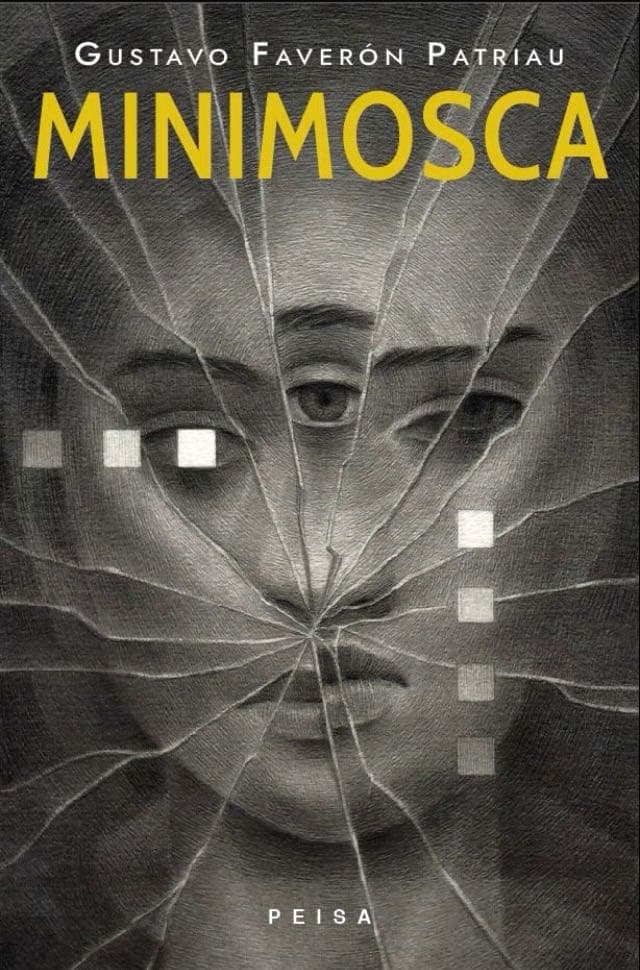
Gustavo Faverón Patriau is Professor and Chair of the Department of Romance Languages and Literatures at Bowdoin College, with affiliations in Latin American, Caribbean, and Latinx Studies and Hispanic Studies. He holds a PhD from Cornell University and has held visiting positions at Stanford University, Middlebury College, and Universidad Cayetano Heredia. His academic work centers on Latin American contemporary literature and political history, with a focus on the limits of visual and linguistic representation, the portrayal of mental illness in narrative, and the writings of Jorge Luis Borges. His research spans literary theory, cultural criticism, and journalistic inquiry, often bridging scholarly and public intellectual spheres. His recent publications reveal a consistent engagement with themes of abjection, memory, trauma, and the philosophical dimensions of narrative. He frequently analyzes canonical and marginal texts through interdisciplinary lenses, drawing on philosophy, visual culture, and historiography. His scholarship often intersects with his creative work, which includes novels and editorial projects that explore similar intellectual terrain. Among his scientific awards and recognitions are being a finalist for the III Vargas Llosa Biennial Novel Prize, receiving accolades from Letras Corsarias and Rockdelux, and being recognized by the Spanish newspaper ABC for his blog Puente Aéreo as one of the most influential in the Hispanic world. He has served on the board of Diacritics , directed literary journals such as Dissidences , La Vaca Multicolor , Somos , and Visto & Bueno , and co-edited major volumes like Bolaño salvaje and Toda la sangre . He regularly presents at international literary festivals and academic conferences, and has conducted numerous interviews and media appearances across Latin America and Europe. His creative and scholarly work has been translated into ten languages, underscoring his transnational impact. He continues to publish prolifically in both academic and literary venues, maintaining a dynamic presence in contemporary Hispanic intellectual life.
Jaime Rodriguez Matos is an Assistant Professor in the Department of Modern and Classical Languages and Literatures at California State University, Fresno, where he has been employed since 2018. His academic career includes prior roles as Lecturer at Fresno State (2016-2018) and Assistant Professor at the University of Michigan (2007-2016). Education: Ph.D., Spanish and Portuguese, Columbia University M.Phil., Spanish and Portuguese, Columbia University M.A., Spanish and Portuguese, Columbia University B.A., Spanish Language and Literature, University of New Hampshire Rodriguez Matos specializes in Latin American poetry, nihilism, infrapolitics, and temporal theory. His work interrogates the intersections of philosophy and literary form, particularly focusing on the deconstruction of time in works by José Lezama Lima, Eduardo Lalo, and Álvaro García Linera. Current research explores neo-revolutionary rhetoric and anarchic political thought in Latin America. His published and forthcoming articles address themes such as Lacanian critiques of hegemony, the ontologies of the present, and the formless in Caribbean politics. Rodriguez Matos has presented at international conferences including the Latin American Studies Association and the University of California, Irvine Humanities Commons cluster. Selected Publications: Writing of the Formless: José Lezama Lima and the End of Time (Fordham University Press, 2017)
George Palacios, Ph.D., is an Associate Professor of Spanish in the Department of Languages at Clemson University's College of Arts and Humanities. His work focuses on racialization and multiculturalism in Latin American nation-states through an Afro-diasporic lens, examining socio-political mobilizations and cultural expressions reshaping identities across Latin America and the Global South. Education: Ph.D. in Spanish from the University of Pittsburgh (2013); M.A. in Spanish from Purdue University (2004). Courses taught include Hispanic Literary Texts, Latin American Cultural Studies, and Spanish Language Immersion programs. Research Interests: Afro-Latin America, Colombian and Brazilian Literatures, US-Latin American Relations, and Global South Cultural Dynamics. He has published extensively on Afro-Colombian intellectual figures like Manuel Zapata Olivella, earning the 2021 Best Book Award from the Asociación de Colombianistas and the 2022 Clemson University Research Award. Articles and Books: His 2020 monograph Manuel Zapata Olivella (1920-2004) analyzes Zapata Olivella's radical political thought. Recent works critique mestizaje narratives and explore Blackness in colonial contexts. Articles appear in Revista de Estudios Colombianos , PALARA , and Escritos . Awards: Recognized for scholarly excellence in Afro-Latin American studies, including awards highlighting his contributions to decolonial theory and cultural critique. Professional Activities: Maintains an active research profile via Google Scholar (FTvxUjgAAAAJ) and engages in international academic collaborations.
Ayendy Bonifacio is a Dominican American scholar, writer, and poet currently serving as Assistant Professor of English at the University of Toledo's College of Arts and Letters. Born in Santiago De Los Caballeros, Dominican Republic, and raised in East New York, Brooklyn, he earned his Ph.D. from Ohio State University and has established himself as a significant voice in American literature, Latine studies, and diaspora studies. His research focuses on the intersections of memory, migration, race, and colonial legacies in the Americas, with particular attention to nineteenth-century to contemporary print culture. Bonifacio's scholarly work bridges academic and public discourse, appearing in venues ranging from American Periodicals and ASAP/Journal to The New York Times and Slate . He explores how literary forms negotiate cultural identity across borders, with special emphasis on Dominican and Latinx experiences. Bonifacio's publications reveal a consistent trajectory examining transnational literary connections, particularly between Anglophone and Hispanophone traditions. His work frequently addresses anti-Blackness within Latinx communities, diasporic identity formation, and the material history of print culture. The 2024 monograph Paratextuality in Anglophone and Hispanophone Poems in the U.S. Press, 1855–1901 represents a significant contribution to understanding how multilingual poetry circulated in nineteenth-century American periodicals. Top ten best non-fiction books of 2017 (The Latino Author for Dique Dominican ) Bonifacio's writing has received support from prestigious organizations including the National Endowment for the Humanities (NEH), the Digital Media and Composition Institute (DMAC), the Ohio Arts Council, and the Society for Nineteenth-Century Americanists. His creative work spans multiple genres, including the memoir Dique Dominican (2017), poetry collection To the River, We Are Migrants (2020), and the forthcoming novel Bless Me, Papi (2025). He maintains an active presence in public intellectual discourse through contributions to major media outlets where he addresses contemporary issues of race, immigration, and academic labor.
Joan Ramon Resina is a Professor at Stanford University in both the Department of Iberian and Latin American Cultures and the Department of Comparative Literature. He serves as Director of the Iberian Studies Program under the Freeman Spogli Institute. Ph.D., University of Barcelona (1988) Ph.D., UC Berkeley (1986) Research interests include Catalan cultural studies, modernism, historical memory, philosophy of language, and urban modernity. His work interrogates the intersections of literature with political and cultural transformation. Recent publications focus on Iberian transnationalism, the Catalan independence movement, and Visconti’s cinematic philosophy. These works span interdisciplinary methodologies in cultural critique and historical analysis. Scientific awards include prestigious Alexander von Humboldt and Fulbright fellowships, reflecting his international scholarly recognition. Contact : jrresina@stanford.edu | Office: Pigott Hall, Bldg 260, Rm 224 | Office Hours: Tu/Th 12-1PM
Carmen Lamas is an Associate Professor at the University of Virginia, jointly appointed to the Department of English and the Department of American Studies. Her work bridges Latinx literary traditions with hemispheric American and Latin American studies, focusing on 19th-century to contemporary scholarship. PhD, University of Pennsylvania M.A., Georgetown University B.S./B.A., Florida State University Lamas specializes in Latinx literary cultures, translation practices, and historiography of the Americas. Her research interrogates the intersections of race, migration, and transnational identity through 19th-century texts, digital humanities projects, and collaborative editorial work. Her recent publications highlight the enduring relevance of 19th-century Latinx literature, emphasizing translation as both a creative and political act. Themes include hemispheric transformations, Afro-Latinx representation, and archival recovery of marginalized voices. LASA 2022 Latinx Studies Book Award MLA 2023 Book Prize All-University Teaching Award, 2022 Buckner W. Clay Award, 2021 Henry Luce Project Course Development Award, 2018 As co-founder of the Latina/o Studies Association and editor of Pasados , Lamas champions interdisciplinary collaboration. She has presented widely, including plenary addresses at MACLAS and the MLA Conference, and serves on editorial boards like J19 and Recovering the US Hispanic Literary Heritage .
Prof. Dr. Natascha Ueckmann is a Professor of Cultural Studies specializing in France/Francophonie and Spain/Latin America at the Institute of Romance Studies, Faculty of Philosophy II, Martin Luther University Halle-Wittenberg. She manages all IKEA degree programs and master's programs, supervises tutors, and coordinates Erasmus+ exchanges with West African universities in Togo (Lomé and Kara) and Senegal (Dakar). Her academic trajectory includes doctoral studies at the University of Osnabrück with a dissertation on 'Women and Orientalism: Travel texts by French-speaking female authors of the 19th and 20th centuries,' followed by a habilitation on 'Aesthetics of Chaos: Creolization and Neo-Baroque in the Franco- and Hispanic-Caribbean Contemporary Novel' at the University of Bremen, for which she received the Elise Richter Research Prize. Prof. Ueckmann's research focuses on postcolonial studies, particularly Franco-Caribbean literature, gender studies, and the transatlantic circulation of ideas. Her publication record spans from 2016 to 2024, with recent works examining Enlightenment influences in Caribbean literature, gender representations in Francophone digital media, and slave revolts in literary narratives. Her scholarly output demonstrates consistent interdisciplinary engagement across literature, cultural studies, and postcolonial theory. Berninghausen Prize for Outstanding Teaching (2016) Elise Richter Research Prize of the German Association of Romance Studies She has supervised students including Susan Bargmann, who created a blog on the Nantes excursion examining colonial history. Prof. Ueckmann has organized numerous educational excursions to Berlin, Nantes, and Avignon, and has led major research projects including a DFG-funded study on Enlightenment's impact on Franco-Caribbean literature (2017-2023) and the current RE-VISUALIZE project (2022-2025) examining gender and Islam in Francophone digital media. She actively participates in international academic collaborations, has organized multiple Caribbean and West Africa study days, and serves on the board of the Society for Caribbean Research (SoCaRe) as Board Member for International Affairs since 2015.
Ralph E Rodriguez is a Professor at Brown University , affiliated with both the American Studies and English departments. His work bridges Latinx literature , Chicano studies , and critical race theory , with over two decades of academic contributions. Education : PhD in English (1997) and BA in English (1992) from the University of Texas and Old Dominion University respectively Research focuses on ethnic expectations in literature , transnational identity , and border relations . Current projects analyze multilingual writers and creative non-fiction narratives. Funded by prestigious institutions like the NEH , Woodrow Wilson Foundation , and Cogut Center for the Humanities , he has published extensively on topics including Chicana/o identity , racial surfaces in graphic art , and assimilation critiques . His teaching awards from Brown, Penn State, and University of Texas highlight his commitment to pedagogy that merges radical love with critical analysis . Collaborations with scholars like Valeria Luiselli and affiliations with the American Studies Association and Latinx Studies Association underscore his influence in interdisciplinary fields. Scientific Awards & Fellowships MLA Best Book Prize (2006) Cogut Center Faculty Fellowship (2014) NEH Younger Scholar (1991) Phi Kappa Phi & Sigma Tau Delta honor society memberships Students engage through courses on Latinx cultural theory , creative non-fiction , and contemporary fiction , reflecting his dedication to community-building in academic environments. His radical love pedagogy emphasizes dialogue, positionalities, and equitable knowledge production across identity markers like race, class, and gender.
Lanie Millar is an Associate Professor of Spanish and Portuguese in the School of Global Studies and Languages at the University of Oregon, with affiliations across multiple academic units including African Studies, Black Studies, Comparative Literature, IRES, Portuguese, and Romance Languages. She teaches courses in Spanish and Portuguese literature with a focus on the Global South, Caribbean, Latin American, and African contexts. Her educational background includes: Ph.D. in Comparative Literature, The University of Texas at Austin (2011) M.A. in Spanish, Middlebury College (2003) B.A. in English and Spanish, Baylor University (2002) Millar is a comparative scholar of the Global South working in Spanish and Portuguese, with particular expertise in the Luso-African-Brazilian world and the Caribbean. Her research focuses on South-South comparison and transnational solidarity networks, drawing from literary and cultural studies, postcolonial studies, and theories of racialization. She has made significant contributions to understanding the poetics of disappointment in Cuban and Angolan narratives after the Cold War, as well as examining feminist solidarities and revolutionary masculinities in cultural memories of African empires. Her work demonstrates how literature from the Global South creates new formal and affective relationships to histories of revolution, decolonization, and racialization. Millar's scholarly output reveals consistent engagement with revolutionary narratives across the South Atlantic, particularly examining connections between Cuba, Angola, Brazil, and Mozambique. Her work increasingly focuses on gender dimensions within postcolonial contexts while maintaining a strong emphasis on literary form as political expression. The trajectory of her publications shows a deepening exploration of transnational solidarity networks and the cultural dimensions of decolonization movements across the Global South. Millar has received research support from prestigious institutions including the Kluge Center at the U.S. Library of Congress and the Luso-American Development Foundation/Arquivo Nacional Torre do Tombo in Lisbon, Portugal. Her 2024 translation of Mário Pinto de Andrade's works represents a significant contribution to making foundational African decolonization thought accessible to English-speaking audiences. As an educator, Millar teaches a diverse range of courses including Caribbean Crossings, Theorizing the Plantation, Runaways Rebellions and Revolutions in the Black Atlantic, and Afro-Latin American Literature. Her teaching portfolio demonstrates a commitment to interdisciplinary approaches that connect literary studies with broader questions of race, empire, and decolonization. She has developed specialized courses examining Hispanic cultures through literature, narrative techniques, and the Chinese diaspora in Latin America, reflecting her broad scholarly interests and multilingual capabilities in Spanish and Portuguese.