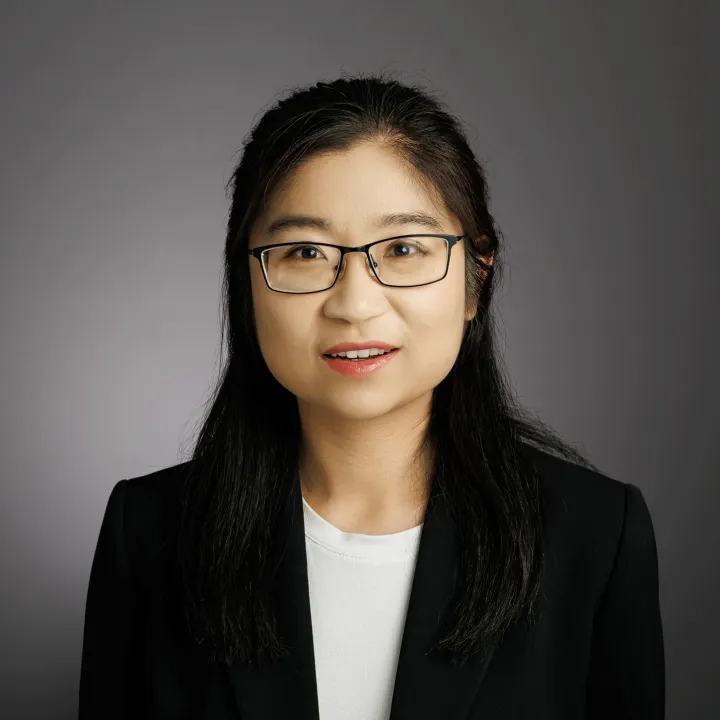
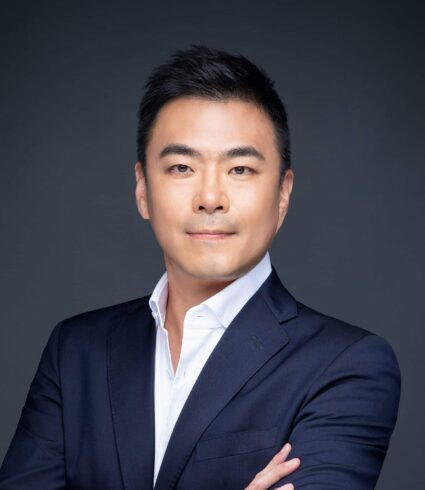
Dr Nima Izadyar serves as a Senior Lecturer and Course Chair of the Bachelor of Building Surveying (NBBS) at Victoria University's School of Built Environment and Engineering within the College of Sport, Health and Engineering. He leads curriculum innovation, applied research, and student-industry engagement in building regulation and performance. His educational background includes a PhD from Queensland University of Technology (QUT), Australia (2020), with academic and research experience spanning Australia, Southeast Asia, and the Middle East. Dr Izadyar's research focuses on developing practical, data-driven solutions for sustainable built environments. His work connects engineering principles with building science to improve indoor environmental quality, enhance ventilation performance, and integrate renewable energy systems. He has secured competitive funding for projects targeting sustainable housing design, digital transformation in construction, and energy efficiency through nature-based and AI-enabled solutions. His research output appears in high-impact journals in building, energy, and sustainability fields. His scholarly contributions have been recognized with prestigious awards including the Signato Medal and the AIRAH Higher Education and Research Award. Signato Medal AIRAH Higher Education and Research Award As an academic supervisor, Dr Izadyar mentors HDR students on critical topics including greening private outdoor spaces for improved indoor environmental quality, regulatory frameworks in Class 2 buildings, ventilation system optimization, occupant-centric window design, and BIM integration in construction education. His supervision approach emphasizes applied systems thinking, interdisciplinary collaboration, and alignment with national sustainability goals. He has secured competitive funding for projects targeting sustainable housing design, digital transformation in construction, and energy efficiency solutions. Dr Izadyar actively contributes to industry engagement through international collaborations that generate tangible outcomes in the built environment, serving as a reviewer, editor, and guest editor for scholarly publications while maintaining strong connections with industry partners to bridge research and practice.
Juan Zhai is an Assistant Professor in the Manning College of Information and Computer Sciences (CICS) at the University of Massachusetts Amherst. She co-directs the Laboratory for Advanced Software Engineering Research (LASER) and is a member of the UMass NLP group. Her research advances software engineering through automated techniques for building high-quality systems with emphasis on behavioral specifications, AI safety, and trustworthy AI. Her work addresses the fundamental challenge of aligning software behavior with intended specifications through two main directions: automated specification synthesis (translating natural language comments to formal specifications via tools like C2S and LLMCup) and defect detection/repair (developing frameworks for AI system testing, bias mitigation, and training diagnostics). Her vision integrates these into end-to-end assurance systems that continuously validate, repair, and audit evolving software in dynamic environments. Recent publications (2024-2025) reveal dominant trends at the software engineering/AI intersection: formal specification synthesis for IoT and code generation, comment maintenance using LLMs, deep learning framework testing (DevMuT, Citadel), bias detection in LLMs, and automated training repair (AutoTrainer, DREAM). These contributions appear in top venues including ICSE, FSE, ASE, ISSTA, and ACL. Professor Zhai currently advises PhD student Gehao Zhang (focusing on Software Engineering and AI Safety) and actively recruits new PhD/Master's students. Her LASER lab develops practical tools for specification inference, LLM-driven synthesis, and trustworthy AI, while collaborating with the UMass NLP group on language-centric software analysis. The LASER lab, co-directed by Zhai, pioneers techniques for behavioral specification enforcement across traditional and AI-powered systems. Key projects include CPC for bidirectional code-comment analysis, ModelMeta for deep learning framework testing, and frameworks for bias mitigation across the ML lifecycle. The lab emphasizes practical, scalable tools that enhance correctness, robustness, and fairness in critical AI applications.
Daniel Varro is a Professor affiliated with McGill University (Faculty of Engineering, School of Computer Science), with strong ties to Budapest University of Technology and Economics and Linköping University. He is a leading researcher in model-driven engineering, cyber-physical systems, and software engineering, actively contributing to top-tier conferences such as MODELS, ICSE, and ASE. His research focuses on model-based systems engineering (MBSE) , automated model generation , model transformations , and constraint-based consistency checking . Recently, his work has expanded into integrating large language models (LLMs) and machine learning into modeling workflows, including model querying, domain modeling, and bug detection. The recent publications reveal a strong trend toward AI-augmented modeling, logic-based solvers (e.g., Refinery), and safety assurance of autonomous systems (e.g., COLREGs compliance). His work bridges formal methods with practical software engineering challenges in industrial and safety-critical domains. Scientific Awards: No specific awards mentioned in the text. Advising and Grants: While no explicit list of students or grants is provided, his mentorship in the Doctoral Symposium and repeated leadership roles suggest active supervision and likely grant funding. He has led projects on automated model generation, model quality, and AI integration in modeling. Labs and Teams: Daniel Varro is associated with research groups focused on model-driven engineering and software evolution, likely leading or co-leading teams working on the VIATRA and Refinery frameworks for model transformation and solving.
Dr. Amir Hakami is a Professor in the Department of Civil & Environmental Engineering at Carleton University , where he leads the Carleton Atmospheric Modelling Group . His research focuses on advanced air quality modeling techniques to inform environmental policy. Degrees: B.Sc. (Polytechnic of Tehran), M.Sc., Ph.D. (Georgia Tech), Postdoc (Caltech) Contact: Office 3454 Mackenzie Building, Phone: 613-520-2600 ext. 8609, Email: amir.hakami@carleton.ca Research Interests: Air quality modeling at multiple spatial scales Adjoint sensitivity analysis for atmospheric response Inverse modeling and data assimilation techniques Uncertainty quantification in environmental systems Interdisciplinary applications in policy, public health, and economics Teaching: Courses include Environmental Engineering Systems Modeling , Contaminant Transport , and Air Pollution & Emissions Control at undergraduate and graduate levels. Research Group: The group includes Ph.D. candidates, postdoctoral fellows, and alumni working on topics ranging from atmospheric chemistry to sustainable energy systems. Members come from diverse backgrounds in engineering, science, and policy disciplines.
Professor Wayne Luk is a Professor of Computer Engineering at the Department of Computing, Faculty of Engineering, Imperial College London. He leads the Programming Languages and Systems Section and the Custom Computing Research Group, and directs the EPSRC Centre for Doctoral Training in High-performance Embedded and Distributed Systems and the Centre for Advanced Financial Engineering. He previously served as a Visiting Professor at Stanford University from 2006 to 2009. His research spans FPGA acceleration, quantum computing, deep learning optimization, and algorithm-hardware co-design, with affiliations to the CRUK Convergence Science Centre and the Engineering Secure Software Systems group. His research interests include computational modeling for particle physics, causal discovery in agent-based systems, and high-throughput digital electronics. Notable contributions include FPGA-accelerated algorithms for neural networks, quantum circuit simulation, and Bayesian optimization frameworks. His work emphasizes practical applications of reconfigurable hardware in fields like medical imaging, high-energy physics, and financial systems. Professor Luk is a Fellow of the Royal Academy of Engineering, IEEE, and BCS. His publications focus on advancing hardware-aware machine learning, FPGA-based acceleration techniques, and scalable design methodologies. His research bridges theoretical computer science with applied engineering, addressing challenges in real-time systems, embedded computing, and next-generation computing architectures. His academic leadership includes directing interdisciplinary centers and training programs, fostering collaboration across computing, engineering, and physics. Current projects explore quantum computing tools, causal inference systems, and high-performance graph neural networks for particle physics applications.
Mehrdad Ehsani is a Robert M. Kennedy Endowed Professor of Electrical Engineering at Texas A&M University, leading the Power Electronics and Motor Drives Laboratory. He holds a Ph.D. from the University of Wisconsin-Madison and has over four decades of expertise in power electronics, electric/hybrid vehicles, and energy systems. His research focuses on sustainable energy, advanced power conversion, and vehicle electrification. Educational Background: Ph.D., Electrical Engineering, University of Wisconsin-Madison (1981) M.S., Electrical Engineering, University of Texas at Austin (1974) B.S., Electrical Engineering, University of Texas at Austin (1973) Research Interests: Sustainable power systems, electric/hybrid vehicles, energy storage, power electronics, and aerospace power systems. His work emphasizes practical applications, such as transmotor technology for energy efficiency and grid-interactive buildings. Awards & Recognition: Life Fellow of IEEE SAE Fellow (2005) IEEE Vehicular Technology Society Avant Garde Award (2001) Recipient of multiple Prize Paper Awards (IEEE-IAS) Advising & Grants: Director of Advanced Vehicle Systems Research Program. His lab collaborates with industry on patents, including over 30 granted/pending patents, and advises on sustainable transportation technologies. He has consulted for over 60 companies and government agencies. Labs & Teams: Founder and director of the Power Electronics & Motor Drives Lab, focusing on electric vehicle propulsion, renewable energy integration, and advanced control systems.
Professor Hala Zreiqat AM is a leading biomedical engineer at The University of Sydney , serving as the Director of the ARC Training Centre for Innovative BioEngineering . A Fellow of all major Australian academies (AAS, ATSE, FAHMS, FRSN), she develops 3D printed bioceramics for bone regeneration while championing diversity through initiatives like the IDEAL Society and BIOTech Futures mentorship program. Her work bridges academia, clinical practice, and industry in musculoskeletal research . Research Focus: Her lab creates synthetic bone scaffolds that mimic natural bone architecture, strength, and porosity, enabling non-rejected bone regeneration via patient-matched implants. Key applications include orthopaedic, dental, and maxillofacial repair , with over $18M in competitive funding and multiple patents. Current projects explore AI-driven scaffold performance prediction and anti-senescence strategies for aging-related bone loss. Scientific Trends: Recent publications highlight 3D printed nanovoxelated ceramics , antisenescence biomaterials , and multifunctional theranostic platforms . Her team integrates machine learning for scaffold design, atom probe tomography for interface analysis, and two-photon imaging for cellular monitoring in 3D environments. 2021-2022 Fulbright Senior Scholar 2018 NSW Premier's Woman of the Year 2019 Eureka Prize for Innovative Use of Technology Fellow of Australian Academy of Science (2021) Over $18M in research funding Teaching & Leadership: She designed core courses like Tissue Engineering and Nanomaterials in Medicine , mentoring 158 students in 2020 alone. As Chair of CAAR (2020-2023), she strengthens Australia-Arab collaborations. Her lab trains early-career researchers , with alumni now in academia and industry.
Wenpeng Yin is an Assistant Professor in Computer Science and Engineering, specializing in Natural Language Processing and Machine Learning. His research focuses on advancing Large Language Models (LLMs) and their applications in scientific, societal, and interdisciplinary domains. Research Interests : LLMs, medical QA, financial AI, model consistency, and instruction-following frameworks. Recent Work : Investigates low-resource NLP tasks, bias evaluation (Gptbias), and adaptive trading systems using LLMs. Current trends in his publications highlight innovations in multimodal learning, symbolic reasoning, and ethical AI, with a strong emphasis on practical implementations across diverse fields.
Sungkwon Park is a Professor in the Department of Food Science and Biotechnology at Sejong University, specializing in advanced food science and biotechnology research with a focus on meat science, cultured meat production, and sustainable food systems. His research integrates molecular biology, food biotechnology, and systems biology to develop innovative food solutions. His educational background includes a Ph.D. from Purdue University (2008), M.S. from Yeungnam University (2001), and B.S. from Yeungnam University (1999). Prior to his current position, he worked as a Postdoctoral Fellow at Virginia Tech (2008-2012) and as a Research Officer at the National Institute of Animal Science, RDA (2012-2015). Professor Park's research interests focus on livestock production optimization, meat processing for health functionality, environmentally friendly animal production systems, and in vitro meat production. His work has led to significant achievements including the identification of calcium and glucose interaction mechanisms in muscle metabolism, development of oleogel-based meat processing techniques, optimization of feed ingredients for sustainable livestock, and establishment of in vitro meat production systems. His recent publications (2023-2025) demonstrate a strong focus on cultured meat technology, meat science, and sustainable food production. The research spans cellular mechanisms for cultured meat production, safety and regulatory aspects of alternative proteins, comparative analysis of muscle satellite cells, and optimization of meat processing techniques. His work shows a clear trend toward developing practical applications for next-generation meat products with emphasis on health functionality and environmental sustainability. Professor Park actively serves as a reviewer for Frontiers in Veterinary Science and is an Editorial Board Member of the Korean Society of Animal Science. His laboratory, the M&M'a lab (Functional Food Lab), conducts research on high-value-added, health-functional BioFood and future foods using bio-convergence technologies.
Anne E. White is the School of Engineering Distinguished Professor of Engineering and associate vice president for research administration at the Massachusetts Institute of Technology (MIT). She serves in the Department of Nuclear Science and Engineering within MIT's School of Engineering and is a key researcher at the Plasma Science and Fusion Center (PSFC). White has held significant leadership roles including NSE department head from 2019 to 2023 and co-chair of the MIT Climate Nucleus from 2021 to 2024. She currently chairs the Fusion Energy Sciences Advisory Committee (FESAC), providing federal advisory input to the U.S. Department of Energy Office of Science. White received her PhD in physics from UCLA, where she conducted research at the Electric Tokamak. Her early career included research positions at the National Spherical Torus Experiment at Princeton Plasma Physics Laboratory and the DIII-D National Fusion Facility at General Atomics before joining MIT as a faculty member. Her educational background laid the foundation for her expertise in plasma physics and fusion energy research. Professor White's research focuses on magnetic fusion energy, specifically on understanding turbulent transport in magnetically confined fusion plasmas. Her work spans diagnostic development, novel experimentation, and validation of nonlinear gyrokinetic codes. She aims to demonstrate nuclear fusion as a practical part of the world's sustainable energy future. Her group develops and uses radiometers, reflectometers, and interferometers to measure fluctuations in plasma density, temperature, and flows in tokamaks. This research is critical for improving predictive capabilities of turbulent transport models, which is essential for developing viable fusion reactors. Analysis of Professor White's recent publications reveals a strong focus on plasma diagnostics and turbulence measurements across multiple tokamak facilities. Her work spans experimental measurements on ASDEX Upgrade, Alcator C-Mod, NSTX, and DIII-D tokamaks, with particular emphasis on electron temperature fluctuations, turbulence characterization, and transport model validation. A significant theme is the development and application of novel diagnostic techniques for simultaneous measurements of multiple plasma parameters. Her research increasingly incorporates computational approaches, including gyrokinetic simulations and machine learning methods, to interpret experimental data and advance predictive capabilities in fusion plasma physics. Professor White has received numerous prestigious awards throughout her career: Fellow, American Physical Society Division of Plasma Physics (2019) Cecil and Ida Green Career Development Professor, MIT (2014) American Physical Society Katherine E. Weimer Award (2014) Fusion Power Associates Excellence in Fusion Engineering Award (2014) Junior Bose Award for Excellence in Teaching, MIT (2014) PAI Outstanding Faculty Award from MIT student chapter of the American Nuclear Society (2013) Norman C. Rosenbluth Career Development Professor, MIT (2012-2014) Department of Energy Early Career Award (2011-2016) Marshall N. Rosenbluth Outstanding Doctoral Thesis Award (2009) As an educator and mentor, Professor White has advised numerous students through MIT's Department of Nuclear Science and Engineering. She has taught courses including Principles of Plasma Diagnostics, Seminar in Fusion & Plasma Physics, and Introduction to Plasma Physics. Her leadership extends to developing educational resources, notably leading a team in 2018 to create a free MITx MOOC focused on nuclear science and engineering for global high school learners. Professor White has secured significant research funding through Department of Energy awards, including the Early Career Award (2011-2016) and various fusion energy fellowships throughout her career. Her research group at MIT's Plasma Science and Fusion Center has contributed to multiple major fusion facilities and has been instrumental in advancing understanding of plasma turbulence and transport. Professor White leads the Fusion and Plasmas Lab at MIT, which focuses on diagnostic development and turbulence measurements in fusion plasmas. Her team has made significant contributions to research on four major tokamaks: Alcator C-Mod, ASDEX Upgrade, DIII-D, and National Spherical Torus Experiment Upgrade. At MIT's Plasma Science and Fusion Center, she previously served as assistant division head for magnetic fusion energy collaborations and ran the Gyrokinetic Simulation Working Group and the Alcator C-Mod Transport Group. Her lab maintains close collaboration between experimental work, theoretical modeling, and computational simulation to advance the understanding of plasma turbulence and transport phenomena critical for fusion energy development.
Quanquan Liu is an Assistant Professor of Computer Science at Yale University. His research focuses on algorithms for large data, dynamic and distributed graph algorithms, parallel computing, differential privacy, and Byzantine-resilient systems. He holds a PhD in Computer Science from MIT's Theory Group and has held postdoctoral positions at Northwestern University and MIT. Education: PhD in Computer Science, MIT (Advisors: Erik Demaine and Julian Shun) MEng in Computer Science, MIT B.S. in Computer Science and Math, MIT (Advisor: David Karger) Research Interests: Theory and practice of algorithms for large-scale data, dynamic/distributed graph algorithms, parallel and high-performance computing, differential privacy, and Byzantine-resilient algorithms. Recent Highlights: His work includes practical differentially private graph algorithms, efficient parallel algorithms for graph problems, and fair course allocation mechanisms. Notably, he received the Best Paper Award at SPAA 2022 for parallel dynamic graph algorithms. Service: PC member for PPoPP, ESA, SPAA, and ALENEX Coach for USA Computing Olympiad (USACO) and Northwestern's ICPC team Current Group: Advising PhD students Felix Zhou and Pranay Mundra, and Master's student Jinghua Sun.
Jordan Siegel is a Professor of Strategy at the Ross School of Business, University of Michigan, and a Michael R. and Mary Kay Hallman Faculty Fellow. He also serves as a Visiting Faculty member at The American College of Greece (ACG). His academic background includes a Ph.D. from MIT, and B.A. and M.A. degrees from Yale University. Professor Siegel’s research focuses on global strategy, particularly how companies leverage institutional differences across borders to gain competitive advantages through governance and human resource management strategies. His work examines institutional arbitrage—how firms exploit formal and informal rules (e.g., laws, cultural norms) to enhance performance, even in single-country operations. Notably, he investigates how foreign multinationals in Japan and South Korea exploit social biases by promoting female managers, leading to long-term performance improvements. His findings highlight the strategic use of labor market discrimination as a competitive tool. Professor Siegel’s research has been published in top-tier journals such as Management Science , Administrative Science Quarterly , and Strategic Management Journal . He is affiliated with the William Davidson Institute and Harvard Korea Institute, contributing to interdisciplinary studies on global business strategy and institutional dynamics.
Jeehwan Kim is an Associate Professor in Mechanical Engineering and Materials Science and Engineering at MIT. He joined the Mechanical Engineering faculty in 2015 and became a joint faculty member in DMSE in 2016. His research focuses on nanotechnology for computing/electronics, electronic/photonic devices, neuromorphic computing, and heterogeneous integration. He holds over 100 patents from IBM and has received awards like the Samsung Fellow (2022) and DARPA Director’s Award (2021). Education : BS (Hongik University), MS (Seoul National University), PhD (UCLA), all in Materials Science and Engineering. Research Interests : Kim’s group innovates in 2D materials, remote epitaxy, neuromorphic systems, and next-gen electronics. Key areas include monolithic 3D integration, bioelectronic devices, and energy-efficient semiconductors. His work bridges material physics with practical device applications. Awards : Samsung Fellow (2022) DARPA Director’s Award (2021) Young Faculty Award (2019) IBM Faculty Award (2016) IBM Master Inventor (2012) Labs/Teams : Jeehwan Kim Research Group at MIT, focusing on advanced material synthesis and device engineering. Active in cross-disciplinary projects involving AI and semiconductor innovation.
Jonathan P. Wong is a Senior Policy Researcher at the RAND Corporation and Professor of Policy Analysis at the RAND School of Public Policy. His work bridges academic research and defense policy, focusing on military strategy, acquisition, force planning, and the integration of emerging technologies into military operations. Education: Ph.D. and M.Phil. in Policy Analysis (Pardee RAND Graduate School), M.A. in Security Studies (Georgetown University), B.A. in Political Science (UC San Diego) Professional Experience: U.S. Marine Corps infantry officer (2001–2011), Consultant at Boston Consulting Group, current RAND researcher and professor Wong’s research interests center on defense innovation, military logistics, artificial intelligence in warfare, space capabilities, and the human dimension of military operations. He has led studies on human-machine teaming, non-lethal weapons, defense acquisition reform, and U.S. military posture in the Indo-Pacific. His work emphasizes practical, policy-relevant insights grounded in operational experience. The trends in his recent publications reveal a deep engagement with modern defense challenges: integrating commercial technologies into military systems, improving acquisition agility, enhancing battlefield awareness, and ensuring that defense innovation serves warfighter needs. His research spans strategic, operational, and tactical levels, often focusing on the U.S. Army and Marine Corps. Wong has not received public recognition in the form of listed awards in the provided texts, but his leadership in congressionally mandated studies and high-impact policy research suggests significant influence in defense circles. Advising & Grants: Co-led major projects such as the Long Range Precision Fires study and research on integrating women into Marine Corps infantry. His work is frequently funded by the Department of Defense and other federal entities, though specific grant details are not listed. Wong is affiliated with RAND’s defense and national security research teams, contributing to strategic analysis and policy development. He is not associated with a formal lab but works within RAND’s collaborative research environment, often partnering with other veterans and defense experts to produce actionable insights for military leaders and policymakers.
Azita Emami serves as the Andrew and Peggy Cherng Professor of Electrical Engineering and Medical Engineering at the California Institute of Technology (Caltech), where she concurrently holds leadership roles as Executive Officer for Electrical Engineering and Director of the Center for Sensing to Intelligence. Appointed to Caltech's faculty in 2007, she progressed from Assistant Professor to her current endowed professorship through demonstrated scholarly excellence. Her academic foundation includes: B.S. in Electrical Engineering from Sharif University of Technology (1996) M.S. in Electrical Engineering from Stanford University (1999) Ph.D. in Electrical Engineering from Stanford University (2004) Professor Emami pioneers mixed-mode integrated circuit systems that bridge theoretical innovation with practical applications. Her research emphasizes ultra-low power consumption and high reliability in scalable semiconductor technologies, targeting transformative solutions across multiple domains. Key thrusts include: Biomedical implantables for neural recording/stimulation and gastrointestinal monitoring Photonics-electronics co-design for energy-efficient optical interconnects Machine learning-enhanced signal processing for brain-computer interfaces Miniaturized magnetic sensors with unprecedented noise performance Her work consistently demonstrates how circuit-level innovations enable breakthrough capabilities in medical diagnostics and high-speed computing. Analysis of her 2021-2024 publications reveals a strategic convergence of biomedical sensing and intelligent signal processing . While maintaining strong contributions to optical interconnects (accounting for ~40% of recent output), her lab increasingly focuses on closed-loop medical systems where low-power analog neural networks interpret physiological signals. This evolution reflects growing NIH and industry interest in implantable/wearable health technologies, with her group leading in CMOS-based sensor miniaturization and energy efficiency. Her professional recognition includes: IEEE Solid-State Circuits Society Distinguished Lecturer appointment Mentorship excellence is evidenced by students receiving prestigious awards including the Jakob van Zyl Predoctoral Research Award (Saransh Sharma, Ryoto Sekine) and Charles Wilts Prize (Kuan-Chang Chen). Her research program leverages strategic partnerships with Heritage Medical Research Institute and industry collaborators, supported through center-based funding like the Center for Sensing to Intelligence. Administrative leadership spans departmental governance (as Executive Officer) and conference organization (ISSCC technical committees). She directs Caltech's Mixed-mode Integrated Circuits and Systems Lab (MICS) , which operates as a nexus for cross-disciplinary innovation between electrical engineering and medical applications. The lab's industry-collaborative framework accelerates translation of circuit concepts into real-world biomedical solutions through the Center for Sensing to Intelligence.