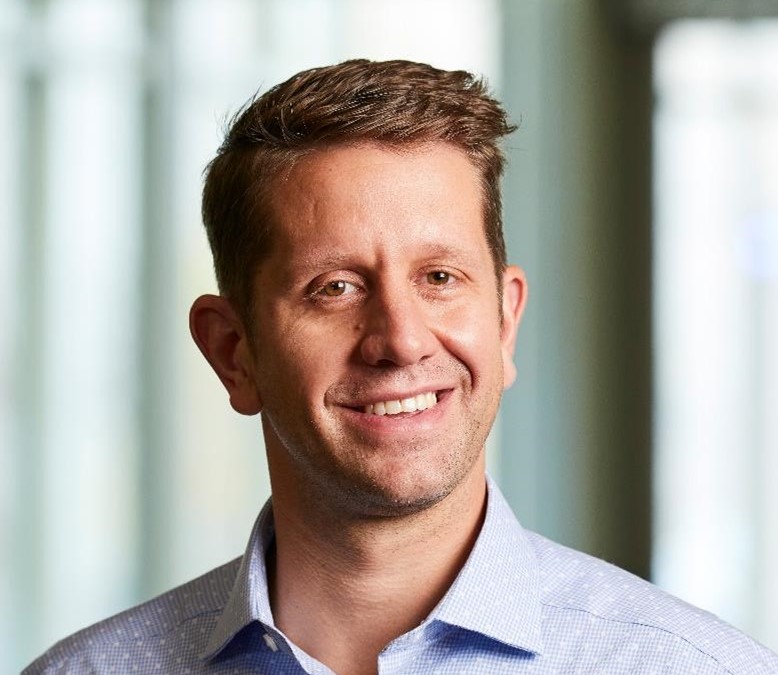
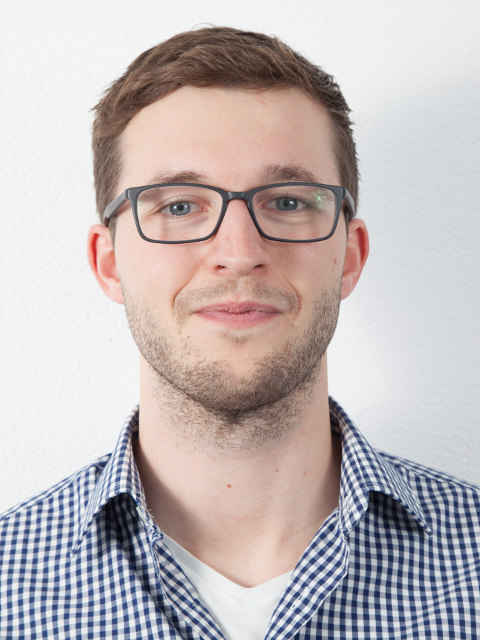
Nathan Weise serves as an Associate Professor in the Electrical and Computer Engineering Department within Marquette University's Opus College of Engineering. He established the Electric Machines and Power Electronics at Marquette (EMPOWER) laboratory in 2014, developing it into a world-class research facility. His academic journey includes a Ph.D. (2011), M.S. (2007), and B.S. (2005) in Electrical/Computer Engineering from the University of Minnesota. Dr. Weise specializes in power electronics with research spanning Power and Energy Conversion , Electric Drives , Vehicular Power Systems , and Control of Renewable Energy Sources . His work focuses on high-power-density GaN-based systems for electric aircraft, ultra-fast EV charging infrastructure, and DC circuit breakers. He has secured two highly competitive U.S. Department of Energy ARPA-E grants addressing critical energy challenges. His publication portfolio reveals strong emphasis on GaN semiconductor applications , thermal management systems , and advanced control algorithms for multilevel converters. Recent work shows progression toward aerospace electrification and ultra-high-power systems, with 2025 publications indicating cutting-edge research in electric aircraft propulsion. Way Klingler Young Scholar Award (2020-2021) Marquette Teacher of the Year (2019) IEEE Eta Kappa Nu Beta Omicron Chapter Award Dr. Weise has developed industry-critical courses in digital control of renewable energy, power electronics, and hands-on lab experiences. His future research plans include establishing a world-leading power electronics lab, creating a medium-voltage facility, and authoring the textbook Digital Control of Power Electronics with accompanying lab materials.
Professor Wanglin Ma serves as Professor of Applied Economics in the Department of Global Value Chains and Trade at Lincoln University's Faculty of Agribusiness and Commerce. He also holds the position of Head of Department since January 2024 and serves as Program Director of the LU-YAU Joint Education Program. With an extensive international research profile, Professor Ma has established himself as a leading scholar in agricultural and development economics, with notable contributions to understanding farm productivity, rural development strategies, and sustainable agricultural practices across both developed and developing contexts. Professor Ma's research focuses on understanding strategies that enhance farm performance, improve household welfare, and promote sustainable rural development. His work spans New Zealand, where he has examined dairy farm profitability and technical efficiency, and developing countries including China, Ghana, Nigeria, Pakistan, and Indonesia, where he has investigated sustainable agricultural practices and cooperative membership. He has made significant contributions to understanding how digital technologies such as smartphones, e-commerce, and mobile payments advance rural livelihoods, increase non-farm employment, and enhance subjective well-being. His research also explores clean energy access, nutrition, and gender inequality through multidimensional analytical frameworks. Professor Ma's scholarly impact is substantial, with over 160 articles published in more than 60 international peer-reviewed journals, 3 book chapters, and 10 social media articles. His work has achieved an H-index of 49 and accumulated over 7,636 citations in Google Scholar. He is recognized globally within the top 0.9% of economists on the RePEc platform and ranks among the top 200 Agricultural Economists worldwide. In New Zealand, he is among the top 5 economists and ranked second among agricultural economists in the country. His publications reveal consistent focus on sustainable agricultural practices, digital transformation in rural areas, gender equality, and energy poverty, with recent work showing increasing emphasis on climate-smart agriculture and multidimensional poverty measurement. The breadth of his research is reflected in publications across diverse journals spanning agricultural economics, development economics, environmental science, and sustainability studies. Professor Ma has received numerous accolades including the Excellent Reviewers Award from the Journal of Integrative Agriculture (2020), the Highly Commended Paper Award from China Agricultural Economic Review (2020), and the High Citation Award from the same journal (2021). According to the Sage Policy Profile, his research has influenced policy with 91 policy documents citing his work. As an educator and mentor, Professor Ma has supervised numerous PhD and master's students, many of whom have published in reputable international journals. His teaching excellence is reflected in consistently high course evaluation scores, with an average of 4.6 out of 5 in recent years. He has served as co-editor-in-chief and associate editor for several prestigious journals including Review of Development Economics and Annals of Public and Cooperative Economics. His commitment to academic service is evident in his role as referee for 134 international journals, with over 530 reviews completed. Professor Ma actively contributes to international academic discourse through his participation in over 50 presentations at renowned universities and research institutes, and more than 60 presentations at prestigious international conferences organized by academic associations such as AAEA, EAAE, AARES, ADBI, and IAAE.
Josep Solé-Pareta is a Professor in the Department of Computer Architecture at the Polytechnic University of Catalonia (UPC), specializing in optical networking and telecommunications. His research spans optical burst switching, wavelength assignment algorithms, network planning, and emerging 5G network architectures. He has contributed significantly to the ALLIANCE project developing converged network solutions for 5G and beyond. His research interests focus on Optical Networks , Optical Communication , Broadband Networks , and Computer Architecture , with particular emphasis on physical layer impairments, routing algorithms, and network optimization. His work bridges theoretical network models with practical implementations in next-generation optical infrastructures. Analysis of his recent publications reveals a strong trend toward converged network architectures integrating optical transport with 5G wireless systems, energy-efficient network design, and machine learning applications for network monitoring. His research consistently addresses critical challenges in spectrum fragmentation, quality of transmission, and network resiliency across multiple generations of optical networking technologies. Professor Solé-Pareta has contributed to significant research projects including the ALLIANCE project for 5G network infrastructure. His work demonstrates consistent funding support for advanced research in optical networking and telecommunications infrastructure. He has been involved with the SMARTxAC platform used by the Supercomputing Center of Catalonia (CESCA) for monitoring the Catalan Research and Education Network. His research group appears to focus on optical network architectures, traffic engineering, and next-generation network planning methodologies.
Carola Doerr is a CNRS Research Director at Sorbonne University's LIP6 Laboratory, specializing in black-box optimization algorithms. She leads the Operational Research team and serves as Scientific Delegate for Section 2 at CNRS (40% time commitment since September 2023). Her research bridges theoretical foundations and practical applications of optimization heuristics, with significant industrial collaborations including Thales, Honda, and Facebook. Her primary research interests include black-box optimization, algorithm configuration, benchmarking methodologies, and discrepancy theory. Doerr develops mathematical models predicting minimum evaluations required for optimization problems while creating practical tools like IOHprofiler for algorithm analysis. Her work enables dynamic algorithm selection that adapts to different problem instances and optimization phases. Her recent publications reveal strong trends in dynamic algorithm configuration, theory-guided benchmarking, and biomedical applications. She has pioneered approaches combining machine learning with optimization theory to create more efficient techniques for industrial and scientific problems, particularly in sensor configuration and medical prediction. CNRS Bronze Medal 2022 for black-box optimization research ERC Consolidator Grant 2024 for dynaBBO project (€2M) Feodor Lynen Research Fellowship from Alexander von Humboldt Foundation Otto Hahn Medal from Max-Planck-Society Multiple best paper awards at GECCO, FOGA, and CEC conferences Doerr actively supervises numerous PhD students across multiple institutions and leads the Benchmarking Network. Her research group develops open-source tools like IOHprofiler that facilitate empirical comparisons of optimization algorithms. Current projects focus on dynamic algorithm selection for biomedical applications and mechanical design optimization, with strong emphasis on explainability and real-world implementation.
Giovanni Del Galdo is a full Professor at the Technische Universität Ilmenau, where he leads the Electronic Measurement Technology and Signal Processing (EMS) group within the Faculty of Electrical Engineering and Information Technology. He also maintains an affiliation with the Fraunhofer Institute for Integrated Circuits IIS. Since 2012, he has directed a research group comprising both a Fraunhofer department and a university chair, which expanded to approximately 60 staff members following a 2016 merger with another research group. Del Galdo received his Laurea degree in Telecommunications Engineering from Politecnico di Milano in 2002 and his Dr.-Ing. from TU Ilmenau in 2007 under Prof. Martin Haardt, with a dissertation titled "Geometry-based Channel Modeling for Multi-User MIMO Systems and Applications." Prior to his current position, he worked as a Senior Scientist at Fraunhofer IIS and was a member of the International Audio Laboratories Erlangen, where he focused on audio watermarking and spatial sound representation. His research spans multidimensional signal processing, wireless communications, and advanced measurement techniques. He specializes in channel modeling, MIMO systems, Over-The-Air testing, and high-resolution parameter estimation methods including compressed sensing. His work addresses challenges from sub-THz frequencies to practical industrial applications. Analysis of his recent publications reveals strong focus on wireless channel characterization, particularly for 5G/6G and V2X applications. His research integrates theoretical signal processing with practical measurement systems, often developing novel hardware implementations for real-world testing scenarios. Key application areas include automotive communications, industrial measurement systems, and next-generation wireless technologies. Del Galdo actively supervises numerous research projects and has extensive experience with laboratory testbed development for wireless systems validation. His group maintains advanced facilities for channel sounding, OTA testing, and signal processing algorithm development, supporting both academic research and industry collaboration.
Fabrice Francès is a Professor at the French Civil Aviation University (ENAC) in the Department of Design and Analysis of Critical Systems (DISC). He serves as both a teacher and researcher, contributing significantly to the fields of embedded networks and avionics systems. His research focuses on performance analysis of on-board avionics networks for civil, military and space sectors, with particular expertise in AFDX, Network Calculus, and SpaceWire technologies. Professor Francès has developed innovative approaches for timing analysis, network scheduling, and reliability optimization in safety-critical communication systems. His recent publications (2021-2023) demonstrate continued research productivity, with work on Priority Switching Scheduler, RELIABLE frame replication/elimination techniques, and FactoRing asynchronous TSN-compliant networks. These publications reflect his evolving research trajectory from traditional avionics networks toward next-generation Time-Sensitive Networking solutions applicable to both aerospace and industrial automation domains. As an educator, Professor Francès teaches across multiple levels: Core courses: Algorithms and Programming, Object-oriented Design and Programming, Real-time Systems/Networks Elective modules: Functional and Logical Languages, Introduction to AI through game programming, Embedded Command/Control Systems His teaching directly complements his research, providing students with both theoretical foundations and practical applications in critical systems development.
Darrell Elton serves as an Adjunct Lecturer in the Engineering school at La Trobe University. His academic profile demonstrates active engagement in both teaching and research within specialized engineering domains. His research interests focus on high speed circuits for laser and photo diodes , microwave circuit design , optical sensors , and electro-chemical instrumentation and signal processing . These areas reflect a strong intersection between electrical engineering and electrochemical analysis, with particular emphasis on sensor development and signal processing techniques. Analysis of his publication record reveals consistent contributions in two primary domains: electrochemical analysis (particularly Fourier-transformed voltammetry techniques) and radar/sensor systems engineering. His work frequently appears in high-impact journals like Analytical Chemistry and Journal of the American Chemical Society , with recent publications extending into 2024. Collaborative patterns show strong connections with researchers specializing in electrochemistry and radar systems. No scientific awards or formal student advisement relationships are documented in the available information. His technical work demonstrates practical applications in both laboratory instrumentation development and real-world systems like SuperDARN radar networks, indicating a research approach that bridges theoretical electrochemistry with applied engineering solutions.
Xue-Bin Liang is an Associate Professor in the Department of Electrical & Computer Engineering at Louisiana State University (LSU), part of the School of Electrical Engineering and Computer Science. His research focuses on wireless communications, information theory, signal processing, neural networks, and computational complexity. He holds Ph.D. degrees from Fudan University (1997) and the University of Delaware (2002). Teaching: Liang has taught advanced courses such as Information Theory, Signals and Systems, Random Processes, and Error Control Coding. Recent courses include EE 7640 (Information Theory) and EE 7600 (MIMO Systems for Wireless Communications). Research Contributions: His work spans space-time coding, unitary signal constellations, and MIMO systems. Notable publications include foundational papers on orthogonal designs, high-rate block codes, and differential modulation techniques. His research emphasizes optimizing communication system performance in noncoherent and fading channel environments. Contact: xbliang@lsu.edu | Baton Rouge, LA 70803 | Office: Patrick Taylor Hall 3316W
John McInerney is a Professor and Head of the Department of Physics at University College Cork (UCC). His research focuses on semiconductor laser physics and technology, including the dynamics of lasers, nonlinear optical systems, optical switching, and applications of lasers in medical and engineering fields. He has contributed significantly to the development of quantum-dot lasers, vertical-cavity surface-emitting lasers (VCSELs), and stabilization techniques for mode-locked lasers. His research interests span semiconductor laser dynamics, ultrafast optical processes, and the development of high-brightness laser systems. He has explored topics such as laser stabilization via optical injection and feedback, mode-locking techniques, and the integration of lasers with fiber cavities. His work emphasizes both fundamental physics and practical applications, such as laser-based sensing and high-speed optical communication systems. Recent publications highlight his contributions to quantum-dash mode-locked lasers, frequency comb generation, and the optimization of laser performance through advanced cavity designs and material engineering. Collaborations with international researchers underscore his global impact in advancing laser technology and photonics.
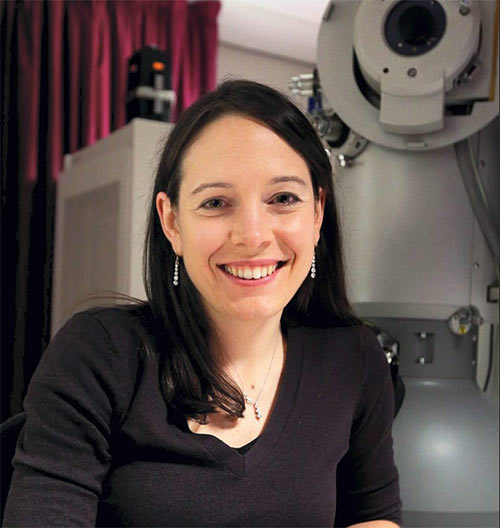
Professor Sarah Haigh is a Professor of Materials Characterisation at the University of Manchester, leading the Electron Microscopy Centre within the School of Natural Sciences. She specializes in advanced transmission electron microscopy (TEM) techniques to study nanomaterials' atomic-scale structure and properties, particularly focusing on 2D materials like graphene and their heterostructures. Her research also addresses nanoparticle interactions, catalysis, and sustainable energy applications. She directs the bp International Centre for Advanced Materials, a $100M collaboration with bp targeting net-zero technologies. Education: BSc and PhD in Materials Science from the University of Oxford (2004 and 2008). Professional Roles: Elected Liveryman of the Worshipful Company of Armourers and Brasiers, former Chair of the Institute of Physics EMAG group, and Director of Manchester’s Electron Microscopy Centre. Awards: Blavatnik UK Finalist (2022), Rosenhain Medal (2017). Research Interests: TEM-based analysis of nanomaterials, in-situ imaging, electron tomography, and functional 2D material devices. Projects include optimizing CO2 conversion, fuel cell efficiency, and quantum device development. Her work aligns with UN Sustainable Development Goals on clean energy and climate action. Publications: Over 320 peer-reviewed articles (h-index 68), including key contributions on nanomaterial characterization, catalysis, and energy materials. Active in mentoring PhD students and industrial collaborations.
Prof. Axel Mertens holds a professorship at Leibniz University Hannover's Faculty of Electrical Engineering and Computer Science, leading the Institute of Drive Systems and Power Electronics. He also serves on the Executive Board of the Leibniz Research Centre Energy 2050 and participates in the Faculty Council as a Deputy Representative for Professors. His expertise spans power electronics, electric drives, renewable energy systems, and aircraft propulsion. He has authored numerous articles on topics like inverter topology optimization, self-sensing motor control, and grid stability in inverter-dominated grids. Research focuses include: High-efficiency power conversion systems Electric machine design and control EMI mitigation strategies Reliability analysis for power electronic systems Integration of renewable energy sources His work contributes to advancing energy-efficient traction systems, airborne wind energy, and fault-tolerant aircraft propulsion. Current projects involve the SkyPower100 airborne wind energy initiative and DampedWEA vibration-reduction research. He actively participates in interdisciplinary collaborations through Leibniz Research Initiatives. Notable achievements include pioneering work on quasi-three-level modular converters and innovative self-sensing control techniques. His research addresses both fundamental and applied challenges in power electronics, with applications ranging from automotive electrification to sustainable energy generation.
Jan Gülink is a Researcher at the Institute of Semiconductor Technology, Faculty of Electrical Engineering, Information Technology, Physics, Technische Universität Braunschweig. His primary affiliations include research in semiconductor devices with specialized focus on GaN-based microLED and nanoLED technologies. Research interests center on optoelectronic systems and their biomedical applications. Key domains include: Development of micro/nanoLED arrays for high-resolution illumination and imaging Optogenetic control systems for cardiac and neural tissue studies Gallium nitride device fabrication and characterization Advanced microscopy techniques using structured light sources Semiconductor processing for miniaturized optoelectronic systems Publication analysis (15 most recent) shows strong focus on optoelectronic device innovation with recurring themes: 80% involve microLED/nanoLED development, 60% target biomedical applications (particularly optogenetics), and 40% address fabrication scalability. Recent works increasingly explore aerospace power systems and cardiac electrophysiology applications. Laboratory involvement includes the Institute of Semiconductor Technology, focusing on experimental semiconductor processing cleanrooms and optoelectronic characterization facilities. No information is available regarding student advising, research teams, or funding sources.
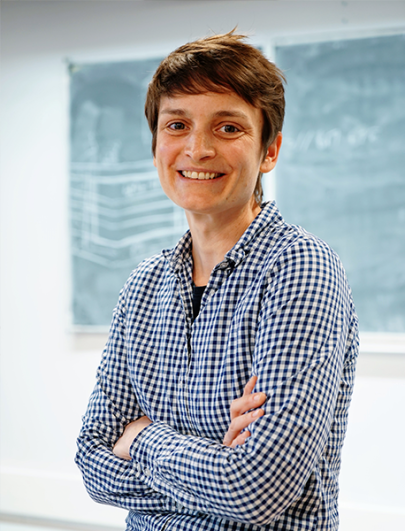
Tim Kowalczyk is a Professor in the Department of Chemistry at Western Washington University, affiliated with the College of Science and Engineering. His research focuses on computational strategies rooted in quantum mechanics to study organic materials combining light-absorbing and conducting properties, photostability models for dyes, and simulation frameworks for material degradation pathways. He holds a B.S. in Chemistry and Mathematics from the University of Southern California (2007) and a Ph.D. in Physical Chemistry from MIT (2012). Dr. Kowalczyk has held a JSPS Postdoctoral Fellowship at Nagoya University (2012-2014) and is a Visiting Scholar at the University of Tokyo (Fall 2024). He has received prestigious awards including the NSF CAREER Award (2019), Henry Dreyfus Teacher-Scholar Award (2023), and Cottrell Scholar Award (2018). His research group explores covalent organic frameworks (COFs), electronic properties of materials, and predictive modeling of material stability. He actively contributes to science education through initiatives like the Energy Ambassadors program and slide decks on diverse scientist role models. His work bridges theoretical chemistry with practical applications in energy materials and environmental chemistry. Lab and advising details include regular office hours and collaboration with students on computational chemistry projects. His contributions span software development (e.g., DFTB+ package) and interdisciplinary research in materials science, quantum mechanics, and environmental catalysis.
Sander Reniers is a University Researcher at Eindhoven University of Technology (TU/e), affiliated with the Department of Electrical Engineering within the College of Engineering. His research focuses on photonic integration, waveguide technologies, and optical communication systems, particularly leveraging Indium Phosphide (InP) platforms. He holds a PhD from TU/e and has contributed to over 30 peer-reviewed publications since 2019, with a citation count of 218. His work emphasizes innovations in grating couplers, polarization converters, and tunable laser systems. Research Interests include: Optical Communication Systems Photonic Integrated Circuits Nanophotonics Material Science for Photonics (e.g., InP) Optical Signal Processing and Switching Recent publications highlight advancements in high-speed WDM optical wireless communication links, switchable polarization conversion on InP membranes, and narrow-linewidth tunable lasers using sampled gratings. Collaborations span international institutions, with notable contributions to conferences like OFC and Advanced Photonics Congress. His work often combines experimental design with theoretical modeling to address challenges in high-speed data transmission and photonic device optimization. Labs/Teams: Active in TU/e's photonics research groups, collaborating with experts in materials science and optical engineering. Supervision of research projects is implied through co-authorship in technical publications.
Hongbo Zhao is an Assistant Professor at Aalborg University's Faculty of Engineering and Science, affiliated with the Power Electronics System Integration and Materials department. His research focuses on advanced semiconductor technologies like 10 kV SiC MOSFETs, medium-voltage power systems, and magnetic component optimization. He leads and collaborates on projects such as Listen2Battery (battery health monitoring) and Magncitor (high-permittivity magnetic materials for energy storage). Zhao has supervised four PhD students and holds a 2024 Best Paper Award for contributions to gate oscillation mitigation in SiC MOSFETs. His work emphasizes reducing parasitic capacitance and inductance in power electronics components, improving power module reliability, and advancing medium-voltage converter designs. Key projects include the development of self-powered gate drivers for SiC MOSFET stacks and low-capacitance planar transformers. Zhao's research bridges theoretical modeling and practical applications, addressing challenges in energy storage systems and high-power electronics. Research Interests: SiC MOSFET applications, magnetic component design, medium-voltage systems, power module reliability, and energy storage technologies. Key Projects: Listen2Battery: In-situ sound monitoring for lithium-ion batteries Magncitor: High-permittivity magnetic materials for capacitors Design of 10 kV SiC MOSFET-based medium-voltage converters Awards: WiPDA 2024 Best Paper Award (team recipient) Advising: Supervises PhD students in power electronics and semiconductor systems.