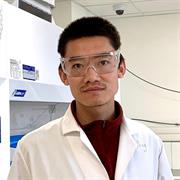
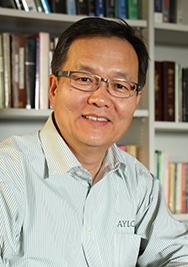
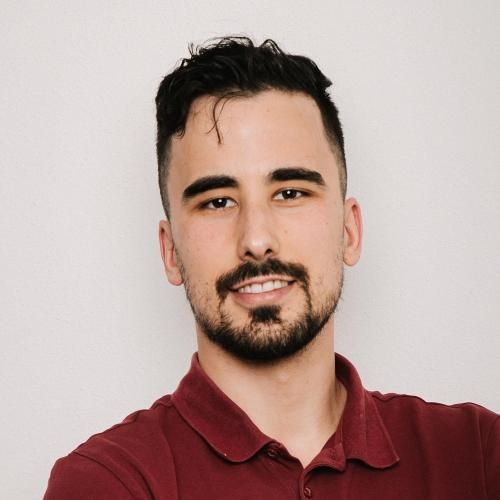
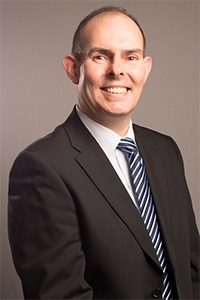
Dr. Peng Li is a Research Fellow at the School of Science, RMIT University. His research focuses on the design of novel materials and nanostructures for energy conversion and storage, including carbon capture, batteries, fuel cells, and electrocatalysis. He holds a PhD and has held academic positions at RMIT University (since 2023), Swinburne University of Technology (2021–2022), and the Commonwealth Scientific and Industrial Research Organisation (CSIRO, 2022–2023). Research Interests: Electrochemistry, carbon capture engineering, catalysis mechanisms, and advanced battery technologies. Key Projects: Development of high-performance aqueous zinc-ion batteries, direct electrolysis of CO2 for syngas production, and borophene materials for Li-O2 batteries. Dr. Li collaborates on industry projects and supervises research students. His work emphasizes sustainable energy solutions and innovative material synthesis. He is open to PhD/Masters supervision and collaborative research.
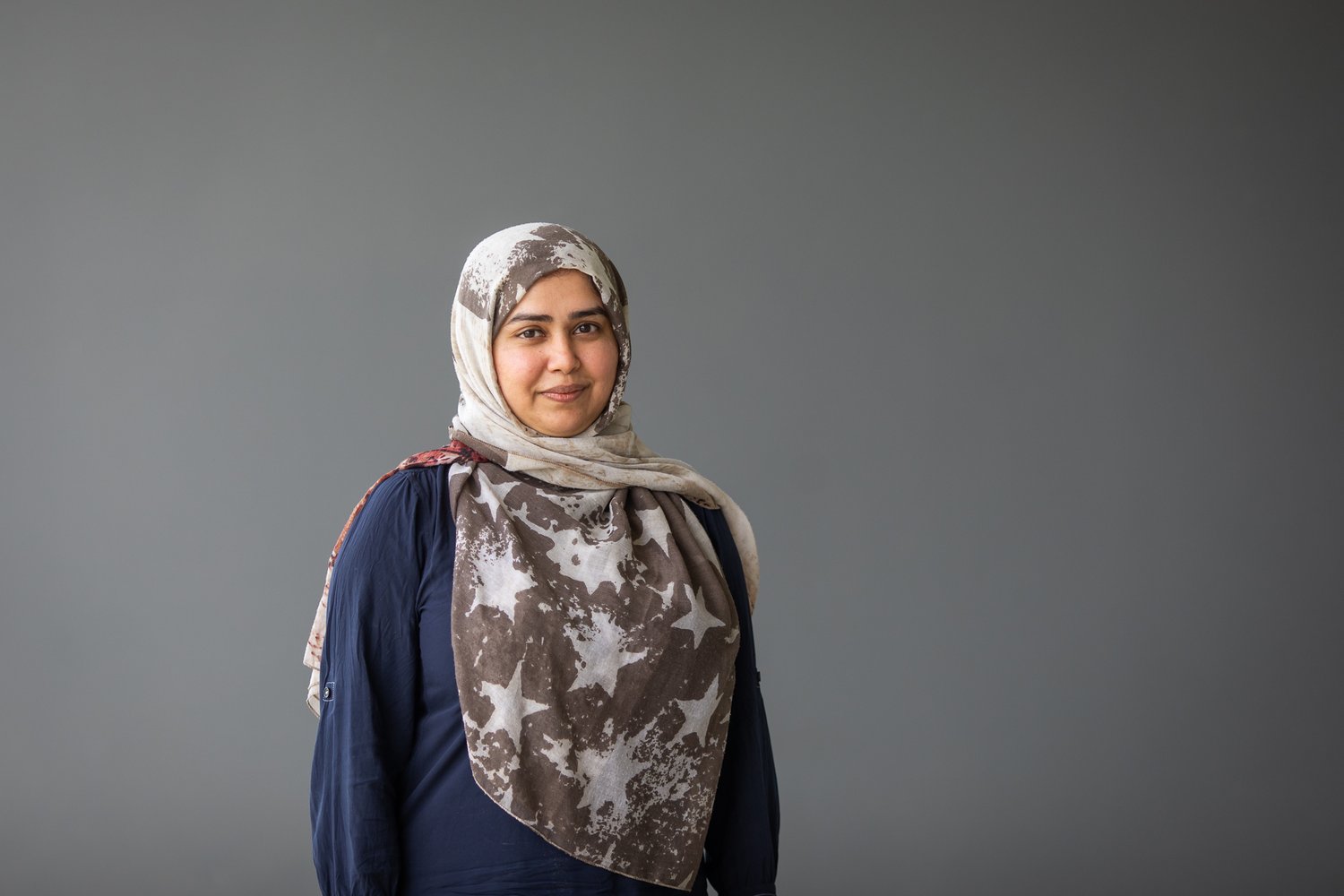
Dr. Syed M Nawazish Ali is a Research Fellow at RMIT University’s School of Engineering (City Campus, Australia) since July 2022. He has held academic roles at Macquarie University (Casual Academic, 2018–2020) and Aalborg University (Visiting Research Fellow, 2019–2020). His industry experience includes roles at Evenergi Pty Ltd and Magnetica Limited in Australia. Education: B.Sc. in Electrical Engineering, University of Engineering & Technology, Lahore (2013) M.Sc. in Electrical Engineering, COMSATS University, Lahore (2016) Ph.D. in Electrical Engineering, Macquarie University, Sydney (2022) Research Interests: Dr. Ali specializes in data analysis of public transportation electrification, electric vehicle (EV) drive control, battery degradation studies, optimization algorithms for battery health estimation, and grid impact of EV penetration. His work addresses thermal degradation in EV motor drives, fault-tolerant inverter designs, and sustainable integration of renewable energy with transport systems. Article Trends: His recent publications focus on harmonizing EV charging with smart grids, optimizing energy control via Machine Learning and genetic algorithms, and enhancing fault tolerance in power electronics. Key themes include thermal management of motor drives, multi-energy system integration, and decentralized energy trading models. Scientific Awards: Postgraduate Research Fund grant and DVC Research Commendation, Macquarie University (2020) 1st position in oral research presentation at Macquarie University’s Higher Degree Research Conference (2019) International Research Training Program Scholarship (Commonwealth Government-funded) for Ph.D. (2017) Prime Minister’s Laptop Scheme award (2016) Top of FA14-MSEE batch at COMSATS University (2016) KAKEZAI Scholarship at UET Lahore (2011–2013) Supervision & Grants: Available for Masters/PhD supervision in EV control systems. Secured grants including the Commonwealth Government’s International Research Training Program Scholarship and Macquarie University’s Postgraduate Research Fund. Key projects: C4NET Project 66 (Zero Emission Bus Trial) and EV battery degradation control research.
Jörg G. Werner is Assistant Professor of Mechanical Engineering and Materials Science & Engineering at Boston University, where he directs the Mesostructured Materials and Devices (MeMaD) Laboratory. His research develops novel fabrication methods for functional nanostructured materials with applications in energy storage, coatings, and sustainability technologies. Education includes: Ph.D. from Cornell University (2015) Research focuses on: Bottom-up assembly of nano/micro-structured materials Block copolymer self-assembly for ordered mesostructures Electrodeposition of functional polymer coatings Phase separation strategies for architected electrodes Design of mesostructured energy storage systems Recent work emphasizes electrodeposited conformal coatings, nanostructured organogels, and block copolymer-derived functional materials. Key trends include innovation in energy storage architectures and sustainable material design. Awards and honors: DARPA Young Faculty Award (2023) emc2 Young Investigator Award (2013) Howard Neal Wachter Memorial Prize (2014) Leads the MeMaD Lab with focus on interdisciplinary approaches to materials design through controlled self-assembly processes.
Dr. Rumana Hossain is a Lecturer at UNSW Sydney's School of Materials Science & Engineering and a Research Associate at the Centre for Sustainable Materials Research & Technology (SMaRT@UNSW). She completed her Ph.D. in Material Science and Engineering at UNSW Sydney in 2020. Her research focuses on waste valorization, sustainable materials, microplastics pollution, and energy storage solutions, aligning with UN Sustainable Development Goals (SDGs) 7, 9, 12, 13, 14, and 15. Education: Ph.D. in Material Science and Engineering, UNSW Sydney (2020) Research Interests: Transformation of waste into high-performance materials Microplastics pollution and mitigation strategies Sustainable energy materials development Surface engineering and metallurgical innovations Grants: Co-Lead CI: Transforming Automotive Shredder Residue (ASR) into Green Materials (TRaCE Program, 2024-2027) Lead CI: TRaCE Industry Mobility Fellowship for Recycling E-Waste (2024-2025) Shared Grant: Upscaling Technology for Recycling Lithium-Ion Batteries (2024-2026) Awards: Early Career Researcher Prize, The Royal Society (2024) Women in Science (ECR) Award, AMSCA-2024 (2024) Australian Postgraduate Award (2016-2020) Advising & Grants: Supervising 6 HDR students in waste-to-value and sustainable material projects Leading industrial collaborations for circular economy initiatives Labs/Teams: Affiliated with SMaRT@UNSW, a globally recognized center for sustainable materials research.
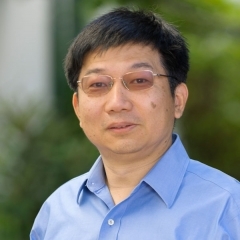
Tao Yang is a Professor in the Department of Computer Science at the University of California, Santa Barbara, where he has been a faculty member since 1993. His research spans web search and mining, database and information systems, machine learning and data mining, parallel and distributed systems, and cloud computing. He serves as an active educator, teaching courses including CS170 Operating Systems (Spring 2024), CS291A Neural Information Retrieval (Fall 2024), and CS140 Parallel Computing (Winter 2025). PhD in Computer Science, Rutgers University ME in Artificial Intelligence, Zhejiang University MS in Computer Science, Rutgers University BS in Computer Science, Zhejiang University Professor Yang's research focuses on advancing the field of information retrieval with particular emphasis on neural approaches to search and ranking. His recent work explores neural document ranking, privacy-aware search systems, and versioned data search. He has led significant projects including Neptune clustering infrastructure, Sorrento self-organizing storage cluster, and TMPI for MPI execution optimization. His research bridges theoretical advances with practical implementations, particularly in scaling search architectures to handle billions of documents while maintaining relevancy, performance, and freshness. His publication record shows a clear evolution from foundational work in parallel and distributed systems toward contemporary research in neural information retrieval. Recent publications demonstrate expertise in optimizing both sparse and dense retrieval methods, with particular focus on efficiency improvements for multi-vector representations. His work consistently addresses real-world challenges in search scalability and privacy preservation. Faculty Research Award, Google Research Research Initiation Award, NSF (1994) UC Regents' Junior Faculty Award (1994) Computer Science Faculty Teacher Award (1995) CAREER Award, NSF (1997) Noble Jeeviant Award, AskJeeves (2002) Professor Yang has supervised numerous graduate students, many of whom have gone on to prominent positions at companies like Google, Apple, and Coursera, or academic positions at universities worldwide. His industry experience as Chief Scientist for Ask.com (2001-2010) and founding Chief Scientist for Teoma (2000-2001) has informed his research direction and provided valuable practical context for his academic work. He has served on program committees for major conferences including WWW, SIGIR, KDD, WSDM, CIKM, ECIR, and EMNLP. His research group maintains active projects in neural information retrieval, privacy-aware search, similarity computing, and parallel computing systems. The group collaborates closely with industry partners, particularly in the search technology space, and has developed systems that power major search engines serving over 100 million users.
Donald J. Chmielewski is a Professor of Chemical Engineering at Illinois Institute of Technology (IIT), affiliated with the Chemical and Biological Engineering Department within the Armour College of Engineering. He holds a Ph.D. in Chemical Engineering from UCLA (2000), an M.S. in Electrical Engineering from UCLA (1993), and a B.S. in Electrical Engineering from IIT (1991). His research focuses on advanced process control strategies for energy systems, including fuel cells, hybrid vehicles, and power generation infrastructure. Chmielewski has received notable awards such as the CAST Division Plenary Lecture (2010) and Excellence in Teaching Award (2003). His expertise spans control system economics, energy process modeling, and system optimization. Key application areas include IGCC power plants, building HVAC systems, and electric power storage. Recent publications emphasize economic model predictive control for energy systems and novel fuel cell designs. Chmielewski advises on energy systems and has collaborated on projects involving oxy-combustion power cycles and PEM fuel cell dynamics. His work bridges theoretical control methodologies with practical engineering challenges in sustainable energy. Professional contributions include plenary lectures and peer-reviewed articles on process systems engineering and energy storage solutions.
Luís Filipe Moreira Mendes is an Assistant Professor at the Department of Physics, Instituto Superior Técnico (IST), Lisbon, Portugal. His research focuses on interdisciplinary physics with a strong emphasis on solar energy systems, thermal and thermochemical energy storage, and applied thermodynamics. He has contributed to advancing calcium-looping technologies for concentrated solar power plants and developed computational models for solar-driven reactors. His work bridges experimental and theoretical approaches in renewable energy systems. Teaching & Academic Roles: He teaches courses such as Solar Thermal Energy, Solar Photovoltaic Energy, and Energy Technologies at IST. His teaching evaluations (QUIC) in 2022-2023 showed high ratings (e.g., Solar Thermal Energy: 9/10). Research & Supervision: He supervises PhD and MSc theses in solar energy applications, including projects on calcium-looping reactors, concentrated solar thermal systems, and solar cavity absorbers. Notable supervisees include Filipe Alexandre Marques (PhD 2019) and ongoing work with Felisberto Camuege. Publications & Impact: Over 30 peer-reviewed articles span solar thermal systems, energy storage, and astrophysical detector design (e.g., the Mercedes Cherenkov detector). His 2023 work on calcium-looping optimization highlights advancements in thermochemical storage. Collaborations & Outreach: Active in the SWGO (Southern Hemisphere Wide-field Gamma-ray Observatory) collaboration and authored educational books like *Physics in Everyday Life at School* (2014). Holds patent PT103112 for an absorption machine with steam refining innovations.
Prof. Seda Keskin is a Professor at Koç University's College of Engineering in the Department of Chemical and Biological Engineering. Her computational research focuses on designing advanced materials for gas separation and environmental applications. Research Focus: She specializes in developing metal-organic frameworks (MOFs), covalent organic frameworks (COFs), and composite materials for CO 2 capture, hydrogen storage, and gas purification using molecular modeling and machine learning. Her work integrates high-throughput computational screening to accelerate material discovery. Honors: Recognized with multiple awards including the TÜBİTAK Incentive Award, TÜBA GEBIP Young Scientist Award, and Industrial & Engineering Chemistry Research Excellence in Review Award. Publications: Her recent articles demonstrate advancements in rational materials design, hybrid membrane systems, and AI-driven approaches for sustainable technology solutions. Research consistently targets industrial scalability and environmental impact mitigation.
Dr. Charles Bishop is a Reader in Zoology (Avian) at Bangor University's School of Environmental & Natural Sciences, focusing on vertebrate flight performance and migration. His research integrates physiological and morphological adaptations with advanced tracking technologies, including miniature electronic data loggers and GPS satellite tags, to study energy expenditure, cardiovascular dynamics, and behavioral responses in birds such as bar-headed geese and homing pigeons. He also contributes to conservation biology through projects on seabirds and captive primates. Education: Not explicitly detailed in the text. Research Interests: Flight biomechanics, high-altitude migration physiology, thermoregulation, and ecological tracking. Key Projects: Investigating wind selectivity in shearwaters, energy conservation in flocking pigeons, and hypoxia tolerance in bar-headed geese. Collaborations: Active in international networks, particularly in Central Asia and the Mediterranean. His recent publications (2023-2025) emphasize flight energetics, thermoregulation strategies, and environmental interactions, showcasing interdisciplinary applications of accelerometry and GPS tracking. Current projects include studying the impact of wind patterns on shearwater foraging and analyzing flight dynamics across species.
Marcus ANG Teck Meng is an Associate Professor of Operations Management (Education) at the Lee Kong Chian School of Business, Singapore Management University. He is also the Academic Director and Track Coordinator of the International Trading Institute (ITI). His academic journey began at the National University of Singapore, where he earned dual B.Sc. degrees in Mathematics, followed by an S.M. in High Performance Computing and a Ph.D. in 2008. Ph.D., National University of Singapore, 2008 S.M., High Performance Computing for Engineering Systems, Singapore-MIT Alliance under NUS, 2003 B.Sc. (Hon), Mathematics, National University of Singapore, 2002 B.Sc., Mathematics, National University of Singapore, 2001 His research focuses on the theoretical and applied aspects of operations management, particularly in inventory management , stochastic models , and robust optimization . His work bridges mathematical rigor with real-world applications in supply chains, healthcare, and e-commerce. He has made significant contributions to warehouse storage optimization, hospital resource planning, and online retail fulfillment under uncertainty. The recent articles reflect a strong trend in applying robust optimization and stochastic modeling to logistics and service operations. His research spans domains such as healthcare analytics, e-commerce fulfillment, and inventory systems. Keywords like operations research , supply chain management , and data analytics dominate, with sub-fields including appointment scheduling, risk measures, and warehouse layout optimization. His teaching excellence has been widely recognized: Winner, SMU Undergraduate Excellent Teacher Award (2020) Winner, SMU Undergraduate Innovative Teacher Award (2018) Nominee, SMU Undergraduate Innovative Teacher Award (2021, 2022) Multiple appearances on SMU Dean’s Teaching Honour List (Undergraduate and Postgraduate) MPA Research Fellow (AY2019–2023) Dean’s List, NUS Department of Mathematics (AY1998–2001) He leads the International Trading Institute (ITI) and has been involved in pedagogical innovation through TEL grant-funded projects such as Inn or Out and Pricing Boss . While no formal list of advisees is provided, his role as Academic Director and course coordinator suggests active mentorship and supervision of students in operations and analytics. He has no known lab or research team explicitly mentioned, but his case studies and projects indicate strong industry engagement and applied research leadership.
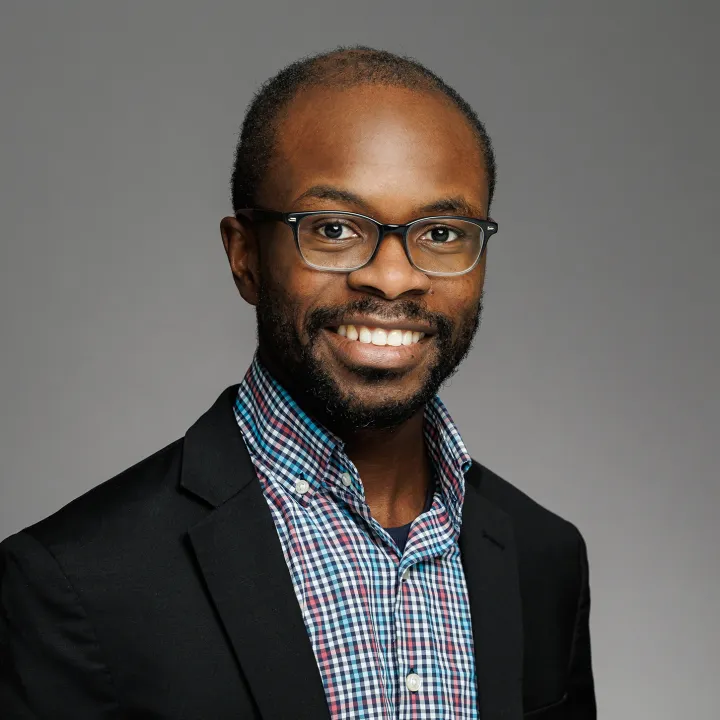
David Kwabi is an Associate Professor of Chemical & Environmental Engineering at Yale University, leading the Kwabi Lab. His research focuses on developing electrochemical systems for clean energy and environmental sustainability, including carbon capture and energy storage. He holds a BSE from Princeton University (2010) and a PhD from MIT (2016). Key research areas include electrochemical energy storage, carbon capture technologies, and chemical separations. His lab employs advanced analytical techniques and physics-based models to design durable, high-performance devices. Recent work addresses CO2 removal from seawater using photoacids and degradation mechanisms in organic redox-flow batteries. Awards: ASME Rising Star Award (2024) Scialog Negative Emissions Fellow (2022) NSF CAREER Award (2021) ASME Pi Tau Sigma Gold Medal (2020) His work is affiliated with the Yale Center for Natural Carbon Capture and the Yale School of Engineering. Research emphasizes clean energy transitions and sustainable environmental solutions.
Paul Ro is Chair and Professor in the Department of Mechanical Engineering at Baylor University's School of Engineering and Computer Science, where he has served since August 2018. Previously, he held professorial and leadership roles at North Carolina State University, including Associate Department Head and Director of Graduate Programs in Mechanical and Aerospace Engineering from 2012 to 2018. Education: B.S. in Mechanical Engineering (High Distinction), University of Minnesota, 1982 M.S. in Mechanical Engineering, Massachusetts Institute of Technology, 1985 Ph.D. in Mechanical Engineering, Massachusetts Institute of Technology, 1989 Dr. Ro's research focuses on renewable energy harvesting and storage , vibro-acoustics and control , robotics and automation , ultra-precision positioning , and vehicle dynamics and control . His work bridges theoretical modeling and experimental validation, particularly in energy systems involving liquid-piston compressors and ocean-based compressed air storage. He has made significant contributions to near-isothermal compression technologies for enhanced energy efficiency. His recent publications (2017–2022) reflect a strong trend in energy storage systems , control in human-robot interaction , and thermal management in mechanical systems . These works demonstrate interdisciplinary innovation across mechanical engineering, robotics, and sustainable energy, with a consistent emphasis on experimental validation and thermodynamic optimization. Scientific Awards: No awards explicitly listed in the provided text. Dr. Ro has actively advised graduate students, including Vikram C. Patil, Jingdong Chen, and others, as evidenced by co-authored publications. His leadership roles indicate involvement in academic administration and graduate program development. While specific grants are not listed, his sustained research output suggests active funding support. He has also contributed to international research through visiting appointments at Seoul National University and the University of Tokyo. Dr. Ro has been involved in research teams focused on precision engineering and energy systems, particularly in the development of liquid-piston technologies for energy storage. His prior affiliation with the Precision Engineering Center at NC State highlights long-standing engagement with advanced mechanical systems and microdynamics.
Adrián García Gutiérrez is a Professor in the Department of Aerospace Engineering at the University of León's College of Engineering. His research focuses on aerospace systems, uncertainty quantification in CFD, atmospheric boundary layer modeling, and airship technology. Recent publications highlight his work in parallel orbital propagation algorithms, stochastic optimization of high-altitude platforms, and neural network applications for wind profiling. Key trends include aerodynamic modeling under uncertainty and interdisciplinary approaches combining turbulence analysis with LiDAR measurements. He contributes to educational innovation in aerospace engineering through simulation-based learning tools and leads the GITA Tecnología Aeroespacial research group.
Professor Rick Greenough at De Montfort University is a leading academic in energy systems and sustainable manufacturing. Affiliated with the School of Engineering and Sustainable Development and the Institute of Energy and Sustainable Development (IESD), he focuses on industrial sustainability, low carbon manufacturing, and energy efficiency. Based in Leicester, UK, he teaches courses like Renewable Energy Technology and Low Impact Manufacturing while leading research on thermal energy systems. His research spans renewable energy integration, biomass power systems, and exergy analysis. Key projects analyze geothermal storage, solar-thermal hybrid systems, and energy flows in manufacturing. His work bridges academia and industry through EPSRC-funded initiatives and EU FP7 partnerships. Publications highlight shallow boreholes for ground source heat pumps, steam storage in biomass CHP plants, and rural energy solutions for Central Asia. He contributes to professional societies like IET and the Energy Institute, emphasizing sustainable development across engineering disciplines.
Wendell Bailey is a Principal Enterprise Fellow at the University of Southampton, affiliated with the Energy Technology Group. His research focuses on advanced materials and systems for cryogenic applications, superconductivity, laser technology, and energy infrastructure. Key projects include evaluating thermoplastic polymers for cryogenic sealing, analyzing superconducting coil performance under high magnetic fields, and developing high-efficiency cryogenically cooled lasers. Current roles: Principal Enterprise Fellow Affiliations: Energy Technology Group at University of Southampton Research interests span cryogenic materials, hydrogen-rich environment effects on thermoplastics, high-performance metallic materials, and thermal management in superconducting systems. He supervises PhD students in Engineering & Environmental Science, including Junyao Song and Owain Atkins.