Indian Institute of Technology Hyderabad (IITH)India
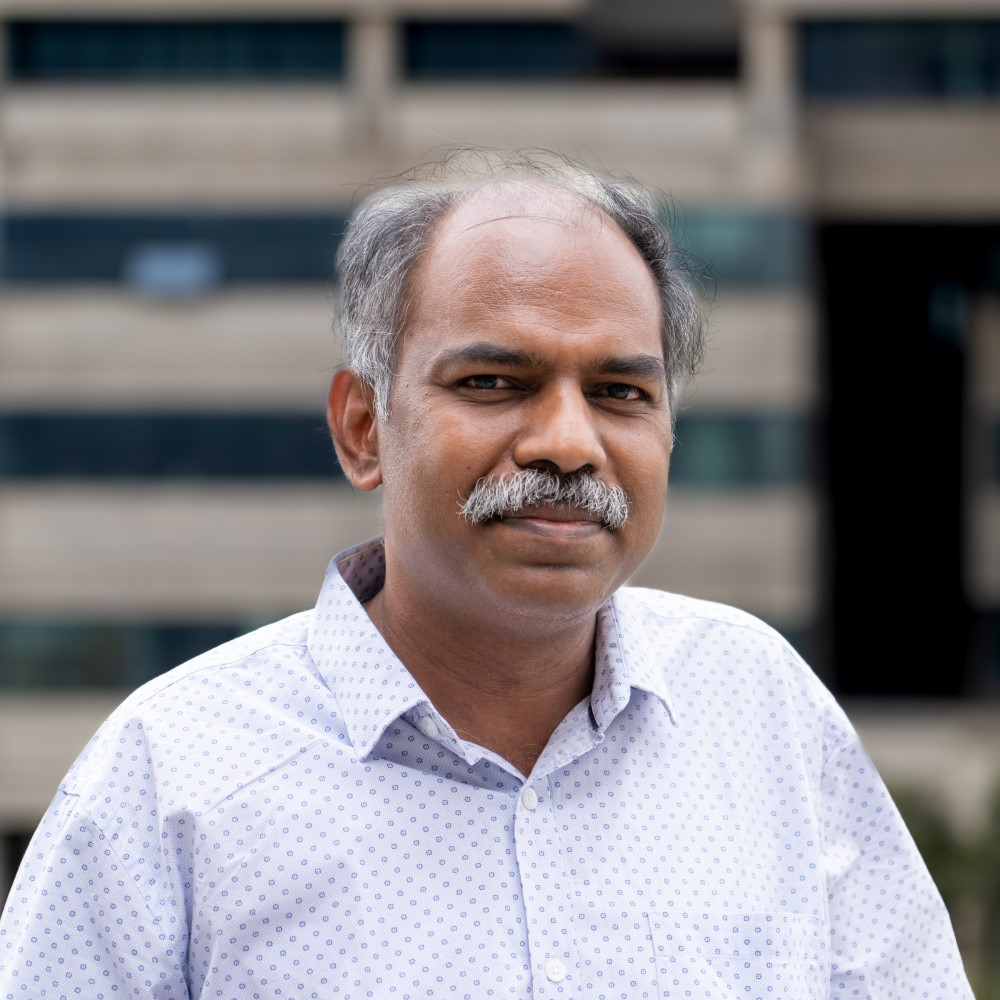
Antony Franklin is an Associate Professor and Head of the Department of Computer Science and Engineering at the Indian Institute of Technology Hyderabad (IITH), India. He leads the Networked Wireless Systems (NeWS) Lab and is actively involved in 5G research, wireless networks, and cybersecurity. He earned his Ph.D. from IIT Madras in 2010. Education: Ph.D. in Computer Science and Engineering, IIT Madras, 2010 Research Interests: His research spans wireless networks , 5G systems , mobile edge computing , low-latency transport protocols , and cybersecurity . He focuses on next-generation mobile systems, especially 5G, aiming to meet the demands of ultra-low latency, high data rates, and quality of experience for services like IoT, autonomous driving, and VR. He has been involved in developing testbeds and prototypes to validate real-world performance of 5G technologies, including network slicing, LTE-WiFi integration, and edge computing. Scientific Awards: Best Academic Demo Award, IEEE COMSNETS 2018 Second Best Paper Award, IEEE ANTS 2017 Grants & Projects: Network Slice Life-cycle Management for 5G Mobile Networks – SPARC, MHRD (2019–2021) DNS/IPv6 for IoT Security – NASSCOM (2018–2019) CCRAN: Energy Efficiency in Cloud RAN – Intel India (2018–2021) End-to-End 5G Test-Bed – DoT, GoI (2018–2021) M2SMART Smart Cities – SATREPS (2018–2023) Ultra-Reliable Low Latency Protocols – STINT, Sweden (2017–2018) Low Latency 5G Protocols – SERB ECR (2016–2019) Lab & Team: He leads the NeWS Lab (Networked Wireless Systems) at IITH, which focuses on 5G, wireless networks, and IoT systems. The lab is actively involved in developing real-world testbeds and publishing in top-tier conferences and journals.
Soumya Dutta is an Assistant Professor in the Department of Computer Science and Engineering at the Indian Institute of Technology Kanpur (IITK), where he leads the INSIGHT: Intelligent Scientific and Visual Computing of Big Data Research Group. He joined IIT Kanpur in October 2022 after working as a Scientist II at Los Alamos National Laboratory (LANL) from July 2019 to August 2022, and previously as a Postdoctoral Research Associate at LANL from June 2018 to July 2019. His educational background includes a Ph.D. and M.S. in Computer Science and Engineering from The Ohio State University (2011-2018), where he was part of the GRAVITY research group, and a B.Tech. in Electronics and Communication Engineering from West Bengal University of Technology, India (2005-2009). Research Interests: Dr. Dutta's research focuses on the intersection of machine learning, visual computing, big data, and high-performance computing. His primary research areas include Machine Learning for Visual Computing and Image Analysis, Big Data Visualization and Analytics, Data Science and HPC, Machine Learning for Scientific Computing, and Explainability and Interpretability of AI Models. His work addresses various big data characteristics including the 5 Vs: Volume, Velocity, Variety, Veracity, and Value. He develops techniques that make complex machine learning models more interpretable and explainable, enabling their effective adoption in real-life applications across scientific domains, social media, IoT, healthcare, and industry applications. Dr. Dutta's research group has secured multiple funded projects including: DAVi: An Intelligent Data Analytics and Visualization Framework (funded by ISRO), Intelligent Visual Computing of Extreme-scale Data for Accelerating Scientific Discovery (IIT Kanpur Initiation Grant), Enabling Interactive Big Data Analytics and Visualization at Exascale (SERB), Development of AI-Enabled National Portal for Efficient Search of Missing People (C3iHub), and Proactive and Generalized Deepfake Defense Mechanisms (C3iHub). Best Reviewer, Honorary Mention Award for IEEE Transactions on Visualization & Computer Graphics (TVCG), 2021 Best Paper Award at ISAV 2021, co-located with Supercomputing (SC) LAAP Award at Los Alamos National Laboratory, 2021 Best Paper Award at TopoInVis 2019 Best Paper Award at ISAV 2018, co-located with Supercomputing (SC) Best Poster Award in 12th Annual CSE Student Poster Exhibition, The Ohio State University, 2018 Best Poster Award in 11th Annual CSE Student Poster Exhibition, The Ohio State University, 2017 Best Paper Honorable Mention Award at IEEE Visualization Conference (IEEE VIS) 2016 Dr. Dutta actively mentors a large group of students including Ph.D., M.Tech., and B.Tech. students. His current Ph.D. students include Shanu Saklani, Sankhadeep Bhowmick, Ananya Chaturvedi, Arpita Santra, Anubhav Dixit (co-supervised), and Robin Shah. He has supervised numerous M.Tech. students with thesis topics ranging from uncertainty-aware neural networks to deepfake detection. Dr. Dutta currently teaches courses including CS360 - Introduction to Computer Graphics and CS661 - Big Data Visual Analytics. The INSIGHT research group collaborates internationally with researchers from Meta, Oak Ridge National Laboratory, and National Taiwan Normal University. The group's work focuses on building machine learning and data science-based solutions to analyze large-scale multifaceted data in a scalable way, enabling interactive and interpretable analytics of complex data from scientific simulations, social media, IoT, healthcare, and other application domains.
Krishna Jagannathan is a full-time Professor in the Department of Electrical Engineering at the Indian Institute of Technology Madras (IIT Madras), India. He specializes in stochastic modeling, communication networks, information theory, and queuing theory. He obtained his B.Tech from IIT Madras in 2004, followed by S.M. and Ph.D. degrees from MIT in 2006 and 2010, respectively. After post-doctoral positions at Caltech and MIT, he joined IIT Madras in 2011. Education: B.Tech in Electrical Engineering, IIT Madras (2004) S.M. in Electrical Engineering and Computer Science, MIT (2006) Ph.D. in Electrical Engineering and Computer Science, MIT (2010) Research Interests: His research focuses on stochastic modeling and analysis of communication networks , information theory , and queuing theory . He has made significant contributions to understanding network performance, resource allocation, and risk-aware decision-making in complex systems. He leads the Networks and Stochastic Systems lab at IIT Madras, mentoring a large cohort of Ph.D. and M.S. students working on cutting-edge problems in networking, optimization, and stochastic systems. Scientific Awards: Best Paper Award at WiOpt 2013, Tsukuba, Japan Young Faculty Recognition Award for Excellence in Teaching and Research, IIT Madras (2014) Teaching & Mentorship: He has taught a wide range of courses including Probability Foundations , Stochastic Modeling and Queuing Theory , Convex Optimization , and Signals & Systems , consistently receiving high teaching evaluations. He has supervised over 15 Ph.D. and M.S. students to completion and continues to guide several active researchers.
Indian Institute of Technology Hyderabad (IITH)India
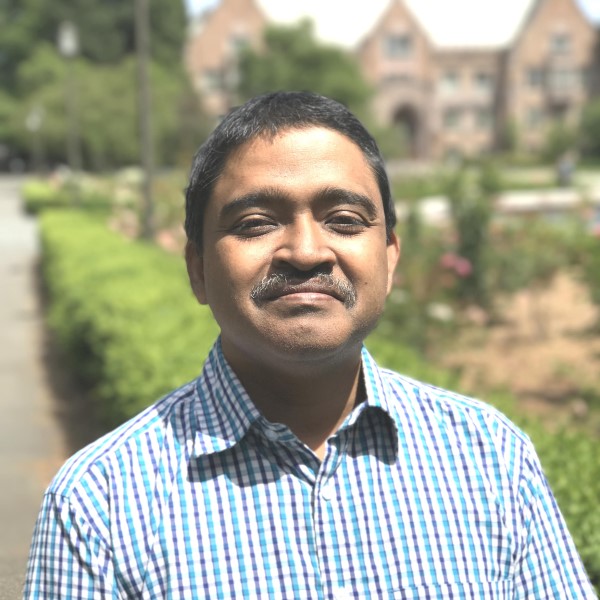
Kishalay Mitra is a Professor at the Indian Institute of Technology Hyderabad , with affiliations to the Department of Chemical Engineering , Department of Climate Change , and Department of Artificial Intelligence . He also holds visiting professorships at Washington University in St. Louis and University of Washington, Seattle . His work in the Global Optimization & Knowledge Unearthing Laboratory (GOKUL) spans interdisciplinary optimization, machine learning, and their applications in industrial-scale engineering problems. Education : Ph.D. from IIT Bombay. Research Interests : Mitra's research focuses on optimization under uncertainty , surrogate modeling , multi-objective optimization , and integrating machine learning with physics-based models . His work addresses real-world challenges in wind energy , bioenergy supply chains , chemical process control , nanoscience , and environmental modeling (e.g., PM10 spatiotemporal analysis, forest fire prediction, and carbon capture). Article Trends : His recent publications emphasize wind energy systems (layout optimization, yaw control, forecasting), materials science (precipitate growth prediction, polymerization), and industrial processes (crystallization, grinding circuits). Techniques include neural operators , Bayesian optimization , generative adversarial networks (GANs) , and explainable AI .
Indian Institute of Technology Hyderabad (IITH)India
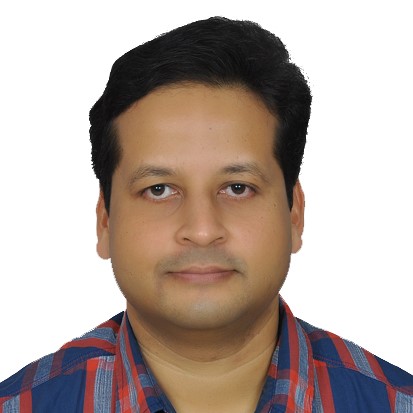
Kaushik Nayak is an Associate Professor in the Department of Electrical Engineering at the Indian Institute of Technology Hyderabad . His research spans semiconductor device physics, mesoscopic electronics, and electro-thermal effects in nanoscale transistors, with recent work on diamond MOSFETs, 2D material contacts, and thermal resistance in nano-sheet FETs. Ph.D., Indian Institute of Technology Bombay M. Tech., Microelectronics, IIT Bombay B.E., Electronics & Telecommunication, Utkal University He teaches advanced courses on semiconductor device modeling, mesoscopic electronics, and electromagnetic wave propagation. His publications focus on nanoelectronics, device variability, and high-temperature operations. Contact: knayak@ee.iith.ac.in .
Angshuman Karmakar is an Assistant Professor in the Department of Computer Science and Engineering at the Indian Institute of Technology Kanpur, India. His research focuses primarily on Post-Quantum Cryptography (PQC) and Computation On Encrypted Data (COED), which are critical areas in modern cryptography and computer security. Dr. Karmakar received his Ph.D. from Katholieke Universiteit Leuven (KU Leuven), Belgium, where he worked under Prof. Ingrid Verbauwhede in the COSIC research group. He was awarded the prestigious Erasmus Mundus fellowship for his doctoral studies and the FWO (Fonds voor Wetenschappelijk Onderzoek – Vlaanderen) fellowship for his post-doctoral research at KU Leuven. His research spans theoretical development of cryptographic schemes, implementation algorithms, side-channel and fault attack analysis, and countermeasure development. Dr. Karmakar has established extensive international collaborations with researchers and engineers worldwide to address complex challenges in cryptography and security. Recent publications demonstrate a strong focus on practical post-quantum cryptographic implementations with particular attention to hardware and software efficiency, side-channel resistance, and novel attack methodologies. His work bridges theoretical cryptography with real-world implementation challenges across diverse platforms from IoT devices to high-performance computing systems. Erasmus Mundus fellowship for doctoral studies at KU Leuven FWO fellowship for post-doctoral study at KU Leuven Google India Research Award for work on practical transition to post-quantum cryptography Dr. Karmakar is actively seeking graduate students and postdoctoral researchers to collaborate on cutting-edge research in cryptography and computer security. His work has significant implications for securing future communication systems against quantum computing threats, with applications spanning blockchain technologies, IoT security, and general-purpose computing systems.
Rajesh Ranjan is an Assistant Professor in the Department of Aerospace Engineering at the Indian Institute of Technology Kanpur. His academic career spans multiple prestigious institutions including Ohio State University and Jawaharlal Nehru Centre for Advanced Scientific Research. Dr. Ranjan completed his PhD (2016) from Jawaharlal Nehru Centre for Advanced Scientific Research, Bengaluru, ME (2007) from Indian Institute of Science, Bengaluru, and BE (2005) from Bihar Institute of Technology, Sindri where he achieved First Rank with Roll of Honor. His educational background laid the foundation for his expertise in fluid dynamics and computational methods. His research focuses on fundamental and applied aspects of fluid dynamics with specialization in turbomachinery flows, applied aerodynamics, stability and flow control, transition and relaminarization phenomena, and high performance computing applications. Dr. Ranjan employs a multidisciplinary approach combining theoretical analysis, advanced computational techniques, and experimental validation to address complex fluid flow problems in aerospace engineering. His work has significant implications for improving efficiency in turbomachinery design and understanding fundamental flow physics in complex geometries. Dr. Ranjan's publication record reveals a strong trajectory in computational fluid dynamics with recent work spanning traditional aerospace applications like turbomachinery and aircraft aerodynamics while also demonstrating adaptability through interdisciplinary research such as his data-driven approach to modeling the COVID-19 pandemic. His publications consistently demonstrate rigorous methodology and innovative approaches to complex fluid flow problems. All India Rank-3, Graduate Aptitude Test in Engineering (GATE), India (2005) Roll of Honor (First Rank), B.E., BIT, Sindri, India (2001-2005) Outstanding Performance Award (thrice), TATA CRL, Pune, India (2008-10) ICAM International Travel Award, Institute for Complex Adaptive Matter (2013) International Travel Support Award, DST, Govt. of India (2014) Best Poster Award, JNCASR In-house Symposium, Bengaluru, India (2015) Dr. Ranjan has mentored multiple students through research projects at IIT Kanpur and previously at Ohio State University. His research has been supported by institutional funds and travel awards from national agencies including the Department of Science and Technology, Government of India. He maintains active collaborations with researchers in India and internationally to advance computational fluid dynamics methodologies and their application to real-world engineering problems.
Alok Ranjan Verma is an Assistant Professor in the Department of Electrical Engineering at Indian Institute of Technology Kanpur. His research focuses on high voltage engineering with specialization in dielectric materials and electrical insulation systems. His primary research interests include High Voltage Engineering, Dielectrics and Electrical Insulation, Computational Electrostatics, Polymeric Insulation for High Voltage Applications, and Over-voltages in Power Systems. His work addresses critical challenges in electrical insulation performance under various environmental and electrical stress conditions. Dr. Verma's publication record shows consistent research output in high-impact journals, particularly IEEE Transactions on Dielectrics and Electrical Insulation. His research trends indicate a strong focus on polymeric insulators, aging studies under multiple stress conditions, surface degradation mechanisms, and novel techniques for improving insulation performance in high voltage systems. His work bridges theoretical understanding with practical applications in power transmission systems. POSOCO Power System Award for Best M. Tech Thesis given jointly by IIT-Delhi and Power grid corporation of India Dr. Verma completed his PhD at IISc Bangalore in 2018 under the supervision of Dr. Subba Reddy B. Prior to joining IIT Kanpur as faculty, he served as a Research Associate at the High Voltage Laboratory, Department of Electrical Engineering, Indian Institute of Science, Bangalore from October 2018 to June 2019. His laboratory work focuses on high voltage testing, dielectric characterization, and aging studies of insulating materials under controlled environmental conditions. His research group likely investigates material degradation mechanisms and develops improved insulation solutions for power transmission infrastructure.
R K Bansal is a Professor in the Department of Electrical Engineering at Indian Institute of Technology Kanpur (IIT Kanpur). He has been actively contributing to the fields of Detection Theory and Information Theory for several decades with a strong academic background including a PhD from University of Connecticut (1987). His research interests include: Universal data compression with applications Sequential detection of a change in distribution Robust detection Ergodic theory and large deviation theory applications Stochastic processes Dr. Bansal's recent publications primarily focus on data compression algorithms, particularly variations of the Lempel-Ziv algorithm, and detection theory applications. His work demonstrates a strong theoretical foundation with practical applications in information processing and analysis, showing consistent research activity from the 1980s through 2013. He has received significant recognition for his teaching excellence: Letter of commendation from Director on best teaching (2011) Outstanding tutor for Mathematical Statistics (BSO209) based on student feedback (1998-II) Consistently high teaching evaluations exceeding institute averages Dr. Bansal has advised students and maintained active research in his specialized areas, though specific names of current advisees are not mentioned in the available information. His research has been published in prestigious venues including IEEE Transactions on Information Theory. His laboratory is located in room 202 ACES (Advanced Centre for Electronic Systems) at IIT Kanpur, serving as the base for his research activities in detection theory and information theory applications.
Nandini Gupta is a Professor in the Department of Electrical Engineering at the Indian Institute of Technology Kanpur . Her research focuses on high voltage engineering, dielectric materials, and plasma discharges. Education : PhD (1998) and ME (1994) from Indian Institute of Science, Bangalore; BE (1991) from Jadavpur University, Kolkata Her work explores dielectric and insulation systems , nanoparticle-enhanced materials , and space charge dynamics in polymers. She has contributed to understanding surface degradation in nanodielectrics and plasma discharge phenomena . Recent publications analyze electric tree progression , nanofiller effects on epoxy resin, and charge transport mechanisms in insulating polymers.
R.K. Shyamasundar is a Professor at the Indian Institute of Technology Bombay , with a focus on Real-Time and Reactive Programming, Logic Programming, Pi-Calculus, and Parallel Programs. Research spans formal verification, concurrency, and distributed systems. Key contributions include RT-CDL semantics, Esterel language extensions, and hybrid system controller synthesis. Scientific awards include JC Bose National Fellow, Fellowships at Indian Academy of Sciences and Indian National Science Academy, and Senior Membership in IEEE. His work involves collaborations with institutions like TCS Group and researchers such as Basant Rajan, N. Raja, and Deepak Kapur.
Laxmidhar Behera is a Professor in the Department of Electrical Engineering at the Indian Institute of Technology Kanpur, specializing in Intelligent Systems and Control. With over two decades of academic experience at IIT Kanpur and international research experience at institutions including Fraunhofer Institute of Autonomous Intelligent Systems in Germany, ETH Zurich, and University of Ulster, he has established himself as a leading researcher in cognitive robotics and intelligent control systems. Dr. Behera's research spans multiple cutting-edge domains including Cognitive Robotics, Nano-robotics, Vision based Control, Soft Computing, Information Retrieval in music and language, Semantic Information Processing, Physics of Complex Systems, Cyber Physical Systems, Formation Control of UAVs, Brain-Computer Interface (BCI), and Sanskrit Computational Linguistics. His interdisciplinary approach bridges traditional control theory with modern computational intelligence techniques, creating innovative solutions for complex real-world problems. His extensive publication record in top-tier journals like IEEE Transactions demonstrates his leadership in areas such as brain-computer interfaces, visual servoing, multi-robot systems, and music information retrieval. Notably, his work on quantum neural networks for EEG filtering and multisatellite formation control has received significant attention in the research community. UKIERI Standard Research Award 2008 Best Paper at International Conf. on Intelligent Sensors and Information Processing (ICISIP-2004) Best Paper at WoSco,02, Int. Conf. High-Performance Computing (HiPC, 2002) AICTE career award for young teacher (1997) Senior Member IEEE Multiple IEEE top accessed articles (2009-2010) As an Associate Editor for Autosoft Journal and Technical Committee Member for Intelligent Control at IEEE Control System Society, Dr. Behera actively contributes to the academic community. His laboratory in the Western Lab - 212A of the Department of Electrical Engineering serves as a hub for research in intelligent systems, where he mentors students and collaborates with researchers worldwide on cutting-edge projects in robotics, control systems, and computational intelligence.
Mohit Law is an Associate Professor in the Department of Mechanical Engineering at the Indian Institute of Technology Kanpur. His research focuses on machining dynamics, machine tool design and analysis, vibration control, and manufacturing systems. With expertise spanning both theoretical modeling and practical applications, Dr. Law has established himself as a notable researcher in precision manufacturing technologies. PhD (2013), University of British Columbia, Canada. Thesis: "Position-dependent dynamics and stability of machine tools." MSc, Michigan Technological University, USA BE, Pune University, India Dr. Law's research spans multiple areas in manufacturing and mechanical engineering, with a strong focus on machining dynamics and machine tool performance. His work addresses critical challenges in precision manufacturing, vibration control, and advanced machining strategies. He has made significant contributions to understanding position-dependent dynamics in machine tools and developing innovative solutions for vibration damping and isolation. His research integrates analytical methods with experimental validation to improve machine tool performance and manufacturing efficiency. Dr. Law's publication record demonstrates a consistent focus on machine tool dynamics, particularly position-dependent behavior. His work bridges theoretical modeling with practical applications in manufacturing, with emphasis on substructuring techniques, vibration isolation, and stability analysis. He has developed novel approaches that have advanced the field of precision manufacturing, particularly in high-performance machining strategies. International Partial Tuition Scholarship, The University of British Columbia, 2009-2013 Graduate Scholar, Sustainable Futures Institute, Michigan Technological University, 2007-2008 Dr. Law has extensive industry experience as a Machine Tool Design Engineer at TAL Manufacturing Solutions (TATA) and Bharat Fritz Werner Ltd. He also served as a Research Associate at the Fraunhofer Institute for Machine Tools and Forming Technology in Germany. He maintains active professional affiliations as a CIRP Research Affiliate and SME Member. His research has practical applications in industrial manufacturing settings, particularly in improving machine tool performance and reliability. Dr. Law is associated with the Manufacturing Science and Solid Mechanics and Design research groups at IIT Kanpur. His work involves developing advanced modeling techniques and experimental methods to improve machine tool dynamics and manufacturing processes. He collaborates with international research institutions and maintains strong industry connections to ensure his research addresses real-world manufacturing challenges.
Gurunath Gurrala serves as an Associate Professor in the Department of Electrical Engineering at the Indian Institute of Science (IISc), Bangalore. His research focuses on power systems dynamics, high-performance computing applications, and renewable energy integration. He maintains active collaborations with international institutions including Oak Ridge National Lab and Texas A&M University. His research interests center on Power Systems Analysis and Control , with specialization in High Performance Computing Applications, Nonlinear and Intelligent Control, Weak Grid Integration of Renewables, Microgrid Protection, and Smart Grid Stability. His work bridges theoretical control systems with practical power grid challenges, particularly for renewable-rich grids. His recent publications demonstrate a strong interdisciplinary trend, spanning power systems (35%), control theory (25%), renewable integration (20%), and emerging applications in biomedical engineering and environmental systems (20%). Key recurring themes include grid stability under high renewable penetration, advanced protection schemes for microgrids, and computational methods for power system analysis. IEEE Power and Energy Society (PES) Outstanding Engineer Award 2018 Young Engineer Award 2015, Indian National Academy Engineers Best Conference Paper, IEEE PES General Meeting 2015 Best Ph.D Thesis Award (Prof.D.J.Badkas Medal) 2010 Elevated to Senior Member IEEE (2016) Professor Gurrala has secured competitive research funding including the Young Scientist Grant from DST (2015) and International Travel Support from SERB (2017). He actively mentors students through PhD and Master's programs while teaching advanced courses including Power System Dynamics and Control (E4 231), Computer Control of Power Systems (E4 233), and Selected Topics in Integrated Power Systems (E4 237). His research group collaborates with power utilities and international research labs on grid modernization challenges.
Vishesh Mishra is a Prime Minister's Research Fellow at the Department of Computer Science and Engineering, Indian Institute of Technology Kanpur. He concurrently serves as a Visiting Research Fellow at INRIA Centre, University of Rennes, France, and an External Research Collaborator at CANDLE LAB, IIT Roorkee. His research centers on hardware security vulnerabilities in approximate computing systems, with focus areas including hardware trojan detection in approximate circuits, energy-efficient error-resilient architectures, and side-channel attack mitigation. He develops novel methodologies for securing IoT devices and blockchain implementations through circuit-level innovations and floating-point approximation techniques. Analysis of his 15 most recent publications reveals dominant themes in approximate arithmetic unit design (adders/multipliers), hardware trojan countermeasures, and floating-point resilience. His work bridges theoretical security models with practical VLSI implementations, consistently targeting energy efficiency without compromising critical functionality in error-tolerant applications. Scientific recognition includes: Prime Minister's Research Fellowship (India's premier PhD fellowship) Collège doctoral de Bretagne international mobility grant (€9600 for 6-month INRIA research) His research is supported through competitive fellowships rather than traditional grants, with no student advising roles documented. Current collaborations span IIT Kanpur's C3i Center, IIT Roorkee's CANDLE LAB, and INRIA's Rennes research unit, focusing on cross-institutional hardware security projects.