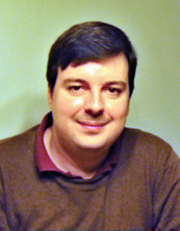
Dr. Matthew Argall is a Research Professor in Physics & Astronomy at the University of New Hampshire's College of Engineering and Physical Sciences. His research focuses on space plasma physics, magnetospheric dynamics, and space weather phenomena using NASA mission data. Research explores magnetic reconnection processes, plasma turbulence, and energy conversion mechanisms in space environments. Recent work develops machine learning tools for space weather prediction and VR systems for science education. Publications extensively utilize data from MMS, Wind, and Ulysses missions. Educational Contributions: Teaches graduate-level Optics (PHYS 708) Supervises senior design projects (PHYS 797) Mentors doctoral researchers (PHYS 999)
Leo Stein is an Associate Professor in the Department of Physics and Astronomy at the University of Mississippi, affiliated with the College of Liberal Arts. He holds a B.S. from Caltech (2006) and a Ph.D. from MIT (2012). His research focuses on Einstein's theory of gravity, particularly using astrophysical observations to test general relativity through gravitational wave studies of black hole systems. He has contributed to numerical simulations and analytical modeling of black hole mergers, exploring theories beyond GR and their observational signatures. Dr. Stein's expertise includes gravitational wave physics, numerical relativity, and post-Newtonian approximations. Key recognitions include the Sloan Research Fellowship (2023–25), NSF CAREER Award (2021–2026), and MIT's Henry Kendall Teaching Award (2011). His work bridges theoretical predictions with cutting-edge detector technology, aiming to advance fundamental physics through gravitational wave astronomy. His teaching spans graduate and undergraduate courses in electromagnetism, mechanics, and gravitational physics. Stein’s research also involves developing open-source tools like GWSurrogate and collaborating with the SXS Collaboration for black hole simulations. Future directions include refining waveform models for next-generation detectors and probing modified gravity theories via merger signals.
Professor Simon Ellingsen is a Professor of Physics and Adjunct Senior Researcher at the University of Tasmania , leading the School of Natural Sciences as Dean since 2019. His work spans radio astronomy , VLBI , and interstellar masers , focusing on high-mass star formation and Galactic structure . He has pioneered space domain awareness via UTas radio telescopes. PhD, University of Tasmania (1996) BSc (1st Class Hons), University of Tasmania (1991) Research centers on using interstellar masers to study high-mass star formation , Galactic spiral structure , and fundamental constant variability . His ATLASGAL and CORNISH-South surveys map 3 mm methanol masers and infrared-radio cross-correlations . Current projects include space infrastructure upgrades and cosmological tests via methanol transitions . His 15 most recent publications highlight VLBI astrometry , maser variability , and Galactic bar dynamics , with keywords spanning astrophysics , radio interferometry , and extragalactic masers . Awards: Alexander von Humboldt Fellowship (2009), Engineering Excellence Award (2003), Research Excellence Award (2002) Grants: $10M+ total funding, including $1.2M from Australian Space Agency for satellite tracking infrastructure As a PhD supervisor , he has guided 17 students in astrometry , space domain awareness , and maser studies . He leads the Southern Hemisphere Parallax Interferometric Radio Legacy Survey (SPIRALS) and collaborates globally with institutions in Germany , China , and USA .
Ivan Oleynik is Professor of Physics at the University of South Florida, holding fellowships in the American Physical Society, American Vacuum Society, and AAAS. His research focuses on materials behavior under extreme conditions using advanced computational and experimental methods. Research explores high-pressure physics, shock compression, quantum molecular dynamics, warm dense matter, and materials for exoplanetary interiors. Recent work includes development of machine learning interatomic potentials and studies of carbon phase transitions under extreme pressures. Major honors include triple fellowship recognition from leading scientific societies. Current research involves collaborations at X-ray free electron laser facilities for in situ studies of material transformation dynamics.
Bhimsen Shivamoggi is a Professor in the Department of Mathematics at the University of Central Florida's College of Sciences. His primary research focuses on theoretical and applied fluid dynamics, with significant contributions to solar wind modeling, magnetohydrodynamics, and turbulence theory. He maintains an active research program in astrophysical fluid dynamics and plasma physics. His research interests span both fundamental theory and practical applications in space physics, including solar wind dynamics, plasma stability analyses, and turbulent flow characterization. The work demonstrates strong interdisciplinary connections between applied mathematics, astrophysics, and plasma physics. Analysis of recent publications reveals a consistent focus on Parker's solar wind model extensions, magnetohydrodynamic stability criteria, and advanced turbulence modeling techniques. Significant theoretical work addresses nonlinear regularization of critical points in astrophysical flows and topological characterization of MHD systems. No awards or student advising information is documented in available materials. Research activities appear concentrated in theoretical development and computational modeling without explicit mention of laboratory facilities or research teams.
Deborah Harris is a Full Professor (Research Stream) in the Department of Physics and Astronomy at York University, holding a joint appointment with Fermilab as a Senior Scientist. She specializes in neutrino physics, focusing on oscillations and interactions, with key roles in major international experiments such as DUNE, MINERvA, and T2K. Her research aims to elucidate neutrino properties, their impact on astrophysical phenomena like galaxy formation, and the matter-antimatter imbalance in the universe. Education: Bachelor's in Physics from the University of California-Berkeley PhD from the University of Chicago (Experiment E799 on neutral kaons) Postdoctoral research at the University of Rochester (NuTeV Experiment) Research Interests: Neutrino oscillations, neutrino-nucleus interactions, and experimental precision in particle physics. She works on DUNE’s near detector to refine interaction models and is co-spokesperson of MINERvA, which provides foundational data for future neutrino experiments. Her involvement with T2K leverages near-far detector strategies critical for DUNE’s success. Publications Trends: Her recent work emphasizes cross-section measurements, detector design for neutrino experiments (e.g., DUNE single-phase technology), and improving neutrino flux predictions through collaborations like EMPHATIC. She bridges experimental data with theoretical models to address uncertainties in neutrino behavior. Awards: While no explicit awards are listed, her leadership roles in MINERvA (co-spokesperson since 2010) and DUNE highlight her impactful contributions to neutrino physics. She has received recognition through her outreach initiatives, including featured profiles in Women @ Energy and public lectures on neutrino experiments. Advising & Grants: As part of the Physics and Astronomy Graduate Program at York, she supervises advisees. Her grants support her roles in international collaborations; details are omitted but reflect her contributions to detector development and neutrino research infrastructure. She has managed large-scale projects, such as the MINERvA construction as a postdoctoral researcher. Labs & Teams: Active in the DUNE, MINERvA, and T2K collaborations. She leads efforts in cross-section measurements at MINERvA and contributes to T2K’s near detector strategies. Her work integratesYork’s academic resources with Fermilab’s experimental facilities.
Patrick Hall is a Full Professor and Chair of the Department of Physics and Astronomy at York University. He holds academic appointments within the Faculty of Science and leads research in active galactic nuclei (AGN) and quasar dynamics. His work focuses on quasar outflows, accretion disk physics, and gravitational lensing. Hall has secured significant external funding, including NSERC Discovery Grants and the Ontario Early Researcher Award. He has advised numerous graduate and undergraduate students, contributing to over 100 refereed publications. Education: Ph.D. in Astronomy (University of Arizona, 1998), B.A. in Astronomy and Physics (UC Berkeley, 1990). Research interests include AGN feedback mechanisms, quasar variability, and observational cosmology. Notable achievements include discoveries of extreme BAL quasars and the first detection of BAL outflow acceleration using Gemini telescope data. Awards: Asteroid 153686 named 'Pathall', NASA mission contributions, and multiple York University Merit Awards. Active in professional organizations like the Canadian Astronomical Society and the Sloan Digital Sky Survey (SDSS-V) collaboration. Grants: Over CAD 1.5M in research funding, including NSERC and CFHT projects. Collaborations include XMM-Newton, Hubble Space Telescope, and the James Webb Space Telescope. Labs/Teams: Member of the Maunakea Spectroscopic Explorer (MSE) project and SDSS-V Black Hole Mapper initiative. Supervises the York University AGN research group.
Yaqi Han is a Researcher and Postdoctoral Visitor in the Department of Physics at the University of Florida , affiliated with the Faculty of Science . Their research focuses on particle physics, astrophysics, and quantum field theory, with particular emphasis on axion dark matter detection, galactic halo modeling, and gravitational self-interactions of quantum fields. Key research interests include analyzing triangular features in Gaia sky maps to validate the Caustic Ring Model of the Milky Way halo, exploring low-frequency axion searches via cavity haloscopes, and investigating the classicality duration of quantum fields under various interactions. Han’s work bridges theoretical physics with observational data, contributing to advancements in dark matter detection methodologies and cosmological models. Recent studies (2024) emphasize nonvirialized axion mass measurements, Doppler effects in galactic halos, and experimental techniques at 100–600 MHz frequencies. Earlier work (2017–2019) explored quantum field dynamics in degenerate systems and self-interactions influencing classical regime stability. No scientific awards or grants are explicitly mentioned in the provided materials. Advising roles or student mentorship details are also unavailable. Research collaborations appear centered on experimental axion detection and astrophysical data analysis (e.g., Gaia and 3D dust maps), though specific lab affiliations or team structures are not detailed in the text.
Glenn Ciolek is a Senior Lecturer in the Department of Physics, Applied Physics & Astronomy at Rensselaer Polytechnic Institute, where he also serves as Transfer Credit and Degree Clearance coordinator. His research focuses on theoretical and computational astrophysics with specialization in interstellar medium dynamics, astrophysical plasmas, and magnetohydrodynamics. Dr. Ciolek's primary research investigates multifluid non-ideal MHD simulations incorporating dust grain dynamics to model shock waves in interstellar clouds and gravitational collapse in protostellar cores. He developed a Riemann-Godunov numerical code with adaptive mesh refinement to study time-dependent MHD shock formation in weakly-ionized clouds, utilizing parallel processing on supercomputers at Rensselaer's Center for Computational Innovations (CCI). His work extends to astrobiological applications through association with the New York Center for Astrobiology (NYCA), examining chemical processes in star-forming regions. His 21 publications spanning 1992-2023 reveal consistent focus on multifluid shock wave dynamics, magnetic field regulation of star formation, and dust-grain interactions. Recent work (2013-2023) emphasizes molecular line emission diagnostics, hydromagnetic wave propagation in weakly-ionized media, and magnetically-controlled fragmentation processes, demonstrating computational sophistication through adaptive mesh refinement and high-performance computing techniques. Collaborating with colleagues including Prof. Wayne Roberge and Prof. Shantanu Basu, Dr. Ciolek's research leverages CCI supercomputing resources for complex simulations. While specific grant details aren't documented, his methodology indicates substantial computational resource requirements. His mentorship activities within RPI's astrophysics program contribute to student training in computational methods. Dr. Ciolek maintains active research connections with the New York Center for Astrobiology and utilizes the Center for Computational Innovations for high-performance computing. His numerical code development for MHD shock simulations represents a sustained technical contribution to astrophysical modeling, with ongoing relevance to contemporary studies of star formation and interstellar medium physics.
New Jersey Institute of Technology (NJIT)United States
Gregory Fleishman is a Research Professor at the Center for Solar-Terrestrial Research at New Jersey Institute of Technology. His research focuses on solar physics, plasma astrophysics, and space weather phenomena. He employs microwave imaging spectroscopy and 3D modeling to study coronal magnetic fields, particle acceleration mechanisms during solar flares, and solar radio bursts. Dr. Fleishman actively develops citizen science initiatives like Solar Jet Hunter to catalog and analyze coronal jets using public participation. His research interests include solar flare dynamics, magnetic reconnection processes, and developing next-generation solar radio telescopes like the Frequency Agile Solar Radiotelescope. Recent work examines energy partitioning in cold solar flares and coupling between magnetic reconnection and particle acceleration in extreme solar events. Dr. Fleishman has made significant contributions to solar radio astronomy through advanced instrumentation projects and data-constrained modeling techniques that improve our understanding of space weather drivers and solar-terrestrial interactions.
Simone Scaringi is an Assistant Professor in the Department of Physics and Astronomy at Texas Tech University. His research focuses on accretion disk physics across cosmic scales and the application of machine learning to astrophysical data analysis, particularly through the BlackGEM telescope project. Education: Ph.D., Astrophysics, University of Southampton (2010) M.Phil., Astrophysics, University of Southampton (2007) B.Sc., Mathematics with Astronomy, University of Southampton (2005) Research Interests: Dr. Scaringi investigates universal accretion processes in systems ranging from young stellar objects to supermassive black holes. He develops machine learning algorithms to analyze data from projects like BlackGEM, aiming to classify transient events and reduce subjective bias in classification. His work bridges observational astronomy with computational techniques. Awards: Alexander von Humboldt Fellowship (2014) FWO Pegasus Marie Curie Fellowship (2012) Labs/Teams: Involved with the BlackGEM telescope array project, focusing on optical transient detection and data fusion techniques using deep learning and convolutional neural networks.
Dr. Alexandre Sousa is an Associate Professor in the Department of Physics at the University of Cincinnati, affiliated with the College of Arts & Sciences. His primary research focuses on experimental high-energy physics, particularly neutrino oscillations and their implications for understanding fundamental particle interactions and cosmological evolution. He has held positions at Harvard University and the University of Oxford before joining UC in 2012. Education: Ph.D. in Physics (Tufts University, 2006), M.Sc. in Physics (Tufts University, 2000), B.Sc. in Physics Engineering (Instituto Superior Técnico, 1998). Research Interests: Neutrino properties, CP violation, neutrino mass hierarchy, sterile neutrino searches, and long-baseline experiments (NOvA, DUNE, MINOS+). His work addresses questions like whether neutrinos violate CP symmetry and the structure of neutrino mass ordering. He leads the NOvA Test Beam effort and coordinates detector simulations for NOvA. Grants & Awards: ORAU Ralph E. Powe Junior Faculty Enhancement Award (2014), UC Rising Star Award (2017), multiple Fermilab Intensity Frontier Fellowships (2013–2019), and NSF grants for education and detector development. He has led over $2.5M in federal and private grants, focusing on HEP data analytics and neutrino experiments. Teaching & Service: Championed active learning methods in physics education. Served as Teaching & Learning Liaison (2016–2018) and active member of the Diversity and Inclusion Committee. Recognized with the Darwin T. Turner Breakfast of Champions Award (2018). Labs & Collaborations: Co-leader of NOvA Test Beam, NOvA Detector Simulations Group, and MINOS/MINOS+ Analysis Coordinator. Collaborates on DUNE, LBNE, and CHIPS projects, advancing neutrino detection technologies and computational methods.
Xavier Aragones Cervera is an Associate Professor at the Polytechnic University of Catalonia (UPC), affiliated with the Department of Electronic Engineering (Departament d'Enginyeria Electrònica) within the School of Telecommunications Engineering of Barcelona (Escola Tècnica Superior d'Enginyeria de Telecomunicació de Barcelona). His research focuses on high-performance integrated circuits and systems design, particularly addressing substrate noise, RF circuit design, and aging effects in CMOS technologies. He leads the HIPICS (High Performance Integrated Circuits and Systems Design Group) and contributes to the EFRICS (Efficient and Robust Integrated Circuits and Systems) research group. Education: M.S. in Telecommunication Engineering from UPC (1993), Ph.D. in Electronic Engineering from UPC (1997). His work spans over 130 publications, including peer-reviewed articles, conference presentations, and patents. Key research areas include substrate noise analysis, RFIC design, mixed-signal systems, and reliability engineering. He has advised students such as Marc Manel Molina and Juan Felipe Osorio. Collaborations include projects funded by national and European programs, focusing on microelectronics, IoT, and next-generation semiconductor technologies. Publications highlight experimental studies on substrate noise in VCOs/PLLs, aging compensation in amplifiers, and low-power IoT designs. He has contributed to major initiatives like the Cherenkov Telescope Array and RISC-V processor development in advanced FDSOI technology. His work emphasizes bridging theoretical models with practical circuit implementations, addressing emerging challenges in nanoscale CMOS and BEYOND-CMOS technologies.
Jonas Heßdörfer is a researcher at the Chair of Astronomy, University of Würzburg, Germany, where he works within Prof. Dr. Matthias Kadler's research group (AG Kadler). His office is located in room 31.02.009 on the Hubland Nord campus at Emil-Fischer-Straße 31, 97074 Würzburg, with contact details including email jonas.hessdoerfer@uni-wuerzburg.de and phone +49931/3186283. His primary research focuses on compact radio jets in active galaxies, specifically investigating radio spectral variability and polarimetry of TeV-emitting active galactic nuclei (AGN). He employs advanced observational methods including single-dish radio astronomy and radio-interferometric techniques, utilizing the mm-VLBI (Global mm-VLBI Array) network and the Effelsberg 100-m Telescope as part of the TELAMON project. His work contributes to high-energy astrophysics research within the FRANCI initiative (Astrophysics in North Bavaria). He is actively involved in the department's research activities, collaborating on observational studies of AGN phenomena while contributing to the university's astronomy curriculum and research infrastructure. His work connects with broader efforts in radio astronomy and high-energy astrophysics within the European research community.
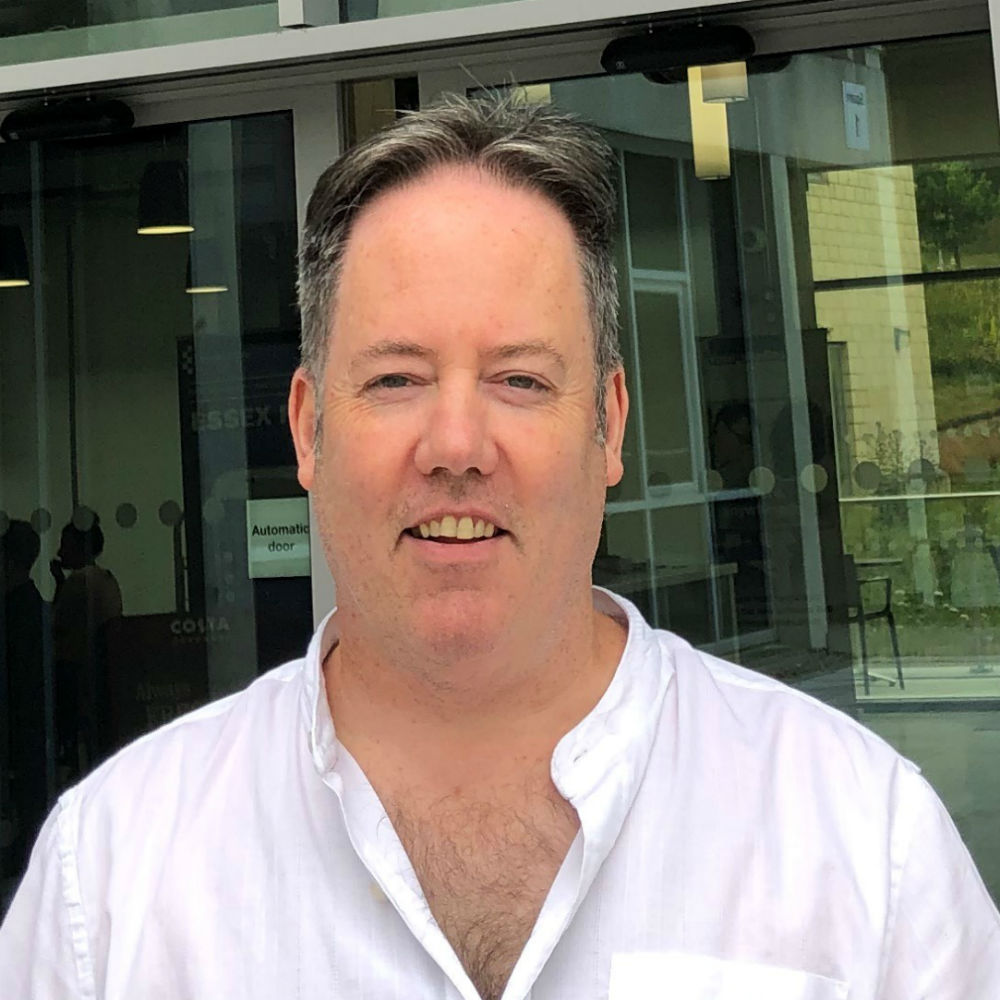
Dr. Andrew Harrison is a Senior Lecturer in the School of Mathematics, Statistics and Actuarial Science at the University of Essex. Originally an astrophysicist specializing in star formation, he transitioned to bioinformatics to explore life detection on exoplanets and apply mathematical-statistical methods to functional genomics. His work involves collaborating with biologists and medics to analyze data-rich experiments like microarrays. Qualifications include a PhD in Astrophysics and BSc in Physics with Astrophysics from the University of Manchester (1991). He has held his current position since 2004. Research interests span bioinformatics applications, computational genomics, and interdisciplinary collaborations in life sciences. Publications reflect expertise in gene selection methods, evolutionary cooperation models, and bioinformatics tools for genomic data analysis. He has contributed to rice stress-resistance databases and protein interaction studies. His work bridges astrophysics-derived analytical techniques with modern biological problems, emphasizing data-driven solutions. Grants and funding details are listed in institutional records, though specific projects are not detailed here. Teaching and supervision activities are integral to his role, though student names are not provided in available texts.