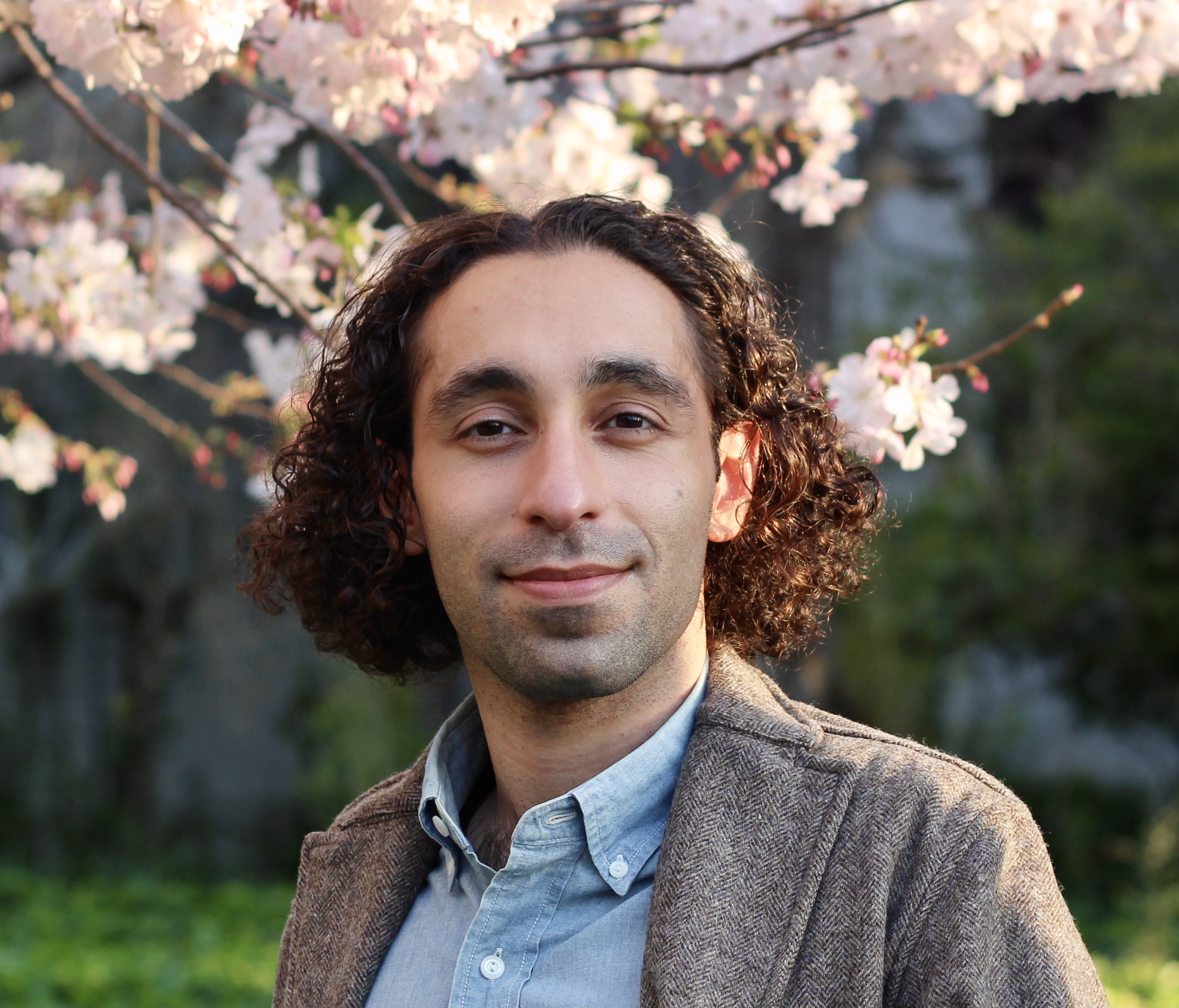
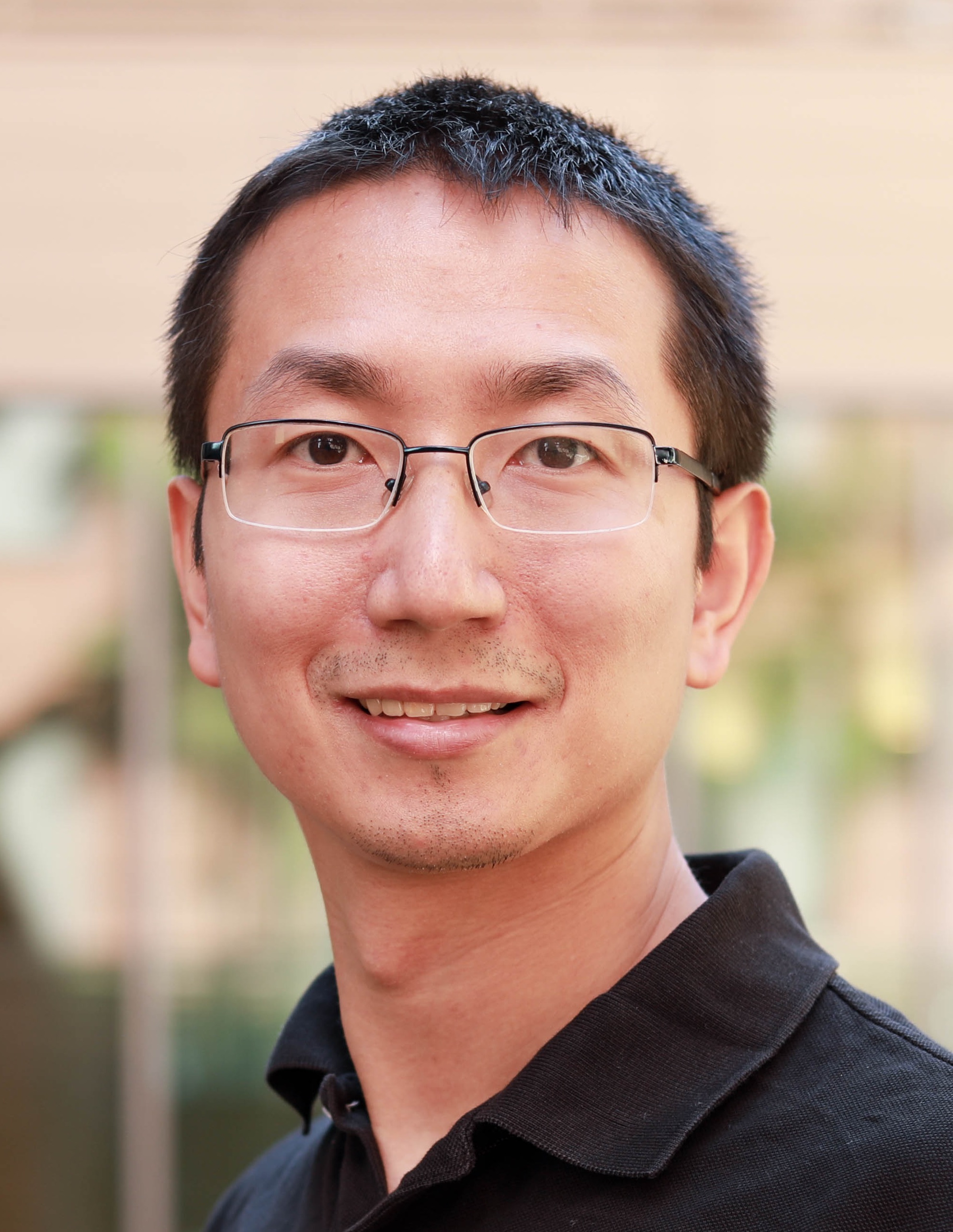
Prof. Tamir Bendory serves as an Associate Professor in the Department of Electrical Engineering within Tel Aviv University's School of Electrical and Computer Engineering. His research bridges mathematical theory with practical signal processing applications, primarily focused on computational imaging challenges. His core research areas include Mathematics of data science, signal processing, optimization, statistics, cryo-electron microscopy, phase retrieval, and super-resolution. This interdisciplinary work develops theoretical frameworks for reconstructing biological structures from noisy imaging data, with particular emphasis on algorithmic solutions for cryo-EM and phase retrieval problems. Analysis of his 2017-2023 publications reveals consistent progression in mathematical cryo-EM methodologies, evolving from fundamental uniqueness theorems toward sparsity-constrained algorithms with improved sample complexity. His work increasingly integrates algebraic geometry with statistical signal processing to address computational bottlenecks in structural biology. Prof. Bendory actively recruits research students and acknowledges funding support from major international sources including ISF, NSF, BSF, and TAD. His laboratory focuses on developing mathematical tools for next-generation imaging technologies in structural biology.
Dr. Chiheb Ben Hammouda is an Assistant Professor in the Mathematical Institute within the Faculty of Science at Utrecht University, where he joined in September 2023. His research integrates mathematical (stochastic) modeling, numerical analysis, and advanced computational methods to address complex problems in engineering and science that exhibit challenging features such as high dimensionality, complex dynamics, low regularity, and rare events. PhD in Applied Mathematics and Computational Science, KAUST (2016-2020) MSc in Applied Mathematics and Computational Science, KAUST (2013-2015) BSc in Multidisciplinary Engineering, Ecole Polytechnique de Tunisie (2010-2013) Dr. Ben Hammouda's research focuses on enhancing numerical methods to achieve optimal performance balancing efficiency and interpretability. His work spans theory, algorithm design, and numerical analysis with applications in quantitative finance (pricing financial derivatives, risk management), optimal control for power systems management, stochastic reaction networks (biochemical systems, epidemiology), and machine learning for forecasting extreme events. He employs methodologies including Monte Carlo methods, multilevel MC, Quasi-MC, sparse grids, Fourier methods, stochastic optimal control, importance sampling, and machine learning. Analysis of Dr. Ben Hammouda's publication record reveals a consistent focus on developing efficient computational methods for high-dimensional problems across multiple domains. His work shows a trajectory from foundational numerical methods development toward increasingly complex applications in finance, energy systems, and biological modeling. A notable trend is the integration of machine learning techniques with traditional numerical methods to address the curse of dimensionality in complex systems. Dr. Ben Hammouda actively supervises multiple PhD, Master's, and Bachelor's students working on projects related to numerical methods in finance, energy systems, and stochastic reaction networks. His students have pursued diverse research topics including Fourier pricing of multi-asset options, numerical smoothing techniques, optimal control for power systems, and dimensionality reduction in stochastic reaction networks. Several of his former students have secured positions at institutions including KAUST, RWTH Aachen University, and financial firms like Allianz Global Investors and Deloitte. Dr. Ben Hammouda is actively involved in the academic community as co-organizer of major conferences including the Study Group Mathematics with Industry (SWI 2025) and the International Conference on Computational Finance 2024. He serves as Associate Editor for the Statistics and Computing Journal and referees for multiple prestigious journals including Journal of Computational and Applied Mathematics and Quantitative Finance. His organizational leadership extends to mini-symposia at major international conferences on Monte Carlo methods and computational finance.
Nima Hejazi is an Assistant Professor of Biostatistics at the Harvard T.H. Chan School of Public Health. His work bridges causal inference , statistical machine learning , and computational statistics to address critical challenges in biomedical and public health sciences. Education: PhD in Biostatistics (UC Berkeley), NSF Postdoctoral Fellowship in Causal Inference (Weill Cornell) His research emphasizes assumption-lean statistical methods for precision medicine, vaccine efficacy trials (HIV, COVID-19), and Long COVID studies. Recent focus areas include two-phase sampling , network interference , and open-source software development for reproducible science. Key trends in his recent publications involve causal mediation analysis for biomarker discovery, modeling socio-demographic impacts on post-COVID outcomes, and semi-parametric inference under network dependence. His work has been recognized with awards including the CFAR Early Career Investigator Award and Tom Ten Have Memorial Award . Scientific Awards: CFAR Early Career (2024-2026) Tom Ten Have Memorial Award (2019) NSF Postdoctoral Fellowship (2021-2022) Grants & Collaborations: NIH/NLM BD2K Fellowship, HU-CFAR collaborations, and leadership roles in the NSH Lab and TLverse open-source projects. Labs & Teams: Leads the NSH Lab (statistical science research group) and contributes to rOpenSci software peer review initiatives.
Antonella Somma is an Associate Professor of Clinical Psychology (RTD-B) at the Faculty of Psychology, Vita-Salute San Raffaele University in Milan, Italy. She has held this position since June 1, 2022, following a previous role as Fixed-Term Researcher Type A (RTD-A) in Psychometrics from May 2019 to April 2022. She is actively engaged in research, teaching, and editorial work, with a focus on personality disorders, psychopathology, and clinical assessment. Dr. Somma earned her Degree in Psychological Sciences in 2008 and Master's Degree in Clinical Psychology in 2010, both with honors (110/110 cum laude) from Vita-Salute San Raffaele University. She completed additional specialized training including a Master's in Forensic Psychopathology and Clinical Criminology (2011), a PhD from LUMSA University (2016), and specialized training in Psychotherapy (2018). She is registered with the Order of Psychology of Lombardy (number 14729) and maintains active clinical practice. Her research focuses on clinical psychology, particularly personality disorders, narcissism, psychopathy, mentalization, and psychometric assessment tools. She investigates the relationships between personality traits, emotional processing, executive functioning, and clinical outcomes. Her work often employs sophisticated methodological approaches including network analysis, latent dimension analysis, and intensive longitudinal data modeling. She has made significant contributions to understanding the DSM-5 Alternative Model of Personality Disorders and the assessment of personality pathology across different age groups. Dr. Somma has published extensively in high-impact journals, with recent work examining malignant narcissism, psychopathic traits, emotion regulation, and the assessment of personality disorders. Her research demonstrates a consistent focus on bridging clinical theory with empirical validation of assessment tools, particularly in Italian populations. She has contributed to both clinical applications and theoretical advancements in personality assessment. Among her scientific recognitions are the Youth Research Award from the Italian Society of Psychotherapy (2017) and multiple Best Poster Awards at national psychology conferences (2014, 2015). She serves as Associate Editor for BMC Psychiatry (Personality Disorders section) and has reviewed for several prestigious journals including Psychological Assessment and European Psychiatry. Dr. Somma is actively involved in teaching at both undergraduate and graduate levels, offering courses in psychological research methodology, psychological assessment, and multivariate analysis. She provides specialized training in SCID-5-PD and DSM-5 personality disorders assessment. She is also a member of the Research Review Group at the Faculty of Psychology and has supervised numerous student projects. Her commitment to public engagement is evident through numerous media appearances and public lectures on psychological topics for non-academic audiences.
Professor Peter Felfer is a leading expert in atom probe tomography and materials science at Friedrich Alexander University Erlangen-Nuremberg. He holds a professorship in Atom Probe Tomography within the Department of Materials Science in the Faculty of Engineering. His research focuses on advanced materials characterization techniques, particularly for analyzing nanoscale structures and hydrogen behavior in metals. Professor Felfer's research interests span multiple areas of materials science. He specializes in atom probe tomography, which allows for three-dimensional chemical mapping at the atomic scale. His work has significant applications in understanding hydrogen embrittlement in metals, superalloy development, additive manufacturing of metals, and corrosion science. He has made substantial contributions to improving atom probe instrumentation, data analysis techniques, and specimen preparation methods, particularly for challenging materials systems. His recent publications demonstrate a strong focus on advancing atom probe tomography techniques while applying them to solve critical materials challenges. A significant portion of his recent work addresses hydrogen analysis in metals, reflecting growing interest in hydrogen as an energy carrier and the need to understand its effects on structural materials. His research also shows increasing integration of computational approaches for data analysis and instrument control. Professor Felfer leads a research group focused on atom probe tomography at FAU Erlangen. His laboratory develops and applies advanced characterization techniques to study materials at the atomic scale, with particular emphasis on metals and alloys for demanding applications.
Dr. Craig Douglas is a Professor of Mathematics and Statistics at the University of Wyoming's College of Engineering and Physical Sciences, with an Adjunct Professor appointment in Computer Science. He earned his Ph.D. from Yale University and is globally recognized for pioneering research in Dynamic Data-Driven Application Systems (DDDAS) for Big Data, high-performance computing, and multigrid algorithms for partial differential equations. He co-developed the first commercial DDDAS for oil and gas pipeline monitoring, deployed across 100+ countries. His work bridges theoretical mathematics and practical engineering challenges. Research Interests Dynamic Data-Driven Application Systems (DDDAS) High-Performance Computing (HPC) Multigrid Algorithms Big Data Analytics for Energy and Environment Computational Science Applications Recent Publications Advances in DDDAS frameworks Computational wildfire modeling CO 2 sequestration simulation Finite-difference and finite-element methods Cache optimization for multigrid algorithms Email: cdougla6@uwyo.edu
Haim Avron is a Professor in the Department of Applied Mathematics at Tel Aviv University's School of Mathematical Sciences, where he has been employed since 2015. His research focuses on numerical computing, high-performance computing, and their applications in scientific computing and machine learning. Education: Completed PhD in Computer Science at Tel Aviv University under Prof. Sivan Toledo, followed by postdoctoral research at IBM T.J. Watson Research Center. Research interests: Foundations of numerical linear algebra and randomized algorithms Tensor-tensor algebra for multiway data representation High-performance computational methods for machine learning Optimization techniques for large-scale systems Recent publications demonstrate strong focus on tensor algebra, randomized numerical methods, and machine learning optimization, with applications ranging from quantum computing to deep learning architectures. Awards: SIAM Activity Group on Computational Science and Engineering Best Paper Prize 2025 Software contributions include development of numerical libraries such as libSkylark for matrix sketching and Blendenpik for least-squares problems.
Cristina Butucea is a Full Professor of Statistics at ENSAE, Institut Polytechnique de Paris (IP Paris), and a Permanent Member of CREST (Center for Research in Economics and Statistics). She specializes in nonparametric and high-dimensional mathematical statistics, with research interests spanning inverse problems, quantum statistics, privacy of data, and machine learning. Her academic career includes faculty positions at several prestigious French institutions including Université Paris-Est Marne-la-Vallée and Université des Sciences et Technologies de Lille. Her educational background includes a post-doc at Humboldt University, Berlin (1998-1999), followed by an Assistant Professor position at Université Paris Nanterre (1999-2007). She was promoted to Professor at Université des Sciences et Technologies de Lille 1 (2007-2010), then at Université Paris-Est Marne-la-Vallée (2010-2016), and currently holds her position at ENSAE, IP Paris (2016-present). Professor Butucea's research focuses on theoretical statistics with applications in modern data science challenges. Her work on differential privacy has established fundamental limits and optimal procedures for statistical estimation under privacy constraints. She has made significant contributions to quantum statistics, particularly in quantum state estimation. Her research on high-dimensional statistics addresses variable selection, sparse structures, and nonparametric estimation in complex settings. She has also contributed to the theory of inverse problems and the analysis of locally stationary processes. Her recent publications demonstrate a strong focus on the intersection of statistics with privacy concerns, quantum information, and high-dimensional data analysis. She has published in top statistical journals including Annals of Statistics, Bernoulli, and Electronic Journal of Statistics. Her work often addresses fundamental questions about optimal rates of convergence, phase transitions in estimation problems, and the theoretical limits of statistical procedures under various constraints. Nominated IMS Fellow in 2019 CO-organizer of the Seminar of Statistics CREST-CMAP Associate Editor of ALEA (Latin American Journal of Probability and Mathematical Statistics) Organizer of several conferences in mathematical statistics and machine learning (Fréjus 2018, Luminy 2019, 2020, Oberwolfach 2021) Professor Butucea has received multiple research grants including ANR HIDITSA (2017-2021), ANR SPADRO (2013-2017), and ANR DIONISOS (2012-2016). She was the Principal Investigator of an ANR project on "Statistics for quantum physics" (2007-2008). She has also been awarded research stays at CIRM Luminy and MFO Oberwolfach. She is actively involved in the academic community as a member of the IMS (Institute of Mathematical Statistics) and the Bernoulli Society. She is also a member of the Institut des Actuaires as an Actuary ISUP.
Vegard Antun is a Postdoctoral Fellow at the Department of Mathematics, University of Oslo , specializing in applied mathematics with a focus on inverse problems, imaging, and deep learning. Education: PhD (2020), Master's (2016), and Bachelor's (2013) degrees from the University of Oslo. Research Interests: Stability and accuracy in AI algorithms, compressive sensing, signal recovery, and mathematical paradoxes in deep learning. Key Projects: Supervised a 2022 interdisciplinary project on deep learning observables for partial differential equations. His work explores the theoretical limitations of AI, particularly the instability of neural networks in inverse problems and their implications for scientific computing, as highlighted in his research on mathematical paradoxes and Smale’s 18th problem. His publications span topics such as binary sampling , wavelet reconstruction , and data-efficient neural networks , emphasizing the tension between AI accuracy and robustness. He has contributed to understanding implicit regularization , existence of optimal decoders , and hybrid concept-based models for scientific applications.
Naoki Awaya is an Assistant Professor at the School of Political Science and Economics , Waseda University. His research focuses on economic statistics, computational statistics, and financial econometrics with applications in machine learning and Bayesian inference. Education : Not explicitly stated Current Projects : Developing Bayesian estimation methods for nonstationary economic time series and structural changes His work includes tree-based models for probability distributions and advanced MCMC sampling techniques. He teaches graduate-level econometrics courses (Econometrics I/II) using R programming, emphasizing methodological rigor and theoretical foundations. Research interests span high-dimensional data analysis, density ratio estimation, and financial market applications through multivariate Hawkes processes. Recent publications highlight innovations in: Unsupervised tree boosting Hidden Markov Pólya trees Particle rolling MCMC algorithms Nonstationary errors-in-variables models
Noemi Anau Montel is a postdoctoral research fellow at the Max Planck Institute for Astrophysics in Garching, Germany. Her work spans astrophysics, cosmology, and particle physics, focusing on developing probabilistic machine learning techniques for analyzing astrophysical datasets. Research interests include: Simulation-based inference for dark matter studies Generative modeling in cosmological simulations Statistical analysis of high-energy astrophysical data Neural ratio estimation techniques Applications to gravitational lensing and dark Universe problems She has published extensively on machine learning applications in astrophysics, with recent works focusing on dark matter mass constraints, cosmological initial condition reconstruction, and model validation techniques.
Viktoria Schuster is a Guest Researcher in the Department of Computer Science at the University of Copenhagen, specializing in machine learning applications for biological data analysis. Her work bridges computational methods with biomedical research challenges. Her primary research domains include: Machine Learning (deep generative models, representation learning) Bioinformatics (single-cell RNA sequencing, multi-omics integration) Immunoinformatics (TCR-peptide binding prediction) Computational Biology (genomic data modeling) Recent publications reveal a strong methodological focus on developing novel deep generative frameworks for biological data, particularly in single-cell genomics and immunology. Her 2024 Nature Communications paper on multi-omics integration and 2023 Genome Biology work on N-of-one differential expression demonstrate significant contributions to handling sparse biological datasets without traditional control samples. Collaborations span international institutions including the Wellcome Sanger Institute (Sarah Teichmann) and multiple Danish research groups, with notable impact evidenced by patent references to her NetTCR-2.0 work and substantial Mendeley readership across publications.
Soumik Pal is a Professor in the Department of Mathematics at the University of Washington, with adjunct appointments in Applied Mathematics and Statistics. His research focuses on probability theory, particularly interacting Brownian particle systems, random graphs, random matrices, and optimal transport. He leads the Kantorovich Initiative, an interdisciplinary research effort funded by PIMS and NSF, advancing applications of optimal transport in data science. NSF grants DMS-2052239 and DMS-2134012 (Scale Math of Deep Learning) NSF Infrastructure grant DMS-2133244 supporting the Kantorovich Initiative His recent work bridges optimal transport with gradient flows, Schrödinger bridges, and graphons. He advises PhD students in probability and stochastic models, with former advisees including Tobias Johnson and Andrey Sarantsev. He serves as Associate Editor for journals like Stochastic Models and Electronic Journal of Probability .
Quanquan Gu is an Assistant Professor in the Department of Computer Science at the University of California, Los Angeles (UCLA). His research spans machine learning, privacy-preserving algorithms, and distributed optimization, with applications in public health modeling and data science. Affiliation: Department of Computer Science, UCLA Academic Rank: Assistant Professor Gu's work addresses fundamental challenges in federated learning, non-convex optimization, and statistical learning. He has contributed to privacy-preserving methods like differentially private stochastic optimization and federated diffusion model training, while also exploring robustness in epidemic modeling under uncertainty. His recent publications highlight trends in privacy-preserving machine learning , including adaptive client sampling in federated systems and secure distributed non-convex optimization. He has also published on epidemiological forecasting , notably analyzing limitations in nationwide disease prediction models during the 2020-2021 pandemic period. Current advisees : 7 PhD students (including Yuan Cao, Jinghui Chen, Difan Zou) and 4 Master's students (Felicia Gao, Arjun Srinivasan) Alumni : 1 PhD graduate (Shi Pu) and 15 Master's graduates (including Xiao Zhang, Yaodong Yu, James Xie) Gu's teaching and research emphasize practical implementation of theoretical algorithms, with a focus on communication-efficient distributed learning and robust statistical estimation in high-dimensional settings.
Egor Dmitrievich Kosov is an Associate Professor at the Faculty of Computer Science of the National Research University Higher School of Economics (HSE), where he has been working since 2016. He also serves as a Senior Research Fellow at the International Laboratory of Stochastic Algorithms and Multidimensional Data Analysis within HSE's Institute of Artificial Intelligence and Digital Sciences. Additionally, he holds positions as Senior Researcher at the Steklov Mathematical Institute's Department of Function Theory and Junior Researcher at the Laboratory of Multidimensional Approximation and Applications. Dr. Kosov earned his Candidate of Physical and Mathematical Sciences degree from Lomonosov Moscow State University in 2018, where he also completed postgraduate studies specializing in Mathematics and Mechanics with a qualification as Researcher. His research focuses on measure theory , particularly Gaussian measures , measures on infinite-dimensional spaces , logarithmically concave measures , and measurable polynomials . Kosov's work bridges theoretical mathematics with applications in stochastic analysis, exploring the regularity properties of distributions and developing discretization techniques for functional norms. His research has significant implications for understanding complex probabilistic structures in high-dimensional spaces. Analysis of Kosov's recent publications reveals a strong focus on polynomial mappings of random variables, particularly Gaussian and log-concave distributions. A significant portion of his research addresses discretization problems—developing methods to approximate continuous mathematical structures through discrete sampling. His publications demonstrate growing recognition in the mathematical community, with appearances in prestigious journals across multiple subfields of mathematical analysis. Letter of gratitude from the First Vice-Rector of HSE (March 2023) Letter of Gratitude from the Faculty of Computer Science at HSE (September 2019) Bonus for publication in List A journals (2023-2024) Multiple bonuses for international peer-reviewed publications (2019-2023) Best Teacher award (2018) Moscow Mathematical Society award (2021) At HSE, Kosov teaches Mathematical Analysis, Probability Theory, and Functional Analysis to undergraduate students in the Applied Mathematics and Computer Science program across both the Faculty of Computer Science and the Faculty of Economic Sciences. His teaching spans multiple academic years (2020-2023), demonstrating his commitment to education alongside research. Dr. Kosov is actively involved in research teams including the International Laboratory of Stochastic Algorithms and Multidimensional Data Analysis at HSE and the Laboratory of Multidimensional Approximation and Applications. His work connects with the broader mathematical community through collaborations with researchers such as V.I. Bogachev, V.N. Temlyakov, and others, contributing to Russia's strong tradition in mathematical analysis and probability theory.