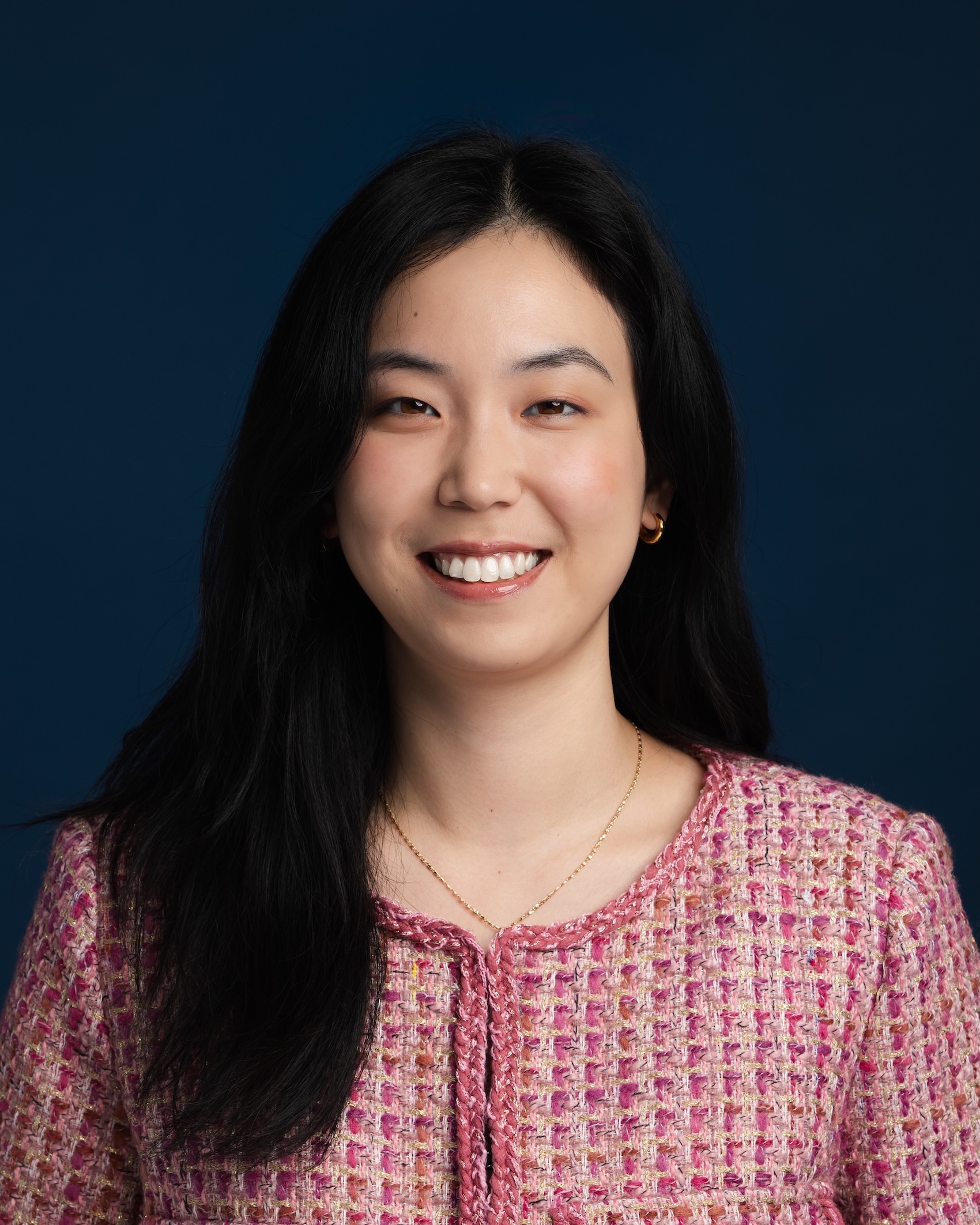
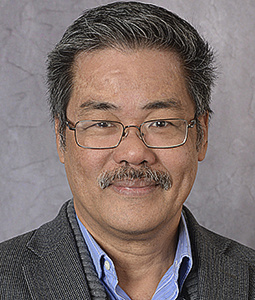
Angelos Alexopoulos is an Assistant Professor at the Department of Economics , Athens University of Economics and Business . He has held Research Associate positions at the University of Cambridge, University College London, and University of Exeter in the UK. PhD: Athens University of Economics and Business Research Focus: Computational Statistics, Econometrics, Bayesian Analysis, Network Modelling Publications span Bayesian inference, epidemic forecasting, machine learning for fraud detection, and econometric methodology. Key journals include Journal of the Royal Statistical Society , Journal of Computational and Graphical Statistics , and Statistics and Computing . 2024: Gaussian invariance in MCMC 2024: Epidemic nowcasting models 2023: VAT fraud detection with ML Awards include certifications in Deep Learning (Coursera), Blockchain (edX), and Object-Oriented R Programming (DataCamp).
Joe Haley is a Professor in the Department of Physics at Oklahoma State University, where he has been a faculty member since 2013 (tenured 2018, full professor 2023). His research focuses on experimental high energy physics through the ATLAS experiment at CERN, particularly searching for vector-like quarks and new fundamental particles that could address Standard Model limitations. Dr. Haley earned a B.S. in Physics and Astronomy from the University of Washington (2003), followed by a Ph.D. in Physics from Princeton University (2009) for DZero experiment research at Fermilab. He conducted postdoctoral work at Northeastern University (2009-2013) with the CMS experiment at CERN. His research spans collider phenomenology, including Higgs boson studies, B meson lifetime measurements, and lepton universality tests in W boson decays. He employs neural simulation-based inference techniques and advanced τ-lepton reconstruction methods to analyze data from the Large Hadron Collider. Dr. Haley actively contributes to educational initiatives through multiple grants, including the US ATLAS Summer Undergraduate Program (2012-2025) and QuarkNet programs (2012-2024). He teaches core physics courses such as University Physics I-III and specialized topics in General Relativity and Particle Physics. As a strong advocate for equity in academia, Dr. Haley engages in inclusion programs and public outreach. His work intersects with Sustainable Development Goals in quality education, reduced inequalities, and clean energy research.
Andreas Asp Bock is a postdoctoral researcher at the Department of Applied Mathematics and Computer Science within the Technical University of Denmark . His work focuses on scientific computing and numerical linear algebra, with particular emphasis on matrix approximation techniques, preconditioning strategies, and optimization methods. Current affiliation: Technical University of Denmark (College of Engineering) Academic role: Researcher (postdoctoral level) Research interests include: Matrix factorization and truncation Bregman divergence applications Baysian inversion frameworks Curve registration algorithms High-dimensional data analysis Preconditioning for iterative solvers Recent publications demonstrate expertise in improving approximate factorization preconditioners, geometric curve registration, and divergence-based preconditioner design. Collaborations with Martin S. Andersen and others indicate ongoing contributions to sparse linear algebra and computational statistics. Supervision : Currently mentoring J. V. Galvão da Mata in a PhD project focused on Optimization methods for data-sparse models , active from 2022-2025.
Scott W Linderman is an Assistant Professor of Statistics at Stanford University with courtesy appointments in Electrical Engineering and Computer Science. He serves as an Institute Scholar in the Wu Tsai Neurosciences Institute and is affiliated with Stanford Bio-X and the Stanford AI Lab. Education: PhD in Computer Science (2016) - Harvard University SM in Computer Science (2013) - Harvard University BS in Electrical and Computer Engineering (2008) - Cornell University 3 years as Microsoft software engineer before graduate school His research focuses on machine learning and computational neuroscience , developing: Advanced state space models (rSLDS, GP-SLDS) behavioral time series methods (GIMBAL, Keypoint MoSeq) deep state space architectures (S5, ELK) point process models (PP-Seq) scalable inference algorithms (SIXO, Structure-exploiting VI) Key collaborations include: Prof. David Anderson (Caltech) - hypothalamic dynamics Prof. Bob Datta (Harvard Medical School) - behavioral sequencing Prof. Chris Ré (Stanford) - biomedical ML Prof. David Sussillo (Stanford) - neural network theory Scientific contributions: Developed SSM and Dynamax software packages Leonard J. Savage Award recipient (2016) Bridging reinforcement learning and neural dynamics Advancing 3D keypoint tracking and behavioral syllable analysis Labs & teams: Linderman Lab - computational neuroscience Stanford AI Lab - machine learning Wu Tsai Neurosciences Institute - interdisciplinary research Stanford Bio-X - cross-departmental collaboration
Lu Tang is an Associate Professor and Vice Chair for Education in the Department of Biostatistics and Health Data Science at the University of Pittsburgh School of Public Health. Her research bridges biostatistics and machine learning to advance health data science through integrative analysis of distributed and high-dimensional datasets, with significant applications in precision medicine, opioid use disorder, sepsis treatment, and public health policy. Dr. Tang's educational journey includes foundational training at Sun Yat-sen University followed by advanced degrees in quantitative fields: PhD in Biostatistics, University of Michigan (2018) MS in Statistics, University of Virginia (2013) BA in Mathematics, University of Virginia (2012) Her research program develops statistical methodologies for data integration, causal inference, and decision-making in healthcare settings. She pioneers techniques for federated learning, robust individualized treatment rules, and high-dimensional data analysis, directly addressing challenges in health disparities, electronic health records, and clinical trial heterogeneity. Her work consistently translates methodological innovations into practical tools for biomedical researchers. Analysis of Dr. Tang's publication trajectory reveals a strategic evolution toward solving real-world healthcare data challenges through distributed learning frameworks. Her recent work emphasizes robust decision rules for heterogeneous populations (2022-2025), transfer learning for federated systems (2024), and methodological innovations for longitudinal and high-dimensional data (2019-2023), demonstrating consistent contributions across biostatistics, machine learning, and public health domains. Dr. Tang has been recognized with: IMS New Researchers Travel Award (2023) She actively mentors 6 current graduate students across PhD and MS programs while supervising 8 alumni now in industry and academia. Her research program is sustained by major funding including NIH R21DA055672 (PI, 2023-2025) on federated Medicaid data analysis, NSF DMS 2310217 (PI, 2023-2026) for longitudinal missing data methods, and multiple NIH R01 grants as Co-I addressing opioid treatment equity and precision medicine in sepsis. Dr. Tang leads the development of critical open-source software including RISE (Python) for robust individualized decisions, ifedtree (R) for tree-based federated learning, and metafuse (R/CRAN) for data integration, establishing infrastructure widely adopted in health data science research communities.
Gerda Claeskens is a full professor of Statistics at the Faculty of Economics and Business (FEB) at KU Leuven, Belgium. She holds positions in the Operations Research and Statistics Research Group (ORSTAT) and is affiliated with the Leuven Statistics Research Center. Her academic journey includes a Licentiate in Mathematics (Summa Cum Laude) from the University of Antwerp and a Ph.D. in Statistics from Limburgs Universitair Centrum (now Hasselt University). Research Interests: Her work focuses on model selection, post-selection inference, nonparametric methods, and high-dimensional statistics. She has contributed extensively to methodologies like focused information criteria, penalized splines, and quantile regression. Awards and Honors: Notable accolades include Fellow of the American Statistical Association (2019), Goodeve Medal (2017), and Medallion Lecturer (2016). She has also held editorial roles in top journals such as Biometrika and Journal of the American Statistical Association . Teaching and Mentoring: She has advised over 20 PhD students and mentored postdoctoral researchers. Her teaching spans advanced statistical methods, probability theory, and business statistics. She has delivered invited lectures globally, including at the European Meeting of Statisticians and the International Society for NonParametric Statistics. Key Contributions: Her book Model Selection and Model Averaging (2008) is a seminal work in statistical methodology. Her research addresses challenges in high-dimensional data, survival analysis, and model averaging, with applications in finance, insurance, and biostatistics.
Yoonkyung Lee is a Professor of Statistics and Computer Science Engineering at The Ohio State University, affiliated with the Department of Statistics in the College of Arts and Sciences. She holds a PhD from the University of Wisconsin-Madison (2002). Her primary research focuses on statistical learning and multivariate analysis, with specializations in classification, kernel methods, and model stability. She has a courtesy appointment in Computer Science and Engineering since 2016 and served as a faculty co-director of the Translational Data Analytics Institute (2020–2022). Her work has been funded by the National Science Foundation (NSF), and she was elected a Fellow of the American Statistical Association in 2015. Her educational background includes a PhD in Statistics from the University of Wisconsin-Madison. Her research interests emphasize developing methodologies for latent structures in multivariate data, computational frameworks for model stability, and predictive modeling. Notable contributions include advancements in kernel discriminant analysis, Bayesian restricted likelihood methods, and sparse logistic tensor decomposition. Prof. Lee serves on editorial boards for journals such as Chemometrics and Intelligent Laboratory Systems , Econometrics and Statistics , and Journal of Machine Learning Research . Her articles span topics like support vector machines, quantile regression, and nonlinear embeddings, reflecting her expertise in bridging statistics and machine learning. Beyond research, she has advised numerous projects and contributed to interdisciplinary initiatives in translational data analytics.
Joseph Antonelli is an Assistant Professor of Statistics at the University of Florida , where he has been since 2018. He holds a PhD in Biostatistics from Harvard University (2015) and completed postdoctoral training there until 2018. His research focuses on causal inference, high-dimensional modeling, Bayesian methods, spatial statistics, and applications in environmental health and criminology. Education: B.S. in Statistics, University of Florida (2011) M.S. in Biostatistics, Harvard University (2013) Ph.D. in Biostatistics, Harvard University (2015) Research Interests: Professor Antonelli develops statistical methods to address complex causal questions in health and social sciences. His work emphasizes robust approaches to confounding adjustment, spatial and environmental data analysis, and policy evaluation. He applies these methods to study air pollution effects, policing policies, and opioid policy impacts, bridging theoretical advancements with real-world applications. Key Contributions: His articles span causal inference techniques, Bayesian modeling, and spatial analysis, with recent work addressing racial bias in policing and air pollution mixtures. His research has been recognized with awards from the Health Effects Institute, JSM Biometrics, and ISBA. Awards: 2020 Health Effects Institute Young Investigator Award 2020 Journal of Speech, Language, and Hearing Research Editors Award 2014 ENAR Distinguished Student Paper Award Advising and Grants: He advises over 15 graduate students and has led grants totaling $3.5M, including NIH funding for auditory deficits in children and CDC studies on firearm policy effects. He also serves as Associate Editor for Bayesian Analysis .
Zheng Fang is an Associate Professor in the Department of Economics at Emory University. His research focuses on econometrics, with expertise in statistical inference, nonparametric methods, and hypothesis testing. He holds a Ph.D. in Economics from the University of California, San Diego (2015), an MS in Statistics from the same institution (2013), and a BA and MA in Economics from Tsinghua University (2008–2010). His work emphasizes methodological advancements in econometrics, including quantile regression, shape-restricted inference, and large-scale linear system analysis. Recent contributions address topics like matrix rank testing and convex cone frameworks for hypothesis testing. Fang's research bridges theoretical developments with practical applications, often implemented in statistical software (e.g., Stata). His articles cover diverse subfields, including nonparametric estimation, bootstrapping, and concavity testing, reflecting his commitment to advancing statistical tools for economic analysis. No specific awards or grants are listed, but his CV highlights ongoing contributions to econometric theory and methodology.
Prof. Dr. Nicole Mücke is a Professor in the Institute for Mathematical Stochastics at the Carl-Friedrich-Gauss Faculty of Technische Universität Braunschweig. Her research focuses on mathematical statistics, machine learning, kernel methods, and statistical inference. She explores topics such as neural network theory, inverse problems, optimization, and regularization techniques. Her work bridges theoretical foundations with practical applications in areas like distributed computing and uncertainty quantification. Prof. Mücke’s research portfolio includes contributions to empirical risk minimization, neural operator learning, and gradient-based optimization. She investigates the interplay between overparameterization and generalization in machine learning models, as well as the design of efficient algorithms for large-scale problems. Her publications span topics ranging from distributed stochastic gradient descent to localized kernel regression techniques. Her recent work emphasizes theoretical guarantees for learning algorithms, including convergence rates, statistical performance in high-dimensional settings, and the role of regularization in inverse problems. She also explores methodological advancements in spectral methods, algorithm unfolding, and data-splitting strategies to enhance statistical efficiency. Prof. Mücke’s research is characterized by a strong emphasis on rigorously analyzing machine learning algorithms through the lens of statistical theory and functional analysis. Her contributions address challenges in both classical and modern machine learning paradigms, with a focus on bridging the gap between abstract mathematical frameworks and practical implementation.
Abolfazl Safikhani is an Assistant Professor in the Department of Statistics at George Mason University. He holds a PhD in Statistics and Probability from Michigan State University and has held prior positions at Columbia University and the University of Florida. His research focuses on network modeling, high-dimensional statistics, spatiotemporal models, and applications in urban planning, neuroscience, and smart cities. He is an Associate Editor for Technometrics , Statistica Sinica , and Data Science in Science . He has contributed to advancements in statistical methodologies for time series analysis, including change point detection, transfer learning, and spatiotemporal modeling. His work bridges theoretical statistics with practical applications in urban growth prediction, healthcare (e.g., cancer drug response modeling), and transportation systems. Recent research trends include leveraging explainable AI for land use modeling, longitudinal omics data analysis, and structural break detection in high-dimensional systems. His publications span theoretical developments and real-world case studies, such as subway ridership during the pandemic and New York City’s taxi demand dynamics. Despite no listed awards, his editorial roles highlight his influence in statistical science. He actively mentors students and collaborates on interdisciplinary projects, emphasizing data-driven solutions for complex societal challenges.
Dr. Jaihee Choi is an Assistant Professor in the Department of Mathematical and Statistical Sciences at Marquette University, located in Cudahy Hall. Her research focuses on statistical genetics, survival analysis, and high-dimensional data applications in biomedical contexts. She teaches courses in statistical methods and has published extensively in peer-reviewed journals such as Statistics in Medicine and JCO Precision Oncology . Her work addresses critical challenges in genetic association studies for complex diseases, including interval-censored outcomes and competing risks frameworks. Recent studies explore germline risk variants in pancreatic cancer and biomarker prediction in breast cancer trials. Dr. Choi collaborates on interdisciplinary projects involving clinical oncology and genetic epidemiology. Professional activities include contributions to statistical methodologies for biomedical data and participation in collaborative research initiatives. Contact: jaihee.choi@marquette.edu or Cudahy Hall 369.
Luella Fu is an Associate Professor in the Department of Mathematics at San Francisco State University, part of the College of Science & Engineering. Her research focuses on large-scale statistical inference, with expertise in multiple testing, empirical Bayes methods, and heteroscedasticity analysis. She holds a position within the university's Mathematics department and contributes to advancing methodologies in statistical theory and applications. Her work emphasizes developing robust frameworks for handling heterogeneous data and controlling false discoveries in high-dimensional settings. Key research themes include nonparametric estimation, adaptive model selection, and the impact of standardization in hypothesis testing. She has also explored applications of statistical methods in social network analysis, such as studying smoking behavior through Facebook data. Dr. Fu is affiliated with the Department of Mathematics, located in Thornton Hall 937. She can be reached at luella@sfsu.edu, with office hours available via the department's live schedule.
Edsel Peña is a Professor and Chair of the Department of Statistics at the University of South Carolina, within the McCausland College of Arts and Sciences. He holds a BS (Magna Cum Laude) from the University of the Philippines Los Baños and a PhD from Florida State University. His research focuses on Mathematical Statistics, Survival Analysis, Reliability, and Biostatistics. Peña has held roles including visiting professorships at the University of Michigan and served as Executive Secretary of the Institute of Mathematical Statistics (2017–2023) and NSF Program Director (2020–2023). Education: Bachelor of Science in Statistics, University of the Philippines Los Baños (1979) PhD in Statistics, Florida State University (1986) Research Interests: Peña’s work spans foundational statistical theory, survival analysis applications, and high-dimensional inference. He emphasizes methodological development in reliability systems and nonparametric approaches for recurrent events. His recent work includes optimal correlation-based prediction and asymptotic theory for recurrent event models. Awards: Fellow, American Statistical Association Member, International Statistical Institute Fellow, Institute of Mathematical Statistics Michael Mungo Graduate Teaching Award (University of South Carolina) Severino and Paz Koh Lectureship Award Grants & Leadership: Secured funding from NSF, NIH, and EPA. Served on editorial boards of top journals including the Journal of the American Statistical Association and Scandinavian Journal of Statistics. Currently chairs the Department of Statistics at USC.
Sévérien Nkurunziza is a Professor in the Department of Mathematics and Statistics at the University of Windsor, within the Faculty of Science. His research expertise lies in statistical inference, stochastic modeling, change-point analysis, and applied probability. He holds a Ph.D. from UQAM, Canada. His research focuses on statistical methodologies including change-point detection, shrinkage estimation, tensor regression, and inference in diffusion processes. He has supervised over 10 undergraduate students and 30 graduate students, contributing to topics such as neuroimaging modeling, high-dimensional data analysis, and mean-reverting processes. Recent work includes advancements in generalized CIR models, improved matrix estimators in high-dimensional settings, and inference methods in time-varying diffusion processes. His contributions span theoretical developments and applied statistical challenges. Advising and supervision highlights include mentoring current PhD students (Sathish Pichika, Ran Sun) and M.Sc. students (Dilay Gumus, Lavanya Perera Dharmasena). Past students have contributed to tensor regression, change-point modeling, and diffusion processes. His research is published in journals like Annals of Applied Probability, Journal of Multivariate Analysis, and Statistical Inference for Stochastic Processes.