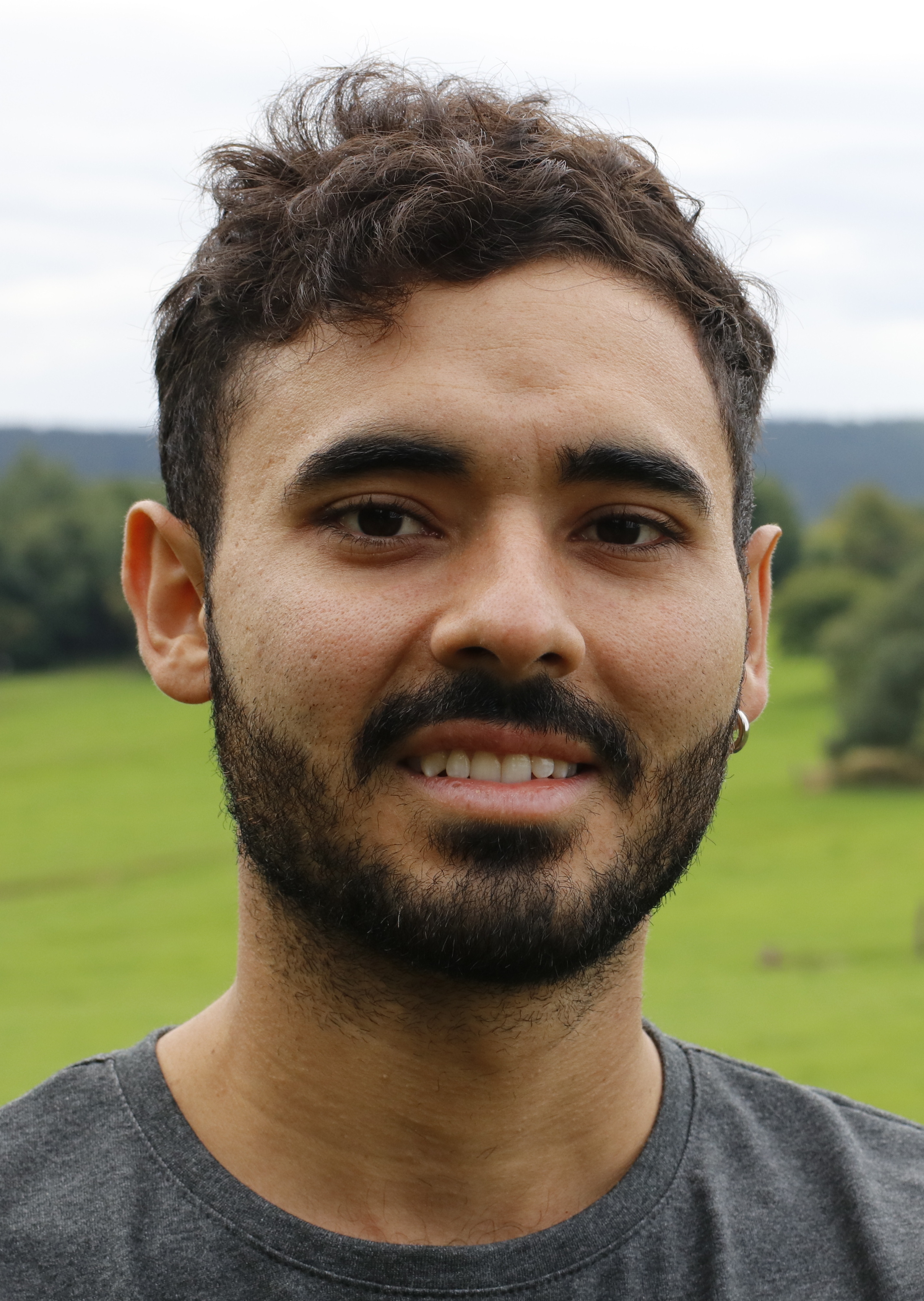
Frank Kagan Gürkaynak is Director of the Microelectronics Design Center (DZ) and a Researcher at ETH Zurich's Department of Information Technology and Electrical Engineering (D-ITET). He leads the PULP open-source hardware project and works closely with Prof. Luca Benini in the Integrated Systems Laboratory (IIS). His academic journey includes BSc/MSc from Istanbul Technical University and a PhD from ETH Zurich. Roles: Microelectronics Design Center Director, Senior Scientist in IIS, VLSI course lecturer Research focuses on energy-efficient digital circuits, cryptographic hardware security, and open-source processor architectures. Key projects include EU-funded initiatives like European Processor Initiative (EPI), Convolve, and NeuroSoC, along with SNSF grants Tiny Trainer and PEDESITE. Active in teaching VLSI design, embedded systems, and essential engineering skills. Publications emphasize secure cryptographic accelerators, low-power processor clusters, and GALS system design methodologies. Contributions include energy-efficient ASICs for IoT to HPC domains and pioneering work in side-channel attack-resistant hardware.
Antonio Paolillo is a Professor in the Department of Informatics and Applied Informatics at Vrije Universiteit Brussel. His research focuses on real-time systems, embedded software, robotics, and synchronization protocols. He leads projects like Brubotics (sustainable human-centered robotics) and FORCES (reliable robotic systems), emphasizing safety, privacy, and performance in human-robot collaboration. Key contributions include the mmPrivPose3D dataset for gesture recognition and sensor-based safety systems. He actively contributes to conferences like ECRTS 2025 and is involved in OS design for embedded platforms. His work bridges theoretical formal verification with practical implementations in multi-core and NUMA architectures. Education details and specific degrees were not explicitly mentioned in the provided text. Research interests span real-time scheduling, hardware-software co-design, and robust embedded systems. Recent articles emphasize privacy-compliant human-robot interaction and compiler transpilation for safety-critical applications. He collaborates internationally in robotics and real-time systems domains. Current projects (2024-2029) include foundational work on embedded software performance, reconfigurable robotics, and conference organization for ECRTS 2025. His work often involves interdisciplinary teams and industry partnerships.
Professor Lasse Natvig is a faculty member at the Norwegian University of Science and Technology (NTNU) in the Faculty of Information Technology and Electrical Engineering , specifically the Department of Computer Science . His research focuses on computer architecture , parallel processing , multi-core programming , and energy-efficient computing . His work includes studying vectorization techniques , cache management , power emulation models , and task scheduling policies to improve performance and energy efficiency in modern processors. He has published extensively in journals like Expert Systems With Applications , The Journal of Supercomputing , and Lecture Notes in Computer Science , with recent 2024 work on micromobility simulation tools. Lasse Natvig's research spans computer architecture , green computing , parallel algorithms , and energy measurement through publications addressing vectorization , cache optimization , and heterogeneous processing . His articles reveal a consistent focus on performance-energy tradeoffs , hardware-software co-design , and simulation tools for computational challenges. Email: lasse.natvig@ntnu.no
Julian Robledo Mejia serves as a Researcher at Dresden University of Technology's Chair for Compiler Construction, Germany, since January 2020. His work focuses on optimizing 5G baseband systems for performance and energy efficiency within heterogeneous multi-core environments under real-time constraints. His academic foundation includes: Bachelor of Electronic Engineering from University of Antioquia (UdeA), Medellín, Colombia Master of Embedded Systems from Polytechnic University of Turin, Italy (2017), thesis on fault injection for real-time operating systems Mejia's research tackles 5G network challenges through adaptive scheduling and dataflow models to enhance baseband system flexibility. His methodologies address critical demands for high data rates, ultra-low latency, and workload heterogeneity while optimizing energy consumption—key for next-generation mobile infrastructure. This work bridges theoretical modeling with practical implementation in resource-constrained environments. Publication analysis (2021-2025) reveals consistent innovation in reactive programming for heterogeneous systems, with Lingua Franca as a recurring framework. His contributions emphasize timing-energy trade-offs in base station optimization, advancing embedded real-time processing for wireless networks through model-based approaches and adaptive resource management. As part of TU Dresden's Compiler Construction research group, Mejia collaborates on cutting-edge projects in compiler design and embedded systems, contributing to tools like Mocasin for rapid prototyping of heterogeneous multi-core mappings. His industry background in automotive embedded software informs practical implementations of theoretical frameworks.
Jongse Park is currently an Associate Professor at the School of Computing (SoC), KAIST , and a core member of the Computer Architecture and Systems Laboratory (CASYS) . He holds co-affiliations with the School of Electrical Engineering , Graduate School of AI Semiconductor , Graduate School of System Architect , and Department of Semiconductor System Engineering at KAIST. Since 2025, he has been serving as a Visiting Associate Professor at Stanford University's Pervasive Parallelism Lab within the EECS department. PhD in Computer Science, Georgia Institute of Technology (2018), advised by Prof. Hadi Esmaeilzadeh MS in Computer Science, KAIST (2012), advised by Prof. Seungryoul Maeng BS in Computer Science and Engineering, Sogang University (2010) His research focuses on accelerating AI serving systems , enabling on-device AI , processing-in-memory (PIM) architectures , and flexible AI compiler frameworks . Recent work explores transformer optimization, heterogeneous AI semiconductors, and efficient video-language processing. Recent publications include MICRO 2025 work on PIM for LLMs, VLDB 2025 research on video-language engines, and ISCA 2025 contributions to LLM quantization. His team's projects have received funding from the K-Cloud Project , NRF Young Researcher Program , and IITP Core Technology Development grants . Teaching Innovation Award Excellence Prize, KAIST (2025) Samsung Humantech Paper Award Gold Prize (2025) IEEE Senior Member (2024) Best Paper & Distinguished Artifact Awards at IISWC (2024) and ISCA (2024) He actively supervises PhD and MS students in AI systems research and serves on program committees for top conferences like ASPLOS , ISCA , and MICRO , including organizing roles as Sponsorship Chair for MICRO 2025.
Ricardo Fernández Pascual is an Associate Professor at the Computer Engineering Department (DITEC) of the Universidad de Murcia , Spain. He teaches introductory and advanced computer architecture courses like ' Estructura y Tecnología de Computadores ' and ' Organización y Arquitectura de Computadores '. His academic work focuses on computer architecture , particularly in memory hierarchies for chip multiprocessors cache coherence protocols fault tolerance energy-efficient design His PhD thesis (2009) at the Universidad de Murcia, titled ' Fault-tolerant Cache Coherence Protocols for CMPs ', was supervised by José Manuel García Carrasco and Manuel Eugenio Acacio Sánchez. He has also collaborated with institutions like Intel Barcelona Research Center and FORTH. Recent research trends in his publications include optimizing coherence directories for manycore scalability hybrid photonic-electronic interconnects fault-tolerant mechanisms in CMP architectures transactional memory enhancements dynamic resource management private-shared cache organization He has advised PhD student Antonio García Guirado, who completed his thesis on energy-efficient cache-coherent multi-cores in 2013. His work has been published in leading journals like IEEE Transactions on Parallel and Distributed Systems, Journal of Parallel Distributed Computing, and conferences including ICS, HPCA, and SBAC-PAD.
Giorgio Lucarelli is a Teaching and Research Associate at ENSIMAG, Grenoble Institute of Technology, and a member of the DataMove team at INRIA and LIG. He earned his PhD in Theoretical Computer Science from Athens University of Economics and Business in 2009, preceded by an M.Sc. in Computer Science (2005) and a B.Sc. in Informatics (2003). PhD Advisor: Professor Ioannis Milis Key Research Areas: Algorithms and Complexity, Power-Aware Scheduling, Graph Theory, Online Optimization His work focuses on energy-efficient scheduling in large-scale systems, with applications to heterogeneous architectures , optical networks , and MapReduce jobs . Recent publications explore online scheduling, dual-fitting methods, and geometric constraints in resource allocation. Collaborations span institutions like INRIA , LIG , and University of Illinois . Notable trends in his research include speed-scaling algorithms , non-preemptive scheduling , and primal-dual optimization . While no explicit awards are listed, his contributions to exact and approximation algorithms for problems like max-edge coloring and densest k-subgraph highlight his expertise in combinatorial optimization. As an educator, he teaches modules on Unix , Imperative Programming , Operating Systems , and Algorithm Design at ENSIMAG, and contributes to the MSc in Informatics (MOSIG) at Grenoble.
Sander Stuijk is an associate professor at the Department of Electrical Engineering of Eindhoven University of Technology, chairing the Electronic Systems (ES) group. His research focuses on design methodologies for embedded signal processing applications in high-tech systems like industrial manufacturing, automotive, and healthcare. He develops high-level compilation strategies for heterogeneous multi-core platforms, with interests in efficient code generation and resource allocation. Prof. Stuijk holds leadership roles including chairing the ES group, serving on the board of 4TU.NIRICT (a Dutch ICT research consortium), and coordinating the Embedded Systems master program. He contributes to national ICT initiatives through ICT Next Generation, a network for mid-career academics. He also chaired the Department Council (2016-2018) and participates in TPC activities. His research spans streaming applications, real-time systems, and multi-processor architectures. Notable projects include the PROMES initiative (programming embedded multi-media systems) and the MNEMEE project (automated MPSoC design). His work emphasizes predictable and energy-efficient computing, with applications in healthcare monitoring (e.g., remote PPG, thermal imaging) and reconfigurable systems. Prof. Stuijk has advised numerous PhD/Master students and led projects like FORSEE, VSM, and SenSafety. His publications include over 70 journal/conference papers, covering topics like neuromorphic computing, GPU optimization, and medical signal processing. He actively engages in academic service, including organizing SCOPES workshops and serving on editorial boards.
Luca Abeni is an Associate Professor at the ReTiS Lab (Real-Time Systems) of Scuola Superiore S. Anna , Pisa. He graduated in Computer Engineering from the University of Pisa in 1998 and earned his PhD at Scuola Superiore S. Anna (1999-2002), focusing on real-time operating systems, scheduling algorithms, and QoS management. His career includes a visiting researcher role at Carnegie Mellon University (2000) and Oregon Graduate Institute (2001), followed by a full-time researcher position at the University of Trento's DISI department (2006-2017). Research Interests include real-time systems, cloud computing, virtualization, containerization (e.g., RT-Kubernetes), Linux kernel optimization, fault tolerance, and scheduling algorithms. His work addresses temporal isolation in cloud/edge environments, energy-efficient real-time computing, and adaptive resource management. Scientific Awards 2021 RTSS Influential Paper Award for 1998 paper on real-time scheduling Notable Contributions involve Xen/KVM latency analysis, deadline-based scheduling, ARM big.LITTLE partitioning, and kernel bypass mechanisms. He developed tools like PROSIT for probabilistic real-time analysis and artifacts for reproducing experiments.
Vassil Alexandrov is a Professor at the School of Systems Engineering, University of Reading, specializing in high-performance computing, Monte Carlo methods, and grid-based scientific computing. His research integrates fault tolerance, virtual environments, and e-Science infrastructures, with strong collaborations in interdisciplinary projects such as eMinerals and P-GRADE. PhD in Computational Science (inferred) Extensive research in parallel and distributed algorithms His research interests lie at the intersection of computational science and distributed systems. He has pioneered the use of Monte Carlo methods for matrix computations and large-scale environmental modeling, particularly in air pollution simulation. His work extends into immersive virtual environments for medical training, psychological modeling, and collaborative e-learning. He has contributed significantly to fault-tolerant computing using intelligent agents and swarm-array paradigms. The recent publications show a strong trend toward intelligent fault tolerance, agent-based recovery, and immersive virtual environments. His work spans both theoretical numerical methods and practical implementations in grid and cluster computing. The integration of cognition models in fault-tolerant systems reflects a unique interdisciplinary approach. While no formal scientific awards are listed in the provided text, his editorial roles and leadership in major computational science conferences indicate recognition in the field. He has collaborated extensively with researchers across Europe and has been involved in advising and mentoring through collaborative projects like eMinerals and P-GRADE. His work has been supported by e-Science and grid computing initiatives, particularly in the UK. He has contributed to the development of collaborative tools, portals, and workflows for virtual organizations. He has been involved in the development of the eMinerals virtual organization, the P-GRADE grid portal, and immersive virtual environments for education and medical training, reflecting a strong focus on collaborative and user-centered research infrastructures.
Dr. Jakub Yaghob is a researcher at the Faculty of Mathematics and Physics , Charles University , specializing in computer science and parallel computing. He teaches advanced programming topics including Compiler Principles , Parallel Programming , and Cloud Computing . Research Interests : Parallel data stream processing, virtualization technologies, semantic web infrastructures, and performance optimization Teaching : Advanced C++ programming, virtualization administration, and computer systems architecture Technical Expertise : Design of parallelization frameworks, astrophysical data analysis, and hybrid CPU-GPU systems His publications focus on: Optimizing stream data processing across distributed architectures Developing domain-specific languages like Bobolang Performance evaluation in educational programming contexts Applications of parallel computing in astrophysics
Weiwei Jia is an Assistant Professor at the Department of Electrical, Computer, and Biomedical Engineering, The University of Rhode Island. His research focuses on computer systems, particularly edge and cloud computing infrastructures, virtualization, operating systems, and memory/storage systems. Ph.D., Computer Science, New Jersey Institute of Technology (2021) M.S., Computer Science and Engineering, Northwestern Polytechnical University, China (2016) His work addresses challenges in virtualized cloud environments, including memory translation, TLB miss reduction, cache conflict mitigation, and I/O performance optimization. Recent projects explore carbon-aware DNN inference scheduling and trusted execution environments for in-storage computing. Key publication trends include: Memory management in virtualized clouds (2021-2025) Performance optimization in multi-core and GPU systems (2018-2021) Storage system innovations (2014-2021) Honors include the 2024 NSF CRII Award. He serves as a PI on NSF grants related to virtualized clouds and participates in professional activities like organizing IEEE ICDCS (2024) and reviewing for top-tier conferences/journals.
Virendra Singh is a Professor at the Indian Institute of Technology Bombay , affiliated with both the Department of Electrical Engineering and Department of Computer Science & Engineering . He leads the Computer Architecture and Dependable Systems Lab (CADSL) and coordinates the Indo-Japanese Joint Laboratory for Intelligent Dependable Cyber Physical Systems and the Information Security Research and Development Centre (ISRDC). Ph.D. in Computer Science from Nara Institute of Science and Technology (NAIST), Japan (2002-2005) M.E. and B.E. in Electronics & Communication from Malaviya National Institute of Technology (MNIT), Jaipur (1994-1996 and 1990-1994) Research Interests : Virendra Singh focuses on Cyber Security , Computer Architecture , Fault-Tolerant Computing , Formal Verification , Trusted Computing , and Blockchain Technology . His work integrates security into hardware design, with a strong emphasis on Cyber Physical Cognitive Systems and Software Defined Networking . Recent Publications highlight advancements in cache security , quantum-resistant cryptography , malware detection , and heterogeneous computing , reflecting his interdisciplinary approach. Awards : SP Sukhatme Excellence in Teaching Award (2021) Students : He currently supervises 15 Ph.D. students, advancing cutting-edge research in security and architecture.
Andy D. Pimentel is a Full Professor at the University of Amsterdam, where he chairs the Parallel Computing Systems (PCS) group within the Systems and Networking Lab at the Informatics Institute. His research focuses on multi-core and multi-processor computer systems, with emphasis on design, programming, and run-time management. Dr. Pimentel earned his PhD in Computer Science in 1998 and MSc in Computer Science in 1993, both from the University of Amsterdam. His educational background laid the foundation for his extensive work in computer architecture and embedded systems. His research interests span a wide range of topics including multi-core embedded systems, system-level design and simulation, design space exploration, performance and power analysis, system dependability, hardware/software co-design, run-time resource management, and Edge AI. His work consistently addresses the extra-functional aspects of computing systems such as performance, energy consumption, and system dependability, while also considering the productivity of designing and programming these complex systems. Analyzing his recent publications reveals a clear trajectory toward sustainable and efficient computing systems. His work has evolved from foundational research in embedded systems design space exploration to cutting-edge research in Edge AI, distributed deep learning, and energy-efficient computing. His publications demonstrate strong interdisciplinary connections between computer architecture, artificial intelligence, and sustainable computing. IEEE CEDA Outstanding Service Recognition Award DATE Fellow Award Professor Pimentel has held significant leadership roles in the academic community, serving as Chair of the Board for the Advanced School for Computing and Imaging (ASCI) since 2021, and as a Board member of ICT Research Platform Nederland (IPN) since 2020. He has organized major conferences including serving as General Chair for Design Automation and Test in Europe (DATE) 2024 and IEEE/ACM Embedded Systems Week 2026. His extensive service to the community demonstrates his leadership in the field of computer architecture and embedded systems. At the University of Amsterdam, Professor Pimentel leads the Parallel Computing Systems group, which investigates the design, programming, and run-time management of multi-core and multi-processor systems. The group's research emphasizes modeling, analysis, and optimization of performance, power/energy consumption, and system dependability, while also focusing on improving the productivity of designing and programming these complex systems.
Dr. Ahmed Hassan is an Assistant Professor in the Department of Computer Science and Engineering at Lehigh University, part of the P.C. Rossin College of Engineering and Applied Science. He is a core member of the Scalable Systems Software (SSS) research group. Previously, he held an Assistant Professor position at Alexandria University and a Postdoctoral Research Associate role at Virginia Tech. His research focuses on distributed computing, concurrent and transactional data structures, multiprocessor programming, and NUMA-aware software design. He teaches courses including Analysis and Design of Algorithms, Advanced Programming Techniques, and Distributed Systems. Education: Ph.D., Computer Engineering, Virginia Tech, 2015 M.S., Computer Engineering, Alexandria University, Egypt, 2011 B.S., Computer Science, Alexandria University, Egypt, 2006 Research Interests: Hassan’s work spans distributed systems, transactional memory, and high-performance computing. He explores synchronization protocols, concurrent data structures, and optimizing software for multi-core architectures. His projects often address challenges in scalability, consistency, and efficiency in modern computing environments. Advising & Grants: While specific student advisees or grant details are not listed, his involvement with the SSS group suggests active participation in collaborative research projects. His work has been disseminated through top-tier conferences and technical reports, reflecting a strong focus on applied and theoretical systems research. Labs/Teams: Member of the Scalable Systems Software (SSS) research group at Lehigh University, focused on advancing scalable systems software and distributed computing solutions.