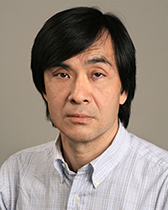
Zaitao Pan is a Professor in the Department of Earth and Atmospheric Sciences at Saint Louis University's School of Science and Engineering. His research focuses on regional climate changes, mesoscale atmospheric phenomena, land surface processes, and ecosystem modeling, with interdisciplinary applications in geophysics and phytopathology. Ph.D., Iowa State University (1996) M.S., University of the Philippines (1983) B.S., Nanjing University (1978) Pan's work examines the interplay between climate systems and terrestrial ecosystems, particularly through land-atmosphere interactions, mesoscale weather dynamics, and climate change impacts on agricultural systems. His research includes modeling climate anomalies like "warming holes" and analyzing soybean rust dispersal patterns. Recent publications highlight his contributions to understanding climate feedback mechanisms, hydrological processes in flood simulations, and the influence of land use changes on regional climate systems. He has extensively studied the 1993 Midwest flood and developed methods for improving regional climate simulations through land surface parameterization.
Dr. Mine Dogan serves as Assistant Professor of Environmental Geophysics in the Department of Geological and Environmental Sciences at Western Michigan University, with her office located in 1121 Rood Hall (Kalamazoo, MI). She holds a Ph.D. from Michigan State University (2013) and previously held research positions at Clemson University's Department of Environmental Engineering and Earth Sciences. Education: Ph.D., Michigan State University, 2013 Her research integrates geophysics, hydrology, and environmental engineering to investigate subsurface processes using advanced methodologies including drone-based electromagnetic surveys, time-lapse monitoring, and 4D X-ray computed tomography. Key focus areas include tree root hydrology, contaminant transport in groundwater, permafrost characterization, and macropore flow dynamics in heterogeneous soils. Analysis of her recent publications (2018-2024) reveals strong emphasis on unmanned aerial systems for geophysical data acquisition, visualization of fluid transport mechanisms in porous media, and forensic/environmental applications of electromagnetic methods. Recurring themes include the role of biological structures in hydrological processes and innovative approaches to subsurface imaging. Scientific Awards: No awards documented in source material While her advising activities and grant funding remain unspecified in available information, her publication record demonstrates active collaboration across geophysics, hydrology, and environmental engineering disciplines. Laboratory facilities and research team structures are not detailed in the provided texts.
Michael Johansson serves as a Research Professor at Northeastern University's Roux Institute, maintaining offices in London, UK and Portland, ME. His work bridges public health research and operational response through advanced statistical and mathematical modeling of infectious diseases, with primary focus on vector-borne pathogens including dengue, Zika, chikungunya, and West Nile virus. Previously with the CDC in Puerto Rico for over a decade, he co-founded the Epidemic Prediction Initiative and led modeling efforts during Zika, COVID-19, and dengue emergencies. His research integrates biological, ecological, climatic, socioeconomic, and behavioral factors to understand disease emergence and transmission dynamics. Key methodologies include network-based forecasting models, climate-disease interaction analysis, and development of early warning systems. Current work emphasizes improving surveillance, burden estimation, and control strategy evaluation for arboviral diseases through quantitative tools. Recent publications demonstrate expertise in dengue synchronization across the Americas, West Nile virus forecasting, and addressing biases in mobility data for outbreak modeling. His work spans from molecular-level antibody response analysis to global risk mapping, consistently emphasizing operational implementation of research findings. Johansson actively contributes to public health practice through conference presentations including the 2025 American Mosquito Control Association Annual Meeting. His modeling frameworks have directly informed CDC emergency responses and the development of collaborative forecasting initiatives that pioneer open, transparent disease prediction.
Pablo G Cámara is an Associate Professor of Genetics at the University of Pennsylvania's Perelman School of Medicine. He serves as Senior Fellow at the Institute for Biomedical Informatics and is affiliated with the Center for AI and Data Science in Integrated Diagnostics, the Statistical Center for Single-Cell and Spatial Genomics, and the Department of Genetics. His research focuses on computational approaches to cellular heterogeneity in diseases, particularly brain tumors, integrating topology, geometry, statistics, physics, and computer science. BS, Theoretical Physics, Universidad Autonoma de Madrid (2002) PhD, Theoretical Physics, Universidad Autonoma de Madrid (2006) His work combines single-cell technologies with mathematical frameworks to decode tumor ecosystems and signaling networks. Key themes include metric geometry applications, tumor-genome interactions, and interdisciplinary collaborations in neurodevelopment and cancer research. Recent publications highlight his methodological innovations in single-cell data analysis, tumor biology, CAR T-cell therapy, and quantum computing. Collaborations span immunology, neuro-oncology, and developmental biology domains. The Camara Lab at Penn Medicine develops computational tools for integrating morphometric, transcriptomic, and physiological data, aiming to advance precision oncology and developmental neuroscience through geometric and topological approaches.
Kamesh Madduri is an Associate Professor in the Department of Computer Science and Engineering at Pennsylvania State University, with affiliations to the Huck Institutes of the Life Sciences. His research focuses on graph analytics, parallel algorithms, and high-performance computing for large-scale data analysis. NSF CAREER Award (2013) His work contributes to the development of scalable graph partitioning algorithms, extreme-scale sparse data analytics, and heterogeneous computing frameworks. Recent projects include multilayer network analysis (NetSplicer) and GPU-accelerated graph processing (Jet). Key research areas include network science, computational biology, and distributed-memory graph algorithms. His publications highlight applications in genomic workflows, advertising keyphrase recommendation (Graphite/BroadGen), and large-scale hydrology data management. Collaborative Research: CCRI (2021-2023) SHF: Medium: NetSplicer (2020-2024) PPoSS: Extreme-scale Sparse Data Analytics (2018-2022) XPS: Genomic Workflows Acceleration (2014-2020) EAGER: SME Manufacturing Integration (2024-2026)
Wen Lu, PhD is a Research Assistant Professor in the Department of Cell and Developmental Biology at Northwestern University's Feinberg School of Medicine. Her primary research focuses on cytoskeletal regulation and molecular motor coordination in super-large cells including oocytes and neurons, utilizing Drosophila melanogaster as a model organism. She employs high-resolution live microscopy, genetic engineering, optogenetics, and pharmacological manipulations to investigate microtubule and F-actin dynamics in cellular development and regeneration. Her educational background includes a BS from Peking University (2004) and a PhD from The University of Chicago (2010), followed by postdoctoral training at Northwestern University Feinberg School of Medicine. Dr. Lu maintains active affiliations with the American Society for Cell Biology (2019-2024) and the Genetics Society of America (2022-2023), and serves on the FlyBase Community Advisory Group since 2014. Research interests center on cytoskeletal dynamics in cellular polarization, with particular emphasis on oocyte specification, growth mechanisms, and neuronal regeneration after injury. Her work bridges developmental biology and neurobiology through innovative imaging techniques that reveal molecular transport mechanisms in cellular systems. Current investigations explore microtubule movement regulation and the interplay between cytoskeletal elements during critical developmental processes. Publication trends demonstrate strong interdisciplinary focus spanning cell biology, neurobiology, and imaging sciences, with recent work increasingly incorporating translational elements in ophthalmology and oncology. Her articles reveal consistent methodological innovation in live-cell imaging and genetic manipulation techniques applied to fundamental biological questions. Winner 2025 Drosophila Art Contest, The FlyStuff / Genesee Scientific Team Winner of CDB Graphic Design Contest, CDB Special Events Committee (2024) Winner in Category 2, Microscopy Image Competition 2024, ProteinTech Group 2nd Prize in Published Category, Microscopy Today Micrograph Awards (2024) BINA 2022 Image Contest- People's Choice Award, BioImaging North America Dr. Lu serves on the FlyBase Community Advisory Group and maintains industry relationships including ownership in Quantum Music LLC. Her laboratory work integrates advanced microscopy with genetic models to address fundamental questions in cellular organization, with potential implications for understanding developmental disorders and neurodegenerative conditions.
Christopher W. Jones is a Professor and John F. Brock III School Chair in the Department of Chemical & Biomolecular Engineering at Georgia Institute of Technology. His research focuses on catalysis, separations, and materials chemistry, with a particular emphasis on CO 2 capture and conversion technologies. Education B.S.E. Chemical Engineering, University of Michigan, 1995 M.S. Chemical Engineering, California Institute of Technology, 1997 Ph.D. Chemical Engineering, California Institute of Technology, 1999 Jones's research explores heterogeneous and homogeneous catalysis, including supported organometallics, zeolites, and metal-organic frameworks (MOFs). His work addresses the interface of catalysis and separations, particularly in energy and environmental applications like direct air capture (DAC) and lignocellulose conversion to fuels and chemicals. His recent publications focus on CO 2 capture using amine-functionalized materials, zeolitic nanotubes, and polymer sorbents. Key areas include humidity effects on DAC, sorbent reactivation, and mechanochemical recycling of plastics. Scientific Awards CAREER Award, National Science Foundation, 2002 Faculty Career Initiation Award, Shell Oil Company Foundation, 2002 Sigma Xi Young Faculty Award, 2004 Dreyfus Foundation Fellowship, 2008 Paul H. Emmett Award, North American Catalysis Society, 2013
Paola Arlotta is the Golub Family Professor and Chair of the Department of Stem Cell and Regenerative Biology at Harvard University. She is a principal faculty member at the Harvard Stem Cell Institute, an Institute Member at the Broad Institute, and an Associate Member of the Stanley Center for Psychiatric Research. Her career spans groundbreaking work in cortical development and regenerative neuroscience. Education: M.S. in Biochemistry from the University of Trieste, Italy Ph.D. in Molecular Biology from the University of Portsmouth, UK Postdoctoral training in Neuroscience at Harvard Medical School Dr. Arlotta’s research focuses on defining molecular pathways that govern the differentiation of neural progenitors into cortical projection neurons, with a special interest in corticospinal neurons linked to ALS and spinal cord injury. Her lab bridges developmental neuroscience with stem cell engineering to study human-specific cortical development using 3D organoid models, aiming to uncover mechanisms of neurodevelopmental diseases. Scientific Contributions: 2024: Discovery of individual susceptibility to neurotoxicity in brain chimeroids 2024: Microglia’s role in fetal brain inflammation response 2022: Autism risk genes affect asynchronous neuron class development 2019: Reproducible generation of human cortical diversity in organoids Scientific Awards: Elected to the National Academy of Medicine for pioneering brain organoid research Her lab employs advanced techniques like single-cell RNA sequencing, FIN-seq for frozen tissue analysis, and in utero electroporation. She also explores neuronal reprogramming and myelin dynamics across axons, contributing to understanding cortical circuit assembly and repair.
Christopher Higgins is an Assistant Teaching Professor in the School of Mathematical and Natural Sciences at Arizona State University, West campus. Since 2020 he has designed and delivered multiple high-enrolment biology courses and immersive experiential-learning initiatives that integrate adaptive learning technologies and citizen-science projects. Education: Specific degrees and institutions are not listed in the supplied text. Research interests centre on biodiversity science, metacommunity ecology and conservation biology. Over two decades he has investigated how hurricanes, desertification, climate and habitat fragmentation influence the diversity and distribution of organisms ranging from tropical snails and Sahelian arthropods to Atlantic-Forest small mammals and Neotropical bats. His 30+ peer-reviewed articles reveal a consistent emphasis on quantifying community structure across taxa (fish, bats, gastropods, parasites) and ecosystems (streams, forests, deserts), utilising phylogenetic, functional and spatial approaches to disentangle historical biogeography from contemporary anthropogenic change. Teaching & Mentoring: Higgins leads large iCourses (The Living World, General Biology, Conservation in Practice) reaching ~1,400 students annually, mentors students via honours contracts and NCUIRE undergraduate-research teams, and directs citizen-science efforts such as the ASU West Global BioBlitz and Saguaro Snapshot Challenge. Labs & Teams: While no dedicated laboratory is named, he routinely supervises student research teams under NCUIRE and honours programmes, linking classroom learning to community-based conservation projects like West Valley Gardens.
Chancellor Johnstone serves as an Adjunct Assistant Professor at the Air Force Institute of Technology (AFIT), specializing in interdisciplinary research bridging military applications with advanced analytics. His work integrates operations research, statistical modeling, and machine learning to solve complex defense-related challenges. His academic credentials include: PhD in Statistics, Iowa State University, 2020 MS in Operations Research, Air Force Institute of Technology, 2015 BS in Operations Research, United States Air Force Academy, 2013 Dr. Johnstone's research focuses on robust optimization for decision-making under uncertainty, anomaly detection in complex systems, and federated learning frameworks for distributed data environments. His methodology emphasizes conformal prediction for uncertainty quantification and physiology-based classification in human-machine systems, with direct applications to Air Force operations including pilot training, mission planning, and personnel selection. Analysis of his 2021-2024 publications reveals three dominant research trajectories: (1) military logistics optimization incorporating cyber-physical constraints; (2) physiological signal processing using graph neural networks for multi-modal data; and (3) responsible AI development addressing bias in high-stakes military personnel decisions. His work consistently demonstrates translation of theoretical advances—particularly in conformal prediction and federated learning—into operational Air Force contexts.
Max Planck Florida Institute for NeuroscienceUnited States
Jesse R. Dixon, M.D., Ph.D., is an Associate Professor at the Gene Expression Laboratory of the Salk Institute for Biological Studies in La Jolla, California. His research explores 3D genome architecture, chromatin organization, and gene regulation mechanisms, with implications for cancer and developmental disorders. He employs cutting-edge genomic technologies like Hi-C and single-cell multi-omics to investigate how chromosomal rearrangements impact gene expression. Dr. Dixon's work focuses on: Topological Domains (TADs) and their role in enhancer-promoter communication Haplotype phasing using chromatin conformation data Structural variant-driven oncogene activation in cancer Single-cell mapping of chromatin and DNA methylation dynamics His publications consistently demonstrate innovations in 3D genome analysis, particularly in neurobiology and oncology contexts, with recurring themes of chromatin topology, epigenetic regulation, and computational genomics. Awards & Honors: Pew Biomedical Scholar (2024) Helmsley Salk Fellow He mentors graduate and postdoctoral researchers in genomics and computational biology, with current projects on chromatin dynamics in cancer and development. The Dixon Lab actively develops novel methodologies for studying genome architecture.
Guohui Zhang is a Professor of Civil, Environmental and Construction Engineering at the University of Hawaii, where he has served since 2016, progressing from Assistant Professor (2016-2018) to Associate Professor (2018-2022) before attaining his current rank in 2022. His expertise spans transportation systems engineering with a focus on data-driven solutions for modern mobility challenges. His educational foundation includes: Ph.D. in Civil Engineering, University of Washington, Seattle (2008) M.S. in Systems Engineering, Tsinghua University, China (2003) B.S. in Control Engineering, Harbin Institute of Technology, China (2000) Professor Zhang's research integrates advanced computational methods with transportation theory across six core domains: Large-Scale Transportation Systems Modeling, Traffic Control and Operations, Sensor Data Analysis, Cyber-Transportation Security, Congestion Pricing, and Safety/Security systems. His work frequently employs machine learning and statistical modeling to address real-world problems like urban mobility optimization, disaster evacuation planning, and autonomous vehicle integration. Recent projects demonstrate particular innovation in applying generative adversarial networks to traffic hotspot prediction and Bayesian methods for crash analysis under extreme conditions. Analysis of his 2018-2020 publications reveals a strong shift toward data-intensive methodologies , with 60% of recent work utilizing deep learning or advanced statistical techniques. Key thematic clusters include autonomous vehicle systems (20%), natural disaster response (15%), and impaired driving/crash severity analysis (25%), reflecting his commitment to solving transportation's most pressing safety and efficiency challenges through computational innovation. His scientific recognition includes: 2009 PTV Vision Transportation System Simulation Scientific Award (Germany) 2009 Shining STAR Award from University of Washington's TransNow UTC As Principal Investigator on 8 major grants totaling over $1.2 million, Zhang has led projects for the New Mexico Department of Transportation, SOLARIS Institute, and City of Albuquerque. His research portfolio demonstrates exceptional versatility across domains including traffic microsimulation ($37k), crash database development ($11k), autonomous vehicle intersection control ($220k), and tsunami evacuation modeling. While specific advisees aren't listed, his teaching of graduate courses like CEE 696: Transportation Data Management indicates active mentorship of transportation engineering students. Professional leadership includes Guest Editor roles for IEEE Intelligent Transportation Systems Magazine and Transportation Research Part C , plus active committee service with the Transportation Research Board.
Tristan Qingyun Li, PhD is an Assistant Professor of Neuroscience and Genetics at Washington University in St. Louis School of Medicine. His research focuses on neuroimmunology with particular emphasis on microglial biology in brain development, aging, and disease. Dr. Li earned his BS in Biological Sciences from China Agricultural University (2002-2006), followed by a PhD in Biology from Duke University (2008-2015) under advisor Pelin Volkan. He completed his postdoctoral training at Stanford University (2015-2019) with advisors Ben Barres and Tony Wyss-Coray. His research interests center on understanding microglial heterogeneity, development, and function using cutting-edge single-cell genomic technologies combined with in vitro and in vivo genetic, molecular, and cellular tools. The lab investigates how microglia (and other immune cells) differ during development, homeostasis, and aging, and how these different populations interact with neural cells to control brain development and function. Another major focus is understanding how microglial fate is specified and diverged from other tissue macrophages during early embryonic development. Analysis of Dr. Li's publications reveals a strong focus on microglial states across developmental stages and disease conditions. His work demonstrates how microglia shift from functionally heterogeneous states early in life to a more homogeneous state in adulthood, with identification of distinct subpopulations like PAM (proliferative-region-associated microglia) that share signatures with DAM (disease-associated microglia). His 2024 Immunity paper introduced the Clec7a-CreER mouse model to track microglial states, showing their plasticity during remyelination. 2011-2012 Howard Hughes Vertical Integration Partnership Program Fellowship 2014 Departmental Semester Fellowship, Duke University 2014 Ray J. Tysor Graduate Fellowship, Duke University 2016 Dean's Fellowship, Stanford University Dr. Li leads the Li Lab, which employs rodent models and techniques including mouse genetics, histology, imaging, single-cell transcriptomics, epigenetics, primary cell culture, transplantation, flow cytometry, and cell sorting. The lab actively recruits graduate students, postdoctoral researchers, and undergraduate students interested in neuroimmunology and microglial biology. Located in the Jeffrey T. Fort Neuroscience Research Building in St. Louis, MO, the lab is part of Washington University's neuroscience and genetics research community.
Kiminori Matsuyama is a Professor of Economics at Northwestern University's Weinberg College of Arts & Sciences. His research focuses on international trade, economic growth, and development, with an emphasis on macroeconomic instability, structural transformation, and global inequality. He holds a PhD from Harvard University (1987) and is a Fellow of the Econometric Society. A 1996 recipient of the Nakahara Prize for outstanding young economists, he currently serves as an associate editor of the Journal of Economic Theory and the Journal of the Japanese and International Economies . His work explores mechanisms driving economic disparities across nations and households, integrating theoretical frameworks with empirical insights. Recent research delves into premature deindustrialization, credit cycles, and demand-driven structural change. He has contributed to understanding how market size influences innovation dynamics and how nonlinear models can explain economic fluctuations. Matsuyama’s scholarly output spans over 30 years, with articles addressing topics such as monopolistic competition, global value chains, and policy implications of structural transformation. His awards reflect recognition for advancing theoretical economics, particularly in development and international trade domains.
Marcus Foston is an Associate Professor and Director of Diversity Initiatives in the Department of Energy, Environmental & Chemical Engineering at Washington University in St. Louis’s McKelvey School of Engineering. His research focuses on sustainable biomass conversion, mechanobiology, and bio-inspired materials. He holds a PhD (2008) and BS (2003) in Polymer Chemistry from Georgia Institute of Technology. Education: PhD in Polymer Chemistry, Georgia Tech, 2008 BS in Chemical Engineering, Georgia Tech, 2003 Research Interests: Dr. Foston develops innovative methods to convert biomass and plastic waste into valuable products. Key areas include: Liquid-phase heterogeneous catalysis for biomass-to-chemicals Integration of catalytic biomass depolymerization with microbial systems Mechanical stimulus response in plant cells He leads research in the NSF-funded Center for Engineering Mechanobiology, advancing interdisciplinary training in force-driven plant cell wall engineering. Awards: 2025 Gephardt Institute Ethic of Service Award Advising/Grants: While specific grant details are not listed, his affiliations with NSF STC and DOE BioEnergy Science Center indicate substantial research funding. No formal advisee list is provided in the text. Labs & Teams: Leads the Foston Lab (Brauer Hall 1049) and collaborates with the Synthetic Biology Manufacturing of Advanced Materials Research Center (SMARC), Consortium for Clean Coal Utilization, and the Institute of Materials Science & Engineering.