Professor Niall Slowey is a distinguished academic in Oceanography at Texas A&M University since 1991. He holds the rank of Professor and has served as Chief Scientist on 19 research cruises. His research focuses on paleoceanography, sedimentary processes, and Quaternary sea level history with a strong emphasis on coral records and deep-sea sediment dynamics. PhD: MIT/Woods Hole Oceanographic Institution (1991) MS: University of North Carolina (1986) B.S.: Tufts University (1980) Research interests span marine sedimentation mechanisms, high-resolution seismic stratigraphy, and environmental monitoring at sites like the Flower Garden Banks National Marine Sanctuary. He pioneered coral geochemistry techniques to reconstruct historical ocean conditions, with over 75 peer-reviewed publications. His awards include the 2006 Distinguished Teaching Award and 2005 College of Geosciences Achievement Award. Current work explores Southern Ocean water mass evolution and anthropogenic impacts using novel proxy methods.
Luís Filipe Moreira Mendes is an Assistant Professor at the Department of Physics, Instituto Superior Técnico (IST), Lisbon, Portugal. His research focuses on interdisciplinary physics with a strong emphasis on solar energy systems, thermal and thermochemical energy storage, and applied thermodynamics. He has contributed to advancing calcium-looping technologies for concentrated solar power plants and developed computational models for solar-driven reactors. His work bridges experimental and theoretical approaches in renewable energy systems. Teaching & Academic Roles: He teaches courses such as Solar Thermal Energy, Solar Photovoltaic Energy, and Energy Technologies at IST. His teaching evaluations (QUIC) in 2022-2023 showed high ratings (e.g., Solar Thermal Energy: 9/10). Research & Supervision: He supervises PhD and MSc theses in solar energy applications, including projects on calcium-looping reactors, concentrated solar thermal systems, and solar cavity absorbers. Notable supervisees include Filipe Alexandre Marques (PhD 2019) and ongoing work with Felisberto Camuege. Publications & Impact: Over 30 peer-reviewed articles span solar thermal systems, energy storage, and astrophysical detector design (e.g., the Mercedes Cherenkov detector). His 2023 work on calcium-looping optimization highlights advancements in thermochemical storage. Collaborations & Outreach: Active in the SWGO (Southern Hemisphere Wide-field Gamma-ray Observatory) collaboration and authored educational books like *Physics in Everyday Life at School* (2014). Holds patent PT103112 for an absorption machine with steam refining innovations.
Michael N. Evans is a Professor in the Department of Geology and Earth System Science Interdisciplinary Center (ESSIC) at the University of Maryland, College Park. He holds affiliate professorships in Atmospheric & Oceanic Science (AOSC) and Applied Mathematics & Statistics and Scientific Computation (AMSC). His research focuses on paleoclimatology, global environmental change, and the use of tree rings and isotopic analysis as climate proxies. Evans has held visiting professorships at institutions like the University of Edinburgh and University of Bristol. He is an Editor of the Journal of Climate and has led initiatives like the Ocean2k Working Group under PAGES (Past Global Changes). His work emphasizes interdisciplinary collaboration, data reproducibility, and climate modeling improvements. Education : A.B. magna cum laude in Environmental Science & Policy (Harvard College, 1992) Ph.D. in Earth and Environmental Sciences (Columbia University, 1999) Research Interests : Evans explores tropical climate dynamics, ENSO variability, and the interplay between physiological processes in trees and environmental conditions. His lab develops mechanistic models to interpret proxy data, such as stable isotopes in tree rings and corals. Recent work addresses biogeochemical cycling, pollution dispersion modeling, and coral reef stress diagnostics. Key Contributions : Founder of the Ocean2k Working Group Developer of PRYSM (Proxy System Modeling software) Co-chair of PAGES Scientific Steering Committee (2018-2020) Grants & Awards : Over 20 years, Evans secured NSF, NASA, and NOAA grants, including a prestigious NSF CAREER award. His honors include the American Meteorological Society Editor’s Award (2018) and multiple visiting professorships globally. Labs/Teams : He directs the Stable Isotope Laboratory at UMD and collaborates with international networks like the Oeschger Centre and Future Earth’s Risk & Resilience programs.
Assoc. Prof. Dr. Rasime Uyguroğlu is an academic at Eastern Mediterranean University, specializing in antenna engineering and biomedical applications. She holds the rank of Associate Professor and has contributed to research in electromagnetic systems, medical imaging, and health monitoring technologies. Her work focuses on antenna design for cancer detection, wireless body channel communication, and advanced microwave systems. Her research interests include the development of antennas for biomedical diagnostics, optimization of antenna arrays, and application of metamaterials in antenna systems. She has served as an associate editor and reviewer for academic journals, demonstrating her active role in the scientific community. Prof. Uyguroğlu's publications span topics such as breast cancer detection using patch antennas, fracture healing monitoring via implanted antennas, and millimeter-wave massive MIMO systems. Her work bridges engineering and medicine, with a focus on practical solutions for healthcare challenges. She actively supervises master's and PhD students in thesis projects related to antenna design and biomedical applications. Her contributions reflect a commitment to advancing both theoretical and applied aspects of electromagnetic engineering in health-related contexts.
Gabriel Bowen is a Professor in the Department of Geology & Geophysics at the University of Utah, where he has held academic positions since 2012, advancing to full Professor in 2016. His work is centered on isotope geochemistry and its applications to Earth system science, climate, hydrology, and environmental change. His research spans climate change science, hydrology, atmospheric sciences, paleoclimatology, ecology, and forensic geolocation . He uses stable isotopes (oxygen, hydrogen, carbon, strontium) to investigate paleoenvironments, animal and human movement, groundwater dynamics, and land-atmosphere interactions. His work integrates field data, modeling, and large-scale data synthesis. His recent publications (2024–2025) reveal a strong focus on isotopic methods in environmental reconstruction , including evapotranspiration partitioning, urban water isoscapes, strontium provenance models, and paleo-CO2 reconstructions. He leads major collaborative initiatives such as IsoBank and CO2PIP , which aim to standardize and centralize isotopic and paleoclimate data. Scientific Awards: Distinguished Research Award, University of Utah (2025, 2024) Distinguished Visiting Fellowship, Tongji University (2019) Fellow, Geological Society of America (2016) James B. Macelwane Medal, American Geophysical Union (2012) Fellow, American Geophysical Union (2012) He has secured numerous grants from the National Science Foundation, American Chemical Society, and US Environmental Protection Agency , supporting research on paleoclimate, isotope systems, and environmental monitoring. He teaches courses such as Isoscapes , Carbon Cycle , and Thesis Research at both Master’s and PhD levels. He also engages in community outreach, including collaborative research with the Jordan Valley Water Conservancy District. He is actively involved in professional service, including membership on the Petroleum Research Fund Advisory Board (ACS) and the Urbino Summer School on Paleoclimatology Board of Directors .
Renata Keller is Associate Professor of History and Undergraduate Advisor at the University of Nevada, Reno (UNR). She previously taught international relations at Boston University for five years before joining UNR in 2017. Education: B.A. in History and Spanish, Arizona State University Ph.D., University of Texas at Austin Research & Teaching Interests: Dr. Keller specializes in Latin American and Cold War history , with particular attention to Cuba, Mexico, inter-American relations, and transnational revolutionary networks . She explores how events in one part of the hemisphere reverberate across borders, shaping politics, diplomacy, and everyday life. Her teaching portfolio includes courses on modern Latin America, Cuban history, the global Cold War, drugs and security in the Americas, historical methods, historiography, and graduate research seminars on the twentieth century. Scholarly Publications & Trends: Across more than two dozen publications—monographs, peer-reviewed articles, book chapters, and op-eds—Keller traces the interconnected fates of the Americas from the Cuban Revolution through the Cold War’s denouement. Recurring themes include information warfare, diplomatic mediation, revolutionary solidarity, and the domestic uses of foreign policy . Her work draws on multi-archival research in the United States, Mexico, Cuba, and beyond, and is characterized by transnational, multilingual, and multi-method approaches . Awards & Honors: Alfred B. Thomas Book Prize, SECOLAS (2016) Thomas McGann Book Prize, Honorable Mention, RMCLAS (2016) Michael C. Meyer Prize, Special Commendation, RMCLAS (2018) Joseph T. Criscenti Article Prize, NECLAS (2016) Sturgis Leavitt Award for Best Article, Honorable Mention, SECOLAS (2020) Edward H. Moseley Paper Prize, SECOLAS (2009) Grants & Fellowships: National Endowment for the Humanities Fulbright Foundation Social Science Research Council Philanthropic Educational Organization Kluge Center, U.S. Library of Congress American Philosophical Society Editorial & Outreach: Keller is co-editor of the UNC Press book series InterConnections: The Global Twentieth Century . She has co-produced an NEH-sponsored podcast documentary on the Cuban Missile Crisis and contributes regularly to public-facing outlets such as History Today , The Washington Post , and NACLA.
Ana Belen Grinon Marin is a Scientific Researcher at Stockholm University's Department of Astronomy, specializing in Solar Physics. She joined the Institute of Solar Physics at Stockholm University in October 2024 after completing postdoctoral research at the University of Oslo (2020-2024) and Stanford University (2019-2020). Her work focuses on the long-term evolution of solar active regions and high-resolution observations of the solar atmosphere using both ground-based and space-based observatories. Dr. Grinon Marin earned her PhD in Solar Physics from the Instituto de Astrofísica de Canarias in Spain (2013-2019), where she completed her thesis on 'Long-term evolution of solar active regions' under the supervision of Dr. Héctor Socas Navarro. Prior to this, she obtained a Master in Astrophysics from Universidad de La Laguna (2011-2012) and a combined Bachelor and Master (licenciatura) in Physics from Universidad de Zaragoza and Universidad de La Laguna (2004-2011). Her research primarily centers on solar magnetism, sunspot dynamics, and magnetic field oscillations. She conducts high-resolution observations of the solar atmosphere from both ground-based and space-based observatories, with particular expertise in analyzing vector magnetic field data. Her work often involves studying the long-term evolution of solar active regions, light bridges in sunspots, and torsional oscillations in isolated sunspots. Dr. Grinon Marin's publication record shows a strong focus on solar physics with increasing emphasis on data analysis techniques for solar magnetic field measurements. Her more recent work demonstrates growing expertise in identifying and mitigating bias in solar vector magnetic field data, examining hemispheric biases, and investigating the structure of magnetic fields in the solar polar region. While her primary focus is solar physics, she has also contributed to research on blazars and active galactic nuclei, particularly during her early career. Scientific Awards: PhD Extraordinary Award 2018/2019 from the University of La Laguna, Spain HAO Newkirk Fellowship 2017 Leonardo Da Vinci Fellowship 2013 Dr. Grinon Marin has held prestigious research positions at leading institutions including Stanford University, the University of Oslo, and the High Altitude Observatory. Her work is conducted within the Solar Physics research group at Stockholm University, which focuses on studying the Sun in great detail as the nearest star to Earth. Her research contributes to our understanding of solar activity and its potential impacts on space weather and Earth's environment.
Franziska Schwarzkopf is a Researcher at the GEOMAR Helmholtz Centre for Ocean Research in Kiel, Germany, with a focus on Ocean Dynamics . She has been actively involved in high-resolution Ocean Modeling and Climate Dynamics since 2019, contributing to projects like WHIRLS (ocean whirls' impact on climate) and SPACES initiatives. Her work spans multiple disciplines, including Physical Oceanography , Climate Modeling , and Marine Ecosystems . Research Interests High-resolution modeling of ocean circulation Oxygen Minimum Zones (OMZs) in tropical oceans Atlantic Meridional Overturning Circulation (AMOC) Agulhas Current system dynamics Marine heatwaves and climate feedback Interaction between ocean currents and marine ecosystems Publication Trends reveal a focus on Modeling ocean-climate interactions Decadal variability of currents Deep-sea and benthic circulation Climate change implications in ocean dynamics Eddy-resolving simulations Marine ecosystem connectivity Projects include WHIRLS , SPACES , Nordatlantik , and R'EDDY , with collaborations across institutions in Germany, Africa, and beyond. Her Education features a Dr. rer. nat. (2016) and Diplom (2008) in Physical Oceanography from Kiel-based institutions.
Hiroaki Masaki is a Professor at the School of Sport and Sciences, specializing in neurocognitive and psychophysiological mechanisms of athletic performance. He earned his Ph.D. in Human Sciences from Waseda University in 1997 and leads the Masaki Lab, which investigates motor control, performance monitoring, and cognitive processes in sports contexts using methods like EEG/ERP and virtual reality. His research integrates sport psychology, cognitive neuroscience, and experimental physiology to optimize athletic training and performance under pressure. Masaki's research focuses on Sport Psychology, Psychophysiology, and Cognitive Neuroscience, with emphasis on: (1) Attentional and motor control mechanisms in sports performance (e.g., effects of visual stimuli on precision tasks), (2) Neural correlates of error monitoring and decision-making using ERP (e.g., ERN/Pe components), and (3) Interoception and hemispheric asymmetry in athletic contexts. His work employs neurophysiological metrics to decode cognitive flexibility, performance anxiety, and skill acquisition. Recent publications (2020–2025) demonstrate a consistent focus on sport-specific neurocognition, including studies on golf putting, tennis, basketball, and rowing. Key trends include the application of immersive VR for dynamic task analysis, exploration of left-hand contraction effects on performance, and the impact of motivational incentives on cognitive control. Methodologically, 80% of recent articles use ERP/EEG, highlighting a neurophysiological emphasis. Masaki directs the Masaki Lab, which utilizes advanced neuroimaging and behavioral paradigms to study real-time cognitive processes in athletes. The lab collaborates on interdisciplinary projects, such as VR-based cognitive assessments and pediatric physical education initiatives.
Prof. Dr. Uwe Schlink is a leading Professor at the Institute of Meteorology, University of Leipzig, and Senior Researcher at the Department of Urban & Environmental Sociology, Helmholtz Centre for Environmental Research - UFZ. His work focuses on urban climate research , thermal comfort , urban air quality , and statistical modelling with Bayesian inference. He leads the working group on urban climate and personal exposure, bridging environmental science with societal resilience. Affiliation: University of Leipzig (since 2009) and UFZ (since 2013) Research Themes: Urban heat islands, personal exposure to environmental stressors, statistical climate models, and health impacts of air pollution His research spans environmental health , urban climatology , and resilient city planning , with significant contributions to understanding thermodynamic interactions between urban structures and climate. He has pioneered methods for high-resolution land surface temperature analysis and green infrastructure performance in mitigating heat stress. Recent publications (2023-2025) highlight his work on PM2.5-bound PAH exposure , anthropogenic heat impacts in Beijing, and Asian plateau climate dynamics . Collaborative projects address urban heat stress , green roofs , and health-focused urban planning .
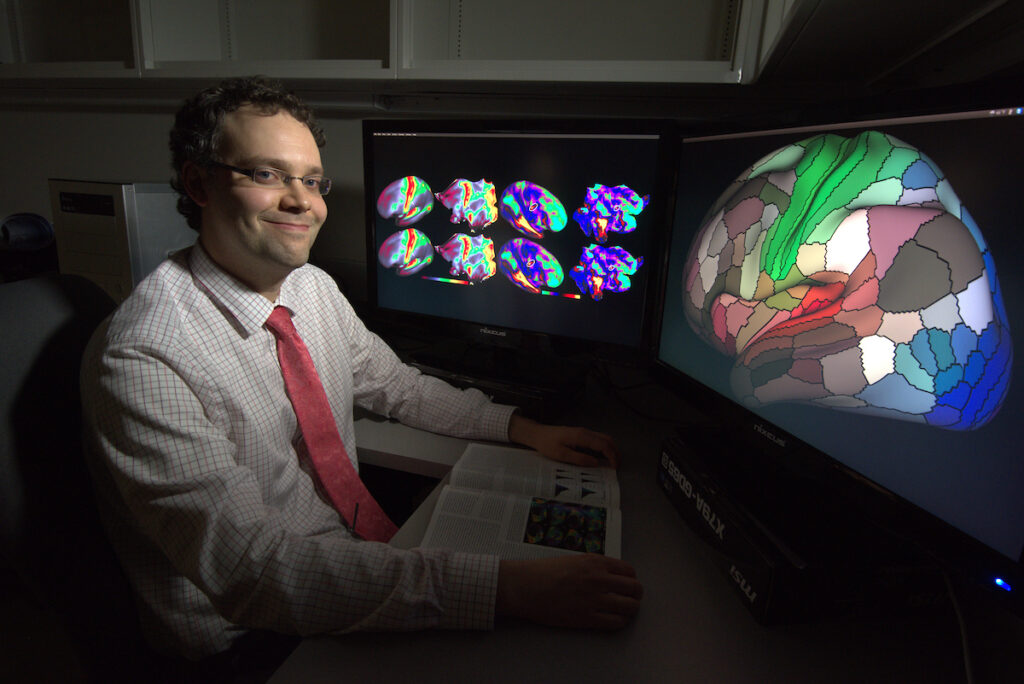
Matthew F. Glasser, MD, PhD is an Assistant Professor of Radiology at Washington University School of Medicine in St. Louis, affiliated with the Mallinckrodt Institute of Radiology (MIR) and the Computational Imaging Research Center (CIRC). He co-directs a brain imaging laboratory with David Van Essen, PhD, and serves as co-leader of the Adult Aging Brain Connectome (AABC) project's Informatics, Data Analysis, and Statistics Core (IDASC). Education: Undergraduate: Emory University Doctorate: Washington University School of Medicine in St. Louis Medical Degree: Washington University School of Medicine in St. Louis Residency: Diagnostic Radiology, Mallinckrodt Institute of Radiology Fellowship: Neuroradiology, Mallinckrodt Institute of Radiology Dr. Glasser's research focuses on neuroanatomy, connectomics, and medical image analysis. He is best known for his work mapping 180 areas of each human cerebral cortical hemisphere using multiple MRI modalities as part of the Human Connectome Project (HCP). His work involves developing techniques for cortical myelin mapping to identify brain areas and align maps across individuals. He continues this research through the Adult Aging Brain Connectome (AABC) project, which aims to uncover factors underlying vulnerability and resilience to late-life dementia. Dr. Glasser's publication record demonstrates a consistent focus on advancing brain imaging techniques and understanding brain connectivity. His work spans from foundational methods in the Human Connectome Project to applications in aging and neurological disorders. Recent publications show an expansion into clinical applications like speech neuroprosthetics and depression treatment, indicating how his fundamental research in brain mapping is translating into therapeutic innovations. Scientific Awards: 2021–2022 Highly Cited Researcher, Clarivate 2022 Roentgen Resident/Fellow Research Award, Radiological Society of North America 2022 Alpha Omega Alpha, Washington University School of Medicine 2018-2021 Highly Cited Researcher, Clarivate 2017 Hugh M. Wilson Award in Radiology, Mallinckrodt Institute 2016 Dennis Hallahan Fellowship for Outstanding Research 2016 Olin Medical Scientist Fellowship 2009 Pittsburgh Brain Connectivity Competition Winner 2008 Distinguished Young Scholar Award Dr. Glasser has been instrumental in securing significant research funding, most notably as a key contributor to the $30 million Human Connectome Project funded by the NIH. He currently co-leads the AABC's Informatics, Data Analysis, and Statistics Core. While the text doesn't specify his current advisees, his position as Assistant Professor and research leadership suggests he mentors graduate students and postdoctoral researchers in neuroimaging and connectomics. Dr. Glasser co-directs a brain imaging laboratory with David Van Essen that is now part of the Computational Imaging Research Center (CIRC). This laboratory has been central to the Human Connectome Project and its successor, the Adult Aging Brain Connectome project. The lab brings together expertise in neuroscience, radiology, computer science, and statistics to advance brain imaging methodologies and applications.
Steve Lund is a Professor of Earth Sciences at the Department of Earth Sciences, University of Southern California (USC). His work focuses on the Earth's magnetic field variability, paleoclimate correlation using paleomagnetic and rock magnetic tools, and microplate tectonics in the North American Cordillera. He has collaborated extensively with institutions like the U.S. Geological Survey (USGS), Ocean Drilling Program (ODP), and International Ocean Discovery Program (IODP), particularly through expeditions such as ODP Leg 172 and IODP Expedition 323. Education: Ph.D. in Geophysics, University of Minnesota, 1981 M.S. in Geophysics, University of Minnesota, 1976 B.S. in Geology, University of North Dakota, 1972 Research Interests: Steve’s primary research explores geomagnetic field dynamics across time scales, including secular variation patterns, field excursions, and reversal sequences. He emphasizes the use of paleomagnetic and rock magnetic data to refine chronostratigraphic frameworks for paleoclimatic studies. His work integrates time-series analysis and microplate tectonics to address continental and oceanographic environmental changes. He has pioneered methods to correlate sediment sequences globally using geomagnetic field features, particularly in arid regions like the Mojave Desert and Bering Sea. Publications Trends: Lund’s recent articles emphasize high-resolution paleomagnetic studies of deep-sea sediments and lake cores, focusing on MIS stratigraphy and geomagnetic excursions. His work bridges Quaternary climate variability and core-based dating techniques, with a regional focus on California, Nevada, and the Pacific margins. Collaborations with multidisciplinary teams (e.g., on IODP/ODP expeditions) highlight his methodological innovation and global data integration. Awards & Grants: While no explicit awards are listed, his sustained contributions to paleomagnetic field analysis and climate studies reflect recognition in the scientific community. He has led or co-led major drilling initiatives (e.g., IODP 323) and U.S. Geological Survey projects, securing grants for long-term sedimentary and geochemical investigations. Labs & Teams: Lund collaborates with the USC Department of Earth Sciences and external agencies like the IODP and USGS. His research leverages core repositories and field campaigns, emphasizing spatial-temporal analysis of geomagnetic and climatic records across North America and the Pacific.
Associate Professor Simon Lawson is a distinguished researcher in forest entomology at the University of the Sunshine Coast's Forest Research Institute. With over 34 years of experience in applied forest entomological research, he specializes in developing sustainable management methods for insect pests of hardwood plantations, with particular expertise in biological control and chemical ecology of forest pests. He is a member of both the Forest Industries Research Centre and the Tropical Forests and People Research Centre at UniSC. Lawson holds a Doctor of Agriculture (Forest Science) from Tokyo, a Master of Agricultural Science from Adelaide, and a Bachelor of Agricultural Science from Adelaide. His educational background has provided the foundation for his extensive international research career spanning Australia, Japan, and multiple countries in Southeast Asia and the Pacific. His research interests focus on biological control of forest insects and the ecosystem services provided by insects in both planted and native forests. He has made significant contributions to integrated pest management in hardwood and softwood plantation forestry, identification and development of semiochemicals for forest insect pest management, forest pest risk modelling, forest biosecurity, and the biology and ecology of bark beetles. His work emphasizes practical, sustainable solutions for forest health challenges with global applicability. Analysis of his recent publications reveals a strong focus on collaborative international research, particularly through the Biological Control of Eucalypt Pest Research Alliance (BiCEP). His work spans from fundamental taxonomic research on parasitoids to applied field studies on pest management systems, demonstrating both theoretical depth and practical application. The consistent theme across his publications is developing sustainable, biological approaches to forest pest management that reduce reliance on chemical controls. Japanese Government Ministry of Education Monbusho Scholarship (1989) Science and Technology Agency of Japan Postdoctoral Fellowship (1993) Japan Society for Promotion of Science Scientific Visits to Japan Awardee (2002, 2003) Forestry and Forest Products Research Institute of Japan Research Fellowship for Foreign Specialists Awardee (2003) Lawson has supervised numerous research students, including doctoral candidates like Ngoc Hoan Le who completed a dissertation on Australian Megastigmus as potential biocontrol agents. His grant portfolio demonstrates substantial research funding, with projects totaling over A$2.6 million from organizations including the Australian Centre for International Agricultural Research, Queensland Government, and international forestry companies. His grants focus on biological control of eucalypt pests, forest health surveillance, and pest detection systems across multiple countries in the Asia-Pacific region. As a key member of the Forest Industries Research Centre and the Tropical Forests and People Research Centre, Lawson leads international collaborations focused on forest health issues. His work with BiCEP represents a major initiative connecting researchers across Australia, Brazil, South Africa, and other countries to address global eucalypt pest challenges. His research teams frequently include collaborators from multiple countries, reflecting his strong commitment to international scientific cooperation in forest health management.
Emanuel Duarte Ribeiro is a PostDoc researcher at the University of Basel , affiliated with the Faculty of Humanities and Natural Sciences and working within the Department of Environmental Sciences under the FG Salzburger research group. His research focuses on paleoenvironmental reconstruction using biotic indicators in lake sediments, climate change impacts on aquatic ecosystems, and experimental studies in alpine springs. Current projects include KUMiT (Climate, Environment, People in Thurgau), SNSF-funded work on remote mountain lake ecosystems, and laboratory experiments on pesticide effects. His recent publications address diverse topics including Alpine plant diversity dynamics Neolithic land-use impacts Methane cycling in meromictic lakes Tropical paleofire metrics Fish fossil records Multi-proxy climate reconstructions Collaborations span institutions including UNESCO Biosphere Engiadina Val Müstair , Swiss National Park , and multiple international research teams analyzing paleoenvironmental datasets from Europe, Africa, and South America.
James W. Lewis is a Professor and Vice-Chair for Education at the West Virginia University School of Medicine, holding dual appointments in the Department of Neuroscience and the Rockefeller Neuroscience Institute. His research focuses on understanding how the human brain processes auditory information, particularly in relation to multisensory integration and natural sound recognition. PhD, California Institute of Technology Dr. Lewis's research explores the neural mechanisms underlying auditory object perception, with particular interest in how the brain categorizes and processes different types of natural sounds. His work employs functional magnetic resonance imaging (fMRI) to investigate cortical networks responsible for recognizing sounds produced by humans, animals, mechanical devices, and environmental sources. He has made significant contributions to understanding the fourfold cortical dissociation for representing different categories of action sounds, demonstrating how distinct brain regions process human, animal, mechanical, and environmental sounds. His recent publications reveal a consistent focus on auditory neuroscience with increasing attention to clinical applications in autism spectrum disorder and medical education innovation. A notable trend is his exploration of how high-level perceptual attributes like concreteness, effectuality, and spatial scale influence cortical processing of natural sounds, advancing models of grounded cognition for acoustic knowledge representation. Dr. Lewis leads a research program utilizing 3 Tesla functional magnetic resonance imaging at the Center for Advanced Imaging at WVU. His lab employs a full-scale simulation-MRI scanner to train children for neuroimaging studies, particularly those with autism spectrum disorder. The team investigates how the brain processes auditory information in both typical development and neurodevelopmental conditions, with findings having implications for biologically inspired hearing aid algorithms.