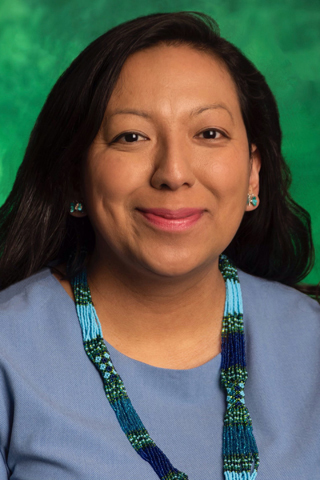
Jennifer Gómez Menjívar is Professor and Director of the M.A. in Media Industries and Critical Cultural Studies at the University of North Texas. Her research examines historical and ethno-linguistic movements influencing text production, circulation, and reception across print media, screen cultures, and digital communities. With over 18 years of teaching experience, she previously held positions at international organizations including the UNECE and UNDP. Her scholarly interests span media linguistics, film adaptation, digital activism, hemispheric animation histories, Indigenous sovereignty media, and Spanish-language media. Her publications demonstrate interdisciplinary work bridging media studies, cultural history, and postcolonial theory. Her extensive publication record includes books such as Tropical Tongues: Language Ideologies, Endangerment, and Minority Languages in Belize (2018) and Black in Print: Plotting the Coordinates of Blackness in Central America (2023), as well as co-edited volumes on Indigenous technology and hemispheric Blackness. She received a Senior Research Fellowship at Freie University Berlin for her upcoming work on Indigenous sovereignty media. Gómez Menjívar teaches courses including Introduction to Graduate Studies in Media Arts, Women in Film, and Global Media. She also mentors students in critical media analysis and serves as faculty advisor for media research projects.
Marcela Echeverri Muñoz is an Associate Professor in the Department of History at Yale University, affiliated with the Faculty of Arts and Sciences. Her scholarship bridges history, anthropology, and political theory, with a focus on Latin America, the Atlantic World, and the Spanish Empire. She is recognized for her interdisciplinary approach to understanding political subjectivities, state formation, and social transformation during the Age of Revolutions. PhD in Latin American and Caribbean History, New York University, 2008 MA in History of the Hispanic World, Fundación MAPFRE-Tavera and CSIC, Madrid, 2006 MA in Social and Political Theory, The New School for Social Research, 2001 BA in Anthropology, Universidad de los Andes, Bogotá, 1997 Her research centers on the interplay of race, gender, law, and political theory in colonial and 19th-century Latin America. She investigates how enslaved and Indigenous peoples navigated imperial and republican transitions, particularly through royalist affiliations. Her work challenges peripheral narratives of Spanish America in Atlantic slavery studies, positioning the region as a central site of abolitionist and constitutional experimentation. The trends in her recent publications reveal a sustained focus on slavery, abolition, and political transformation in the Spanish American mainland. She analyzes how anti-slavery movements were intertwined with republicanism, citizenship, and state formation, especially in Gran Colombia. Her scholarship spans legal history, Atlantic processes, and transimperial dynamics, often highlighting marginalized voices in revolutionary contexts. She frequently contributes to major reference works and edited volumes on Atlantic revolutions and Latin American independence. Her scientific awards and fellowships reflect her standing in the field: James Alexander Robertson Prize Michael Jiménez Prize Bolton-Johnson Prize Honorable Mention Yale Heyman Prize for Outstanding Scholarly Publication Alexander von Humboldt Research Fellowship MacMillan Research Fellow, Yale Mellon Residential Fellow, CUNY NEH Summer Institute Participant, Johns Hopkins Fellowships from John Carter Brown Library, CSIC, Fundación Mapfre, and Instituto Colombiano de Antropología e Historia Echeverri has secured significant research grants from Harvard’s Atlantic History Seminar, CUNY Research Foundation, and Yale. She has co-edited special issues on Gran Colombian history and Spanish American abolition, and led key academic initiatives including the Race and Slavery in the Atlantic World Working Group and the Early Modern Empires Workshop at Yale. Though student advising is not explicitly detailed, her role as a senior scholar implies mentorship of graduate students. She is affiliated with several research networks and has been a visiting scholar at institutions such as Freie Universität Berlin. Her ongoing book project on Gran Colombian slavery underscores her commitment to redefining the hemispheric significance of Latin American abolition. She remains an active contributor to both scholarly and pedagogical conversations in Atlantic and Latin American history.
Roland Greene is the Mark Pigott KBE Professor and Anthony P. Meier Family Professor of the Humanities at Stanford University, holding dual appointments in the Department of English and the Department of Comparative Literature. He serves as Director of the Stanford Humanities Center and co-chair of the Renaissances and Poetics Workshop research groups. Educated at Brown University (A.B., 1979) and Princeton University (Ph.D., 1985), his academic career includes prior roles at Harvard and Oregon universities. His research focuses on Renaissance literatures of England, Latin Europe, and the transatlantic world, with expertise in poetry and poetics from the Renaissance to the present. Major works include Five Words: Critical Semantics in the Age of Shakespeare and Cervantes (2013) and editing the Princeton Encyclopedia of Poetry and Poetics (2012). Recent lectures address topics like Juan Caramuel’s Metametrica , Baroque aesthetics, and digital humanities challenges. Greene has advised over 50 Ph.D. students, many of whom hold academic positions globally. Awards include American Academy of Arts and Sciences membership and leadership roles like MLA President (2015–2016). His work engages with interdisciplinary themes such as colonial baroque, digital humanities, and global literary history.
Greg Grandin is the Peter V. and C. Vann Woodward Professor of History at Yale University, where he has been affiliated since returning from New York University after nineteen years. His work focuses on Latin American and U.S. history, with an emphasis on empires, colonialism, indigenous peoples, and social-political dynamics. He has authored seven books, including award-winning titles such as The Blood of Guatemala , The Empire of Necessity (winner of the Bancroft and Beveridge awards), and The End of the Myth (Pulitzer Prize winner). Grandin is a member of prestigious academic societies like the American Academy of Arts and Sciences and contributes to journals like The Nation and London Review of Books . His research explores the interplay between U.S. interventions and Latin American resistance, reshaping understandings of hemispheric relations. Recent publications include America, América (2025), a sweeping re-evaluation of North and South American histories. His academic awards include the Pulitzer Prize, Bancroft Award, and multiple fellowships. Grandin’s work often bridges scholarly and public engagement, reflected in his editorial roles and media appearances. He has co-edited volumes like The Guatemala Reader and his writings address contemporary political issues through historical lenses.
Peter Wilf is a Professor in the Department of Geosciences at Pennsylvania State University's College of Earth & Mineral Sciences. His research focuses on fossil plants as indicators of past climates, biodiversity, and environmental disturbances from the latest Cretaceous through middle Eocene (~67-45 million years ago). Wilf leads significant research projects including the Origins of Southeast Asian Rainforests from Paleobotany and Machine Learning and the Patagonia Paleofloras Project. His research interests span paleobotany, paleoclimatology, plant-insect interactions, and biogeography, with emphasis on how deep-time data illuminate modern ecosystems and their responses to anthropogenic change. Wilf's work primarily focuses on the latest Cretaceous through middle Eocene, examining global disturbances including warming and cooling events, the end-Cretaceous mass extinction, and recovery periods. His research has significant implications for understanding climate change, biodiversity conservation, and ecosystem dynamics. Wilf's extensive publication record demonstrates consistent high-impact research across paleobotany, with recent work focusing on Southeast Asian rainforests, Patagonian paleofloras, and the connections between Gondwanan landmasses. His research integrates fieldwork in Patagonia and Southeast Asia with advanced analytical techniques, including machine learning applications for fossil leaf identification. Fellow, American Association for the Advancement of Science (AAAS) 2022 Wilson Award for Excellence in Research, Penn State College of Earth & Mineral Sciences 2022 Fellow, Paleontological Society 2017 Fellow, Geological Society of America 2016 Paul F. Robertson Research Breakthrough of the Year Award, Penn State College of Earth & Mineral Sciences 2016 George W. Atherton Award for Excellence in Teaching, Pennsylvania State University 2013 Wilf maintains an active research program with numerous NSF-funded projects and international collaborations. He leads a productive lab group conducting extensive fieldwork in Patagonia, Argentina, and Southeast Asia. His research has transformed understanding of Southern Hemisphere floras, the role of Patagonia in plant evolution, and connections between ancient and modern ecosystems across continents. Wilf's laboratory serves as a hub for paleobotanical research, bringing together students, postdocs, and international collaborators to study fossil plant collections from around the world. The lab integrates traditional paleobotanical methods with cutting-edge technologies including machine learning for fossil identification and advanced imaging techniques for detailed morphological analysis.
Kirsten Weld is a Professor of History at Harvard University, affiliated with the Faculty of Arts and Sciences. Her work focuses on modern Latin America, particularly struggles over inequality, justice, historical memory, and social inclusion. She holds a BA from McGill University and a PhD from Yale University. Her research has been recognized with prestigious awards, including the WOLA-Duke Human Rights Book Award (2015) and the Latin American Studies Association’s Best Book Award (2016). Her first book, *Paper Cadavers: The Archives of Dictatorship in Guatemala* (2014), examines the role of archives in shaping historical narratives during Guatemala’s civil war. Her current project, *Ruins and Glory: The Long Spanish Civil War in Latin America*, explores the war’s legacies in the Americas. She teaches courses on Latin American history, U.S.-Latin American relations, archival theory, and historical methods. Weld’s publications span journals like *Hispanic American Historical Review* and *Dissent Magazine*, addressing topics such as Cold War dynamics, memory politics, and surveillance. Her work bridges historical scholarship with activism, emphasizing archives as tools for justice and accountability. Her awards reflect her contributions to human rights scholarship and historical methodology. Weld’s research often intersects with contemporary issues, including post-conflict justice and the ethical use of archival materials.
Charlie Geyer serves as Assistant Professor of Hispanic Studies at Davidson College, specializing in hemispheric border studies through comparative analysis of Latin American and Latinx literatures and cultures. His educational credentials include: Ph.D. and M.A. from Vanderbilt University B.A. from Emory University Geyer's research centers on the politics and aesthetics of bordering practices across the Americas, examining how literature, performance, and visual arts engage with geographic and social borders related to race, class, gender, sexuality, and citizenship. His current book project "Disturbing Beauty: Border Crossing in Latin American and Latinx Imaginaries" identifies an aesthetic practice that challenges violent border enforcement while proposing new political arrangements for border coexistence. His scholarly publications appear in Revista de Estudios Hispánicos, CENTRO: Journal, Chasqui, The Comparatist, and Afro-Hispanic Review. Geyer teaches specialized courses including "Border Crossing in the Latinx Americas," "Queer Crossings: Latin and Latinx Americas," and "Beauty and Marginality in Contemporary Latin America," following prior appointments at University of Arizona and Ball State University.
Marta Kutas is a Distinguished Professor in the Department of Cognitive Science at the University of California, San Diego (UCSD), where she has held roles including Department Chair (2007–2019), Director of the Center for Research in Language (2007–2022), and Chancellor's Associates Endowed Chair (2017–2022). Her research focuses on language processing, neuropsychology, and electrophysiological methods, with a particular emphasis on event-related potentials (ERPs). She has contributed significantly to understanding semantic integration, memory, and neural mechanisms underlying language comprehension. Education includes a B.A. from Oberlin College (1971) and a Ph.D. in Psychology from the University of Illinois (1977). She has held adjunct roles at San Diego State University and the UCSD Department of Neurosciences. Her awards include the Revelle Medal (2023), membership in the American Academy of Arts and Sciences (2018), and the Cognitive Neuroscience Society's Distinguished Career Award (2015). Her research interests span language comprehension/production, neuropsychology, and ERP methodologies. Key publications analyze semantic processing, memory-related brain potentials, and the impact of individual knowledge on word processing. She has collaborated on studies involving Alzheimer's, Parkinson's, and schizophrenia, using ERPs to explore cognitive deficits.
Nicholas B. Maher is an Associate Professor of History at Oglethorpe University, located in Atlanta, Georgia. He holds a B.A. from the University of Michigan and both an M.A. and Ph.D. from the University of Chicago. His research focuses on U.S. foreign relations, cultural history, and U.S.-Latin American relations, with particular emphasis on 20th century diplomacy and Cold War dynamics. Dr. Maher's teaching portfolio includes courses on American diplomatic history, cultural studies, and hemispheric relations. His work bridges traditional diplomatic history with cultural analysis, examining how political decisions intersect with societal values and transnational exchanges. No specific academic awards or grants are mentioned in the provided materials. His current contact information includes an office at Hearst 306 and a university email address.
Agnes Lugo-Ortiz serves as Associate Professor of Latin American Literature in the Department of Romance Languages and Literatures at the University of Chicago's Division of the Humanities. Her scholarly profile centers on nineteenth-century Latin American literatures and Caribbean cultural histories within transatlantic frameworks of modernity, with particular emphasis on slavery, visual culture, and archival epistemology. Her educational foundation includes a PhD from Princeton University (1990), followed by teaching appointments at Northwestern University and Dartmouth College before her tenure at Chicago. Her research trajectory examines cultural politics through lenses of national identity formation, anti-colonial projects, and diasporic community reconfigurations, notably through decades of affiliation with the Recovering the U.S. Hispanic Literary Heritage Project. Lugo-Ortiz's current book project "The Plantation Gaze: Slavery and Visual Culture in Colonial Cuba (1727–1886)" interrogates the imbrication of visual culture with plantation slavery, analyzing diverse artifacts from religious performances to medical treatises. Her co-edited volume "Slave Portraiture in the Atlantic World" and co-founding of the Working Group on Slavery and Visual Culture (2016) demonstrate her leadership in visual studies of enslavement, recently expanded through the digital exhibit "Palimpsests: Visual Idioms of Enslavement in the Nineteenth-Century and Their Afterlives". Her scholarly impact is recognized through awards including the Latin American Studies Association Prize for Best Essay in Nineteenth-century Studies and the Premio Alejandro Tapia y Rivera. Prestigious fellowships from Ford Foundation, Mellon Foundation, Franke Institute, and Clark Art Institute have supported her research. As co-founder and co-editor of the anti-colonial digital journal "Categoría Cinco. Revista de Política y Cultura", she actively engages Puerto Rican decolonial politics. Her editorial service spans PMLA and University of New England Press publications, while advisory roles include the Recovering the US Hispanic Literary Heritage Project and Hemispheric Institute of Performance and Politics. She maintains robust institutional engagement through affiliations with Chicago's Center for Latin American Studies, Center for Gender and Sexuality Studies, and Center for Race, Politics, and Culture.
Natalia Villanueva-Nieves is an Assistant Professor in the Department of Chicana and Chicano Studies at Sonoma State University. Her interdisciplinary scholarship bridges literary studies, affect theory, and digital humanities, with a focus on Latinx, Chicanx, Central American, and Caribbean expressive cultures. Her academic background includes a doctoral degree in Chicana and Chicano Studies from the University of California, Santa Barbara, and a master’s in Comparative Literary Studies from Utrecht University. Dr. Villanueva-Nieves' research explores Latinx emotional geographies, transnational feminisms, hemispheric race studies, and digital storytelling. She investigates how affect, space, and racialization intersect in Latina narratives, particularly through relational and hemispheric frameworks. Her work emphasizes collective archives of care and hope in Latinx testimonial writing. Her recent publications reflect a strong trend toward interdisciplinary and public-facing scholarship, combining literary analysis with digital tools and social justice engagement. The articles span themes such as affective spaces, digital archives, transnational feminisms, and geocritical approaches to Latinx literature. Her scholarly work has appeared in Chiricú Journal , Ex-Centric Narratives Journal , Zócalo Public Square , American National Biography , Aztlán: A Journal of Chicano Studies , and edited volumes from UNAM and the University of Alcalá de Henares. Dr. Villanueva-Nieves is currently developing a digital monograph that uses interactive maps and digital storytelling to present Latinx testimonial writing as living archives. She is also completing her book The True Colors of Feeling Brown: Affect and Space in Latina Narratives , under contract with Palgrave in the Geocriticism and Spatial Literary Studies series.
Tianna Paschel is an Associate Professor in the Department of African American Studies at the University of California, Berkeley. Her research focuses on the intersection of racial ideology, politics, and globalization in Latin America, particularly exploring shifts from universal citizenship to multicultural frameworks recognizing black populations’ rights. She is the author of Becoming Black Political Subjects (winner of multiple awards) and co-editor of Afro-Latin@s in Movement . Paschel holds affiliations with the American Political Science Association Task Force on Race and Class Inequality, the Network of Anti-Racist Action and Research (RAIAR), and the Law Section of the American Sociological Association. Her work examines black mobilization in Colombia and Brazil, anti-blackness in immigration politics, and transnational solidarity networks. Key themes include racialized state policies, intersectionality of race and class, and hemispheric black activism. Her research methods combine ethnography, archival work, and survey data analysis. Paschel’s scholarly contributions bridge sociology, political science, and ethnic studies. Her 2020s work explores California’s racialized immigration debates while earlier projects analyzed Latin America’s ethno-racial rights frameworks. She has received prestigious awards recognizing her groundbreaking analysis of race, statecraft, and social movements. Her professional service includes advising on anti-racist research initiatives and collaborating across disciplines to center black perspectives in academic discourse. Office hours are held Monday-Friday 9am-4pm in 660 Social Sciences Building, UC Berkeley.
Dr. Jonathan T. Overpeck is the Samuel A. Graham Dean of the School for Environment and Sustainability (SEAS) at the University of Michigan, where he also holds the William B. Stapp Collegiate Professorship of Environmental Education. He is a Professor of both Climate and Space Sciences and Engineering, and Earth and Environmental Sciences, with a career spanning climate-vegetation interactions, abrupt climate change, monsoon dynamics, drought hydroclimate, sea level rise research, and interdisciplinary climate assessment. Overpeck has published over 230 works cited 60,000+ times, emphasizing public education, university-community partnerships for climate solutions, and environmental justice initiatives. PhD in Geological Sciences, Brown University MSc in Geological Sciences, Brown University BA in Geology (Honors), Hamilton College His research spans climate-biosphere interactions , climate variability and abrupt change , monsoon dynamics , drought and hydroclimate , sea level rise , climate law , and climate adaptation . Overpeck pioneered studies on megadrought terminology, temperature-driven drought intensification, and the aridification of North America. His work with the NOAA Paleoclimate Program and World Data Center for Paleoclimatology established foundational understanding of climate dynamics through annually-laminated sediment analysis in the Cariaco Basin. Overpeck's 2020-2024 research includes climate aridification , hydroclimate scaling mismatches , and temperature-precipitation interactions , with recent focus on Antarctic heatwaves, Mississippi River Basin changes, and corporate climate accountability. His article trends show concentration in climate attribution , hydrological extremes , paleoclimate modeling , and climate policy analysis . Scientific Honors: 2024 U.S. National Academy of Sciences 2015 American Geophysical Union Fellow 2009 AAAS Fellow 2007 Nobel Peace Prize contributor (IPCC) 2005 Guggenheim Fellowship Multiple U.S. Department of Commerce awards Overpeck has led or participated in significant climate adaptation projects , including NSF grants totaling $5.1M+ for Southwest Hydroclimatic Extremes (2017-2020), Amazon Drought Impacts (2014-2018), and Quantifying Drought Risk (2013-2018). He serves on the Colorado River Research Group (2014-present) and advises Climate Communication (2011-present). Current initiatives include Great Lakes University positioning, Michigan's climate resilience planning, and the Audacious Water podcast series examining Mississippi River Basin transformations. Overpeck actively contributes to climate policy discourse , advocating for science-informed decision-making and stakeholder collaboration across government, military, and corporate sectors.
Angelo Rivero Santos is a Teaching Professor and Director of Academic Affairs at Georgetown University's Center for Latin American Studies (CLAS), part of the Edmund A. Walsh School of Foreign Service. He served as Interim Director of CLAS (AY 2022-23) and previously held leadership roles between 2003-2006. His roles include overseeing the M.A. in Latin American Studies and the Capstone Seminar. He also serves on Georgetown's School Council and Task Force for Undocumented Students. Education: Ph.D. in International Relations, Syracuse University MPA and M.A. in Economics, Syracuse University B.S., Syracuse University Research Interests: International development and US-Venezuela relations Western Hemispheric Affairs, Political Economy of Development, and Latin American sociopolitical dynamics Diplomatic practices and migration policy His publications focus on migration challenges, sustainable development, and regional diplomacy. He is currently a member of Universidad de Chile's Revista Política editorial board. His career includes seven years as Deputy Chief of Mission at Venezuela's Embassy in Washington, D.C., and community leadership roles with CASA's Leadership Academy. Advising & Grants: Oversees graduate Capstone Seminar requirements Contributed to Georgetown's Institute for the Study of International Migration projects He actively engages in public policy through NACLA interviews and co-edited academic volumes on regional policy analysis.
Salomé Aguilera Skvirsky is an Associate Professor in the Department of Cinema and Media Studies and The College at the University of Chicago, with affiliated appointments in the Center for Latin American Studies and the Center for the Study of Race, Politics, and Culture. She earned her Ph.D. from the University of Pittsburgh and serves as co-editor at Critical Inquiry. Her research pioneers the concept of the “process genre”—a transmedial category depicting step-by-step production processes that aestheticize labor as skilled and artisanal across ideological spectrums. She employs hemispheric frameworks to analyze race, labor, and “the people” in Latin American political cinema, Third Cinema, and nonfiction media, revealing how representations intersect with power structures and historical trauma. Recent publications examine police representation in “Filming the Police,” domestic labor in Roma, and the legacy of The Battle of Chile. Her work spans Cinema Journal, Journal of Latin American Cultural Studies, and The Routledge Companion to Latin American Cinema, demonstrating methodological rigor in visual analysis and political theory. Major recognitions include: Best First Book Prize (Society for Cinema and Media Studies, 2021) PROSE Book Awards Finalist (Media and Cultural Studies, 2021) Kraszna-Krausz Moving Image Book Award shortlist (2021) She teaches advanced seminars on Latin American Documentary, Cinema/Labor, and Filming the Police, mentoring students in critical media analysis while advancing her book project on police representation across televisual and digital platforms.