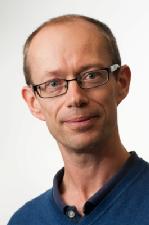
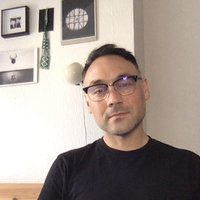
Dr. Sarah Marsden is a Researcher affiliated with Lancaster University's Health Research Department within the Lancaster Medical School, part of the Faculty of Health and Medicine. Her role involves a Scoping Study on Suicide, Self-harm and Learning Disability. She focuses on qualitative research addressing mental health challenges in marginalized groups, particularly suicidality and self-harm behaviors among autistic individuals, neurodiverse populations, and those with learning disabilities. Her research emphasizes understanding systemic barriers in healthcare access through studies like 'Diversifying medicine by widening participation' and exploring self-harm dynamics in autistic adults. Publications reflect interdisciplinary approaches bridging medical sociology and clinical psychiatry. She holds no listed awards but contributes actively to public health discourse through blogs and peer-reviewed journals. As part of the Health Research team, her work aligns with broader institutional priorities in advancing equitable healthcare practices and improving outcomes for vulnerable groups.
Dr. Sara Caputo is a British Academy Postdoctoral Fellow at the Department of History and Philosophy of Science and an Affiliated Lecturer at the Faculty of History, University of Cambridge. She serves as Director of Studies in History, History and Politics, and History and Modern Languages at Magdalene College. Her research spans transnational maritime history, the history of medicine, cartography, and imperial history. Education: PhD in History from the University of Cambridge (Robinson College), MSc in History from the University of Edinburgh, BA (Hons) in History from Cardiff University. Career Highlights: Lumley Junior Research Fellow (2019–2022), Senior Research Fellow (2022–present) at Magdalene College, Scouloudi Fellow (2018–2019), Lewis-AHRC Scholarship (2015–2018), Honorary Vice-Chancellor’s Scholar (2015–2018). Research Focus: Dr. Caputo explores maritime mobilities, knowledge exchange, and the instability of national boundaries in the British and European navies. Her work integrates transnational perspectives into the study of a quintessentially national institution, challenging notions of Britishness and foreignness. She combines qualitative and quantitative methodologies to analyze legal, social, and cultural contexts of naval service and cartographic practices. Notable Articles: Recent publications include studies on British naval medicine, the evolution of ship tracks into surveillance tools, and the transnational dimensions of naval exploration. Her articles span journals like Past & Present , English Historical Review , and Social History of Medicine , with chapters in edited volumes on transport history and postwar naval recruitment. Scientific Awards: Royal Historical Society Whitfield Prize (2024) British Commission for Maritime History Boydell & Brewer Prize (2020) Fachverband Medizingeschichte wissenschaftlichen Förderpreis (2022) International Committee for History of Technology Maurice Daumas Prize (2021) Scottish History Society Rosebery Prize (2020) Teaching and Outreach: Dr. Caputo teaches courses on the Global Eighteenth Century, Union and Disunion in Britain, and Mediterranean history. She actively participates in outreach programs with the Cambridge University Admissions Office and The Brilliant Club, focusing on widening participation in history education.
Gayle Letherby is a Visiting Professor of Sociology at the University of Plymouth’s Peninsula Medical School (Faculty of Health), and holds visiting roles at the University of Greenwich and the University of Bath’s Centre for Death and Society (CDAS). She is an Academician of the Academy of Social Sciences (since 2007) and recipient of the 2023 Lifetime Contribution to Autoethnography Award. Her research focuses on feminist methodology, health sociology, grief and bereavement, mobility studies, and criminology. She has supervised over 20 doctoral students across multiple universities, including topics like non-motherhood, occupational therapy, and gang culture in African Caribbean communities. Her teaching spans undergraduate and postgraduate levels, covering crime theory, auto/biographical research, and feminist epistemology. Notable collaborations include participatory studies on homeless individuals’ food experiences and ethnographic explorations of medical decision-making. Her interdisciplinary work bridges sociology, criminology, and health studies, with a strong emphasis on autoethnographic and creative methodologies. Recent research explores themes like grief narratives, gendered travel experiences, and the emotional dimensions of doctoral journeys. She has contributed to policy discussions on family-centred care and has been a guest lecturer globally, including at York University (Canada) and University College Cork (Ireland). Awards: Academy of Social Sciences Academician (2007), Lifetime Contribution to Autoethnography (2023) Teaching Expertise: Feminist research methods, criminology, sociology of health, gender studies Key Research Areas: Auto/biography, non-motherhood, medical sociology, mobility, grief studies
Mark de Rond is Professor of Organisational Ethnography at Cambridge Judge Business School and Fellow of Darwin College, University of Cambridge. His work focuses on immersive ethnographic studies of human behavior in extreme contexts including war zones, high-stakes sports, and controversial social movements, revealing how individuals navigate challenging circumstances through compromise and sensemaking. His educational background includes a DPhil from the University of Oxford alongside advanced degrees in management and economics, photojournalism, documentary photography, biography, creative nonfiction, and prose fiction. This multidisciplinary training informs his unconventional methodological approach. De Rond's research centers on extreme context ethnography, examining how pressure-cooker environments expose fundamental organizational dynamics. His work spans military medicine (Camp Bastion fieldwork), elite sports (Cambridge Boat Race), Amazon river expeditions, and controversial practices like paedophile hunting. Key contributions explore negotiation, conflict resolution, serendipity, institutional persistence, and the emotional toll of fieldwork, often employing innovative methods like enactive ethnography and linguistic analysis of digital communities. His recent publications reveal a growing focus on digital vigilantism and the societal implications of extreme practices, with increasing interdisciplinary reach across organizational studies, criminology, medical anthropology, and sociology. The work demonstrates methodological creativity through linguistic analysis of Facebook groups, embodiment studies in extreme environments, and dream-based reflexive techniques. Scientific recognition includes: BEST ARTICLE AWARD FOR 2016 Favorite MBA Professor honors from Poets & Quants (2021, 2022) Guinness World Record for first unsupported Amazon row De Rond advises MBA students and delivers executive education to top law firms (Slaughter and May, Allen & Overy), professional services (McKinsey, KPMG), corporations (Sky, BT, Diageo), and NGOs (UNICEF, NHS). His negotiation training from Harvard Law School informs both academic work and university mediation practice. Current research involves collaborative teams studying paedophile hunting (featured in Sundance-nominated documentary Predators ) and high-performance sports organizations, with fieldwork requiring deep immersion in challenging environments. His research methodology involves embedded collaboration with diverse teams including medical personnel in conflict zones, elite rowers, and controversial activist groups, often pushing methodological boundaries through photojournalism and creative nonfiction approaches.
Julia Lawton is Professor of Health & Social Science at the Usher Institute , University of Edinburgh, where she leads the Edinburgh Qualitative Health Research Group (EQual) . Her work focuses on improving healthcare delivery through qualitative research, particularly in chronic condition self-management and health inequalities. Education: PhD and BA in Social Anthropology from University of Cambridge Research Themes: Diabetes self-management, health technology adoption, inequities in healthcare access, process evaluations of complex interventions Key Projects: UNBIASED (diabetes technology disparities), REDUCE (diabetic foot ulcers), CL4P-CF (cystic fibrosis-related diabetes), AiDAPT (pregnancy diabetes management) Her recent publications highlight innovations in diabetes care, including closed-loop systems, structured education, and addressing disparities in technology access for underserved populations. She collaborates extensively with NHS entities and international institutions.
Professor Owen Davies is a faculty member at the University of Hertfordshire , affiliated with the History Department at the School of Creative Arts . His research spans witchcraft , magic , supernatural beliefs , and folklore , with a focus on interdisciplinary approaches integrating archaeology, anthropology, and biomedical studies. Key research areas : Witchcraft, Domestic Magic, Medical History, Electrification, Public History. Recent projects : AHRC-funded 'StoryMachine', Leverhulme 'Inner Lives', Wellcome Trust 'Harnessing the Power of the Criminal Corpse', and a new AHRC 3-year study on witch bottles. Selected publications : America Bewitched (2013), The Oxford Illustrated History of Witchcraft and Magic (2017), Troubled by Faith (2023). Awards : Funded by AHRC, Wellcome Trust, and Leverhulme Trust. Collaborates with institutions like Museum of London Archaeology and University of Essex. Leads community engagement via the Heritage Hub and 'Electric Generations' exhibition.
Mathew Thomson is a Professor of History at the University of Warwick, specifically within the Department of History under the Faculty of Arts. He holds a BA in History from University College London (1987) and a D.Phil. from the University of Oxford (1992). His research focuses on the cultural and social history of medicine, eugenics, and psychological practices in 20th-century Britain. He has been a Wellcome University Award Holder at the University of Sheffield (1993-1998) and has held roles such as Lecturer and Reader at Warwick (1998-2015) before his current professorship. Thomson's teaching includes undergraduate modules like 'The Cultural History of the NHS' and 'Eugenics Lecture,' as well as postgraduate courses on medical humanities. His publications, including books like *The Problem of Mental Deficiency* (1998) and *Psychological Subjects* (2006), explore themes of mental health policy, eugenics, and the intersection of psychology with societal structures. His recent work examines the NHS's cultural representation and post-war childhood landscapes. He has contributed to public engagement through BBC documentaries (e.g., *The NHS: A People's History*), museum consultations (V&A Museum of Childhood), and policy initiatives like the British Academy Childhood Policy Programme. His research on mental deficiency policies, wartime mental health, and the history of psychological practices underscores his interdisciplinary approach to societal and medical history.
Laia Becares is a Professor of Social Science and Health at King's College London, part of the School of Global Affairs and the Department of Global Health & Social Medicine. She previously held roles at the University of Sussex (2018-2022) and the University of Manchester (2010-2018), where she maintains an Honorary position. She serves as an Editor of Sociology of Health and Illness and on the Academic Reference Group of the NHS Race and Health Observatory. Her work is funded by organizations such as the Nuffield Foundation and the Health Foundation. Laia holds a PhD in Social Epidemiology from University College London (UCL) and a Master's in Public Health from Boston University School of Public Health. Her research employs an interdisciplinary approach, collaborating with sociologists, psychiatrists, geographers, and demographers to understand how discrimination and marginalization perpetuate social and health inequities. Key areas include racism, homophobia/heterosexism, LGBTQ+ inequalities, and the impact of systemic oppression across life stages. She co-developed the Queerantine Study on pandemic impacts on LGBTQ+ communities and leads the ESRC Centre for Society and Mental Health, fostering student mentorship in health inequality topics. Her scientific awards include ESRC/MRC Postdoctoral Research Fellowship (2010-2012), Hallsworth Research Fellowship (2012-2016), and ESRC Future Research Leader Fellowship (2012-2015). Recent work focuses on ethnic healthcare disparities in multimorbidity and longitudinal studies of racism's effects on health outcomes. Ongoing projects include LGBTQ+ policymaking networks and the GHSM Anti Racism Steering Group, addressing structural inequities in academia and healthcare. Laia’s grants include Nuffield Foundation funding for ethnic inequalities in later life and Health Foundation support for healthcare equity studies. She advocates for integrating lived experiences into research design, particularly through the Evidence for Equality National Survey (EVENS). Her lab affiliations include Queer@King’s and the ESRC Centre for Society and Mental Health, emphasizing collaborative, community-driven approaches.
George Musgrave is a Senior Lecturer in Cultural Sociology and Creative Industries at the Institute for Creative and Cultural Entrepreneurship (ICCE) at Goldsmiths, University of London. An interdisciplinary sociologist of culture, he specializes in researching musicians' psychosocial working lives with a focus on mental health and wellbeing in the music industry. His work has directly influenced industry practices and government policy, including the establishment of the Music Minds Matter helpline in 2017. Dr. Musgrave holds a PhD from the Centre for Competition Policy (UEA), an MA in Politics, Philosophy and Economics, and a Cambridge MA (Cantab) in Social and Political Science. His academic journey reflects his interdisciplinary approach that bridges sociology, psychology, and economics in understanding creative work. His research interests center on the psychological experiences and working conditions of creative careers, particularly examining how the music industry impacts mental health. Musgrave investigates the paradox where music-making can be therapeutic while building a music career often proves detrimental to wellbeing. His work explores the intersections of identity, class, gender, and economic precarity in creative labor, with particular attention to how social media, streaming platforms, and industry structures affect musicians' mental health. Analyzing his recent publications reveals a consistent focus on mental health in the music industry across multiple dimensions: epidemiological studies of anxiety and depression among musicians, interventions and policy solutions, the impact of digital platforms, and the cultural narratives surrounding musical work. His research spans methodological approaches from quantitative surveys to qualitative interviews and critical policy analysis, consistently highlighting the need for structural changes in the music industry to support artist wellbeing. Fellow of the Royal Society for Public Health (FRSPH) Fellow of the Royal Society of Arts (FRSA) Fellow of the Higher Education Academy (FHEA) Editorial Board member of Cultural Trends journal Royal Musical Association Music and Mental Health Group Research Coordinator Dr. Musgrave has supervised 68 MA dissertations to completion and seven doctoral projects, including Dr. Steven Sparling (2021). His current PhD supervision spans interdisciplinary topics connecting music, psychology, and sociology. He has secured significant research funding from diverse sources including UKRI (ESRC), the Mayor of London, Help Musicians UK, and the Danish Partnership for Sustainable Development in Music. His major projects include 'Can Music Make You Sick?' and 'When Music Speaks,' which represent the largest studies to date on musicians' mental health in the UK and Scandinavia respectively. Beyond academia, Musgrave maintains an active music career, having signed with EMI/Sony/ATV and performed at major festivals including Reading and Leeds.
Catherine Polling is an NIHR Clinical Lecturer in General Psychiatry at King’s College London (KCL), affiliated with the Institute of Psychiatry, Psychology & Neuroscience (IoPPN) and the Health Inequalities Research Group . Her work focuses on mental health inequities, self-harm epidemiology, and mixed-methods research, particularly in urban and marginalized communities. Education: MBBS from University College London, MSc in Epidemiology from the London School of Hygiene and Tropical Medicine, PhD from KCL's Department of Psychological Medicine Research Interests: Catherine investigates health disparities in mental health services using advanced statistical methods (multi-level modeling, Bayesian disease mapping) and GIS-based data visualization. Her clinical work with the South London and Maudsley NHS Foundation Trust complements her academic focus on systemic racism and mental health outcomes. Teaching & Engagement: She lectures on urban mental health for KCL’s Urban Informatics MSc and co-leads training on racism in mental health services. She also facilitates reflective practice groups accredited by the Balint Society and contributes to curriculum reform via the Maudsley Cultural Psychiatry Group. Scientific Awards: NIHR Clinical Lecturer Fellowship Wellcome Training Fellowship Research Trends: Her publications emphasize self-harm risk factors, pandemic impacts on healthcare workers, ethnic disparities in mental health services, and the intersection of urban environments with mental health outcomes. She integrates large-scale clinical datasets, qualitative interviews, and spatial analysis to address systemic inequities.
Dr Ulla McKnight is an Assistant Professor in Sociology (Sociology and Criminology) at the University of Sussex, School of Law, Politics and Sociology. Her interdisciplinary research focuses on racialised and gendered health inequalities, particularly in reproductive and sexual health for ethnic minority and migrant women in the UK. Her educational background includes a PhD in Sociology from Goldsmiths, University of London (2016), an MA in Postcolonial Studies (Goldsmiths, 2006), a BFA in Photography (San Francisco Art Institute, 2001), and a Postgraduate Certificate in Learning and Teaching in Higher Education (Goldsmiths, 2018). Dr McKnight’s research lies at the intersection of Science and Technology Studies (STS), Black Feminist Hauntology, and participatory methodologies. She investigates how crises such as antimicrobial resistance (AMR), environmental collapse, and political inequity shape health futures. A key contribution is her conceptualisation of the HIV diaspora , which captures the transnational care experiences of people living with HIV in high-resource settings. Her work critically examines the entanglements of race, infectious disease, and political uncertainty using speculative and sensory methods. Her recent publications and research projects reveal a strong focus on maternal morbidity, speculative futures in sexual health, and the social justice dimensions of AMR. She employs arts-based and collaborative methods to explore the 'unsayable' in healthcare experiences. Nominated for Education Awards 2024 Nominated for Education Awards 2025 Dr McKnight is actively involved in supervising student research and has taught courses such as 'Doing Social Research', 'Health across the Lifecourse', and 'Sociology Research Proposal'. She is a Co-Investigator on the AHRC-funded project 'Reproductive Borders and Bordering Reproduction' and collaborates with the Wellcome Trust-funded project 'Inequalities and Tackling Antimicrobial Resistance in Sexual Health'. She has also secured a grant from the National Institute for Health Research for an arts-based workshop on 'unsayable' experiences. She is actively engaged in academic and public discourse through invited talks, conference presentations, and peer review for journals including Sociology of Health and Illness and Journal of the International AIDS Society .
Chris Till is a Senior Lecturer in Sociology at Leeds Beckett University, specializing in the intersection of digital technologies, health practices, and social theory. His academic work critically examines how digital health technologies mediate contemporary social relations and subject formations within capitalist structures. Dr. Till's educational background includes studies at Nottingham Trent University and the University of Leeds. His research primarily focuses on self-tracking devices, corporate wellness programs, and the sociological implications of digital health technologies within contemporary capitalism. His scholarly work reveals consistent themes around digital labor, biopolitical control through health technologies, and the transformation of exercise and wellness practices into forms of labor under financialized capitalism. Till's research demonstrates how seemingly personal health tracking practices become integrated into broader systems of capital accumulation and social control. His publications show a clear trajectory examining the sociological dimensions of digital health, with particular attention to how corporate wellness initiatives transform individual health behaviors into productive labor for capital. The recurring themes across his work include the examination of self-tracking as a form of digital labor, the commercialization of bodies through wellness technologies, and the construction of new subjectivities within digital capitalism. As an educator, Till has developed academic writing tools to support student development, demonstrating his commitment to pedagogical innovation alongside his research interests in digital practices.
Dr Anthony Faramelli is a Lecturer in Visual Cultures at Goldsmiths, University of London, serving as Programme Leader for the BA in Fine Art and History of Art, and co-Leader of the PhD in Visual Cultures. He holds a PhD in Critical Humanities from The London Graduate School, Kingston University (2014). His research focuses on psychosocial studies, coloniality, institutional analysis, digital cultures, and psychotherapy aesthetics, with notable works including Resistance, Revolution and Fascism: Zapatismo and Assemblage Politics (2018) and The Mass Psychology of Fascism in the Age of Machines (forthcoming). He is affiliated with the Goldsmiths Centre for Migrant Futures and the Psychosocial Studies Association. Faramelli also consults for mental health and housing organizations, applying institutional psychotherapy principles in practice. Education: PhD in Critical Humanities (2014), The London Graduate School, Kingston University Research Interests: Coloniality, institutional psychotherapy, digital surveillance, micro-fascist movements, Fanon’s ethico-aesthetic paradigm, Zapatismo, and decolonial mental health practices. His work bridges psychoanalytic theory, political philosophy, and postcolonial critique. Recent Projects: Refugee Cartographies (mapping Latin American diaspora networks), and critical analyses of the Alt-Right and algorithmic fascism. He has presented at conferences such as the IV Jornadas Deleuze in Buenos Aires and the Université Le Havre-Normandie. Professional Roles: Editor of Deleuze and Guattari Studies , Executive Board member of the Psychosocial Studies Association, and consultant for Southwark Council’s Housing Solutions.
Dr. Daniel Read is a Senior Lecturer at the Institute for Sport Business , Loughborough University London. His interdisciplinary research addresses critical integrity issues in sport through qualitative and quantitative methodologies, focusing on athlete welfare, governance, sponsorship, fan behavior, and digital media. PhD in Sport Business (Loughborough University London) MRes in Psychology BSc in Sports Science and Physiology Dan's current projects examine: Athlete welfare (care-seeking behavior, medicine misuse, education) Commercial innovation vs. sporting tradition Digital divide impacts on sport access 21st-century sport governance He collaborates with organizations such as the World Anti-Doping Agency , FIFA , World Rugby , and the Professional Footballers’ Association . His teaching expertise spans research methods, data analytics, sport integrity, and digital media, alongside PhD supervision.
Thomas Hansen is a Research Professor at the Department of Mental Health within the Norwegian Institute of Public Health . His work focuses on subjective well-being , loneliness , aging , informal caregiving , and active aging , combining quantitative research and systematic reviews to address critical public health challenges. Key research areas: Loneliness trajectories, caregiving impacts, digital interventions for social connection Active in longitudinal studies (e.g., HUNT, SHARE) and cross-sectional analyses Collaborates with institutions in Norway and internationally His recent publications span gerontology , mental health interventions , and social epidemiology , emphasizing population-level well-being and policy recommendations . No scientific awards are explicitly mentioned. Thomas Hansen actively contributes to understanding social determinants of health in aging populations, advocating for evidence-based strategies to improve psychosocial outcomes through interventions targeting loneliness and caregiver support .