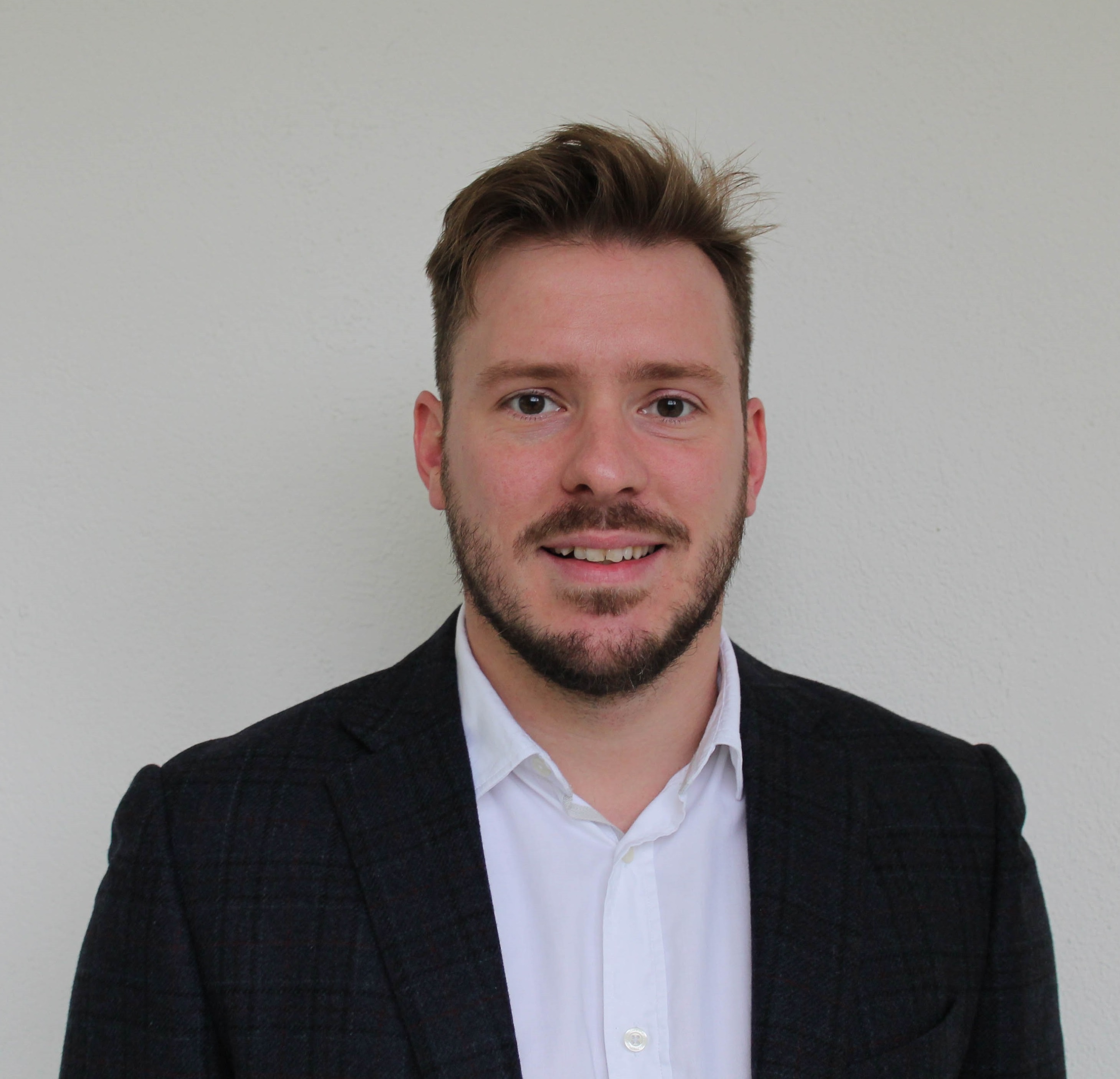
Ignacio Monzón is an Associate Professor at the University of Turin (Department of Economics and Statistics, ESOMAS) and Junior Chair at Collegio Carlo Alberto. He holds a Ph.D. in Economics from the University of Wisconsin-Madison (2010). His research focuses on game theory, observational learning, labor economics, delegation, and bargaining, with publications in top journals like the American Economic Review and Theoretical Economics. He teaches Microeconomics, Industrial Organization, and Research Methods at both undergraduate and graduate levels. His current roles include Director of the Master in Economics and Data Analytics at Collegio Carlo Alberto and the University of Turin. He is also a Research Fellow at CEPR. Monzón’s research explores topics such as expert evaluations in decision-making, bargaining dynamics in imperfect markets, and social cooperation through uncertainty. His work bridges theoretical models with applied analyses, including labor market sorting and educational policy.
Dr. Simone Loreti is a Research Fellow at the Oeschger Centre for Climate Change Research (OCCR) at the University of Bern, Switzerland. His current research focuses on mathematical modelling of infrastructure networks' interconnectedness under flood impacts, utilizing complex networks and human mobility analysis. He holds a PhD from the University of Surrey (UK), a Master’s in Physics of Complex Systems from IFISC (Spain), and a Master’s and Bachelor’s in Theoretical Physics from the University of Bologna (Italy). Previously, he served as an Industrial Postdoctoral Researcher at F. Hoffmann-La Roche AG (Switzerland), focusing on fluidized bed granulation modelling, and as an R&D Mechanical Engineer at Bucci Industries (Italy). His research interests span mathematical and computational physics, complex networks, spatial networks, physics of complex systems, dynamical systems, and floods phenomena. He also explores engineering applications such as powder technology, pharmaceutical engineering, discrete element method (DEM), computational fluid dynamics (CFD), and population balance modelling (PBM). Key contributions include studies on flood impacts on road networks and human mobility patterns, as well as pharmaceutical and materials processing dynamics. His work bridges theoretical physics with applied engineering, emphasizing interdisciplinary approaches to environmental and industrial challenges.
Flemming Winther Bach serves as Overlæge (Senior Physician) at Aalborg University Hospital within the Faculty of Medicine's Department of Neurology. With an extensive publication record spanning over two decades, he has established himself as a prominent researcher in stroke, migraine, and neuropathic pain disorders. His clinical and research work bridges the gap between neurological practice and academic medicine at one of Denmark's leading medical institutions. Dr. Bach's primary research interests focus on cerebrovascular diseases, particularly ischemic and hemorrhagic stroke mechanisms and prevention strategies. His work extensively examines the relationship between dietary factors (especially fatty acids) and stroke risk, as well as genetic factors in migraine and epilepsy. Additional research areas include whiplash-associated disorders, neuropathic pain mechanisms, and the clinical applications of medical cannabis. His research fingerprint prominently features Whiplash Injury (100%), Neuropathic Pain (44%), Brain Ischemia (44%), and Polyneuropathy (42%), indicating his specialization in these neurological domains. Analysis of his 98 publications reveals a consistent trajectory of high-impact research in neurology, with particular emphasis on stroke epidemiology and treatment. His recent work (2020-2025) shows increasing focus on genetic aspects of neurological disorders and refined approaches to stroke prevention. The 2025 publication on migraine genetics represents a significant expansion into neurogenetics, while his stroke-related publications maintain strong methodological rigor with large Danish cohort studies. Dr. Bach actively participates in the scientific community through conference presentations and professional memberships. He has participated in significant events including the 8th International Conference on the Mechanisms and Treatment of Neuropathic Pain (2005), the 12th Congress of the International Headache Society (2005), and Expanding Vistas in Neuropathic Pain (2005). He maintains active memberships in both the Dansk Hovedpineselskab (Danish Headache Society) since 2005 and the Scandinavian Association for the Study of Pain since 2003. His media engagement demonstrates commitment to public discourse on neurological health issues, particularly his 2017 commentary on medical cannabis, which received significant media attention across multiple platforms including news outlets, social media, and policy discussions. This public engagement complements his substantial scholarly contributions to the field of neurology.
Dorin RADU serves as an Associate Professor in the Department of Civil Engineering at the Faculty of Civil Engineering, Transilvania University of Brasov, Romania. His office is located in Building J, Room JII3b at Turnului 5, Brașov, with contact email dorin.radu@unitbv.ro and phone +40 711 975623. His primary research spans structural integrity, steel structures, fracture mechanics, building materials, and life cycle assessment of construction processes. This work focuses on failure analysis, structural rehabilitation, and sustainable material development, addressing critical challenges in infrastructure safety and longevity through experimental and computational methods. Analysis of his 2024-2025 publications reveals dominant themes in structural failure mechanisms (particularly welded joints and concrete elements), seismic performance assessment, and advanced material applications. Key trends include fracture mechanics in multi-defect scenarios, CFRP reinforcement techniques for fatigue-damaged structures, seismic vulnerability studies informed by recent earthquakes, and optimization of composite systems for critical infrastructure. His work consistently integrates finite element analysis with experimental validation across civil and industrial contexts. His research directly addresses real-world engineering challenges including post-earthquake structural assessment, critical infrastructure protection against hybrid threats, oil and gas construction safety, and disaster recovery solutions through innovative temporary bridge systems. This practical orientation demonstrates strong industry relevance while advancing fundamental understanding of structural behavior under extreme conditions.
Dr. Wengui Huang is a Lecturer in Civil Engineering at Teesside University's SCEDT Engineering School, specializing in geotechnical engineering and infrastructure resilience. He holds Chartered Engineer status (CEng) from ICE and PWI, and is a Fellow of the Higher Education Academy (FHEA). His academic journey includes a BEng from Lanzhou University (China) and a PhD from Nanyang Technological University (Singapore), focusing on unsaturated soil mechanics. Prior to academia, he worked as a geotechnical engineer at Arup on major infrastructure projects like the Changi Airport Inter Terminal Tunnels and Jakarta MRT Phase 2. He also served as an adjunct lecturer at the University of Newcastle (Singapore) and as a Research Fellow at the University of Leeds for the EPSRC-funded ACHILLES programme. Education: BEng in Geological Engineering, Lanzhou University (2008–2012) PhD in Geotechnical & Geoenvironmental Engineering, Nanyang Technological University (2013–2017) Research Interests: Climate resilience of geo-infrastructure under dry-wet cycles Low-carbon geotechnical construction via advanced design methods Data-driven asset management for landslide risk assessment Landslide hazards in developing countries Awards: Fellow of the Higher Education Academy (FHEA) Chartered Engineer (CEng) from ICE and PWI Advising & Grants: Supervising PhD/MSc students on climate resilience and low-carbon construction Recipient of EPSRC Programme Grant ACHILLES (2020–2022) Labs & Collaborations: Collaborations with Network Rail, Highways England, and international researchers Leading projects on climate impact modeling and regional landslide risk assessment
Dr. John Ginger serves as the Research Director of the Cyclone Testing Station at James Cook University (JCU) in Townsville, Australia. He has been actively involved in wind engineering research, testing, and consulting since 1987, focusing on structural vulnerability under extreme wind conditions, wind tunnel modeling, and full-scale field tests. His expertise spans wind loading of structures, internal/external pressure dynamics, and building resilience in cyclonic regions. Research Projects: Wind-driven rainwater ingress through windows and doors (2021–2022) Wind loads on roofing tile systems (2017–2018) Improving housing resilience to severe wind events (multiple phases since 2014) Mitigation of wind-related losses in Queensland (2017–2018) Research Interests: Dr. Ginger’s work emphasizes enhancing building resilience through advanced modeling of structural responses to cyclonic winds. He investigates pressure dynamics in industrial and residential buildings, cladding performance, solar panel integration, and adherence to Australian/New Zealand wind standards (AS/NZS 1170.2). His studies also address climate change impacts on housing vulnerability and cost-effective retrofitting strategies. Publications Trends: His recent articles focus on updating wind codes, analyzing roof-to-wall connection failures, and developing vulnerability models for industrial buildings. He frequently collaborates on projects related to cyclone shelters, solar panel wind loads, and retrofitting legacy housing. Awards/Grants: While no formal awards are listed, his extensive grant-funded projects highlight institutional recognition. Notable contributions include leadership in SWIRLnet (portable anemometer networks for cyclone monitoring) and cyclone Larry/Yasi damage assessments. Advising & Labs: He supervises PhD students on topics like solar tracker wind loading and industrial building pressures. The Cyclone Testing Station serves as his primary research facility, specializing in large-scale wind engineering studies.
Prof Jussi Samuli Keppo is the Head of the Department of Analytics & Operations (DAO) at the National University of Singapore (NUS) Business School and Research Director of the Institute of Operations Research and Analytics (IORA) at NUS. He holds a PhD in Engineering from Aalto University and has held prior appointments at the University of Michigan. His research focuses on banking regulation, risk management, stochastic control, and decision-making under uncertainty. He serves on editorial boards of Management Science, Operations Research, and Journal of Risk. Educations: Doctor of Science (Technology), Aalto University (Finland) Master of Applied Mathematics, Aalto University (Finland) Research Interests: Methodological: Stochastic control, statistical analysis of stochastic processes, optimization Applications: Risk management, banking regulation, information economics, strategic incentives Recent Research Trends: His work spans cross-chain stablecoin design, data-sharing strategies in innovation, and AI-driven video generation. Collaborations include startups, Fortune 100 firms, and financial institutions. Grants & Consulting: Supported by NSF and Singapore agencies. Advises on executive education programs and consults globally. Leads IORA and DAO strategic initiatives. Labs/Teams: Directs analytics research at IORA and oversees DAO's academic programs. Active in cross-disciplinary projects blending finance, operations, and computer science.
Dr. Jonathan Fannin is a Full Professor in the Department of Civil Engineering at the University of British Columbia (UBC), specializing in Geotechnical Engineering. He joined UBC in 1989 and was promoted to Full Professor in 2001. His research focuses on internal erosion mechanisms in soils, geosynthetic applications, slope stability, and debris flow dynamics. He teaches courses such as CIVL 210 Soil Mechanics I and CIVL 413 Design of Earth Dams . Dr. Fannin holds a B.Sc. in Civil Engineering from Queen’s University Belfast and a D.Phil. in Geotechnical Engineering from the University of Oxford. His professional service includes roles as Chair of the Canadian Geotechnical Society’s Geosynthetics Division and Board Member of the North American Geosynthetics Society. He is a Fellow of the Engineering Institute of Canada (since 2013). His research achievements include pioneering studies on internal erosion in dams, triaxial permeability testing, and geosynthetic filter design. Notable awards include the 4th IGS Award (1996), the CGS Quigley Award (1996), and the UBC Killam Teaching Prize (1998, 2004). His work bridges laboratory and field research, with contributions to dam safety, landslide assessment, and geotechnical engineering practices. Dr. Fannin’s publications span over 30 years, addressing topics like debris flow travel distance, geosynthetic durability, and micro-mechanical erosion mechanisms. He has advised numerous graduate students and led research projects funded by international organizations such as the Royal Academy of Engineering and the FAO. His lab, internalerosion.civil.ubc.ca , focuses on internal erosion science and engineering solutions.
Raul Fuentes is a Professor at the Institute for Geomechanics and Underground Technology (GUT), Faculty of Civil Engineering, RWTH Aachen University, Germany. He is actively involved in research and academic supervision, with recent publications and student advisement confirming his ongoing academic engagement. His work is centered on computational and experimental geomechanics, with applications in natural hazards and sustainable infrastructure. Research Interests: Geomechanics and geotechnical engineering with focus on granular and rock mechanics Landslide dynamics and dam-forming landslide behavior Sustainable geosynthetics using recycled materials Application of deep learning in geotechnical testing and modeling Numerical simulation of geotechnical processes using discrete and continuum methods The recent articles (2024–2025) reflect a strong trend toward computational modeling of geotechnical phenomena, integrating physics-based simulations with AI-driven approaches. Key themes include impact dynamics in rockfalls, gravity effects on granular flows, and sustainable material use in geotechnical applications. His work bridges fundamental mechanics with practical engineering solutions for natural hazard mitigation. Scientific Awards: No awards mentioned in the provided text. Advising and Grants: Currently supervising at least one master’s student: Ahmad Moeineddin, whose thesis focuses on physics-informed neural networks in poromechanics of freezing soils. No explicit mention of grants or funding sources in the text. Labs and Teams: Member of the research team at the Institute for Geomechanics and Underground Technology (GUT), RWTH Aachen University. Collaborates on topics involving computational geomechanics, experimental testing, and AI-assisted modeling within the institute.
Dr. Michael Tait is a Professor in the Department of Civil Engineering at McMaster University, specializing in structural engineering, seismic isolation, blast risk mitigation, and infrastructure resilience. His research integrates advanced computational modeling with experimental validation to enhance the safety and performance of critical systems. Research Interests Structural and seismic engineering with focus on fiber-reinforced materials Development and analysis of tuned liquid dampers for vibration control Resilience-based design frameworks for blast and multi-hazard scenarios Numerical modeling of complex systems using smoothed particle hydrodynamics Probabilistic risk assessment and infrastructure hardening Selected Publications His recent work (2025-2022) spans seismic fragility of bridges, blast risk mitigation for masonry systems, power grid resilience, and innovative damping technologies. Key themes include hybrid modeling, nonlinear dynamics, and geometric optimization of fluid control systems. Teaching Professor Tait has taught Structural Analysis (CIVENG 3G04) and Structural Dynamics (CIVENG 739) since 2017, emphasizing computational tools and real-world engineering applications.
Professor Yan Zhuge is a leading academic in Structural Engineering at the University of South Australia's STEM unit. His research specializes in sustainable construction materials and advanced structural systems, with focus areas including fiber-reinforced polymers (FRP), concrete technology, and waste recycling in construction. He collaborates globally on experimental mechanics and material innovation projects. Zhuge's research explores alkali-silica reaction mitigation using industrial byproducts, development of lightweight cementitious composites, and performance enhancement of FRP-reinforced structures. His work consistently integrates nanotechnology, circular economy principles, and advanced material characterization techniques. Recent publications (2023-2025) demonstrate strong trends in sustainable material development, including alum sludge recycling, FRP-ultra high performance concrete hybrids, and corrosion-resistant composites. Collaborative works frequently address structural behavior under complex loading conditions and life-cycle optimization of construction materials. No awards, grants, or specific lab/team details are documented in the provided sources.
Ali M. Memari is the Bernard and Henrietta Hankin Chair Professor at The Pennsylvania State University, with joint appointments in the Departments of Architectural Engineering and Civil and Environmental Engineering. He serves as Director of the Pennsylvania Housing Research Center (PHRC) and Editor-in-Chief of the ASCE Journal of Architectural Engineering. His research integrates structural engineering, building science, and sustainable construction technologies. Research Focus: Dr. Memari leads investigations in residential building systems, including seismic resilience of structures, energy-efficient envelope design, and sustainable materials development. His pioneering work in multi-story modular construction and 3D concrete printing addresses housing affordability and environmental impact. Current projects explore hurricane/flood-resistant designs, hempcrete applications, and performance optimization of 3D-printed structural elements. Teaching & Advising: He teaches graduate courses in Building Enclosure Science and Earthquake Resistant Design. Since 2000, he has mentored over 45 graduate students, with dissertations/theses spanning seismic testing of wall systems, additive manufacturing, building energy modeling, and tornado shelter design. Honors & Innovations: Recognized as an ASCE Fellow and endowed chair holder, Memari holds patents for earthquake-resistant glass panels and transparent sustainable wall systems. His research receives support through PHRC industry partnerships and federal grants. Laboratory Leadership: He directs experimental research at PHRC's Air Bladder Load Test Facility and 3D printing laboratories, advancing testing protocols for building components under environmental and seismic loads.
Simone Mineo is an Associate Professor of Applied Geology (GEO/05) at the University of Catania, Department of Biological, Geological, and Environmental Sciences. His office is located at Palazzo Ramondetta, Corso Italia, 57, 95129 Catania on the 4th floor, with office hours on Mondays from 11:00 to 12:00 by appointment. Dr. Mineo's educational background includes a PhD in Earth Sciences, Environment, and Resources from the University of Naples Federico II (2017), a Master's degree in Geological Sciences from the University of Catania (2014, with honors), and a specialized Master's in environmental risk control systems. He has achieved National Scientific Qualification for both associate and full professor positions in Applied Geology. His research focuses on Applied Geology with pioneering work in Infrared Thermography applications for rock porosity assessment and landslide monitoring. Dr. Mineo integrates traditional geological methods with cutting-edge technologies including UAV photogrammetry, DInSAR, and digital outcrop modeling to address complex geological challenges, particularly in Sicily and the Maltese Archipelago. His work bridges geomechanics, environmental protection, and geological heritage conservation. Analysis of his publication record reveals a strong focus on technological innovation in geological risk assessment, with increasing emphasis on digital approaches for monitoring unstable slopes in protected areas. His research trajectory shows progression from laboratory-based thermographic analysis to comprehensive field applications in natural reserves and cultural heritage sites. Dr. Mineo's significant scientific recognition includes: BEST PAPER AWARD at MedGU24 (2024) PREMIO AIGA for outstanding scientific contributions (2020, 2023, 2024) Outstanding Contribution in Reviewing awards from major geoscience journals As Principal Investigator, Dr. Mineo leads the LINAR project (PRIN 2022, €206,896 funding) studying landslides in nature reserves, and the MODIV project funded by the University of Catania. He regularly teaches courses in Applied Geology, Rock Mechanics, and Geological Regulations, with teaching activities documented through June 2025. His research group actively participates in international conferences including EGU General Assembly and Mediterranean Geosciences Union meetings, demonstrating strong engagement with the global geoscience community.
Julio A. Ramirez is the Karl H. Kettelhut Professor of Civil Engineering and Director of the NHERI-Network Coordination Office (NCO) at Purdue University. He holds a prominent role in the College of Engineering's Civil and Construction Engineering department and serves on the University Senate. His research focuses on structural engineering resilience, extraterrestrial habitat systems, and natural hazards mitigation, with notable contributions to lunar habitat design, seismic vulnerability assessment, and AI-driven infrastructure analysis. Key research areas include: Structural behavior of civil infrastructure under extreme events Development of computational frameworks for space habitats Integration of artificial intelligence in construction defect modeling and bridge inspection Advancement of NHERI's national research infrastructure His recent work emphasizes lunar lava tube structural stability , in-situ resource utilization , and multi-hazard resilient systems . Over 50 peer-reviewed publications span topics like seismic assessment methodologies, computational modeling of construction defects, and AI-enabled damage classification systems. Current initiatives include leading NHERI's coordination office to advance disaster-resilient infrastructure research. His work bridges theoretical engineering principles with practical applications in both terrestrial and extraterrestrial environments.
Shirley J Dyke is the Donald A. and Patricia A. Coates Professor of Innovation in Mechanical Engineering at Purdue University, located in the West Lafayette School of Mechanical Engineering. She holds a BS in Aeronautical and Astronautical Engineering from the University of Illinois and a PhD in Civil Engineering from the University of Notre Dame. Her research focuses on Structural Dynamics and Control , Cyber-physical Systems , Machine Vision , and Real-time Hybrid Simulation . Key areas include damage detection, cyberinfrastructure development, and resilient extraterrestrial habitat design. She leads the Intelligent Infrastructure Systems Lab and contributes to the Resilient Extra Terrestrial Habitats Institute . Dr. Dyke has received prestigious awards including the NSF PECASE and CAREER Awards (1998), and her work spans over 150 publications. Recent research emphasizes AI-driven infrastructure monitoring, autonomous habitat systems, and space mission resilience. She collaborates on projects like the HabSim testbed for extraterrestrial habitat simulation and C-ViSER (Center for Visual Structural Expertise for Resilience). Awards: Editor-in-Chief of Engineering Structures , Purdue Team Excellence Award (2013), ANCRISST Young Investigator Award (2007) Grants: NSF CPS Medium Award (2023), IUCRC Planning Grant (2024) Labs/Teams: Intelligent Infrastructure Systems Lab, Resilient Extra Terrestrial Habitats Institute