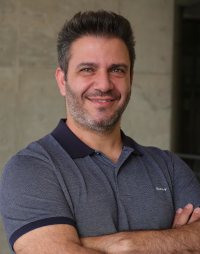
David Lindlbauer is an Assistant Professor at the Human-Computer Interaction Institute (HCII) of Carnegie Mellon University . He leads the Augmented Perception Lab and co-directs the CMU Extended Reality Technology Center . His research focuses on enhancing human perception and interaction with digital information through novel Augmented Reality and Virtual Reality technologies. Research Interests : Computational interaction techniques Adaptive user interfaces Spatial audio and haptic feedback Dynamic interface element placement Environmental context awareness Noticeability prediction models Scientific Recognition : Best Paper Honorable Mention at ACM CHI 2024 Best Paper Award at ACM ISS 2023 ETH Zurich Postdoctoral Fellowship Multiple best paper recognitions at ACM UIST and IEEE VR Professional Engagement : Subcommittee Chair for CHI 2025 Workshops Co-Chair for UIST 2023 Doctoral Symposium Chair for ISS 2023 Regular reviewer for top venues like CHI, UIST, SIGGRAPH, and IEEE VR Education : PhD from TU Berlin Postdoctoral Researcher at ETH Zurich
Dr. Wenbin Li is a Senior Lecturer (Associate Professor) in Robotics at the University of Bath's Department of Computer Science. He leads the Pering Laboratory (Perceptual Intelligence Laboratory), affiliated with the AI & Machine Learning and Visual Computing groups. Previously, he held postdoctoral positions at Imperial College London (2016-2018) and UCL (2014-2016), and earned his PhD from the University of Bath in 2013, with earlier degrees from Imperial College London (MSc, 2009) and Xidian University (B.Eng, 2008). His research focuses on unified autonomous systems, including multi-sensory localization/mapping, dynamic motion capture, and uncontrolled scene understanding with applications in manufacturing and professional capture. Key areas include Robotics, Computer Vision, Graphics, and Machine Learning. He actively supervises doctoral students in these fields and has funded PhD openings. Dr. Li has been involved in major initiatives such as the My World - Strength in Places Fund (2021–2027), SLAM with Reinforcement Learning (2022–2023), and the CAMERA MC2 Award (2019–2023). His work aligns with UN Sustainable Development Goals, particularly in advancing technology for societal benefit. Recent publications emphasize aerial robotics, autonomous systems, and computer vision applications, including UAV package delivery reviews, Bayesian optimization for balloon station-keeping, and generative models for intrinsic image decomposition.
Nuria Pelechano Gomez is a Professor at the Department of Computer Science, Polytechnic University of Catalonia (UPC), affiliated with the Barcelona School of Informatics (FIB). She leads research in the ViRVIG group (Visualització, Realitat Virtual i Interacció Gràfica), focusing on character animation, virtual humans, and crowd simulation. Her work emphasizes immersive environments and real-time rendering applications. Education: PhD in Computer Science from UPC (thesis: 'Real-Time Avatar Animation Synthesis in Virtual Reality' by Yun, H. 2023). Research interests include motion capture, crowd behavior modeling, and VR/AR applications. Recent work explores sparse data reconstruction, avatar customization, and disease spread simulations. She has contributed to over 140 publications, including high-impact journals like ACM Transactions on Graphics and Computer Graphics Forum. Awards include 'Best Teaching Assistant' in 2005 and 2006. Active in academic governance, she serves on program committees for top conferences (e.g., Eurographics, SIGGRAPH Motion in Games). Her projects (e.g., MPACT, XR4ED) are funded by national and EU grants. Labs/Teams: ViRVIG Group at UPC, collaborating with international institutions on projects like CAVAST (Crowd Animation, Visualization, and Simulation Testbed).
Sio Kei Im is an active researcher with a focus on computer science, machine learning, and human-computer interaction. His recent work spans multiple domains including image processing, quantum computing, and virtual reality. Publications address advanced data augmentation (LogicMix), multi-modal quantum watermarking (MMQW), and efficient neural decoding algorithms (TRHyper). Research interests include time series optimization, dialogue summarization, and haptics in VR environments. Collaborations with experts in linguistics, electrical engineering, and software development indicate interdisciplinary expertise. Key contributions involve adaptive algorithms for AI model protection, speaker recognition systems, and real-time 3D rendering techniques.
Dan Casas is a Senior Applied Scientist at Amazon in Seattle and an Associate Professor (Profesor Titular) on leave from King Juan Carlos University in Spain. His research spans the intersection of Computer Graphics, Computer Vision, and Machine Learning with a focus on 3D reconstruction, modeling, and animation of virtual humans and clothing. He has authored over 40 high-impact publications in top venues including SIGGRAPH, CVPR, and NeurIPS, and holds 3 international patents. Dr. Casas received his M.Sc. degree (2009) from Universitat Autònoma de Barcelona (Spain), including a research visit at Carnegie Mellon University. He earned his Ph.D. in Computer Graphics (2014) from the University of Surrey (UK), supervised by Prof. Adrian Hilton. He completed postdoctoral research at the University of Southern California's Institute for Creative Technology (2014-2015) and the Max Planck Institute in Saarbrücken (2015-2016). His research interests center on creating realistic virtual humans and digital clothing through advanced techniques in computer vision and machine learning. Casas has pioneered methods for 3D reconstruction of humans and garments from video input, physics-based simulation of soft-tissue deformations, and data-driven approaches to character animation. His work bridges the gap between theoretical computer graphics and practical applications in virtual reality, digital fashion, and immersive communication. Analysis of his recent publications reveals a consistent focus on human digitization, with increasing emphasis on machine learning approaches. His work has evolved from traditional computer graphics techniques toward neural representations and diffusion models, particularly in the areas of 3D garment simulation and human avatar creation. The trend shows growing integration of physics-based modeling with data-driven approaches to achieve both realism and computational efficiency. Marie Skłodowska-Curie Individual Fellowship (2015) FBBVA Leonardo Fellowship (2021) Medal from the Royal Academy of Engineering of Spain for Young Researcher Award (2023) i3 certification (outstanding researcher) from Spanish Ministry of Universities (2022) Winner of 2021 IEEE Retail Digital Transformation Grand Challenge Multiple Outstanding Reviewer Awards at top conferences (CVPR, BMVC, 3DV) Dan Casas has successfully advised multiple PhD students including Suzanne Sorli, Cristian Romero, Raquel Vidaurre, and Igor Santesteban (now at Meta Reality Labs), with several ongoing students including Melania Prieto-Martin, Gonzalo Gómez-Nogales, and Andrés Casado-Elvira. He has secured significant research funding as Principal Investigator, totaling over €1.2 million from Spanish Ministry of Science projects, EU H2020 programs, and industry fellowships including the FBBVA Leonardo Fellowship. His leadership extends to conference organization as Area Chair for ICCV 2023 and General Chair for ACM i3D 2020. Dr. Casas leads research in digital human modeling with applications in virtual reality, fashion technology, and immersive communication. His team develops advanced techniques for creating personalized 3D avatars from minimal input (like smartphone videos), addressing challenges in geometry, appearance, and physical simulation of virtual humans and their clothing.
Andreas Fender is a researcher at the Visualization Institute of the University of Stuttgart (VISUS), affiliated with the Schmalstieg Working Group. He has held postdoctoral positions at ETH Zurich (Switzerland) and the University of Sussex (England), following his PhD at Aarhus University (Denmark) with an internship at Microsoft Research (USA). His research focuses on Human-Computer Interaction, particularly in Augmented and Virtual Reality (AR/VR) and camera networks. He develops novel input methods for productivity and artistic expression in Mixed Reality environments, creating hybrid physical-digital systems like OptiBasePen, PressurePick, InfinitePaint, and DeltaPen. Recent work includes contributions to Mixed Reality input methods (UIST 2024, CHI 2022) and collaborative systems (Asynchronous Reality). Projects like GuitarPie (UIST 2025) and OptiBasePen (UIST 2024) demonstrate his focus on mobile interaction and ergonomic design. Scientific accolades include the Best paper award at CHI 2022 Best application paper award at ISS 2019 . At VISUS, he collaborates with Dieter Schmalstieg and leads hiring for PhD students and PostDocs exploring physical-digital workflows, artistic tools, and critical AI engagement. His work integrates machine learning, hardware prototyping, and spatial user interfaces to redefine future workplaces.
Prof. Christopher Habel is a Professor in the Department of Computer Science at the University of Hamburg, leading the WSV work area. His research focuses on spatial and temporal cognition, multimodal interaction, and accessibility technologies. He holds the formal title of Head of Department WSV and is affiliated with the Faculty of Mathematics, Computer Science and Natural Sciences. Habel's work bridges cognitive science, artificial intelligence, and human-computer interaction with an emphasis on assistive technologies for visually impaired individuals. Key research projects include the CINACS International Research Training Group, exploring auditory-haptic access to spatial graphics, and the development of multimodal comprehension systems integrating text, graphics, and tactile feedback. His contributions span theoretical frameworks in cognitive linguistics and practical implementations of verbal assistance systems for tactile maps and haptic graph exploration. Over 30 years of academic activity is reflected in his extensive publication record (1984–2015), with recent work emphasizing cross-linguistic studies, event recognition in virtual environments, and the design of multimodal interfaces for cognitive robotics. His research integrates computational models with empirical studies on human perception and language processing.
Hong Qin is a Full Professor (with tenure) in the Department of Computer Science at Stony Brook University, where he is also a member of the Center for Visual Computing. He holds a B.S. and M.S. from Peking University, and a Ph.D. from the University of Toronto. His research focuses on computer graphics, geometric modeling, physics-based simulation, and scientific visualization. Education: B.S. (1986) and M.S. (1989) in Computer Science from Peking University; Ph.D. (1995) in Computer Science from the University of Toronto. Research interests include geometric modeling, computer-aided design, scientific visualization, medical imaging, and robotics. He has received notable awards like the NSF CAREER Award (1997), Alfred P. Sloan Fellowship (2001-2005), and multiple NSF grants. Qin has organized major conferences such as Computer Graphics International 2005 and chairs editorial boards for IEEE TVCG and The Visual Computer.
Joanna Emilia Bergström serves as an Associate Professor in the Department of Computer Science at the University of Copenhagen, specializing within the Human-Centred Computing research section. Her academic work focuses on advancing human-computer interaction through innovative research in virtual reality and body-based user interfaces, where she applies rigorous experimental methods, investigates human perception and motor skills, and develops statistical models for interaction techniques. Dr. Bergström holds a D.Sc. (technology) degree, establishing her technical expertise in the field. Her educational background has prepared her for interdisciplinary research that bridges computer science with cognitive psychology and sensory science. Her primary research interests encompass human-computer interaction with particular emphasis on virtual reality systems and embodied interaction techniques. Bergström's work investigates how humans perceive and interact with digital environments, examining the intersection of cognitive psychology, motor control, and interface design. She employs experimental methodologies to study sensory illusions, haptic feedback systems, and the cognitive aspects of virtual environments. Her research often explores how virtual reality can create compelling illusions of presence and movement, with applications ranging from consumer VR to specialized training environments. This work has significant implications for designing more intuitive and effective virtual interfaces that align with human perceptual and motor capabilities. Analysis of her recent publication record (2024-2025) reveals a strong thematic focus on virtual reality interaction techniques, particularly examining presence phenomena, selection methods, haptic feedback mechanisms, and the cognitive aspects of virtual navigation. Her research demonstrates consistent interdisciplinary collaboration, as evidenced by co-authorship with researchers across different institutions and disciplines. The work spans theoretical contributions to HCI models and practical applications for consumer VR technologies, showing how academic research translates into real-world implementations. Bergström's publications appear in top-tier venues including CHI and IEEE Transactions on Haptics, indicating recognition within the international HCI community. Dr. Bergström actively collaborates with industry partners and academic institutions globally, as reflected in her international research projects and publications. Her work has gained significant attention beyond academia, with mentions in 12 news outlets and engagement across social media platforms including X (formerly Twitter), Facebook, and Bluesky. This broader impact demonstrates the relevance of her research to both technical communities and the general public. She is embedded within the Human-Centred Computing section at the University of Copenhagen's Department of Computer Science, contributing to both research and teaching activities. Her work connects with other research areas within the department including machine learning, image analysis, and software development, creating opportunities for cross-disciplinary innovation in human-centered technologies.
Wenzhen Yuan is an Assistant Professor at the University of Illinois at Urbana-Champaign, holding appointments in the Siebel School of Computing and Data Science, Mechanical Science and Engineering, Electrical and Computer Engineering, and the Coordinated Science Lab. His research focuses on tactile sensing, robotics, and their interdisciplinary applications. Key areas include vision-based tactile sensors (e.g., GelBelt and GelSight), photonic tactile arrays, and robotic manipulation systems for precise tasks like liquid dispensing and door opening. He contributes to both hardware innovation and algorithmic advancements in sensor design and perception. Research interests emphasize tactile sensor development, sensor fusion with vision, and applying these technologies to real-world robotics challenges. Notable projects include the A Novel Parylene C Waveguide-Based High-Resolution Photonic Tactile Array Sensor (2025) and the An Intelligent Robotic System for Perceptive Pancake Batter Stirring (2024). His work bridges mechanical engineering, computer science, and electrical engineering, addressing challenges in robotics perception and control. Publications span high-impact journals like IEEE Transactions on Robotics and Advanced Materials Technologies, showcasing contributions to tactile robotics, sensor design, and automation. Collaborations include institutions globally, with a focus on tactile sensing applications in industrial robotics and human-robot interaction. He leads the Tactile Robotics research group at the Coordinated Science Lab, advancing next-generation tactile systems.
Shahram Payandeh is a Professor of Engineering Science at Simon Fraser University (SFU), affiliated with the School of Engineering Science within the Faculty of Applied Sciences. He holds a Ph.D. from the University of Toronto (1990), M.A.Sc. (1986), and B.Sc. (1981). His research focuses on robotics, geometrical robotics, networked dynamical systems, and medical robotics, with emphasis on haptic devices, multi-view tracking, and multi-modal interaction in serious games. Education: Ph.D., University of Toronto, Canada, 1990 M.A.Sc., University of Toronto, Canada, 1986 B.Sc., University of Akron, United States, 1981 Research Interests: Robotics and medical robotics applications Geometrical robotics and sensor networks Multi-view tracking and haptic rendering Networked dynamical systems and decision support His work spans visual tracking algorithms, sensor calibration, and teleoperation systems, with practical applications in healthcare and elderly care technology. Teaching: ENSC 482: Introduction to Decision Making in Engineering ENSC 890: Advanced Robotics: Mechanics and Control Labs & Facilities: Associated with the Engineering Science Research Lab (erl.ensc.sfu.ca) Office: ASB 10829
Amrita Puri is Associate Professor of Biology at University of Central Arkansas, teaching Principles of Biology, Neuroscience, and Sensation & Perception. Holds PhD in Neuroscience (UC Davis) and dual BS degrees in Biology/Chemistry (UNO). Research examines visual cognition and sensory integration. Key research areas: Crossmodal transfer between echolocation, vision and haptics Attentional mechanisms in numerical/physical size processing Anxiety effects on facial emotion perception Neural correlates of visual attention allocation Publications demonstrate strong methodological diversity, employing psychophysics, eye-tracking, fMRI, and auditory perception paradigms. Recent work explores sensory substitution mechanisms and perceptual resolution in echolocation.
Mark A. Minor is an Associate Professor in the Department of Mechanical Engineering at the University of Utah's College of Engineering, where he serves as Director of the Robotics Systems Lab and Coordinator of the Robotics Track within Mechanical Engineering. His research spans multiple domains of robotics including climbing robots, terrain adaptable mobile robots, virtual interfaces, autonomous vehicles, and flying robots. The Robotics Systems Lab under his direction synergizes design, modeling, and control to create novel robotic embodiments with enhanced adaptability, mobility, and immersion. Dr. Minor's research focuses on the synergistic integration of design, modeling, and control of robotic systems. His lab specializes in several types of robotic systems including climbing robots, terrain adaptable mobile robots, virtual interfaces, autonomous vehicles, and flying robots. With extensive expertise in the design and control of under-actuated nonholonomic systems, kinematic motion control, dynamic motion control, state estimation, sensor development, and data fusion, his work pushes the boundaries of what robotic systems can achieve in challenging environments. His research portfolio demonstrates a consistent focus on practical robotic applications across multiple domains. Recent work shows increasing emphasis on immersive virtual environments with wind, olfactory, and thermal displays, as well as sophisticated control systems for autonomous vehicles and terrain-adaptive locomotion. The integration of haptic feedback, multi-sensory stimulation, and soft robotics components represents an emerging trend in his research trajectory, bridging the gap between physical robotics and human perception. Dr. Minor has successfully advised numerous graduate students through completion of their degrees, with alumni now working at institutions including Harbin Institute of Technology, University of Utah, Orbital Sciences Corporation, and Western Digital Corporation. His research has been supported by prestigious sponsors including the National Science Foundation, NASA, Army Night Vision Lab, and industry partners such as ATK Launch System and Kairos Autonomi. The Robotics Systems Lab, directed by Dr. Minor, maintains several active research projects including Hybrid Mobility Research (investigating robots capable of rolling, walking, and climbing), Autonomous Vehicle Research (particularly related to the DARPA Urban Challenge), Traction Sensing and Control in Wheeled Mobile Robots, Immersive Virtual Environments (including the TreadPort Active Wind Tunnel), and Compliant Framed Modular Mobile Robots. The lab continues to push the boundaries of robotic mobility, control, and human-robot interaction.
Aristidou Andreas is an Associate Professor at the Department of Informatics, University of Cyprus. His academic journey includes a BSc from National and Kapodistrian University of Athens (2005), MSc from King's College London (2006), and a PhD from the University of Cambridge (2011). He has held postdoctoral positions at multiple institutions and served as a visiting professor at the University of Nicosia. His research focuses on human motion analysis, computer graphics, cultural heritage digitization, and geometric algebra applications. He is a senior member of IEEE, ACM, and Eurographics, and serves on editorial boards for journals like The Visual Computer. Research highlights include the FABRIK algorithm (widely used in game engines) and motion capture innovations for cultural heritage preservation. Awards include the DIDAKTOR scholarship, Erasmus Mundus Grant, and NVIDIA GPU grant. He leads projects funded by EU initiatives (e.g., ITN-DCH, SCHEDAR) and collaborates internationally on digital twins, virtual museums, and AI-driven motion synthesis. Key contributions span 3D motion analysis, motion reconstruction from sparse data, and emotion recognition in theater performances. His work bridges computational methods with cultural preservation, biomedical applications, and interactive VR systems.
Ekaterini Manias is a Professor at the School of Electrical and Computer Engineering, Technical University of Crete . She specializes in perception-based computer graphics, virtual reality, and haptic technologies, leading the SURREAL research group . Education : Ph.D. in Computer Science (University of Bristol, 2001), M.Sc. in Computer Science (University of Bristol, 1996), B.Sc. in Mathematics (University of Crete, 1994). Research Interests span 3D spatial cognition, distributed graphics, human-computer interaction, and gaze-contingent displays. Her work integrates psychophysics, usability engineering, and real-time rendering techniques. Professional Roles : Professor at Technical University of Crete (since Dec 2005) Assistant Professor (tenure 2004) and Lecturer at University of Sussex Researcher at Hewlett Packard Research Laboratories (1996-1998) Coordinator of SURREAL research group Associate Editor for ACM Transactions on Applied Perception and Presence, Teleoperators and Virtual Environments Chair/co-chair roles at ACM Siggraph, Eurographics, and other international conferences