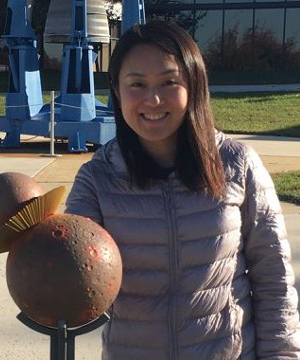
Miki Nakajima is an Assistant Professor of Earth and Environmental Sciences and Physics and Astronomy at the University of Rochester. She holds a PhD from the California Institute of Technology. Her dual appointments reflect her interdisciplinary research in planetary science, combining geophysics, astrophysics, and computational modeling. Education: PhD in Planetary Science, California Institute of Technology Research Interests: Planetary Dynamics: Focuses on impact processes, planetary interior evolution, and moon/exomoon formation mechanisms. Specializes in modeling Enceladus plumes and Earth-Moon system origins. Numerical Simulations: Develops advanced computational tools like NcorpiON for collisional system modeling and N-body integration. Early Solar System: Investigates accretion processes, mantle differentiation, and volatile retention during terrestrial planet formation. Research Trends in Publications: Recent work emphasizes giant impact simulations (Moon formation), tungsten isotope systematics, and exomoon formation limitations. Her articles consistently integrate high-fidelity numerical models with geochemical observations. Advising & Grants: No advisees listed; her funding sources likely support computational infrastructure and space mission collaborations. Active in planetary science communities. Labs/Teams: Affiliated with the University of Rochester's Earth and Environmental Sciences department, collaborating with astrophysics groups on interdisciplinary projects.
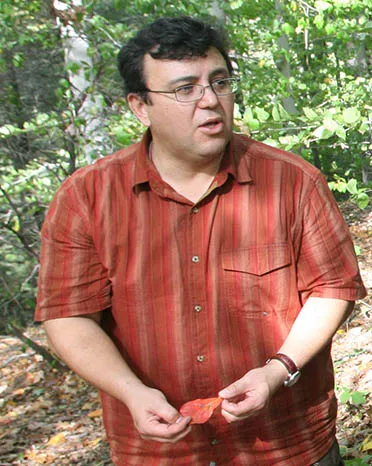
Jose-Luis Machado is an Associate Professor in the Department of Biology at Swarthmore College. His research focuses on temperate and tropical forest ecology , integrating plant physiological processes with community dynamics to study biodiversity maintenance and ecosystem functioning. Education: Ph.D. in Forest Resources, University of Minnesota M.S. in Botany, University of Vermont B.S. in Biology, Universidad de Los Andes, Colombia Research Interests: Comparative analysis of carbon, water, and nutrient cycling in forest ecosystems Physiological and demographic responses of understory seedlings to resource limitations Ecological impacts of invasive species like Japanese knotweed and Norway maple Development of digital herbarium tools for biodiversity research Key Publications: 2008 - Metabolic scaling in forest ecosystems (Ecology Letters) 2006 - Plant respiration and size relationships (Nature, Tree Physiology) 2003 - Grassland/savanna functional group differences (New Phytologist) 2002-2004 - Undergraduate-driven pedagogical research on soil-plant-atmosphere stoichiometry Collaborative Projects: Smithsonian Tropical Research Institute (long-term carbon budget studies) Community Population Ecology Lab at Pontificia Universidad Javeriana Multidisciplinary GIS initiatives in Crum Woods
Per Åberg serves as Project Coordinator and Vice Dean for first and second cycle education at the Faculty of Science, University of Gothenburg, Department of Marine Sciences. His work integrates academic leadership with active research in marine population ecology. Research focuses on population ecology with emphasis on demography, life-history evolution, and plant-animal interactions in rocky shore ecosystems. Åberg specializes in using Ascophyllum nodosum and seagrasses as model organisms, developing Integral Projection Models (IPMs) to analyze continuous phenotypic traits like size. His work examines chemical defense mechanisms in brown seaweeds and their trade-offs with growth, often in collaboration with colleagues at the Department of Marine Sciences. Recent publications reveal strong trends in climate change impacts on range-edge populations, disturbance ecology in intertidal zones, and trophic dynamics in seagrass ecosystems. Åberg teaches population ecology in undergraduate biology and marine science programs, including an internet-based Marine Biology course open to qualified students. His advising activities include supervising PhD students on topics related to marine population dynamics, though specific student names aren't listed in available materials. While no major scientific awards are documented in the provided text, his extensive publication record demonstrates significant contributions to marine ecology. His laboratory work centers on rocky shore ecosystems with particular focus on fucoid algae and seagrass meadows. Current projects involve modeling chemical defense scenarios in Ascophyllum populations and analyzing century-scale changes in intertidal communities across the North-East Atlantic.
David Auty is an Associate Professor and Executive Director in the School of Forestry at Northern Arizona University. His research focuses on wood properties, forest management practices, and innovative applications of LiDAR technology in forestry. He leads projects investigating the impact of environmental factors on tree physiology, wood quality, and forest dynamics. Notable contributions include developing the sgsR toolbox for LiDAR-based forest inventories and studying radial profiles of specific gravity in conifers. His work bridges ecological and engineering disciplines, addressing challenges in sustainable forestry and climate resilience. Collaborations include international studies on wildfire impacts, carbon modeling, and wood mechanics. David actively contributes to datasets on tree growth dynamics and has authored over 45 scholarly works, emphasizing practical solutions for forest management and conservation. Key Focus Areas: Forest Management, Wood Quality, Remote Sensing, Climate Adaptation Tools & Innovations: sgsR LiDAR Toolbox, Acoustic Wood Testing, Stand Dynamics Models Collaborations: Global networks studying boreal forests, wildfire impacts, and conifer physiology David’s research highlights the interplay between ecological processes and industrial forestry needs, with implications for bioenergy, carbon sequestration, and resilient forest systems.
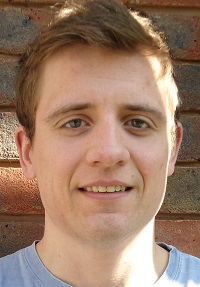
Dr. Adam Bateson is a Postdoctoral Research Assistant in the Department of Meteorology at the University of Reading. His research focuses on understanding Arctic sea ice dynamics, particularly the roles of floe size distribution, fragmentation processes, and melt patterns in climate modeling. He holds a PhD from the University of Reading (2021), where his thesis investigated Fragmentation and Melting of the Seasonal Sea Ice Cover . His work integrates high-resolution satellite data with advanced climate models to evaluate Arctic ice behavior under changing environmental conditions. Notable contributions include analyzing summer sea ice floe perimeter density using optical satellite imagery and examining feedback mechanisms in marginal Arctic ice zones. Bateson collaborates with international teams to refine model complexity and improve projections of pan-Arctic ice mass balance. His publications emphasize the interplay between floe size distributions and climate dynamics, offering critical insights for future climate change studies. Contact: a.bateson@reading.ac.uk | Office: BH 2L41
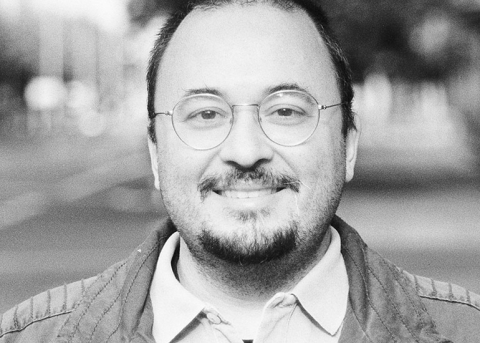
Dr. Ali Onder is a Senior Lecturer in Economics at the University of Portsmouth, UK, within the School of Accounting, Economics and Finance. He holds affiliations including the Uppsala Center for Fiscal Studies (Sweden) and has prior experience at institutions like the University of Bayreuth and Vanderbilt University. His research focuses on applied microeconomics, network analysis, and the economics of science, particularly examining academic production processes and innovation dynamics. Education: PhD in Economics, Vanderbilt University (2009) MA in Economics, Vanderbilt University (2005) BSc in Economics, Middle East Technical University (2002) Research Interests: Combines network tools with economic analysis to study influence, diffusion, and innovation. Key areas include public economics, political economy, international trade, and STEM education policies. Active in analyzing citation networks, academic collaboration patterns, and migration economics. Teaching: Specializes in courses like Economic and Social Network Analysis, Development Economics, and the Economics of Science at undergraduate and postgraduate levels. Grants & Advising: Supervises PhD students on topics like innovation economics and gender disparities in academia. Active in research projects funded by institutions like the University of Bayreuth and Uppsala University. Labs/Teams: Engaged in interdisciplinary research groups focusing on science metrics, fiscal policy, and migration studies.
Dr. Tim Bartkiw is an Associate Professor in the Department of Human Resources and Organizational Behaviour at Toronto Metropolitan University. He holds a Ph.D. in public policy, along with degrees in economics and law, and has practiced labour/employment law. His research focuses on labour law policy, industrial relations, public policy, and political economy, with particular emphasis on precarious work, unionization challenges, and legal frameworks. Education: BA, LLB, LLM, PhD (public policy). Research interests include the regulation of precarious work and triangular employment, worker access to unionization, and the intersection of labour law with constitutional rights via Charter litigation. He actively contributes to policy reviews, advising governments on federal and provincial labour law reforms. His recent work analyzes the fissured economy's impact on collective bargaining and enforcement gaps in employment standards. Teaches courses on labour law, industrial relations, and advanced legal topics at Ryerson University. Serves as co-editor of a leading labour law textbook and member of the Labour Law Casebook Group. His publications span peer-reviewed journals and government-commissioned reports, emphasizing comparative legal frameworks and policy analysis.
Nicholas Perez is an Associate Professor at Texas A&M University, affiliated with the Basin Tectonic Group. His research focuses on tectonic processes such as basin dynamics, fold-thrust belts, and continental rifting. He investigates these phenomena through field and lab-based techniques, working in regions like the central Andes, Cascade Range, and Atlas Mountains. Perez holds a Ph.D. in Geological Sciences from the University of Texas at Austin (2015) and a B.S. in Geological Sciences (Special Honors) from the same university (2009). He has received notable awards including the NSF CAREER Award (2019) and the Dean's Distinguished Achievement Faculty Teaching Award (2020). His research emphasizes integrating sedimentology, structural geology, and thermochronology to understand mountain-building processes and crustal deformation. Key projects include studying the impact of flat-slab subduction on Andean tectonics and the role of structural inheritance in guiding deformation. Perez has advised multiple graduate students, including Pesek M. E., Gao Z., and Findlay C. P., and has led NSF-funded research initiatives. His work has been presented at major conferences like AGU and GSA, and he contributes to educational initiatives through the Center for Teaching Excellence. Perez is actively involved in the Basin Tectonic Group, which explores tectonic problems through multi-disciplinary approaches. His publications span over 30 peer-reviewed articles, focusing on topics like exhumation mechanisms, basin evolution, and Andean geodynamic processes. He has also contributed to invited presentations on cordilleran margin development and structural inheritance effects on deformation patterns.
Dr Linda Hering is a Post-doc Research Associate at Humboldt-Universität zu Berlin in the Collaborative Research Centre 1265 “Re-Figuration of Spaces”, where she explores how food, knowledge and space interact in contexts ranging from German fresh-produce markets to peri-urban Nairobi. Education: 2018-2021 PhD in Sociology, Technische Universität Berlin (supervisors: Nina Baur & Elmar Kulke) 2006-2012 Diploma in Sociology, TU Berlin & Auckland University of Technology, NZ Research focus: Hering combines economic sociology with spatial and environmental questions. She scrutinises agri-food commodity chains, traces the invisible logics that shape urban retail landscapes, and analyses how crises and power asymmetries reconfigure socio-spatial arrangements. Mixed-methods designs, comparative case studies and visual techniques such as mapping and photo-documentation are central to her work. Key themes: Her publications reveal three interlocking strands: (i) the materiality and governance of global food chains, (ii) the transformation of urban food systems in the Global South, and (iii) methodological innovation for space-sensitive sociology. Recent articles illuminate Singapore’s hawker centres, Nairobi’s informal settlements and the resilience of commodity chains under external shocks. Scientific awards & grants: No major personal prizes are listed; her projects are financed through the German Research Foundation (DFG) within CRC 1265 and earlier DFG projects on local economic conventions. Teaching & supervision: She has taught at TU Berlin and Akkon Hochschule für Humanwissenschaften, covering qualitative methods, spatial sociology and sustainability, but no individual advisees are named in the source. Labs & teams: Hering is an integral member of the interdisciplinary CRC 1265 team, co-leading sub-project A03 “Knowledge and Goods II” that brings together sociologists, geographers and planners to investigate how consumers and intermediaries co-produce spatial knowledge.
Bastien Mallein is a Professor of Mathematics at the University of Toulouse III Paul Sabatier, where he is affiliated with the Institut de Mathématique de Toulouse (IMT). His research focuses on probability theory, particularly branching processes, random walks, and their applications in statistical mechanics and mathematical physics. Education: PhD in Mathematics (2012–2015), Université Pierre et Marie Curie, supervised by Zhan Shi Agrégé-préparateur (2013–2016), École Normale Supérieure Postdoctoral Researcher (2016–2017), Universität Zürich under Jean Bertoin Research Interests: Mallein studies branching processes, including branching random walks, branching Brownian motion, and Lévy processes. His work explores extreme value theory, phase transitions, and the behavior of stochastic systems over time. He has contributed to understanding critical phenomena in random trees, percolation models, and population dynamics. Recent Publications: His recent work addresses reinforced Galton-Watson processes, extremal point processes, and applications to evolutionary models. Key topics include phase transitions, large deviations, and stochastic stability. Students: He advises PhD students such as Simon Delalande (2024–) and Lianghui Luo (2023–), focusing on branching processes and extreme value analysis. Notable co-advised students include Elie Cerf (2020–2024) and Mohamed Ali Belloum (2018–2021). Labs/Teams: Active member of the IMT Probability group. Collaborates internationally on projects involving stochastic processes and mathematical physics.
Neelima Kandula is a Researcher in the Department of Materials Physics at the Australian National University. Her work focuses on advanced imaging techniques such as X-ray micro-computed tomography and synchrotron-based methods to study particle separation, ore fragmentation, and fracture mechanics in geological materials. She collaborates on interdisciplinary projects involving mineral processing, granular bed dynamics, and reservoir rock failure mechanisms. Her research emphasizes 3D/4D imaging to analyze microscale precursors to macroscopic failure events, with applications in resource engineering and geophysics. Key techniques include high-resolution imaging of iron ore fragmentation, dynamic in-situ observations of compaction in granular systems, and synchrotron-based strain localization studies. Her contributions bridge materials science, geology, and engineering, with a focus on understanding deformation and failure processes in porous and crystalline rocks. Neelima's recent work highlights advancements in particle characterization for ore beneficiation and the use of computational methods to simulate crack growth and coalescence. These studies aim to improve resource extraction efficiency and predict geological failure mechanisms in natural systems.
Jacek Banasiak is a Visiting Professor in the Department of Mathematics and Statistics within the Faculty of Science at the University of Strathclyde, United Kingdom. He is actively engaged in research in mathematical analysis, particularly in the theory of semigroups and its applications to coagulation-fragmentation processes. His research focuses on coagulation and fragmentation dynamics , semigroup theory , and kinetic models , with applications in population dynamics and engineering mathematics. His work often involves rigorous analysis of integro-differential equations, unbounded operators, and long-term behavior of solutions. He frequently collaborates with Wilson Lamb and other mathematical analysts. The most recent publications demonstrate sustained contributions to the solvability, compactness, and asymptotic analysis of coagulation-fragmentation equations, particularly under power-law and strong fragmentation regimes. His work bridges pure and applied mathematics, contributing to both theoretical developments and modeling in physical and biological systems. The following scientific contributions have been recognized through peer-reviewed publications: Development of analytic fragmentation semigroups Existence and uniqueness results for equations with unbounded rates Study of asynchronous exponential growth in discrete and continuous models Analysis of mass loss in coagulation-fragmentation systems Banasiak has advised students and researchers in the field of mathematical modeling, though specific names are not listed in the source material. There is no mention of external grants or funding sources in the provided texts. He is associated with a research group focused on kinetic theory and evolution equations at Strathclyde.
Nyla Branscombe serves as a University Distinguished Professor in the Department of Psychology at the University of Kansas, where she has established herself as a leading scholar in social psychology with a focus on intergroup dynamics. Her academic home resides within the university's psychological sciences infrastructure, contributing significantly to both undergraduate and graduate education through specialized courses in social psychology, intergroup relations, and prejudice studies. As a core faculty member, she actively shapes the department's research trajectory and mentorship culture. Her educational foundation includes: Ph.D. in Social Psychology from Purdue University M.A. in Social Psychology from the University of Western Ontario B.A. in Psychology from York University Branscombe's research program centers on how group memberships shape individual experiences, particularly examining the psychological consequences of prejudice, discrimination, and victimization across gender and ethnic identities. She investigates how collective guilt operates in intergroup contexts, how individuals cope with pervasive discrimination through identity-based strategies, and how group processes influence psychological well-being. Her work bridges theoretical social psychology with real-world applications in organizational settings, trauma recovery, and social justice initiatives, often employing both experimental and field methodologies to capture authentic social dynamics. Analysis of her recent publications reveals an evolving research trajectory emphasizing gender equality interventions, collective trauma responses, and identity management during life transitions. Her 2022-2025 work increasingly focuses on practical applications of social identity theory in workplace inclusion, retirement adaptation, and measuring collective post-traumatic growth. This shift demonstrates her commitment to translating fundamental social psychological principles into actionable frameworks for improving group relations and individual well-being across diverse contexts. While specific awards aren't detailed in available materials, her University Distinguished Professor title represents a significant institutional honor recognizing exceptional scholarly contributions. Her research impact is evident through extensive citations and editorial roles in major handbooks like The SAGE Handbook of Gender and Psychology . Branscombe's scholarly influence extends through mentorship and collaborative networks, though specific student names aren't publicly listed. Her research has secured substantial funding enabling longitudinal studies on discrimination's psychological impacts and interventions for group-based trauma. She maintains active research partnerships across North America, particularly with Canadian institutions given her educational background. Though specific laboratory affiliations aren't detailed in the source material, her work appears connected to broader university initiatives on social identity and intergroup relations. Her recent retirement transition research suggests engagement with aging and identity adaptation programs, while her gender studies work likely intersects with campus diversity initiatives and organizational partnerships focused on workplace equity.
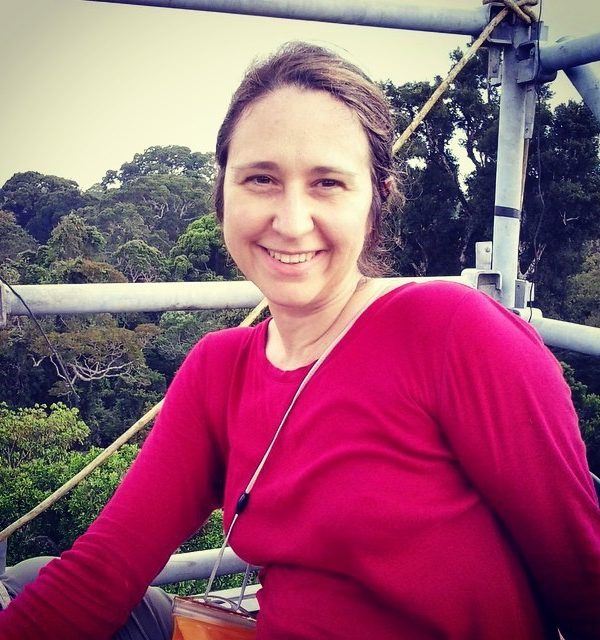
Luciana Alves is an Associate Researcher at the Center for Tropical Research within the Institute of the Environment and Sustainability (IoES) at the University of California, Los Angeles. Her work focuses on plant ecology in tropical forest systems, with particular emphasis on understanding the biological and environmental drivers of ecological dynamics in these critical ecosystems. Dr. Alves' research interests span tropical forest structure and carbon dynamics, plant population ecology, and the effects of habitat fragmentation on tree species richness and abundance. Her fieldwork is primarily conducted in Amazon and Atlantic forest sites in Brazil, where she investigates forest regeneration processes and ecological responses to environmental changes. Her recent publications reveal strong expertise in tropical forest carbon dynamics, tree hydraulic traits, and biodiversity patterns across global forest ecosystems. Her research often examines how climate variability and extreme events impact forest functioning, with particular attention to Amazonian forests. She frequently collaborates with major international research networks studying global forest dynamics. 2025-2028: PI for 'Aboveground Carbon Stock Changes in Dynamic Tropical Forests' (NASA CMS Program) 2024-2026: Co-PI for 'A Service to Quantify Forest Carbon Stock Changes in the State of Mato Grosso, Brazil' (NASA SERVIR Program) 2022-2025: Co-PI for 'Intrinsic dimensionality and data fusion to monitor Cape biodiversity' (NASA Biodiversity Program) 2018-2023: PI for 'Collaborative Research: Are Amazon forest trees source or sink limited?' Dr. Alves has established diverse collaborations across universities and research institutions in Brazil and the United States. Her previous positions include senior research scientist roles at the Institute of Botany and Institute of Agricultural Sciences in Brazil, Research Associate at the University of Colorado, Consulting Scientist for NEON, and Post-Doctoral Research Fellow for the NSF PIRE Program at the University of Arizona.
James E Gardner is a Professor in the Department of Earth and Planetary Sciences at the Jackson School of Geosciences, University of Texas at Austin, holding the Third Mr. and Mrs. Charles E. Yager Professorship. His research focuses on volcanic eruptions, magmatic processes, and experimental petrology, with emphasis on bubble nucleation in magmas and caldera-forming eruptions. He leads a state-of-the-art experimental laboratory capable of simulating high-pressure magma conditions (up to 1400°C and 5000 bars). Key research areas include studying active volcanic systems globally (USA, Mexico, Kamchatka), experimental determination of volatile solubility in magmas, and the role of pre-eruption degassing in eruption dynamics. Recent work addresses multi-component volatile solubility, bubble nucleation mechanisms, and magma ascent rates. His experimental setups include cold-seal and TZM pressure vessels for studying melt degassing under controlled conditions. Publications span 20+ years, emphasizing bubble nucleation kinetics, pyroclastic density currents, and silicic magma evolution. His work integrates field observations with laboratory experiments and numerical models to understand volcanic hazards and eruption processes. The experimental lab under construction will advance studies on magma-volatile interactions and ore body formation linked to magmatism. Notably, Dr. Gardner’s research bridges fundamental magma physics with applied volcanic hazard assessment, contributing to understanding explosive eruption triggers and conduit dynamics. His collaborative projects include NSF-funded studies on bubble nucleation models and lunar magma ocean processes.