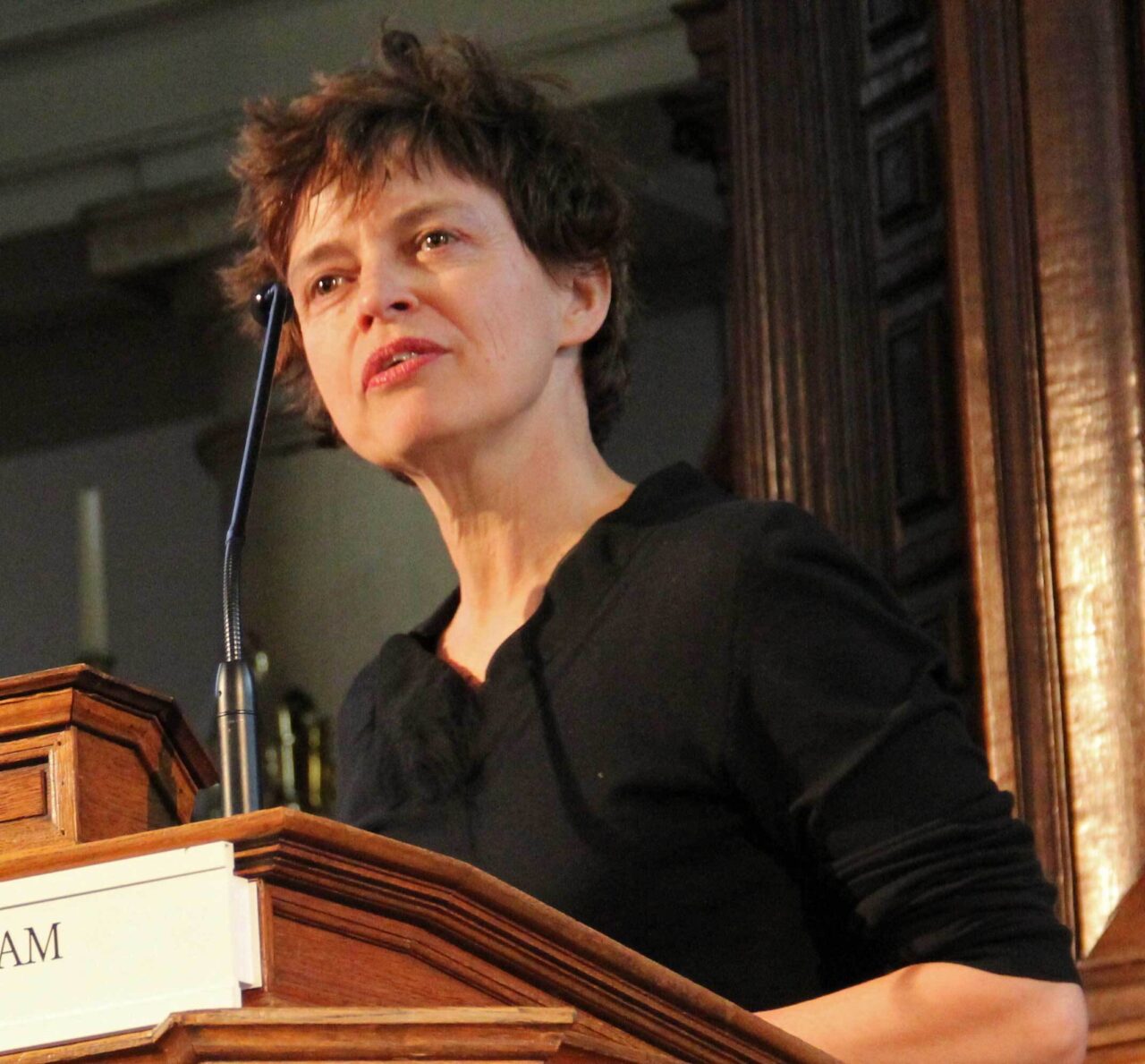
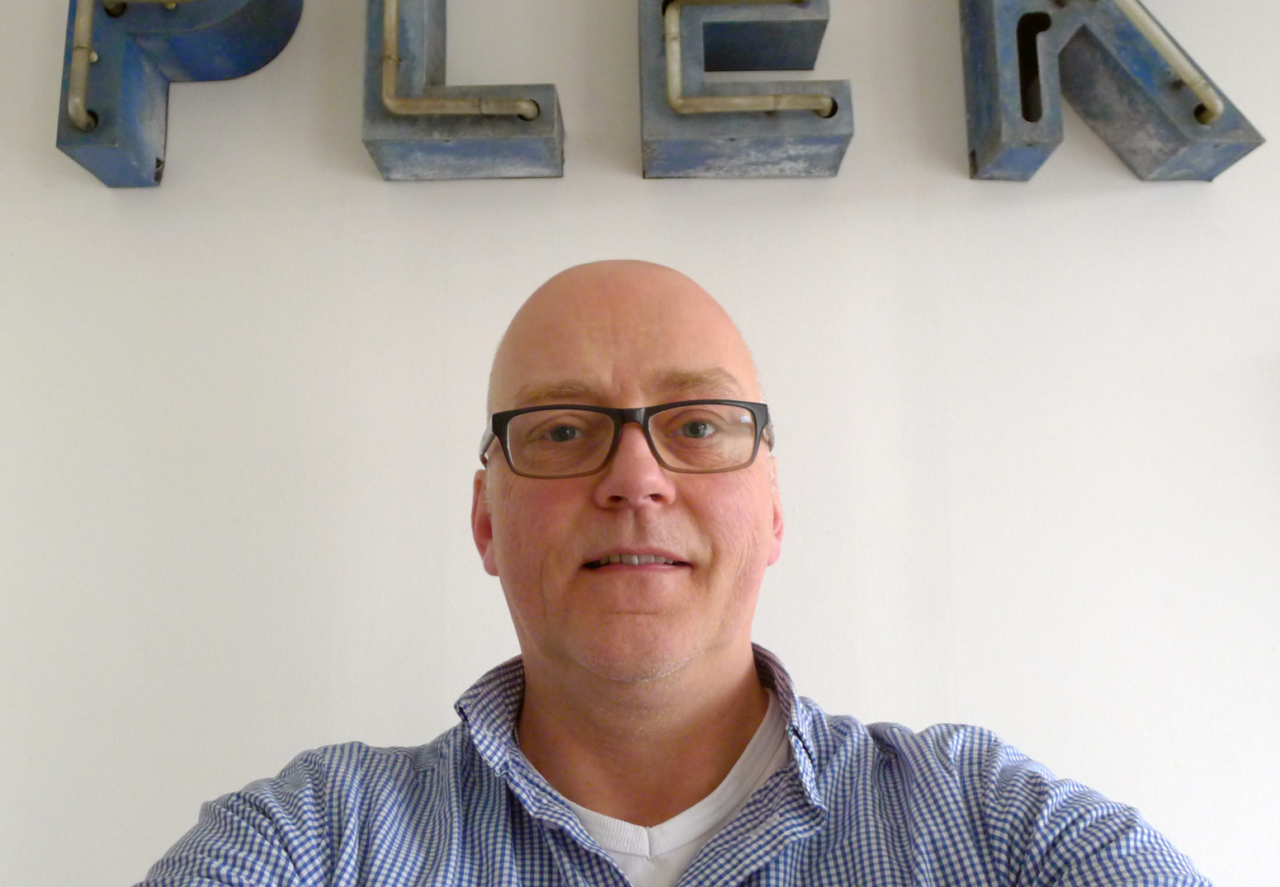
Simnikiwe Buhlungu is a Tutor year 4 (Graphic Design) and Guest artist at the Royal Academy of Art, The Hague (KABK). Her work critically engages with knowledge production, examining how it is generated, disseminated, and situated within socio-historical contexts. She employs research-based methodologies to map layers of awareness across reverberating ecologies. Recent contributions include participations in major exhibitions such as The Milk of Dreams (59th Venice Biennale, 2022), A Lasting Truth Is Change (Van Abbe Museum, 2021), and a residency at Dar Yusef Nasri Jacir for Art and Research in Palestine. Her debut solo exhibition dissonated underings [hic!], after-happenings and khuayarings was held at Kunsthalle Bern (2023). She is affiliated with the Bachelor of Graphic Design and Master of Artistic Research (MAR) programs at KABK, contributing to pedagogical and creative dialogues in contemporary art education.
Elisa Piazzi is a guest lecturer and part-time faculty member in the MA Artistic Research program at the Royal Academy of Arts, The Hague. Her practice bridges art, design, and critical inquiry, focusing on accessible knowledge-sharing through workshops, public discussions, and self-publishing. She specializes in editorial design for cultural clients like Onomatopee and Dutch Design Week. Research interests: Elisa interrogates legal frameworks (e.g., Universal Declaration of Human Rights) by transforming complex texts into accessible formats through space making and participatory methods. Her work emphasizes social solidarity, mistrust → understanding dynamics, and playful critical engagement with societal structures. Teaching: Mentors students in editorial design and recently completed a bookbinding course. No formal grants or labs are mentioned, though her projects often involve collaborative, self-organized educational frameworks.
Alexander Cromer is an IST coach and study coach for the Bachelor Graphic Design program at the Royal Academy of Art, The Hague (KABK). He is concurrently pursuing a PhD at the PhDArts program (Leiden University/KABK), focusing on radical imagination and alternative Black ecologies. His interdisciplinary work bridges performance art, storytelling, and critical design. Education: Master's in Design of Experiences from the University of the Underground (collaboration with Sandberg Instituut, Amsterdam). Affiliated with the Design & The Deep Future Research Group (2022–2023). Research interests emphasize speculative futures, racial ecologies, and pedagogical innovation. He contributes to teaching at both KABK and the University of the Underground. Awards and grants: No specific mentions. Advising and grants: No formal grants listed; involvement in collaborative research through the Design & The Deep Future Group. Labs/teams: Engaged with KABK's research platforms and the PhDArts program.
Jun Wu is an Associate Professor in the Department of Sustainable Design Engineering at Delft University of Technology (TU Delft), Faculty of Industrial Design Engineering, where he has been a tenure-track faculty member since 2016 and was promoted to Associate Professor in August 2022. He holds two PhDs: one in Computer Science from Technische Universität München (2015) and another in Mechanical Engineering from Beihang University (2012). Prior to TU Delft, he was an HC Ørsted Postdoctoral Fellow at DTU Denmark. Research Interests: His research lies at the intersection of computational design, digital fabrication, and structural optimization. He specializes in topology optimization (generative design) for additive manufacturing, with a focus on space-time optimization, stress-constrained design, multi-material lattices, and bio-inspired infill structures. His work bridges mechanical engineering, computer graphics, and materials science to create high-performance, lightweight, and printable structures. Recent Research Trends: His most recent publications (2023–2025) demonstrate a strong trend toward integrating physical constraints—such as residual stress, thermal distortion, and manufacturability—into topology optimization frameworks. He is pioneering space-time optimization for multi-axis additive manufacturing, developing methods for stress-aligned lattices, and exploring differentiable microstructures. His interdisciplinary work spans biomedical implants, soft robotics, and educational tools for design. Scientific Awards: Frontiers of Science Award, International Congress of Basic Science (2023) 2023 ISSMO Haftka Young Investigator Award 2021 SMA Young Investigator Award Best Paper Award (2nd place), SPM 2019 ISSMO/Springer Prize (2020) Multiple ESI Highly Cited Papers Advising and Grants: He leads a vibrant research group with numerous PhD students and postdocs. In 2023, he was awarded a Vidi grant from the Dutch Research Council (NWO) for his project on Space-time optimization for additive manufacturing . He has also secured funding under the Dutch Research Agenda (NWA) for the project AM4Micro . He actively mentors PhD candidates and has co-organized the IDEA League summer school on Computational Design for Additive Manufacturing since 2020. Labs and Teams: He is affiliated with the Computational Design Lab at TU Delft and is the initiator and convener of the TOP Webinar series since 2020, fostering global collaboration in topology optimization. He serves on the editorial boards of Computer-Aided Design and Structural and Multidisciplinary Optimization , and has been a program committee member for major conferences including SPM, CGI, and CVM.
Chantal Hendriksen is a lecturer in Graphic Design at the Royal Academy of Art, The Hague (KABK). Based in Amsterdam, she runs her own graphic design studio, focusing on conceptual and experimental approaches through collaborations with art institutions, museums, galleries, and artists. Her work emphasizes interdisciplinary collaboration and challenging the autonomy of graphic design. She teaches in the Bachelor Graphic Design program, guiding students through the elective course 'Design Office', supervising internships, and leading the Professional Practice Skills course. Her research interests center on integrating graphic design with contemporary art practices, fostering real-world project-based learning, and exploring experimental methodologies in visual communication.
Phil Baber is a Lecturer in the Graphic Design Department at the Gerrit Rietveld Academie since 2016, where he teaches writing. He also taught in the temporary MA Approaching Language program at the Sandberg Instituut from 2020 to 2021. His research centers on prosody in contemporary and historical poetry and the social/material histories of radical publishing, with significant contributions to typography, experimental writing, and poetics. His work bridges academic inquiry with material practice in publishing and design. His notable recognitions include: Walter Tiemann Prize for book design (2012) Fellowship at Akademie Schloss Solitude, Stuttgart No information is available regarding student supervision or research grants in the provided text. Baber co-founded The Last Books publishing house (with Snejanka Mihaylova) for experimental writing and archival research, edits The Yellow Papers pamphlet series, and co-curates the 'Don’t Pay Your Rent' reading series at Amsterdam's Rietlanden Women’s Office.
Quentin Creuzet is a Paris-based designer and developer currently serving as Tutor in Coding within the Graphic Design department at the Royal Academy of Art (KABK) in The Hague, Netherlands. He co-founded the design studio F451 with Domitille Debret, focusing on experimental web-based projects. Education background: MFA in Type Design, École Estienne, Paris, France His research explores the intersection of design and programming, emphasizing web standards, information architecture, and innovative structural approaches to digital content. Through both commissioned work and self-directed research, Creuzet investigates how programming conventions can reshape information presentation, with particular expertise in type design derived from his graduate studies. His practice challenges traditional web paradigms while maintaining a focus on functional information systems. As co-founder of F451, he collaborates on design projects that bridge technical experimentation with visual communication, contributing to the broader discourse on digital design methodologies.
Francois Girard-Meunier serves as a Lecturer in Coding for the Bachelor Graphic Design program at the Royal Academy of Art, The Hague, directly affiliated with the Graphic Design studies curriculum. His expertise focuses on integrating coding methodologies within contemporary graphic design practices, emphasizing digital media applications and technical skill development for visual communication. This specialized instruction supports the program's technical pedagogy without documented extensions into broader research domains. No verifiable information exists regarding student advisement, research grants, laboratory affiliations, or professional collaborations beyond his instructional role in the Graphic Design bachelor's curriculum.
Anna Hoetjes (born 1984 in Amsterdam) is a visual artist and filmmaker affiliated with the Royal Academy of Art, The Hague , where she teaches in the Bachelor Graphic Design program. Her work explores intersections between early 20th-century history and modern technological developments, focusing on how technology mediates self-perception and visibility.
Els Kuijpers is a theory tutor at the Bachelor Graphic Design program of the Royal Academy of Art, The Hague (KABK) . She is also a design critic, lecturer, and curator specializing in visual communication and cultural discourse. Currently pursuing her PhD at ACPA, University of Leiden , her research focuses on 'The politics of design: the liberating potential of communication design in post/modern times – Towards a method in communication design.' Primary Affiliation : Royal Academy of Art, The Hague (KABK) Secondary Affiliation : ACPA, University of Leiden (PhD candidate) Her research examines how design constructs social values through dynamic processes of visual, textual, and spatial language. This perspective informs her teaching and curatorial practice, which emphasizes critical engagement with communication design. Kuijpers' publications and curatorial work demonstrate sustained contributions to design discourse. Key themes in her writing include: Graphic design as cultural production Communication design epistemology Visual rhetoric in social contexts Critical design methodologies Postmodern design analysis Design historiography She has lectured internationally at institutions including: KTH Royal Institute of Technology (Stockholm) Offenbach University of Art and Design (HfG, Karlsruhe) PXL-MAD School of Arts (Hasselt) London College of Communication (UAL)
Peter Verheul is a core teacher at the TypeMedia Master's program and the Bachelor Graphic Design department at the Royal Academy of Art (KABK) in The Hague. Since 1991, he has taught at KABK, contributing to the education of visual communication practitioners. His studio Farhill.nl focuses on typefaces, lettering, and design projects. Core Teacher at TypeMedia (Master Type and Media program) Teacher at Bachelor Graphic Design department Studio: Farhill.nl, The Hague Research interests include type design for print and digital media, letterform exploration (contrast, rhythm, proportion), type history, and tool development. His work spans corporate typefaces (e.g., Dutch Government, 2008), signage (KABK), and publications like Dutch Type (2004) and Dutch Alphabets (collaboration with Mathieu Lommen). Farhill.nl, established in 1991, serves as his base for typographic projects. He collaborates with Erik van Blokland and Paul van der Laan on the Letterstudio course, and his studio's output includes the Versa typeface used in his book Dutch Type .
Dr. Evanthia Dimara is a Tenured Assistant Professor in the Department of Information & Computing Sciences at Utrecht University's Faculty of Science. Her research focuses on Information Visualization and Human-Computer Interaction, particularly how technology can aid unbiased decision-making in individual and group contexts. Education : Ph.D. in Computer Science (2017) from INRIA & University Paris-Saclay M.Sc. in Human-Computer Interaction (2013) from University of Paris-Saclay B.Sc. in Informatics & Telecommunications (2012) from National and Kapodistrian University of Athens Her work addresses decision-making failures in current visualization systems, with a focus on cognitive biases. Recent publications analyze financial fraud detection frameworks, job-seeking tools, and public policy reasoning errors, emphasizing human-AI collaboration and visual analytics. Professional Activities : Associate Editor, IEEE Transactions on Visualization and Computer Graphics (2023–present) Chair, IEEE VIS Workshops (2023, 2017) Program Committee Member, IEEE VIS, BELIV, VisPsych
Jamie Atkins is a Postdoctoral Researcher at Utrecht University's Faculty of Science , affiliated with the Freudenthal Institute and the Public Engagement and Science Communication group. He works on the VirtualShip project within the OceanParcels team, focusing on Python code development and educational research to enhance ocean data analysis tools for students and scientists. Research Interests: Jamie's work bridges climate dynamics , oceanography , and data science , with expertise in climate modeling , mesoscale ocean processes , and marine extreme events . His recent publications highlight: Seasonal forecasting of shelf seas (2024) Role of ocean eddies in low-oxygen extreme events (2022) Technical Skills: Python programming, big data analysis, climate modeling, data visualization, graphic design.
Dr. Angelos Chatzimparmpas is an Assistant Professor in the Department of Information and Computing Sciences at Utrecht University's Faculty of Science, specializing in the Visualization and Graphics subgroup. His research focuses on developing visual analytics systems to enhance understanding and trust in machine learning models, particularly in the domain of Explainable AI (XAI). He maintains active collaborations with institutions including Northwestern University where he completed his postdoctoral research. Dr. Chatzimparmpas earned his educational credentials through an impressive international trajectory: BSc and MSc in Informatics and Telecommunications Engineering from the University of Western Macedonia, Greece (2017), PhD in Computer and Information Science from Linnaeus University, Sweden (completed February 2023), followed by a postdoctoral position in Computer Science at Northwestern University, USA (completed March 2024). His research interests span Information Visualization, Human-Computer Interaction, and Machine Learning with a specialized focus on Explainable AI. He investigates visual exploration of machine learning models' inner workings, model uncertainty quantification, evaluation of visualization systems using deep learning architectures, and detection of AI-generated images (deepfakes). His work bridges theoretical machine learning concepts with practical visualization techniques to make complex AI systems more transparent and trustworthy for human users. Analysis of his recent publications reveals a clear trajectory focusing on visual analytics for machine learning interpretability. His work systematically addresses challenges in understanding ensemble learning methods, dimensionality reduction techniques, and deep learning models through innovative visualization approaches. A significant portion of his research targets the growing problem of AI-generated content, developing methods to distinguish authentic from synthetic media. His publications appear in top-tier venues including IEEE Transactions on Visualization and Computer Graphics, Computer Graphics Forum, and CHI Conference proceedings. Dr. Chatzimparmpas teaches several advanced courses including Data Science Colloquium, Game Programming, Optimization and Vectorization, and Visual Analytics for Big Data. His teaching directly reflects his research expertise, providing students with cutting-edge knowledge in visualization and machine learning integration. He is actively involved with the Utrecht Platform for Applied Data Science and contributes to research in Applied Data Science, Game Research, and Human-centered Artificial Intelligence. His work demonstrates strong interdisciplinary connections between computer science, cognitive science, and domain-specific applications requiring trustworthy AI systems.
Peter Vangorp is an Assistant Professor in the Visualization and Graphics group of the Department of Information and Computing Sciences at Utrecht University in the Netherlands. He leads research in computer graphics, visual perception, and virtual reality, with a particular focus on material perception and realistic rendering techniques. Dr. Vangorp obtained his Ph.D. in Computer Science at the University of Leuven (Belgium) in 2009. His doctoral research focused on "Human Visual Perception of Materials in Realistic Computer Graphics." Prior to his current position, he held postdoctoral positions at REVES/Inria Sophia-Antipolis (France), Giessen University (Germany), Max Planck Institute for Informatics (Germany), and Bangor University (UK). He also served as a Senior Lecturer at Edge Hill University (UK) from 2016 to 2022. Dr. Vangorp's research interests span several interconnected domains within computer graphics and visual perception. His primary focus is on understanding how humans perceive materials and gloss in computer-generated imagery, which has direct applications in realistic rendering. He has made significant contributions to the study of hazy gloss perception, BRDF modeling, and material editing techniques. His work bridges the gap between computer graphics and human visual perception, using rigorous experimental methods to inform rendering techniques. More recently, his research has expanded into virtual reality applications, particularly in medical visualization and rehabilitation. Analysis of Dr. Vangorp's recent publications reveals a consistent focus on material perception and realistic rendering, with increasing attention to virtual reality applications. His work often combines computer graphics techniques with psychophysical experiments to understand human visual perception. Recent publications show expansion into medical applications of VR, 3D point cloud processing, and gamification in educational contexts. The interdisciplinary nature of his research is evident in collaborations with researchers from computer science, psychology, medicine, and education fields. Dr. Vangorp has received research funding through an NWO grant for the VR4eVR project (Virtual Reality for enhanced Visual Rehabilitation), which runs from 2024 to 2030. This project involves collaboration with multiple institutions including UMCG, Royal Visio, RUG, and UT. Dr. Vangorp has supervised numerous graduate students, including PhD candidate Vanderfeesten (2025) and multiple Master's students in Game & Media Technology and Artificial Intelligence programs. His students have worked on diverse topics including real-time rendering techniques, neural denoising, 3D Gaussian splatting, and volumetric sampling methods. He serves as a PhD supervisor and researcher in the VR4eVR project, mentoring students working at the intersection of computer graphics and medical applications. Dr. Vangorp is actively involved in the Visualization and Graphics research group at Utrecht University, where he contributes to research on advanced rendering techniques, material perception, and virtual reality applications. His work on the VR4eVR project demonstrates his commitment to applying computer graphics research to real-world medical challenges, particularly in visual rehabilitation.