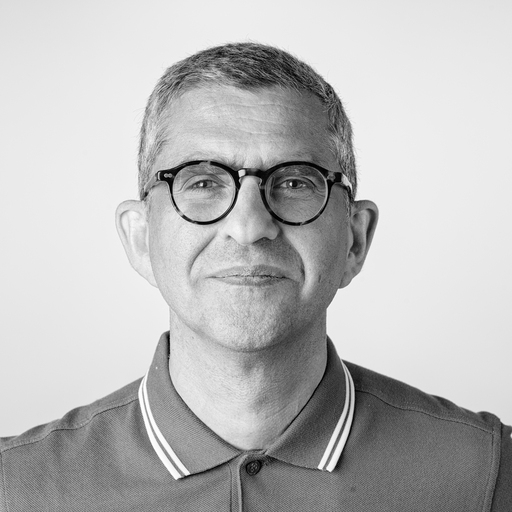
Maziar Raein is an Associate Professor at the Oslo National Academy of the Arts (KHiO) , specializing in Graphic Design and Methodology. He holds a BA (Hons) in Fine Art and an MA in Independent Film from Central Saint Martins (CSM). Before moving to Oslo, he taught on the BA Graphics course at CSM, leading the Context programme, and founded Codex Design, a brand identity agency that worked with companies like Lastminute.com. Research Focus : Visual and spatial ability, reflective practice, typographic archives, and audience engagement in music performance. Leadership Roles : Director of KHiO's Typographic Archive and Senior Advisor in Research at CEMPE (Centre of Excellence in Music Performance Education). His publications and projects explore interdisciplinary methodologies, asemic writing, and craftsmanship. Recent work includes the Radical Interpretations research program reinterpreting musical works for percussion. Scientific Contributions : Co-developed the landmark Writing-PAD project with Julia Lockheart. Recognized by HEFCE-FDTL for advancing creative writing models in art & design.
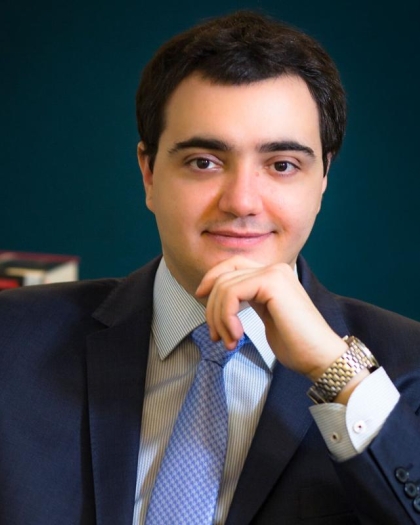
Kjell Gunnar Robbersmyr is a Professor at the University of Agder's Department of Engineering Sciences and director of the Top Research Center in Mechatronics. With a Ph.D. in mechanical engineering from NTNU (1992), his career spans academic leadership, research management at Agder Research, and active contributions to IEEE. His work focuses on mechatronics, machine design, and condition monitoring, with special emphasis on fault diagnosis in electric motors and vehicle crash modeling. Senior Member of IEEE Member of Norwegian Academy of Technical Sciences Member of Agder Academy of Sciences Research interests include: Advanced fault diagnosis in electric drives using AI and signal processing Vehicle crashworthiness modeling with lumped parameter and finite element methods Optical measurement technology for machine monitoring Digital twin applications for infrastructure and wind energy systems Condition monitoring of low-speed bearings and rotating machinery Recent publications demonstrate expertise in: Deep learning for imbalanced motor fault datasets Transformer networks in power electronics diagnostics 3D reconstruction techniques for mechanical systems Multi-classifier decision fusion in power systems Dynamic operations modeling for electric vehicles Scientific contributions include: Over 50 peer-reviewed articles Leadership in the Intelligent Monitoring research group Development of novel inverter topologies Innovations in wind turbine condition monitoring Advancements in laser-based mechanical diagnostics
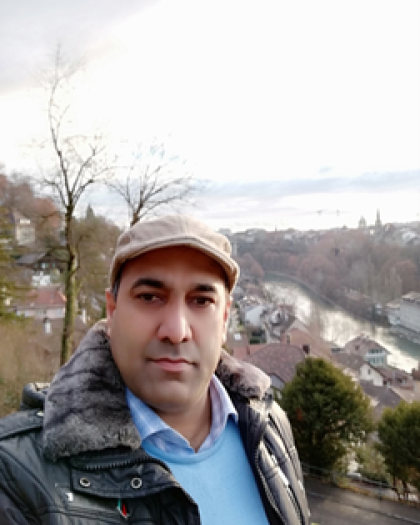
Morgan Konnestad is an Associate Professor in the Department of Information and Communication Technology at the University of Agder's Faculty of Technology and Natural Sciences. He has been employed full-time at UiA since January 1, 1989, and holds a Master's degree in Marine Technology from NTNU with a focus on Computer-Aided Design and additional coursework from the ICT department. His career spans over three decades of dedicated service to the university, with significant contributions to multimedia education and technology. Education Background: Master of Science in Marine Technology from NTNU (Computer-Aided Design focus) Additional coursework from NTNU's Department of ICT University Pedagogics Program completed at UiA in 2006 Konnestad's research interests center on visual computing technologies and their educational applications. He has been responsible for Computer Graphics and CAD courses since joining UiA, later expanding into Video, DVD/Blu-ray Authoring, and e-learning material production. His work demonstrates a consistent focus on practical applications of digital media technologies in educational contexts, with particular emphasis on motion capture systems, 3D visualization, and emerging AR/VR technologies. He has developed numerous multimedia production techniques specifically tailored for academic use and student learning. Analysis of his recent publications (2014-2023) reveals a strong trajectory toward immersive technologies and collaborative learning environments. His work increasingly focuses on motion capture applications, AR/VR implementations in education, and interactive systems for specialized training. The publications show a clear evolution from technical demonstrations of multimedia capabilities toward research-oriented investigations of how these technologies enhance learning outcomes and professional training, particularly in emergency management contexts. Academic Supervision: Assistant supervisor for Maurice Isabwe's PhD completed in 2013 Konnestad actively contributes to the university's outreach efforts through numerous presentations at open house events, high schools, and educational institutions. He has been instrumental in demonstrating UiA's Motion Capture Laboratory capabilities, providing hands-on experiences that showcase the practical applications of multimedia technology. His work bridges academic research with real-world implementation, particularly through collaborations with regional businesses and emergency management stakeholders. Laboratory Focus: Konnestad has been a driving force behind UiA's Motion Capture Laboratory, developing demonstration protocols and practical applications that support both educational and research objectives. His work with this facility has enabled innovative approaches to multimedia production, 3D visualization, and interactive learning environments.
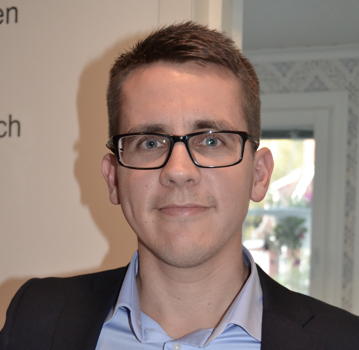
Kristian Muri Knausgård is a Lecturer at the Department of Engineering Sciences , University of Agder , Norway. He teaches courses in embedded systems, software development, and robotics. Current courses: MAS245 (Embedded Computer Systems), MAS417 (Software Development), MAS418 (Robotics Programming) Previous courses: MAS218 (Electrical Circuits), MAS234 (Embedded Systems) His research focuses on embedded systems , real-time systems , and technical cybernetics , with applications in artificial intelligence , computer vision , and systems engineering . He contributes to the university's research groups on Robotics and Automation and Systems Engineering and Modeling . Recent publications show a strong emphasis on: Autonomous systems (robotics, docking algorithms) Deep learning applications in marine ecology 3D reconstruction and computer vision techniques Fish detection/classification using neural networks Industrial automation for aquaponic systems His work bridges theoretical research with practical implementations in mechatronic systems and environmental monitoring.
Mikhail Barash is an Associate Professor at the Department of Informatics, University of Bergen. His research focuses on software language engineering, domain-specific languages (DSLs), and graphical user interface (GUI) frameworks. He explores innovative approaches to DSL design, including spreadsheet-based workbenches and reusable GUI structures. His work emphasizes user involvement in language standardization, such as in ECMAScript/JavaScript evolution. He also investigates formal methods for GUI abstraction and constraint-based systems. Barash collaborates with industry and academia, notably through the Magnolia programming language ecosystem and teaching experiences with JetBrains' MPS tooling. His contributions span over 20 peer-reviewed publications in top conferences like ACM SIGPLAN and IEEE. Key research areas include declarative GUI manipulation, language workbench democratization, and legacy grammar modernization. He has presented at venues such as the International Symposium on Formal Methods and contributes to frameworks like Event-B IDE development. His work bridges theoretical advances with practical tooling, aiming to make language engineering accessible to broader audiences.
Allah Bux is a Research Fellow at the Department of Linguistic, Literary and Aesthetic Studies, University of Bergen. His work focuses on advanced computer vision techniques, medical image analysis, and deep learning applications. He holds expertise in 3D reconstruction, anomaly detection, and surveillance systems. His research interests include developing novel neural network architectures for tasks such as skin cancer diagnosis, head pose estimation, and human action recognition. He also explores spatiotemporal analysis and attention mechanisms in CNN models. Recent trends in his publications emphasize integration of vision transformers, dual attention networks, and transfer learning for solving real-world problems in healthcare, security, and education. No scientific awards or grants are explicitly listed in the provided text. He has no documented advisees. His research involves collaborations in medical imaging, autonomous surveillance systems, and educational data analysis, with a focus on practical applications of AI.
Johan Pensar is an Associate Professor of Statistics and Data Science at the University of Oslo's Department of Mathematics. He holds a PhD from Åbo Akademi University (2016) and was a postdoc at the University of Helsinki (2016–2020). His research focuses on statistical machine learning, probabilistic graphical models, causal inference, and applications in genomics. He has supervised multiple PhD students and co-supervised others in interdisciplinary projects, including causal modeling in healthcare and machine learning for microbiology. Education: PhD in Statistics, Åbo Akademi University, 2016 Postdoctoral Researcher, University of Helsinki, 2016–2020 Research Interests: Pensar's work integrates statistical theory with practical applications. Key areas include developing methods for causal discovery, probabilistic graphical models (e.g., Bayesian networks), and their use in genomics and healthcare. He emphasizes interpretable machine learning and robust statistical frameworks for complex data. Publications: Recent work spans causal inference, microbial genome analysis, and housing market prediction. His methods address challenges like confounding bias, generalization in ML, and uncertainty quantification in valuation models. Awards: Finnish Statistical Society Doctoral Thesis Award (2013–2016) Teaching & Advising: Pensar teaches advanced courses in statistical learning and probabilistic graphical models. He advises PhD students on causal modeling, ML in healthcare, and data science applications. He collaborates with industry partners like Integreat and Eiendomsverdi AS. Lab/Teams: He is affiliated with the Norwegian Centre for Knowledge-driven Machine Learning (Integreat) and leads research on Bayesian methods in ML.
Pekka Parviainen is an Associate Professor in the Department of Informatics at the University of Bergen, within the Faculty of Mathematics and Natural Sciences. His research spans machine learning, probabilistic modeling, and AI theory, with a focus on Bayesian and Markov networks, adversarial robustness, fairness, and energy forecasting. He is affiliated with the Center for Data Science (CEDAS), an active research center at the university. His research interests include: Structure learning in graphical models Probabilistic forecasting using graph neural networks Adversarial robustness and defense mechanisms Fairness in clustering and machine learning Optimization and approximation in learning algorithms Applications in renewable energy and quantum sensing His recent publications (2020–2025) reflect a strong theoretical grounding combined with real-world applications, particularly in energy systems and AI safety. The works trend toward scalable and interpretable models, with increasing focus on fairness and robustness. Key themes include Bayesian network learning, metric learning, and causal graph modeling. Scientific contributions include: Development of novel adversaries (e.g., Voronoi-epsilon) for measuring robustness Scalable algorithms for learning large DAGs and Bayesian networks Integration of continuous optimization with combinatorial heuristics Applications in electricity demand forecasting and gas sensing Parviainen advises PhD students, including Hyeongji Kim (2023 thesis on distance in machine learning), and collaborates extensively with researchers in Norway and internationally. He has received computational support via Sigma2 (NN9884K) and is part of the CEDAS project, which fosters interdisciplinary data science research. While no specific grants are detailed, his involvement in funded projects and high-impact publications indicates active grant engagement. He is associated with the Center for Data Science (CEDAS), where he contributes to advancing data-driven methodologies across domains. The team emphasizes scalable, robust, and fair AI systems, aligning with national and international research priorities in trustworthy machine learning.
Noeska Smit is a Professor in Medical Visualization at the Department of Informatics, University of Bergen , where she has held a tenure-track position funded by the Trond Mohn Foundation since 2017. She is also a senior researcher and member of the leadership team at the Mohn Medical Imaging and Visualization (MMIV) Centre . Her research focuses on novel interactive visualization techniques for exploring and communicating multimodal medical imaging data , particularly in multi-parametric MR acquisitions . She leads projects in gynecologic cancer imaging , Multiple Sclerosis neuroimaging , and human anatomy education through collaborations with institutions like UGent (Belgium) and HVL. 2019: Dirk Bartz Prize for Visual Computing in Medicine 2016: PhD at Delft University of Technology , Netherlands 2012: MSc in Computer Science (Computer Graphics & Visualization) , Delft University Recent publications highlight her work in MRI radiomics , narrative visualization , open-source anatomy platforms , and interactive clustering tools for tumor analysis. Her methods are applied in oncological pelvic surgery planning , neurological disease monitoring , and 3D learning environments . She supervises PhD candidates Eric Mörth and Sherin Sugathan , and has contributed to open-source medical visualization tools like RegistrationShop and Online Anatomical Human (OAH) . Her work bridges clinical practice and computer science through collaborations with radiologists, surgeons, and ML researchers.
Peter E. Danielsen is an Assistant Professor at UiT The Arctic University of Norway, affiliated with the Department of Building, Energy and Material Technology. He serves as Deputy Head of Department and is a member of the BEaM research group and Northern Buildings in Changing Climate (NoBiCC) project. Research focuses on human collaboration via digital tools , BIM frameworks , and energy efficiency in Arctic construction Teaching includes courses on BIM Collaboration Processes (BYG-2612) and BSc supervision (BYG-2780) Research Trends His work emphasizes Building Information Modeling , digital visualization , and climate-adaptive infrastructure in Arctic regions. Key themes include: Energy efficiency in model-based building systems Collaborative digital tools for construction Visualization centers for Arctic research Cross-border educational approaches in construction informatics
Pia S. Hagerup is an Associate Professor in the Department of Teacher Education at NTNU, affiliated with the Faculty of Social and Educational Sciences. She holds a PhD in school management and a master's degree in knowledge and innovation management, integrating art-based methodologies into her research. Her work bridges educational leadership, organizational development, and visual arts. Her research focuses on leadership practices in schools, art-based research methods, and policy implementation. She has advised municipalities like Trondheim on cultural funding and educational strategies. Notable contributions include studies on Montessori education trends and longitudinal analyses of school development programs. Hagerup's career spans visual art exhibitions (e.g., international printmaking triennales), teaching, and advisory roles. She combines academic rigor with practical insights from municipal governance, emphasizing creative approaches to leadership challenges.
Sigrid Haugen is an Assistant Professor at Oslo Metropolitan University’s Faculty of Technology, Art and Design, Department of Product Design. Her expertise spans product design, industrial design, and graphic design, with specialized skills in ceramic production techniques and aesthetic qualities of cement-based materials. She leads the ceramic section and serves as course leader for first-year bachelor students. Academic Rank: Assistant Professor University: Oslo Metropolitan University School: Faculty of Technology, Art and Design Department: Department of Product Design Her research focuses on material innovation (concrete, porcelain, ceramics) and design education pedagogy. She has conducted extensive work on workshop practices and tangible material usage in design education. Her recent dissemination includes ceramic wall art, porcelain jewelry, and exhibition-related contributions. Scientific Awards Recipient of the Design Excellence Award from the Norwegian Design Council (2001) for Bake it Easy Nominated for Teacher of the Year at OsloMet (2016, 2020, 2022, 2023, 2024)
Lei Jiao is a Professor in the Department of Information and Communication Technology at the University of Agder's Faculty of Engineering and Science. Previously serving as an Associate Professor from May 2014 to October 2022, Dr. Jiao has established himself as a leading researcher in artificial intelligence, with particular expertise in Tsetlin Machines and their applications across diverse domains. PhD in Information and Communication Technology, University of Agder (2008-2012) Master of Engineering in Communication and Information System, Shandong University (2005-2008) Bachelor of Engineering in Telecommunication Engineering, Hunan University (2001-2005) Dr. Jiao's research spans multiple cutting-edge areas including interpretable artificial intelligence, wireless communication protocols, network resource allocation, and signal processing. His work on Tsetlin Machines has pioneered new approaches to machine learning that emphasize interpretability while maintaining high performance. The research group he contributes to at the University of Agder focuses on Autonomous and Cyber-Physical Systems (ACPS), Battery recycling, and the Centre for Artificial Intelligence Research (CAIR). Analysis of Dr. Jiao's recent publications reveals a strong emphasis on interpretable AI systems, particularly through Tsetlin Machines. His work spans applications in GNSS jammer detection, crowd anomaly detection, DNA sequence classification, and hardware acceleration of machine learning models. The research consistently demonstrates how logical, rule-based approaches can provide transparent alternatives to traditional neural networks while maintaining competitive performance. Supervised numerous PhD students including Vojtech Halenka, Ahmed K. Kadhim, and Sindhusha Jeeru Mentored over 30 Master's thesis projects covering topics from Tsetlin Machines to signal processing and computer vision Collaborates extensively with Ole-Christoffer Granmo and other leading researchers in the AI field Dr. Jiao actively contributes to advancing the field through supervision of doctoral candidates, collaboration on major research projects, and development of novel machine learning approaches that balance performance with interpretability. His work bridges theoretical foundations with practical applications across telecommunications, computer vision, and natural language processing domains.
Dr. Anna Plaksienko is a Research Fellow in High-dimensional Statistics at the University of Oslo's Institute of Basic Medical Sciences, Faculty of Medicine. Her work focuses on statistical methods for omics data integration, particularly in multi-source high-dimensional regression and graphical models. She develops computational tools like the methyLImp2 and jewel R packages for missing value imputation and joint network estimation. Education: PhD in Mathematics (2021) - Gran Sasso Science Institute, Italy BSc in Mathematics (2016) - Novosibirsk State University, Russia Research Interests: She explores differential network estimation, stability selection, and error control in omics data (RNA-Seq, methylation, lipidomics). Her methods aim to uncover biological insights from multi-omics integration and high-dimensional datasets. Labs/Teams: She is part of the High-dimensional Statistics research group at the Institute of Basic Medical Sciences, collaborating on projects involving statistical methodology and computational biology.
Stefan Bruckner is a Professor of Visualization, currently heading the Chair of Visual Analytics at the University of Rostock, Germany, after previously serving as a full Professor at the University of Bergen, Norway. He holds a master's (2004) and PhD (2008) in Computer Science from TU Wien, Austria, and an habilitation (2012). His research focuses on interactive visualization techniques, particularly in biomedical and data-driven contexts, with contributions spanning illustrative visualization, volume rendering, and narrative medical storytelling. He has led industry collaborations with GE Healthcare and Agfa HealthCare, resulting in 7 patents. His academic roles include program co-chair for EuroVis, PacificVis, and the Eurographics Medical Prize, and editorial board membership in IEEE Transactions on Visualization and Computer Graphics and Computers & Graphics. Awards include the Eurographics Young Researcher Award and Karl-Heinz-Höhne Award for Medical Visualization, alongside 11 best paper awards. Research emphasizes narrative visualization for disease communication, user-centric medical data exploration, and innovative visual metaphors like Honeycomb Plots and ScrollyVis. His work bridges academic research with practical applications, fostering interdisciplinary collaborations in healthcare and computational biology.