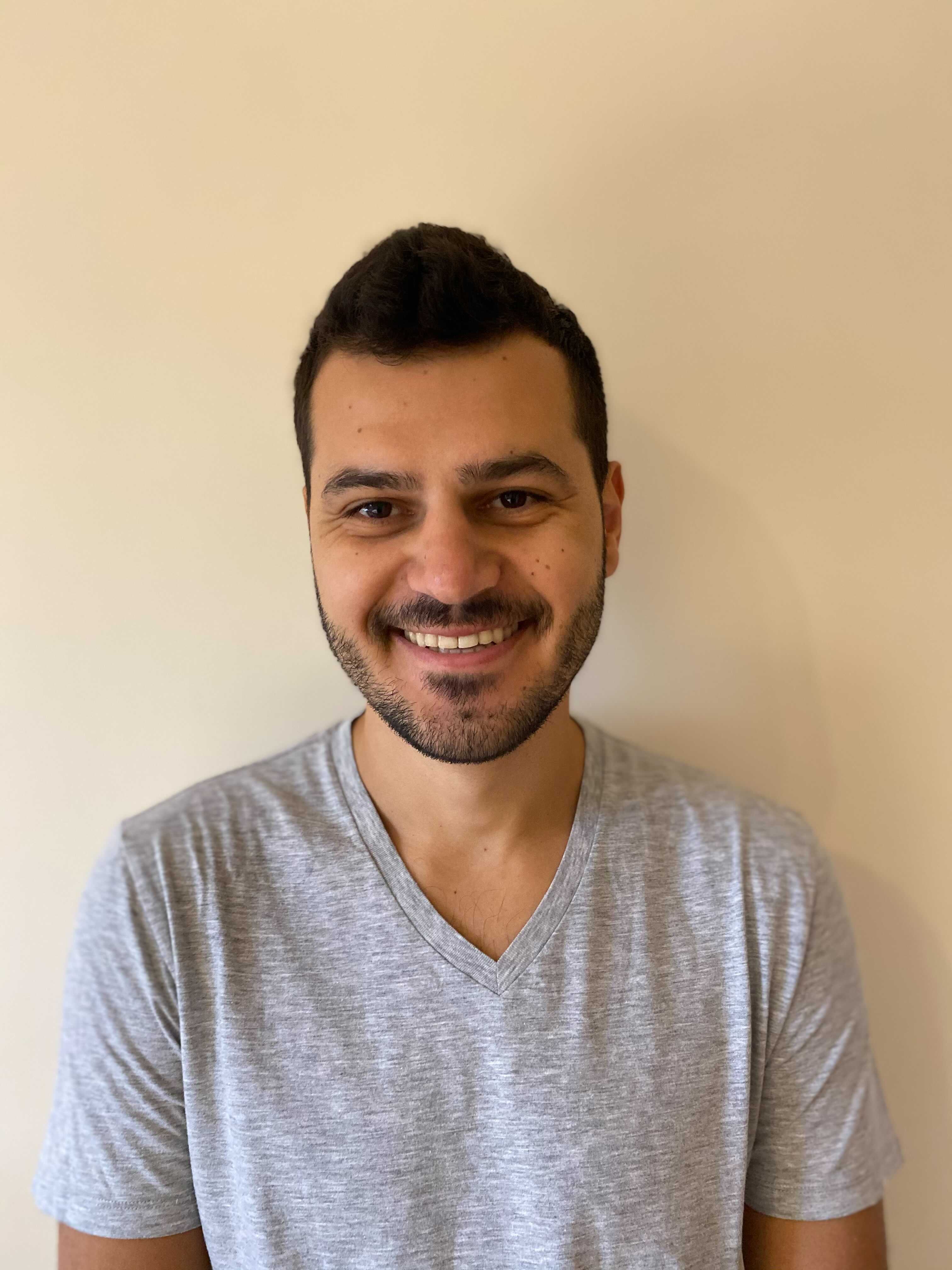
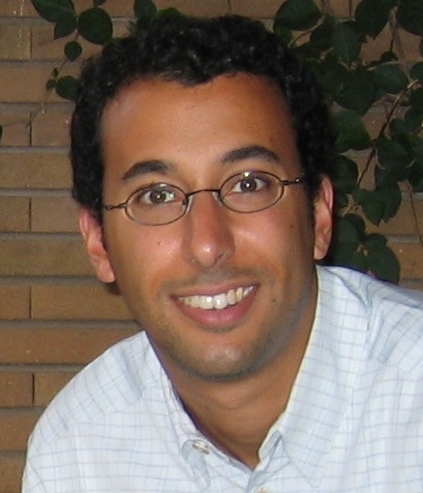
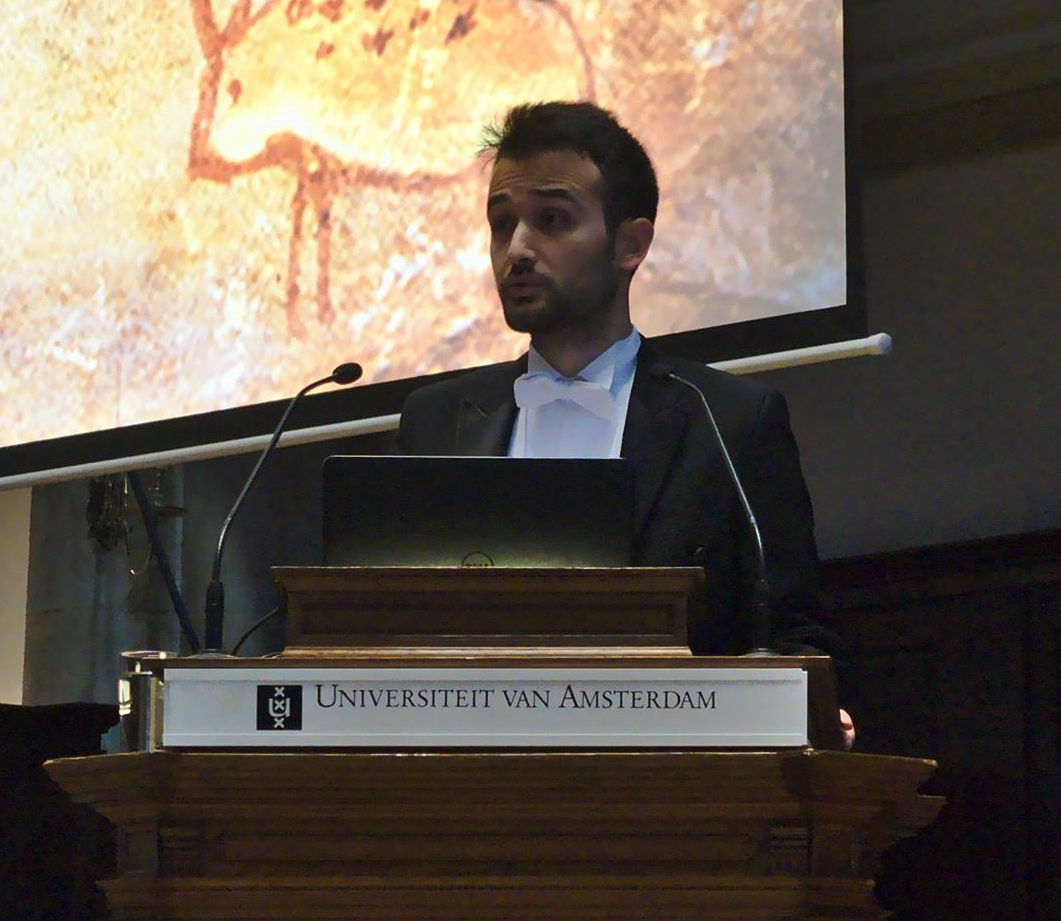
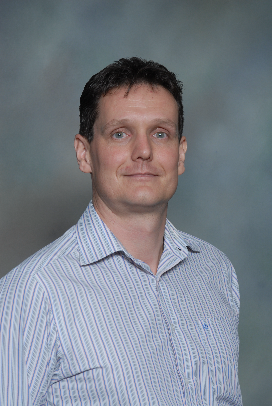
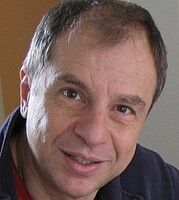
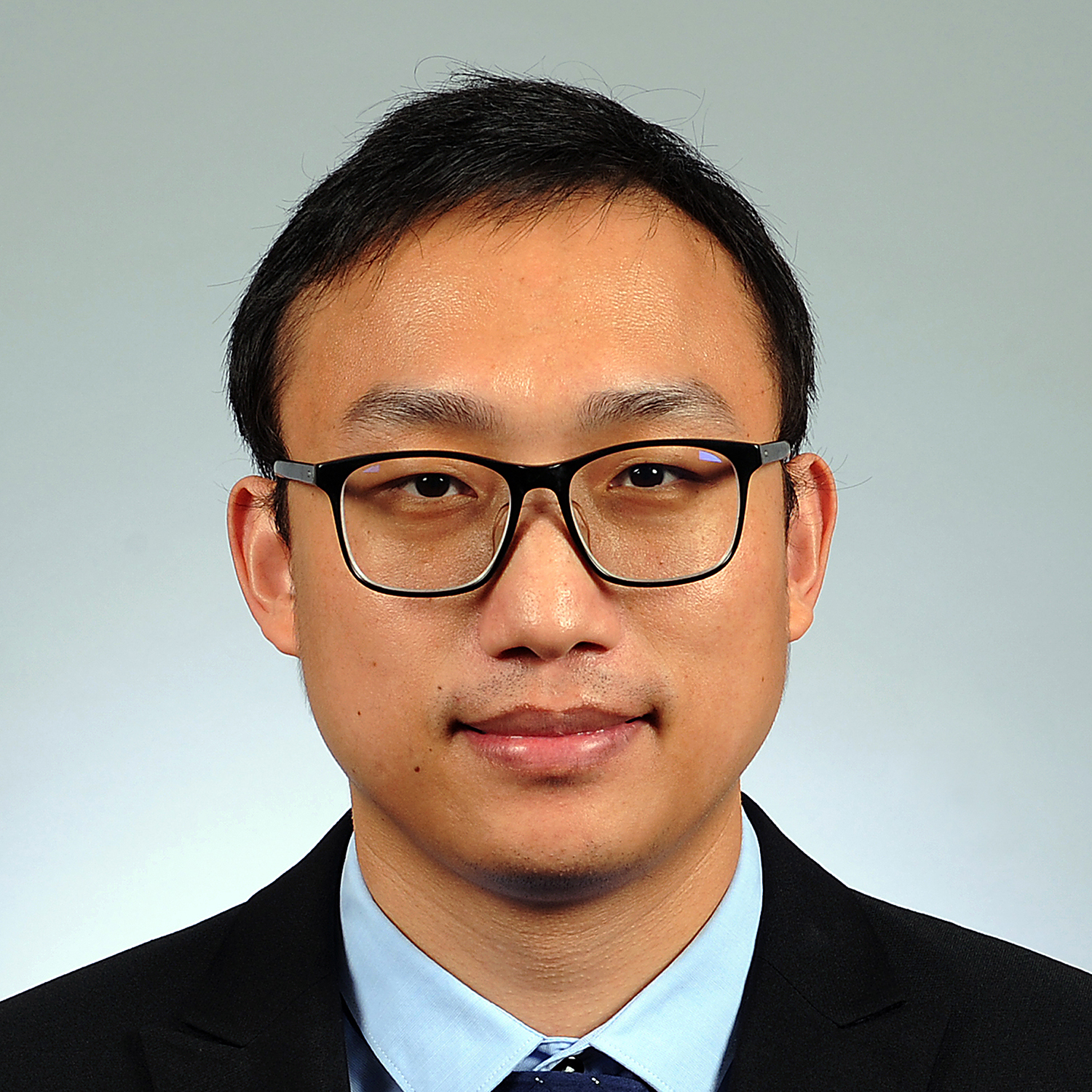
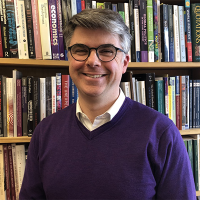
Denny Yu is an Associate Professor at the Edwardson School of Industrial Engineering, Purdue University. His work bridges human factors, neuroergonomics, and healthcare safety through advanced sensor systems and AI. Primary Affiliation : Edwardson School of Industrial Engineering, Purdue University Research Themes : Surgical ergonomics, autonomous vehicle human factors, cognitive workload assessment, multimodal physiological sensing Dr. Yu's research focuses on neuroergonomics and human-robot interaction , particularly in surgical and transportation contexts. His team develops sensor-based systems for workload monitoring, including: EEG-eye tracking fusion for situation awareness Wearable exoskeletons for surgical posture support Computer vision tools for lifting task risk analysis Smart infusion pump usability frameworks AI-driven surgical coaching systems Recent publications emphasize deep learning applications in soft tissue deformation estimation and real-time adaptive systems for robotic surgery augmentation. His work spans both occupational health (veterinary surgeons, airport workers) and medical device innovation domains.
Christopher Bishop is a Microsoft Technical Fellow and Director of Microsoft Research AI for Science, concurrently serving as Honorary Professor of Computer Science at the University of Edinburgh and Fellow of Darwin College, Cambridge. His distinguished career spans theoretical physics, neural computing, and leadership in AI research. Fellow of the Royal Academy of Engineering (2004) Fellow of the Royal Society of Edinburgh (2007) Fellow of the Royal Society (2017) Founding member of UK AI Council Member of Prime Minister's Council for Science and Technology (2019) Delivered Royal Institution Christmas Lectures (2008) His research focuses on probabilistic models and machine learning, with significant contributions to AI for scientific discovery. Bishop pioneered the concept of the fifth paradigm of scientific discovery , where AI transforms traditional research methodologies across natural sciences. His work bridges theoretical computer science with practical applications in fusion energy, materials science, and computational biology. Analysis of his recent publications reveals a strategic shift toward AI-driven scientific infrastructure , with emphasis on machine learning foundations that endure technological evolution. His 2024 textbook became Springer Nature's top-selling publication, demonstrating exceptional impact in both academic and industrial contexts. Deep Learning: Foundations and Concepts (2024) Pattern Recognition and Machine Learning (2006) Neural Networks for Pattern Recognition (1995) Bishop leads Microsoft's global AI for Science initiative, establishing research teams in Berlin and coordinating interdisciplinary projects that apply machine learning to climate science, fusion energy, and molecular biology. His leadership in the Prime Minister's Council shapes national AI strategy while maintaining active engagement in public science communication through lectures and media appearances.
Peter Kazanzides is a Research Professor in the Department of Computer Science at the Whiting School of Engineering, Johns Hopkins University, where he joined the faculty in 2002. His research focuses on robotics, medical robotics, augmented reality, and computer-assisted interventions with primary applications in computer-integrated surgery. His educational background includes multiple degrees from Brown University: ScB (1983) in Electrical Engineering AB (1983) in Computer Science ScM (1985) in Electrical Engineering ScM (1987) in Applied Mathematics PhD (1988) in Electrical Engineering Kazanzides is a member of the Robotics, Vision, and Graphics research group and directs the Sensing, Manipulation, and Real-Time Systems (SMARTS) laboratory. His work spans surgical robotics, mixed reality, and systems engineering, with emphasis on computer-assisted surgery in extreme environments including minimally invasive surgery, microsurgery, and space teleoperation. The SMARTS lab develops real-time sensing systems, augmented/mixed reality interfaces using head-mounted displays, high-performance motor control, and sensor fusion technologies, with strong focus on system integration and open-source platforms like the da Vinci Research Kit (dVRK). Analysis of his recent publications (2024-2025) reveals dominant trends in surgical robotics autonomy, augmented reality navigation, force estimation, and digital twin technologies. Key themes include AI-driven task automation, haptic feedback enhancement, real-time instrument segmentation, and simulation environments for surgical training, primarily leveraging the da Vinci Research Kit framework. As director of the SMARTS lab within the Laboratory for Computational Sensing and Robotics (LCSR), Kazanzides leads a collaborative ecosystem including the Computer Integrated Interventional Systems (CIIS) Lab, Advanced Medical Instrumentation and Robotics (AMIRO) Lab, Dynamical Systems and Controls Lab (DSCL), Computer Aided Medical Procedures (CAMP) Lab, Medical UltraSound Imaging & Intervention Collaboration (MUSiiC) Lab, and Photoacoustic & ULtrasonic Systems Engineering (PULSE) Lab. His lab maintains responsibility for the development and support of the open-source da Vinci Research Kit, a critical resource for surgical robotics research worldwide.
Georgi Ganev is a PhD Researcher at University College London (UCL) and Principal Research Scientist at SAS, following the acquisition of Hazy, a synthetic data company. He is part of UCL's Information Security Research Group under Professors Emiliano De Cristofaro and David Barber. His research focuses on advancing privacy-preserving synthetic data techniques, particularly in machine learning and differential privacy. Key areas include developing DP generative models, auditing privacy mechanisms, and addressing legal implications of synthetic data. Education: MSc in Computational Statistics and Machine Learning (UCL, supervised by Prof. Sebastian Riedel) and BSc in Business Mathematics and Statistics (LSE, supervised by Prof. Wicher Bergsma). Research Interests: Privacy-preserving synthetic data, differential privacy, privacy auditing, generative models, and regulatory compliance. His work has led to 25+ discovered privacy bugs in open-source libraries and vulnerabilities in deployed systems, with publications in top-tier conferences like IEEE S&P, USENIX Security, and ICML. Notable Achievements: Distinguished Paper Award at IEEE S&P 2025. His research has been integrated into SAS's synthetic data products, impacting industry adoption. Open-source contributions include dpmm and dpart libraries for DP synthetic data generation. Publications: Over 15 peer-reviewed articles, including works on privacy metrics inadequacy, PATE-GAN benchmarking, and synthetic data regulatory challenges. Active in workshops on generative AI and law, and deployment challenges in enterprise settings.
Youssef Marzouk is a Professor of Aeronautics and Astronautics at MIT, serving as co-director of the MIT Center for Computational Engineering and director of the Aerospace Computational Design Laboratory. His research focuses on integrating physical modeling with statistical inference, emphasizing Bayesian computation, uncertainty quantification, and optimal experimental design. He holds a SB, SM, and PhD from MIT and has been recognized with prestigious awards including the DOE Early Career Award and the Junior Bose Teaching Prize. Education: PhD in Aeronautics and Astronautics, MIT SM in Aeronautics and Astronautics, MIT SB in Aeronautics and Astronautics, MIT Research Interests: Uncertainty Quantification techniques for complex systems Bayesian computational methods and inverse problem solutions Optimal experimental design strategies Interdisciplinary applications in geophysics, environmental science, and engineering Awards: 2022: Report to the President, Center for Computational Science and Engineering 2021: Bayesian Inference Software Framework (hIPPYlib-MUQ) 2012: MIT School of Engineering Junior Bose Award 2010: DOE Early Career Research Award Labs & Leadership: Aerospace Computational Design Laboratory (Director) MIT Center for Computational Engineering (Co-Director) Editorial Board roles: SIAM Journal on Scientific Computing, Advances in Computational Mathematics
Sezer Karaoglu is a Lecturer and part-time postdoctoral researcher at the Computer Vision Group, Informatics Institute, University of Amsterdam. He is also the CTO and Co-Founder of 3DUniversum, a technology spin-off of the University of Amsterdam that provides state-of-the-art 2D/3D computer vision solutions. Additionally, he has co-founded other startups including Scanm and 3DHealthScan. Dr. Karaoglu received his PhD from the Computer Vision Group, Informatics Institute, University of Amsterdam, with research funded by the COMMIT project. His educational background includes a double master's degree: an optics, image and vision master's degree from University Jean Monnet in France and a media technology master's degree from Gjovik University College in Norway. He completed his undergraduate studies with honors at Istanbul Technical University in Telecommunication Engineering. His research focuses on Artificial Intelligence and 3D Computer Vision, with specific interests in SLAM, re-localization, 3D reconstruction, 3D object detection and segmentation, synthetic media, generative AI, deep fake creation and detection, and VR/AR technologies. His work has significant applications in healthcare, particularly in using deepfake technology for therapy for victims of sexual violence-related PTSD and moral injury, as documented in a Frontiers in Psychiatry article. Analyzing his recent publications reveals a strong trend toward neural scene reconstruction, intrinsic image decomposition, and the application of diffusion models to computer vision problems. His research increasingly integrates 3D scene understanding with language models, as evidenced by his work on language-to-3D scene generation. The applications span from healthcare (deeptherapy.ai) to media authenticity (deepfake detection) and industrial applications. ICT.OPEN Poster Award (3rd Position), Oct'13 Pascal VOC'12 Classification challenge, 2nd Position, Sep'12 Pascal VOC'12 Detection challenge, 3rd Position, Sep'12 Best project award at Nokia and CIMET project competition Outstanding reviewer at CVPR'21 PROVADA Future Startup Battle winner Best Dutch AI startup by Valuer Dr. Karaoglu has supervised numerous PhD, Master's, and Bachelor's students, demonstrating his commitment to academic mentorship. His research has attracted significant media attention, with features on Dutch national TV programs including NPO, VPRO, RTL, and international outlets like BBC News. He has received research funding through the COMMIT project during his PhD studies and has successfully translated his research into commercial applications through his startups. His work on deepfake technology has been applied in innovative therapeutic contexts through DeepTherapy.ai, showing the real-world impact of his research. Dr. Karaoglu leads research efforts at the Computer Vision Group Amsterdam and through his company 3DUniversum, which has developed applications like weScan, DeepTherapy, and FairFake.ai. His team collaborates with various institutions including the Netherlands Film Academy for grief therapy applications using deepfake technology. The DeepTherapy project represents a particularly impactful application of his work, using deepfake technology to help victims of sexual violence confront perpetrators in therapeutic settings.
Professor Andrew Whyte serves as a faculty member in the School of Civil and Mechanical Engineering within the Faculty of Science and Engineering at Curtin University, Perth. His expertise spans civil engineering, sustainable infrastructure development, and construction management with a particular emphasis on life-cycle assessment methodologies. Professor Whyte maintains an active research profile with numerous international collaborations, especially with Malaysian institutions and industry partners across Southeast Asia. BSc, PhD (formal qualifications) Professor at Curtin University since at least 2000 Extensive international research collaborations Active participation in professional engineering organizations Professor Whyte's research interests focus on life-cycle analysis methodologies (LCA/LCCA) applied to civil infrastructure systems, with particular emphasis on sustainable materials, construction waste management, and transportation systems. His work bridges theoretical engineering principles with practical applications in sustainable construction practices, asset management, and infrastructure development. Recent research has expanded into autonomous vehicle integration, offshore engineering systems, and sustainable urban mobility solutions. Analysis of Professor Whyte's publication record reveals a consistent trajectory toward increasingly sophisticated life-cycle assessment methodologies applied across diverse infrastructure domains. His recent work demonstrates growing integration of computational modeling techniques with environmental and economic analysis, particularly in transportation systems and offshore engineering applications. The research shows strong industry relevance with practical applications in sustainable construction practices and infrastructure asset management. FICE (Fellow of the Institution of Civil Engineers) FIEAust (Fellow of the Institution of Engineers Australia) CPEng (Chartered Professional Engineer) NER (National Engineering Register) APECEngineer IntPE(Aus) (International Professional Engineer - Australia) Professor Whyte has secured substantial research funding from diverse sources including Australian government bodies, Malaysian research councils, and industry partners. His grant portfolio demonstrates expertise in translating academic research into practical engineering solutions, with particular strength in sustainable construction practices, offshore engineering systems, and infrastructure asset management. These projects often involve multi-institutional collaborations that bridge academic research with industry implementation.
Abey Campbell is an Assistant Professor in Computer Science at the School of Computer Science, University College Dublin. He holds roles such as Deputy Programme Director for Computer Science, Director of UCD VR Lab, and 1st Year Stage Coordinator. His research focuses on Augmented Reality (AR), Virtual Reality (VR), Mixed Reality (MR), and Multi-Agent Systems with applications in education, healthcare, and human-computer interaction. Campbell has coordinated modules like Augmented and Virtual Reality, Computer Graphics, Game Development, and Mobile Computing. He earned his BSc and PhD in Computer Science from University College Dublin. His work explores touchless interaction technologies, machine learning agents in STEM education, and ethical implications of emerging technologies. Notable contributions include RenderKernel for real-time rendering systems and studies on AR's role in decision support systems. Campbell has secured a grant from Enterprise Ireland for collaborative design documentation and participates in professional activities like peer reviewing for Frontiers in Virtual Reality and IEEE conferences. His collaborative projects include developing AR tools for veterinary training and evaluating immersive VR experiences in nursing education. The UCD VR Lab under his direction focuses on applied research in spatial computing and interactive systems.
Professor Dollas Apostolos serves as a Professor in the School of Electrical and Computer Engineering at the Technical University of Crete (TUC), where he has held leadership roles such as Department Chairman. He directs the Microprocessor and Hardware Laboratory, focusing on reconfigurable computing, embedded systems, and high-performance digital systems. His work emphasizes rapid prototyping and real-world implementation of computational solutions. Education: Ph.D., Computer Science, University of Illinois at Urbana-Champaign (1987) M.Sc., Computer Science, University of Illinois at Urbana-Champaign (1984) B.Sc., Computer Science, University of Illinois at Urbana-Champaign (1982) Research Interests: Reconfigurable computing architectures FPGA-based acceleration for bioinformatics and genomics Embedded systems and real-time processing Hardware-software co-design for high-performance computing His research bridges theoretical innovation with practical applications, such as FPGA implementations for genome assembly and aquaculture monitoring systems. Publications: Recent work highlights FPGA-based solutions for bioinformatics (e.g., genome assembly acceleration), real-time embedded systems (e.g., fish cage net monitoring), and scalable data processing frameworks. His articles often explore the intersection of FPGA technology with computational biology, embedded vision, and distributed systems. Awards and Affiliations: Senior Member, IEEE and IEEE Computer Society Recipient of IEEE Computer Society Golden Core and Meritorious Service Awards Twice honored with the University of Illinois Teaching Excellence Award He is a co-founder of IEEE conferences like FCCM and RSP, reflecting his leadership in the reconfigurable computing community. Teaching and Labs: Teaches courses on computer architecture, logic design, and VLSI design. The Microprocessor and Hardware Lab under his direction drives advancements in FPGA-based systems, with projects ranging from bioinformatics hardware accelerators to embedded vision systems.
Fahim Hasan Khan is an Assistant Professor in the Computer Science and Software Engineering Department at California Polytechnic State University, San Luis Obispo (Cal Poly). His research focuses on computer vision, applied machine learning, and citizen science applications, with a special emphasis on environmental monitoring and education. He holds a PhD in Computer Science and Engineering from UC Santa Cruz, where he was advised by Professors Alex Pang and James Davis, and a Master's in Computer Science from the University of Calgary. Key research contributions include real-time rip current detection systems (RipFinder, RipScout), mobile citizen science platforms (SmartCS), and educational tools to engage high school students in STEM research. His work has received media attention for innovations in drowning prevention and environmental safety. Notable awards include the Best Poster Presentation Award at ICIAR 2019 and the Best of the Baskin School of Engineering Award at UC Santa Cruz in 2022. Dr. Khan collaborates extensively with industry and academic partners to develop practical solutions for challenges in marine safety, autonomous systems, and healthcare diagnostics. He actively mentors students and seeks to democratize access to machine learning tools through no-code platforms.
Dr. Daniel Berio is a researcher at Goldsmiths, University of London, specializing in computational models for human-like movement in digital art and robotics. His work bridges computer graphics, cognitive psychology, and robotic manipulation, focusing on stylized stroke generation, graffiti analysis, and kinematic modeling. He collaborates with Frederic Fol Leymarie and Rejean Plamondon, utilizing the Sigma Lognormal model to simulate human handwriting dynamics. Education : Doctoral thesis on AutoGraff (2021), exploring computational understanding of graffiti and calligraphy. Research Themes : Human-like motion in digital art, kinematic reconstruction from static traces, robotic graffiti generation, and perceptual fluency in aesthetic evaluation. Publications : 15+ works since 2015, spanning ACM Transactions on Graphics, British Journal of Psychology, and conferences like MOCO and IROS. Applications : Font stylization tools, synthetic graffiti generation, compliant robot control, and semantic typography systems.
Fan Yao is an Associate Professor in the Department of Electrical and Computer Engineering at the University of Central Florida's College of Engineering and Computer Science. She received her Ph.D. in Computer Engineering from The George Washington University in 2018 and currently leads the Computer Architecture and Systems Research (CASR) lab. Her research focuses on the intersection of computer architecture, security, and machine learning, with particular emphasis on hardware-based security vulnerabilities and defenses. Dr. Yao's research interests span computer architecture, hardware and system security, AI security, energy-efficient computing, and cloud computing. Her work addresses critical security challenges in modern computing systems, particularly focusing on microarchitecture attacks, hardware-based model tampering in deep learning systems, and information leakage threats in emerging non-volatile memory systems. She has developed innovative defense mechanisms against cache timing channels, branch predictor vulnerabilities, and GPU-based side channels. Her recent publications demonstrate a strong focus on AI security (particularly Deep Neural Network vulnerabilities), hardware security (including cache and branch predictor attacks), and secure memory architectures. The research shows an evolution from traditional computer architecture topics toward the security implications of AI hardware and emerging memory technologies, with increasing emphasis on practical attacks and defenses in real-world systems. NSF GW I-Corps Site Grant Award, 2018 Best Dissertation Award, GWU, 2018 The Norris & Betty Hekimian Engineering Endowment Fellowship, GWU, 2017 Top Picks in Hardware and Embedded Security, 2019 NSF CAREER project award, 2024 Dr. Yao currently leads multiple NSF-funded research projects including 'Understanding and Taming Deterministic Model Bit Flip Attacks in Deep Neural Networks' (NSF SaTC, 2020-2023), 'Towards Secure-By-Design Integration of Emerging Non-Volatile Memory in Future System' (NSF CNS, 2020-2023), and 'Architecting Secure-by-Design Memristor-Based Memories' (NSF CNS, 2019-2022). She has successfully mentored numerous PhD students, many of whom appear as first authors on top-tier conference publications, demonstrating her commitment to graduate education and research mentorship. As the leader of the CASR lab, Dr. Yao oversees a vibrant research group focused on building secure-by-design, efficient, and advanced future systems through novel techniques spanning hardware, computer architecture, and systems. The lab actively publishes at top computer architecture and security conferences including ISCA, MICRO, HPCA, IEEE S&P, and USENIX Security, with multiple papers accepted to these venues annually. The group has developed several influential tools and frameworks for security analysis, including proof-of-concept code for BranchSpec exploits that has been widely cited in the hardware security community.
Dr. Xin Fu is a Professor in Electrical and Computer Engineering at the University of Houston's Cullen College of Engineering, holding a PhD from the University of Florida. His research spans computer architecture, energy-efficient systems, machine learning acceleration, and hardware reliability, with applications in edge computing and quantum systems. Awarded the NSF CAREER Award and named Miller Scholar, he leads innovations in heterogeneous computing architectures. Research focuses on optimizing hardware-software co-design for AI workloads, with current projects in federated learning optimization, quantum computing reliability, and neural network acceleration. Recent publications demonstrate cross-cutting work in mobile AI deployment, adversarial defense mechanisms, and quantum error correction. Honors include: NSF Faculty Early CAREER Award (2014) Four-time recipient of competitive NSF research grants Miller Scholar recognition for teaching and research excellence
James Milner is Professor of Political Science at Carleton University and Project Director of SSHRC-funded LERRN (Local Engagement Refugee Research Network). He holds degrees from the University of Toronto (BA) and University of Oxford (MPhil, DPhil). Additional roles include Director of Migration and Diaspora Studies and Canada's De Mello Chair. Research expertise encompasses: Protracted refugee situations and durable solutions Refugee participation in governance UNHCR and global refugee regime reform Humanitarian action in Africa and Asia Publications analyze refugee agency in peacebuilding, localization of knowledge production, and historical evolution of asylum policies. Field research spans refugee contexts in Burundi, Guinea, Kenya, Tanzania, Thailand and India. Professional experience includes consultancies with UNHCR in India, Cameroon, Guinea, and Geneva headquarters.
Lane Harrison is an Associate Professor in the Department of Computer Science at Worcester Polytechnic Institute (WPI), where he directs the Visualization and Information Equity lab (VIEW). His research leverages cognitive and perceptual principles to improve information visualization and visual analytics systems, with critical applications in cybersecurity and health-risk communication for high-stakes decision-making. His educational background includes a BS (2009) and PhD (2013) in Computer Science from the University of North Carolina, Charlotte. Prior to WPI, he was a Postdoctoral Researcher at Tufts University's Visual Analytics Lab. Harrison's research focuses on empirical evaluation of visualization techniques , investigating how cognitive principles can optimize user performance with visual representations. He develops design guidelines for effective visualizations in domains like cybersecurity and healthcare, while creating adaptive systems that integrate models of user abilities. His work bridges theoretical foundations with practical applications to address real-world challenges in data interpretation. Analysis of his 2016-2021 publications reveals consistent emphasis on user-centered evaluation methodologies , including crowdsourcing and controlled experiments. Key trends include quantifying exploration behaviors in web visualizations, addressing cognitive biases in data reproduction, and developing healthcare-focused analytics for drug interactions and risk communication. His research demonstrates strong interdisciplinary connections between visualization, cognitive science, and domain-specific applications. His scientific recognition includes: Best Paper Award at ACM CHI 2016 for adaptive interface research Harrison secures significant research funding including an NSF Grant (2022) for visualization studies and participates in an 11-school AI collaboration for intelligence professionals (2025). He teaches data visualization and web programming courses, mentoring students through the VIEW lab on projects applying visualization techniques to social issues and scientific domains. He directs the VIEW lab at WPI, which develops computational methods to understand how people engage with data visualizations while emphasizing equitable information access. Current projects integrate user modeling with visualization systems to optimize design for diverse cognitive abilities and application contexts.