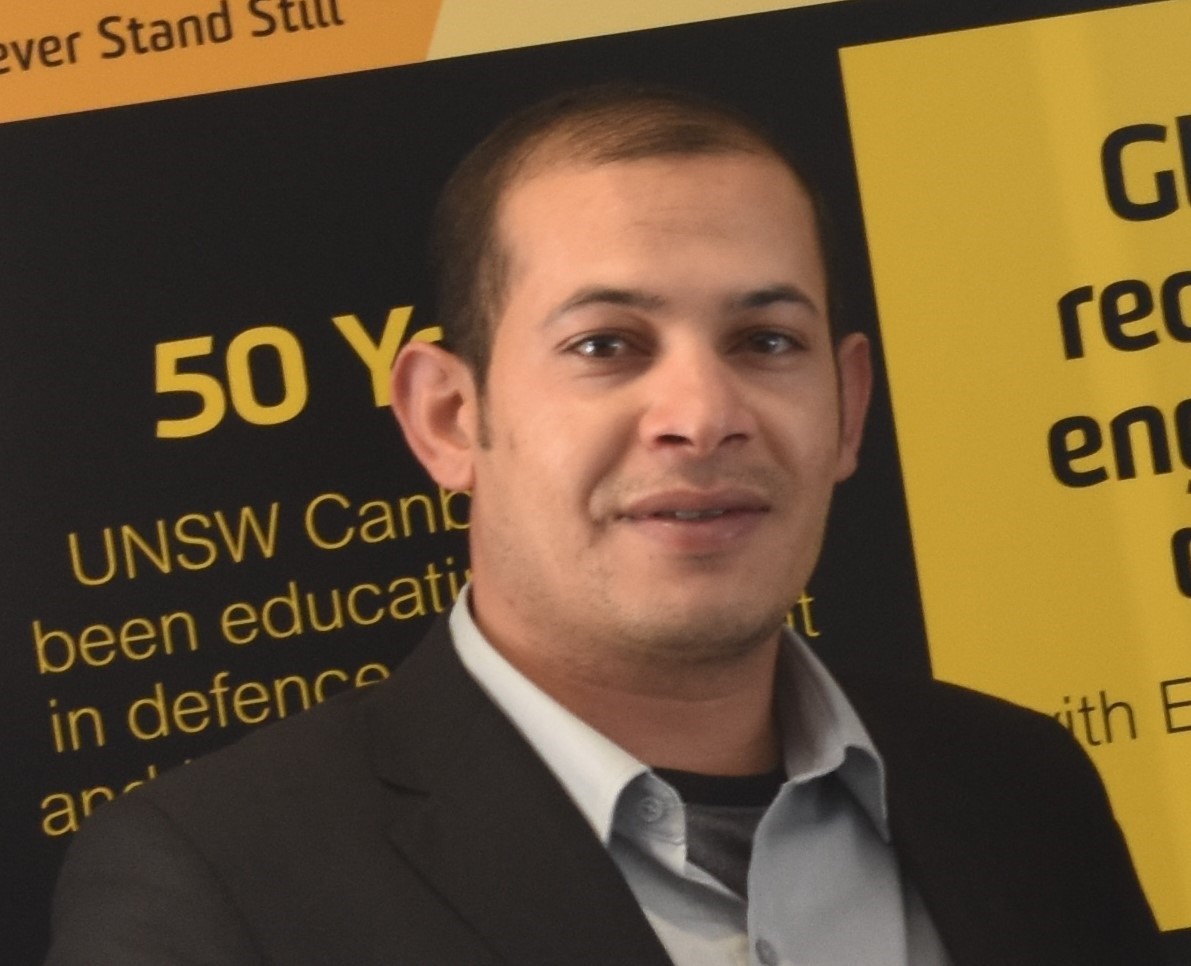
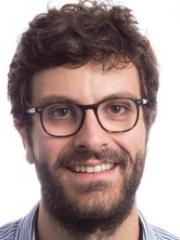
Kwan-Wu Chin is a Professor in the School of Electrical, Computer and Telecommunications Engineering at the University of Wollongong, where he also serves as Head of Postgraduate Studies (HPS) and co-directs the Wireless Technologies Lab (WTL). His research focuses on resource allocation problems in Internet of Things (IoT) systems, maritime networks, edge computing platforms, and integrated sensing-communication systems. Chin leads an active research group currently supervising five PhD students working on UAV networks, edge computing, maritime systems, and metaverse resource allocation. He has graduated over 20 PhD students who now hold positions in academia and industry. Chin serves as editor for Elsevier Computer Communications and IEEE Internet of Things Journal. His work develops optimization techniques using graph theory, stochastic processes, and machine learning for next-generation wireless systems.
Dr. Nour Moustafa is an Associate Professor and ARC DECRA Fellow at the School of Systems & Computing (SysCom) , University of New South Wales (UNSW) Canberra , Australia. He leads the Intelligent Security Group and focuses on developing AI/ML-driven cybersecurity frameworks for smart systems. Educated at Helwan University (BSc/MSc in Information Systems) and UNSW (PhD in Cybersecurity). Research Interests include intrusion detection, threat intelligence, privacy preservation, digital forensics, and cyber resilience, with methodologies spanning statistical analysis , machine learning , and deep learning applied to IoT , Edge/Cloud , and Industrial IoT environments. His work emphasizes federated learning for privacy preservation, blockchain for secure AI, and digital twins for network self-healing. Notable contributions include the TON-IoT , Bot-IoT , and UNSW-NB15 datasets for cybersecurity evaluation. Scientific Awards : 2020 Spitfire Memorial Defence Fellowship ACM Distinguished Speaker IEEE Senior Member He has served as guest associate editor for IEEE Transactions journals and held leadership roles in conferences like IEEE TrustCom . His research bridges academia and industry, with over 75 publications in top-tier venues.
Adjunct Professor Evgeny Osipov is affiliated with La Trobe University's Business Analytics department. His research spans artificial intelligence, hyperdimensional computing, and neural network architectures. Academic Rank: Adjunct Professor Department: Business Analytics Email: E.Osipov@latrobe.edu.au Research interests include: Hyperdimensional computing and vector symbolic architectures Spiking neural networks and reservoir computing Hardware-efficient AI implementations Causal reasoning in large language models Self-organizing maps and spatiotemporal sequence learning Applications in smart cities and robotic navigation Recent research outputs demonstrate expertise in: Developing unsupervised learning frameworks using hypervectors Optimizing reservoir computing with cellular automata Creating memory-efficient neural network models Advancing hyperdimensional classification techniques Exploring causal graph integration in language models
Dr Lin Yue is a Lecturer at the University of Adelaide , affiliated with the Faculty of Sciences, Engineering and Technology and the School of Computer and Mathematical Sciences . She earned her PhD from Jilin University, with part of her doctoral studies completed as a joint PhD candidate at the University of Queensland. Past affiliations: Northeast Normal University, University of Queensland, University of Newcastle Her research focuses on Sequential Data Analysis and its applications in Medical Data Analytics, EEG Data Analysis, Brain-Computer Interfaces, Social Media Data Analytics, and Sentiment Analysis . She collaborates with academia, government, and professional organizations, supported by internal and external research grants. Dr Yue is eligible to supervise Masters and PhD students as a Co-Supervisor and contributes to advancing data mining and machine learning techniques in healthcare and time series analysis.
Chung-Hsing Yeh is an Associate Professor at Monash University's Faculty of Information Technology, Department of Data Science & AI. He holds a visiting professorship at National Cheng Kung University, Taiwan, and has extensive experience in academic roles including Chief Examiner and Lecturer for numerous IT and business-related courses. His research focuses on multicriteria decision analysis, applied artificial intelligence, fuzzy logic, neural networks, and sustainable operations management. He has led collaborative projects on e-waste recycling, supply chain optimization, and public health policy, funded by organizations like the Ministry of Science and Technology (Taiwan) and the Australian Research Council. Education: PhD in Operations Research/Information Systems, Monash University (1988) MSc in Management Science, National Cheng Kung University (1982) BSc (Engineering) in Industrial Design, National Cheng Kung University (1977) Research Interests: His work spans decision support systems, optimization modeling, transport research, and recycling operations. Notable contributions include algorithms for production scheduling, AI-driven solutions for healthcare, and sustainable e-waste management strategies. Awards: Listed in Marquis Who's Who in the World Listed in Who's Who in Finance and Industry Listed in Who's Who in Science and Engineering Grants & Projects: Led 6 major projects, including 'Maximizing E-waste Recycling Profitability' (2019–2020) and 'Smoke-Free Policy Effectiveness' (2007–2010). Active in grant review roles for ARC and the Netherlands Organisation for Scientific Research. Teaching: Overseeing courses such as Fundamentals of Artificial Intelligence, Business Intelligence Modelling, and Management Information Systems.
Andreas Wicenec is a Professor and Senior Principal Research Fellow at the University of Western Australia (UWA), leading the Data Intensive Astronomy Program (DIA) at the International Centre for Radio Astronomy Research (ICRAR). He specializes in data-intensive astronomy, high-performance computing, and large-scale data management systems. His work supports the Square Kilometre Array (SKA) and other major observatories. Education: PhD in Astronomy from the University of Tübingen (1994), Physics Diploma (1989). Professional roles include Archive Scientist at the European Southern Observatory (ESO) and leadership in the International Virtual Observatory Alliance (IVOA). Research focuses on petascale data flows, reproducible science workflows, and next-generation archive systems like NGAS. Current projects include the DALiuGE engine, SKA data handling, and gravitational wave detection pipelines using deep learning. Key Projects: SKA Science Data Processing (7M AUD contract), Data Activated Flow Graph Engine (DALiuGE), and NGAS archive system Awards: ACM Gordon Bell Prize 2020 finalist Grants: Includes SKA Bridging Design (2019–2021), ICRAR IV (2025–2030) Labs/Teams: Active in ICRAR's Data Intensive Astronomy group, collaborating internationally on large-scale astronomy initiatives.
Professor David Taubman is a distinguished academic serving as Professor and Deputy Head of School (Research) at the School of Electrical Engineering and Telecommunications (EE&T) at the University of New South Wales (UNSW) in Sydney, Australia. He is also co-director of Kakadu Software Pty. Ltd. and its affiliates Kakadu R&D and Kakadu GPU. With a career spanning over three decades, Professor Taubman has made significant contributions to the field of image and video compression, most notably as the author of the EBCOT coding algorithm adopted in the JPEG2000 international standard. Professor Taubman earned his B.Sc. in Mathematics and Computer Science (1986) and B.E. (Medal) in Electrical Engineering (1988) from the University of Sydney, followed by an M.Sc. (1992) and Ph.D. (1994) in Electrical Engineering from the University of California at Berkeley. His professional journey includes engineering work at the Electricity Commission of N.S.W. (1988-1990), research positions at Hewlett-Packard Laboratories in Palo Alto (1994-1998), and an academic career at UNSW where he progressed from Senior Lecturer (1998-2003) to Associate Professor (2004-2009) and finally to Professor (2009-present). He has held various leadership roles including Head of the EE&T Telecommunications Research Group (2003-2014), Head of the EE&T Signal Processing Research Group (2014-present), Director of Research for the School of EE&T (2011-2016), and Deputy Head of School (Research) since 2017. Professor Taubman's research interests center on image and video compression, with particular expertise in JPEG2000 standards and implementations. His work spans signal processing, wavelet transforms, scalable video coding, motion modeling, and multimedia systems. He has pioneered numerous compression algorithms and frameworks, including the EBCOT coding algorithm that became central to the JPEG2000 standard. His recent research focuses on efficient motion modeling with cuboidal partitioning, learned lifting-based transform structures, and high-throughput implementations of JPEG2000 for video applications. His work bridges theoretical foundations with practical implementations, as evidenced by the commercially successful Kakadu Software tools that have garnered around 500 commercial licensees. Analysis of Professor Taubman's recent publications reveals a consistent focus on advancing compression technologies with particular emphasis on scalability, efficiency, and adaptability. His work spans traditional image compression (JPEG2000 extensions), video coding (cuboid-based partitioning for UHD/360-degree video), and emerging applications (nanopore sequencing data compression). A notable trend is the integration of machine learning techniques with traditional compression frameworks, as seen in his work on learned lifting-based transform structures. His research maintains strong connections to real-world applications across diverse domains including medical imaging, astronomical data processing, and genomic sequencing. IEEE Fellow Engineers Australia Fellow (by invitation) Professor Taubman has served as Associate Editor for the IEEE Transactions on Image Processing for two four-year appointments (2003-2005 and 2010-2013). He has been actively involved in numerous research grants focused on image and video compression technologies, particularly those related to the JPEG2000 standard and its extensions. His work has received significant industry support, reflected in his consultancy with various U.S., Japanese, and Australian corporations. He has also contributed to international standards development as a member of Standards Australia Technical Committee MS-065 (mirroring ISO TC42 on Digital Photography) and as a constitutional member of Standards Australia Technical Committee IT-029 (Coded Representation of Picture, Audio and Multimedia/Hypermedia Information). Professor Taubman co-directs Kakadu Software Pty. Ltd. and its research affiliates Kakadu R&D and Kakadu GPU, which have developed the commercially successful Kakadu Software tools for JPEG2000. His research group at UNSW focuses on advanced image and video compression techniques, with particular expertise in wavelet-based methods, scalable coding, and motion modeling. The group maintains strong industry connections and has contributed significantly to the development and standardization of image compression technologies worldwide.
Dr. Ben Swift is a Senior Lecturer at the School of Cybernetics, ANU, specializing in AI, computational art, and cybernetics. He leads the Cybernetic Studio, an interdisciplinary collective exploring cybernetic systems through hardware/software/people collaborations. As a livecoding artist, he performs globally and co-founded the ANU Laptop Ensemble. His research spans generative AI, open-source tools like Extempore, and UX design. Education: PhD in Computer Science (ANU) Projects: Australia's Digital Economy (2022), The Augmented Web (2019) Research focuses on AI creativity, biofeedback interfaces, and computational music. His work bridges technical innovation with artistic expression, evident in projects like TSPNet and adversarial camera systems. Key contributions include Extempore’s development and studies in live coding disruption. Awards unspecified but recognized internationally for interdisciplinary impact.
Kok Sheik Wong is a Professor and Deputy Head (Research) at the School of Information Technology, Monash University Malaysia. He holds a Doctor of Engineering from Shinshu University, Japan, and Master’s and Bachelor’s degrees in Computer Science and Mathematics from Utah State University, USA. His academic leadership and research excellence are central to his role at Monash. B.S. Computational Mathematics, Utah State University (2002) M.S. Computer Science, Utah State University (2006) M.S. Mathematics, Utah State University (2004) Doctor of Engineering, Shinshu University, Japan (2009) His research focuses on multimedia signal processing and cybersecurity , particularly in data hiding , reversible data hiding , coverless steganography , and multimedia encryption . He is also expanding into digital health , applying AI to mental health in workplace environments. His work aligns with UN SDGs, particularly in health and education. The recent publication trends show a strong emphasis on reversible data hiding , image watermarking , and AI-driven health applications . His interdisciplinary work spans computer science, engineering, and public health, with increasing focus on real-world impact through EU and national grants. He has received several honors, including: Academic of Science Malaysia - Young Scientist Network (2020) Best Paper Award, IWDW 2019 ITEX 2021 Gold Medal for BAITRADAR School of IT Excellence in Research Award (2022) Dr. Wong actively supervises PhD students and leads major research projects, including the EU-funded WAge project. He has served as an associate editor for IEEE Signal Processing Letters and the Journal of Information Security and Applications, and is a member of IEEE IFS and APSIPA technical committees. His grants reflect strong external collaboration and funding in cybersecurity and digital health. He is involved in key research labs and teams through Monash University and international consortia, particularly in the areas of multimedia security and digital health innovation. His leadership in the WAge project connects him with European and Asia-Pacific research networks, enhancing global impact.
Prof Ghassan Beydoun is a Professor and Head of Discipline (Information Systems) at the School of Computer Science, University of Technology Sydney (UTS). He leads the Information Systems discipline and is affiliated with the Centre for Advanced Modelling and Geospatial Information Systems (CAMGIS). His research focuses on AI-driven systems, agent-based modelling, ontologies, and disaster management, with notable contributions to knowledge graphs, enterprise architecture, and IoT applications. Beydoun actively supervises Masters and PhD students in these domains. His research interests span metamodelling, agent systems, and AI applications in disaster management (e.g., flood, landslide, and earthquake risk assessment), health systems, and smart infrastructure. He has pioneered frameworks for reproducible machine learning solutions, digital identity systems, and cloud migration strategies. Beydoun’s work integrates interdisciplinary methods, such as bibliometric analysis for journal evolution and XAI for spatial hazard prediction. Recent publications highlight his expertise in AI for climate-induced hazard modelling, agent-based knowledge transfer mechanisms, and metaverse applications in education. His funded projects include AI-powered circular economy initiatives, smart beach safety systems, and health data querying frameworks. Beydoun collaborates with industry partners like CSIRO, Capsicum Business Architects, and Data Zoo, translating research into practical solutions for enterprise architecture, cybersecurity, and public health.
Dr. Maxime Cordeil is a Senior Lecturer in Human Centred Computing at the School of Electrical Engineering and Computer Science, The University of Queensland. His research focuses on Virtual and Augmented Reality technologies for data interaction, interactive visualization systems, and AR interfaces for industry applications. He has authored over 60 publications in top-tier venues such as ACM CHI and IEEE VR, and was nominated as Australia's Field Leader in Computer Graphics in 2021 and 2022. Research Interests: Data visualization, immersive analytics, medical imaging, collaborative systems, and human-computer interaction. Current Projects: Includes embedded visualizations for sports performance, interactive machine learning in 3D environments, and mixed-reality applications in forensic science. PhD Supervision: Actively guiding students in topics like immersive gesture exploration, AR for digital health, and collaborative VR systems. His work bridges theory and practice, with tools like IATK (Immersive Analytics Toolkit) and the MADE-Axes hardware system. He collaborates with industry partners like Raytracer and CSIRO, focusing on applications in space exploration, underwater training, and remote operations. Awards: Multiple best paper recognitions at ISS and CHI, plus industry-driven research grants. Labs: Leads the Immersive Analytics research group at UQ, specializing in embodied interaction and spatial computing.
Fabio Zanini is an Associate Professor at the University of New South Wales (UNSW) , leading a research group focused on computational biology , single-cell approaches , and transcriptomic analysis across diseases like severe dengue , neonatal lung disease , cancer , and marine biology . He previously conducted postdoctoral research at Stanford University (2016-2019) and earned a PhD in Bioinformatics from the Max Planck Institute for Developmental Biology and the University of Tuebingen (2015). Current Affiliation: Group leader, UNSW Previous Training: Postdoc (Stanford), PhD (Max Planck/University of Tuebingen) His research spans single-cell RNA sequencing , computational virology , developmental cell biology , and bioinformatics tool development , with recent work on: Severe dengue progression (viral-host interactions, immune signatures) Lung development (endothelial cell diversity, hyperoxia-induced injury) Cancer genomics (mutant HSC clones, AZA therapy response) Marine biology (plankton transcriptomics, evolutionary analysis) Bioinformatics (HTSeq 2.0, northstar algorithm) Recent scientific awards include grants from the Chan Zuckerberg Initiative ($270,000), NIH R01 (multiple), ARC Discovery Grant , and NHMRC Ideas Grant . Notable contributions include: Northstar - Cell classification algorithm SpectralSeq - Hyperspectral-transcriptomic integration Tabula Muris - Mouse aging atlas He has supervised research into hematopoietic stem cell regulation , lung vascular development , and autophagy in viral infections , with collaborations across Stanford , University of Sydney , and Harvard .
Andrew Zammit Mangion is an Associate Professor at the University of Wollongong , affiliated with the School of Mathematics and Applied Statistics . His research focuses on spatio-temporal statistics, computational methods, and environmental informatics, with applications in climate science and geospatial data analysis. Education : PhD in Statistics (University of Sheffield, 2012), B.Eng. (University of Malta, 2007) Research Themes : Spatio-temporal modeling, Bayesian inversion frameworks (e.g., WOMBAT v2.S), deep learning integration, and statistical software development (e.g., FRK package) Grants & Projects : ARC DECRA Fellow (2018), Chief Investigator on ARC Discovery Project (greenhouse gases), ARC Special Research Initiative (Securing Antarctica's Environmental Future), and ARC Industrial Transformation Hub (TIDE). Collaborations : University of Bristol, University of Edinburgh, ESA CCI, NASA OCO-2 data projects Scientific Awards include the prestigious Australian Research Council Discovery Early Career Researcher Award (DECRA). His work spans Antarctic ice sheet analysis, CO2 flux inversion, and scalable spatial statistical models for environmental monitoring.
Dr. Lijun Chang is an Associate Professor in the School of Computer Science at the University of Sydney. He holds an ARC Future Fellowship (2019–2022) and an ARC DECRA Fellowship (2015–2017). Previously, he was at the University of New South Wales. His research focuses on graph analytics, mining, algorithms, and network science. He teaches courses like INFO5011 (Competitive Programming), COMP5313 (Large Scale Networks), and COMP9120 (Database Management Systems), and coaches the USYD Programming Competition Teams. Education: B.Eng. in Computer Science & Technology from Renmin University of China; PhD from the Chinese University of Hong Kong. Research highlights include scalable graph processing systems (e.g., ScaleG), densest subgraph detection, and graph similarity search. He leads projects funded by ARC grants such as 'Advanced Search of Cohesive Subgraphs in Big Graphs' (2018) and 'Directionality-Aware Cohesive Subgraph Search' (2022). His work emphasizes efficient algorithms for large-scale networks and graph databases. Awards : ARC Future Fellow, ARC DECRA Fellow Students : Yu KONG, Rashmika MATHTHAKA GAMAGE, Mouyi XU Labs/Teams : Focuses on graph algorithms and systems research, contributing to open-source tools and large-scale network analysis.
Yuan-Fang Li is an Associate Professor in the Department of Data Science & AI at Monash University's Faculty of Information Technology. He also serves as Associate Dean International. His research focuses on knowledge graphs, natural language processing, multimodality, and graph representation learning. He holds a PhD from National University of Singapore (2006) and a Bachelor of Computing (Honours) from the same institution (2002). Affiliations: Monash University (since 201?), National University of Singapore (PhD 2002-2006) Key Projects: Leading research on neuro-symbolic systems (HARNESS project), large-scale multimodal knowledge management, and maritime knowledge graphs Teaching: Taught courses including FIT4002, FIT4004, and supervised over 20 PhD students Research interests include complex question answering over knowledge graphs, knowledge extraction from text/images, and structural/temporal graph learning. He has published 152+ works with notable contributions to scene graph generation, event extraction, and LLM-based reasoning. Key awards include the 2020 Best Student Paper Award and 2017 Kurzweil Prize. Grants: ARC Discovery Projects, industry collaborations (e.g., Outotec Oy) Labs/Teams: Active in Monash's Data Science & AI research groups, leading neuro-symbolic AI initiatives