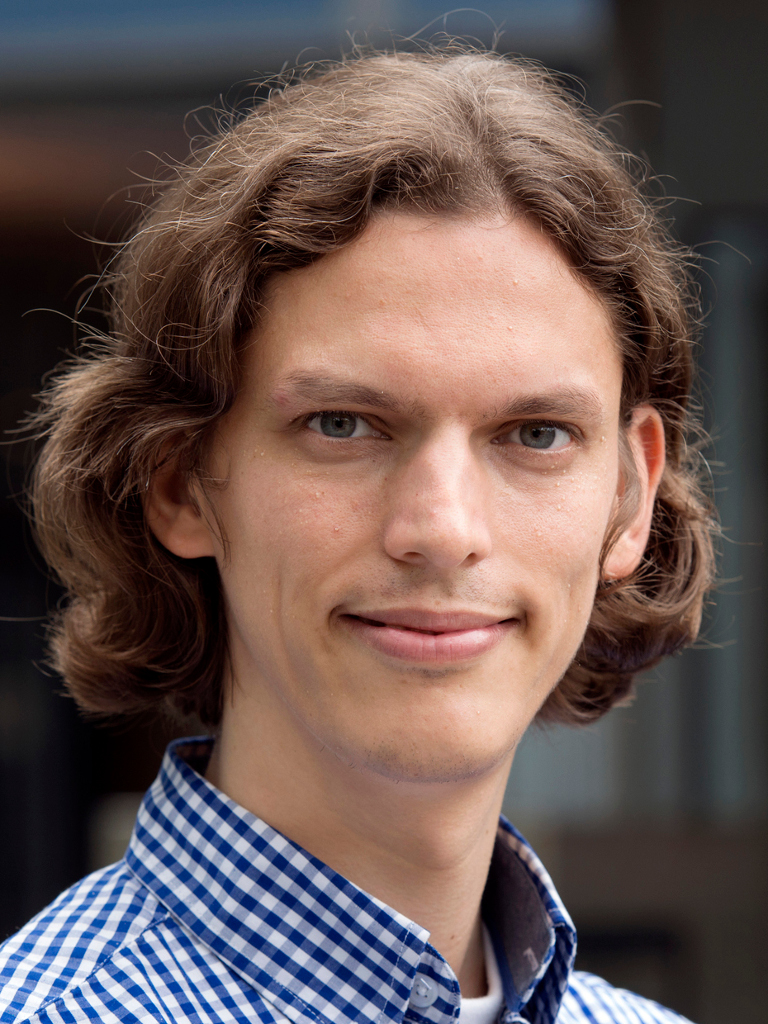
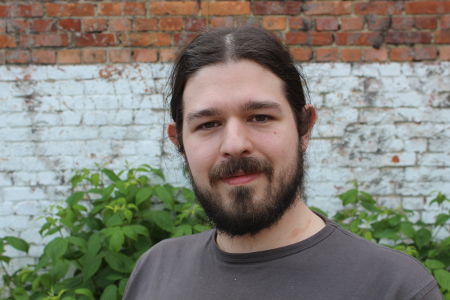
Yang Lei is an academic affiliated with the University of Melbourne's Department of Computing and Information Systems. Their research focuses on knowledge graphs, FAIR data principles, large language models (LLMs), and ontology engineering. They contribute to initiatives like the Open Research Knowledge Graph (ORKG) and NFDI4DataScience, emphasizing reproducibility, scholarly metadata, and systematic literature reviews. Recent work includes applications of LLMs for abstract summarization, leaderboard extraction, and entity recognition in scholarly documents. Yang also explores challenges in FAIR Digital Objects, machine-actionable workflows, and interoperability in research data management.
Prof. Dr. Peter Sanders is a full professor in Theoretical Computer Science at the Karlsruhe Institute of Technology (KIT), leading the Algorithm Engineering group. His academic career includes a doctoral degree from Karlsruhe University and research stints at institutions like the Max Planck Institute for Informatics. He specializes in algorithm theory and engineering, focusing on parallel computing, large-scale data processing, and graph partitioning. His research bridges theoretical foundations with practical implementations, emphasizing real-world applications in optimization, route planning, and distributed systems. Education: Ph.D. in Computer Science, Karlsruhe University (1996) Bachelor/Master studies at Karlsruhe University (1988-1996) Research Interests: Algorithm design and analysis Parallel and distributed algorithms Graph algorithms and partitioning Algorithm engineering for big data High-performance computing Publications: Over 250 papers, emphasizing parallel algorithms, distributed systems, and graph theory. Recent work includes scalable SAT solving, hypergraph partitioning, and distributed string sorting. His contributions have advanced practical applications in route planning, load balancing, and large dataset processing. Awards: Recipient of the prestigious Leibniz Prize (DFG) and Baden-Württemberg State Research Prize. He coordinated the DFG Priority Program on Algorithm Engineering and is an active reviewer for major funding bodies. Consulting: Engages with companies like SAP and Google, focusing on optimization, route planning, and database algorithms. Leads projects on algorithm scalability and real-world problem-solving. Labs/Teams: Heads the Algorithm Engineering group at KIT, fostering collaborations in distributed computing and algorithmic research.
Sandra Geisler is a Junior Professor for Data Stream Management and Analysis at the Department of Computer Science, RWTH Aachen University, a position she has held since September 2021. She is also the leader of the Digital Health Spaces group at the Fraunhofer Institute for Applied Information Technology (FIT) in St. Augustin, reflecting her dual expertise in academic research and applied digital health solutions. Bachelor/Master: Diploma in Computer Science, RWTH Aachen University (2008) PhD: Doctoral degree in Computer Science, RWTH Aachen University (2016) Her research focuses on data stream systems, real-time analytics, data quality, and their applications in digital health and industrial processes. She has made significant contributions to ontology-based data quality management, edge computing for stream processing, and FAIR data principles. Recent work explores the integration of large language models into data management workflows and the development of privacy-preserving platforms for industrial data exchange. Her recent publications demonstrate a strong trend in distributed and edge-based stream processing, interdisciplinary applications in healthcare and supply chains, and the use of AI for data discoverability and quality. Topics include in-network computing, simulation of edge queries, self-tonometry for glaucoma, and cross-company data sharing with privacy awareness. She has served as Associate Editor for the Data & Knowledge Engineering Journal (Elsevier), Public Relation Chair for QDB Workshop (VLDB 2016), and Workshop Chair for IMMoA and HIMoA workshops. She has also edited a special issue on Information Management in Mobile Applications in the Pervasive and Mobile Computing Journal. Geisler has supervised multiple theses on topics including LLM-based ontology integration, edge anomaly detection, and data ecosystem modeling. She has been actively involved in research grants and projects related to industrial data processing, digital health, and sustainable production. She teaches courses such as Data Stream Management and Analysis and Data Ecosystems Lab. She leads the Digital Health Spaces research group at Fraunhofer FIT, focusing on innovative solutions for health data management and patient-centric digital tools. Her work bridges computer science, healthcare, and industrial applications, promoting secure, efficient, and intelligent data ecosystems.
Siegfried Nijssen is an Assistant Professor of Data Mining and Artificial Intelligence at the Catholic University of Louvain (UCLouvain) in Belgium, working within the ICTEAM research institute's Artificial Intelligence and Algorithms group. He has been at UCLouvain since 2016, previously serving as an Assistant Professor at University Leiden (2012-2016) and completing postdoctoral work at KU Leuven (2006-2015). He earned his PhD in Computer Science from University Leiden in 2006. His research focuses on making data analysis simpler through intersections between pattern mining, exploratory data analysis, and programming paradigms in Artificial Intelligence, particularly constraint programming and probabilistic programming. He has developed techniques for analyzing diverse data types including graphs, networks, and multi-relational data. His work bridges theoretical foundations with practical applications in decision tree learning, probabilistic networks, and source code analysis. Nijssen's recent publications demonstrate a strong focus on optimal decision trees, constraint-based pattern mining, and applications in bioinformatics and education. His research shows consistent evolution from foundational graph mining work (including the Gaston algorithm developed in 2004) to current work integrating machine learning with constraint programming for interpretable AI solutions. As an educator, he teaches courses including Mining Patterns in Data, Databases, and Artificial Intelligence and Machine Learning seminars at UCLouvain. He has advised numerous PhD students and postdocs, primarily in collaboration with Pierre Schaus, with former students like Tias Guns now holding professorships.
Georg Gottlob is a Professor at the University of Oxford's Department of Computer Science, with additional affiliation at TU Vienna's Faculty of Informatics. He has maintained an exceptionally productive research career spanning over four decades, with 494 publications documented in the DBLP database from 1983 to the present. His research interests focus on Database Theory , Logic Programming , and Knowledge Graphs , with particular expertise in hypertree decompositions, Datalog systems, and existential rules. His work bridges theoretical foundations with practical applications, as evidenced by his development of the Vadalog system for knowledge graph reasoning. Gottlob's recent publications (2023-2025) demonstrate continued innovation in query optimization, rule-based reasoning, and the integration of large language models with database systems. His work shows a consistent trend toward making theoretical advances in database theory practically applicable, particularly in the context of knowledge graphs and semantic web technologies. Scientific Awards: 2020 ACM PODS Alberto O. Mendelzon Test-of-Time Award for influential contributions to database theory Gottlob maintains extensive research collaborations with scholars including Reinhard Pichler, Andreas Pieris, and Matthias Lanzinger. His work has significant practical impact through systems like Vadalog, which combines machine learning with logical reasoning for knowledge graph applications. He has supervised numerous PhD students (though specific names aren't listed in the DBLP record) and has been instrumental in advancing the field of database theory from theoretical foundations to real-world applications. His research group focuses on the intersection of database theory, knowledge representation, and artificial intelligence, with particular emphasis on developing efficient algorithms for complex query processing and reasoning tasks over large knowledge graphs.
Andreas Thor is affiliated with the University of Applied Sciences for Telecommunications Leipzig, Germany. He has been actively publishing in computer science since 2004, with a focus on database systems, data integration, bibliometrics, and educational technology. His research spans several domains, including database systems, entity resolution, ontology matching, and more recently, e-assessment and digital learning tools. He has made significant contributions to bibliometrics through the development and application of CRExplorer for Reference Publication Year Spectroscopy (RPYS). His work also includes the design of educational tools like DMT and FeeDI for automated assessment in higher education. The recent articles (2021–2023) reflect a strong trend toward educational technology, particularly in the development of tools for e-assessment, Jupyter Notebook integration, and knowledge graphs for learning. Earlier works (2004–2012) focus on core database research such as entity resolution, data fusion, and MapReduce-based systems. The publications collectively demonstrate a transition from foundational database research to applied educational informatics. Scientific Awards: No scientific awards mentioned in the provided text. Advising and Grants: No information is available regarding students advised or grants received. However, his extensive publication record and leadership in workshop proceedings (e.g., GI-Workshop Grundlagen von Datenbanken) suggest involvement in academic mentoring and collaborative research initiatives. Labs and Teams: Andreas Thor has collaborated extensively with researchers at the University of Leipzig, particularly with Erhard Rahm, Toralf Kirsten, and Stefanie Scherzinger. His work on bibliometrics involves collaboration with Lutz Bornmann, Loet Leydesdorff, and Robin Haunschild. These collaborations indicate participation in research groups focused on data management and scientometrics.
Sushil Awale is a Research Associate at the Visual Analytics Research Group, TIB Hannover , Germany, and a PhD candidate at Leibniz Universität Hannover , supervised by Prof. Dr. Ralph Ewerth. His research focuses on Multimodal Information Retrieval , Question Answering , and Knowledge Graphs . Previously, he worked as a Student Assistant in the Language Technology Group at Universität Hamburg, developing NLP-driven scholarly systems. M.Sc. in Intelligent Adaptive Systems (2020–2023), Universität Hamburg B.Sc. in Computer Science (2015–2020), Tribhuwan University, Nepal His research interests span patent domain analysis , multimodal systems , and language resources for under-resourced languages . Recent work includes visual patent search interfaces and large vision-language models for classification tasks. Publications highlight contributions to scholarly knowledge graphs (e.g., DBLP-QuAD dataset) and AI-enhanced research advisory systems (ARDIAS). He also contributed to preprocessing Nepali language corpora and enriching Hindi WordNet via knowledge graph techniques. Currently affiliated with TIB’s Visual Analytics Group, he actively organizes events like the Scholarly Question Answering over Linked Data workshop at ISWC 2023.
Max Willsey is an Assistant Professor in the Department of Electrical Engineering and Computer Sciences at the University of California, Berkeley, since 2024. He specializes in program optimization, leveraging techniques from programming languages, databases, and systems to develop robust and accessible compiler frameworks. His research focuses on equality saturation, E-Graphs, and the integration of Datalog with compiler optimizations. He has contributed to advancements in unifying algorithmic approaches, enabling faster and more extensible program analysis. Teaching: CS 164 (Programming Languages and Compilers, Spring 2025), CS 265 (Compiler Optimization, Fall 2024), and CS 294-260 (Declarative Program Analysis and Optimization, Spring 2024). Research Highlights: Development of the egg and egglog projects, co-organizing the EGRAPHS workshop, and leading the EGRAPHS Community for e-graphs researchers. His recent articles highlight trends in unifying traditional hash joins with worst-case optimal joins, applying equality saturation to diverse domains like Datalog and tensor graph optimization, and advancing E-Graphs for program synthesis and formal verification. Scientific Awards: SIGMOD Record Research Highlight, 2024 MIT PL Review Selection, 2024 Distinguished Paper, OOPSLA 2021 and POPL 2021 NSF Graduate Research Fellowship Honorable Mention, 2018 Qualcomm Innovation Fellow, 2019 Service: Committee Member, PLDI 2025, POPL 2025, ASPLOS 2025 Co-organizer, EGRAPHS 2024 and 2023 workshops Interviewer, UC Berkeley Graduate Admissions Committee, 2024
Michael Cochez is an Assistant Professor in the Learning and Reasoning group at the Faculty of Science, Vrije Universiteit Amsterdam . His research focuses on Machine Learning , Knowledge Graph Embedding , and Prototype-Based Ontologies , with applications in Scalable Hierarchical Clustering , Ontology Matching , and Knowledge Evolution . He teaches Intelligent Systems , Data Mining , and Machine Learning courses. His research explores integrating Knowledge Graphs into end-to-end ML models , addressing challenges in Approximate Query Answering and Knowledge Representation . He has also contributed to Multi-Agent Systems and Cloud Communication through projects like Graphino.nl (his consultancy business). His students include Jiawen Chen (supervised thesis on Smart Semantic Multi-channel Communication ).
Catherine Faron is a Full Professor at Université Côte d'Azur , affiliated with the I3S laboratory and Inria center . She serves as vice-head of the Wimmics joint research team and leads the Artificial Intelligence and Data Engineering (IAID) program at Polytech Nice Sophia engineer school. Habilitation à diriger les recherches (HDR) in Computer Science, UCA (2017) PhD in Computer Science, Univ. Paris 6 (1997) Her research focuses on Artificial Intelligence , particularly in Knowledge Representation and Reasoning (KRR) and Semantic Web technologies. She develops hybrid intelligent systems combining KRR with machine learning for knowledge extraction, integration, and exploitation across education, health, and digital humanities. Recent publications highlight her work on: 2025 : Knowledge graphs for historical zoological data 2024 : Semantic annotation frameworks in agronomy 2023 : Agricultural data mapping and medical record enrichment 2022 : Visual exploration of big linked data Scientific recognitions include: 2023: Best Paper Award, ESWC 2017: Scientific Excellence Award, UCA 2016: Best Demo Award, ISWC 2015: Best Paper Award, IC 2008: Best PhD Paper Award, ECPPM She has supervised 19 PhD/Master's students and leads/has led projects like D2KAB , DEKALOG , and ZOOMATHIA , with partnerships across academic and industrial institutions.
Stefan Bruckner is a Professor at the University of Rostock , leading the Chair of Visual Analytics within the Institute of Visual and Analytic Computing. His work bridges Visual Analytics , Biomedical Visualization , and Interactive Systems , with a focus on translating complex datasets into actionable insights. Role: Chair of Visual Analytics Key Affiliations: Eurographics Executive Committee, IEEE VGTC Editorial Leadership: Associate Editor, IEEE Transactions on Visualization and Computer Graphics Research spans Medical Visualization , Immersive Analytics , and Proteogenomic Data Exploration . Recent work includes: ProHap Explorer for haplotype analysis Line Harp sonification techniques Narrative visualization frameworks His publications reveal trends in interactive data exploration , multi-omics visualization , and user behavior analysis within medical contexts. Awards include contributions to the Dirk Bartz Prize in 2019. He actively collaborates with international institutions and maintains memberships in ACM, IEEE, and GI.
Prof. Dr. Karsten Niehaus serves as Head of the Proteome and Metabolome Research Group at the Center for Biotechnology (CeBiTec) and Faculty of Biology, University of Bielefeld. His research focuses on proteomics and metabolomics applications in plant-microbe interactions, bacterial stress responses, and disease model systems. His laboratory employs advanced mass spectrometry imaging and cell phenotyping technologies to investigate molecular responses in crops like sugar beet and grapevines under abiotic stress conditions, as well as in cancer models where differentiation therapy impacts tumor malignancy. The group also explores microbial biotechnology through Xanthomonas campestris studies on xanthan production and stress adaptation. Selected publications highlight innovations in 3D microfluidics for biomarker detection and bioinformatics platforms like MetHoS for metabolomics data analysis. His work appears in journals covering Frontiers in Plant Science , Scientific Reports , and Journal of Experimental Botany . Contact: kniehaus@cebitec.uni-bielefeld.de | Office: UHG W7-117
Prof. Dr. Rainer Schnell is a Professor at the Institute of Sociology, University of Duisburg-Essen. His research focuses on advanced survey methodologies, privacy-preserving data linkage techniques, and statistical analysis of health and social data. He leads the Chair of Empirical Social Research and contributes to interdisciplinary studies combining sociology, computer science, and public health. Research interests span: Survey Methodology : Innovations in web surveys, non-response analysis, and data quality assurance Data Privacy : Cryptographic techniques for secure record linkage and vulnerability assessments Health Analytics : Vaccination behavior studies, health data governance, and pandemic-related research Recent publications demonstrate a strong emphasis on: Privacy-enhancing technologies for sensitive data integration Methodological critiques of survey and data linkage practices COVID-19-related behavioral research using large-scale population data
Professor Javier Villalba-Diez serves at the Faculty of Business of Heilbronn University of Applied Sciences, Germany, where he integrates artificial intelligence with lean management principles in industrial and business contexts. His international collaborations include a cooperative doctoral program with Technical University of Madrid and Erasmus exchanges with Universidad Politécnica de Madrid. Dr. Villalba-Diez earned dual engineering degrees: Mechanical Engineering from Technische Universität München and Industrial Engineering from Universidad Politécnica de Madrid (2003). His PhD in Engineering, Economics and Organizational Innovation (2016) from Universidad Politécnica de Madrid received the institution's best doctoral thesis award. His research spans Artificial Intelligence (particularly Deep Learning applications), Hoshin Kanri strategic planning, Business Intelligence , and Lean Manufacturing . He pioneers sensor-based methodologies for organizational design, using EEG and industrial IoT to analyze problem-solving patterns and network resilience. His work bridges theoretical models with practical implementations across German, American, Japanese, and Spanish manufacturing facilities. Recent publications demonstrate a clear trajectory toward Industry 4.0 integration , with 60% of his 2019-2020 work focusing on deep learning applications in quality control, sensor networks, and cyber-physical systems. The journal Sensors (MDPI) serves as his primary publication venue, reflecting his emphasis on data-driven industrial analytics. His recognition includes: Prize for best doctoral thesis by Universidad Politécnica de Madrid (2016) As Guest Editor for Sensors and reviewer for journals like Sustainability and Journal of Manufacturing Systems , he shapes discourse in industrial AI. His doctoral supervision with Madrid focuses on AI-driven strategic organizational design, while industry collaborations with manufacturing facilities worldwide translate research into operational frameworks. He maintains active roles in curriculum development for Industry 4.0 education through the PROFH4 digital initiative. Dr. Villalba-Diez operates within international research networks, leveraging his multilingual capabilities (German, English, Spanish) to facilitate transnational projects. His work with Neo4j for Hoshin Kanri visualization exemplifies his approach to making complex organizational networks actionable for industry leaders.
Zoi Kaoudi is a researcher at the IT University of Copenhagen , specializing in Data Management , Knowledge Graphs , and Machine Learning . Her work focuses on cross-platform data processing, query optimization, and scalable systems for graph analytics. She has published extensively in venues like SIGMOD , VLDB , and ISWC , with recent contributions to Apache Wayang , DORIAN , and Space-Efficient Graph Algorithms . Her research bridges theoretical advancements with practical frameworks for data science pipelines. Collaborations include Volker Markl, Jorge-Arnulfo Quiané-Ruiz, and Ioana Manolescu. She has explored topics such as Parameter Servers , Knowledge Graph Embeddings , and RDF Data Management in the cloud. Her work emphasizes open science and system integration.