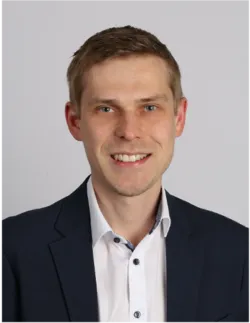
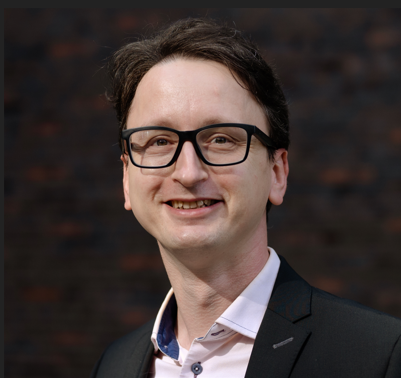
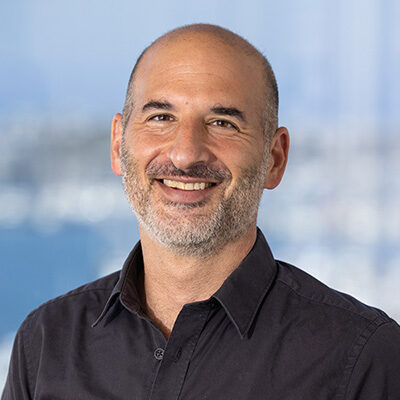
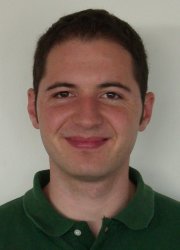
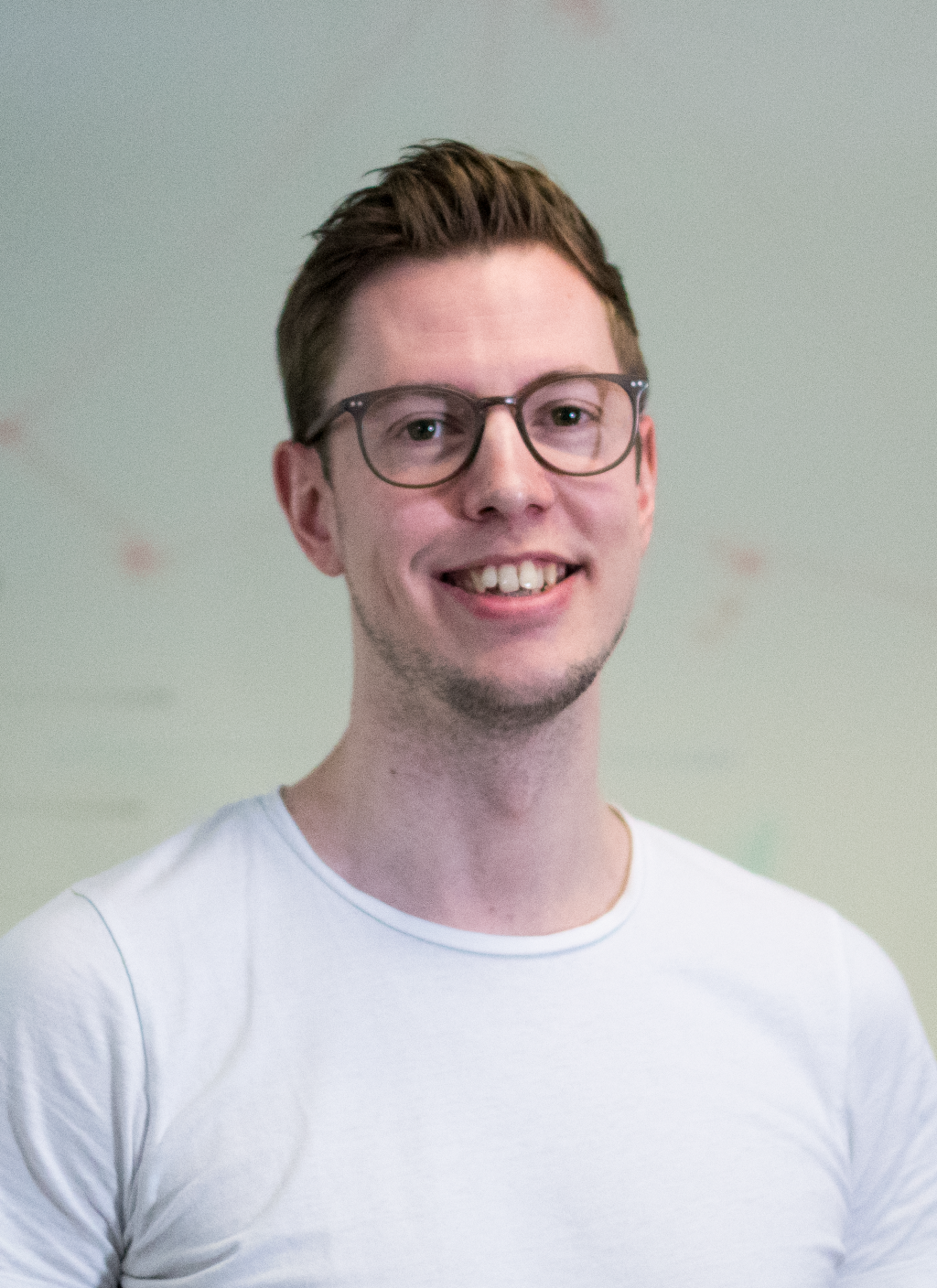
Andreas Koch is a Research Associate at the Professorship of Simulation for Additive Manufacturing at the Technical University of Munich (TUM), Germany. His research focuses on computational modeling of compressible multiphase flows, CutDG methods, and high-performance computing with software development. He holds a Master of Science (M.Sc.) in Mechanical Engineering from TUM (2024). Research Interests Koch's work bridges computational mechanics and machine learning, with emphasis on cut discontinuous Galerkin methods for simulating complex flows and high-performance computing systems. His publications demonstrate expertise in machine learning applications for aerospace systems, including anomaly detection in spacecraft telemetry and deep learning acceleration for spaceborne hardware. Scientific Awards ERC Starting Grant Publications (2024-2013) His research portfolio includes 15 recent publications spanning edge AI solutions for spacecraft , RF synchronization systems, and machine learning frameworks for aerospace applications. Earlier work explores robot perception and geoinformatics implementations.
Dr. Marcel Friedrichs is a Researcher at the Faculty of Engineering , Bielefeld University , Germany. He is affiliated with both the Algorithmic Cheminformatics Group and the Center for Biotechnology (CeBiTec) , contributing to interdisciplinary research at the intersection of computational methods and biomedical systems. Researcher in Algorithmic Cheminformatics Group Center for Biotechnology (CeBiTec) member Focus on graph-based data integration and biomedical networks Research Interests : Computational biology, systems biology, bioinformatics tool development, and medical biochemistry. His work emphasizes automated data integration, modeling of regulatory networks, and analysis of gene-disease comorbidities. Article Trends : Publications span 2018–2025, highlighting graph-based data integration, stem cell differentiation (cardiomyocytes), miRNA databases, clinical trial analysis, and pharmacological network modeling. Key keywords include Computational Biology , Medical Biochemistry , and Graph Theory . Labs & Teams : Algorithmic Cheminformatics Group (Faculty of Engineering) Center for Biotechnology (CeBiTec) Contributor to projects like BioDWH2 and GenCoNet
Shiqing Liu is a researcher at the University of Bielefeld, affiliated with the Faculty of Engineering and the Cognitronics & Sensor Technology Group within the Center for Cognitive Interaction Technology (CITEC). Based at office CITEC 3-204, Liu contributes to the university's research in the Socio-Technical World domain, focusing on technologies that enable agents to act and communicate in complex environments. Dr. Liu's research spans several cutting-edge areas in artificial intelligence and optimization. Their work primarily focuses on graph neural networks, combinatorial optimization, and federated learning systems. They have made significant contributions to applying machine learning techniques to solve complex optimization problems including vehicle routing, facility location, and neural architecture search. Their research bridges theoretical computer science with practical applications in distributed systems and privacy-preserving technologies. An analysis of Dr. Liu's recent publications reveals a strong trajectory in developing unified frameworks that combine graph-based learning with combinatorial optimization. Their work increasingly addresses challenges in federated settings where data privacy and distribution heterogeneity present significant obstacles. The research demonstrates a progression from single-objective optimization problems toward more complex multi-objective scenarios, with growing emphasis on practical implementation constraints and real-world applicability. Dr. Liu is actively involved in the Cognitronics & Sensor Technology research group at CITEC, which is part of Bielefeld University's strategic focus on the Socio-Technical World. This center investigates how humans, robots, and AI systems can effectively interact and collaborate in complex environments, aligning with the university's broader mission of "Transcending Boundaries" between disciplines and between science and society.
Janine Strotherm is a researcher at Bielefeld University, affiliated with the Faculty of Engineering and the Machine Learning Group within the Center for Cognitive Interaction Technology (CITEC). Her office is located at CITEC 2-112, and she actively contributes to the EU Grant 'Water Futures' project focused on water distribution systems. She works within Bielefeld's strategic research area in the Socio-Technical World, which examines capabilities enabling agents like humans, robots, and AI to function in complex environments. Dr. Strotherm's research bridges machine learning and hydraulic engineering, with particular expertise in physics-informed graph neural networks for water infrastructure. Her work addresses critical challenges in water distribution networks including leak detection, system monitoring, and infrastructure optimization. A significant portion of her recent research focuses on fairness-enhancing methods for AI systems applied to water networks, developing techniques that account for non-binary sensitive features to ensure equitable resource allocation and monitoring. Analysis of her publication trends reveals a clear progression from foundational machine learning applications toward sophisticated hybrid approaches that integrate physical domain knowledge with neural architectures. Her work demonstrates growing attention to ethical considerations in AI deployment for critical infrastructure, with publications spanning theoretical analyses of hydraulic states to practical fairness-enhancing classification methods. Within Bielefeld University's research ecosystem, Dr. Strotherm contributes to the Center for Cognitive Interaction Technology (CITEC), one of the university's central academic institutes that fosters interdisciplinary collaboration across faculties. Her work aligns with Bielefeld's strategic focus on transcending disciplinary boundaries to address complex societal challenges through innovative research approaches.
Thomas Liebig is an Assistant Professor of Smart City Science at TU Dortmund University's Artificial Intelligence Unit and a Principal Investigator at the Lamarr Institute for Machine Learning and Artificial Intelligence. He also serves as a senior AI architect supporting Materna SE in integrating artificial intelligence into the public sector and industry, and previously held an Adjunct Professor position in Data Privacy and Ethics at the University of Nicosia. His research focuses on distributed data mining, reinforcement learning, multi-agent systems, privacy-preserving learning, and spatio-temporal modeling. Liebig has made significant contributions to graph neural networks, probabilistic modeling with sum-product networks, and traffic flow prediction systems. His work bridges theoretical machine learning with practical applications in smart cities, transportation, and healthcare. Liebig's recent publications demonstrate a strong trend toward privacy-preserving machine learning techniques, particularly differential privacy applied to distributed settings. His work on sum-product networks has advanced interpretable probabilistic modeling, while his research on graph neural networks has explored novel connections with classical algorithms like PageRank. His practical applications span transportation systems, healthcare, and smart city infrastructure. Liebig has supervised numerous graduate students working on topics including blockchain-based data analysis, traffic prediction systems, and privacy-preserving machine learning. His research has been supported by projects including SFB876 (Providing Information by Resource-Constrained Data Analysis) and collaborations with industry partners. He is actively involved in the academic community, having co-organized workshops such as Mining Urban Data at ICML and Computational Transportation Sciences. His work appears in top venues including IEEE International Conference on Knowledge Graph, ECML/PKDD, and IEEE Transactions on Intelligent Transportation Systems.
Ralf Borndörfer is a Professor and Head of the Network Optimization Department at the Zuse Institute Berlin (ZIB) , a leading research institution in mathematical algorithmic intelligence. His work focuses on optimizing complex transportation systems, particularly in railway operations, public transit, and air cargo logistics. He leads projects like Timetabling with Duality and Zonotopes, Symmetric Line Planning, and WILSON-LEARN, which address challenges in train scheduling, electric vehicle integration, and predictive maintenance. Key Research Areas : Mathematical optimization, railway timetabling, public transport planning, game theory for toll enforcement, and electric vehicle scheduling. Notable Collaborations : Projects with Deutsche Bahn, BIFOLD, and MATH+ Cluster of Excellence. His recent publications (2023-2025) explore: Non-linear battery modeling in electric bus scheduling Predictive maintenance integration in rolling stock rotations Logic-constrained shortest paths for flight planning Price-sensitive routing in public transport He has contributed to algorithmic frameworks like the Restricted Modulo Network Simplex Method and Bayesian rolling horizon approaches, emphasizing computational efficiency and real-world applicability.
Dr. Olaf Parczyk is a research assistant at the Zuse Institute Berlin (ZIB) in the Interactive Optimization and Learning Laboratory under Sebastian Pokutta. In the winter term 2024/25, he served as a substitute professor at Freie Universität Berlin (FU Berlin) in the Department of Mathematics and Computer Science. Previously, he was a Math+ Postdoc at FU Berlin, a visiting fellow at the London School of Economics funded by a DFG fellowship (Grant PA 3513/1-1), and a postdoctoral researcher at TU Ilmenau. He earned his Ph.D. at Goethe University Frankfurt, supervised by Yury Person. Education: Bachelor's in Mathematics, Freie Universität Berlin (2013) Master's in Mathematics, Freie Universität Berlin (2014) Ph.D. in Mathematics, Goethe University Frankfurt (2017) Olaf's research lies at the intersection of probabilistic and extremal combinatorics, Ramsey theory, and machine learning. He focuses on embedding problems for graphs and hypergraphs, particularly those involving randomness. His work includes advancements in Ramsey-type problems, Hamiltonian cycles, and universality in sparse graphs. Recent publications highlight his contributions to Dirac-type theorems for graphs of bounded bandwidth, Ramsey multiplicity bounds, and resilience properties in hypergraphs. He has also explored applications in group testing and positional games under random perturbations. Key Awards: DFG Fellowship (Grant PA 3513/1-1) Olaf has supervised multiple theses, including ongoing Master's students Eva Schinzel and Niall Smith, and Bachelor's student Pascal Weihnhart (2025). He has taught courses in discrete mathematics, probability theory, and seminars on random graphs and extremal combinatorics at FU Berlin and TU Ilmenau.
Oliver Lenke is a Scientific Assistant at the Chair of Integrated Systems , Technical University of Munich (TUM), affiliated with the TUM School of Computation, Information and Technology . He completed his Bachelor’s (2015-2018) and Master’s (2018-2020) in Electrical Engineering at TUM and has been a PhD student since 2020 . His research focuses on MPSoC architectures , memory hierarchies , hardware preloading mechanisms , and FPGA-based system prototyping . His recent publications address topics like near-memory computing , cache prefetching , and runtime adaptive MPSoCs . He supervises students in projects involving VHDL coding , C programming , and MPSoC optimization , collaborating with industry partners such as Infineon AG , BMW AG , and Huawei . His work includes developing non-intrusive performance monitoring frameworks and dynamic memory preloading solutions .
Itay Hen is an Associate Professor of Research in the Department of Physics and Astronomy and Principal Scientist at the Information Sciences Institute (ISI), University of Southern California. He has held research faculty positions at USC since 2013, progressing from Assistant Professor (2016-2020) to his current Associate Professor role since 2020, while leading ISI's quantum computing initiatives. His educational background includes dual bachelor's degrees in Physics and Psychology from Tel Aviv University, followed by a Ph.D. in Physics from the same institution in 2009. Postdoctoral training included theoretical condensed matter research at Georgetown University and UC Santa Cruz, plus a senior scientist role at NASA Ames Research Center within the Quantum Artificial Intelligence Laboratory—a NASA/Google/USRA collaboration. Dr. Hen's research centers on Quantum Computing and Computational Physics , with specific expertise in gate-based quantum simulation algorithms, quantum annealer limitations, and methods for studying equilibrium/non-equilibrium properties of strongly correlated quantum systems. His work bridges theoretical frameworks with practical quantum hardware applications. Analysis of his 15 most recent publications (2017-2025) reveals consistent focus on quantum algorithms and Monte Carlo techniques, with accelerating output in 2024. Key themes include Feynman path integrals, spin/Bose-Hubbard model simulations, and quantum spectrum estimation, primarily published in Physical Review journals and Quantum. He leads the Hen Lab at USC's ISI, which operates within the Quantum Artificial Intelligence Laboratory framework. His research has been supported through NASA/Google/USRA collaborations focused on quantum optimization for complex computational problems, though specific grant details and student mentorship records aren't provided in the source material.
Mark Wittek is an Assistant Professor at the Department of Network and Data Science (Central European University, Vienna). His research bridges Computational Social Science , Sociological Theory , and Network Analysis to explore how institutional conditions shape relational processes in schools, academic fields, and cultural industries. Key Themes : Social stratification in networks, resource inequality in science, status hierarchies, cultural consumption, and data-driven policy modeling Methods : Statistical analysis, network science, natural language processing, and computational modeling Recent work includes studies on biomedical conventionality , elite networks in governance , and migration under climate change . His collaborative projects span institutions like University of Cologne, University of Zurich, and Heidelberg Academy of Sciences. Awards : None explicitly stated Teaching : Courses like "Multivariate Data Analysis with R" and data visualization workshops
Prof. Dr. David Bommes is a leading researcher in computer graphics and geometry processing, currently a Professor at the University of Bern . His expertise lies in mesh generation, particularly quadrilateral and hexahedral meshing, numerical optimization, and automatic differentiation techniques. His research focuses on developing robust algorithms for generating high-quality meshes from complex geometries, with applications in CAD, architecture, and simulation. He has made significant contributions to the fields of surface and volume parametrization, directional field synthesis, and geometry processing optimization. Prof. Bommes has received notable recognition, including the Best Paper Award (1st place) at SGP 2022 and the Graphics Replicability Stamp for his work on TinyAD, a lightweight automatic differentiation library for geometry processing. His publications span top-tier venues such as SIGGRAPH, Eurographics, and ACM Transactions on Graphics, covering topics from automatic differentiation and geodesic computation to advanced meshing techniques. He actively collaborates with leading institutions and researchers worldwide.
Patrick Schmidt is a researcher in the Department of Computer Science at RWTH Aachen University, Germany, specializing in geometry processing and computer graphics. His work focuses on developing robust algorithms for surface mapping, mesh processing, and automatic differentiation, with significant contributions to both theoretical foundations and practical applications. He actively collaborates with the Computer Graphics group led by Prof. Leif Kobbelt, producing high-impact research published in premier venues including SIGGRAPH and Eurographics. His research spans Geometry Processing, Computer Graphics, and Computational Biology, with core interests in distortion-minimizing surface maps, mesh parametrization, and biomedical applications. Schmidt's innovative approaches include adaptive triangulation methods for bijective surface correspondence and lightweight automatic differentiation frameworks like TinyAD that simplify non-linear optimization in geometry processing. His interdisciplinary work on heart tube formation demonstrates how geometric techniques can advance biological understanding of mammalian organ development. Analysis of Schmidt's publication trajectory reveals a consistent focus on improving the robustness and efficiency of surface mapping techniques. His work progressively addresses challenges in distortion control, topological consistency, and computational performance, culminating in award-winning contributions like adaptive triangulation methods and constant-curvature metric representations. The recurring theme across his research is the unification of geometric theory with practical implementation, emphasizing reproducibility through open-source tools and Graphics Replicability Stamps. Scientific recognition includes: Günter Enderle Best Paper Award at Eurographics 2023 for pioneering adaptive triangulation techniques Consecutive Best Paper Awards at SGP 2022 and 2021 for TinyAD library and homology inference methods Honorable mention for Eurographics 2021 work on layout embedding optimization While specific student advising records aren't documented in public sources, Schmidt's role involves mentoring through collaborative research within RWTH Aachen's Computer Graphics group. His projects frequently secure institutional support for high-impact work, evidenced by consistent publication in top-tier venues and development of widely adopted tools like TinyAD. The group maintains strong industry and academic partnerships focused on advancing geometry processing fundamentals. As a core member of RWTH Aachen's Computer Graphics research team, Schmidt contributes to a vibrant ecosystem centered around Prof. Leif Kobbelt's lab. The team emphasizes both theoretical innovation and practical software development, with recent work bridging computer graphics and biomedical modeling. Current efforts focus on intrinsic optimization frameworks and expanding automatic differentiation applications, positioning Schmidt at the forefront of next-generation geometry processing techniques.
Dr. Henrik Zimmer is a researcher at RWTH Aachen University specializing in computer graphics and geometry processing. His work bridges theoretical computational geometry with practical applications in digital fabrication, medical visualization, and industrial manufacturing. Affiliated with the Department of Computer Science, he has made significant contributions to mesh processing, 3D modeling, and optimization algorithms for real-world applications. His research focuses on geometry optimization for fabrication constraints, including Zometool-based approximation of freeform surfaces and rationalization of point-folding structures. Key interests include Mesh processing and topology preservation Variational methods for planar polygonal meshing Mixed-integer optimization for quadrangulation Medical visualization techniques for diffusion fiber tracking Industrial vision systems for laser welding process control His publication record shows consistent innovation from 2006 to 2014, with recent work emphasizing digital fabrication and practical optimization for consumer-level manufacturing. Notable scientific contributions include: Efficient algorithms for shortest path-concavity computation in 3D meshes Interactive volume-based visualization for diffusion MRI data Rationalization methods reducing fabrication costs by over 90% Novel approaches to melt pool monitoring in industrial welding Zimmer's collaborative work with Leif Kobbelt demonstrates strong industry-academia connections, particularly in translating geometric algorithms to manufacturing applications. His research spans both theoretical computer graphics (SIGGRAPH, Eurographics) and industrial applications (laser welding process control), reflecting a unique interdisciplinary approach. Current work focuses on making advanced geometric modeling accessible through personal fabrication technologies.
Prof. Dr. Nicolas R. Gauger is Full Professor and Chairholder for Scientific Computing at the University of Kaiserslautern-Landau (RPTU), holding dual appointments in the Department of Mathematics and Department of Computer Science. He directs the university's Computing Center (RHRZ) and leads the SciComp research team, with prior roles at DLR Braunschweig, Humboldt University Berlin, RWTH Aachen University, and MIT. His academic background includes a Master in Mathematics (Dipl.-Math.) from Leibniz University Hannover (1998) and a Ph.D. in Applied Mathematics (Dr.rer.nat.) from Braunschweig University of Technology (2003). 1998-2010: Research Scientist, Numerical Methods for Aerodynamics at DLR Braunschweig 2005-2010: Assistant Professor (W1), Department of Mathematics, Humboldt University Berlin 2010-2014: Associate Professor (W2), RWTH Aachen University 2014: Visiting Professor, Massachusetts Institute of Technology Prof. Gauger's research centers on optimization under uncertainty for complex physical systems. His work integrates Algorithmic Differentiation with Machine Learning to advance Computational Fluid Dynamics, Aeroacoustics, and Structural Mechanics. Recent projects focus on medical applications like proton computed tomography (pCT) for cancer treatment through SIVERT and AI Care initiatives, alongside aerodynamic design for noise reduction and flow control. His 2025 publications reveal a dominant trend in end-to-end differentiable programming for physics-based optimization, particularly in fundamental particle physics experiments and medical imaging. Key subfields include diffusion models for detector design, reinforcement learning for particle tracking, and robust optimization frameworks applied to turbulence modeling and proton therapy. Scientific recognition includes: Associate Fellow of the American Institute of Aeronautics and Astronautics (AIAA), 2018 Teaching Award from RPTU, June 2025 He has advised doctoral students including award-winning researcher Max Aehle (2025 Freundeskreis RPTU Outstanding Dissertation Award). Major grants include leadership of the Excellence Initiative-funded AICES Graduate School (2010-2019), the Center for Mathematical and Computational Modelling (CM) 2 (2014-2019), and the MathApp (2019-2024) and MSO (2024-present) research initiatives. Current projects like SIVERT and AI Care apply AI to cancer therapy. Prof. Gauger co-leads the Fraunhofer Performance Center's R&D Lab for Data Analysis and AI, serves on the Managing Board of ERCOFTAC (European Research Community on Flow, Turbulence and Combustion), and chairs the Steering Committee of ERCOFTAC's Special Interest Group on Design Optimization. His team develops critical AD tools including CoDiPack and OpDiLib within the NHR South-West high-performance computing consortium.
Slava Novgorodov is an Associate Professor in the Department of Computer Science at Tel Aviv University's Faculty of Engineering. His research focuses on data management systems with applications in e-commerce, information retrieval, and machine learning. He leads research projects at the intersection of database systems and artificial intelligence, particularly exploring how large language models can enhance traditional data management tasks. Novgorodov's research interests center around data management, database systems, information retrieval, and e-commerce applications. His work addresses practical challenges in data cleaning, category tree construction, and product information extraction. Recent research has increasingly focused on leveraging large language models for cost-effective data processing, with applications in visual search, review analysis, and personalized recommendation systems. His approach combines theoretical algorithm design with practical system implementation, often addressing resource constraints in real-world applications. His publication record shows a clear progression from foundational data management research to increasingly sophisticated applications of machine learning and LLMs. Early work focused on data cleaning, fraud detection, and collaborative filtering, while more recent publications demonstrate a strategic shift toward LLM applications in e-commerce contexts. This evolution reflects broader trends in the field while maintaining his core expertise in database systems and information management. Novgorodov has established productive collaborations with researchers including Tova Milo, Ido Guy, and Kira Radinsky, resulting in numerous publications at premier venues like SIGMOD, VLDB, and WWW. His research has practical applications in e-commerce systems, particularly in product information management, review analysis, and visual search capabilities.