About
Patrick Schmidt is a researcher in the Department of Computer Science at RWTH Aachen University, Germany, specializing in geometry processing and computer graphics. His work focuses on developing robust algorithms for surface mapping, mesh processing, and automatic differentiation, with significant contributions to both theoretical foundations and practical applications. He actively collaborates with the Computer Graphics group led by Prof. Leif Kobbelt, producing high-impact research published in premier venues including SIGGRAPH and Eurographics.
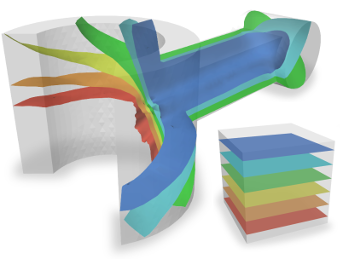
His research spans Geometry Processing, Computer Graphics, and Computational Biology, with core interests in distortion-minimizing surface maps, mesh parametrization, and biomedical applications. Schmidt's innovative approaches include adaptive triangulation methods for bijective surface correspondence and lightweight automatic differentiation frameworks like TinyAD that simplify non-linear optimization in geometry processing. His interdisciplinary work on heart tube formation demonstrates how geometric techniques can advance biological understanding of mammalian organ development.
Analysis of Schmidt's publication trajectory reveals a consistent focus on improving the robustness and efficiency of surface mapping techniques. His work progressively addresses challenges in distortion control, topological consistency, and computational performance, culminating in award-winning contributions like adaptive triangulation methods and constant-curvature metric representations. The recurring theme across his research is the unification of geometric theory with practical implementation, emphasizing reproducibility through open-source tools and Graphics Replicability Stamps.
Scientific recognition includes:
- Günter Enderle Best Paper Award at Eurographics 2023 for pioneering adaptive triangulation techniques
- Consecutive Best Paper Awards at SGP 2022 and 2021 for TinyAD library and homology inference methods
- Honorable mention for Eurographics 2021 work on layout embedding optimization
While specific student advising records aren't documented in public sources, Schmidt's role involves mentoring through collaborative research within RWTH Aachen's Computer Graphics group. His projects frequently secure institutional support for high-impact work, evidenced by consistent publication in top-tier venues and development of widely adopted tools like TinyAD. The group maintains strong industry and academic partnerships focused on advancing geometry processing fundamentals.
As a core member of RWTH Aachen's Computer Graphics research team, Schmidt contributes to a vibrant ecosystem centered around Prof. Leif Kobbelt's lab. The team emphasizes both theoretical innovation and practical software development, with recent work bridging computer graphics and biomedical modeling. Current efforts focus on intrinsic optimization frameworks and expanding automatic differentiation applications, positioning Schmidt at the forefront of next-generation geometry processing techniques.