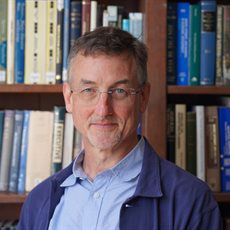
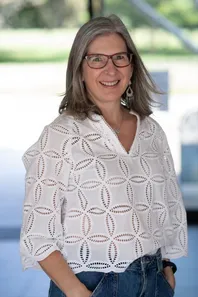
Dr. Frances Smith is an Associate Professor in Film Studies at the University of Sussex's School of Media, Arts and Humanities. She holds a PhD in Film and Television Studies from the University of Warwick (2013), an MA in Management from Durham University (2008), and a Master of Modern Languages in French/Italian from Manchester University (2007). Her research focuses on teen cinema, female authorship, Hollywood and European cinema, and gender studies, with current work on Céline Sciamma's Girlhood. She authored Rethinking the Hollywood Teen Movie (2017) and co-edited Refocus: The Films of John Hughes (2021). Teaching includes convening Analysing Film, American Teen Cinema, and Working with Film modules. She has taught Gender and Representation, British Cinema, and Study Skills. Her awards include Fellowship of the Higher Education Academy (2016). Active in PhD supervision focusing on teen cinema, female authorship, and gender in cinema. Publications span over 25 articles/chapters addressing topics like queer youth representation, transatlantic media comparisons, and directorial authorship in John Hughes and Amy Heckerling films. Research explores intersections of gender, space, and cultural identity in global popular cinema.
London School of Economics and Political Science (LSE)United Kingdom
Clare Hemmings is a Professor of Feminist Theory at the Department of Gender Studies, London School of Economics and Political Science (LSE), where she has been since 1999. Her work bridges feminist theory, queer studies, and sexuality studies, with a focus on how these fields are institutionalized and narrated. She holds a PhD and has authored seminal works like Why Stories Matter (2011) and Considering Emma Goldman (2018), which explore feminist historiography and political ambivalence. Her research emphasizes interdisciplinary methods, including archival interventions and creative writing to challenge dominant narratives. Hemmings’ research interests include feminist epistemology, queer of color critique, and anarchist thought. She has been active in countering 'anti-gender' movements and is currently developing a project on 'Feminist Knowledge Struggles.' Her work is marked by attention to form, affect, and the intersection of nationalism, feminism, and sexuality. She supervises PhD students Senel Wanniarachchi and Rawda Elaskary and has received the FWSA Book Prize 2012 for Why Stories Matter . Hemmings’ articles span feminist theory, political mobilizations, and affect studies. Her recent work engages with family memory archives and decolonial methodologies. She is a prolific scholar, contributing to journals like Memory Studies , Feminist Studies , and Radical Philosophy . Her interdisciplinary approach integrates literary criticism, sociology, and activism, offering transformative frameworks for feminist praxis.
Jack Bowman is a Teaching Fellow in Modern History at the University of Warwick, School of Arts, Department of History. He teaches modules such as "Britain in the Twentieth Century" and "Race, Racism, and Resistance in Modern Britain," and serves as an Academic Writing Adviser and Teaching Representative for the Social Inclusion and Diversity Committee. PhD in History, University of Warwick (2019–2023) MA in Modern History, University of Warwick (2018–2019) BA (Hons) in History, University of Warwick (2015–2018) His research focuses on anti-colonial print cultures, particularly within the British Empire and the Pan-African movement. He specializes in book history, global histories of empire, queer histories, and visual media. His work explores the role of political publishing in anti-colonial activism and the intellectual networks of figures like V. K. Krishna Menon and Ras T. Makonnen. The recent publications and presentations reflect a strong engagement with transnational anti-colonial movements, Black radicalism, and the material culture of print. His work spans historical biography, archival research, and critical reviews of scholarship in visual culture, decolonization, and global knowledge systems. He frequently contributes to public history through outreach and digital media. University of Warwick, History Department Doctoral Scholarship (2019–2023) Jack Bowman advises undergraduate students and contributes to academic governance through committee roles. He is also involved in public engagement, including outreach to school children as the historian for George Padmore and creating educational resources for GCSE and A-Level students. He is a Convenor of the Modern British History Reading Group and a member of the Global History and Culture Centre and Manuscript and Print Cultures Research Group at Warwick. He is currently working on a new book project on the League Against Imperialism and maintains an active public presence through Twitter (@DrJackBowman) and podcast contributions, such as with Shoga Films on the Harlem Renaissance.
Professor Lizelle Bisschoff is a Professor of Film Studies at the University of Glasgow’s School of Culture & Creative Arts. She specializes in African cinema with particular focus on gender representation, digital technologies, and film festival curation. Her research bridges academic scholarship and practical initiatives, such as co-founding the Africa in Motion Film Festival (AiM). She holds a PhD from the University of Stirling and has held prestigious fellowships including the Leverhulme Trust (2010-2012) and Lord Kelvin Adam Smith (2012-2015). Education: PhD in African Cinema (University of Stirling, 2009) MSc in Cultural Studies (University of Edinburgh, 2005) Research Interests: Gender dynamics in African filmmaking Emerging digital film industries across sub-Saharan Africa Postcolonial cinema and modernist aesthetics Her work emphasizes decolonizing film studies through projects like AiM Festival and edited volumes such as Women in African Cinema . Recent research explores African science fiction and feminist archives. She has secured £115k in grants for film restoration and educational outreach programs. Awards: Leverhulme Trust Postdoctoral Fellowship AHRC Follow-on Funding for Impact (£90k) British Federation of Women Graduates Scholarship Teaching: Convenes MSc Film Curation program Teaches Introduction to African Cinemas and Race on Screen Key Projects: Lead curator for Africa’s Lost Classics restoration initiative Organized international symposia on African art and activism
Rashmi Varma is a Professor at the University of Warwick, affiliated with the Faculty of Arts. She has previously taught at the University of North Carolina, Chapel Hill, and Jesus and Mary College, University of Delhi. Education: BA in English (Honours) from Lady Shri Ram College, University of Delhi MA in English Literature from University of Delhi PhD in English and Women’s Studies from University of Illinois at Chicago Research interests: Varma specializes in the postcolonial city, postcolonial Indian and African theory, global feminism, representations of indigeneity, and world literature theory. Her work interrogates urban political ecologies, feminist pedagogy, and subaltern politics. Scientific awards: British Academy Mid-Career Fellowship (2011-2012) for Modern Tribal: Representing Indigeneity in Postcolonial India Supervision: She currently supervises PhD students Angel Maria Varghese, Shavena Malvika Nair (Chancellor's International Scholar), Ragesree Roy, and Archana Vinod (Chancellor's International Scholar). Collaborations: Varma co-edited journals like Feminist Dissent and special issues on transnational feminism, urban political ecologies, and postcolonial theory. She was involved in the Tate Exchange workshop on 'Production, Truth and Justice' (2021).
Akanksha Mehta is a Lecturer in Gender, Race and Cultural Studies at Goldsmiths, University of London , where she co-directs the Centre for Feminist Research. She joined Goldsmiths in September 2018 after lecturing at the School of Global Studies, University of Sussex (2016-2018). Research Focus: Intersections of gender, sexuality, race, and everyday politics/violence; affective and material structures in nationalist movements; decolonial pedagogies. Key Projects: Co-founded the 'Mind the BAME Gap' initiative at Sussex; ongoing book project on right-wing women's mobilizations. Recognition: Recipient of the EISA Best Dissertation Award (2018) and Rachel Tanur Memorial Prize (2016). Publication Trends: Her work spans feminist critiques of Hindutva, queer rights in post-377 India, ethnographic analyses of right-wing women, and decolonial pedagogical frameworks. Recent outputs engage with racial justice in universities, affect theory, and visual sociology. Scientific Awards: Best Dissertation Award, EISA (2018) Rachel Tanur Memorial Prize, ISA (2016) Collaborative Work: Engages with decolonial visual practices, collective complaint mechanisms in academia, and intergenerational feminist dialogues through the podcast 'The F Less Travelled'.
London School of Economics and Political Science (LSE)United Kingdom
Professor Shani Orgad is a leading academic in the Department of Media and Communications at the London School of Economics (LSE), where she holds the rank of Professor. Her research focuses on gender, feminism, media representations, and globalization, with notable works exploring motherhood, work-life balance, and the intersection of media with contemporary cultural narratives. Education: Orgad earned a bachelor’s degree in Media and Communications from The Hebrew University in Jerusalem, followed by a Master's and PhD in Media and Communications at LSE. She is renowned for her interdisciplinary approach, blending media studies with ethnographic research and sociocultural analysis. Research Interests: Her work critically examines media discourses around gender, motherhood, and inequality. Key themes include the 'confidence culture' critique, menopause visibility, and the role of media in shaping public perceptions of marginalized groups. She has also explored humanitarian communication and the challenges faced by NGOs in engaging the public. Awards: Orgad has been recognized for her teaching excellence, including the 2019 LSE Teaching Excellence Prize and the 2018 LSE Excellence in Education Award. Her book Confidence Culture (2022), co-authored with Rosalind Gill, challenges neoliberal individualism in modern feminist discourse. Public Engagement: She frequently contributes to public discussions on media and gender through blogs, podcasts, and media commentaries. Her work bridges academic rigor with societal relevance, addressing issues like pandemic resilience, menopause discourse, and the impact of social media on self-perception. Current Projects: During the 2024/25 academic year, Orgad is on research leave, focusing on new projects that continue her exploration of media, gender, and cultural dynamics.
Gayle Letherby is a Visiting Professor of Sociology at the University of Plymouth’s Peninsula Medical School (Faculty of Health), and holds visiting roles at the University of Greenwich and the University of Bath’s Centre for Death and Society (CDAS). She is an Academician of the Academy of Social Sciences (since 2007) and recipient of the 2023 Lifetime Contribution to Autoethnography Award. Her research focuses on feminist methodology, health sociology, grief and bereavement, mobility studies, and criminology. She has supervised over 20 doctoral students across multiple universities, including topics like non-motherhood, occupational therapy, and gang culture in African Caribbean communities. Her teaching spans undergraduate and postgraduate levels, covering crime theory, auto/biographical research, and feminist epistemology. Notable collaborations include participatory studies on homeless individuals’ food experiences and ethnographic explorations of medical decision-making. Her interdisciplinary work bridges sociology, criminology, and health studies, with a strong emphasis on autoethnographic and creative methodologies. Recent research explores themes like grief narratives, gendered travel experiences, and the emotional dimensions of doctoral journeys. She has contributed to policy discussions on family-centred care and has been a guest lecturer globally, including at York University (Canada) and University College Cork (Ireland). Awards: Academy of Social Sciences Academician (2007), Lifetime Contribution to Autoethnography (2023) Teaching Expertise: Feminist research methods, criminology, sociology of health, gender studies Key Research Areas: Auto/biography, non-motherhood, medical sociology, mobility, grief studies
Carolina Matos is a Professor at City, University of London's School of Communication & Creativity, specializing in media studies, gender politics, and communications research with a particular focus on Brazil and Latin America. Her scholarly work bridges academic inquiry with practical advocacy, especially in the areas of sexual and reproductive health rights (SRHR), feminist media studies, and democratic processes in the Global South. Dr. Matos's research interests span several interconnected domains: Gender politics and feminist media studies, with particular attention to Brazilian and Latin American contexts Sexual and reproductive health and rights (SRHR) communications and advocacy across global contexts Media democratization and public service broadcasting in Brazil and Latin America Digital activism and online networks for social change and gender equality Health communication in the age of misinformation, particularly regarding women's health in politically polarized environments Journalism's role in democratic processes and political transitions Her recent publications (2021-2025) demonstrate a clear trajectory toward examining how marginalized communities, particularly women in the Global South, navigate complex media landscapes around reproductive health. Her methodology frequently employs focus group research designed to empower participants while gathering insights on media consumption and interpretation. She has conducted significant research in partnership with NGOs like Reprolatina in Brazil and Open Arms in Florida, examining how disadvantaged communities process health communications in contexts of political polarization and misinformation. Dr. Matos has made substantial theoretical contributions through both foundational and recent works: Her book "Globalization, gender politics and the media" (2016) examines changing media representations in relation to feminist movements globally Her seminal work "Journalism and Political Democracy in Brazil" (2009) analyzes media's critical role in Brazil's democratization process following the military dictatorship She has conducted extensive comparative research on how NGOs communicate about SRHR across the Global North and South Her research on "New Brazilian feminism and online networks" (2017) documents the emergence of digital feminist activism in Brazil Her methodological approach consistently combines rigorous academic frameworks with practical applications, often utilizing mixed methods including content analysis, discourse analysis, and participatory research techniques designed to center marginalized voices while advancing scholarly understanding of media, gender, and power dynamics.
London School of Economics and Political Science (LSE)United Kingdom
Sarah Banet-Weiser is the Walter H. Annenberg Dean and Lauren Berlant Professor of Communication at the University of Pennsylvania’s Annenberg School for Communication. She also holds a Research Professor position at the University of Southern California’s Annenberg School for Communication and Journalism and directs the Center for Collaborative Communication (C3). Previously, she served as Head of the Department of Media and Communications at the London School of Economics (LSE) and held leadership roles at the University of Southern California, including Vice Dean and Director of the School of Communication. Her interdisciplinary research focuses on gender in media, consumer culture, neoliberal capitalism, branding, and social media. Key publications include Authentic™: The Politics of Ambivalence in a Brand Culture (NYU Press, 2012), Empowered: Popular Feminism and Popular Misogyny (Duke, 2018), and Believability: Sexual Violence, Media, and the Politics of Doubt (2024). She has edited flagship journals like American Quarterly and co-edits Communication, Culture, Critique . Education: B.A., M.A., and Ph.D. in Communication from the University of California, San Diego (1989–1995). Editorial Roles: Former editor of American Quarterly ; founding co-editor of NYU Press’ Critical Cultural Communication Studies series. Her awards include the ICA Outstanding Book Award, Mellon Mentoring Award, and Distinguished Faculty Fellow at USC. She has held fellowships at the Fondation Maison des sciences de l'homme (Paris), Microsoft Research New England, and McGill University. Teaching and courses cover gender, media economies, popular culture, and crisis communication. Her work bridges activism and academia, examining media’s role in global cultural politics.
London School of Economics and Political Science (LSE)United Kingdom
Dr. Imaobong Umoren is an Associate Professor of International History at the London School of Economics (LSE), specializing in race, gender, and political thought in the Caribbean, Britain, and the US. Her research focuses on the intersections of colonialism, imperialism, and activism in the 19th and 20th centuries. She is currently on maternity leave (2025-2026) and has been a Leverhulme Research Fellow (2020/21). Her acclaimed book Race Women Internationalists (2018) won the 2019 Women’s History Network Book Prize and explores Afro-Caribbean and African American women’s roles in global freedom struggles. Her recent work includes Empire Without End (2025), which reinterprets the British Empire’s enduring legacy in the Caribbean, and a political biography of Dominica’s former Prime Minister, Eugenia Charles. Umoren teaches courses such as HY246: The Global Caribbean and coordinates MSc dissertations. She has contributed to media projects like BBC Radio 3’s Essays and appeared on Fake or Fortune . Umoren’s awards include the British Library Eccles Centre/Hay Festival Writer’s Award (2020-2021) and Leverhulme Fellowship. Her research emphasizes systemic racism, decolonization, and the global impact of Caribbean histories.
Scott Taylor is a Professor of Leadership & Organization Studies in the Department of Management at the University of Birmingham’s Birmingham Business School. He also serves as the Business School Director of External Engagement and Responsible Business and as Academic Lead for Accreditations. He has held academic positions at Open, Essex, Exeter, and Loughborough Universities, and has been affiliated with the University of Birmingham in two periods: 2002–2007 and since 2013, confirming his current active status. Education: PhD in Management, Manchester Metropolitan University MA in Human Resource Management, University of Bolton MA in Arts, University of Glasgow His research centers on feminism in organizations, with current projects exploring gender quotas in political parties and women in the craft brewing sector. His work critically examines misogyny, gendered workloads, and the roles of men in feminist organizational change. He has published extensively in top journals such as Gender, Work & Organization , Human Relations , and Organization . His recent publications reveal a consistent focus on gender, power, and organizational ethics, often from a feminist and critical perspective. Scott Taylor is currently Development Editor for the Journal of Business Ethics and serves on the editorial boards of Academy of Management Learning & Education , Leadership , and Organization . He supervises several postgraduate students including Jennifer Davies, Isbahna Naz, and Dannielle Dorn. He is also a member of the Chartered Association of Business Schools’ Equality, Diversity & Inclusion committee, reflecting his institutional leadership in equity issues. Scientific Awards and Recognitions: Member, Chartered Association of Business Schools EDI Committee He has taught and visited universities internationally, including Auckland, Delhi, São Paulo, Jeddah, Melbourne, and Lapland. His academic leadership, editorial roles, and sustained research output confirm his active and influential position in the field of organizational studies.
Susan Holmes is Professor at the School of Media, Language and Communication Studies at the University of East Anglia (UEA), where she joined as Reader in Television in 2007 and was appointed to Professor in 2018. She is an active member of several research groups including Media Equality, Film, Television and Media, Gender and Its Intersections Steering Committee, and HealthUEA. Her work spans television studies, celebrity culture, and feminist approaches to eating disorders. Professor Holmes received her academic training at the University of Sussex (BA in English and Media Studies), followed by an MA in Film from the University of Southampton, and completed her PhD on British film and television in the 1950s at the same institution. Prior to joining UEA, she taught Media and Cultural Studies at the Southampton Institute (now Southampton Solent University) and television and film at the University of Kent. Her research focuses on several interconnected areas that challenge traditional disciplinary boundaries. In television studies, she has made significant contributions to understanding British television history, particularly through her books 'British TV and Film in the 1950s' and 'Entertaining TV: the BBC and Popular Programme Culture in the 1950s,' where she challenges canonical ideas about early BBC television. Her work on reality TV examines historical development, generic labeling, and celebrity. Since 2014, she has conducted important empirical research on feminist approaches to eating disorders, analyzing media representations and working directly with people with lived experience. A key focus of this research examines how feminist approaches are neglected in contemporary eating disorder treatment, with implications for both clinical practice and cultural understanding. She co-founded the influential Celebrity Studies journal in 2010 and edited it for the first eight years of its publication. Analysis of Professor Holmes' recent publications reveals a clear trajectory where her expertise in media and television studies converges with her feminist scholarship on eating disorders. Her most recent work (2023-2025) increasingly focuses on cross-cultural applications of feminist approaches to eating disorders (including work in China), the use of innovative methodologies like Photovoice, and examinations of therapeutic alliance in treatment settings. Simultaneously, she continues to analyze contemporary media representations, particularly focusing on motherhood, true crime television, and reality TV through feminist lenses. This dual focus demonstrates how media representations shape cultural understandings of both celebrity and health conditions. Professor Holmes' significant contributions to academia have been recognized with several prestigious awards: Senior Fellowship from Advance HE (2024) UEA engagement award (2017) ALPSP award nomination for Celebrity Studies as best new journal (2011) She currently runs the Feminist Media Studies research cluster at UEA and is actively supervising postgraduate research in areas including popular television, television/film history, British TV history, stardom/celebrity, and feminist approaches to eating disorders. Her current major research project is the 'ALLIANCE study' (2024-2026), funded by the National Institute for Health and Care Research, which aims to develop practice and policy recommendations to support effective therapeutic alliance in inpatient treatment for eating disorders. This builds on her earlier British Academy-funded research on 'Entertaining Television: British TV, the BBC and Popular Programme Culture in the 1950s' (2007-2008). Professor Holmes plays a significant role in the academic community through her editorial work, serving on the boards of journals including Archives of Psychology, Big Data & Society, and Critical Studies in Television, and previously as co-founder and editor of Celebrity Studies. She has also been active in media engagement, contributing expert commentary on topics ranging from Netflix's portrayal of eating disorders to Celebrity Big Brother.
Rosalind Gill is a prominent Professor at Goldsmiths, University of London, with a distinguished career spanning gender studies, media studies, and cultural studies. Her extensive publication record demonstrates leadership in critical analyses of postfeminism, neoliberalism, and digital culture. Gill's research interests focus on the intersections of gender, media, and neoliberal subjectivity, with particular attention to postfeminist discourse, digital culture, embodiment, and creative labor. Her work critically examines how contemporary media cultures shape gendered subjectivities, with significant contributions to understanding the 'postfeminist sensibility' as a dominant cultural framework. She has pioneered research on the affective dimensions of neoliberalism, particularly how it shapes women's experiences of confidence, self-care, and embodiment in digital environments. Analysis of Gill's recent publications reveals a consistent scholarly trajectory examining the psychological and affective dimensions of contemporary culture. Her work increasingly focuses on digital embodiment, social media practices, and the 'editable self,' exploring how visual culture and digital technologies reshape bodily experiences and self-perception. Gill's research demonstrates a sophisticated understanding of how neoliberal imperatives intertwine with postfeminist discourse to create new forms of gendered subjectivity. Gill has produced significant scholarly collaborations, particularly with researchers like Shani Orgad, Julia Coffey, and Akane Kanai. Her influential book 'Confidence Culture' (2022, co-authored with Orgad) offers a critical analysis of how confidence has become a moral imperative within contemporary neoliberal feminism. Her academic contributions extend to professional activities, including submissions of evidence to UK Parliamentary committees on employment rights, demonstrating her engagement with policy-relevant research. Gill's work consistently bridges theoretical sophistication with attention to contemporary social issues, making significant contributions to feminist scholarship and cultural studies.
Nicola Pratt is a Professor of International Politics of the Middle East at the University of Warwick's School of Politics and International Studies (SPAIS). She previously served at the University of East Anglia and has extensive field experience in Egypt focused on human rights and democratization. Her work bridges feminist international relations theory with Middle Eastern politics, emphasizing grassroots activism, gender dynamics, and popular culture's role in political movements. Pratt's research explores democratization, gender politics, and peace/security in the Middle East, with notable projects like the digital archive documenting Egypt's 2011 uprising. She has held leadership roles, including President of the British Society for Middle Eastern Studies (2024-). Her 2020 book Embodying Geopolitics won the BISA Susan Strange Prize, analyzing women's activism across Egypt, Jordan, and Lebanon. Her recent articles address feminist responses to Israel's actions in Palestine, the political economy of tourism-related violence, and decolonial praxis in academia. Pratt also advises PhD students on Middle Eastern studies and critical approaches to international relations.