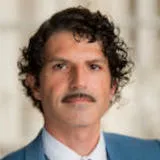
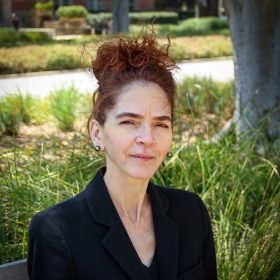
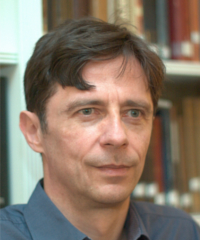
Dr. Charity Anderson is an Associate Professor in the Department of Philosophy at Baylor University's College of Arts and Sciences. Her research specializes in epistemology and philosophy of religion, with focus areas including fallibilism, epistemic modals, and evidence theory. She has presented her work at major philosophy conferences including the APA and Butler Society meetings. Her publications primarily explore epistemological frameworks and religious philosophy, examining topics such as divine hiddenness, fallibilist theories, and evidentiary arguments. Her most recent work addresses progress in philosophy and truth theories.
Julien Dutant is a Lecturer in Philosophy at King's College London, affiliated with the Department of Philosophy within the Faculty of Arts & Humanities. His research examines epistemological frameworks, including the principles of knowledge, rational belief, and epistemic value. He holds a Ph.D. from the University of Geneva (2010) and has held research positions at the University of Oxford and University of Michigan. Dutant's primary research explores foundational questions in epistemology, formal models of knowledge, and the semantics of propositional attitudes. His work integrates philosophical analysis with formal methods to address epistemic norms and contextual variations in knowledge attribution. His publications demonstrate sustained focus on refining theories of justification, rationality, and epistemic norms. Recent research trends include investigations into practical rationality, epistemic utility, and the interplay between evidence and ignorance. Dr. Dutant teaches undergraduate and postgraduate courses including Introduction to Philosophy, Methodology, Intermediate Logic, and advanced topics in epistemology. He maintains active engagement with philosophical communities through invited talks and editorial roles.
Tamar Lando is an Associate Professor of Philosophy at Columbia University, affiliated with the School of Arts and Sciences. She holds a B.A. in Philosophy from Stanford University (2002), an M.A. in Mathematics from UC Berkeley (2008), and a Ph.D. in Philosophy from UC Berkeley (2012). Her research focuses on logic and epistemology, with specializations in modal logic, topological and probabilistic semantics, and philosophical theories of chance, coincidence, and luck. She joined Columbia in 2012 after completing her doctoral studies. Her work bridges formal logic, mathematics, and philosophy, with notable contributions to region-based theories of space, measure-theoretic semantics, and causal explanation. Her photography, exhibited in venues like the Autry Museum, explores landscapes such as the Mimbres River Valley, reflecting her dual passion for academic and artistic expression.
Valerie San Juan is an Assistant Professor in the Psychology Department at Bradley University's College of Liberal Arts & Sciences. With a Ph.D. in Developmental Psychology and Education from the University of Toronto, she completed postdoctoral research at both the University of Toronto (under Dr. Patricia Ganea) and the University of Calgary (with Drs. Susan Graham and Suzanne Curtin), supported by the Eyes High Fellowship and SSHRC grants. Education: Ph.D. in Developmental Psychology and Education, University of Toronto Her research focuses on children's social cognitive development and language acquisition, particularly how children understand others' mental states and integrate this knowledge into social interactions. Using innovative methods like computer-based games and eye-tracking technology, she investigates perspective taking, desire reasoning, and false-belief understanding in children aged 2-6 years. Recent publications demonstrate her expertise in referential communication, epistemic verb development, and social category inference. Her work appears in top journals including Journal of Experimental Child Psychology , Cognitive Development , and Journal of Child Language . These studies consistently examine how children's cognitive control, language development, and social understanding interact. Scientific Awards: Eyes High Fellowship program (University of Calgary) Social Sciences and Humanities Research Council of Canada (SSHRC) grant As director of the Social Minds and Language Lab (S.M.A.L.L.), she mentors undergraduate researchers and collaborates with local families to conduct community-based developmental studies. Her teaching portfolio includes Principles of Psychology, Experimental Psychology, and Developmental Psychology courses.
Sherrilyn Roush is a Professor in the Department of Philosophy at University of California, Los Angeles (UCLA) , with a PhD in Philosophy from Harvard University (1999). She holds dual B.S. and B.A. degrees with highest distinction from Pennsylvania State University (1988). Her work spans Epistemology , Formal Epistemology , Scientific Method , and Bayesian Reasoning . Harvard University, PhD in Philosophy (1999) University of California, Los Angeles, Department of Philosophy Research interests include the epistemic value of knowledge, probabilistic reasoning in legal contexts, and the distinction between knowledge and understanding. She has extensively analyzed the role of statistical evidence in judicial verdicts, simulation methods in science, and epistemic self-doubt through a Bayesian framework. Her publications cover topics like the epistemic superiority of experiments over simulations, epistemic injustice in testimonial contexts, and evolutionary stable strategies for knowledge. While she has not been explicitly linked to scientific awards or formal student mentoring in the provided texts, her work intersects with medical epistemology through collaborations on self-knowledge in illness .
Vera Tripodi is an Associate Professor at the Department of Electronics and Telecommunications (DET) at Politecnico di Torino. Her academic career spans multiple institutions including the University of Milan 'La Statale,' University of Turin, University of Barcelona, University of Oslo, and Columbia University. She serves on the Single Guarantee Committee and is actively involved in gender equality initiatives. Dr. Tripodi earned her PhD in Logic and Epistemology from Sapienza University of Rome. Her academic journey includes postdoctoral research positions at prestigious international institutions and a research position at the University of Milan from July 2021 to March 2022. Her research focuses on the intersection of philosophy, technology, and gender. She specializes in bioethics, ethics of technology, feminist philosophy and ethics, and social ontology. Her work addresses critical contemporary issues including climate change ethics, reproductive technologies, AI ethics, and gender equality in philosophy and academia. She has made significant contributions to understanding the ethical dimensions of emerging technologies and their social implications. Dr. Tripodi's publication record demonstrates a consistent focus on ethical frameworks for technological development, gender issues in philosophy and society, and the philosophical implications of medical and technological innovations. Her work bridges theoretical philosophy with practical ethical concerns in rapidly evolving technological landscapes. Vice President of SWIP Italia (Society for Women in Philosophy) for two terms (2018-2021, 2021-2024) Member of the Bioethics Committee since 2019 Member of SIFA (Italian Society of Analytical Philosophy) since 2008 Associate Editor of AESTHETICS MAGAZINE since 2022 Member of the APHEX editorial board since 2010 Dr. Tripodi advises PhD students in philosophy programs at the University of Pavia and University of Eastern Piedmont. She teaches courses on Research Ethics in Dual-Use Technology, Gender and Diversity in Research, Ethics of Technology, and Bio- and Nanotechnologies in Medicine across various engineering programs at Politecnico di Torino. She also serves on course committees for Biomedical Engineering and Electronic, Telecommunications and Physics Engineering programs. She leads the NOW research project (2023-2025) titled 'Understanding Natural History: Nature, Evolution and Human Beings. A New Philosophical Framework' funded through the National Research PRIN program.
Vilius Dranseika is a Lecturer and researcher affiliated with Vilnius University (Department of Logic and History of Philosophy) and Jagiellonian University (Department of Philosophy and Bioethics). His work bridges philosophy, bioethics, and empirical research, focusing on cross-cultural studies, personal identity, and experimental philosophy. Research interests include metaphysical questions about personal identity, ethics in biomedical research, moral psychology, and the application of quantitative methods to philosophical inquiry. He has published extensively on topics like euthanasia, consent in research, and cultural variations in moral judgments. Key contributions include analyses of ethical frameworks in predictive medicine, cross-cultural perspectives on moral transgressions, and the role of empirical methods in resolving philosophical debates. Notable projects investigate the psychological underpinnings of concepts like persistence, responsibility, and identity across diverse populations. His work frequently engages with real-world ethical dilemmas, such as the use of residual biological materials in research and ethical challenges posed by emerging technologies like AI and pharmacological enhancements.
Dr. Yuri Cath is a Senior Lecturer in the Department of Politics, Media and Philosophy at La Trobe University, Australia, where he has been employed since February 2015, initially as a Lecturer before being promoted to Senior Lecturer in July 2019. Prior to joining La Trobe, he held academic positions at the University of East Anglia (2012-2014) and served as an AHRC Research Fellow at the University of St Andrews (2008-2012). His educational background includes a PhD in Philosophy from the Australian National University (2009), an MA from the University of Auckland, and a BFA also from the University of Auckland. Dr. Cath's research primarily focuses on epistemological questions concerning the nature and sources of different kinds of knowledge, with particular emphasis on the distinction between knowledge-how and knowledge-that, and the implications of these distinctions for debates in philosophy of mind and moral philosophy. His work often explores the relationship between testimony and various forms of 'knowing-wh', including 'what it is like'-knowledge, knowing-why, and knowing-how. He has developed a distinctive approach that combines elements of intellectualism and Ryleanism, which he calls 'practical attitude intellectualism.' His recent work has examined transformative experiences, social dimensions of knowing-how, and the retention of phenomenal knowledge through imagination, memory, and recognition. Dr. Cath's publications reveal a consistent trajectory exploring the boundaries between different forms of knowledge, with a special focus on how knowledge-how relates to abilities, skills, and propositional knowledge. His work has been influential in contemporary debates about the nature of knowledge, particularly in challenging strict dichotomies between theoretical and practical knowledge. His 2024 Element 'Knowing What It Is Like' represents a significant contribution to understanding phenomenal knowledge, while his 2025 article 'Transformative experiences and the equivocation objection' offers a novel critique of L.A. Paul's influential work on transformative experiences. Dr. Cath has demonstrated expertise across multiple philosophical domains, with publications spanning epistemology, philosophy of mind, metaphilosophy, and philosophical methodology. His work often bridges conceptual analysis with considerations of practical epistemic concerns, making significant contributions to our understanding of how different forms of knowledge function both theoretically and in practical contexts.
Enrique Moros Claramunt is a Professor at the Ecclesiastical School of Philosophy (University of Navarra), specializing in philosophical theology and metaphysics. His work bridges epistemology, liberty, and divine existence, engaging with thinkers like Alvin Plantinga, Leonardo Polo, and Harry Frankfurt. His research interests include: Philosophy of Religion Natural Theology Epistemological Virtues Transcendental Anthropology Compatibilism/Incompatibilism Scientific Rationality Critique Notable recent publications focus on: 2017: God's existence proofs via Polo's philosophy 2012: Thomistic theology and metaphysical identity 2011: Scientific rationality limits and freedom theories
Prof. Nurbay Irmak is an active academic specializing in Metaphysics and Bioethics, with a Ph.D. from the University of Miami, USA. He teaches courses such as Introduction to Philosophy, Bioethics, Ontology, and Metaphysics of Art Objects, indicating a strong engagement with both theoretical and applied philosophy. His research interests focus on: Metaphysics of abstract artifacts Philosophy of language and art Medical and professional ethics Ontological debates in science and technology Authorship and creation in the age of AI His recent publications (2021–2024) reflect a consistent trajectory in analytic metaphysics and bioethics, particularly exploring the nature of artifacts, musical works, and ethical challenges in healthcare. There is a noticeable integration of traditional philosophical inquiry with contemporary issues such as generative AI and digital ontology. He has led significant research projects funded by TÜBİTAK and BAP, including studies on the right to refuse medical treatment in Turkey and the metaphysics of abstract artifacts. While no scientific awards are listed, his work appears in top-tier journals like Synthese , Erkenntnis , and Journal of Medical Ethics . Prof. Irmak serves as the Third Year Advisor, suggesting an active role in student mentorship. He maintains an office (JF510) and holds regular office hours, indicating ongoing academic presence. Affiliation details such as university, school, and department are not specified in the provided text.
Volker Halbach is a Professor of Philosophy and Tutorial Fellow in Philosophy at New College, University of Oxford. He holds a Dr.phil. from Ludwig-Maximilians-Universität München and Università degli Studi di Firenze (1991-1994), and an M.A. from Ludwig-Maximilians-Universität München (1985-1991). His career includes roles at the University of Konstanz (1997-2004) before joining Oxford in 2004. Halbach’s research focuses on foundational issues in logic and philosophy of language, including truth theory, logical constants, self-reference paradoxes, and modal logic. He is known for work on axiomatic theories of truth, substitutional semantics, and the analysis of logical consequence. His recent publications explore topics like unrestricted quantification, determinate truth, and the interplay between syntax and semantics in formal systems. His work frequently addresses challenges in classical and non-classical logics, particularly through axiomatic frameworks. He has contributed significantly to debates on truth paradoxes, modal predicates/operators, and the philosophical implications of metamathematical results. Halbach’s scholarship bridges analytic philosophy, mathematical logic, and formal semantics.
Mikael Janvid is Professor and Deputy Head of the Department of Philosophy at Stockholm University, Sweden. His research is concentrated in epistemology, with particular attention to skepticism, defeaters, African epistemology, understanding, and a priori justification. Research interests Skepticism: structure of skeptical arguments, debasing-demon scenarios, and responses to external-world skepticism. Defeaters: development of an externalist account of defeat in contrast to prevailing internalist models. African Epistemology: contextualist approaches bridging universalist and particularist positions, epistemic role of testimony in Yoruba practice. Understanding: nature of grasping relationships required for objectual understanding and its distinction from knowledge. A Priori Justification: default-and-challenge models, empirical defeasibility, and the epistemic status of a priori warranted beliefs. Across sixteen publications (2008-2025) Janvid consistently engages analytic epistemology, often combining formal argumentation with cross-cultural philosophical concerns. His recent work critiques self-undermining strategies against skepticism and resurrects the debasing-demon hypothesis to illuminate implicit bias. Contact Email: mikael.janvid@philosophy.su.se Department of Philosophy, Stockholm University, Universitetsvägen 10 D, 106 91 Stockholm, Sweden
Elijah Chudnoff is a Professor of Philosophy at the University of Miami's Department of Philosophy. He received his PhD from Harvard University in 2008 and has established himself as a prominent scholar in epistemology and philosophy of mind. Chudnoff's research focuses on several interconnected areas within philosophy: Epistemology, particularly the nature and role of intuition in philosophical methodology Philosophy of mind, with emphasis on cognitive phenomenology and perceptual experience Metaphysics, especially concerning abstract objects and awareness Philosophy of mathematics, examining the relationship between intuition and mathematical knowledge His scholarly output demonstrates a consistent focus on the intersection of perception, intuition, and knowledge. Chudnoff has developed a distinctive view of intuition as a form of intellectual perception that provides immediate justification for beliefs. His work challenges traditional distinctions between perceptual and cognitive expertise, arguing for a more nuanced understanding of how we form impressions and perform mental actions. Recent publications show an increasing interest in the epistemic significance of perceptual learning and the relationship between consciousness and knowledge. Chudnoff is the author of three influential monographs: Intuition (Oxford University Press, 2013) Cognitive Phenomenology (Routledge, 2015) Forming Impressions: Expertise in Perception and Intuition (Oxford University Press, 2020) His work has been widely cited and has significantly shaped contemporary debates in epistemology and philosophy of mind, particularly regarding the nature of intuitive justification and the possibility of cognitive phenomenology.
Richard Kenneth Atkins is a Professor of Philosophy at Boston College and serves as Assistant Chair of the Department. He specializes in 19th Century Philosophy, particularly the works of Charles S. Peirce, and holds research interests in Pragmatism, Epistemology, and Philosophy of Mind. Atkins earned his Ph.D. from Fordham University in 2010. His most recent publications include Peirce on Inference (2023), Charles S. Peirce’s Phenomenology (2018), and numerous articles in journals like Transactions of the Charles S. Peirce Society and Social Epistemology . His work explores Peirce’s contributions to logic, semiotics, and the philosophy of inquiry, as well as broader questions in epistemology and the philosophy of mind. Atkins has also engaged with classical American philosophers like C.I. Lewis and Josiah Royce, examining their theories of ideas and ethics. His research bridges historical and contemporary debates, offering fresh perspectives on foundational issues in philosophy.
Fred Adams is a prominent Professor specializing in Philosophy of Cognitive Science and Epistemology, with significant contributions to debates on extended cognition, mental representation, and knowledge theories. His career spans over four decades with continuous scholarly output. His educational foundation includes a 1982 dissertation on Goal-Directed Systems from The University of Wisconsin - Madison, establishing his early focus on cybernetic models of teleological behavior. This philosophical grounding evolved into interdisciplinary work bridging cognitive science and philosophy. Adams' research centers on critical examinations of extended cognition frameworks (notably in The Bounds of Cognition with Kenneth Aizawa), truth-tracking epistemology, and semantic theories of mental content. His work consistently challenges prevailing theories while developing nuanced alternatives, particularly regarding how cognitive systems interface with environmental information. Recent publications demonstrate sustained engagement with foundational epistemological problems through modal analyses of knowledge conditions. Analysis of his 15 most recent publications reveals consistent focus on epistemic justification frameworks, with growing emphasis on interdisciplinary cognitive science applications. His work shows particular expertise in adapting Nozick's tracking theory to contemporary challenges while maintaining philosophical rigor. Notable scholarly contributions include: Critical analysis of extended cognition hypotheses Development of fact-tracking knowledge models Refinements to causal theories of mental representation Interdisciplinary bridges between philosophy and cognitive neuroscience His advising and collaborative work shows strong mentorship patterns through co-authored publications with emerging scholars, particularly in consciousness studies and epistemology. While specific grant details aren't documented in the source text, his sustained publication record across multiple academic presses indicates successful research funding support throughout his career. Adams maintains active laboratory engagement through theoretical cognitive modeling, particularly in the philosophy-cognitive science interface, with ongoing collaborations examining neural correlates of semantic processing and epistemic justification frameworks.