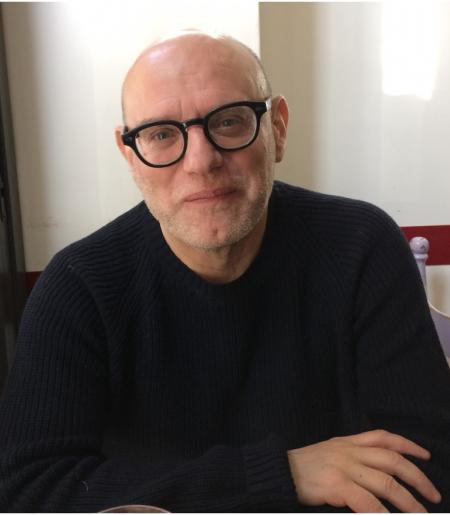
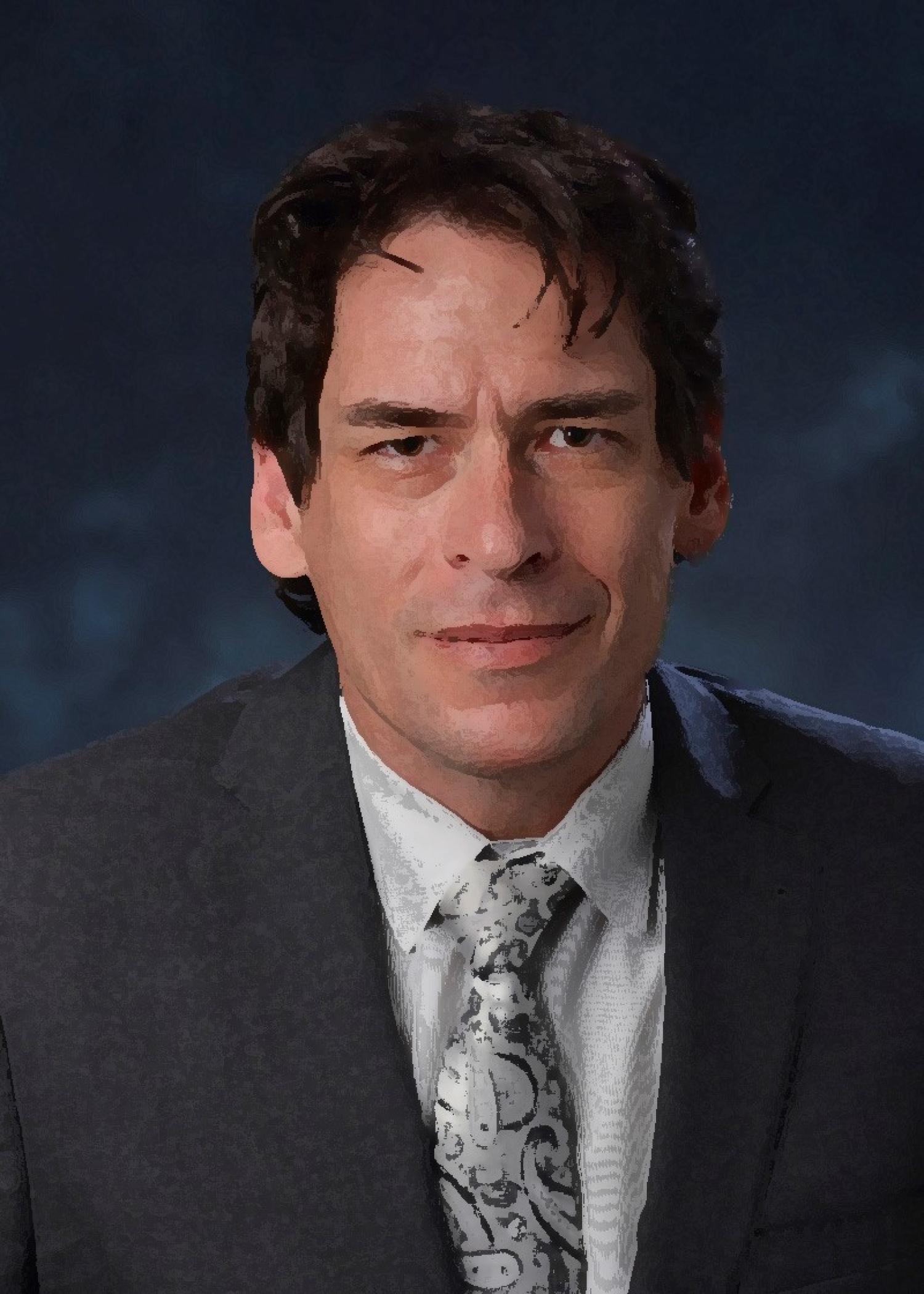
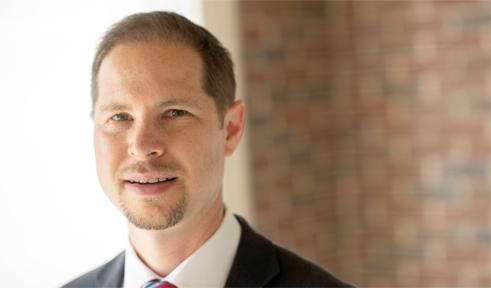
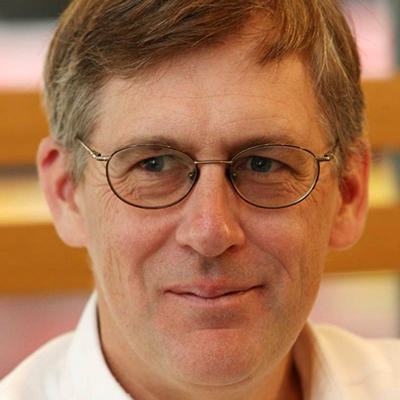
Hasan Kayalı is a Professor in the Department of History at the University of California, San Diego. He specializes in the history of the Middle East during the Islamic period, focusing on the late Ottoman Empire, nationalism, and transitions from empire to nation-states. His research bridges political, social, and intellectual histories of the region. Education : B.A. in Government, Harvard University Ph.D. in History and Middle Eastern Studies, Harvard University Research Interests : Dr. Kayalı examines Ottoman administration of Arab provinces, the impact of World War I on imperial structures, and the ideological contests between Ottomanism, Arabism, and Islamism. His work challenges traditional narratives of empire decline and emphasizes continuity in governance and identity formation. Key Publications : He authored Imperial Resilience (2021) and Arabs and Young Turks (1997), translated into multiple languages. He co-edited Empire to Nation (2006) and contributed to Archivum Ottomanicum . Labs/Teams : Engaged in collaborative projects on Ottoman archives and digital humanities initiatives to map historical networks in the Middle East.
Cathryn Carson is a Professor in the Department of History at the University of California, Berkeley. Her work bridges the philosophical, cultural, and political dimensions of 20th-century science, with a focus on theoretical physics, nuclear history, and the integration of social sciences and humanities into engineering education. Education: AB in History and Philosophy of Science from University of Chicago (1990) AM in Physics from Harvard University (1993) PhD in History of Science from Harvard University (1995) Her research explores the interplay between science and philosophy, particularly in Germany and the U.S., alongside the institutionalization of data science. She teaches graduate and undergraduate courses, including Berkeley’s Data Science major’s Human Contexts and Ethics of Data course. Scientific Awards: Berkeley Collegium Award for Excellence in Undergraduate Education (2017) Distinguished Service Award, Division of Social Sciences (2014) Carol D. Soc Distinguished Graduate Student Mentoring Award (2014) Fellow of the American Association for the Advancement of Science Fellow of the American Physical Society Mellon New Directions Fellowship NSF CAREER Award Alexander von Humboldt Foundation Research Fellowship Member, Institute for Advanced Study, Princeton Carson has served in multiple leadership roles, including Associate Dean of Social Sciences, founding Interim Director of the D-Lab (Social Science Data Laboratory), and Faculty Lead of Berkeley’s Data Science Education Program. She is currently accepting students for advising and contributes to campus governance through roles in the Academic Senate.
Peter C. Caldwell is the Samuel G. McCann Professor of History at Rice University and Director of the Program in Politics, Law, and Social Thought. He specializes in modern European history with a focus on Germany, constitutionalism, welfare state development, and political thought. His research spans Weimar Republic legal crises, postwar West Germany, and 19th/20th-century intellectual movements. Education: PhD (1993), MA (1989), and BA (1987) from Cornell University, New York University. Awards include the George R. Brown Award for Teaching (2016) and Humboldt Fellowship. He has authored/co-authored major works like Democracy, Capitalism, and the Welfare State (2019) and Germany Since 1945 (2018, 2023 revision). Teaching focuses on European political history, comparative welfare states, and 19th-century political thought. Current research examines democratic rhetoric in contemporary Mexican politics and authoritarian constitutionalism. Advised over a dozen undergraduate theses on topics ranging from Weimar Republic legal theory to Cold War historiography. Publications span German constitutional history, Cold War dynamics, and East German politics. His work bridges legal, economic, and cultural dimensions of modern European history with interdisciplinary approaches to political theory.
Jeffrey Rossman is an Associate Professor at the University of Virginia , affiliated with the Department of History and serving as Director of the Center for Russian, East European, and Eurasian Studies . His work bridges historical analysis with cultural and literary studies, focusing on Russia/USSR, Modern Europe, Communism, Genocide, Espionage, and Jewish Cultural Studies. Education: Ph.D., University of California, Berkeley, 1997 A.B., Harvard University, 1989 His research explores worker resistance under Stalin, the intersection of Jewish identity and German literature, and the role of translation in cultural exchange. He has authored key works on Soviet labor movements and Holocaust memory, blending historical narratives with literary theory. Jeffrey’s recent publications and Google Scholar contributions highlight trends in 20th-century European history , Yiddish-German literary dynamics , and translation as a tool for identity formation . His work spans comparative literature, cultural memory, and diaspora studies, emphasizing interdisciplinary approaches. Scientific Awards: ACLS Collaborative Research Fellowship (2013-15) Harry Frank Guggenheim Foundation Research Grant (2013-15) Multiple grants from the University of Virginia’s College of Arts & Sciences and Faculty Summer Research Grant program Fulbright-Hays and IREX fellowships for international research As an educator, Rossman has taught courses such as Genocide: A Global History and Stalinism , mentoring students in historical and literary analysis. His lab, the Center for Russian, East European, and Eurasian Studies, fosters research on Soviet history, Jewish cultural studies, and transnational literary exchange.
Rutgers, The State University of New JerseyUnited States
Jochen Hellbeck is a Distinguished Professor of History and Vice Chair for Graduate Education in the Department of History at Rutgers University's School of Arts and Sciences, where he has been teaching since 2003. He holds a Ph.D. from Columbia University and specializes in the history of the Soviet Union, with particular focus on individual life stories and the shaping of the self in modern Europe. Professor Hellbeck's research centers on the place and self-understandings of individuals during cataclysmic 20th century events, including the Russian Revolution, Stalin's terror regime, and World War II. His work examines how narratives of redemptive violence and transformation attached themselves to individuals on the ground, revealing how authors of diaries and personal texts became co-authors of the revolutionary script. More recently, he has explored comparative and transnational aspects of how Soviet, German, and British states mobilized citizens during World War II, highlighting the centrality of the Soviet war effort to the broader history of the conflict. His acclaimed book Stalingrad: The City that Defeated the Third Reich (2015) was the first Western study to probe the meaning of the Battle of Stalingrad for Soviet soldiers and civilians. The book draws on dozens of oral histories recorded by Moscow historians during and after the battle. Hellbeck's research consistently focuses on personal narratives and eyewitness accounts to provide grounded perspectives on major historical events. Morphomata Fellowship, Cologne (2019) Guggenheim Fellowship (2017) Short list, non-fiction prize of the Moscow Book Fair (2017) Davis Center Fellowship, Princeton (2016) Damals prize for best historical monograph (2013) American Academy in Berlin Fellowship (2009) Rutgers Board of Trustees Fellowship for Scholarly Excellence (2007) Michigan Society of Fellows (1997-1999) As a member of the Rutgers graduate faculty, Professor Hellbeck works with students interested in modern Russia and the Soviet Union, and in transnational explorations of Communism, World War II, and the Cold War. He encourages prospective graduate students to contact him before application deadlines. His website, Facing Stalingrad , features portraits and voices of veterans he interviewed during his research.
Richard Steigmann-Gall is an Associate Professor of History at Kent State University's Department of History, within the College of Arts & Sciences. He previously served as Director of the Jewish Studies Program (2004–2010). Holding degrees from the University of Michigan (BA, MA) and the University of Toronto (PhD), his research focuses on religion and Nazi Germany, transatlantic fascism, and antisemitism. His seminal work, *The Holy Reich: Nazi Conceptions of Christianity, 1919-1945*, has been translated into Spanish, Portuguese, and Italian, earning widespread academic and public acclaim. His research has been supported by grants from institutions like the Social Science and Humanities Research Council of Canada, the Max Planck Institute, and the U.S. Holocaust Memorial Museum. Dr. Steigmann-Gall has presented globally, including at Georgetown, NYU, Cambridge University, and the University of Sydney. He is a recipient of the Distinguished Teaching Award from Kent State's College of Arts & Sciences (2004) and has been a frequent media commentator on fascism and modern political movements. Research & Education: His expertise spans Nazism’s religious dimensions, comparative fascist ideologies, and the cultural underpinnings of antisemitism. Current projects include a chapter on religion and genocide in pre-WWII American fascist thought for *American Fascism: Past and Present* (Cambridge). He has published in journals like *German History*, *Journal of Holocaust Research*, and *Totalitarian Movements and Political Religions*. Teaching & Outreach: Dr. Steigmann-Gall teaches courses on modern European history, fascism, and the Holocaust. He has mentored students in topics including Nazi Germany and transnational extremism, and his pedagogical approach has been recognized through teaching awards and nominations. He has also engaged with public discourse through media appearances in *The New York Times*, *The Daily Beast*, and documentaries on the History Channel. Awards & Grants: Distinguished Teaching Award (2004) Grants from the Max Planck Institute, SSHRC, and the U.S. Holocaust Memorial Museum Collaborations & Networks: He has collaborated on edited volumes and contributed to projects at institutions worldwide, reflecting his commitment to transnational historical inquiry.
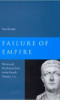
Noel Lenski is the Dunham Professor of Classics and History and Chair of the Classics Department at Yale University. His work focuses on Roman history, particularly the later Roman Empire, with an emphasis on power dynamics, slavery, and migration. He holds a BA from The Colorado College (1989) and MA and PhD from Princeton University (1995). Education: BA in Classics, Colorado College (1989) MA in Classics and Ancient History, Princeton University (1995) PhD in Classics and Ancient History, Princeton University (1995) His research spans political, military, social, economic, religious, and cultural history. Key interests include the limits of imperial power, slavery in antiquity, and human migration. Lenski has authored/co-authored influential books such as Failure of Empire: Valens and the Roman State and Constantine and the Cities , and edited volumes like What is a Slave Society? . He is currently working on monographs on Late Antique slavery and global premodern slavery. Recent scholarship includes studies on the Arch of Constantine, Visigothic law, and the Collectio Avellana. His work bridges archaeological and textual evidence, offering interdisciplinary insights into Roman governance and societal structures. Lenski’s contributions extend to collaborative projects, such as co-editing From East to West in Late Antiquity , and translating/analyzing ancient legal texts like the Liber Iudiciorum .
Paul Kennedy is the J. Richardson Dilworth Professor of History at Yale University, Director of International Security Studies, and Distinguished Fellow of the Brady-Johnson Program in Grand Strategy. His research focuses on great power relations, military history, British foreign policy, and global security. Born in 1945 in England, he holds a BA from Newcastle University and a DPhil from the University of Oxford. He is a Fellow of the Royal Historical Society and numerous other academic societies, and was honored as Commander of the British Empire (C.B.E.) in 2000. His influential works include The Rise and Fall of the Great Powers (1987) and Engineers of Victory (2013). Kennedy’s monthly column on global issues is syndicated worldwide, and he has authored nineteen books. His academic leadership includes directing ISS programs funded by the Smith Richardson Foundation and contributing to UN policy reports. Awards highlight his contributions to historical scholarship, including election to the British Academy. Current projects involve seapower’s role in World War II transformations. Kennedy’s work bridges historical analysis with contemporary strategic challenges, emphasizing problem-solving approaches in global conflict and cooperation.
Enzo Traverso is the Susan and Barton Winokur Professor in the Humanities at Cornell University, affiliated with the College of Arts and Sciences. His scholarly work bridges the Department of History, French Studies Program, Jewish Studies Program, and Romance Studies. Born in Italy, he studied at the University of Genoa and earned his PhD from EHESS in Paris (1989). Before joining Cornell in 2013, he taught political science in France for two decades and held visiting professorships across Europe and Latin America. Education: University of Genoa (Italy), Ecole des Hautes Etudes en Sciences Sociales (PhD, 1989) Traverso’s research explores intellectual history, historiography, and critical theory, focusing on twentieth-century Europe. His work interrogates the intersections of war, fascism, genocide, revolution, and collective memory. His authored books, translated into over fifteen languages, have established him as a leading scholar in these areas. His recent publications reflect a trajectory analyzing historical memory, revolutionary ideologies, and the resurgence of far-right movements. Articles in journals like History & Theory and Historical Materialism further contextualize his contributions to debates on totalitarianism, Jewish modernity, and postwar political thought. Awards: Premio Pozzale (2014), Premio Lo Straniero/Gli Asini (2018), Premio Napoli (2022) Traverso has advised students through courses on topics such as Left-Wing Melancholia, Holocaust memory, and the European Civil War. His academic influence extends via editorial contributions to journals like Jacobin, Constellations, and Il Manifesto.
Brian A. Catlos is Professor of Religious Studies at the University of Colorado Boulder and Research Associate in Humanities at the University of California Santa Cruz. He serves as Director of the CU Mediterranean Studies Group and Co-Director of The Mediterranean Seminar, an international scholarly forum with over 1,900 members worldwide. His academic appointments span multiple disciplines including Religious Studies, History, Ethnic Studies, Asian Languages and Civilizations, and Jewish Studies. Dr. Catlos specializes in Christian-Muslim-Jewish relations, Medieval Mediterranean history, and ethno-religious minorities in pre-modern contexts. His research focuses on the complex dynamics of religious and ethnic identity in medieval Europe and the Islamic world, particularly in the Iberian Peninsula. He explores how religious minorities navigated political power structures while maintaining cultural and religious identities under majority rule. His publications reveal a consistent focus on challenging simplistic narratives about religious conflict in medieval Mediterranean societies. Rather than portraying these societies as defined primarily by religious division, his work emphasizes the practical accommodations, economic interdependencies, and complex identities that characterized daily life across religious boundaries. His research demonstrates how religious identity often functioned alongside other social markers like language, profession, and regional affiliation. Catlos has received numerous prestigious awards including the Medieval Academy of America's Charles Homer Haskins Medal (2018), the Middle East Studies Association's Albert Hourani Book Prize (2014), and a 2024 Guggenheim Fellowship. His books have been translated into numerous languages including Spanish, German, Polish, Korean, Russian, and Chinese. 2024 Guggenheim Fellow Medieval Academy of America's Charles Homer Haskins Medal (2018) Middle East Studies Association's Albert Hourani Book Prize (2014) American Historical Association's James A. Rawley Prize American Historical Association's Premio del Rey Boulder Faculty Association Award for Excellence in Research (2015) As an educator, Catlos mentors MA students interested in Mediterranean Studies and Christian-Muslim-Jewish relations, with recent students securing fully-funded PhD positions at Princeton, Brown, and Rochester. He has received multiple teaching and leadership awards from the Boulder Faculty Association. His current research includes 'An Age of Convergence: Christians, Muslims and Jews in the Pre-Modern Mediterranean' and 'James the Conqueror: A Crusader King in an Age of Faith and Reason.'
Stefanie Markovits is a Professor of English and Director of Undergraduate Studies at Yale University. She holds a Ph.D. in English Language and Literature from Yale (2001), an M.Phil. in English Romantic Studies from Oxford (1996), and a B.A. in English and Philosophy from Yale (1994, summa cum laude). Her research focuses on 19th-century British literature, including Romantic and Victorian poetry and novels, German classical literature (e.g., Goethe and Schiller), aesthetic theory, war literature, and genre theory. She explores intersections between formal innovation and socio-political contexts, such as the impact of the Crimean War on Victorian poetry. Her publications include The Number-Sense of Nineteenth-Century British Fiction (2025), The Victorian Verse-Novel (2017), and The Crimean War in the British Imagination (2009). Recent articles analyze themes like numerical symbolism in literature and the evolution of the verse-novel genre. She teaches undergraduate courses on literary analysis, Romantic and Victorian novels, and Jane Austen, as well as graduate seminars on Dickens and Eliot.
Joshua Hill is an Associate Professor in the Department of History at Ohio University, affiliated with the College of Arts and Sciences. His work centers on modern Chinese political and intellectual history, with a focus on elections, political culture, and the evolution of governance ideals. Dr. Hill earned his Ph.D. in History from Harvard University. His research is deeply informed by his time living in Ningbo and Changsha, China, during the Reform and Opening Up era. He specializes in the intellectual and cultural history of political ideas in modern China, particularly the meaning and practice of elections from the late Qing through the 20th century. His primary research interests include Modern Chinese History, Political History, the History of Democracy, Chinese Political Culture, U.S.-China Relations, and Intellectual History. He explores how political concepts like elections were adapted and reinterpreted within Chinese contexts, often as cultural rites rather than democratic tools. His publications, including his 2019 book Voting as a Rite: A History of Elections in Modern China and several articles on election law and voter education, demonstrate a consistent focus on the symbolic and ideological dimensions of political participation in China. The articles reveal a scholarly trajectory centered on the transformation of political norms, the tension between elite and popular governance, and the adaptation of Western political forms in Chinese history. Dr. Hill is actively involved in teaching, offering courses such as HIST 2460: Rise of Modern Asia, HIST 3463/5464: History of China, and seminars on historical methodology and East Asian ideas. He is also available for academic advising and student meetings, indicating an active faculty role. He previously served as an Adjunct Assistant Professor at the Fletcher School of Law and Diplomacy, Tufts University, in Spring 2012. He maintains a scholarly presence through his Academia.edu profile, where he shares publications and syllabi.
John Connelly is a Professor at the University of California, Berkeley, holding the Sidney Hellman Ehrman Professorship of European History. His academic career spans three decades of research and publication in modern East-Central European history, Catholicism, and the dynamics of dictatorships. Education: PhD in History, Harvard University (1994) MA in History, Harvard University (1988) BSFS in International Relations (magna cum laude), Georgetown University (1982) Research Interests: Modern East and Central European Political and Social History Comparative Education History of Nationalism and Racism History of Catholicism His work examines the intersection of religion and politics, particularly in Eastern Europe under totalitarian regimes, and the transformation of academic institutions under ideological control. Scientific Awards: Humanities Research Fellowship (UC, 2007) Institute for Advanced Study Membership (Princeton, 2002-03) George L. Beer Prize (AHA, 2001) Spencer Fellow (1996-98) German Marshall Fund Fellow (1996-97) 82nd Airborne Division Scholarship (Georgetown, 1978-82) Publications: Connelly has authored or co-authored five major books, including From Enemy to Brother (2012) on Catholic-Jewish relations and Captive University (2000) on Sovietization of higher education. His 50+ journal articles span topics like Nazi racial theory, Stalinist university policies, and postwar Catholic moral theology.
Katherine Pence is an Associate Professor in the Department of History at the Weissman School of Arts and Sciences, Baruch College, City University of New York (CUNY). She has been actively teaching courses including Global History Since 1500 and Capstone: Search History through Spring 2025. Her educational background includes: Ph.D. in History, University of Michigan M.A. in History, University of Michigan B.A. in History, Pomona College Professor Pence specializes in Cold War history with a particular focus on German history, consumer culture, gender studies, and transnational relations between Germany and Africa during the decolonization period. Her research explores how consumer politics, gender dynamics, and Cold War competition shaped everyday life in divided Germany, as well as examining German-African relations during the Cold War era. She has made significant contributions to understanding the intersections of consumption, citizenship, and Cold War politics in both East and West Germany, with particular attention to gendered experiences. Her book Gender and Consumer Politics in Cold War Germany (Cambridge University Press, 2019) represents a major contribution to the field. Her recent scholarly output reveals a growing emphasis on German-African relations during the Cold War, particularly examining how West Germany engaged with decolonizing Africa through trade exhibitions, development aid, and cultural diplomacy. While her earlier work focused primarily on consumer culture and gender in divided Germany, her research has expanded to explore transnational connections and the global dimensions of Cold War competition. Her publications span historical methodology, gender studies, and transnational history, with consistent attention to how ordinary people navigated political systems through everyday practices. Faculty Service Award for the Weissman School of Arts and Sciences (2015) Presidential Excellence Award for Distinguished Teaching (2008) Feliks Gross Endowment Award for Outstanding Research (2007) Eugene M. Lang Junior Faculty Research Program Award (2006) Whiting Research Award for Excellence in Teaching (2005) Weissman School of Arts and Sciences Dean's Award for Special Service to Students (2004) Professor Pence has received multiple PSC-CUNY research grants for her projects on 'The East and West German Scramble for Africa,' totaling over $25,000 in funding between 2008-2017. She has served as a dissertation committee member for graduate students at Harvard University, NYU, and the University of Illinois. Her service to the academic community includes organizing numerous conferences, particularly the International Conference of Undergraduate Research (ICUR), and she has held various leadership positions within Baruch College and CUNY, including Faculty Liaison for ICUR and member of the Weissman School of Arts and Sciences Diversity Equity and Inclusion (DEI) Alliance. Professor Pence is actively involved in campus initiatives related to undergraduate research, diversity and inclusion, and international education. She has organized multiple faculty workshops on research in undergraduate classrooms and has been instrumental in developing Baruch's Women's Studies program. Her current research projects continue her exploration of German-African relations during the Cold War era, with particular attention to local initiatives, gender dynamics, and transnational connections.
Benjamin Hett is a Professor of History at Hunter College and the Graduate Center, CUNY. He holds a PhD from Harvard University and has taught at Harvard's History and Literature program before joining CUNY in 2003. His research focuses on German criminal law history, Nazi rise to power, and postwar legacies. Educational Background: B.A. in Political Science and English Literature (University of Alberta, 1987) J.D. (University of Toronto, 1990) M.A. in History (University of Toronto, 1995) PhD in History (Harvard University, 2001) Research Interests: Dr. Hett examines themes such as Nazi governance structures, legal frameworks in Imperial Germany, and the societal impact of National Socialism. His work bridges legal, political, and cultural dimensions of German history. Publications Trends: His books analyze pivotal moments like the Reichstag Fire (2014), Weimar Republic collapse (2018), and pre-war diplomatic maneuvering (2020). His writing often employs forensic history methods to reconstruct events. Awards: Fraenkel Prize (2007) Guggenheim Fellowship (2009) Hans Rosenberg Prize (2015) Vine Award (2019) Grants & Advising: Hett has held DAAD and SSHRC fellowships. He advises graduate students at Harvard Law School and CUNY, though no current advisees are listed. Labs/Teams: No formal lab affiliations mentioned, though his work collaborates with archival institutions like the Wiener Library.