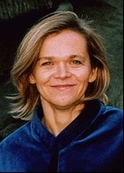
Monika Gabryś-Sławińska is a Professor at the Department of Polish Literary History , part of the Faculty of Languages, Literatures and Cultures at the University of Maria Curie-Skłodowska (UMCS). Her research spans 19th- and 20th-century Polish literature , focusing on Stefan Żeromski , historical journalism , text editing , voice emission , and museology . MA in Polish Philology (1998, UMCS) PhD in Literary Studies (2007, UMCS) Habilitation in Literary Studies (2016, UMCS) Her research interests include political commentary in historical press , media's role in cultural identity , and sociolinguistic trends . She has edited over 29 academic volumes and authored 5 monographs. Scientific awards: Bronze Cross of Merit KEN Medals (Bronze, Silver) 8 Rector's Awards (UMCS) Lublin Mayor's Medal (2019) She has participated in 5 research grants , organized 35 academic conferences , and contributed extensively to Annales UMCS as a scientific editor.
Dr. Grzegorz Kotłowski serves as an Assistant Professor at the University of Gdańsk's Faculty of Languages within the Institute of Classical and Slavonic Studies, Division of Classical Philology. He concurrently holds the significant administrative position of Deputy Dean for Students Affairs at the Faculty of Languages, demonstrating dual expertise in academic scholarship and institutional leadership. His research centers on Classical Philology with intense specialization in Latin epigraphy, particularly the documentation and analysis of Neo-Latin inscriptions in historical churches of Gdańsk (notably St. Mary's Church) and Warmia (Frombork Cathedral). Dr. Kotłowski's work bridges philological rigor with historical contextualization, examining epitaphs, sepulchral plates, and commemorative texts from the early modern period to reconstruct social hierarchies, religious practices, and cultural identities within Gdańsk's multicultural urban landscape. His methodological contributions extend to digital approaches in Neo-Latin studies, addressing data acquisition and dataset creation challenges. Recent publications (2020-2022) reveal a highly focused epigraphic output, with over twenty articles detailing specific monuments while collectively forming a comprehensive corpus of Gdańsk's Latin funerary heritage. His collaborative multi-volume series with Elżbieta Starek— Łacińskie inskrypcje w kościołach Gdańska (covering Mariacka Basilica, Śródmieście, and Oliwa) and Łacińskie inskrypcje w kościołach Warmii (Frombork)—establishes foundational references for regional epigraphic studies. No scientific awards are documented in available sources. Administrative responsibilities as Deputy Dean for Students Affairs indicate active engagement in academic governance, though specific advising roles or grant funding remain unreported in current materials. The absence of laboratory or team descriptions suggests individual or small-collaboration research models centered on archival and field-based epigraphy.
Konrad Zawadzki is an Assistant Professor at the Department of Latin Philology, Institute of Literary Studies, Faculty of Humanities, John Paul II Catholic University of Lublin (KUL) in Poland. He also holds the position of Associate Professor at the University of Salzburg, Austria. His academic career spans multiple European institutions, with significant research experience at the Faculty of Theology in Trier, Germany. His educational background includes: 2024: Habilitation at KUL (Poland) 2020: Habilitation at University of Salzburg (Austria) 2013: PhD at Faculty of Theology in Trier (Germany) 2011: Master's Degree in Classical Philology at University of Trier (Germany) 2007: Diploma in Catholic Theology at Faculty of Theology in Trier (Germany) Zawadzki's research focuses on early Christian literature and textual criticism, with particular expertise in the works of Cyril of Alexandria and other Church Fathers. His scholarly interests encompass: Early Christian interpretations of the Bible Editions of ancient Christian texts Syntax of Greek, Latin, Syriac, and Armenian languages Latinitas viva (living Latin) Byzantine catenae (biblical commentaries) History of ancient Christian oriental communities (Syria and Armenia) His research output demonstrates a consistent focus on recovering and analyzing fragments of early Christian commentaries, particularly those of Cyril of Alexandria on the Pauline epistles. Zawadzki has made significant contributions to the field through his critical editions and analyses of previously unknown or under-studied texts across multiple ancient languages. His scholarly recognition includes: Inner Reward Award for the best-scoring publication in 2024 Inner Reward Award for the best-scoring publication in 2022 Zawadzki has received substantial research funding, including a €256,000 grant from the Deutsche Forschungsgemeinschaft for his project on Cyril of Alexandria's commentary on 2 Corinthians. He has also participated in international research collaborations, notably the "Nouvelle histoire de la littérature grecque chrétienne" project at Université Paris-Sorbonne (2015-2021) and the "Anathema in lateinischen Inschriften" project at the Berlin-Brandenburg Academy of Sciences (2018-2019). He serves as a peer reviewer for several prestigious journals including Biblica, Commentaria Classica, Religions, Sacris Erudiri, Vox Patrum, and Zeitschrift für antikes Christentum, demonstrating his standing in multiple academic communities. Zawadzki is an active member of the International Association of Patristic Studies (IAPS) and the German Arbeitskreis Patristik.
Prof. Dr. hab. Marzena Górecka is a Full Professor at the Department of German-Language Literature and Culture , Faculty of Humanities , John Paul II Catholic University of Lublin . Her academic career includes habilitation (2006), Erasmus teaching assignments at the University of Freiburg (Switzerland), and leadership of the INTERREG III C project Language Bridges (2004-2006). Education: University of Lublin (Humanities), University of Zurich (Germanic Philology), University of Perugia (Italian Studies) Degree: Licentiata Philosophiae (1995), Doctorate in German Medieval Literature (1999) Research Focus: German medieval mysticism (Mechthild von Magdeburg, Hildegard von Bingen), Swiss German-language literature of the 20th century (Meinrad Inglin, Albin Zollinger), and literary translation theory with emphasis on Joseph Ratzinger/Benedict XVI's Opera Omnia . She explores mystical anthropology, cultural boundaries, and the interplay between theology and literature. Recent Trends: Analysis of postmodern literary spirituality, translation challenges of theological texts, and cultural memory in European border regions. Her 2023 publications examine educational crises through religious pedagogy and contemporary social critique in Swiss literature. Key Awards: Feniks National Literary Award (2014, 2013), Ministerial Individual Scholarship (MEiN), Landes&Gyr Foundation Research Stipend (Switzerland) Academic Service: Active in international research (SNSF Berlin evaluation), editorial leadership for Opera Omnia Ratzinger , and conference organization on European values and migration. She serves on the Polish Ministerial Expert Panel for academic promotions.
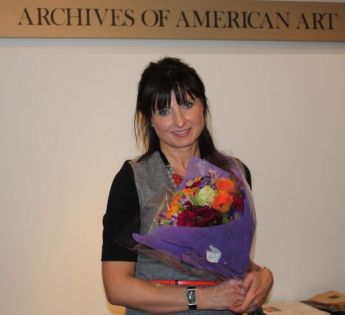
Dr. Edyta Frelik is a Senior Lecturer at the Department of American Studies, Faculty of Languages, Literatures and Cultures, Maria Curie-Skłodowska University. Her academic career spans research and teaching in American art history, visual culture, and interdisciplinary intersections between literature and visual arts. She holds a PhD in Humanities (UMCS, 2013) and has been recognized with prestigious awards including the Terra Foundation Award (2013) and Georgia O’Keeffe Museum nomination (2018). Her research focuses on: Modernist artists' intellectual engagements Interactions between textual and visual media Anti-intellectualism in American art and culture Gender dynamics in avant-garde practice Relationships between science/technology and artistic expression Recent publications highlight her expertise in artists like Georgia O’Keeffe, Ad Reinhardt, and Frank Lloyd Wright, with thematic clusters in: American cultural identity formation Artistic self-representation strategies Transatlantic modernist dialogues Architectural language theory Visual epistemology Post-historical cultural analysis Scientific recognitions include: 2013 : Terra Foundation Award for Best Essay by International Scholar 2018 : Georgia O’Keeffe Museum Book Prize Nomination 2022 : NCN MINIATURA 5 Grant Dr. Frelik has organized international conferences like Wordstruck (2015) and actively participates in academic exchanges across Europe and North America.
Katarzyna Liszka is an Assistant Professor at the Taube Department of Jewish Studies at the University of Wrocław. She has held teaching roles at multiple institutions since 2008, including the Lower Silesian Higher School of Economics, the Academy of Fine Arts in Wrocław, and the Institute for Culture Studies at her alma mater. She co-founded the Association of Education and Civic Initiatives 'Chiazm,' organizing events focused on Holocaust-related issues and ethical memory. Education: She earned her MA in cultural studies, philosophy, and Jewish Languages and Culture at the University of Wrocław. Research interests: Her work centers on Holocaust studies, modern Jewish philosophy, and the ethical dimensions of traumatic memory. She investigates how Jewish theology and philosophy inform responses to the Holocaust, emphasizing non-consensual democracy, cultural anthropology, and the intersection of trauma and dialogue. Key areas include socio-political ethics, human rights frameworks, and the role of testimony in memorializing catastrophic events. Her research trends consistently address Holocaust memory, ethical labor division in post-catastrophe societies, and philosophical dialogues on human nature. Recent publications analyze cultural symbolism (e.g., Jewish figurines in Poland) and trauma representation through interdisciplinary lenses. Scientific Awards: Grant from the John F. Kennedy Institute for North American Studies (FU Berlin) for research project 'Responses to the Holocaust. Post-Holocaust Jewish and Non-Jewish Thought in American Culture.' Advising and Grants: While no specific advisees are listed, her grant-funded work highlights mentorship through collaborative research projects. She has engaged with international teams in Berlin, Vilnius, and across Poland, advancing topics like pragmatist aesthetics and non-consensual democracy. Her teaching and civic initiatives reflect a commitment to bridging academic and community engagement. Labs/Teams: Collaborates with the Centre for Legal Education and Social Theory in Berlin and the Polish Cultural Studies Society. Co-organized seminars like 'Czytanie Margalita' and 'Cultura Lectionis,' addressing post-Holocaust theology and modern cultural theory. A key member of interdisciplinary Holocaust research networks.
Prof. Wilken Engelbrecht is a prominent scholar in Dutch language and literature at the John Paul II Catholic University of Lublin. His work focuses on historical linguistics , medieval philology , and literary reception studies in Central and Eastern Europe. He has led international projects like CODL and organized conferences including the 15th Regional Colloquium van Comenius . Education & Appointments : PhD in Dutch Philology, habilitation on prepositional complements, founder of Olomouc Neerlandistiek program His research spans 150 years of Dutch studies in Czech Republic , medieval Latin commentaries on Ovid, and translation dynamics under socialist regimes. Recent publications analyze Czech reception of Frisian literature and Ovidian traditions in academic contexts. Awards & Recognitions : Bronze Medal for Long Service Silver Medal of Palacký University Officier van de Orde van Oranje-Nassau Individual Rector's Award (I stopień) He serves on editorial boards for Roczniki Humanistyczne and Neerlandica Wratislaviensia , and has reviewed over 10 habilitation theses. His teaching includes Dutch language courses and comparative studies at Palacký University.
University of Natural Sciences and Humanities in SiedlcePoland
Adam Bobryk is a Professor at the Institute of Security Studies, Faculty of Social Sciences, University of Physical Education and Sport in Siedlce. His research bridges Sociology and Security Studies , with a focus on National Minorities , Eastern Europe , and Historical Memory . His work examines: Cultural Integration of Ukrainian students in Polish schools and its implications. Educational Role of Monuments , particularly in Vilnius. Language and Identity in religious and educational contexts. Polish-Lithuanian Relations and their impact on minority autonomy. Recent publications highlight Multiculturalism , Ethnic Dynamics , and Post-Soviet Memory Politics . Despite significant citations (h-index 2 in Scopus, 1 in WoS), no explicit awards are listed. His 141 publications and editorial contributions underscore his academic influence.
Prof. Magdalena Steciąg is a full-time faculty member at the University of Zielona Góra, affiliated with the Institute of Polish Philology and the Department of Journalism and Media Studies. Her research spans ecolinguistics, discourse analysis, multilingualism, and media studies, with a focus on conceptual metaphors, lingua receptiva, and gendered language in public protests. Key Research Trends: Ecological discourse in public debates and media Polish-Czech cross-border communication via lingua receptiva Gender studies in journalistic and feminist discourse Anthropocene-era linguistic analysis Contact: msteciag@g.elearn.uz.zgora.pl | ORCID: 0000-0002-6360-2987
Prof. Dr. hab. Joanna Orska is a faculty member at the Institute of Polish Philology , University of Wrocław, specializing in modernism, postmodernism, and avant-garde studies. She oversees the Contemporary Critical Forms Workshop and co-founded the Textual Culture and Practice program. Her research bridges literary criticism, poetry analysis, and translation theory. Department of Post-1918 Literature (since 2004) Key focus: Avant-garde syntax, poetic constructivism, and transnational literary discourse Her publications analyze Polish poetry (1989–present), avant-garde manifestos, and intermediality in literary works. She co-edited Learning to Walk: Programmatic Texts of the Late Avant-garde (2019) and participates in international conferences on mountain humanities and literary culture. As a juror for the Wisława Szymborska and Silesius Poetry Awards, she shapes contemporary Polish literary criticism. Recent trends in her work include metalepsis in translation, retro-avant-garde movements, and intersections of politics and poetic form. She collaborates with European institutions like the German Historical Institute and Leibniz-Institut, with articles appearing in Teksty Drugie , Ruch Literacki , and Nowe Książki .
Dr. Jan Wasiewicz is a researcher at Magdalena Abakanowicz University of Arts in Poznań (UAP). His work bridges philosophy, memory studies, and postcolonial theory, focusing on nihilism and the cultural memory of Polish peasant heritage. PhD in Philosophy (specializing in 19th-century European nihilism) Current research: peasant revolts, counter-memory, and hegemony in Polish cultural identity His scholarly output includes monographs such as Faces of Nothingness (2010) and Metachłopska wspólnota postpamięci (2021), analyzing historical narratives through the lens of situated knowledge. He has contributed to transdisciplinary studies on peasant heritage and teaches courses in philosophy, aesthetics, and design theory. Research trends in his publications include: Continuity of nihilistic thought from Nietzsche to contemporary art Reclamation of peasant resistance in Polish collective memory Critical analysis of historical representations in media and education
Lecturer Marlis Lami teaches at Jagiellonian University's Institute of Religious Studies with interdisciplinary expertise spanning religious literature, cultural management, and translation studies. Her academic background integrates classical philology, Slavic studies, and Polish studies. Research focuses on: Andrzej Towiański's writings in European intellectual context Polish-Jewish cultural relations Literature translation Cultural exchange management Teaches courses in religious studies and Germanic philology while actively translating Polish literature into German.
Dr. Bartosz Czepil serves as an Assistant Professor in the Department of Political Science and Public Administration at the University of Opole, Poland, where he contributes to academic research and teaching in political science. His institutional affiliation is clearly established through his university email and repository profile, with primary focus on Polish governance structures and European political dynamics. His research centers on Corruption Studies , Border Studies , and Local Governance , with significant emphasis on ethnic diversity in the Opole Province and anti-corruption mechanisms in Polish local press. He examines clientelism in government funding allocation, Nordic state comparisons, and the geopolitical implications of the 2022 Russian invasion of Ukraine on refugee flows and border management. His methodology combines case studies from southwestern Poland with comparative analysis of post-communist transitions. Analysis of his 15 most recent publications (2018-2024) reveals consistent thematic progression: early work focused on theoretical frameworks of corruption and border concepts, while recent research addresses urgent contemporary issues including Ukrainian refugee integration and war-induced border crises. His publications demonstrate specialized expertise in Polish local governance with increasing attention to Eastern European security challenges. Dr. Czepil has completed 3 research projects contributing to a Polish ministerial academic score of 652. While specific grant details and student supervision are not documented in available sources, his work shows sustained engagement with practical governance challenges in regional administration and borderland communities.
Professor Jerzy Koch is a distinguished academic at Adam Mickiewicz University in Poznań, serving as Professor Ordinarius since 2012 and head of the Department of Dutch and South African Studies. He also maintains an active research fellowship at the University of the Free State in South Africa since 2001. His academic journey includes degrees from Wrocław University (MA in Dutch/Flemish and German, 1982), Catholic University of Leuven (Ph.D. in Dutch/Flemish literature, 1991), and Wrocław University again (D.Litt. in Afrikaans literature, 2002). He earned full professor status in 2005 and Professor Ordinarius title in 2012. Professor Koch's research focuses on Dutch and Flemish literature of the 19th and 20th centuries, Afrikaans literature, post-colonial literature from South Africa, Suriname, and the Caribbean, and the culture of the Low Countries and South Africa. His scholarly approach combines historical, comparative, and post-colonial perspectives, with particular attention to xenofania (strangeness) in literature and the representation of 'the other' in South African texts. His work often bridges European and African literary traditions, examining cross-cultural influences and translations. An analysis of his 15 most recent publications reveals a consistent focus on Afrikaans literary history, with particular emphasis on the development of Afrikaans literature from colonial to post-colonial periods. His scholarship demonstrates expertise in both historical literary analysis and contemporary theoretical frameworks, including affect theory and canon formation. His work on writers like Marie Linde, Olga Kirsch, and Joan Hambidge shows his commitment to recovering marginalized voices in literary history. Second prize in the Multatuli-Competition, Amsterdam, 1991 M. Nijhoff-Award for Translations from Dutch Literature, Amsterdam, 1995 Minister of National Education Award for outstanding research results (2004, 2005) ANV-Visser-Neerlandiaprijs, 2008 Nagroda Ministerstwa Spraw Zagranicznych Królestwa Holandii for promoting Dutch culture in Poland, 2009 Order Oficerski Leopolda I (Leopoldsorde), 2010 aFrykas Roku 2015 in the Science category GDYNIA Literary Award for translation, 2023 Professor Koch has supervised numerous academic projects and edited the scholarly journal 'Werkwinkel. Journal of Low Countries and South African Studies.' His international collaborations include work with scholars across Central Europe, South Africa, and the Caribbean. He has been instrumental in establishing academic connections between Polish institutions and universities in South Africa, particularly through his role as Research Fellow at the University of the Free State. His editorial work includes co-founding and editing the 'Werkwinkel Library' series, which has published significant works on Low Countries and South African studies. Professor Koch maintains strong connections with academic communities in South Africa, particularly through his membership in the South African Academy for Science and Arts and the Afrikaanse Letterkundevereniging. His work demonstrates a commitment to building bridges between Polish and South African academic communities, with particular attention to translation studies and comparative literature. His contributions to understanding the cultural connections between the Low Countries and South Africa have been particularly noteworthy.
SWPS University of Social Sciences and HumanitiesPoland
Maciej Nawrocki is a Polish philologist, cultural historian, and game expert at SWPS University in Krakow, affiliated with the Interdisciplinary Faculty and the Department of Humanities . His research focuses on cultural texts, particularly literature and digital games, analyzed through narrative and discourse frameworks, alongside studies in the history of ideas, ideologies, and the culture of laughter and play. Academic Rank: Lecturer Specializations: Discourse analysis, Popular culture, Horror studies Nawrocki's scholarly work explores intersections of digital games with narrative theory, as seen in his 2024 article on Baldur’s Gate III. His earlier publications examine Polish literary history, military symbolism, and comparative literature. He is a member of the Centre for Threat Research at Jagiellonian University and a recipient of the Foundation for Polish Science's 'Monographs' competition award. Teaching Roles: Courses on critical game analysis, poetics of digital games, and scientific writing. Scientific Awards: Winner of 'Monographs' competition (Foundation for Polish Science) His recent research trends emphasize digital humanities, historical narratives, and the cultural significance of play and horror. At SWPS, he contributes to interdisciplinary studies bridging media, literature, and cultural discourse.