Prof. Dr. Alexander Stroh-Steckelberg is Professor of Political Science with a focus on African Politics & Development Policy at the University of Bayreuth since 2022. He serves as Deputy Head of the Bayreuth International Graduate School of African Studies (BIGSAS) until 2025 and has held prior roles as Junior Professor and Senior Fellow at BIGSAS (2015–2021). His academic career includes research associate positions at the GIGA German Institute of Global and Area Studies (2006–2015) and teaching roles at the Universities of Abomey-Calavi, Heidelberg, and Lüneburg. Stroh-Steckelberg’s research spans comparative democracy studies , judicial politics , electoral systems , political party dynamics , and development policy in Africa, with regional expertise in Francophone West Africa and Rwanda . His work emphasizes institutional diffusion, informal networks in courts, and the interplay between formal and informal governance structures. Recent publications reveal a focus on judicial appointment policies , electoral manipulation , and local governance challenges across Africa. He contributes to methodological advancements in comparative area studies and network analysis , particularly in non-Western democracies. Stroh-Steckelberg is actively involved in academic communities including the American Political Science Association , German Political Science Association , and Association for African Studies in Germany .
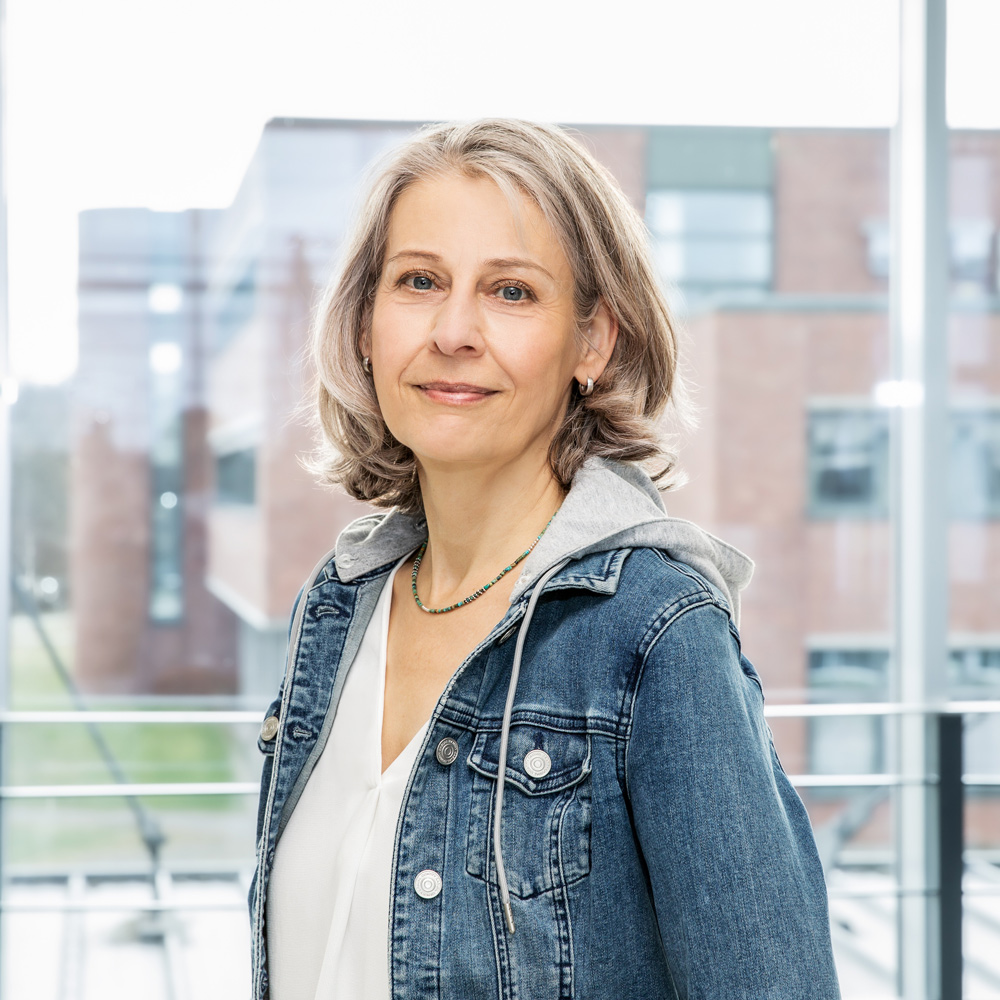
Prof. Dr. Eva Spies is a Professor for the Study of Religion with Focus on Africa at the University of Bayreuth within the Faculty of Humanities & Social Sciences . She holds a PhD in Cultural Anthropology from the University of Mainz and leads the Research Section Moralities in the Africa Multiple Cluster of Excellence (EXC 2052). Key Roles : Principal Investigator, Bayreuth International Graduate School of African Studies (BIGSAS) Vice Dean of Research Co-founder, German Association for the Study of Religion's Africa working group Research Interests span religious plurality, development cooperation, and transformative practices. She coined the concept of religious engineering to analyze how religious resources shape social/political worlds. Regional expertise in Niger/West Africa and Madagascar/Indian Ocean , with focus on: South-South mission Religion and pandemic response Intercultural hermeneutics Epistemological conflicts Material culture in development Projects : Africa Multiple Cluster of Excellence (2025): "Religious engineering. The making of moralities, development and religion in Niger" Humboldt Research Hub (2021): "Fighting pandemics with religion?" (with Moi University and University of Zimbabwe) Education : PhD in Cultural Anthropology, University of Mainz
Dr. Carola Weil serves as Dean of McGill University's School of Continuing Studies and Associate Professor in the Department of Political Science since July 2018, following leadership roles as founding Dean at American University and Senior Associate Dean at USC's Annenberg School. Her educational background includes: Post-Doctoral Fellowship, University of Southern California School of International Service Post-Doctoral Fellowship, Harvard University John F. Kennedy School of Government Belfer Center Ph.D. and M.A. in Political Science, University of Maryland Master of Public Management, University of Maryland B.A. in History (Minor in Politics), Bryn Mawr College Dr. Weil's research centers on human security, migration, and conflict transformation with specialized expertise in gender dynamics in international relations and public diplomacy . Her work bridges policy analysis and practical applications in humanitarian intervention, while her recent focus explores lifelong learning systems and the impact of digital technologies on adult education , addressing evolving workforce demands through innovative educational frameworks. Her publication trajectory reveals a strategic evolution from foundational work on women in international security (1990s) to contemporary analyses of digital media diversity and global communication challenges in higher education. Early scholarship examined military intervention dilemmas in humanitarian crises, later pivoting toward systemic analyses of information ecosystems and educational accessibility in the digital age. Dr. Weil co-founded Women In International Security (WIIS) and serves on multiple non-profit boards, leveraging her dual German-American citizenship and multilingual capabilities to advance organizational development initiatives. Her peacebuilding consultancy spans Pakistan, Afghanistan, Darfur, Colombia, and the African Great Lakes region with specific attention to gender-inclusive journalism practices. Her leadership extends to advising on global strategy for technology-enhanced education and future workforce development, though no formal student advisement lists or grant details appear in the source material.
Bettina Migge is a Full Professor in the School of Languages, Cultures and Linguistics at University College Dublin, where she has been a faculty member since 2004. She previously held academic positions at Goethe University Frankfurt and earned her PhD in Linguistics from The Ohio State University. She served as Head of School from 2016 to 2021 and has held leadership roles in research centers and committees, including the Royal Irish Academy and the Society for Pidgin and Creole Linguistics, of which she is President until 2023. She is Co-Editor of the Journal of Pidgin and Creole Languages and actively contributes to COST Action LITHME, focusing on language and technology. Her educational background includes studies at Universität Hamburg, Université de Cameroun, Freie Universität Berlin, and The Ohio State University, culminating in a PhD focused on African languages in creole genesis, with fieldwork in Suriname and Benin. She is fluent in Dutch, English, French, German, and Ndyuka/Pamaka. Bettina Migge's research centers on sociolinguistics, language contact, and creole languages, with a focus on multilingual contexts undergoing rapid social change such as urbanization and migration. Her work spans French Guiana, Suriname, and Ireland, examining structural and socio-pragmatic aspects of language use, linguistic landscaping, and computer-mediated communication. She has led significant projects like the trilingual DicoNenge(e) dictionary and has explored the role of AI in reshaping language practices. Her recent publications reflect a critical engagement with the impact of AI and machine learning on language, revealing colonial continuities in language technologies and questioning dataist ideologies. She investigates how language is materially produced in both colonial and digital contexts, emphasizing power, authenticity, and control. She has received research funding from the National Science Foundation (USA), IRCHSS, IRC, Ulysses grants, and French research units like SeDyL. Her collaborative projects include work on complementation in creoles, South Dublin English, and language practices in multilingual border zones. Bettina Migge supervises MA and PhD students in sociolinguistics, linguistic landscaping, and World Englishes. She is involved in numerous editorial and professional associations, including the Society for Caribbean Linguistics and The Global Council on Anthropological Linguistics. She has coordinated modules such as World Englishes, Sociolinguistics, and Research in Creole Languages. She leads and participates in public engagement activities, including workshops on AI in linguistics, multilingualism in Ireland, and dictionary launches. Her research team includes collaborators from Europe and beyond, and she is committed to participatory and ethnographically grounded approaches in language documentation and analysis.
Andreas Eckert is Professor and Chair of African History at Humboldt University Berlin, where he also serves as Director of the International Research Centre "Work and Human Life Cycle in Global History" since 2009. Previously, he was Head of Department at the Institute of Asian and African Studies (2008-2009) and Dean of the Faculty of History and Philosophy at the University of Hamburg (2004-2006). His academic career includes visiting professorships at Harvard University, Maison des Sciences de l'Homme in Paris, and Indiana University. Professor Eckert's research focuses on African history in the 19th and 20th century , with particular emphasis on the history of the state, urbanization, and historiography. His scholarly work extends to comparative history of colonialism , history of work/labour history , and global history . His approach combines deep regional expertise in African contexts with transnational and comparative perspectives that challenge traditional historical narratives. Eckert's publication record demonstrates a consistent engagement with themes of state formation, labor relations, urban development, and historical methodology in African contexts. His work spans from detailed case studies of specific regions like Douala and Tanzania to broader conceptual explorations of how Africa fits into world historical narratives. A notable trend in his scholarship is the examination of entangled histories that connect local African experiences with global processes of colonialism, decolonization, and postcolonial state formation. His notable achievements include: 2012 Guest Fellowship at Freiburg Institute of Advanced Study Election as chairperson of "Forum Transregionale Studien" (2011) Major Grant from the German Ministry for Research and Education for the Institute "Work and Human Life Cycle in Global History" (2009) Election as chairperson of "Arbeitskreis für Moderne Sozialgeschichte" (2007) Managing Editor of the Journal of African History (2004-2011) Fellowship in the Royal Historical Society (2000) As Director of the International Research Centre "Work and Human Life Cycle in Global History," Eckert has secured significant funding including a major grant from the German Ministry for Research and Education (2009-2015). He has also served on the Board of the International African Institute in London and has been actively involved in scholarly organizations including the "Forum Transregionale Studien" and "Arbeitskreis für Moderne Sozialgeschichte." Under Eckert's leadership, the International Research Centre "Work and Human Life Cycle in Global History" brings together scholars from multiple disciplines and countries to examine the historical dimensions of work and human life cycles from a global perspective. The center serves as a hub for innovative research that transcends traditional geographic and disciplinary boundaries.
Prof. Dr. Ulrike Freitag is a distinguished scholar in Islamic Studies and social history of the Arab world, holding a Professorship at Freie Universität Berlin and serving as Director of the Leibniz-Zentrum Moderner Orient (ZMO) . Her work bridges urban history, transregional Islamic networks, and Arabian Peninsula studies within Indian Ocean and Red Sea contexts. Education : PhD in Islamic Studies (Freiburg, 1991), Habilitation (Bonn, 2002) Research : Focus on Ottoman urban violence, Saudi state formation, Hadhrami diaspora, and historical urbanism in Jeddah Her supervision of PhD projects spans topics from Moroccan Sufi sanctußen to Yemeni Jewish communities. Recent scientific awards include fellowships at Leiden University and Käthe-Hamburger Kolleg. She contributes to public discourse through Tagesspiegel op-eds and international conferences.
Judith Altrogge is a Researcher at the Institute for Migration Research and Intercultural Studies (IMIS) at the University of Osnabrück . Since August 2019, she has served as a Research Associate in the project TRANSMIT - Transnational Perspectives on Migration and Integration . Her academic journey includes completing her PhD (2017-2020) at the University of Basel and Osnabrück, and prior roles as a Research Associate (2017-19) and Project Assistant (2012-17) at the Arnold-Bergstraesser-Institute (ABI) in Freiburg. Education: PhD candidate (2017-2020) at University of Basel and University of Osnabrück Her research spans Migration and Border Regimes , International Political Sociology , and Practice Theories , with geographic focus on North and West Africa . She critically examines policies of externalization, humanitarianism, and the role of international organizations in migration governance. Her work often addresses postcolonial dimensions of sovereignty and deportation practices. Judith's publications (2018-2022) reflect a thematic concentration on EU-African migration cooperation , forced return mechanisms , and diaspora dynamics . Key contributions include analyses of Gambian migration governance, EU-African policy challenges, and the political economy of migration. Her methodological approach integrates practice theory with empirical fieldwork in West Africa. Currently affiliated with IMIS and involved in the Collaborative Research Center 'Production of Migration' , she contributes to projects under the DeZIM Research Association and participates in networks like IMISCOE . Judith actively collaborates with institutions such as the German Society for International Cooperation (GIZ) and the Arnold Bergstraesser Institute (ABI).
Christiane Fellbaum serves as Lecturer with Rank of Professor in Princeton University's Program in Linguistics and Department of Computer Science, where she has been a senior research scholar since returning in 1987 after postdoctoral work at the University of Paris. Her foundational contributions to computational linguistics include co-developing WordNet and co-founding the Global WordNet Association. Her educational background features: Ph.D. in Linguistics, Princeton University (1980) Postdoctoral Fellowship, University of Paris Fellbaum's research integrates theoretical linguistics with computational applications, specializing in lexical semantics, corpus analysis, and semantic network construction. Her work bridges computational linguistics and lexicography through projects like WordNet and Medical WordNet, with recent emphasis on multilingual resources, bias analysis in embeddings, and African language technology development. She examines semantic phenomena including idioms, verb alternations, and emotion scales through both corpus linguistics and formal ontological frameworks. Analysis of her publication trajectory reveals sustained innovation in lexical resource development since the 2000s, evolving from foundational WordNet studies to contemporary work on large language model adaptation and social bias mitigation. Current research demonstrates increasing interdisciplinary collaboration across NLP, cognitive science, and social justice applications. Her scientific recognition includes: Wolfgang Paul Prize from the German Humboldt Foundation (2001) Antonio Zampolli Prize (2006) Fellbaum has secured continuous research funding from the U.S. National Science Foundation, European Union Seventh Framework, Frank Moss Foundation, and Tim Gill Foundation. She actively mentors junior researchers through Princeton's Independent Work seminars and hosts the North American Computational Linguistics Olympiad (NACLO), while leading major international collaborations including the KYOTO and SIERA European projects. As director of the WordNet project and permanent fellow at the Berlin-Brandenburg Academy of Sciences, she maintains leadership in global lexical resource initiatives through the Princeton Language and Intelligence initiative and Natural and Artificial Minds research group.
Bénédicte Savoy (born May 22, 1972 in Paris) is a renowned French art historian and Professor of Modern Art History at the Technical University of Berlin since 2009. Since 2016, she has also held positions at the Collège de France in Paris (2016-2021) and in November 2024 was appointed to the 'Cátedra del Prado' visiting professorship at the Prado Museum in Madrid. She is internationally recognized as a leading expert on cultural property restitution, particularly regarding colonial-era art theft and looted artifacts. Her research focuses on the complex histories of cultural displacement, with particular emphasis on European museums' colonial collections. Savoy has pioneered critical approaches to provenance research and has been instrumental in reshaping global debates about museum ethics and restitution practices. Her work bridges art history, postcolonial studies, and cultural policy, challenging traditional museum narratives and advocating for more transparent and ethical approaches to cultural heritage. Savoy's publications form a cohesive intellectual trajectory examining how cultural property has been transferred, often forcibly, across borders and continents. Her recent work increasingly focuses on African cultural heritage in European collections, with detailed case studies of Cameroon and broader analyses of restitution politics. The themes of historical justice, museum transparency, and decolonization of cultural institutions run consistently through her scholarship. Gottfried Wilhelm Leibniz Prize (2016), Germany's most prestigious research award TIME 100 most influential people in the world (2021) Ritterin der französischen Ehrenlegion (2022) Deutscher Kulturpolitikpreis (2022) Berliner Wissenschaftspreis (2023) Clark Prize for Excellence in Arts Writing (2024) Prix Européen de l'Essai 2025 (2025) As co-author of the groundbreaking 2018 report on African cultural restitution commissioned by French President Emmanuel Macron, Savoy has significantly influenced international policy. Her work has secured major research funding, including collaborative projects with African scholars. She has led influential research teams examining colonial collections, most notably the seven-member team that produced the 'Atlas der Abwesenheit' documenting Cameroonian cultural heritage in Germany. Her advocacy continues to shape museum practices worldwide, pushing institutions toward greater accountability regarding their colonial-era acquisitions.
Dr. Jochen Lingelbach is a Research Associate at the Chair of African History within the Faculty of Cultural Studies at the University of Bayreuth, working in the Cluster of Excellence "Africa multiple. Reconfiguring African Studies" since 2019. He earned his doctorate in 2018 from the Institute of African Studies at the University of Leipzig, where he had previously worked as a doctoral student and research assistant in the DFG Research Training Group "Fracture Zones of Globalization" from 2012-2016. Prior to that, he was a Research Associate at the Centre Marc Bloch in Berlin (2016-2017). His academic background includes studies in Geography and African Studies at the University of Leipzig and the University of Dar es Salaam (2003-2010). Dr. Lingelbach's research focuses on migration history, particularly colonial history (with emphasis on German and British contexts), the history of East Africa (especially Tanzania and Uganda), and the history of refugee camps and international refugee aid organizations. His work demonstrates a strong interdisciplinary approach that bridges historical analysis with contemporary refugee studies. His publication record reveals consistent scholarly output with a clear thematic focus on refugee movements during and after World War II, particularly examining Polish refugees in colonial Africa. His recent work has expanded to include comparative analyses of refugee experiences across different historical periods, including connections to contemporary refugee situations such as the Ukrainian crisis. The publications demonstrate expertise in both European and African historical contexts, with particular attention to the intersections of race, colonial administration, and refugee status. Dr. Lingelbach is actively involved in several academic networks including the Working Group Africa in the Refugee Research Network, the Network for Displaced Persons Research, and AEGIS CRG African Migration, Mobility, and Displacement (AMMODI). His current research project, "Africa in the Global History of Refugee Camps (1940s to 1950s)," builds upon his completed doctoral work on "Polish refugees during and after the Second World War in East and Central Africa," demonstrating a sustained commitment to understanding refugee movements within colonial contexts and their implications for contemporary refugee studies.
Prof. Dr. Henning Klöter is Professor of Modern Chinese Languages and Literatures at Humboldt University of Berlin (HU Berlin) and serves as Dean of the Faculty of Culture, Language and Education. He is affiliated with the Institute of Asian and African Studies and the Department of East Asian Studies. He has been a faculty member since 2015 and leads significant research in sociolinguistics, language planning, and Sinophone studies. His educational background includes studies in Sinology, German Studies, and Linguistics at the University of Trier, Capital Normal University (Beijing), Leiden University, and National Taiwan University. He earned his doctorate from Leiden University in 2003 and completed his habilitation at Ruhr University Bochum in 2010. Henning Klöter's research focuses on multilingualism, language planning, the history of Chinese linguistics in Europe—especially missionary and colonial linguistics—historical sociolinguistics, Overseas Chinese communities, and Taiwan Studies, with regional interests spanning the PRC, Hong Kong, Macao, Singapore, the Philippines, and Taiwan. His work often explores the ideological and political dimensions of language standardization and visibility in public space. Since 2023, he has been Chief Editor of the Journal of Asian Pacific Communication. His recent scholarly output reveals a strong trend in historical and sociopolitical aspects of Chinese language use, particularly across Sinophone regions. Themes include language policy divergence between Taiwan and the PRC, linguistic landscape analysis in Taipei, missionary lexicography, and the evolution of Chinese linguistic standards. His publications bridge historical documentation with contemporary sociolinguistic theory, emphasizing pluricentricity and ideological influences on language. Chief Editor, Journal of Asian Pacific Communication (since 2023) Principal Investigator, ChinGram (Erasmus+ project) Principal Investigator, EMHo (DFG Weave project) He has not received any explicitly mentioned scientific awards in the provided texts. Prof. Klöter is actively engaged in major research initiatives and editorial leadership, contributing significantly to the academic understanding of language in Chinese-speaking societies. He is involved in the Mori-Ōgai Memorial and contributes to the academic community through research projects, publications, and institutional leadership. His work often intersects with cultural memory, colonial history, and linguistic identity in East Asia.
Claire Mouflard is an Associate Professor of French at Hamilton College , specializing in contemporary French and francophone literature, culture, and film. Her teaching and research focus on immigrant identities, postcolonial theory, digital humanities, and intersectional feminism. Department: German, Russian, Italian, and Arabic Areas of Study Academic Rank: Associate Professor Email: cmouflar@hamilton.edu Research Interests include: Immigrant representation in French cinema and literature Digital humanities and new media Postcolonial feminisms Twentieth and twenty-first-century Francophone narratives Scientific Awards include the Dean’s Scholarly Achievement Award (Hamilton College, 2021) and Andrew W. Mellon Foundation Grant (Union College, 2016). Selected Publications analyze intersectionality in French cinema, digital authority in Francophone texts, and postcolonial diasporic literature.
Katrin Bromber is a German Researcher at the Centre for Modern Oriental Studies in Berlin, where she has led the research group "Progress and its Discontents: Ideas, Practices, Materiality" since 2014. Her career spans senior research roles at ZMO and academic teaching positions at the University of Vienna. Nationality: German. Language skills: Native German, fluent English/Swahili, moderate Amharic, good reading knowledge in French/Russian, basic Tigrinya. Habilitation (2009–): African Studies, University of Vienna PhD (1993): African Linguistics, University of Leipzig MA (1988): Swahili Studies, University of Leipzig Katrin Bromber's research interrogates intersections of body politics , sports history , Swahili linguistics , and Ethiopian modernity . Her work traces how physical culture, media representation, and colonial/imperial narratives shape national identities across Africa and Asia. Current focus: "Progress" as contested concept in Ethiopian and Gulf urbanism. Key article trends reflect her translocal methodology: 2017 studies on Ethiopian stadiums and fitness culture ; 2014-2013 publications analyzing East African military press , sports branding in the Gulf , and Swahili poetry ; 2007-2000 works on colonial linguistic politics , Indian Ocean slavery , and German colonial Swahili promotion . Recurring sub-fields: body as political text, translocal modernity, media historiography. Scientific Awards: Research Grant of the Berlin City Council (1999-2000): Gendered Slavery study Service to the Scientific Community: Chairwoman, Academic Association for Horn of Africa Studies (2012–) Editorial Advisory Board - Stichproben. Vienna Journal of African Studies (2015–) Editorial Advisory Board - Studies of Department of African Languages and Cultures (2015–) Teaching Experience: Textlinguistics, Mediacommunication, African Linguistics, Swahili (elementary/advanced), Swahili Literature, Swahili in Arabic Script at Leipzig, Humboldt-Berlin, Free Berlin, and Vienna universities Anthropology of the Body at Mekelle University Summer School Field Research: Tanzania (1993-2003): Swahili Poetry, Intellectual History Kenya (2005): Indian Ocean WW2 UAE/Bahrain (2009): Sports and Body Cultures Ethiopia (2009-2015): Sports, Body Politics
Professor Sarah Stockwell is a leading scholar in the History of Empire and Decolonization at King's College London, affiliated with the Faculty of Arts & Humanities and the Department of History. She joined King’s in 1992 after studies at Cambridge and Oxford, and became a full-time professor following a flexible part-time period from 2002 to 2017. She leads the Empires and Decolonizations Research Hub and co-convenes the World and Imperial History Seminar at the Institute of Historical Research. Her research focuses on 20th century British colonial and postcolonial history, particularly decolonization processes in Africa, the role of institutions like Oxford/Cambridge, and the Anglican Church’s engagement with decolonization. Key works include The British End of the British Empire (2018) and edited volumes on development in post-colonial Africa. Recent publications analyze British business strategies during decolonization, postcolonial development aid, and institutional transitions. She has delivered lectures globally and participated in major conferences such as the North American Conference of British Studies and German Historical Institute events. Her work emphasizes transnational histories and the legacy of empire on contemporary institutions.
Susannah Heschel is the Eli M. Black Distinguished Professor of Jewish Studies at Dartmouth College , chair of the Jewish Studies Program, and faculty member of the Religion Department. She is currently the Joseph Engel Visiting Professor for 2025-2026 at Swartz Hall, Cambridge, and a Guggenheim Fellow researching European Jewish scholarship on Islam. Education: A.B. from Trinity College, M.T.S. from Harvard Divinity School, Ph.D. from the University of Pennsylvania. Research Interests: Her work bridges Jewish and Protestant thought (19th-20th centuries), focusing on biblical scholarship, antisemitism, and Jewish perceptions of Islam. She explores intersections of race, gender, and ethics, particularly in Nazi Germany and modern prophetic traditions. Publications Trends: Recent articles examine Holocaust-era biblical interpretation, prophetic leadership in civil rights, racial theology, and sensory dimensions of antisemitism. Her scholarship spans historical analysis, ethical critique, and interdisciplinary engagements with theology and politics. Scientific Awards: Guggenheim Fellowship National Humanities Center Fellowship Wissenschaftskolleg in Berlin Fellowship Moses Mendelssohn Prize (Leo Baeck Institute) Five Honorary Doctorates Elected Member, American Society for the Study of Religion and American Academy for Jewish Research Grants & Visiting Roles: Recipient of Ford Foundation and Carnegie Corporation grants. Visiting professorships at Universities of Cape Town, Frankfurt, Princeton, Edinburgh, and Lucerne. Convening a 2026 conference on 'Sexual Violence and Antisemitism' with Carnegie support.