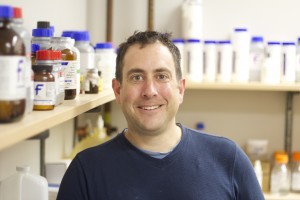
David Donald Hansen is Professor and Head of Biological Sciences at University of Calgary, leading research on stem cell regulation using C. elegans model systems. His work examines proteasomal control of germline development and balance between proliferation/differentiation decisions. Honored with multiple teaching awards including Killam mentorship and U Make a Difference awards. Research Focus: Genetic controls of germ line development in C. elegans Proteasome regulation of chromodomain proteins RNA-binding proteins in oocyte maturation
Hugh Clarke, PhD is a Senior Scientist at the RI-MUHC, Glen site and a Professor in the Department of Obstetrics and Gynecology at McGill University 's Faculty of Medicine and Health Sciences. His research focuses on oocyte development within ovarian follicles. Research Interests: Oocyte growth and maternal molecule storage Germ cell-somatic cell communication Environmental toxin effects on oocyte quality Intercellular signaling mechanisms mRNA regulation during maturation Chromatin remodeling at fertilization Publications (2015-2024) reveal expertise in reproductive biology, with key projects examining: EGFR signaling in follicular decoupling mTOR pathway in follicle communication CNOT6-mediated mRNA deadenylation Transzonal projection architecture Epigenetic inheritance patterns Actin's role in meiotic processes Location: Lab F3-50, Royal Victoria Hospital, Montreal, QC H3A 1A1
Catherine Fallet-Bianco is a Clinical Professor of Neuropathology at the University of Montreal's Faculty of Medicine and the Department of Pathology and Cell Biology. She is affiliated with the CHU Sainte-Justine, a leading pediatric hospital, and holds roles such as President of the Medical Act Review Subcommission. Her career spans over two decades, including academic appointments at Parisian universities and international collaborations in Tunisia. She specializes in fetal and pediatric neuropathology, focusing on neuronal migration disorders, epilepsy, and environmental impacts on brain development. Her research expertise includes congenital malformations, prematurity-related brain lesions, and genetic mutations' roles in developmental anomalies. Notable awards include the 2006 prize for best poster presentation at the SLAPPE conference. She has contributed to over 50 peer-reviewed articles, advancing knowledge in tubulin gene mutations, mTOR pathway variants, and Zika virus vertical transmission. Her work bridges clinical practice, research, and education, with a global impact on pediatric neuropathology. Affiliations: CHU Sainte-Justine, Université de Montréal, Canadian Association of NeuroPathologists, SOFFOET (Fetal Pathology Society). Grants & Advising: Extensive publications in genetic and developmental disorders, with a focus on prenatal diagnosis and molecular mechanisms. Labs/Teams: Collaborates with international teams on fetal neuropathology and genetic syndromes.
Dr. John Brubacher is an Assistant Professor in the Department of Biology at Canadian Mennonite University (CMU), where he has worked since 2008. His research focuses on the regenerative capabilities of planarians, a type of flatworm, to study cell behavior during development and healing. He also teaches courses like The Genetic Revolution , emphasizing historical experiments in genetics. Research Interests: Dr. Brubacher's work explores how planarians regenerate entire organisms from fragments, including collaborations with the Morgridge Institute for Research. His studies aim to understand cellular migration, differentiation, and organization in normal and injured worms, contributing to broader insights in regenerative biology. Scientific Awards: None explicitly mentioned in the text.