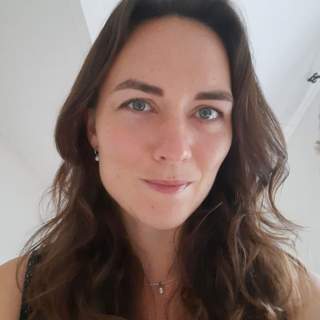
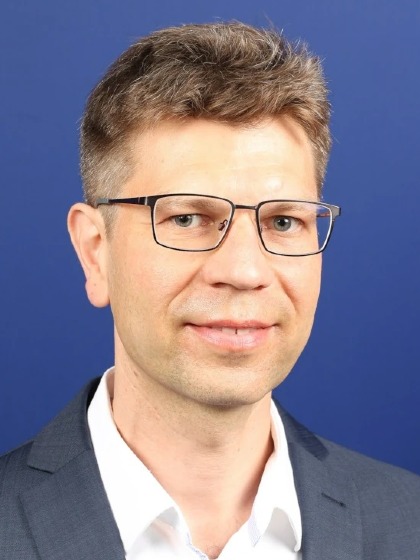
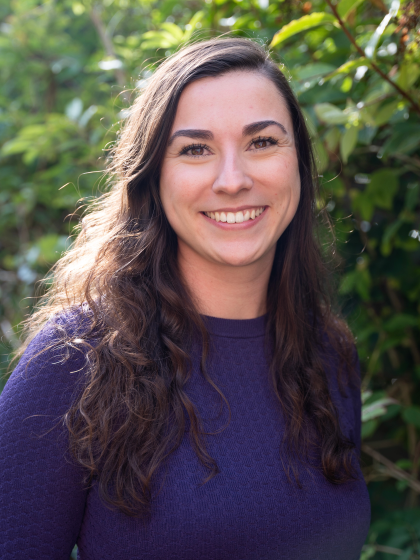
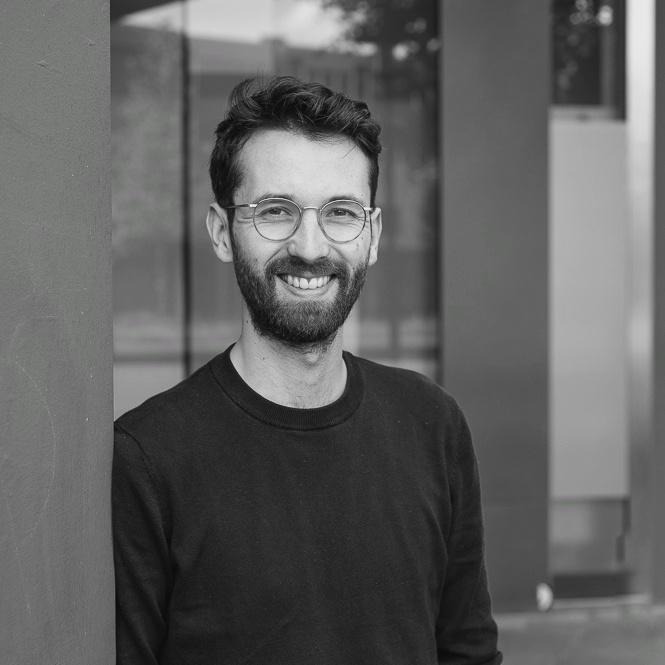
Dr. Christa van IJzendoorn is an Assistant Professor in Nature-Based Solutions for Dynamic Delta Challenges at Utrecht University's Faculty of Geosciences. She holds a Ph.D. in Coastal Engineering from Delft University of Technology and conducted postdoctoral research at Oregon State University. Her work focuses on quantifying aeolian sediment transport to predict coastal dune evolution and design nature-based solutions for climate resilience. She leads the development of the open-source AeoLiS model and created the Jarkus Analysis Toolbox. Her research integrates field measurements and numerical modeling to address delta adaptation challenges. Education: BSc/MSc in Earth Sciences (Utrecht University), PhD in Coastal Engineering (Delft University of Technology). Professional roles include junior researcher at Deltares and postdoc at Oregon State University. Research interests include coastal dynamics, climate change impacts, numerical modeling, and delta sustainability. She contributes to Utrecht University's Future Deltas research group, emphasizing Water, Climate, and Future Deltas pathways. Key tools: AeoLiS numerical model, Jarkus Analysis Toolbox. Collaborations span academic and applied sectors, with a focus on open-source software and interdisciplinary approaches.
Prof. J.W.M. Gerrits is a Full Professor at Vrije Universiteit Amsterdam’s School of Business and Economics, Department of Knowledge, Information and Innovation, and affiliated with the Amsterdam Business Research Institute and KIN Center for Digital Innovation. His work bridges organizational innovation and technology, with a focus on IT-driven business process optimization, internet applications, and technology’s role in enhancing organizational capabilities. He holds ancillary roles as an advisor at Woxsen University and director at Newtech Solutions. Research interests include innovation management, e-business models, entrepreneurship, and agent-based simulations of social and behavioral phenomena. Notable areas of exploration involve emotion recognition in virtual environments, legal/ethical AI implications, and crowd behavior analysis. His teaching includes the Digital Entrepreneurship Project course. Recent work emphasizes AI ethics, social robotics in healthcare, and computational models of emotion contagion. His publications span interdisciplinary topics like panic amplification in crowds, gamified mental health interventions, and domain-adaptive sentiment analysis tools like SentiMap. Labs/teams: Active contributor to the KIN Center for Digital Innovation and Amsterdam Business Research Institute.
Alex Levering is an Assistant Professor in socio-cultural landscape interactions at the Faculty of Science, Vrije Universiteit Amsterdam. He is affiliated with the Institute for Environmental Studies (IVM) and specializes in remote sensing, geo-information sciences, and computer vision applications. His work focuses on landscape semantics, AI interpretability, and combining visual/non-visual data for predictive models. Education : PhD in Remote Sensing (2024), Wageningen University MSc in Geo-Information Sciences (2019), Wageningen University BSc in Water Management (2016), Hogeschool Zeeland Research Interests : Levering explores how computer vision and GeoAI can quantify landscape quality preferences, model urban liveability from aerial/satellite imagery, and improve AI model interpretability. He also investigates small dataset challenges and integrates social media data for environmental monitoring. Current Projects : Leading roles in projects like 'Guiding Human Settlements Towards Sustainable Development' (2019–2024), focusing on urban densification and environmental impact assessments. Collaborations with institutions like the Hong Kong University of Science and Technology (Guangzhou) as an advisor (2025–2027). His recent publications emphasize multimodal learning, urban liveability prediction, and explainable AI for socioeconomic analyses. No scientific awards are explicitly listed in the provided texts.
Thomas van Dijk is an Assistant Professor in the Department of Mathematics and Computer Science at Eindhoven University of Technology. His research focuses on algorithmic spatial data analysis with contributions to UN Sustainable Development Goals. He teaches the course 'Algorithms Engineering' starting September 2024. Affiliation: TU Eindhoven Department: Mathematics and Computer Science His work integrates algorithmic methodologies with spatial data challenges, addressing real-world sustainability issues through computational approaches. Current research emphasizes scalable algorithms for geospatial applications. No publications or grants are listed in the provided information.
Dr. Ingrid Mulder is a researcher and educator at the Faculty of Industrial Design Engineering, Delft University of Technology. She is affiliated with the Human-Centered Design department and focuses on participatory design, social innovation, and open data ecosystems. She teaches courses such as Designing Transformation and supervises Master Honours Projects. University: Delft University of Technology School: Faculty of Industrial Design Engineering Department: Human-Centered Design Email: I.J.Mulder@tudelft.nl Her research centers on human-centered and co-design approaches to social change, particularly in urban and digital contexts. Key areas include open data literacy, sustainable fashion, and civic innovation. She emphasizes participatory methodologies that engage diverse stakeholders in systemic transitions. The recent publications show a strong trend in leveraging design to empower communities through open data, education, and sustainable production. Her work bridges design theory with real-world applications in governance, fashion, and urban development. Scientific Awards: Best paper award for Data Exploration for Generative Design Research (DRS 2018) Best Paper Award for Agorà 2.0: Designing Hybrid Communities (C&T 2013) She actively supervises student projects and contributes to design education at the master’s level. Her work often involves interdisciplinary collaboration with researchers in data science, education, and sustainability. While no formal lab is mentioned, her projects suggest involvement in design innovation initiatives such as DESIGNSCAPES, focusing on urban challenges.
Caroline Gevaert is an Associate Professor at the University of Twente’s Faculty of Geo-Information Science and Earth Observations (ITC), specializing in drone imagery, artificial intelligence, and geospatial data analysis for sustainable urban development in informal settlements. She bridges technical innovation with humanitarian applications, particularly in slums across Africa, South America, and Asia. PhD in Informal Settlement Mapping with UAV Imagery (cum laude) - University of Twente, 2014 MSc in Geographical Information Systems - Lund University, Sweden (2012-2014) MSc in Remote Sensing - University of Valencia, Spain (2012-2013) BSc in International Land and Water Management - Wageningen University, Netherlands (2008-2011) Her research focuses on overcoming satellite imagery limitations in tropical regions through drone-based 3D modeling and AI-driven automated mapping. This work enables precise infrastructure planning in slums, improving accessibility for essential services like healthcare and waste management. She collaborates with the World Bank and develops responsible AI frameworks for geospatial data interpretation in developing countries. Gevaert has received multiple accolades, including the prestigious NWO Veni grant and the J.M. Tienstra Research Prize. Her expertise in GIS and drone technology has made her a key figure in humanitarian geo-intelligence, influencing policy decisions in Rwanda and beyond.
Dr. Ville Lehtola serves as Assistant Professor in the Department of Earth Observation Science within the Faculty of Geo-Information Science and Earth Observation (ITC) at the University of Twente. Additionally, he holds an Associate Professor (Dosentti) position in Computational Science, specializing in Multi-Sensor Fusion and Machine Learning, at the University of Jyväskylä's Faculty of Information Sciences. His research centers on indoor and mobile mapping, with core expertise in simultaneous localization and mapping (SLAM), multi-sensor fusion, and AI-driven data analysis. He investigates perception sensors and data processing across urban, indoor, forest, and maritime environments, addressing challenges in measuring while moving and interpreting scanned data through machine learning techniques. His work bridges geospatial science and autonomous systems development. Key applications include autonomous vehicles (cars, forest machinery, and ships) and automated 3D indoor modeling for Building Information Modeling (BIM) digital twins in construction. His technical proficiency spans Computer Science, Point Cloud Modeling, Earth and Planetary Sciences, Cartography, and Laser Scanning technologies, driving innovations in spatial data acquisition and analysis.
Dr. Gerald Leppert is a Senior Economist at the Global Center on Adaptation (GCA) and affiliated with the Faculty of Science and Engineering at the University of Groningen. With a PhD from the University of Cologne, his expertise spans climate change adaptation, social risk management, and development economics. He leads the Research for Impact team at GCA, focusing on rigorous impact assessments, mixed-methods designs, and causal analysis. His work addresses climate adaptation strategies, public health systems, and social protection mechanisms in low- and middle-income countries. Recent research includes nature-based solutions for adaptation, energy access in rural Africa, and policy evaluations for disaster resilience. He collaborates with institutions globally, contributing to evidence-based policy frameworks to mitigate climate and health risks. His interdisciplinary approach integrates geospatial data, remote sensing, and participatory methods to enhance evaluation rigor.
Dr. Julia Doornbos is a Lecturer at University College Groningen, affiliated with the Department of Social Sciences at the University of Groningen. She serves as Director of Academic Staff, overseeing faculty development and teaching excellence. Her research focuses on postcolonial geographies, diaspora experiences, and inclusive urban spaces, with particular attention to ethics in qualitative methodologies and participatory research approaches. Research highlights include a postdoctoral project (NWO 2023-2026) examining everyday geographies of disability and a collaborative Erasmus+ project digitizing multicultural folktales across European cities. Her doctoral work (2018-2023) explored intergenerational transmission of colonial histories among Indo-European families in the Netherlands, supervised by Dr. Bettina van Hoven and Dr. Peter Groote. In teaching, she designs courses such as Postcolonial Theory, Qualitative Data Analysis, and Academic Skills modules. Her pedagogical innovations include experiential learning frameworks for ethics education in geospatial data handling. Current projects emphasize community-based co-creation and decolonizing academic practices.
Taede Tillema is a Professor by Special Appointment in Transport Geography at the Faculty of Spatial Sciences, University of Groningen . He also serves as a strategic advisor at the Dutch Ministry of Infrastructure and Water Management (IenW) , bridging academic research with policy implementation in transportation and spatial planning. Specializes in rural accessibility, mobility patterns, and smart mobility solutions Contributes to UN Sustainable Development Goals (SDGs) in sustainable cities and communities Active in interdisciplinary collaborations across geography, engineering, and policy analysis Education: Civil Engineering & Management (specialization in Traffic and Transportation), University of Twente PhD in Transport Geography, Utrecht University Postdoctoral research on digital communication and physical mobility Research Trends focus on rural transport equity, multimodal integration, and governance challenges. Recent work explores 15-minute city adaptations , transport-related social exclusion , and maritime governance in the Global South . Projects: Principal Investigator for AccessCity4All (2024-2027) on active mobility in diverse neighborhoods Collaborator in rural mobility hub governance studies
Marco Testoni is an Assistant Professor of Strategic Management at Tilburg University in the TS Economics and Management department. His research focuses on corporate strategy, particularly mergers and acquisitions (M&A), analyzing factors influencing firms' ability to appropriate value from acquisitions. He employs diverse datasets, including smartphone geolocation, transportation, patent text, and news text. His work has been published in top journals like the Strategic Management Journal and recognized with awards such as the Wiley Blackwell Outstanding Dissertation Award and the Best Corporate Strategy Interest Group Proposal at the Strategic Management Society Annual Conference. Affiliations: Institution: Tilburg University Department: Strategy & Entrepreneurship Research Group: Strategy and Entrepreneurship Education: PhD: Business Administration, UCLA Anderson School of Management (2014–2019) MSc: Economics and Management of Innovation & Technology (Bocconi University, 2009–2012) BSc: Economics and Social Sciences (Bocconi University, 2006–2009) Research Themes: Market competition in corporate control Signaling effects on target valuations Data-driven M&A analysis (e.g., geospatial, patent text) Grants and Projects: Co-Investigator: R&D Organizational Choices and Innovation Performance in the Biopharmaceutical Industry (2020–2025) Awards: Wiley Blackwell Outstanding Dissertation Award in Strategic Management Best Corporate Strategy Interest Group Proposal (Strategic Management Society) Advising & Grants Narrative: While no formal student advisees are listed, his research collaborations (e.g., with Contigiani, Sakakibara, Chen) reflect academic partnerships. His grants focus on biopharmaceutical innovation and strategic M&A dynamics. Labs/Teams: No specific lab mentioned, but affiliated with Tilburg’s Strategy & Entrepreneurship research group.
Arjen van Lin is an Associate Professor at the Department of Marketing, School of Economics and Management, Tilburg University. His research focuses on consumer behavior, retail strategy, and environmental sustainability, with a particular emphasis on food waste reduction and digital customer engagement. He contributes to the United Nations Sustainable Development Goals (SDGs) through his work on sustainable consumption practices. University: Tilburg University School: School of Economics and Management Department: Department of Marketing Email: A.VanLin@tilburguniversity.edu Van Lin's research explores the intersection of marketing, environmental sustainability, and consumer psychology. Key areas include the impact of price promotions on household food waste, the role of nutritional warning labels in retail pricing, and the spatiotemporal dynamics of grocery chain expansions. His work combines empirical analysis with Bayesian modeling to address complex market behaviors. Recent publications highlight trends in retail analytics , consumer waste behavior , and sustainable consumption . These studies often examine how policy interventions (e.g., banning unsolicited store flyers) influence retail outcomes and consumer decisions.
National Research Institute for Mathematics and Computer ScienceNetherlands
Eric Pauwels is a Scientific Staff Member at Centrum Wiskunde & Informatica (CWI) in Amsterdam, The Netherlands, affiliated with the Intelligent and Autonomous Systems department. His research spans interdisciplinary domains including transportation systems, energy markets, and behavioral economics. Key Research Areas: Transportation demand modeling, machine learning applications in mobility, reinforcement learning for cooperative systems, and energy systems optimization. Active Projects: ALIGN4energy (aligning citizen behavior with systems), Energy Intranets (NEAT project), and industrial collaborations like Impactstudie Noord/Zuidlijn. Scientific Contributions: 2005 ERCIM Best Working Group Prize recipient, with expertise in discrete choice modeling, wavelet analysis, and production scheduling optimization. Publications: Recent work focuses on bicycle-train integration, electric vehicle bidding frameworks, and CKLS financial process analysis. Contact: Email Eric.Pauwels@cwi.nl , Phone +31 20 592 4225 (Room M358).
Dr. Erik-Jan van Kesteren is an Assistant Professor in the Methodology and Statistics department at Utrecht University , where he leads the ODISSEI Social Data Science (SoDa) team. His work bridges statistical methodology with computational social science, with a focus on synthetic data, Bayesian inference, and open research infrastructure. Current research initiatives include: Developing privacy-preserving synthetic data frameworks Improving computational approaches to structural equation modeling Addressing geospatial sampling bias in volunteer-collected datasets Exploring text-based personality computing and language association tools He maintains the department's compute server infrastructure and contributes to open-source projects like ArtScraper and osmenrich. Contact via e.vankesteren1@uu.nl or erikjanvankesteren@pm.me
Jeremy Faludi is an Assistant Professor of Design for Sustainability at Delft University of Technology's Faculty of Industrial Design Engineering. With a strong background spanning both physics and design, he brings a unique interdisciplinary perspective to sustainable product development and manufacturing. His work bridges academic research and industry application, focusing on practical solutions for environmental challenges in design and manufacturing. Dr. Faludi's educational background includes a PhD in Mechanical Engineering from the University of California (2017), an ME in Product Design from Stanford University (2003), and a BA in Physics from Reed College (1995). Before returning to academia, he spent fifteen years working as a sustainable designer in industry and taught green product design at prestigious institutions including Stanford, Dartmouth, and Minneapolis College of Art and Design. His research focuses on sustainable design methods and metrics, with particular emphasis on whole system mapping, life cycle assessment, biomimicry, and sustainable additive manufacturing. He has developed numerous tools for health hazard assessment, product reparability evaluation, and LCA software interface improvements. His work in green 3D printing is particularly notable, where he has published the most comprehensive life cycle assessments in the additive manufacturing industry and written policy recommendations for the OECD. Dr. Faludi's publications reveal a strong trend toward practical applications of sustainable design principles across multiple domains. His recent work addresses climate footprint analysis of clinical trials, reparability scoring systems, circular economy applications in medical devices, and sustainable additive manufacturing frameworks. His research consistently bridges theoretical sustainability concepts with practical implementation strategies for industry. Contributed to six books on sustainable design, including the influential Worldchanging: A User's Guide for the 21st Century Designed the Biomimicry Institute's first online database (AskNature.org) Bicycle design featured in Smithsonian Cooper-Hewitt Design Museum's 2007 exhibit "Design for the Other 90%" Created StreetNatureScore.com using 11 billion satellite data points Authored multiple online courses including VentureWell's Tools for Design and Sustainability Dr. Faludi actively collaborates with industry through multiple research projects including DesHealth, DiCE (Digital health in a Circular Economy), PROMPT, and ShaRepair. His work contributes significantly to UN Sustainable Development Goals related to sustainable cities, responsible consumption, climate action, and industry innovation.