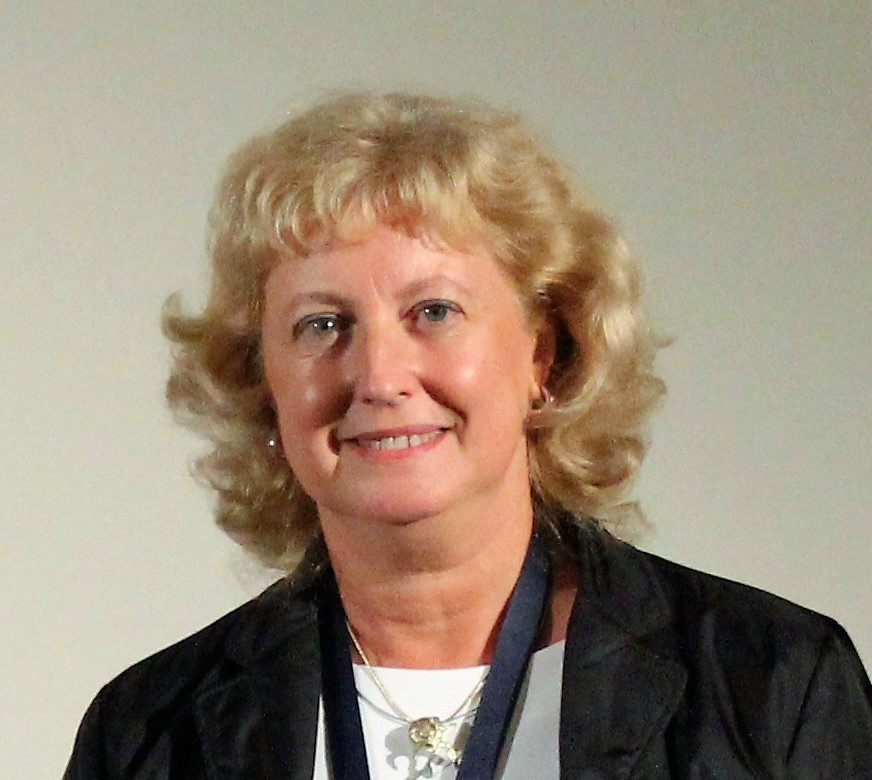
Mauro Serpelloni is a Full Professor of electrical and electronic measurements at the University of Brescia's Department of Information Engineering. His expertise spans electronic instrumentation, sensors, and biomedical applications, including wearable and implantable devices. He has held roles as Associate Professor (2010–2021) and Postdoctoral Researcher (2006–2010), and conducted visiting research at the Universitat Politècnica de Catalunya (2004–2005) and Université Pierre et Marie Curie (2011–2012, 2014). Education: Master's (2003) and Ph.D. (2006) in Electronic Instrumentation from the University of Brescia. Research interests focus on wearable sensors, energy-harvesting systems, and printed electronics. His work includes developing implantable force-measurement devices for knee prostheses and wireless systems for biomedical monitoring. Publications include 15+ recent articles on topics like aerosol jet printing, wearable tracking systems, and electrochemical biosensors. He manages a lab for aerosol jet printing and serves on technical committees for conferences like IEEE Sensors and I2MTC.
Luigi Amedeo Bianchi is an Associate Professor in the Department of Mathematics at the University of Trento. His expertise spans stochastic processes, partial differential equations, fluid mechanics, and probability theory with a focus on stochastic partial differential equations. He has contributed to areas like turbulence modeling, stochastic fluid dynamics, and mathematical physics. His work bridges theoretical mathematics with applications in cosmology, astrophysics, and education through Olympiad mathematics resources. Research interests include stochastic differential equations under Gaussian noise, fractional processes, and modulation equations in unbounded domains. He has published extensively on topics ranging from stochastic Navier-Stokes equations to logical reasoning in mathematical competitions. His recent work (2023-2024) explores Wagner Framework systematization in graph theory and reinforcement learning, alongside improved cosmological data analysis methods. Notable contributions include textbook authorship on probability theory with exercises, and editorial work honoring prominent stochastic analysts. His publications reflect interdisciplinary engagement with both pure and applied mathematical challenges. Academic career includes teaching and research activities at the University of Trento, though specific educational background details are not provided here. No listed awards or grants are mentioned in the current data.
Emma Frosina is an Associate Professor at the Department of Engineering (DING) of the University of Sannio, Italy. Her research focuses on fluid machinery, thermal management systems, and computational fluid dynamics (CFD) with applications in automotive and railway sectors. Academic Rank: Associate Professor Department: Engineering (DING) Email: frosina@unisannio.it Her work emphasizes fault detection in pumps using machine learning, optimization of liquid cold plates via DOE and CFD, and analysis of cavitation in spool valves. Recent publications highlight collaborations with researchers like Senatore, Romagnuolo, and Borriello. Key themes from her 15 most recent publications include: Advancements in condition monitoring for electric gear pumps Innovations in pressure ripple reduction via CFD Development of vibroacoustic tools for fault detection Optimization of thermal management systems in railway and automotive contexts
Eleonora Anna Romano is a Researcher at the Department of Mathematics (DIMA) of the University of Genoa . She teaches Geometry and Linear Algebra courses for degree programs in Mechanical Engineering, Mathematics, and Mathematical Statistics and Computer Data Processing. Her research focuses on algebraic geometry, particularly in the study of Fano manifolds, C*-actions, and birational geometry. Her recent publications (all from 2022) explore topics such as the classification of Fano 4-folds with specific Lefschetz defects and Picard numbers, small modifications of Mori dream spaces, and manifold structures with multiple projective bundles. She can be contacted at eleonoraanna.romano@unige.it or romano@dima.unige.it to arrange office hours.
Umberto Morbiducci is Full Professor of Industrial Bioengineering at the Department of Mechanical and Aerospace Engineering (DIMEAS) , Politecnico di Torino , Italy. He holds a Master's degree in Electronic Engineering from University of Rome La Sapienza and a PhD in Mechanical Engineering from Università Politecnica delle Marche, Ancona. He serves as Coordinator of Biomedical Engineering BS/MS programs and heads the Biomedical Simulations Unit since 2012. Research Interests focus on cardiovascular fluid mechanics , computational hemodynamics , digital twin , and in silico medicine . His work spans Prosthesis and artificial organ design Multiscale modeling (from atomistic to continuum) Dynamic culture devices (bioreactors) for tissue engineering Transport phenomena in biomedical systems Recent Articles highlight trends in hemodynamic risk assessment , stent design optimization , and AI-driven cardiovascular diagnostics . Key topics include coronary plaque stability, YAP mechanoactivation in vascular grafts, and CPAP device mechanics. Scientific Awards : Jack Perkins Prize (IPEM, 2018) ASME Swiss Section Young Engineer Award (2013) ESB Travel Award (2012) TERMIS Travel Award (2012) Editorial Roles : Associate Editor, Annals of Biomedical Engineering (2013-) Associate Editor, Frontiers in Cardiovascular Medicine (2017-) Associate Editor, Journal of Biomechanics (2022-) Editorial Board, Computers in Biology and Medicine (2021-) Labs & Collaborations : Board member, PoliToBIOMed Lab (80+ researchers) Bilateral agreements with Beihang University (China) and Cyprus University of Technology Scientific Director for projects with Istituto Superiore di Sanità
Letizia Scuderi is a Tenured Associate Professor at the Department of Mathematical Sciences 'GL Lagrange' (DISMA) , Politecnico di Torino. She is affiliated with the College of Mathematical Engineering and contributes to teaching in Chemical and Sustainable Process Engineering, Mathematics for Engineering, and Aerospace Engineering programs. Her research focuses on numerical methods for wave propagation problems, particularly acoustic and elastic waves in bounded and unbounded domains. Scientific Branch: Numerical Analysis (MATH-05/A) Research Interests: Acoustic waves, Elasticity, Integral Equations, Wave Propagation, Computational Methods, etc. She actively collaborates with the Numerical Analysis and Scientific Computing (DISMA) research group. Her work involves coupling Boundary Element Methods (BEM) , Finite Element Methods (FEM) , and Virtual Element Methods (VEM) to solve partial differential equations in complex domains. Recent publications highlight her contributions to: Wave scattering problems Time-domain simulations Non-reflecting boundary conditions Curved virtual elements Convolution quadrature Wavelet-based matrix sparsification She supervises PhD students Davide Collato and Matteo Ferrari , focusing on non-symmetric coupling techniques and wave propagation in unbounded domains.
Valeria Anna Sovrano is an Associate Professor at the Center for Mind/Brain Sciences (CIMeC) and the Department of Psychology and Cognitive Science at the University of Trento. Her research focuses on comparative cognition , brain asymmetries , and spatial-numerical skills in fish and reptiles , with a particular emphasis on visual perception of illusions and environmental geometry encoding . She leads the Lower Vertebrates Behavior and Neurobiology Unit at CIMeC and has supervised numerous doctoral projects. PhD in Experimental Psychology (University of Padua, 2004) Master degrees in Legal Psychology, Criminology, and Human Rights Recent work explores neurodevelopmental disorders in zebrafish models , inhibitory control in reptiles , and environmental pollutant impacts on cognition . Her studies on fish spatial navigation and numerical discrimination have been widely cited across cognitive science and developmental psychology. Notable awards include the AIP Section of Experimental Psychology award (2000) and the Gold Medal of the Italian President (2007) . She has taught courses like Biological bases of social behavior , Animal Cognition , and Psychobiology of stress , while coordinating STEM outreach programs and serving on equality & diversity committees.
Felice Arena is a Full Professor of Ocean Engineering at the Mediterranea University of Reggio Calabria and serves as Director of the Natural Ocean Engineering Laboratory (NOEL). His research focuses on nonlinear sea waves, wave statistics, hydrodynamic forces on coastal/offshore structures, and innovative wave energy devices. He has authored over 200 publications and led significant research projects funded by the Italian Ministry of Environment, EU Marie Curie actions, and others. Research Interests Nonlinear Ocean Waves Wave Energy Conversion Hydrodynamic Modeling Marine Renewable Energy Stochastic Analysis Coastal/Offshore Structures Scientific Leadership includes chairing the Ph.D. program in Ocean Engineering, serving as Associate Editor for the Journal of Offshore Mechanics and Arctic Engineering (ASME), and participating in international committees like PIANC and EERA. He has advised over 90 undergraduate/MS students, mentored 17 PhD graduates, and supervised 3 current PhD candidates. Notable Achievements : OMAE 2011 SSR Best Paper Award Scientific Coordinator for Marie Curie FP7-PEOPLE-2013-IRSES Key contributor to EU TEN-T and Italian Ministry projects Editorial Board Member: Probabilistic Engineering Mechanics, Mathematical Problems in Engineering
Angela Anna ALBANESE is a Full Professor in the Department of Mathematics and Physics "Ennio De Giorgi" at the University of Salento, Italy, a position she has held since October 1, 2021. She previously served as an Associate Professor in the same department from 1998 to 2021. She earned her degree in Mathematics from the University of Lecce in 1991 and began her academic career there as a researcher from 1993 to 1998. She has held visiting positions at the Polytechnic University of Valencia (Spain) and the University of Tübingen (Germany), and was a CNR-Italy fellow at the Polytechnic University of Valencia. Her research is centered on Functional Analysis , particularly in Operator Theory , Ultradifferentiable Classes , Sequence Spaces , and Spectral Theory . Her work investigates the properties of Cesàro and related operators in various function and sequence spaces, including Fréchet and Banach spaces, with a strong emphasis on regularity, spectral behavior, and dynamical properties. Her expertise also extends to partial differential equations and harmonic analysis. The recent publications highlight a sustained focus on operator theory in function spaces , with a particular concentration on the Cesàro operator and its generalizations across different topological vector spaces. A significant trend is the analysis of spectral properties and dynamics of composition, multiplication, and convolution operators. Her work increasingly bridges classical functional analysis with applications in harmonic analysis and PDEs, as seen in her research on time-frequency representations and hypoellipticity. National Scientific Qualification (ASN) as Full Professor of Analysis (2013) National Scientific Qualification (ASN) as Full Professor of Analysis (2019, 1st quarter) Prof. ALBANESE plays a significant role in academic leadership and service. She is the Coordinator of the PhD School in "Mathematics and Computer Science" at the University of Salento (since 2019) and a member of the Doctoral School Board (since 2024). She has been a member of the Teaching Committee for the PhD School in Mathematics since 2007. She has served as an Assistant Editor for the journal Note di Matematica (2009–2019) and is currently a member of the Editorial Board of the Banach Journal of Mathematical Analysis (since 2023). She is a prolific reviewer for numerous journals and funding bodies, including Zentralblatt MATH, the Austrian Science Fund (FWF), and the VQR. Her research has been supported by several national and international projects. She was the main researcher for a project on "Functional Analysis and Applications-Young Researchers" at the University of Lecce and has participated in multiple projects funded by the National Institute of Higher Mathematics (INdAM) and the Italian Ministry of University and Scientific Research. She was also a researcher on a Spanish Ministry of Science and Innovation project titled "Metodos de analisis funcional para el analisis matematico".
Prof. Paolo Mazzoleni is Full Professor of Mineral Georesources and Mineralogical-Petrographic Applications for Environment and Cultural Heritage (GEO/09) at the University of Catania , where he has coordinated multiple academic programs including the Master's Degree in Geological Sciences since 2012. His research spans archaeometry, mineralogy, and environmental impact studies. PhD in Petrology of Magmatic Associations Graduated summa cum laude in Geological Sciences Key research interests include: Archaeometric characterization of ceramics and stone materials Application of neutron-based techniques (SANS, TOF-ND) and synchrotron methods Study of stone degradation processes in historical buildings His publication record (85 Scopus documents) demonstrates impactful work in: Non-destructive analysis of cultural heritage Development of geopolymer restoration materials Volcanic ash environmental and health impact assessments He has coordinated the Catania unit of the European Crossreads project and led multiple PRIN research initiatives . His scientific collaborations span institutions in Warsaw, Ghent, Granada, and Grenoble.
Andrea Cannata is a Full Professor of Solid Earth Geophysics at the University of Catania , Italy. He serves as a key researcher at the National Institute of Geophysics and Volcanology (INGV-OE) , contributing to multidisciplinary studies in volcanology , seismology , and microseism analysis . His career spans institutions like the University of Perugia (2015–2018) and collaborations with global entities such as the Berkeley Seismological Laboratory and NIED, Japan . Education: PhD in Geodynamics and Seismotectonics (University of Catania, 2009), Master’s in Theoretical and Applied Geophysics (University of Pisa, 2004), Bachelor’s in Geological Sciences (University of Catania, 2002). Research Focus: Analysis of seismic and infrasound signals in volcanic environments, magma dynamics, volcano-earthquake interaction, seismic noise interferometry, and machine learning applications in geophysics. Publications highlight his expertise in volcanic tremors , lava fountain monitoring , microseism-storm correlation , and Antarctic seismo-climatic studies . His work spans 75+ ISI JCR papers , book chapters , and scientific reports , with significant contributions to machine learning in volcano monitoring and COVID-19 lockdown seismic noise analysis . Projects include i-waveNET for Mediterranean sea state monitoring and multiparametric studies of Mount Melbourne and Stromboli paroxysms . His Antarctic expeditions (2016–2017) advanced understanding of glacial seismicity and volcanic degassing .
Marina Indri is a Tenured Associate Professor in the Department of Electronics and Telecommunications at Politecnico di Torino, Italy. She serves as a member of the Interdepartmental Center PIC4SeR for Service Robotics and chairs the Robotics Laboratory (1999–present). With over 100 publications, her work bridges industrial robotics , mobile robotics , and Industry 4.0 . Education: Laurea (Electronic Engineering, cum laude , 1991) Ph.D. (Systems Engineering, 1995) Research Interests: Specializing in Collision detection and avoidance for industrial manipulators Friction modeling and compensation Path planning and autonomous navigation Smart manufacturing systems Human-robot collaboration Awards: James C. Hung Best Paper Award (ETFA 2013, 2024) euRobotics Technology Transfer Prize (2014, 2017) Leadership: As IEEE Senior Member , she chairs the IEEE Industrial Electronics Society’s Factory Automation Technical Committee and serves on editorial boards for IEEE Transactions on Industrial Informatics and IEEE/ASME Transactions on Mechatronics . She leads projects like SpaceItUp! (space robotics) and PNRR FAIR (AI-driven manufacturing).
Gianluca Mastrantonio is an Associate Professor at the Department of Mathematical Sciences (DISMA) of the Polytechnic University of Turin , Italy. He is a member of the Interdepartmental Center SmartData@PoliTO and actively contributes to the Statistics and Data Science research group. His academic roles include teaching in PhD programs (Mathematical Sciences, 2023-2025) and master's courses such as Statistical Methods in Data Science and Statistical Models/Statistical Learning . His research focuses on Bayesian Statistics and Hierarchical Models , with applications spanning Biostatistics , Environmental Monitoring , Machine Learning , and Computational Statistics . Key keywords include RNA Velocity , Sea Climate Analysis , Animal Movement Modeling , and Bayesian Software Development . Selected Scientific Awards Steering Committee Member, Royal Statistical Society (Emerging Applications, 2021-) Effective Member, International Statistical Institute (ISI, 2019-) Effective Member, Graspa (Italy, 2017-) Associate Editor, Journal of Statistical Computation and Simulation (2020-) Key Research Themes Bayesian Modeling of RNA Dynamics Environmental and Wildlife Behavior Analysis Statistical Software Development (Julia/R packages) Climatic Change-Point Detection Integration of Linear/Circular Data in Ecology Applications in Prostate Cancer Diagnostics
Sonia Mazzucchi is a Full Professor in the Department of Mathematics at the University of Trento, specializing in probability theory, stochastic processes, and mathematical physics. Her research focuses on Feynman path integrals, quantum mechanics, and operator theory, with recent extensions into quantum information and photonics applications. She teaches core courses including Probability Calculus II, Mathematics and Statistics II, Quantum Information, and Stochastic Processes. Her research interests bridge abstract mathematical theory with practical quantum technologies. She investigates stochastic processes for modeling quantum systems, develops rigorous mathematical frameworks for path integrals on Lie groups, and applies probability theory to quantum random number generation and LiDAR systems. Her work combines functional analysis, measure theory, and differential equations to solve problems in quantum mechanics and information science. Recent publications (2022-2025) reveal a strong interdisciplinary trajectory merging mathematical physics with quantum engineering. Key trends include quantum random number generators using single-photon entanglement, SPAD-based LiDAR innovations for photon flux measurement, and advanced treatments of path integrals on Riemannian manifolds. Her work demonstrates consistent progression from foundational mathematical theory to quantum technology applications. No scientific awards are documented in the available information. Details regarding graduate student supervision and research grants are not specified in the source materials. Her academic activities center on teaching core mathematics courses and publishing in high-impact journals spanning mathematical physics and quantum information science.
Francesco Carlo De Vecchi is an Associate Professor at the University of Pavia, specializing in Stochastic Analysis and Quantum Field Theory. His research intersects Probability and Statistics, focusing on symmetry analysis, stochastic partial differential equations (SPDEs), and connections to quantum mechanics. University: University of Pavia Academic Rank: Associate Professor Research Group: Probability and Statistics His work explores the interplay between stochastic differential equations (SDEs), Lie symmetries, and quantum field quantization. Recent research includes applications of optimal transport to McKean-Vlasov control problems, stochastic modeling of Bose-Einstein condensation, and geometric methods for SPDEs. Dr. De Vecchi's publications highlight trends in stochastic quantization of Euclidean QFTs, nonlinear Schrödinger equations, and symmetry-adapted numerical schemes. His expertise spans rigorous mathematical analysis and theoretical physics applications.