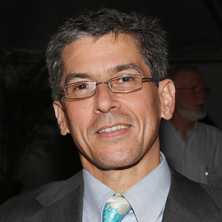
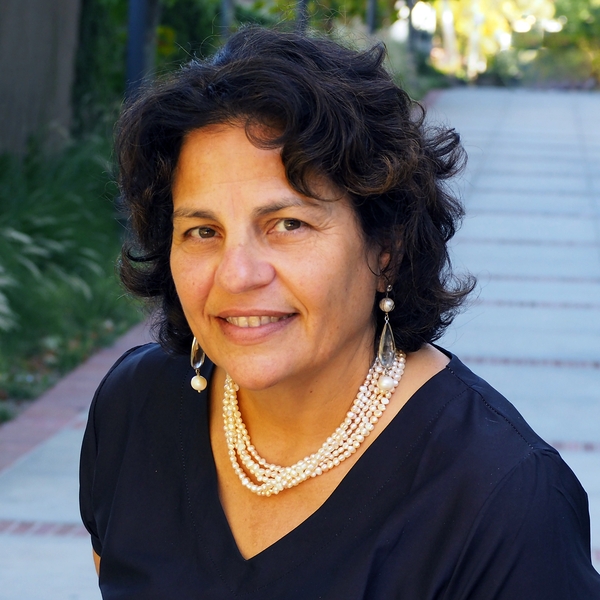
Claudia Lupi is a Researcher at the Department of Earth and Environmental Sciences of the University of Pavia. Her work spans paleontology, paleoclimatology, and geoscience education initiatives. She has contributed to studies on nannofossil responses to climate transitions and innovative methods for fossil analysis. Current university affiliation: University of Pavia Department: Earth and Environmental Sciences Research Interests include: Paleontological analysis of marine microorganisms Paleoclimatic reconstruction using sedimentological records Development of educational laboratories for Earth Sciences Geochemical characterization of calcareous exoskeletons Publications highlight her expertise in: Cyclostratigraphy and climate variability studies Biomineralization processes in coccolithophores Historical development of geological sciences Teaching Activities cover: Global Paleoclimatology Geoscience Didactics Sustainable Development Education Biodiversity Conservation
Dr. Patrick Hayman is a Senior Lecturer in the School of Earth & Atmospheric Sciences at Queensland University of Technology (QUT), where he serves as the coordinator of the Earth Science major. His research integrates field-based physical volcanology with geochemical and geochronological techniques to understand the formation of mineral deposits, particularly in Precambrian terranes across Australia, Canada, and West Africa. He teaches core courses including Earth Materials, Earth's Mineral Resources, and a specialized short-course for industry geologists and postgraduate students in Merimbula, NSW. Education: PhD, Monash University M.Sc., University of British Columbia B.Sc. ENG., Queen's University at Kingston Research Interests: Dr. Hayman’s research focuses on the intersection of volcanology and economic geology. His work aims to develop genetic models for mineral exploration by studying volcanic and igneous processes in ancient terranes. He investigates the physical emplacement of mafic rocks, the architecture of greenstone belts, and the tectono-magmatic settings of VMS and orogenic gold systems. His research spans Archean to Paleoproterozoic geological environments, emphasizing the role of volcanism in ore genesis and crustal evolution. Publication Trends: His recent publications (2015–2023) reveal a consistent focus on Precambrian geology, particularly in the Yilgarn Craton and West African Craton. His work combines detailed field stratigraphy with advanced geochemical and isotopic analyses to reconstruct volcanic arcs, mafic intrusions, and mineralized systems. Key themes include magmatic differentiation, basin architecture, sulfur isotope geochemistry, and tectonic correlations across ancient cratons. Scientific Awards: AB Edwards Medal (2016) for best paper in economic geology in the Australian Journal of Earth Sciences Nominated for the Stillwell Award (2016) for best paper in the same journal Supervision and Grants: Dr. Hayman actively supervises multiple MPhil and PhD students on topics ranging from lithium exploration to terrane evolution in West Africa. His research is supported by the Australian Research Council (ARC), industry partners (e.g., CMOC, Rio Tinto, Northern Star Resources, Gold Fields), and geological surveys (e.g., Geological Survey of Western Australia). He is a Chief Investigator on an ARC Discovery Project and the Yilgarn 2020 project funded by MRIWA. Professional Involvement: He is a member of the Society of Economic Geologists (SEG), Geological Society of Australia (GSA), and the International Association of Volcanologists of the Earth's Interior (IAVCEI), reflecting his active engagement in both economic geology and volcanology communities.
Dr. Mitchell McMillan is a Postdoctoral Fellow at Georgia Institute of Technology, specializing in geodynamic processes that shape Earth's mountain belts and planetary surfaces. His research integrates thermodynamic modeling with field observations across three distinct domains: Subduction zone fluid dynamics and lower crustal density transformations Wind erosion mechanisms in hyperarid terrestrial and Martian environments Hydrodynamic modeling of fluvial erosion processes His computational work on streambank erosion modeling has produced globally applicable tools available via GitHub, while his recent Earth and Planetary Science Letters publication proposes novel mechanisms for lithospheric foundering. Current projects investigate weak-crust dripping dynamics in the Central Andes and their surface expressions. Key research themes: Crustal metamorphism-driven buoyancy changes Rayleigh-Taylor instability in continental lithosphere Wind erosion quantification in extreme environments Multi-scalar geomorphological modeling
Dietrich Lange is a Researcher at GEOMAR Helmholtz Centre for Ocean Research Kiel, affiliated with the Research Area 4: Dynamics of the Ocean Floor and the Research Unit: Marine Geodynamics. His work focuses on understanding geodynamic processes in marine environments using seismic and geodetic methods. Research Interests: His primary research areas include earthquake seismology, marine geodesy, and the structural and dynamic processes of subduction zones, particularly in Chile and Sumatra. He utilizes offshore and onshore seismic networks, ocean-bottom seismometers, and autonomous acoustic transponder networks for seafloor strain measurements. His analytical methods include earthquake detection, location, local tomography, and moment tensor inversion. Scientific Contributions: Although specific publications are not listed in the text, his research contributes to the broader understanding of solid Earth dynamics in marine regions. His work supports hazard assessment and tectonic modeling in active margin settings. Advising and Grants: No information is available regarding student supervision or grant funding in the provided text. Labs and Teams: He is part of the Marine Geodynamics research unit within GEOMAR, contributing to interdisciplinary efforts in ocean floor dynamics and seafloor monitoring technologies.
Dr. Yi-Wei Chen is a researcher at the Chair of Astronomical & Physical Geodesy, Technical University of Munich (TUM), located in the College of Engineering. The research group is part of the Engineering Institute for Astronomical and Physical Geodesy, focusing on geophysical and geodetic investigations of Earth's structure and dynamics. The research interests of Dr. Chen span key areas in solid Earth geophysics, including plate tectonics, subduction zone dynamics, mantle convection, asthenospheric flow, and neotectonics. His work combines seismic imaging, geodynamic modeling, and geomorphological analysis to understand large-scale tectonic processes and Earth's deep interior. Dr. Chen's recent publications reveal a strong focus on active tectonic systems such as the Andes, Tonga, Taiwan, and the Caribbean. These studies, published in high-impact journals like Nature and Nature Communications , demonstrate expertise in integrating geophysical data to explore slab dynamics, plume interactions, and surface-tectonic feedbacks. Among scientific contributions, Dr. Chen has been involved in significant research projects related to Earth observation and gravity field modeling, potentially linked to ESA and DFG initiatives such as NEROGRAV and UPLIFT, though specific roles are not detailed. There is no public information on student advising, grants, or scientific awards. However, the publication record indicates active collaboration with leading geoscientists and participation in cutting-edge research.
Emmanuelle Vennin is a Professor of Sedimentary Geology and Paleoecology at the University of Bourgogne's Biogeosciences Laboratory (UMR 5561). She holds a PhD from Lille-Pau (1996) and an HDR (Habilitation) from Lille (2005). Her research focuses on carbonate petrology, microbialite formation processes, and the interplay between sedimentation and climatic changes across geological time. She leads the SEDS team (Sédimentologie et Environnements Dégradés) and has coordinated major industrial and academic projects totaling over €500k in funding. Professional Roles: Director of Master 2 Geobiosphere (2006-2010), Member of UMR Biogeosciences Council, French National Correspondent for the International Association of Sedimentologists (since 2015). Research Themes: Microbialite mineralization mechanisms, Permian-Triassic extinction recovery, Cretaceous climate-carbonate feedback, and evaporite-carbonate interactions. Her teaching spans undergraduate (Sedimentary Petrology, Geodynamics) and graduate programs (Micropaleontology, Carbonate Basin Analysis). She has advised 9 PhD students since 2009, many of whom pursue academic or industry roles in geosciences. Key projects include studies on microbialite dynamics in Utah, Cuba, and Gabon, as well as Iran's Paleozoic basins.
Tanja Đukanović is an Assistant Professor at the Faculty of Architecture, Civil Engineering and Geodesy of the University of Banja Luka. Her research focuses on geodetic methodologies, remote sensing technologies, and structural monitoring, with particular emphasis on GNSS applications, deformation analysis, and infrastructure safety. She actively contributes to projects addressing geodetic network optimization, environmental hazard monitoring, and educational methodologies in geomatics. She participates in two active research projects: "Osnivanje evropskog provenijenicnog testa hrasta kitnjaka..." (focusing on oak provenance evaluation) and "Savremene metode vremensko frekvencijske analize..." (exploring signal processing techniques). Her work integrates advanced technologies like neural networks and laser scanning into geodetic practices. Key research interests include: tectonic geodesy, GNSS positioning accuracy, geotechnical infrastructure monitoring, and application of machine learning in spatial data processing. She has published extensively on topics such as landslide monitoring, dam safety, and educational innovations in geodetic curricula. Her recent articles (2020-2025) demonstrate interdisciplinary approaches combining geomatics with seismology, civil engineering, and environmental science. Notable projects involve highway network optimization in Banja Luka, deformation monitoring of earthen dams, and laser scanning applications in cultural heritage preservation. Professional engagement includes teaching and academic coordination at the faculty, contributing to both theoretical advancements and practical implementation of geodetic solutions in regional infrastructure projects.
Victoria Milanez Fernandes is a Postdoctoral Researcher at GFZ Potsdam, Germany, focusing on integrating geological observations with geophysical and geomorphological models to study landscape evolution and dynamic topography. Her work emphasizes Southern Patagonia, combining low-temperature thermochronology and cosmogenic nuclide dating to explore climate-tectonic interactions. Formerly a Postdoctoral Research Associate at Imperial College London, she investigated mantle-driven vertical motions and continental-scale topography under the NERC MC2 Project. Education: PhD in Earth Sciences, Imperial College London (2017–2021) MSci Geological Sciences, University of Cambridge (2015–2016) BA Natural Sciences, University of Cambridge (2012–2015) Research Interests: Quantifying landscape evolution at spatio-temporal scales, constraining mantle-driven vertical motions, paleoenvironmental reconstructions, and sedimentary flux history at passive margins. Her work bridges geodynamic models with field observations to understand Earth's surface processes. Awards: 2020 Faculty of Engineering Graduate Teaching Assistant of the Year 2019 Janet Watson Research Prize 2018 AGU Outstanding Student Presentation Award Teaching & Supervision: Supervised multiple MSci projects at Imperial College London, including studies on North American rivers, Neogene evolution of the New Jersey margin, and tectonic-landscape modeling. Taught field courses in the Pyrenees and Apennines. Labs/Teams: Part of the ERC GyroSCoPe Project (GFZ Potsdam) and the NERC MC2 Project (Imperial College London).
Dr. Graham Begg is an Adjunct Senior Research Fellow at the School of Earth and Oceans, The University of Western Australia, where he conducts research in lithospheric architecture and mineral systems. With over 36 years of experience in mining and minerals exploration, he holds a PhD in tectonics and epithermal deposit geology. Dr. Begg also serves as Director and Principal of Minerals Targeting International Pty Ltd, developing commercial applications of his research through the Global Lithospheric Architecture Mapping (GLAM) framework. His research focuses on: Lithospheric architecture mapping Geodynamic evolution of continental crust Tectonic controls on mineral deposits Craton formation and stability Economic geology of precious metals Greenfields exploration methodologies Dr. Begg's publications demonstrate expertise in cratonic geology, with recurring themes in Precambrian terranes, magmatic ore formation, and trans-lithospheric fault systems. His work consistently integrates field geology with geophysical and geochronological data to develop exploration targeting frameworks. He was a Chief Investigator on the Australian Research Council-funded project 'Four Dimensional Lithospheric Evolution & Controls on Mineral System Distribution in Neoarchean to Paleoproterozoic Terranes' (2011-2013), collaborating with researchers from multiple institutions to study lithospheric controls on mineral distribution.
Nicolas Thebaud is an Associate Professor at The University of Western Australia's School of Earth and Oceans, where he serves as the Hamond and Nisbet fellow and coordinates the Master of Ore Deposit Geology program. His academic appointment involves 50% research, 40% teaching, and 10% administration, with teaching responsibilities spanning undergraduate and postgraduate structural geology courses including GEOS4417, MING5501, EART3343, GEOS5505, and GEOS4410. Dr. Thebaud completed his Ph.D. through a joint program between the University of Paris 6 and the University of Sydney in 2006, followed by 18 months as a structural geologist with Mercator Gold Australia before joining the Centre for Exploration Targeting in October 2007. His educational background combines hard-rock field geology, structural geology, and petrography with advanced analytical techniques including synchrotron microfluorescence X. His research focuses on three interconnected themes: (1) Investigation of lithospheric to continental architecture through integration of structural geology, lithochemistry, and isotope analyses; (2) 4D reconstruction of mineralized terrains at regional to camp scales; and (3) Geochemistry and mineralogy of ore-forming processes with emphasis on metal transport mechanisms. His work pioneered the recognition of nano-scale colloidal transport in high-grade gold deposit formation. Analysis of his recent publications reveals a strong focus on Precambrian geology, particularly Craton studies of the Yilgarn and West African Cratons, with growing attention to Phanerozoic terrains in the South American Cordillera. His research increasingly integrates multi-disciplinary data, advanced analytical techniques (SIMS, TIMA, TEM), and 4D modeling approaches to understand ore deposit formation processes across geological timeframes. Dr. Thebaud maintains extensive industry engagement as a research provider for major mining companies including Newmont Corporation, Barrick Gold, Northern Star, and BHP. His current projects include geological evolution studies of the Oberon gold deposit (2020-2023) and the Yilgarn 2020 initiative (2019-2022), with total research funding spanning 13 completed projects. He serves as Associate Editor for Ore Geology Reviews, reviews for prestigious journals including Nature and Geology, and holds leadership roles in professional organizations as deputy chair of the 6th International Archean Symposium. As director of the AGATE project, he contributes to capacity building in West Africa through earth science education initiatives.
Prof. Dr. Raúl Fonseca is a Chair Professor of Experimental Petrology and Geochemistry at Ruhr University Bochum (RUB), Germany. His research integrates high-pressure/temperature experiments with isotope geochemistry to study planetary differentiation, focusing on terrestrial magmatism, sulfide melt dynamics, and stable isotope fractionation during core formation and crustal evolution. PhD in Geochemistry (Australian National University, 2007) Habilitation in Mineralogy (University of Bonn, 2013) Postdoctoral Habilitation (University of Cologne, 2018) His work addresses key questions in planetary science, including the role of Fe-S melts in mantle elemental cycling, Ti isotope constraints on Archean crust formation, and B isotope fractionation during subduction-related fluid exsolution. Current projects funded by the DFG include studies on sulfide melt mobility in planetary interiors (FO 698/17-1, until 2028), Ti isotope records in Archean rocks (FO 698/14-1, until 2024), and B isotope behavior in arc magmatism (FO 698/10-1, until 2024). Scientific awards and community contributions include election to the European Association of Geochemistry Council (2023), and editorial roles at Geochemical Perspectives Letters (2023) and Advances in Geochemistry and Cosmochemistry (2024). He teaches courses such as High-Temperature Geochemistry , Geochemie , and Igneous and Metamorphic Petrology to undergraduate and graduate students at RUB. Germany-based collaborations: Carsten Münker (U Cologne), Chris Ballhaus (U Bonn), Stefan Weyer (Leibniz U Hannover) International collaborations: Julie Prytulak (Durham), Paolo Sossi (ETH Zürich), Guil Mallmann (ANU), Kristoffer Szilas (Copenhagen)
Dr. Hans-Peter Schertl is a Professor in the Department of Petrology and Geochemistry at Ruhr University Bochum's Faculty of Geosciences. His research focuses on high- and ultrahigh-pressure metamorphic processes, subduction/exhumation dynamics, and fluid-rock interactions, with field studies spanning the Dora-Maira Massif (Italy), Kokchetav Massif (Kazakhstan), Rio San Juan Complex (Dominican Republic), and multiple Chinese orogens. Research interests encompass: PTt-path reconstruction of subduction systems Cathodoluminescence microscopy of metamorphic minerals Geochemical tracing of subduction zone fluids Provenance studies of jadeitite artifacts Ultrahigh-temperature metamorphic processes His publication trends reveal consistent focus on ultrahigh-pressure terranes, with recent works emphasizing: Isotopic tracing (B, Mg, Fe, Li) in subduction fluids Metasomatic processes in continental subduction channels Nanoscale mineral inclusion studies Geodynamic modeling of collisional orogens Honors include: Fellowship of the Mineralogical Society of America (2014) Distinguished Lecturer, Mineralogical Society of America (2012-2013) Presidency of the International Mineralogical Association (2022-present) He directs international collaborations through IGCP-709 'HP-UHP Metamorphism and Geochemical Cycles' and maintains active research partnerships across Europe, Asia, and the Americas. Teaching responsibilities include undergraduate and graduate courses in mineralogy, petrology, and field geology.
David Pritchard is a Senior Teaching Fellow in the Department of Mathematics & Statistics at the University of Strathclyde, Faculty of Science. He serves as the Postgraduate Research Director and is actively involved in teaching and research. His current teaching responsibilities include MM146 (Mathematics in Society), MM305 (Mechanics of Rigid Bodies and Fluids), MM554 (Applied Mathematics Methods 1), and the SMSTC module on Asymptotic and Analytical Methods. Research Interests: Dr. Pritchard is an applied mathematician with a focus on fluid dynamics in earth sciences. His research spans non-Newtonian fluids, flow in porous media, sediment transport in environmental flows, and the application of mathematical modeling to geophysical problems. He also has a strong interest in mathematics education, particularly in integrating ethics and historical context into the curriculum and improving the transition between school and university mathematics. Publication Trends: His publications, spanning from 2004 to 2011, demonstrate a consistent focus on fluid mechanics with applications in geophysics and environmental engineering. Key themes include gravity currents, sediment transport, double-diffusive flows, and the modeling of natural convection in reactive porous media. His work frequently appears in high-impact journals such as the Journal of Fluid Mechanics and Geophysical Research Letters. Scientific Awards: Advising and Grants: Dr. Pritchard has been actively involved in research funding, serving as Principal Investigator on projects such as 'Setting fire to soil: modelling smouldering remediation' and 'EPSRC Doctoral Training Grant'. He has also been a Co-investigator on larger grants including the EPSRC Institutional Sponsorship for the Global Challenges Research Fund and the Doctoral Training Partnership. As Postgraduate Research Director and a listed supervisor, he plays a significant role in advising and mentoring postgraduate researchers, though specific student names are not provided in the text. Labs and Research Teams: While specific lab names are not mentioned, Dr. Pritchard is part of the Applied & Computational Mathematics research group within the Department of Mathematics & Statistics. He collaborates on interdisciplinary projects involving geophysical flows and environmental modeling, and participates in professional networks such as the British Applied Mathematics Colloquium and the Scottish Fluid Mechanics Meeting.
Professor Paulo Vasconcelos serves as the Centre Director of the Centre for Geoanalytical Mass Spectrometry at the University of Queensland , where he also holds a professorship in the School of the Environment under the Faculty of Science . His academic credentials include a PhD from the University of California (Berkeley) , alongside a Bachelor of Science from the University of Kansas and a Master of Science (Coursework) from The University of Texas . Research Focus: Integrates Low-Temperature Geochemistry , Economic Geology , and 40Ar/39Ar Geochronology to study weathering processes, landscape evolution, and ore deposit genesis. Key Projects: Explore supergene enrichment in iron/manganese provinces, U-Th/He dating of oxide minerals, Cenozoic magmatism in Brazil/Australia, and Martian analogues via Queensland magnesite studies. Scientific Contributions: Over 270 publications including Chemical Geology and Gondwana Research articles, with emphasis on geochronological tool development and paleoclimatic reconstructions . Supervises PhD/MPhil candidates in ore genesis, weathering dynamics, and planetary geology.
Carolina Lithgow-Bertelloni serves as Professor and Louis B. and Martha B. Slichter Endowed Chair in Geosciences at the University of California, Los Angeles within the Department of Earth, Planetary, and Space Sciences. Her research focuses on geodynamics and Earth's interior processes, specializing in mantle convection, plate tectonics, and thermal evolution of planetary bodies. She employs advanced computational modeling to investigate deep-Earth dynamics and their surface manifestations, with particular emphasis on numerical simulation of geodynamic systems. She leads the KGB Lab (Geodynamics Laboratory), which conducts cutting-edge research on mantle flow, lithospheric deformation, and Earth's long-term thermal history using high-performance computing resources. No scientific awards were documented in the provided source material. Information regarding student advising and research grants was not specified in the available text, though her endowed chair position indicates significant research leadership. Her laboratory work represents ongoing contributions to quantitative geodynamics and Earth system science.