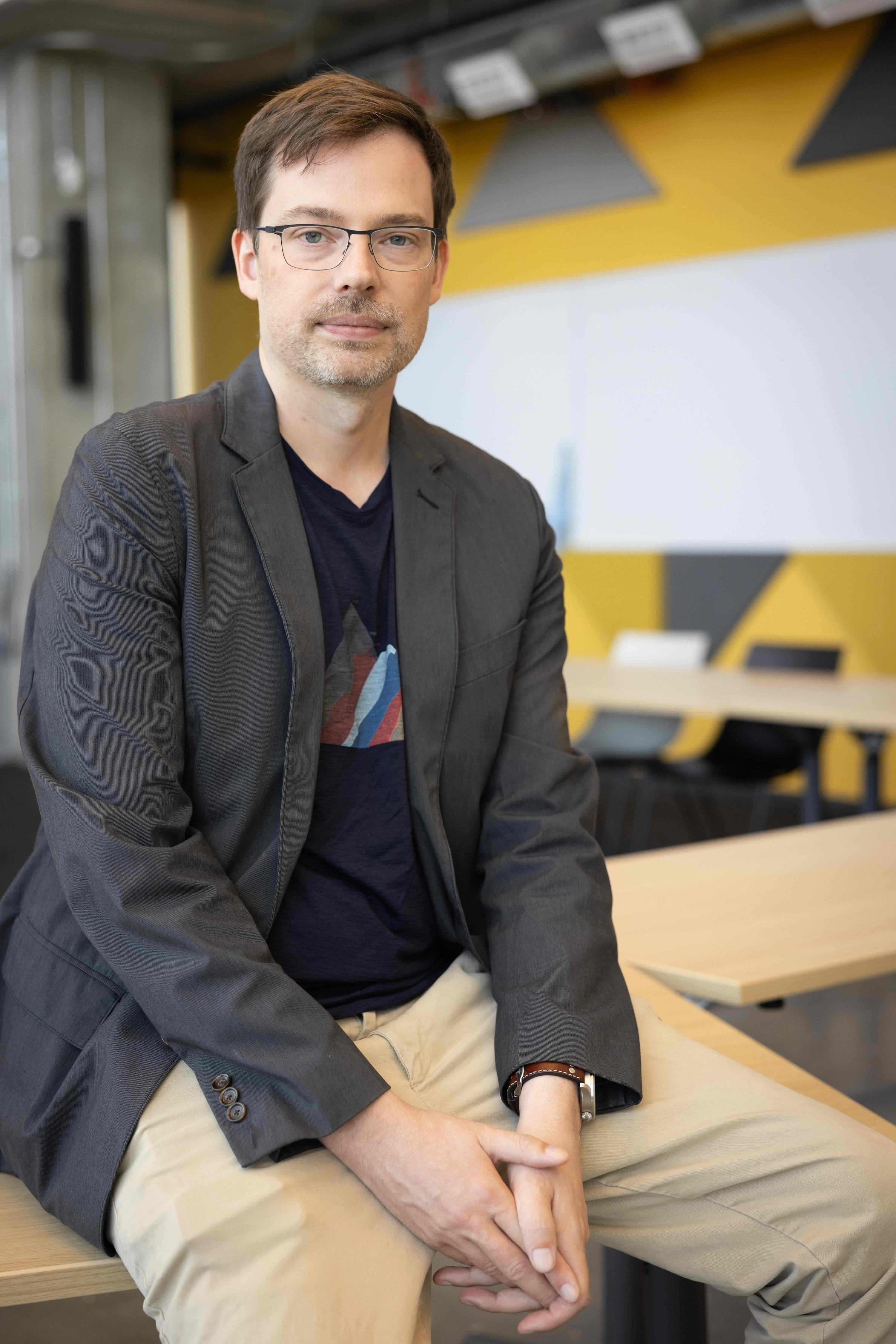
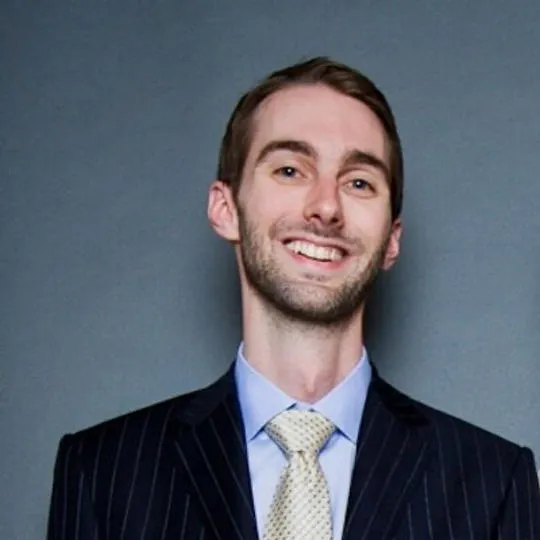
Ryan Heuser is an Assistant Professor in Digital Humanities at the University of Cambridge, specializing in computational approaches to literary and intellectual history, prosody, and artificial intelligence's impact on language. His work bridges data science, machine learning, and literary studies through digital methodologies. Doctoral training in Eighteenth-Century British Literature, Stanford University (2019) Founding member & Associate Research Director, Stanford Literary Lab Junior Research Fellow, King’s College Cambridge (2019-2022) Research interests span computational modeling of semantic revolutions, large-scale literary field analysis, and the intersection of digital methods with historical and intellectual studies. His book Explorations in the Digital History of Ideas (2023) co-edited with Peter de Bolla exemplifies this approach. Recent publications focus on historical semantics, metrical analysis, and digital mapping of emotions in literature, reflecting his interdisciplinary expertise in natural language processing, network theory, and literary data visualization. Currently leads teaching initiatives at Cambridge Digital Humanities and contributes to computational projects exploring textual rhythms and large language models.
Alan Ritter is an Associate Professor at the School of Interactive Computing , Georgia Institute of Technology, with additional affiliation to the Machine Learning Center . His research focuses on Natural Language Processing , particularly robust models across domains/languages with fewer labels and efficient resource use, plus data-driven dialogue agents for open-topic conversations. Research Interests : Robust NLP models, cross-lingual transfer, resource-efficient learning, dialogue systems, cultural bias measurement, and privacy-aware language models Students : Mentors Ph.D. students in Georgia Tech's ML and CS programs, including Junmo Kang, Yang Chen, and Duong Minh Le. Alumni include Fan Bai (Ph.D. 2023), Yang Chen (Ph.D. 2024), and Andrew Li (M.S. 2024). Awards : NSF CAREER Award, Amazon Research Award, ACL 2024 Best Social Impact Paper, IUI 2009 Best Student Paper. Recent Work : Studies training budget allocation between supervised and preference-based finetuning, cross-lingual information extraction, cultural bias in LLMs, and privacy risk mitigation in social media disclosures. Service : Served as Program Chair for NAACL 2025, Area Chair for multiple top-tier conferences (COLM, EMNLP, ACL, EACL, AAAI). Email : alan.ritter@cc.gatech.edu
Erik Ketzan is a Lecturer in Digital Humanities and Cultural Computation at King's College London. He holds a PhD in English/Digital Humanities from Birkbeck, University of London, and has held postdoctoral roles at the University of Cologne and Trinity College Dublin, where he coordinated the MA in Digital Humanities and Culture. His research focuses on computational literary studies, legal/ethical issues in digital research, and corpus stylistics. He has published widely on topics such as Thomas Pynchon’s computational stylistics, legal frameworks for digital humanities research, and gender bias in historical texts. His work includes developing tools like Coleto for textual variant analysis and co-authoring the book *Thomas Pynchon and the Digital Humanities* (2022). Ketzan actively engages in policy advocacy, advising on copyright and data protection in DH, and has contributed to projects like CLARIN and the Leibniz Institute for the German Language. Education: PhD in English/Digital Humanities, Birkbeck, University of London Postdoctoral Researcher, University of Cologne (EncycNet Project) Postdoctoral Research and Teaching Fellow, Trinity College Dublin Research Interests: Computational approaches to literary analysis, legal challenges in data-driven research, corpus stylistics, and gender studies in historical corpora. Teaching: Courses include Python for the humanities, computational literary studies, and legal issues in digital humanities.
Sara Stymne is a Senior Lecturer in Computational Linguistics at the Department of Linguistics and Philology, Uppsala University, where she has been working since 2012. She initially joined as a post-doc (2012-2015), then worked as a researcher (2015-2017), and served as an assistant professor (2017-2023) before her current position as Senior Lecturer. Prior to Uppsala, she was a researcher at Linköping University's Department of Computer and Information Science. Dr. Stymne earned her PhD in Computational Linguistics from Linköping University in 2012 with the thesis 'Text Harmonization Strategies for Phrase-Based Statistical Machine Translation,' following a Licentiate degree in Computational Linguistics (2009) and a Master's degree in Cognitive Science (2006), both also from Linköping University. During her doctoral studies, she spent the autumn of 2010 and spring of 2009 at Xerox Research Centre Europe in Grenoble, France. Her primary research interests focus on cross-lingual natural language processing and digital humanities, with particular emphasis on multilingual dependency parsing. Dr. Stymne is passionate about applying computational linguistics to solve research questions in other fields, including language history, literary analysis, and political science. Her earlier work concentrated on machine translation, with specific interests in discourse-aware translation, compound processing, and error analysis. She has made significant contributions to the development of language technology tools for analyzing dialogue, narrative, and stylistic features in literature. Analysis of Dr. Stymne's recent publications reveals a strong focus on cross-lingual and cross-domain natural language processing. Her work spans multiple subfields including dependency parsing across genres and topics, discourse relation analysis in low-resource languages like Egyptian Arabic, direct speech identification in Swedish literature, and causality detection in governmental documents. A notable trend is her application of NLP techniques to digital humanities problems, particularly in analyzing literary texts and historical language change. Her research often involves creating and utilizing specialized datasets for specific linguistic phenomena across multiple languages. Dr. Stymne actively supervises graduate students, having guided numerous master's and bachelor's theses on topics ranging from speech recognition to multilingual parsing and causality detection. She leads or participates in several research projects including 'Fictional prose and language change' (funded by VR, 2021-2023) and 'Enabling climate-resilient development' (funded by Marianne and Marcus Wallenberg Foundation, 2023-2027), demonstrating her commitment to interdisciplinary research with practical applications. Her work has resulted in several notable software resources including uuPronPred for cross-lingual pronoun prediction, uuparser for dependency parsing, and Docent for document-level machine translation. Within the Computational Linguistics and Language Technology group at Uppsala University, Dr. Stymne contributes to multiple research initiatives focused on developing language technology tools for digital humanities applications. Her team works closely with literary scholars and historians to create computational methods for analyzing large corpora of literary texts, particularly focusing on Swedish literature across different historical periods. Her research bridges the gap between theoretical computational linguistics and practical applications in the humanities, creating new methodologies for quantitative analysis of literary and historical texts.
Dr. Chandranath Adak is an Assistant Professor at the Department of Computer Science and Engineering, Indian Institute of Technology Patna (IIT Patna), and concurrently serves as a Visiting Fellow at the School of Computer Science, University of Technology Sydney (UTS), Australia. He holds a Ph.D. in Analytics from UTS (2019) and previously served as an Assistant Professor at Indian Institute of Information Technology Lucknow (IIITL) and the Centre for Data Science at JIS Institute of Advanced Studies, Kolkata. Education: Ph.D. (Analytics), University of Technology Sydney (2019) M.Tech., Computer Science and Engineering, University of Kalyani (2014) B.Tech., Computer Science and Engineering, West Bengal University of Technology (2012) Research Interests: His work spans Computer Vision, Deep Learning, Reinforcement Learning, Document Image Analysis, and AI-driven solutions for healthcare, forensics, and industrial automation. He has pioneered methods in biomarker detection using electrochemical sensors combined with ML models, handwriting analysis for educational and forensic applications, and anomaly detection in industrial systems. His research bridges theoretical advances with real-world applications, such as medical diagnostics and quality control systems. Publications: His recent work includes innovations in biosensor-based medical diagnostics, handwriting evaluation systems, and transformer networks for historical document analysis. These contributions reflect a focus on interdisciplinary applications of AI across healthcare, cultural heritage preservation, and industrial automation. Awards: Start-up Research Grant, SERB, India (2022) Dr. Kalam Doctoral Scholarship, UTS (2018) IEEE CIS Graduate Student Research Grant (2017) Senior Member, IEEE (2024) Teaching & Supervision: Taught courses at UTS including 'Introduction to Data Analytics' and supervised research in machine learning and computer vision. His mentorship emphasizes hands-on experience with AI tools and real-world problem-solving. Labs & Teams: Engaged in collaborative projects at UTS's CIBCI Centre and Griffith University's IIIS, focusing on computational intelligence and sensor-driven AI systems.
Maite Taboada is a Distinguished Professor in the Department of Linguistics at Simon Fraser University (SFU), directing the Discourse Processing Lab. She is also an Associate Member of the Cognitive Science Program and School of Computing Science, and affiliated with the Digital Democracies Institute and Visual and Interactive Computing Institute. Her research bridges discourse analysis and computational linguistics, focusing on mechanisms of coherence, discourse parsing, and sentiment analysis. Key projects include analyzing online news comments (SOCC corpus), detecting misinformation (MisInfoText), and monitoring gender representation in media (Gender Gap Tracker/Radar de Parité). Notable research interests span toxic language detection, constructive dialogue systems, and interdisciplinary work between social sciences and engineering. She has led projects funded by SFU and collaborated with organizations like Informed Opinion. Her awards include Fellowship in the Royal Society of Canada. Key contributions include developing the SFU Opinion and Comments Corpus, systems for comment moderation, and frameworks for gender bias analysis using topic modeling. Her work integrates theoretical discourse analysis with applied computational methods, addressing societal challenges like media bias and misinformation.
Aage Hill-Madsen is an Associate Professor at the Department of Culture and Learning, Aalborg University (Denmark), affiliated with the Communication, Language, and Discourse (CLD) research unit. His work focuses on translation studies, medical communication, and systemic-functional linguistics. He holds a Cand.mag. et ling.merc. and a PhD in English linguistics. Research Interests: Translation theories (especially intralingual translation) Medical terminology simplification and communication Systemic-functional grammar applications Legitimation Code Theory in educational contexts Genre analysis of specialized texts Semiotic approaches to knowledge transmission Recent Publications Trends: His 2024-2025 work emphasizes medical translation between technical and lay audiences, with studies on EPAR summaries, patient information leaflets, and historical East-West medical terminology exchanges. He combines functionalist translation theory with systemic-functional frameworks to analyze textual transformations. Grants & Projects: Participated in the 2024-ongoing project Udvikling af kommunikative kompetencer gennem frivilligt brobygningsarbejde i NGO’en Social Sundhed , exploring communication skills through NGO activities. Academic Engagement: Active peer reviewer for journals like Globe and Across Languages and Cultures , with conference presentations on intralingual translation strategies and medical text accessibility.
Jay David Bolter holds the Wesley Chair of New Media and serves as Professor and Director of Computational Media at the Georgia Institute of Technology, where he is affiliated with the School of Literature, Media, and Communication within the Ivan Allen College of Liberal Arts. A foundational figure in digital media studies, he is renowned for his influential theoretical works and practical contributions to new media forms. His research spans Augmented Reality , Virtual Reality , Digital Culture , and the History of Media , with particular emphasis on remediation theory (developed with Richard Grusin) and the evolution of digital writing. As an active member of the Augmented Environments Lab, Bolter creates narrative-driven AR applications for cultural heritage sites and educational contexts, blending theoretical rigor with experimental design. His work consistently examines how new media technologies reshape human perception and cultural practices. Recent publications reveal a concentrated exploration of reality media (AR/VR) as narrative spaces, with articles addressing biofeedback integration in VR fitness, agency-driven interactive storytelling, and theoretical frameworks for understanding immersive experiences. His scholarship bridges historical media analysis with cutting-edge technical implementation, demonstrating how remediation processes continue to evolve in mixed reality environments. This trajectory reflects his lifelong investigation into the interplay between technological capabilities and human expression. Bolter maintains significant collaborative partnerships, including co-authoring seminal texts like Remediation and developing the Storyspace hypertext system with Michael Joyce. His leadership in the Augmented Environments Lab drives interdisciplinary projects that merge humanities perspectives with technological innovation, particularly in creating culturally resonant AR experiences. Teaching responsibilities include advanced courses in mixed reality design, computational media, and digital media theory, shaping the next generation of media scholars and practitioners.
Associate Professor Mustafa GulTekin serves at Gaziantep University in the Faculty of Arts and Sciences , affiliated with both the Department of Turkish Language and Literature and the Department of Turkish Folklore . He holds a Doctorate in Turkish Folklorics (2010) from Ege University and has been teaching since 2004. Education: PhD in Turkish Folklorics, Ege University (2004-2010) MA in Turkish Language and Literature, Gaziantep University (2002-2004) Bachelor in Turkish Language and Literature, Balikesir University (1997-2001) Research Focus: Specializes in Turkic world fairy tales, oral literature analysis, minstrelsy traditions, and intangible cultural heritage. His work intersects folklore methodology with performance studies and cultural anthropology. Projects: Led/managed national projects including TUBITAK-funded research on Diyarbakir Alevi ocaks (2013-2016), Uzbek cultural studies in Gaziantep (2012-2015), and applied Karagöz education programs (2009-2010). Administrative Roles: Head of Department (2014-2017, 2012-present) Deputy Head of Department (2017-present, 2011-2012) Director of Research and Application Center (2012-2016)
Helmholtz Centre for Environmental ResearchGermany
Joakim Nivre is a Professor at Uppsala University's Department of Linguistics and Philology. He is a leading researcher in computational linguistics, with a focus on dependency parsing, Universal Dependencies (UD) framework development, and multilingual NLP applications. His recent work explores LLMs in climate change discourse analysis, pharmacovigilance explainability, and historical text processing. Key research areas: Dependency parsing theory, Universal Dependencies standardization, LLM evaluation Collaborations: SweSAT-1.0 benchmark development, ClimateEval project, PARSEME integration His 2025-2023 publications demonstrate expertise in explainable AI for healthcare, synthetic data generation for idioms, and multilingual benchmark design. Notably, he co-developed SweSAT-1.0 to evaluate Swedish LLMs and contributed to typology-informed UD revisions. Despite extensive work in NLP, no scientific awards are mentioned in available texts.
Alan Ritter is an Associate Professor at the School of Interactive Computing, Georgia Institute of Technology (Georgia Tech), affiliated with the Machine Learning Center (ML@GT). His research focuses on natural language processing (NLP), machine learning, and robust computational models. He completed his Ph.D. at the University of Washington and a postdoctoral fellowship at Carnegie Mellon University's Machine Learning Department. Education : - Ph.D. in Computer Science, University of Washington - Postdoctoral Research, Machine Learning Department, Carnegie Mellon University Research Interests : Ritter's work emphasizes developing models that operate across domains and languages with minimal supervision. His projects include systems analyzing social media data for cybersecurity threats, cultural bias in LLMs, and privacy-preserving dialogue agents. His group also explores efficient fine-tuning of language models and cross-lingual information extraction. Recent Activities & Awards : - NSF CAREER Award - Amazon Research Award - Best Social Impact Paper Award (ACL 2024) - Program Chair for NAACL 2025 Advising & Students : Ritter advises Ph.D. and M.S. students in Georgia Tech's ML and CS programs. Notable advisees include Yang Chen (Ph.D. 2024, now at NVIDIA) and Fan Bai (Ph.D. 2023). Labs & Affiliations : - Machine Learning Center (ML@GT) - Collaborations with institutions like AI2, Stanford, and Microsoft Research
Professor Mustapha Sheikh is Chair in Islamic Thought and Muslim Societies at the School of Languages, Cultures and Societies, University of Leeds. He is Co-Director of the Iqbal Centre for Critical Muslim Studies and actively contributes to interdisciplinary research on Muslim intellectual history, Islamic law, and contemporary socio-political issues affecting Muslim communities globally. His educational background includes a DPhil in Theology and Religion from the University of Oxford, an MSt in the Study of Religions (Oxford), a BA in Arabic and Islamic Law, and a BSc in Project Management from University College London. His academic journey reflects a deep integration of traditional Islamic scholarship and rigorous Western academic training. Sheikh's research is centered on two interrelated strands: first, Islamic intellectual and legal history, particularly revivalist and reformist movements in the Ottoman and early modern Islamic world; second, the socio-scientific analysis of contemporary Muslim societies, including Islamophobia, Islamic finance, food and water security, and decolonial studies. His seminal work Ottoman Puritanism and Its Discontents (Oxford University Press, 2016) has significantly reshaped scholarly understanding of the Qadizadeli movement and Taymiyyan influences in Ottoman thought. He is a pioneer in advancing Critical Muslim Studies as a post-Orientalist framework for rethinking Islamic tradition. His recent publications reveal a strong interdisciplinary trend, combining Islamic legal theory with social justice, environmental security, and political economy. Themes such as intersectional oppression, decoloniality, and ethical finance recur across his work, reflecting a commitment to justice-oriented scholarship. He frequently collaborates with scholars across disciplines and geographies, particularly in the Global South. Member, British Society for Middle Eastern Studies (BRISMES) Member, British Association of Islamic Studies (BRAIS) Board Member, (In)Justice International Professor Sheikh actively supervises PhD students and has successfully guided over 20 doctoral candidates to completion. His research is supported by collaborations across institutions, including the University of Punjab (where he is a Visiting Professor) and Harper Adams University. He is currently co-editing volumes on global injustice and Islamic finance, and working on a book about healing racial trauma from an Islamic psycho-spiritual perspective. He leads and participates in numerous research groups, including the Arabic History group and the Centre for Religion and Public Life, and is deeply involved in public engagement through talks, webinars, and podcasts addressing Islamophobia, women’s rights under Shari’a, and decolonising knowledge.
Seamus Ross is an Honorary Professor at the School of Humanities, University of Glasgow, with a career spanning over two decades in digital preservation, digital libraries, and data curation. He has led and collaborated on numerous European initiatives, including the DL.org and BlogForever projects, focusing on policy interoperability, genre classification, and digital repository auditing. University of Glasgow School of Humanities His research explores the intersection of digital preservation, cultural heritage, and information management, emphasizing automated genre classification, metadata extraction, and sustainable digital libraries. He has also investigated user perspectives in digital information communication and developed frameworks for assessing digital preservation infrastructures. Recent publications highlight his contributions to digital preservation strategies, including analyses of storage formats, spam filtering, and preservation methodologies. These works reflect his expertise in digital forensics , metadata standards , and repository auditing . Seamus has collaborated extensively with researchers like Yunhyong Kim and Piero Innocenti, co-authoring studies on genre classification, digital policy, and significant properties in web archiving. While no specific awards are listed, his involvement in foundational projects like DELOS and ERPANET underscores his influence in the field.
Pauwke Berkers is a full professor of Sociology of Popular Music at the Erasmus School of History, Culture and Communication, Erasmus University Rotterdam, where he is also head of the Department of Arts and Culture Studies. He specializes in the sociology of popular music with a focus on inclusion, well-being, and resilience. Berkers co-founded the Rotterdam Popular Music Studies (RPMS) research group and the EUR minor MU$IC, and is a founding member of the Rotterdam Arts and Sciences Lab and part of the EUR Cultuurcampus core team. His educational background includes an MA in Sociology from Tilburg University, where he specialized in the sociology of arts and culture, with a thesis on women in punk and feminism. He completed his PhD at Erasmus University Rotterdam, studying the integration of ethnic minority authors into literary mainstreams in the U.S., the Netherlands, and Germany. Berkers' research spans cultural sociology, focusing on social inequality, boundary work, authenticity, and stigmatization in music. His recent work explores well-being and resilience in the music ecosystem, including projects like NWO Smart Culture's POPLIVE and a pilot on resilience principles with Codarts and Utrecht University. He has led major initiatives such as the HERA project FestiVersities and the EUR Fellowship Hearing Diversities. The most recent publications reflect a strong interdisciplinary trend, merging cultural sociology with emotional and interactional theory, especially in the 2025 book A Sociology of Awkwardness , which introduces a new theoretical framework for understanding social discomfort. Other works address gender inequality in metal, music festivals, and fair pay for artists, demonstrating a consistent focus on equity, inclusion, and systemic change in cultural sectors. Berkers has not received explicitly mentioned scientific awards in the provided texts. However, his leadership in funded projects and public engagement highlights significant recognition. He supervises PhD candidates, including Wessel Coppes, and has secured multiple grants from NWO, EUR, and other funding bodies. His research often involves collaboration with arts councils, municipalities, and cultural institutions, such as the Rotterdam Arts Council and the City of The Hague. He is currently active in the National Workgroup Inclusion, advising on cultural policy. Berkers is involved in several research groups and labs, including RPMS, Rotterdam Arts and Sciences Lab, and Cultuurcampus. His collaborative projects with Codarts Rotterdam and Utrecht University emphasize transdisciplinary approaches to music, well-being, and resilience.
Naoki Saito is a Professor in the Department of Mathematics at the University of California, Davis, and the Director of the UC Davis TETRAPODS Institute of Data Science (UCD4IDS). His research lies at the intersection of applied mathematics, signal processing, and data science, with a focus on multiscale analysis and harmonic analysis on graphs and networks. His research interests include Applied and Computational Harmonic Analysis , Graph Signal Processing , Multiscale Transforms , Wavelets , Spectral Graph Theory , and Mathematical Data Representation . He develops theoretical frameworks and practical algorithms for analyzing complex datasets, particularly through the use of Laplacian eigenfunctions and multiscale basis dictionaries. The recent publications reflect a strong trend toward graph-based signal processing , scattering transforms , and topological data analysis . His work emphasizes the construction of natural, adaptive bases for signals on graphs and simplicial complexes, enabling efficient and interpretable data analysis. The integration of harmonic analysis with machine learning techniques is a recurring theme. Although no specific scientific awards are listed in the provided texts, his sustained scholarly output and leadership in the field are evident. Dr. Saito advises a number of students and postdoctoral researchers, including J. Irion, Y. Shao, H. Li, and others. His research has been supported by various grants, though specific funding sources are not detailed in the provided materials. He leads the UCD4IDS, a research institute focused on data science, indicating active involvement in collaborative, interdisciplinary research and academic leadership.