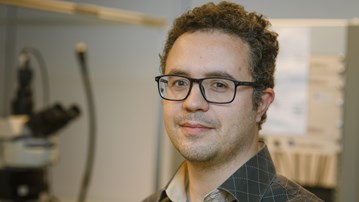
Samuele MarroView profile
Assistant Professor
Samuele Marro is an Assistant Professor in the Nash Family Department of Neuroscience and the Black Family Stem Cell Institute at the Icahn School of Medicine at Mount Sinai. His research program focuses on synaptic plasticity and its dysfunction in Fragile X syndrome, which represents the number one genetic cause of autism. Dr. Marro received his PhD in Human Biology from the Molecular Biotechnology Center at the University of Torino in Italy. He completed his postdoctoral training in pluripotent stem cell biology in the laboratory of Marius Wernig, MD PhD, at the Institute for Stem Cell Biology and Regenerative Medicine at Stanford University. His laboratory utilizes human neurons directly differentiated from pluripotent stem cells and genetically modified using CRISPR/Cas9 tools to investigate neurodevelopmental disorders. His research spans multiple disciplines including neuroscience, stem cell biology, and genetic engineering, with particular emphasis on autism spectrum disorders and synaptic function. Dr. Marro's team has developed sophisticated protocols for generating precise disease models and investigating cellular mechanisms underlying neurological conditions. Analysis of Dr. Marro's 15 most recent publications reveals a consistent trajectory from foundational stem cell techniques to complex disease modeling. His work demonstrates expertise in CRISPR-based gene editing, single-cell analysis, and advanced imaging techniques applied to neurodevelopmental and neurodegenerative conditions. There is a clear progression toward increasingly sophisticated models of neurological disorders with translational applications. Dr. Marro serves as co-Director of the Stem Cell Engineering Core, which provides critical infrastructure services including derivation of iPSCs from patient blood samples, differentiation into specific cell types, and gene-editing to create or repair disease mutations for the Icahn School of Medicine community. This role positions him at the intersection of basic research and translational applications across multiple disciplines.