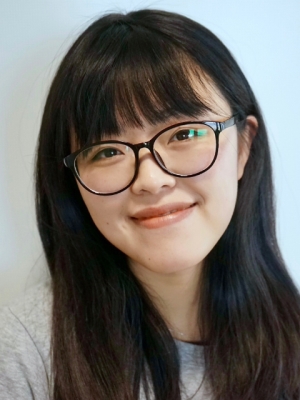
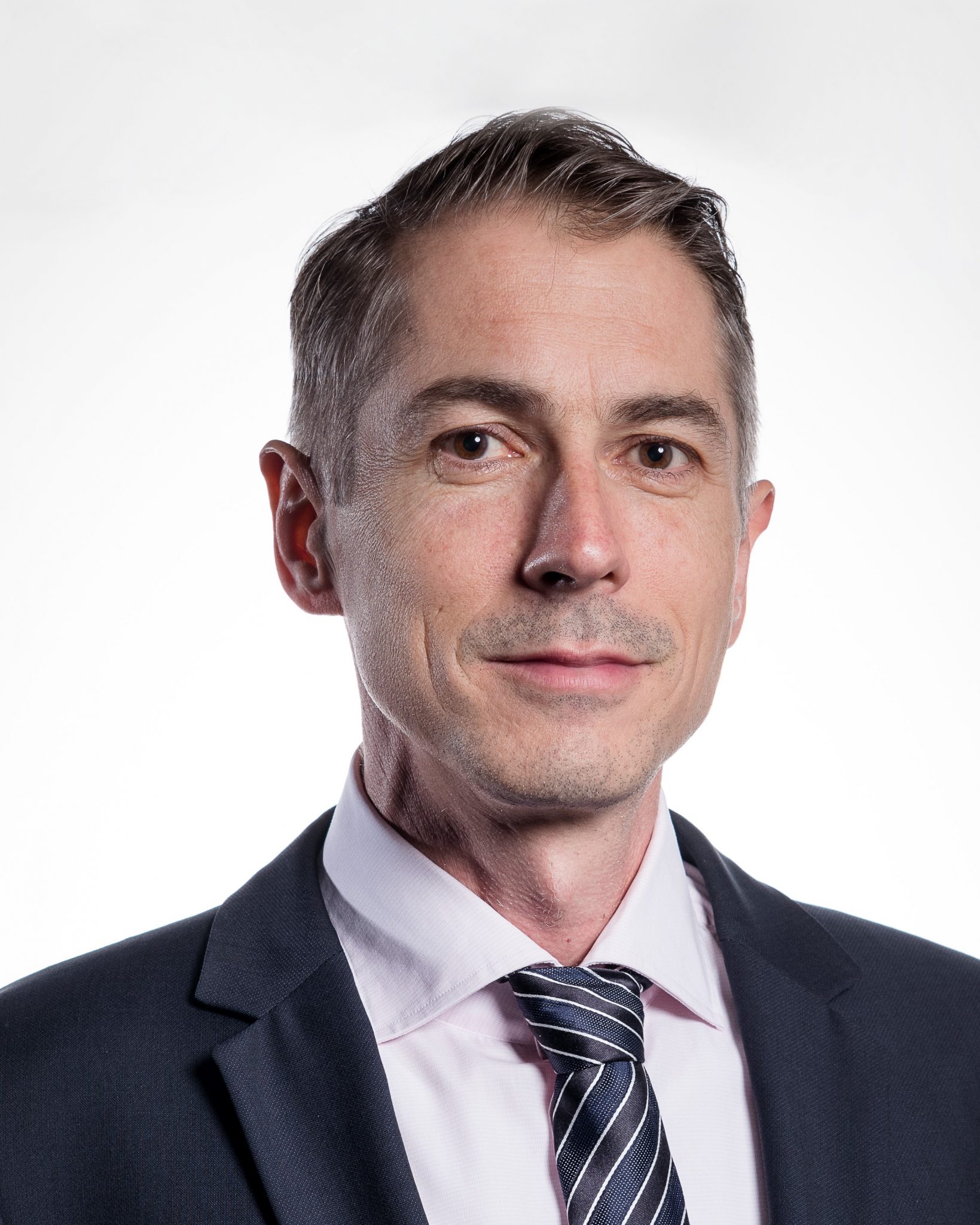
Dr. Andrea Martinelli is a Lecturer and Postdoctoral Researcher at the Automatic Control Laboratory (IfA), ETH Zurich. He holds a PhD in Automatic Control from ETH Zurich (2024) under Prof. John Lygeros, an MSc in Control Engineering (2017) from Politecnico di Milano, and a BSc in Management Engineering (2015). His research focuses on optimal control, reinforcement learning, and decentralized control strategies for large-scale systems, emphasizing scalability and applicability to renewable energy systems. He received the ETH Medal for his doctoral thesis on data-driven control methods. Education: BSc in Management Engineering, Politecnico di Milano (2015) MSc in Control Engineering with Honours, Politechnico di Milano (2017) PhD in Automatic Control, ETH Zurich (2024) Research Interests: Optimal control and reinforcement learning Data-driven methods for control systems Decentralized control of interconnected systems Dissipativity theory and passivity-based approaches Applications in renewable energy systems (DC microgrids) Teaching & Outreach: Program Manager for the CAS ETH in Automation Teaching a post-graduate course on automation in 2025 Professional Activities: Worked at Laboratoire d'Automatique (EPFL) during MSc thesis (2017) Research Assistant with Prof. R. Scattolini, Politecnico di Milano (2018)
Gerold Schneider is an Associate Professor at the University of Zurich , affiliated with the Department of Computational Linguistics under the Faculty of Arts and Social Sciences and Faculty of Business, Economics and Informatics . He leads the Text Crunching Center (TCC) , focusing on interdisciplinary research at the intersection of NLP, Digital Humanities, and Health Data Science. Research Interests His work spans Text Analytics , Digital Humanities , Corpus Linguistics , and Health Data Science , with applications in: Biomedical NLP (e.g., Alzheimer’s detection, clinical trials) Digital Humanities projects (e.g., analyzing Charles Dickens, UN archives) Migration discourse framing across languages Adversarial data collection for hate speech detection Interdisciplinary methodologies for digital unstructured data Recent Publications 2025–2024 research highlights include annotated corpora for preclinical and neurological studies, AI-driven analysis of historical linguistic variation, and innovative tools for language learners. His NLP applications address health diagnostics, ethical AI, and cross-lingual political discourse. Labs & Teams As TCC leader, he spearheads collaborative projects within the Digital Society Initiative (DSI) communities (AI & Law, Health, Ethics, etc.), integrating computational methods with humanities and health research.
Andras Kis is a Full Professor at the École Polytechnique Fédérale de Lausanne (EPFL), affiliated with the School of Engineering (STI) across multiple institutes including the Institute of Electrical Engineering (IEL), Institute of Materials Science (IMX), and teaching programs in Electrical Engineering (SEL-ENS). He leads the Laboratory of Nanoscale Electronics and Structures (LANES) and serves on the PhD program committee for Microsystems and Microelectronics. PhD, EPFL (2003) MS, Physics, University of Zagreb (1999) Baccalaureate, MIOC High School Research Focus: Pioneering work on 2D materials for electronic and optoelectronic devices, particularly transition metal dichalcogenides like MoS2 and PtSe2. His research spans: Transistor design with atomically thin semiconductors Excitonic devices and valleytronics Nanofluidics and ionic logic Optical properties of 2D heterostructures Scalable fabrication of 2D materials Defect engineering and doping techniques Scientific Impact: Based on analysis of 15 most recent publications, his work focuses on advancing 2D materials for next-generation electronics through innovations in: Van der Waals heterostructures Thermoelectric and optoelectronic applications Nanofabrication techniques Spintronic and quantum transport phenomena Memristive and neuromorphic devices Characterization of electronic and optical properties Awards & Recognition: Fellow of the Institute of Electrical and Electronics Engineers (IEEE) Lotfi A. Zadeh Award for Emerging Technologies (2024) Highly Cited Researcher (Clarivate Analytics) Teaching & Academic Leadership: Currently teaching courses including Lab in Nanoelectronics , Physical Models for Micro and Nanosystems , and Semiconductor Devices II . He has supervised over 20 PhD students in his research group at EPFL. Laboratory & Collaborations: Directs the Laboratory of Nanoscale Electronics and Structures (LANES) which focuses on fundamental and applied research in 2D materials and nanoelectronic devices. His work bridges materials science, condensed matter physics, and microelectronics engineering.
Emre Telatar is a Full Professor at École Polytechnique Fédérale de Lausanne (EPFL) with multiple affiliations within the School of Computer and Communication Sciences. His primary appointment is in the Laboratory of Theory and History of Information (LTHI), with additional roles in Signal and Image Processing (SSC) and Systems and Networking (SIN). He also serves on the PhD program committee for Computer and Communication Sciences. Professor Telatar's research focuses on communication and information theories, with specific expertise in wireless communication, network information theory, and distributed compression. His work has been consistently sponsored by the Swiss National Science Foundation and the NCCR/MICS (National Center of Competence in Research / Mobile Information & Communication Systems). His research demonstrates a strong theoretical foundation with practical applications in modern communication systems. His publication record shows a sustained contribution to the field, with significant papers spanning from the mid-1990s through the 2000s. The research trends indicate a consistent focus on fundamental aspects of communication theory with evolving applications to multi-antenna systems, ad hoc networks, and channel estimation techniques. Scientific recognition includes: IEEE Information Theory Society Paper Award (2001) EPFL Agepoly teaching prize (2005) Professor Telatar has supervised numerous PhD students throughout his career at EPFL, serving as primary advisor to current students including Coban Serhat Emre, Girish Adway, and Song Ryan Yuanqing, as well as many past students who have completed their doctoral studies under his guidance. His teaching includes foundational courses such as Principles of Digital Communications and Information Theory and Coding. He maintains his research laboratory within the Information Theory Laboratory at EPFL, continuing to advance theoretical frameworks for modern communication systems while mentoring the next generation of researchers in the field.
Prof. Dr. Matthias A. Tietz is an Assistant Professor and leads the Competence Center for Entrepreneurship at the St.Gallen Institute of Management in Asia (SGI-HSG), part of the University of St.Gallen in Singapore. He holds affiliate positions at IE Business School (Madrid), INDEG ISCTE (Lisbon), and the Mediterranean School of Business (Tunis). His academic journey includes degrees from Ivey Business School (Ph.D. in Entrepreneurship), Universidad del Pacífico (Peru), and Nanyang Business School (MBA, Singapore). Research focuses on entrepreneurial decision making, corporate innovation in SMEs and MNCs, and business model copycats. He regularly presents at global conferences like the Babson College Entrepreneurship Research Conference and Academy of Management Annual Meetings. Prior to academia, he consulted for companies like DHL, Henkel, and Sulzer Engineering, focusing on HR and turnaround management. He teaches courses on business consulting, social entrepreneurship in Southeast Asia, and executive education programs globally. Awarded multiple Best Paper Awards (2012, 2014, 2020) and Best Lecturer Awards across IE University programs (2019-2020). Engaged in startups as an advisor and investor, emphasizing cultural diversity in entrepreneurial contexts. Active in pro bono projects, such as supporting rural entrepreneurs in Peru.
Dima Damen is a Professor of Computer Vision at the School of Computer Science, University of Bristol, where she leads the Machine Learning and Computer Vision Group. She also serves as a Senior Research Scientist at Google DeepMind. As an EPSRC Early Career Fellow (2020-2025) and a Fellow of ELLIS for Europe, her research focuses on advancing computer vision, particularly in egocentric (first-person) vision, video understanding, and action recognition. Her educational background and professional journey have positioned her as a leader in the field of computer vision, with a particular emphasis on understanding human activities from wearable cameras. She has received numerous awards including Best Paper at ACCV 2024 and Outstanding Paper at ICASSP 2021. Professor Damen's research interests span multiple areas of computer vision and machine learning. She specializes in egocentric vision, where she has made significant contributions to understanding human activities from first-person perspectives. Her work explores video understanding, action recognition, hand-object interactions, and the development of vision-language models that can interpret and generate instructions from visual data. She has pioneered approaches to unique video captioning, long video understanding through active memory representations, and spatial reasoning from egocentric videos. Her research often bridges the gap between theoretical computer vision and practical applications in human-centered AI. Her recent publications demonstrate a strong focus on egocentric vision, with papers like "AMEGO: Active Memory from long EGOcentric videos" (ECCV 2024) and "HOI-Ref: Hand-Object Interaction Referral in Egocentric Vision" (2024) advancing the state of the art in understanding long-form first-person videos. She has also contributed to vision-language models with works like "ShowHowTo: Generating Scene-Conditioned Step-by-Step Visual Instructions" (CVPR 2025) and "It's Just Another Day: Unique Video Captioning by Discriminitave Prompting" (ACCV 2024, Best Paper). Her research shows a consistent trajectory toward building systems that can understand human activities in natural environments with human-like capabilities. Professor Damen has received significant recognition for her work, including: EPSRC Early Career Fellow (2020-2025) ELLIS Fellow for Europe (Nov 2024) Best Paper at ACCV 2024 Outstanding Paper at ICASSP 2021 (awarded to only 3 out of 1700 papers) Outstanding Reviewer for CVPR 2020 and 2021 Program Chair for ICCV 2021 She has successfully advised numerous PhD students and postdoctoral researchers, many of whom have gone on to prestigious positions in academia and industry. Her group has secured significant research funding including the EPSRC Programme Grant Visual AI and the EPSRC UMPIRE grant. She actively collaborates with industry partners including Google DeepMind, Adobe, and Meta, ensuring her research has practical impact. Professor Damen leads the Machine Learning and Computer Vision Group at the University of Bristol, which focuses on egocentric vision, video understanding, and the development of vision-language models. The group has created influential datasets like EPIC-KITCHENS, which has become a standard benchmark in egocentric vision research. Her team regularly participates in and organizes workshops at major computer vision conferences including CVPR, ICCV, and ECCV.
Michael Gastpar is a full Professor at École Polytechnique Fédérale de Lausanne (EPFL) in the School of Computer and Communication Sciences, where he leads the Laboratory for Information in Networked Systems (LINX). He previously held faculty positions at the University of California, Berkeley (2003-2011, earning tenure in 2008) and Delft University of Technology. His research spans information theory, signal processing, communications, and systems neuroscience. His research interests focus on network information theory and related coding and signal processing techniques, with applications to sensor networks and neuroscience. Recent work demonstrates a strong shift toward exploring the theoretical foundations of modern machine learning, particularly investigating transformer architectures from an information-theoretic perspective. His research group at EPFL explores how information theory principles can provide fundamental limits and novel approaches for contemporary machine learning problems. His recent publications reveal a clear trend toward bridging classical information theory with modern machine learning. The 15 most recent papers show increasing focus on theoretical analysis of transformers, rate-distortion frameworks for language models, universal prediction methods, and applications of information measures to machine learning theory. This represents a strategic evolution from his earlier work on sensor networks and physical-layer network coding toward foundational questions in artificial intelligence. Scientific Awards: IEEE Fellow 2013 Communications Society & Information Theory Society Joint Paper Award Information Theory Society Distinguished Lecturer (2009-2011) ERC Starting Grant (2010) Okawa Foundation Research Grant (2008) NSF CAREER award (2004) 2002 EPFL Best Thesis Award Professor Gastpar has advised over 20 PhD students who have gone on to successful careers in both academia and industry. His research has been generously supported by major grants including an ERC Starting Grant "ComCom" (2011-2016) and ongoing support from the Swiss National Science Foundation. He has served in significant editorial roles, including as Associate Editor for Shannon Theory for the IEEE Transactions on Information Theory (2008-11) and as Technical Program Committee Co-Chair for the IEEE International Symposium on Information Theory in 2010 and 2021. He leads the Laboratory for Information in Networked Systems (LINX) at EPFL, which brings together researchers working at the intersection of information theory, machine learning, and networked systems. The lab maintains strong connections with both theoretical research communities and practical applications in communications and neuroscience.
Li Tang is an Associate Professor with tenure at École polytechnique fédérale de Lausanne (EPFL), affiliated with the Institute of Bioengineering (IBI) and the Institute of Materials Science and Engineering (IMX) within the School of Engineering (STI). She leads the Laboratory of Biomaterials for Immunoengineering, focusing on developing innovative strategies at the intersection of immunology, materials science, and cancer therapy. Her work bridges fundamental research and clinical translation, with multiple ongoing clinical trials based on CAR-T cell therapies developed in her lab. B.S. in Chemistry, Peking University (2003–2007) Ph.D. in Materials Science and Engineering, University of Illinois at Urbana-Champaign (2007–2012) Postdoctoral Fellow, MIT (2013–2016) Her research lies at the forefront of immunoengineering, integrating chemical, metabolic, and mechanical approaches to modulate immune responses. Key areas include cancer immunotherapy, immune metabolism, mechano-immunology, and biomaterials. She investigates how physical and biochemical cues can reprogram T cells, overcome exhaustion, and enhance tumor targeting. Her work emphasizes multidimensional immunity-disease interactions, aiming to develop safer and more effective therapies for cancer and autoimmune diseases. The recent publications highlight a strong trend in engineering immune cells (especially CAR-T) for enhanced durability and function, using advanced biomaterials and metabolic reprogramming. There is a clear focus on overcoming challenges in solid tumors, modulating the tumor microenvironment, and translating findings into clinical applications. The use of nanoparticle delivery, single-cell analysis, and biomechanical cues are recurring themes across her work. Notable scientific awards include: Friedrich Miescher Award (2025) ERC Starting Grant (2018) MIT TR35 Innovators Under 35 (China Region, 2020) Nano Research Young Innovator Award (2018) Biomaterials Science Emerging Investigator (2019) Materials Horizons Emerging Investigator (2020) Li Tang actively mentors PhD students across multiple doctoral programs (EDBB, EDMS, EDMX) and has advised numerous graduates who have gone on to prestigious postdoctoral and faculty positions. She is involved in significant research grants, including an Innosuisse project with Novochizol SA, and her lab is supported by competitive funding. She teaches core courses such as Immunoengineering and Next-Generation Biomaterials, shaping the next generation of scientists. Her lab fosters interdisciplinary collaboration and innovation, with active projects in chemical, metabolic, and mechanical immunoengineering, as well as CAR-T cell development. She is the Principal Investigator of the Tang Lab, which includes postdoctoral fellows, PhD students, and technical staff. The lab is actively recruiting and has a strong publication and clinical translation record. Tang Lab is also involved in multiple MA/BA training projects and promotes student engagement in cutting-edge research. The lab’s discoveries are being translated into clinical trials, reflecting a strong commitment to translational science.
Emad Oveisi serves as a Research and Teaching Associate at École Polytechnique Fédérale de Lausanne (EPFL), primarily affiliated with the Interdisciplinary Centre for Electron Microscopy (CIME) at the EPFL Valais Wallis campus in Sion. He simultaneously holds roles in EDCH-ENS (Teaching), EDMX-ENS (Teaching), the Teachers Council (CCE), and the EPFL Assembly (AE), reflecting his multifaceted contributions to research, education, and academic governance. His academic foundation includes a PhD in Materials Science and Engineering from EPFL (2014), an MSc from the University of Tehran (2008), and a BSc in Metallurgy and Materials Engineering from the University of Tehran (2005). PhD: Materials Science and Engineering, EPFL (2014) MSc: Materials Science and Engineering, University of Tehran (2008) BSc: Metallurgy and Materials Engineering, University of Tehran (2005) Oveisi pioneers advanced electron microscopy techniques with emphasis on real-time 3D imaging of crystal defects and precision measurement of materials properties using aberration-corrected S/TEM. His work bridges fundamental materials science with practical applications in nanotechnology and in situ dynamic analysis, enabling breakthroughs in visualizing atomic-scale structural evolution. His research directly supports over 250 researchers across 12 interdisciplinary groups at EPFL-Valais. His scientific excellence is recognized through prestigious awards: Rodolphe and Renée Haenny Prize (2022) for contributions to electron microscopy techniques and teaching dedication Microscopy Today Innovation Award (2018) for inventing "Single-shot three-dimensional electron imaging" Oveisi actively mentors the next generation of scientists as evidenced by his supervision of PhD student Gulnaz Ganeeva. His research program receives substantial support from major funding bodies including the Swiss National Science Foundation (SNSF), European Research Council (ERC), Horizon 2020, and the Research Council of Norway. Beyond the lab, he shapes institutional policy as an elected member of EPFL's Teachers Council Bureau and the School Assembly. As manager of EPFL-Valais' electron microscopy platform, Oveisi leads a critical infrastructure hub serving diverse research teams. His operational framework integrates cutting-edge instrumentation with rigorous safety protocols, while his collaborative approach fosters cross-departmental innovation in materials characterization across physics, chemistry, and engineering disciplines.
Paul Gompers is a Professor of Business Administration at the Harvard Business School , holding appointments in both the Finance and Entrepreneurial Management areas. His research focuses on financial issues related to start-up and high-growth companies, private equity funds, and corporate finance. Education: A.B. in Biology (Harvard College, 1987), M.Sc. in Economics (Oxford University), Ph.D. in Business Economics (Harvard University, 1993) Research interests include: Structure, governance, and performance of private equity funds Sources of financing, incentive design, and performance of private firms Long-run performance evaluation of newly public companies General partner-portfolio company relationships Institutional investor-private equity fund manager dynamics Scientific contributions and recognition: Faculty Research Fellow, National Bureau of Economic Research Corporate Finance Program Marshall Fellowship recipient (Oxford University studies) Author of influential working paper "How Do Venture Capitalists Make Decisions?" (2016) Research compiled in "The Venture Capital Cycle" (forthcoming, MIT Press)
Juergen Schmidhuber is Associate Professor at the Faculty of Informatics of Università della Svizzera italiana and a leading researcher at the Dalle Molle Institute for Artificial Intelligence (IDSIA USI-SUPSI). He is also Chief Scientist at NNAISENSE, a company dedicated to building practical general-purpose AI. His work has profoundly influenced modern artificial intelligence, particularly through the development of Long Short-Term Memory (LSTM) networks in 1991, now deployed across billions of devices for speech recognition, machine translation, and virtual assistants. His research interests span Artificial Intelligence, Deep Learning, Recurrent Neural Networks, Universal AI, Meta-Learning, Algorithmic Information Theory, Artificial Curiosity, Robotics , and Low-Complexity Art . He has pioneered mathematically rigorous frameworks for self-improving AI systems and formal theories of creativity and beauty. His work bridges theoretical foundations with real-world applications in computer vision, natural language processing, and autonomous robotics. The recent articles reflect a consistent trajectory of innovation, combining deep theoretical insights with scalable machine learning architectures. His publications emphasize sequence modeling, universal learning, intrinsic motivation, and computational creativity , demonstrating both foundational contributions and industrial impact. From LSTM to Goedel machines, his work consistently targets the long-term goal of self-improving general AI. Scientific Awards: Numerous awards in AI and machine learning (specific names not listed) Schmidhuber leads a research group at IDSIA, where he mentors students and researchers in advancing the frontiers of AI. His lab has secured significant recognition and industrial collaboration, though specific grants are not detailed. He promotes the 'New AI'—general, sound, and relevant to physics—and continues to explore the convergence of intelligence, computation, and the universe. Labs and Teams: Dalle Molle Institute for Artificial Intelligence (IDSIA USI-SUPSI) NNAISENSE (as Chief Scientist)
Siyu Tang is an Assistant Professor in the Department of Computer Science at ETH Zürich, where she leads the Computer Vision and Learning Group (VLG) at the Institute of Visual Computing. Her research focuses on computational models for human perception and digitalization through computer vision and machine learning. Her educational background includes: PhD in Computer Science, Max Planck Institute for Informatics (2017), supervised by Prof. Bernt Schiele Master of Science in Media Informatics, RWTH Aachen University Bachelor of Science in Computer Science, Zhejiang University, China Dr. Tang specializes in human-centric computer vision, developing statistical models for motion analysis, pose estimation, and digital human creation. Her work integrates machine learning with optimization techniques to enable machines to interpret human activities from visual data, with applications spanning virtual reality, healthcare, and human-computer interaction. Key research thrusts include generative models for content creation, egocentric vision, and human motion synthesis. Her recent publications (2024-2025) demonstrate intense focus on 3D human modeling and neural rendering, with Gaussian splatting emerging as a dominant technique for efficient avatar creation and scene reconstruction. Significant themes include text-driven motion synthesis using diffusion models, relightable avatars, surgical training applications, and egocentric multimodal pretraining. This work bridges computer vision, graphics, and machine learning to advance human digitalization. No scientific awards were mentioned in the provided text. Dr. Tang leads the VLG research group at ETH Zürich, mentoring PhD and Master's students in human-centric AI. She previously secured an early career research grant from the Max Planck Institute for Intelligent Systems to establish her independent research program. Her group actively pursues funding for projects in human motion analysis, 3D reconstruction, and generative modeling, with strong industry and clinical collaborations. The Computer Vision and Learning Group (VLG) operates within ETH's Institute of Visual Computing, maintaining dedicated facilities for motion capture, 3D scanning, and high-performance computing. The team collaborates internationally with institutions like the Max Planck Society and focuses on scalable solutions for real-world human digitalization challenges, including surgical training systems and immersive virtual environments.
Academic Profile: Damir Filipovic is a Full Professor and the Swissquote Chair in Quantitative Finance at the College of Management of Technology (CDM) of École Polytechnique Fédérale de Lausanne (EPFL), Switzerland. He previously held academic positions at the University of Vienna, University of Munich, and Princeton University, and served as Head of the Vienna Institute of Finance. Research Focus: Quantitative finance, risk management, stochastic processes, term structure modeling, volatility risk, and machine learning applications in financial markets. Industry Collaboration: Co-developed the Swiss Solvency Test for insurance capital requirements while consulting for the Swiss Federal Office of Private Insurance. Publications: Contributed extensively to journals like Journal of Financial Economics, Mathematical Finance, and Annals of Applied Probability, with a textbook on Term-Structure Models. Academic Service: Editorial board member of multiple journals and organizer of advanced workshops on systemic risk and financial technology. Recent Research: His work emphasizes machine learning for portfolio risk management, kernel-based yield curve estimation, and robust stochastic modeling. Keynote speaker at international conferences on finance and insurance mathematics, with over 15 recent publications in 2023-2025 addressing high-dimensional financial problems, neural control systems, and causal inference in market data. Education: Ph.D. in Mathematics from ETH Zurich (2000). Graduate of ETH Zurich and University of Vienna. Teaching & Mentorship: Supervises current and former EPFL Ph.D. students in quantitative finance, including Nicolas Camenzind, Joshua Hayes, Andrea Ruglioni, and ten others. Former students like Damien Ackerer and Lotfi Boudabsa now lead research in risk management. Labs & Programs: Directs EPFL's Finance and Technology Programme, leads the Computational Finance Group (CSF) at EPFL, and contributes to Swiss Finance Institute initiatives. Scientific Leadership: Served on EPFL Committee of Academic Evaluation and Doctoral Program Finance committee.
Mathias Payer is an Associate Professor at EPFL's School of Computer and Communication Sciences (IC), leading the HexHive Laboratory . His work focuses on software security, particularly addressing memory corruption and type violations through binary analysis and compiler-based techniques. He contributes to research in secure system design, fault isolation, and fuzzing methodologies. Current PhD students : Di Bartolomeo Luca, Feng Zhiyao, Hofhammer Florian, Lyu Tao, Mao Philipp Yuxiang, Zhang Chibin, Zheng Han Past EPFL PhD students: Badoux Nicolas Daniel, Bhattacharyya Atri, Hazimeh Ahmad His research explores software security in areas like: Protecting applications from vulnerabilities Binary exploitation and mitigation Compiler-driven security hardening Strong sanitization and privilege separation Memory corruption detection The HexHive group develops tools and frameworks for: Automated fuzz driver generation Gradual compartmentalization State inference for feedback optimization Secure cell architectures Recent publications highlight advancements in: Fuzzing hybrid approaches (e.g., DUMPLING, MendelFuzz) Memory safety validation (QMSan, Pacmem) Compiler-assisted defenses (Gradient, Type++)
Wenzel Jakob is an Associate Professor and leader of the Realistic Graphics Lab at EPFL's School of Computer and Communication Sciences , currently on sabbatical at the University of Tokyo until Fall 2025. His work bridges inverse graphics , physically based rendering , and compiler/systems research , with a focus on developing robust differentiable rendering frameworks. Key research themes include: Backpropagation through rendering algorithms for inverse problems Material appearance modeling and optical measurement systems Compiler design for differentiable rendering pipelines Manifold sampling techniques and light transport derivatives His group created Mitsuba renderer , Dr.Jit , and Instant Meshes (recipient of the SGP Software Award). Recent publications (2021–2024) explore volumetric rendering, SDF-based differentiable systems, and efficient Monte Carlo estimators. Awards include the ACM SIGGRAPH Significant Researcher Award , Eurographics Young Researcher Award , and ERC Starting Grant . Teaching roles (2016–2024) span Advanced Computer Graphics and Numerical Methods for Visual Computing courses at EPFL.