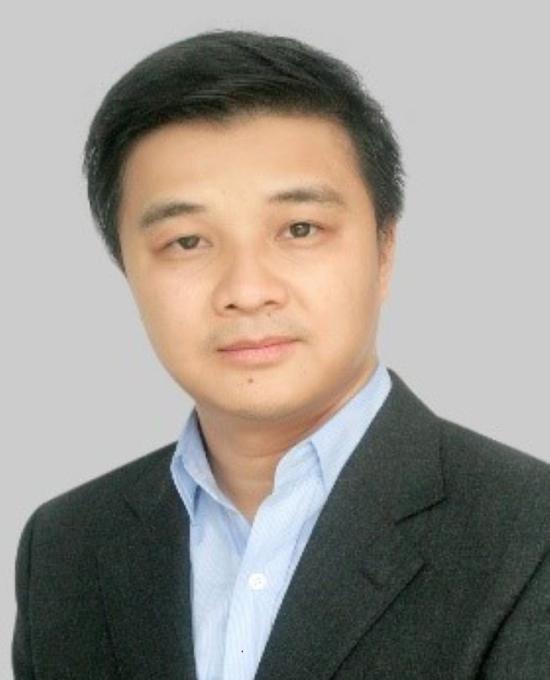
Andrzej Murawski is a Professor of Computer Science at the University of Oxford and a Tutorial Fellow at Worcester College . His research focuses on the semantics of programming languages and software verification, with applications in automata theory, probabilistic computation, and concurrency. Current affiliations: University of Oxford, SIGLOG Vice-Chair, FoSSaCS Steering Committee Research interests: Game semantics, higher-order recursion, probabilistic systems, differential privacy Recent publications address probabilistic verification, equivalence checking, and game semantics for concurrent systems. He has chaired program committees for conferences such as ESOP and PERR, and his work has earned recognition like the POPL 2025 Distinguished Paper Award . Current students : Benedict Bunting, Haoxuan Yin Past students : Conrad Cotton-Barratt, David Hopkins, Guanyan Li, Dominik Wagner, Fabian Zaiser
Eric TOTEL is a Professor at Telecom SudParis, specializing in cybersecurity and network security. His research focuses on intrusion detection systems, graph-based anomaly detection, machine learning applications in security, and data confidentiality in distributed systems. He has contributed to projects such as DAMS (DDoS mitigation using deep reinforcement learning), Sec2Graph (novelty detection on graph-structured data), and DAEMON (dynamic autoencoder-based anomaly detection). His work emphasizes scalable solutions for multi-step attack detection and privacy-preserving infrastructure for encrypted DNS logs. Key contributions include developing correlation engines for distributed systems, formalizing invariant-based attack detection in web applications, and exploring static analysis for information flow control. He has authored over 50 peer-reviewed publications and served on program committees for conferences like RAID, CRiSIS, and EuroS&P. His HDR (2012) formalized error-detection techniques applied to intrusion detection. Advising and grants: He collaborates on projects funded by French national research agencies and has mentored students in cybersecurity, AI for defense (CAID conferences), and cloud infrastructure security. His research often bridges theoretical models and practical implementations, with tools like STARLORD for 3D graph visualization of security data.
Sumitro Banerjee is an Associate Professor of Marketing at Grenoble Ecole de Management (GEM), where he teaches strategic and international marketing, digital marketing, brand management, and product development. Previously, he held positions at ESMT Berlin and Syracuse University. He holds a PhD and MSc from INSEAD, an MBA from IIFT, and a Bachelor of Technology in Mining Machinery from IIT-ISM Dhanbad. His research focuses on new product development, innovation diffusion, market entry strategies, and salesforce incentives, employing microeconomic and game theory frameworks. He has published in journals like Production and Operations Management and serves on the editorial board of International Journal of Research in Marketing , where he received an award for editorial excellence in 2023. Before academia, he worked in international trade at Tata Steel and as an engineer at Jessop & Company. His executive education programs have served Fortune 500 clients, and he consults for organizations globally.
Geoffroy Couteau is a CNRS research scientist at IRIF (Institut de Recherche en Informatique Fondamentale), Université Paris Cité, where he conducts research in theoretical and applied cryptography. He obtained his PhD from École Normale Supérieure de Paris in 2017 under the supervision of David Pointcheval and Hoeteck Wee, followed by a postdoctoral position at Karlsruhe Institute of Technology (KIT) from 2017 to 2019. His primary research interests include secure multiparty computation, zero-knowledge proofs, and the theoretical foundations of cryptography, with a particular emphasis on pseudorandom correlation generators and efficiency improvements in cryptographic protocols. He has made significant contributions to fine-grained cryptography, non-interactive zero-knowledge proofs, and post-quantum secure computation. The recent publications reflect a strong trend toward foundational advances in secure computation, with increasing focus on efficiency, practicality, and connections to complexity theory and learning theory. His work often bridges theoretical hardness assumptions with practical protocol design. ERC Starting Grant (2023) for project OBELiSC (Overcoming Barriers and Efficiency Limitations in Secure Computation) Geoffroy Couteau has advised numerous PhD and master’s students, including Dung Bui, Clément Ducros, Eliana Carozza, and Ulysse Léchine. He has also hosted many visiting students and postdocs, fostering a vibrant research group. He has served on the program committees of major conferences such as EUROCRYPT, CRYPTO, TCC, and PKC. He is currently leading research in cryptography at IRIF and is involved in postdoctoral hiring for projects in advanced cryptographic primitives. He maintains a research blog and resource collection for students, including LaTeX templates, a probability cheat sheet, and curated answers to common cryptography questions.
Chloe Guillot-Soulez is a University Professor at iaelyon School of Management, Jean Moulin University Lyon 3. She is Head of the Master's in Human Resources Management and Organization in a work-study program and leads the Human Resources and Organization Teaching and Research Center. She is affiliated with the Magellan Research Center and co-leads the AGRH's 'Employer Branding and HR Marketing' thematic group. Her research focuses on employer branding, HR marketing, recruitment, remuneration, professional integration, and cooperative organizations . She is particularly interested in the strategic and operational dimensions of Human Resources Management, including career planning (GPEC), organizational behavior, and HR communication. Her work bridges academic research with practical applications in modern organizations. Her recent publications include textbooks and applied works on HR management, indicating a strong trend toward educational and strategic HR topics. These works emphasize practical tools, exercises, and real-world applications in recruitment, training, compensation, and workforce planning. While no formal scientific awards are listed, her leadership roles, HDR (Habilitation to Supervise Research), and editorial contributions reflect significant recognition in the field of management sciences. She actively supervises students through her role as Master’s program director and is involved in curriculum development and teaching across multiple HR-related courses. She has not received mention of external grants, but her institutional research center affiliation suggests collaborative research funding. She is a key member of the Human Resources Research Group within the Magellan Research Laboratory. She is involved in research teams focused on cooperative and mutualist organizations (MOCOO) and contributes to national academic networks such as AGRH. Her work appears in both academic and professional outlets, demonstrating a commitment to bridging theory and practice in HR.
Julie Klein is a full professor at Sciences Po and Dean of the Sciences Po Law School. She is affiliated with the Law School's Research Center and specializes in Law of obligations and Economic Law, with a focus on the interaction between civil and commercial law. Education : PhD in Private Law from University Paris II Panthéon-Assas (2010); passed agrégation in Private Law and Criminal Science (2011). Professional Roles : Former director of the Master’s degree in General Private Law at University of Rouen (2011-2019); co-director of the Entreprises, Marchés, Régulation (EMR) program at Sciences Po (2020-present); Scientific Director of Semaine juridique édition entreprise (JCP E) since 2018; member of the High Committee for Corporate Governance (HCGE) since 2019. Her research explores the confrontation of civil law and commercial law rules, particularly in evidence law, burden of proof, and prescription periods. She has contributed to the reform of the regime of obligations under the Ministry of Justice (2011-2012) and writes the general regime of obligations chronicle for the Revue des contrats (since 2012). Recent articles address evidence admissibility, trade secrets, GDPR compliance, and procedural fairness. She received the Anthony Mainguené prize for her work. Scientific Awards : Anthony Mainguené prize. Klein is actively involved in the Law School's Research Center and collaborates with legal practitioners on corporate governance and economic law reforms.
Dacia Dressen-Hammouda is a Professor of Universities at Université Clermont Auvergne, affiliated with the ACTé Laboratory (Activity, Knowledge, Transmission, Education). She co-leads Theme 1 ( Situations of knowledge transmission and learning ) and has held significant educational responsibilities since 2007, including designing and managing the Multilingual Technical Documentation Engineering and Multilingual Information Design programs. Her research spans English for Specific Purposes (ESP) , multimodality , indexicality , and intercultural rhetoric , with a focus on digital communication and AI integration in education. Research Themes include: Digital and multimodal supports in specialized English Genre-based pedagogies for professional and academic writing Intercultural challenges in second-language politeness negotiation Recontextualization of expert knowledge in digital media Indexicality as a framework for disciplinary identity analysis Article Trends highlight her work on multimodal literacy through instructional videos, indexicality in professional writing , and digital science communication . She explores how digital tools reshape genre mastery and how intercultural exchanges influence academic writing practices. Scientific Contributions include collaborations with researchers like Ciara R. Wigham and Susan Birch-Becaas , with projects such as the DILAN Project (Digital Language and Communication Training for EU Scientists). She has supervised PhD candidates Hamza Miftah and Nedjah Zerrouki , focusing on AI-driven writing support and multimodal travel blogs. Lab Engagement : As co-responsible for Theme 1 at the ACTé Laboratory, she integrates activity theory and ethnographic approaches to study writing as a social and pedagogical activity.
Ngoc Thang NGUYEN is an Associate Professor of Management and Vice Dean at the Hanoi School of Business and Management , Vietnam National University, Hanoi. He is also an Affiliate Senior Research Fellow at IPAG Business School , France. He holds a Ph.D. in Applied Economic Sciences from Ghent University (2009), an MBA from the University of Southern California (2003), and dual bachelor’s degrees in Economics and English from National Economics University and Hanoi University (1999). Education: Ph.D. in Applied Economic Sciences, Ghent University, Belgium (2009) MBA, University of Southern California, U.S.A. (2003) Bachelor of Economics, National Economics University, Vietnam (1999) Bachelor of English, Hanoi University, Vietnam (1999) His research focuses on Human Resource Management, Knowledge Management, Green HRM, and Corporate Social Responsibility (CSR), particularly examining labor practices and organizational sustainability. He has published in journals such as Asia Pacific Business Review , International Review of Economics and Finance , and Journal of Developmental Entrepreneurship . His recent work explores employer branding, CSR attractiveness for Generation Z job seekers, and green training’s impact on environmental performance. He has led 4 research projects at Ministerial and National levels and served on editorial boards for journals including Asia Pacific Business Review and Journal of Human Resource and Sustainability Studies . He has taught over 1,000 executive courses for corporations like Samsung, Viettel, and Petro Vietnam, and supervised doctoral dissertations as pre-examiner or committee member.
Hugo Paquet is a Researcher at INRIA Paris and a member of the ANTIQUE team at École Normale Supérieure , PSL University. He completed a PhD in Computer Science (2015–2019) at the University of Cambridge under Glynn Winskel , focusing on concurrent game semantics for probabilistic programming. His postdoctoral work includes positions at LIPN, Paris (2022–2024, funded by a Marie Skłodowska-Curie Award) and University of Oxford (2020–2022). He has contributed to conferences including LICS , ESOP , FSCD , and POPL . Education : PhD in Computer Science (University of Cambridge, 2019) Research Interests : Probabilistic programming (semantics, inference algorithms, nonparametric models), categorical semantics (game semantics, concurrency models, adjunctions), combinatorial species, and 2-dimensional categories. Teaching : Category Theory (2023–2024), Bayesian Statistical Probabilistic Programming (2021–2022), Lambda-calculus and Types (2020–2021), and small-group teaching at Cambridge (Logic, Discrete Mathematics, Semantics). Awards : Marie Skłodowska-Curie Award under the Paris Region Fellowship Programme Labs : INRIA Paris, ANTIQUE team (2024–present)
Michalis Vazirgiannis is a Professor at LIX, École Polytechnique in France, where he leads the Data Science and Mining group (DaSciM). He holds a degree in Physics and a PhD in Informatics from Athens University (Greece), and a Master's degree in AI from Heriot Watt University, Edinburgh (UK). His academic career spans multiple prestigious institutions including Fraunhofer and Max Planck MPI in Germany, INRIA/FUTURS in Paris, AUEB in Greece, Telecom-Paristech, ENS in France, Tsinghua and Jiaotong Shanghai in China, and Deusto University in Spain. Professor Vazirgiannis's research focuses on machine and deep learning methods for graph analysis, including community detection, graph clustering, node embeddings, and influence maximization. His work in text mining encompasses Graph of Words, word embeddings with applications to web advertising and marketing, event detection, and summarization. He has active collaborations with industrial partners in analytics and machine learning for large-scale data repositories across various application domains such as recommendations, meeting summarization, influence metrics for scientific and social networks, and predictive maintenance. His recent publications demonstrate a strong emphasis on Graph Neural Networks, multilingual NLP (particularly for French and Arabic), and applications of deep learning to diverse domains including social networks, legal text, and biomedical data. There's a clear trajectory toward developing more efficient, explainable, and specialized models that address real-world challenges in data analysis. ERCIM fellowship Marie Curie EU fellowship Tencent "Rhino-Bird International Academic Expert Award" (2017) Best Paper Award at IJCAI 2018 Best Paper Award at CIKM 2013 Professor Vazirgiannis has supervised 29 completed PhD theses and has attracted significant R&D funding from national and international sources, including research agencies and industrial partners such as Google, Airbus, Huawei, Deezer, BNP, and LVMH. He leads or has led several academic research chairs including DIGITEO (2013-15), ANR/HELAS (2020-25), and AXA (2015-2018). The DaSciM research group, which he leads at École Polytechnique, has extensive experience in real-world R&D projects involving large-scale data mining. The team maintains active collaborations with major industrial partners including AIRBUS, Google, BNP, Tencent, and Tradelab, working on cutting-edge machine learning projects. The group has co-organized major conferences such as ECML PKDD 2011 and ECML/PKDD 2017 and participates in the senior organization of AI and data mining events like AAAI and IJCAI.
Helmut Meiss serves as an Assistant Professor at the University of Lorraine's University Institute of Technology (IUT) Nancy-Brabois, where he directs the DUT Biology with Agronomy option study program. His research focuses on conservation biological control of crop pests and weeds through natural enemies within innovative cropping systems, bridging ecological science and agricultural practice. Dr. Meiss's work emphasizes biological pest control and weed management in sustainable agriculture, investigating how landscape features, crop rotations, and biodiversity enhance ecosystem services. His research integrates field studies with predictive modeling—particularly machine learning—to develop practical tools for farmers, as evidenced by his leadership in the ARENA project which establishes observation networks for natural pest regulation. Analysis of his 15 most recent publications reveals consistent themes in cereal aphid regulation, weed dynamics in cropping systems, and data-driven approaches to agri-environmental indicators. His work demonstrates a strong trajectory toward generic predictive models for pest control and the integration of biocontrol into farm-level decision-making, with increasing emphasis on ecosystem service quantification since 2017. Dr. Meiss co-supervises PhD candidate Eric STELL on predicting conservation biological pest control in cereal crop mixtures. His involvement in the ARENA project indicates collaborative grant-funded research, though specific funding sources aren't detailed in available materials. He actively contributes to farmer advisory systems through biodiversity indicators and crop management tools. As part of a multidisciplinary research group organized around three thematic axes, he participates in the ARENA network for pest biocontrol assessment and engages in public outreach including school workshops, biodiversity exhibitions, and science-society initiatives like the 'Grand Nancy Terre de pollinisateurs' project.
Youssef TLICHE is an Assistant Professor in Supply Chain Management and Logistics at EM Normandie, where he has been since 2021. He previously held an assistant professorship at Université Le Havre Normandie (2019–2020). He serves as Academic Director of the Graduate programs in Supply Chain Logistics Innovations. He holds a PhD in Management Sciences from Université Le Havre Normandie (2020) and an Engineering degree in Statistics and Data Analysis from ESSAI Tunis (2015). His research focuses on quantitative methods in supply chain management, including collaborative forecasting, decentralized supply chain optimization, and blockchain applications. He also explores decarbonization strategies in maritime logistics and the impact of AI on e-commerce. Key contributions include work on demand inference, inventory optimization, and blockchain in finance. His recent articles address topics such as AI-driven recommendation systems, wind-powered vessel financing, and Industry 4.0’s impact on supply chain vulnerability. No scientific awards are listed. His advising and grant activities remain unspecified in the provided text.
Camilo Bogoya serves as an Associate Professor of Latin American Literature (14th section) at Artois University's School of Languages. He teaches Hispanic-American literature, Spanish contemporary literature, and cultural studies across undergraduate and graduate programs, including preparation for the French national CAPES teaching examination. As an active member of the Texts and Cultures Research Center, he organizes academic events and serves on national examination juries for Spanish language teaching credentials. His educational foundation includes a Doctorate in French Language and Literature from Sorbonne Nouvelle University (2011), an External Spanish Aggregation (2015), External CAPES in Spanish (2014), DEA in General and Comparative Literature (2004), and a Master's in Philology from Colombia's National University (2002). PhD: Sorbonne Nouvelle University (2011) DEA: Sorbonne Nouvelle University (2004) Master's: National University of Colombia (2002) Bogoya's research centers on three interconnected domains: the essayist-writer figure bridging novel and essay genres; literary transfers between Latin American and French traditions; and music's role as structural element and thematic concern in literature. His work examines how authors like García Márquez, Borges, and contemporary Colombian writers negotiate cultural identity through genre experimentation and cross-Atlantic dialogues, with particular focus on León de Greiff's poetic legacy and Quignard's musical aesthetics. His scholarly contributions reveal evolving engagement with Colombian literary identity, shifting from historical analysis of independence narratives toward contemporary explorations of globalization's impact on regional literature. His scientific recognition includes: National Literature Prize, University of Antioquia (2020) National Literature Prize, Central University of Bogotá (2008) As academic supervisor, Bogoya directs Master's research theses and oversees professional internships for Languages and International Business students. His editorial leadership spans journals including L'Autre Amérique , Ojo Vulgar , and Colombia's Literatura: teoría, historia, crítica , while his organizational work features doctoral seminars on literary diaries and writer interviews. The Texts and Cultures Research Center provides Bogoya's primary academic home, where he coordinates interdisciplinary projects examining Latin American-French literary connections through study days, edited volumes, and collaborative publications that bridge historical and contemporary perspectives.
Martin Delacourt is a Lecturer at the University of Orléans, affiliated with the LIFO (Laboratoire d'informatique fondamentale d'Orléans). He earned his PhD on December 5, 2011, under the joint supervision of Bruno Durand and Victor Poupet at LIF Marseille. His research focuses on cellular automata, including directional dynamics, limit sets, and decidability of computational problems. PhD: University of Montpellier 2 (2011) ENS Lyon: Bachelor (2006), Master (2008) His research explores cellular automata through computational complexity, symbolic dynamics, and formal verification. Key themes include limit set characterization, defect dynamics, and algorithmic properties of number systems. He has published in conferences like AUTOMATA, MFCS, and CiE. Teaching responsibilities include courses in network engineering, computability, complexity theory, operating systems, and algorithm analysis at the University of Orléans. He has supervised work-study students in the MIAGE program since 2018.
Anna Korba is an Assistant Professor at École Polytechnique, specifically affiliated with ENSAE/CREST in the Statistics Department since September 2020. She is also a co-administrator of the Master Data Science program at École Polytechnique. Her academic journey has positioned her as a leading researcher in machine learning, with particular expertise in kernel methods, optimal transport, and statistical optimization. Dr. Korba received her PhD from Telecom ParisTech in 2018 under the supervision of Prof. Stephan Clémençon. Prior to her current position, she was a postdoctoral researcher at University College London's Gatsby Computational Neuroscience Unit working with Arthur Gretton from December 2018 to August 2020. Her academic foundation includes a Master's degree in Machine Learning and Computer Vision (MVA) from ENS Cachan and ENSAE in 2015. Anna Korba's research primarily focuses on machine learning with emphasis on kernel methods, optimal transport, optimization, particle systems, and preference learning. Her work bridges theoretical statistics with practical machine learning applications, particularly in developing novel sampling and optimization methods. She has made significant contributions to understanding Wasserstein gradient flows, density ratio estimation, and variational inference techniques. Her publication record demonstrates a strong trajectory in top-tier machine learning conferences including ICML, NeurIPS, AISTATS, and ICLR. Her research shows a clear evolution from foundational work on ranking and preference learning during her PhD to more recent contributions in Wasserstein-based optimization, sampling methods, and deep probabilistic modeling. The interdisciplinary nature of her work connects statistics, optimization theory, and practical machine learning applications. Top 10% Oral Presentation at AISTATS 2022 Top 15% Long Oral Presentation at ICML 2021 She actively mentors PhD students and postdoctoral researchers, currently advising seven PhD candidates and having successfully guided several alumni to prestigious positions. Dr. Korba also contributes to the academic community through her role in administering the Master Data Science program and collaborating with researchers across institutions worldwide. As part of the CREST research center, Dr. Korba works within a vibrant team of researchers focused on statistics, machine learning, and their applications to economic and social sciences. Her research group includes current PhD students and postdocs working on various aspects of her research interests, creating a dynamic environment for advancing the field of statistical machine learning.