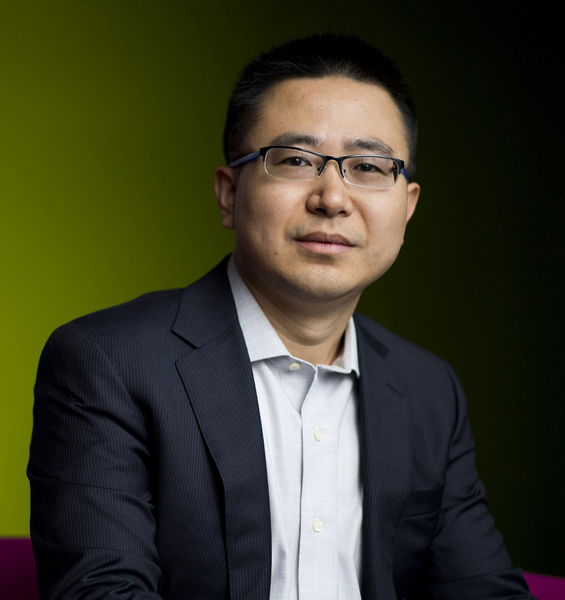
Yun Fu is a Distinguished Professor at Northeastern University, affiliated with the College of Engineering and Khoury College of Computer Science. He holds tenure in Electrical and Computer Engineering (ECE). His roles include Professor, Senior Vice President at Shiseido Americas, founder of Giaran (acquired by Shiseido), and co-founder of TVision Insights. He earned his Ph.D. from the University of Illinois at Urbana-Champaign. His research focuses on artificial intelligence, computer vision, machine learning, and data mining. Key achievements include over 500 publications, 50+ patents, and prestigious awards like IEEE Fellow, OSA Fellow, and AAIA Fellow. He leads the SMILE Lab, exploring AI applications in vision, robotics, and healthcare. Notable entrepreneurship includes AI-driven ventures in cosmetics and media analytics. Research interests emphasize AI-driven solutions for computer vision challenges, including anomaly detection, trajectory prediction, and multimodal learning. His work bridges academia and industry, with impactful contributions to both fields.
Song Liu serves as Associate Professor in Data Sciences and AI within the School of Mathematics at the University of Bristol. His academic journey spans multiple continents with a BEng from Suzhou University, MSc from Bristol, and Doctor of Engineering from Tokyo Tech. Current research focuses integrate mathematical foundations with practical AI applications across engineering domains. His educational background demonstrates international expertise: BEng: Suzhou University MSc: University of Bristol Doctor of Engineering: Tokyo Tech Research centers on exponential family manifolds and graphical models , with significant contributions to score matching techniques for missing data and generative modeling. His work bridges theoretical statistics with real-world applications in structural health monitoring and power electronics, particularly through transfer learning frameworks for magnetic core loss prediction. Recent publications reveal increasing focus on Wasserstein gradient flows and differential parameter inference in high-dimensional spaces. Liu's publication trajectory shows consistent innovation in density estimation and generative modeling, with recent work (2023-2025) emphasizing practical implementations in engineering contexts. Key themes include score-based diffusion models, manifold learning applications, and novel approaches to divergence minimization using velocity fields and optimal transport theory. Award recognition includes: Outstanding Paper at ICML2025 3rd Place in MagNet Challenge 2023 (Outstanding Performance Award) Grant leadership includes the 2023-2024 project Using Machine Learning to Correct Probe Skew in High-frequency Electrical Loss Measurements as Co-Investigator, and the 2019 Joint Workshop Between JGI and ISM as Principal Investigator. His academic service extends to hosting international researchers like Ayaka Sakata (2023) and receiving competitive fellowships for boundary example simulation (2018-2020). While no formal lab structure is specified, his collaborative network spans electrical engineering (magnetic core loss projects) and structural analysis (offshore wind foundation monitoring).
Mauro Barni serves as a Full Professor in the Department of Information Engineering and Mathematical Sciences at the University of Siena, where he teaches Cybersecurity, Information Theory, and Mathematical Statistics. His office hours are held Fridays from 3:00 PM to 5:00 PM via online appointment, reflecting his active engagement with students. Professor Barni's research spans multimedia security and digital forensics, with emphasis on deep learning applications for digital watermarking, deepfake detection, and synthetic image attribution. His work addresses critical challenges in adversarial machine learning, steganography, and image manipulation detection, contributing significantly to cybersecurity and intellectual property protection frameworks. Analysis of his 2021-2025 publications reveals dominant trends in neural network watermarking robustness, synthetic media detection, and defenses against backdoor attacks. His research consistently bridges theoretical foundations with practical implementations, focusing on real-world applications like printer source attribution and physical-domain adversarial scenarios. He leads the VIPP (Vision, Image Processing, and Pattern Recognition) research group, which maintains dedicated virtual classrooms for collaborative projects in computer vision and multimedia security. The group actively develops methodologies for image forensics, synthetic media analysis, and security countermeasures against emerging threats.
Kanad Basu is an Associate Professor in the Department of Electrical, Computer, and Systems Engineering at The University of Texas at Dallas, Jonsson School of Engineering and Computer Science. He leads the Trustworthy and Intelligent Embedded Systems (TIES) lab, focusing on hardware security, reliability, and emerging computing paradigms. His research spans AI hardware, quantum computing, functional safety, and hardware-based security validation. Research Interests: His work emphasizes improving the trustworthiness of modern hardware systems. Key areas include hardware security (e.g., side-channel analysis, hardware trojans), functional safety in AI accelerators, quantum computing security and verification, and post-silicon validation techniques. He combines formal methods, machine learning, and hardware design to address vulnerabilities in SoCs, DNN accelerators, and quantum systems. Publication Trends: Recent publications (2023–2025) show a strong focus on interdisciplinary research, integrating AI/ML with hardware security, quantum computing, and functional safety. There is a growing emphasis on using large language models for assertion generation, symbolic execution for hardware fuzzing, and graph neural networks for quantum circuit analysis. His work frequently appears in top venues like DAC, DATE, HOST, ISVLSI, and IEEE journals. Scientific Awards: NSF CAREER Award, 2025 IEEE Top Picks in Test and Reliability, 2024 and 2023 Multiple Hack@DAC Prizes (2nd and 3rd) Best Paper Award at VLSI Design 2011 Assistant Professor Award at UTD Jonsson School, 2024 Nominated for Blavatnik Awards for Young Scientists, 2019 Advising and Grants: Dr. Basu has mentored numerous PhD, MS, and undergraduate students, many of whom have published in top-tier venues. He leads the TIES lab, which has received significant recognition, including the NSF CAREER Award. He actively collaborates across disciplines, advising students on topics ranging from quantum computing to AI hardware and functional safety. His lab produces high-impact research with real-world applications in automotive, cloud, and embedded systems. Labs and Teams: He leads the Trustworthy and Intelligent Embedded Systems (TIES) lab at UT Dallas, which fosters innovation in hardware security and reliability. The lab has produced award-winning work, including second prize at HACK@DAC 2025. He also serves on technical committees for IEEE DATE and HOST, and acts as Hardware Hacking Chair for IEEE HOST, indicating strong leadership in the hardware security community.
Jamal Atif is a Professor at Paris-Dauphine University and holds multiple significant leadership positions including Project Manager for 'Data Science and Artificial Intelligence' at the Institute of Information Sciences and their Interactions (INS2I) of the CNRS, Deputy Scientific Director of 3IA PRAIRIE, Head of the MILES team/project at LAMSADE (UMR CNRS-Université Paris-Dauphine), Co-leader of the Transverse Artificial Intelligence Program at PSL University, and Director of the Dauphine Numérique program. Professor Atif's primary research focuses on the foundations of responsible artificial intelligence, with specific expertise in privacy preservation in machine learning, robustness of deep learning algorithms to malicious attacks, causality, and explainability. His work bridges theoretical foundations with practical applications in security and reliability of AI systems. He has developed innovative approaches to address adversarial vulnerabilities in machine learning models and has made significant contributions to privacy-preserving techniques in data analysis. His publication record demonstrates a consistent focus on robust and trustworthy AI systems, with recent work exploring differential privacy in clustering, adversarial robustness, and explainable AI. The research spans theoretical foundations in logic and knowledge representation to practical applications in finance, healthcare, and computer vision. His publications appear in top-tier venues including Machine Learning journal, Neural Information Processing Systems, and International Joint Conferences on Artificial Intelligence. Scientific Awards: Recipient of two awards from the North American Society of Radiology for his thesis work Professor Atif has co-supervised or is currently supervising around fifteen doctoral students, demonstrating his commitment to mentoring the next generation of AI researchers. His leadership extends to directing major institutional programs including Dauphine Numérique and the Transverse Artificial Intelligence Program at PSL University, where he shapes strategic research directions in AI. He leads the MILES team/project at LAMSADE, which focuses on foundational aspects of machine learning and artificial intelligence. The team's research spans theoretical aspects of learning algorithms to practical applications requiring robust and reliable AI systems, with particular emphasis on security and privacy considerations in modern machine learning deployments.
Saptarashmi Bandyopadhyay is a Tenure-Track Assistant Professor of Computer Science at the City College of New York and the Graduate Center at the City University of New York (CUNY). Her research focuses on Artificial Intelligence Agents and Autonomous Decision Making, with special emphasis on Multi-Agent Reinforcement Learning, Multi-Agent Imitation Learning, and related paradigms. She has established significant collaborations with leading institutions including Google DeepMind, Carnegie Mellon University, Oxford University, and MIT. Dr. Bandyopadhyay received her PhD from the University of Maryland, College Park, where she was advised by Professor John Dickerson and Professor Tom Goldstein. Prior to that, she graduated from Penn State in 2020 with a thesis on Multimodal Computer Vision in Medical Domain advised by Prof. William Evan Higgins. Her research expertise spans multiple domains of AI including Multi-Agent Systems, Reinforcement Learning, Imitation Learning, and Multimodal Perception. She specializes in developing AI agents for applications in climate conservation, economic systems, and AI safety. Her work integrates techniques from computer vision, natural language processing, and robotics to create more robust and explainable AI systems that can operate effectively in complex, real-world scenarios. Current work includes improving explainable AI, developing Multimodal LLM/VLM/Robotic Agents, and creating libraries to speed up Multi-Agent evolutionary training with JAXMARL. Analysis of Dr. Bandyopadhyay's publication record reveals a clear progression from foundational work in medical imaging and natural language processing toward increasingly sophisticated multi-agent AI systems. Her recent publications demonstrate a strong focus on Multi-Agent Reinforcement Learning frameworks like JAXMARL, with applications spanning from supply chain orchestration to climate conservation. The interdisciplinary nature of her work is evident in publications spanning computer vision, NLP, and multi-agent systems conferences including AAAI, NeurIPS, AAMAS, EMNLP, and ACL. DoGood Fellow (2022) UMD Dean's Summer Fellow (2021) Dr. Bandyopadhyay has been actively involved in securing research funding from major agencies including NSF, NIH, DoD, and ARL. She served as the lead PhD student RA in a DoD project for Multi-Agent Explainable AI to improve AI trustworthiness. Her service to the academic community includes membership on program committees for major conferences including IJCAI 2024, KDD 2024, ACL 2024, and AAMAS 2023-2024. She has also created the AI Agents Seminar Series at UMD in 2022 with over 1,000 participants from six continents. Currently, Dr. Bandyopadhyay leads research on improving explainable AI, developing Multimodal LLM/VLM/Robotic Agents, and creating libraries to speed up Multi-Agent evolutionary training with JAXMARL. Her lab collaborates prominently with researchers from Google DeepMind, Carnegie Mellon University, Oxford University, University of Sheffield, Waymo, Meta AI, and MIT, with special focus on Dr. Jakob Foerster's and Dr. Robert Loftin's groups.
Lesley Shannon is an Associate Professor in the School of Engineering Science at Simon Fraser University (SFU), specializing in computing system design and reconfigurable computing. She leads the Reconfigurable Computing Lab (RCL), focusing on FPGA-based architectures, heterogeneous multicore systems, and CAD tools. Her academic journey includes a B.Sc. from the University of New Brunswick (1999), M.A.Sc. and Ph.D. from the University of Toronto (2001 and 2006). Her research spans FPGA CAD algorithms, Networks-on-Chip (NoCs), dynamic partial reconfiguration (DPR), and application-specific architectures. Key projects include FUSE (OS abstraction for hardware accelerators), PolyBlaze (multicore system emulation), and uROAMs (microfluidic reconfigurable devices). She has secured funding from NSERC, Xilinx, and Altera, among others. Education: B.Sc., Electrical Engineering (Computer Option), University of New Brunswick, 1999 M.A.Sc., Applied Science, University of Toronto, 2001 Ph.D., Applied Science, University of Toronto, 2006 Roles: NSERC Chair for Women in Science and Engineering (BC/Yukon) Faculty Advisor, SFU WEST (Women in Engineering, Science, and Technology) Her lab employs 5 current students and has graduated 7, including work on FPGA CAD, microfluidics, and embedded systems. Courses taught include Advanced Digital Systems Design and Real-Time/Embedded Systems. Her research emphasizes reducing design time through on-chip profiling and CAD tools, with applications in biomedical imaging and quantum computing. Awards & Grants: NSERC Discovery Grant NSERC Strategic Grant (Lead PI, 2009; Co-PI, 2010) SFU Startup Grant and President’s Research Grant Lab & Collaborations: The RCL develops silicon and non-silicon architectures, including quantum computing and microfluidic systems. Partnerships include industry collaborations and open-source tools like Odin II synthesis framework.
Prof. Dr. Julia Schnabel is the TUM Liesel Beckmann Distinguished Professor and Helmholtz Distinguished Professor at TUM's TUM School of Computation, Information and Technology. Her research focuses on computational imaging and AI in medicine, including medical image processing, machine learning, motion modeling, and quantitative imaging. She holds IEEE, Ellis, and MICCAI Society fellowships, and has pioneered work in image reconstruction, artifact correction, and AI-based diagnostics. Educations: Bachelor/Master from TU Berlin (1993) PhD from University College London (1998) Postdocs at UMC Utrecht, King's College London, and UCL Her research interests span medical AI, deep learning for medical imaging, and clinical evaluation methodologies. Key contributions include frameworks for motion artifact correction in MRI, physics-informed neural networks, and benchmark datasets like NOVA for anomaly detection in brain MRI. She has authored over 100 publications, with recent work advancing unsupervised anomaly detection and federated learning in healthcare. Prof. Schnabel leads interdisciplinary projects at TUM and Helmholtz Zentrum München, focusing on AI-driven solutions for diagnostic and therapeutic challenges. Her labs develop tools for real-time cardiac imaging, histopathology segmentation, and trustworthy AI guidelines (FUTURE-AI initiative).
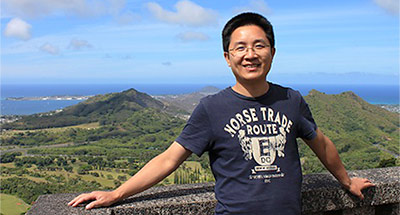
Qi Chen is a Professor in the Department of Geography at the University of Hawaii at Mānoa, specializing in remote sensing and geospatial technologies. His office is located in Saunders Hall, and he teaches undergraduate and graduate courses including GEO 370 (UAV and Aerial Photography), GEO 388 (Introduction to GIS), GEO 470 (Remote Sensing), GEO 489 (Applied GIS), and GEO 762 (Research Seminar: Remote Sensing. His research focuses on transforming earth observation data into actionable knowledge for environmental monitoring. Primary interests include: LiDAR applications for vegetation analysis and biomass estimation Climate change impacts on land cover and coastal systems Machine learning integration with geospatial data High-resolution mapping of agricultural and forest ecosystems Drone and satellite-based environmental assessment Chen's recent publications (2020-2025) demonstrate a strong focus on advancing remote sensing methodologies, particularly through: AI-driven approaches (GANs for vegetation indices, deep learning for marine debris) Multi-sensor fusion (LiDAR with camera systems, hyperspectral-multispectral integration) Novel applications in precision agriculture and infrastructure monitoring Hawaii-specific environmental studies incorporating indigenous knowledge systems He leads the Smart Remote Sensing Lab (smartremotesensing.org) where he mentors graduate students in developing cutting-edge geospatial solutions for ecological and societal challenges.
Stuart Shieber is the James O. Welch, Jr. and Virginia B. Welch Professor of Computer Science in the School of Engineering and Applied Sciences at Harvard University. He is a prominent researcher in computational linguistics and natural language processing, with significant contributions across multiple related fields including theoretical linguistics, computer-human interaction, automated graphic design, and the philosophy of artificial intelligence. Professor Shieber's research interests focus primarily on computational linguistics, examining natural language from the perspective of computer science. His work spans scientific and engineering goals, utilizing foundational formal and mathematical tools. He has made significant contributions to grammar formalisms, psycholinguistics, semantics, and synchronous grammars with applications in machine translation and sentence compression. Beyond computational linguistics, his research extends to automatic layout of charts and maps, novel interaction techniques for document reading and diagram layout, online auction mechanisms, library book access prediction, biological evolution tree reconstruction, and the philosophical basis for Turing's test for machine intelligence. His recent publications demonstrate a continued focus on neural language models, syntactic agreement mechanisms, readability assessment, conversational understanding, and bias detection in language models. His research has evolved from traditional grammar formalisms to incorporate modern neural network approaches while maintaining a strong theoretical foundation. The trend shows increasing attention to ethical considerations in NLP, particularly around bias detection and mitigation, alongside continued theoretical work on language structure. Presidential Young Investigator award (1991) Presidential Faculty Fellow (1993) John L. Loeb Associate Professorship in Natural Sciences (1993) Harvard College Professorship (2001) Fellow of the American Association for Artificial Intelligence (2004) Fellow of the Association for Computing Machinery (2014) Fellow of the Association for Computational Linguistics (2017) Professor Shieber has advised numerous PhD students who have gone on to successful careers at institutions including UCSD, Cornell University, Microsoft Research, Google, and various academic institutions. His work on open access and scholarly communication policy, particularly his development of Harvard's open-access policies, led to his appointment as the first director of the university's Office for Scholarly Communication. He is also the founding director of the Center for Research on Computation and Society and a faculty co-director of the Berkman Center for Internet and Society. His laboratory work has focused on advancing computational linguistics through both theoretical and applied research, with numerous patents and co-founding of Cartesian Products, Inc., a high-technology research and development company. His future work appears to be focusing on the intersection of neural network approaches with traditional linguistic theory, particularly in understanding and mitigating bias in language models, while continuing his long-standing interest in the theoretical foundations of language processing.
Mingyi Hong is an Associate Professor in the Department of Electrical and Computer Engineering at the University of Minnesota , where he leads the OptimAI-Lab . His work bridges optimization theory , machine learning , and signal processing , with a focus on foundation models like LLMs and diffusion models. Education : Not explicitly mentioned in the text Current Projects : NSF grants on bilevel optimization, LLM unlearning, and inverse reinforcement learning Research Themes : Bilevel Optimization : Applications in LLM alignment, unlearning, and wireless systems LLM Safety : Unlearning, alignment with human feedback, robustness Diffusion Models : Inference-time alignment, adversarial training Distributed Optimization : Privacy-preserving algorithms, federated learning Recent Publications highlight trends in LLM unlearning (BLUR, LUME), optimization theory (Barrier Functions, νSAM), and diffusion models (Direct Noise Optimization). His group has secured NSF , AWS , Cisco , and Open Philanthropy grants. Scientific Recognition : IEEE Fellow (2025) SPS Best Paper Award (2022, 2021, 2018) Doctoral Dissertation Fellowship (2024) IBM Pat Goldberg Memorial Award (2022) He mentors PhD students like Siliang Zeng and Xinwei Zhang , and collaborates with institutions including Michigan State University , Amazon , and NIH on projects spanning UHF MRI technology to climate-smart agriculture .
Ludwig Schmidt is an Assistant Professor in the Computer Science Department at Stanford University and a member of Stanford Data Science. He also serves as a member of the technical staff at Anthropic and LAION, contributing to both academic and industrial research in machine learning. Dr. Schmidt completed his PhD at MIT, where he received the prestigious George M. Sprowls Award for best PhD theses in computer science, followed by a postdoctoral position at UC Berkeley. His educational background provides a strong foundation for his research at the intersection of theoretical and applied machine learning. Dr. Schmidt's research focuses on the empirical foundations of machine learning, with particular emphasis on datasets, reliable generalization, multimodality, and language models. His work addresses critical challenges in ensuring machine learning models perform consistently across different domains and data distributions. His research group has made significant contributions to open source machine learning through projects like OpenCLIP, DCLM, and the LAION-5B dataset, which have become important resources for the machine learning community. An analysis of Dr. Schmidt's recent publications reveals a strong focus on dataset quality, multimodal learning, and language model training. His work spans from fundamental research on generalization and robustness to practical applications in vision-language systems and tabular data. A recurring theme is the importance of high-quality, diverse datasets for training robust machine learning models, with several papers addressing dataset curation, evaluation methodologies, and the impact of data quality on model performance. New Horizons Award at EAAMO Best paper awards at ICML & NeurIPS Best paper finalist at CVPR Sprowls dissertation award from MIT (George M. Sprowls Award) Dr. Schmidt actively mentors doctoral students and postdoctoral researchers. His current advisees include doctoral candidates Liangyu Chen, Shiye Su, Elaine Sui, Audrey Xie, John Yang, Yuhui Zhang, and Wanjia Zhao. He serves as Doctoral Dissertation Reader for Kyle Hsu and Aishwarya Mandyam, and as Postdoctoral Faculty Sponsor for Benjamin Feuer and Mike Merrill. His research has attracted significant funding that supports these students and enables his group to contribute to open source projects like OpenCLIP and LAION-5B. Dr. Schmidt leads a research group focused on empirical machine learning foundations. The group actively contributes to open source machine learning through code repositories and datasets, including OpenCLIP, OpenFlamingo, LAION-5B, and the DataComp datasets. Their work bridges theoretical insights with practical applications, developing tools and resources that advance the entire machine learning community.
Tanvir Arafin serves as an Assistant Professor in the Department of Cyber Security Engineering at George Mason University, where his research focuses on hardware security and trust mechanisms for emerging computing platforms. With publications in premier venues including IEEE Transactions on Very Large Scale Integration Systems, IEEE Transactions on Computers, and ACM International Conference on Computer-Aided Design, he addresses critical security challenges in next-generation systems through rigorous hardware-software co-design approaches. His research portfolio spans Hardware Security, Trusted Computing, and IoT Security, with specialized expertise in Side-Channel Attacks and Secure Hardware Design. Dr. Arafin investigates electromagnetic side-channel vulnerabilities in O-RAN networks, develops countermeasures for autonomous vehicle cybersecurity, and pioneers RRAM-based security solutions for memory-constrained devices. His work bridges theoretical security models with practical implementations, emphasizing real-world applicability in edge computing environments and autonomous navigation systems. Current projects explore machine learning integration for anomaly detection in connected vehicles and secure acceleration of cryptographic operations. Analysis of Dr. Arafin's 2022-2025 publications reveals strategic focus areas: electromagnetic fingerprinting for radio units in O-RAN (2025), spatial acceleration of Kolmogorov-Arnold Networks (2025), and NTT-based cryptography accelerators (2024). His research demonstrates consistent innovation in securing autonomous navigation systems and edge devices, with emerging work on in-memory computing architectures using resistive memory technologies. Key trends include hardware-centric defense against model inversion attacks, voltage overscaling for lightweight authentication, and robust multi-robot coordination in dynamic environments. Scientific Awards: No scientific awards, fellowships, or medals were documented in the source materials. Dr. Arafin leads significant collaborative research, including the NSF CISE-MSI grant (DP: CNS) for edge-based robust multi-robot systems. His educational initiatives feature Capture-the-Flag competitions targeting underrepresented students in cybersecurity. Current grant activities emphasize practical security solutions for autonomous navigation, multi-robot coordination, and IoT edge devices, with demonstrated focus on translating research into deployable countermeasures for real-world threats in dynamic operational environments.
Prof. Dr. Haris Gačanin is a faculty member at RWTH Aachen University, affiliated with the Institute for Distributed Signal Processing under the College of Electrical Engineering. His research focuses on integrating machine learning with wireless communication systems, particularly in industrial IoT, edge computing, and network optimization. Current academic rank: Professor Contact: harisg@dsp.rwth-aachen.de Research Interests: Wireless systems, machine learning, signal processing, and network optimization. Key contributions include: Adaptive resource allocation in IIoT and vehicular networks AI-driven channel estimation and feedback mechanisms Security-oriented emitter identification via metric learning Federated/transfer learning for edge environments Hardware-efficient deep learning models for mmWave and THz communications Methodological Focus: Combines reinforcement learning, attention mechanisms, and robust neural architectures with practical implementations on FPGA and vehicular systems.
Karianne Bergen is an Assistant Professor of Data Science and Earth, Environmental & Planetary Sciences at Brown University, with a courtesy appointment in Computer Science. She leads the Scientific Machine Learning (SciML) Research Group, affiliated with the Data Science Institute (DSI), DEEPS, and the SciAI Center. Her research focuses on scientific machine learning (SciML), including surrogate models for climate science, explainable AI (XAI), and foundation models. She holds a Ph.D. and M.Sc. in Computational and Mathematical Engineering from Stanford University and a B.Sc. in Applied Mathematics from Brown University. Her postdoctoral training included a Harvard University HDSI fellowship in Computer Science. Education: B.Sc. Applied Mathematics, Brown University (2009) M.Sc. Computational and Mathematical Engineering, Stanford University (2015) Ph.D. Computational and Mathematical Engineering, Stanford University (2018) Research Interests: Dr. Bergen’s work bridges machine learning and Earth sciences, emphasizing scalable methods for climate modeling and geophysical data analysis. Her group develops emulators for Antarctic ice sheet dynamics, XAI frameworks for climate data interpretation, and scientific foundation models for geoscience applications. Recent projects include GAN-based sea ice resolution enhancement and flow-based neural networks for sea level projections. Awards: Harvard Data Science Initiative Postdoctoral Fellowship (2018–2020) Stanford Graduate Fellowship in Science and Engineering (2011–2015) Outstanding Student Paper Award, American Geophysical Union (2015) Advising & Collaborations: She mentors PhD students in Earth, Environmental, and Planetary Sciences and collaborates with institutions like MIT-Lincoln Laboratory, SciAI Center, and international geoscience groups. Her lab includes postdocs (e.g., Hilarie Sit) and alumni from data science practicum programs. Labs/Teams: The SciML group at Brown University focuses on multidisciplinary projects at the intersection of AI and Earth sciences, with recent presentations at AGU Fall Meetings and the AI for Science Workshop at ICML.