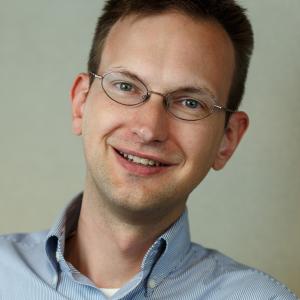
Professor David Clifton is the Royal Academy of Engineering Chair of Clinical Machine Learning at the University of Oxford’s Institute of Biomedical Engineering. He leads the Computational Health Informatics (CHI) Lab, focusing on AI-driven healthcare solutions with a strong emphasis on translational research in low- and middle-income countries (LMICs). His work spans digital health technologies, medical imaging analysis, and AI ethics. Clifton holds multiple fellowships, including from the Alan Turing Institute and Fudan University. Key affiliations include co-directorship of the Oxford-CityU Centre for Cardiovascular Engineering and involvement in the Wellcome Trust’s Flagship Centre in Vietnam. His research has been commercialized through spinouts like OBS Medical and Oxehealth. Notable projects include AI tools for non-invasive vital sign monitoring and pandemic response strategies using audio-based health data. Clifton’s awards include the IEEE Early Career Award (2022) and the Vice-Chancellor’s Innovation Prize. His lab’s Suzhou branch focuses on open-source digital health research using public datasets. Current research themes include multimodal data integration, generative AI in healthcare, and equitable AI deployment across global health systems.
Steven W. Popper is a Professor of Policy Analysis at the RAND School of Public Policy and an Adjunct Senior Economist at the RAND Corporation. He also serves as Distinguished Professor of Decision Sciences at Tecnológico de Monterrey’s School of Government and Public Transformation, reflecting his international academic engagement. His work bridges economics, science and technology policy, and strategic decision-making under uncertainty. Research Interests: Popper's expertise lies in decision-making under deep uncertainty (DMDU), robust decision making (RDM), assumption-based planning, and science, technology, and innovation policy. He has made seminal contributions to long-term policy analysis, particularly through his co-authorship of Shaping the Next One Hundred Years (2003). His research addresses complex systems in economic development, international relations, and environmental planning. Publication Trends: His recent work applies RDM methodologies to diverse domains such as U.S.-China economic competition, Israeli defense and energy policy, transportation planning, and future technologies. His publications often involve scenario analysis, foresight, and adaptive strategies for policy resilience in uncertain futures. Scientific Awards and Leadership: Founding officer and current Finance Chair, Society for Decision Making under Deep Uncertainty Past Chair, Industrial Science and Technology Section, American Association for the Advancement of Science Consultant to the World Bank, OECD, and multiple national governments Advising and Grants: While specific advisees are not listed, Popper has led numerous high-impact research projects funded by U.S. federal agencies and international bodies. His role as Associate Director of the Science and Technology Policy Institute (1996–2001) involved providing analytic support to the White House Office of Science and Technology Policy, indicating extensive grant-funded research leadership. Labs and Teams: Popper is affiliated with RAND’s research teams focused on policy analysis, innovation, and strategic foresight. He collaborates with interdisciplinary teams applying modeling and simulation tools to public policy challenges, particularly through the Robust Decision Making framework.
Xuezhe Ma is an Assistant Professor in the Department of Computer Science at the University of Southern California's Viterbi School of Engineering. Previously, he was a Ph.D. student at Carnegie Mellon University's Language Technologies Institute, where he worked under the supervision of Professor Eduard Hovy. His academic journey includes a Master's degree from Shanghai Jiao Tong University's Center for Brain-like Computing and Machine Intelligence and a Bachelor's degree in Computer Science from the same institution. Ph.D. in Computer Science, Carnegie Mellon University (completed ~2020) M.S. in Brain-like Computing, Shanghai Jiao Tong University B.S. in Computer Science, Shanghai Jiao Tong University Dr. Ma's research spans multiple areas at the intersection of Natural Language Processing and Machine Learning, with particular focus on structured prediction, syntactic and semantic parsing, machine translation, language generation, and deep generative models. His recent work has expanded into vision-language models, large language model architectures, and applications across computer vision tasks. His research combines theoretical foundations with practical implementations, as evidenced by his development of tools like NeuroNLP2 and MaxParser. His publication record shows a clear trajectory from foundational NLP work during his PhD (including papers on dependency parsing and sequence labeling) to more recent contributions in generative models and large language systems. The 15 most recent publications reveal a strong focus on addressing fundamental challenges in generative modeling, context handling, and multimodal integration, with applications spanning literary translation, medical imaging, and news diffusion analysis. AI2 Outstanding Intern Award (2018) Dr. Ma has secured research funding supporting his work in generative models and language technologies, with projects focusing on improving the efficiency and capabilities of large language models. His research group at USC is actively working on next-generation language understanding and generation systems, with particular emphasis on context-aware modeling and multimodal integration. He has established collaborations with industry partners including the Allen Institute for AI and has contributed to open-source projects like Texar. At USC, Dr. Ma leads research in the Information Sciences Institute, directing projects on efficient large language model architectures and multimodal reasoning systems. His lab focuses on developing novel approaches to context handling, model efficiency, and multimodal integration, with applications across diverse domains including healthcare, literary analysis, and news media.
Hanbyul Joo is an Assistant Professor in the Department of Computer Science and Engineering at Seoul National University (SNU). Prior to joining SNU, he was a Research Scientist at Facebook AI Research (FAIR) in Menlo Park. He completed his Ph.D. in the Robotics Institute at Carnegie Mellon University, working with Yaser Sheikh, and received his M.S. in Electrical Engineering and B.S. in Computer Science from KAIST, Korea. Dr. Joo's educational journey began at KAIST, where he earned both his Bachelor's and Master's degrees. He then pursued his Ph.D. at Carnegie Mellon University's Robotics Institute, completing his dissertation titled "Sensing, Measuring, and Modeling Social Signals in Nonverbal Communication." His doctoral work focused on developing the Panoptic Studio, a unique sensing system with over 500 synchronized cameras for capturing social interactions. Dr. Joo's research primarily focuses on endowing machines and robots with the ability to perceive and understand human behaviors in 3D . His goal is to build "social Artificial Intelligence" that can interact with humans using social signals (body languages). He pursues this direction using data-driven methods where data is collected by measuring the wide spectrum of social signals transmitted during interpersonal social interaction. His research spans computer vision, machine learning, computer graphics, and robotics , with particular emphasis on 3D human pose estimation, human-object interaction, and social signal processing. His recent publications demonstrate a clear trend toward leveraging diffusion models for 3D reconstruction and generation tasks, with a focus on human-centric applications. His work bridges the gap between 2D image understanding and 3D scene reconstruction, often utilizing pre-trained models to overcome data limitations. The research consistently addresses fundamental challenges in understanding human behavior, interaction with objects, and social dynamics in 3D space. Dr. Joo is a recipient of several prestigious awards including the Samsung Scholarship and the CVPR Best Student Paper Award in 2018 . His paper "Total Capture: A 3D Deformation Model for Tracking Faces, Hands, and Bodies" received this honor at CVPR 2018. His research has been widely recognized in top computer vision and AI conferences, with multiple oral presentations at venues like CVPR, ICCV, and ECCV. Dr. Joo actively mentors a large group of students, with approximately 15 current students working toward MS/PhD degrees under his supervision. His lab, the SNU VCLab, focuses on cutting-edge research in computer vision and graphics. He has secured significant research funding through his work, though specific grant details aren't provided on his website. Dr. Joo frequently serves as an area chair for major conferences including CVPR, ICCV, and NeurIPS, demonstrating his standing in the academic community. Dr. Joo leads the SNU VCLab, which has developed several notable datasets and tools including SNU ParaHome, FrankMocap, and the CMU Panoptic Studio Dataset. His lab maintains strong industry connections, with students interning at leading companies like Meta. The lab's research focuses on building the infrastructure and algorithms needed for social AI, with an emphasis on practical applications that can be deployed in real-world settings.
Prof. Dan Jiao is the Synopsys Professor of Electrical and Computer Engineering at Purdue University's Elmore Family School. She leads the Rapid-Heterogeneous Integration (Rapid-HI) Design Institute and serves as Editor-in-Chief of the IEEE Journal on Multiscale and Multiphysics Computational Techniques. Her research focuses on computational electromagnetics, multiphysics modeling, and AI-driven design automation for advanced integrated circuits and quantum systems. She has held academic positions since 2005, progressing from Assistant to Full Professor, and has extensive industry experience at Intel Corporation (2001–2005). Education: PhD in Electrical Engineering, University of Illinois at Urbana-Champaign (2001) Senior Staff Engineer at Intel Corporation (2001–2005) Research Interests: Fast numerical methods for large-scale electromagnetic analysis AI/ML integration in design automation (EDA/MDA) Quantum circuits and spin qubit systems Heterogeneous integration and advanced packaging Multiphysics co-simulation for nano-scale devices Signal/power integrity in high-speed systems Key Projects: Leads the NSTC AIDRFIC program (first NSTC R&D Jump Start project), the DARPA NGMM Rapid-HI Design Institute, and the GENIE-RFIC generative design tool initiative. Also directs the Consortium for Electromagnetic Science and Technology. Awards & Honors: 2022 ACES Computational Electromagnetics Award IEEE Fellow (2016) Intel Outstanding Researcher Award (2019) MTT-S Distinguished Microwave Lecturer (2020–2023) 2013 Schelkunoff Prize Paper Award Advising & Grants: Advised over 30 PhD/master's students and led projects funded by NSF, DARPA, Intel, SRC, and industry partnerships. Key grants include NSF CAREER (2008), ONR Young Investigator (2006), and multiple industry-sponsored initiatives. Labs & Teams: Rapid-HI Design Institute (DARPA NGMM) Quantum device co-design group Multiphysics modeling team
David Mimno is an Associate Professor and Chair of the Department of Information Science at Cornell University. He holds a PhD from the University of Massachusetts Amherst and previously worked at the Perseus Project and Princeton University. His research focuses on computational social science, natural language processing, and historical text analysis. Mimno is known for developing the MALLET toolkit, a widely used Java-based platform for machine learning in text processing. He teaches courses such as INFO 4940: How LLMs Work and INFO 6150/CS 6788: Advanced Topic Modeling. His work has been supported by the Sloan Foundation, NEH, and NSF. Mimno advises PhD students in Information Science and Computer Science, emphasizing interdisciplinary research at the intersection of computing and humanities/social sciences. He also contributes to initiatives like AI for Humanists, making large language models accessible for text-as-data research. Bachelor’s degree: Not explicitly stated in text PhD: University of Massachusetts Amherst Research Interests: Mimno explores large language models, topic modeling, cross-lingual semantics, and ethical AI applications in humanities and legal domains. His recent work addresses data curation practices for language models, LLM memorization of poetry, and generative AI’s societal impacts. He co-authored reports on generative AI in academic research and education. Grants & Collaborations: His projects include the Text as Data (TADA) conference and collaborations on generative AI law workshops. Mimno’s MALLET toolkit supports document classification, clustering, and topic modeling, with applications in cultural analytics and computational historiography.
Xiaojiang Du is the Anson Wood Burchard Endowed Professor at Stevens Institute of Technology, directing research in IoT security, AI security, and wireless networks. An IEEE Fellow and ACM Distinguished Member, he leads NSF-funded projects on secure IoT systems and cross-platform security vulnerabilities. Education PhD in Electrical Engineering, University of Maryland MS in Electrical Engineering, Tsinghua University BE in Electrical Engineering, Tsinghua University Research Focus: Develops security frameworks for IoT ecosystems and adversarial machine learning, with recent breakthroughs in smart home security anomaly detection. Honors: IEEE Fellow, ACM Distinguished Member, multiple best paper awards at IEEE conferences. Graduated PhD students hold faculty positions at UNC Charlotte, UL Lafayette, and ShanXi University. Professional Service: IEEE ComSoc Distinguished Lecturer, Associate Editor for IEEE Transactions, and General Co-Chair for IEEE/ACM IWQoS 2023. Secured $9M+ in research funding from NSF, NSA, and DOD.
Mehmet Esat Belviranli is an Assistant Professor in the Computer Science Department at the Colorado School of Mines, where he directs the High Performance Systems and Software Lab (HyperSys). His research focuses on increasing resource utilization in heterogeneous architectures through runtime systems, scheduling algorithms, and performance modeling, with publications in top venues including MICRO, PPoPP, and SC. Education: Ph.D. in Computer Science, University of California, Riverside (2016) M.S. in Computer Science, Bilkent University (2009) B.S. in Computer Science, Bilkent University (2006) Belviranli's research spans heterogeneous architectures, runtime systems, performance modeling, parallel programming, autonomous computing, deep learning acceleration, cyber-physical systems, and edge-cloud platforms. His work develops analytical models and programming abstractions to address resource management, scheduling, and security challenges in diversely heterogeneous systems, with applications in edge computing, autonomous systems, and machine learning acceleration. Recent projects emphasize real-world constraints and security implications. His publication trends reveal increasing focus on edge-cloud resource management (e.g., HARNESS), security vulnerabilities in heterogeneous systems (e.g., MC3), and deep learning acceleration under resource constraints. Key themes include memory contention modeling, scheduling for cyber-physical systems, and concurrent DNN execution, reflecting a shift toward practical deployment in security-sensitive edge environments. Scientific Awards: U.S. Air Force Research Lab Summer Faculty Fellowship Award (2022) U.S. Air Force Research Lab Summer Faculty Fellowship Award (2021) Oak Ridge National Laboratory Significant Event Award (2019) Best Paper Finalist, IEEE HPEC 2018 Outstanding Paper Award, DATE 2024 Belviranli mentors Ph.D. students Ismet Dagli (MLCommons Rising Star 2024, CGO'24 SRC finalist) and Justin Davis (DATE'24 Outstanding Paper Award winner). He has secured $2M+ in funding from NSF, DoE, and SRC, including an NSF-SaTC grant on mobile security (2024), a DoE grant on superconductive systems (2023), and an NSF FuSe grant on graphene nanoribbons (2023), often leading multi-institutional teams from Rochester, Virginia, Arizona, and Minnesota. The HyperSys Lab develops ecosystems for high-performance heterogeneous systems, with recent projects including HARNESS for edge-cloud resource management and MC3 for mobile SoC security. The lab has received equipment donations from Google Coral.ai and Xilinx, and collaborates with national labs on security challenges and next-generation semiconductor technologies.
Dr. Muhammad Imran is a Reader and Lecturer in Mechanical, Biomedical & Design Engineering at Aston University, UK. He is affiliated with the Energy and Bioproducts Research Institute (EBRI) and the College of Engineering and Physical Sciences. His research focuses on energy efficiency, waste heat recovery, and low-temperature power cycles such as Organic Rankine Cycle (ORC) and Supercritical CO₂ systems. He has contributed to the commercialization of ORC systems and collaborates internationally on hybrid energy systems, solar-thermal integration, and district heating networks. Dr. Imran holds a PhD in Energy System Engineering (2016), MSc in Thermal Power Engineering (2012), and BEng in Mechanical Engineering (2009). He has held academic roles at institutions in Pakistan, South Korea, and Denmark, including a Marie Curie Fellowship at the Technical University of Denmark. His awards include the Marie Curie Fellowship (EU), Innovation Award (South Asia Triple Helix), and multiple Research Excellence Awards from South Korea. He leads funded projects on hybrid energy systems for agriculture, waste heat recovery in industries, and sustainable energy solutions in developing countries. His editorial roles include associate editorships in Frontiers in Thermal Engineering and Resources, Environment and Sustainability . He supervises PhD students in renewable energy and low-temperature thermodynamic systems, with ongoing projects on solid-state heat pumps and advanced ORC control strategies. Dr. Imran’s work bridges engineering, data science, and environmental science to address energy challenges. Notable collaborations include projects in Ethiopia, Kenya, Nigeria, and Sudan, focusing on off-grid cold storage, smart irrigation, and biomass energy systems. His research outputs include over 130 peer-reviewed articles, patents, and contributions to international conferences.
LEE Wee Sun is a Professor in the Department of Computer Science at the National University of Singapore (NUS), where he previously served as Head of Department, Vice Dean of Undergraduate Studies, and Vice Dean of Research. His academic journey began with a B.Eng. in Computer Systems Engineering from the University of Queensland (1992) and a Ph.D. from the Australian National University (1996), followed by research roles at the Australian Defence Force Academy and MIT. Education: Ph.D., Australian National University, Canberra, Australia (1996) B.Eng. in Computer Systems Engineering, University of Queensland, Brisbane, Australia (1992) Research Focus: Professor Lee pioneers work in Machine Learning , Planning Under Uncertainty , and Approximate Inference , with emphasis on integrating AI subfields for holistic reasoning. His current projects include "Learning to Decompose for Reasoning and Planning" (enhancing LLMs via self-supervised problem decomposition) and "Learning to Reason with Visual-Linguistic Inputs" (unifying vision, language, and reasoning in single architectures). Publication Trends: Recent work (2023-2025) centers on bridging LLMs with classical AI techniques, featuring breakthroughs in uncertainty quantification, multi-task optimization, and graph-based reasoning. Key themes include sparsity-aware vehicle routing, epistemic uncertainty for reliable LLMs, and differentiable neural solvers for combinatorial problems. Awards: IJCAI-JAIR Best Paper Prize (2022) RSS Test of Time Award (2021) RoboCup Best Paper Award (IROS 2015) HRATC 1st Place (2015) IPPC POMDP Track 1st Place (2011, 2014) UAI Google Best Student Paper (2014) Semeval-1 1st/2nd Place (2007) J.G. Crawford Prize (ANU 1996) Leadership & Service: As steering committee chair for ACML and area chair for NeurIPS/ICML/AAAI/IJCAI, Professor Lee shapes global AI discourse. His administrative roles at NUS and collaborations with MIT/Singapore-MIT Alliance demonstrate commitment to advancing AI education and research infrastructure. While student advisees aren't listed, his leadership positions imply extensive mentoring. Research Ecosystem: His work drives NUS's AI initiatives including Knowledge@Computing projects on reasoning frontiers. Current efforts focus on making AI systems robust through uncertainty-aware planning and multi-modal integration, with applications in robotics, verification systems, and combinatorial optimization.
Geoff Pleiss is an Assistant Professor in the Department of Statistics at the University of British Columbia (UBC), affiliated with CAIDA's AIM-SI cluster. He is also a Canada CIFAR AI Chair and faculty member at the Vector Institute. His research bridges deep learning and probabilistic modeling, focusing on uncertainty quantification, Bayesian optimization, Gaussian processes, and ensemble methods. Pleiss earned his PhD in Computer Science from Cornell University (2020), followed by a postdoc at Columbia University. He holds multiple awards, including the AISTATS Top Reviewer and NeurIPS recognitions. His work emphasizes scalable algorithms and open-source contributions, such as the GPyTorch library. Pleiss advises students in Computer Science and Statistics, including Donney Fan (PhD), Tim G. Zhou (MSc), and others. He teaches advanced courses like STAT 547U (Deep Learning Theory) and STAT 520P (Bayesian Optimization). Grants include NSERC Discovery and New Frontiers in Research funding. Pleiss collaborates on interdisciplinary projects, such as astrophysical discovery via machine learning, and actively participates in academic service and outreach. Education: PhD in Computer Science, Cornell University (2020) MSc in Computer Science, Cornell University (2018) BSc in Engineering (Computing with Applied Mathematics), Olin College (2013) Key Research Themes: Uncertainty-aware decision-making with neural networks Scalable Gaussian processes and Bayesian optimization Ensemble methods and their theoretical limitations Recent Grants: NSERC Discovery Grant (2024) New Frontiers in Research Fund (2025, co-PI) His publications span foundational theory to applied machine learning, with over 14,500 citations. He actively mentors students through research internships and advises on open-source software development. Pleiss frequently presents at top conferences and collaborates with industry partners like Microsoft and ASAPP.
Chris De Sa is an Associate Professor in the Department of Computer Science at Cornell University, affiliated with the Cornell Machine Learning Group and leading the Relax ML Lab. His research focuses on algorithmic, software, and hardware techniques for high-performance machine learning, particularly relaxed-consistency stochastic algorithms like asynchronous and low-precision stochastic gradient descent (SGD). He earned his Ph.D. from Stanford University under advisors Kunle Olukotun and Chris Ré. His work emphasizes constructing efficient, parallel, and distributed machine learning frameworks for deep learning and data analytics. Education: Ph.D. in Computer Science, Stanford University (2017) Research Interests: Algorithmic techniques for scalable ML, quantization, distributed optimization, hyperbolic geometry in ML, and reliable measurement of ML systems. His group develops frameworks for efficient inference/training and explores the intersection of ML with domains like agriculture and plant science through courses like PLSCI 7202. Recent Highlights: DARPA YFA Grant (2024), NSF CAREER Award, Google Research Scholar Award, and multiple best paper recognitions. Key contributions include QuIP quantization methods, Coneheads attention mechanisms, and theoretical advances in decentralized training. Awards: NSF CAREER Award DARPA YFA Grant (2024) Google Research Scholar Award Mr. & Mrs. Richard F. Tucker Teaching Award Grants & Advising: Advises 8 Ph.D. students (including Ruqi Zhang, Yucheng Lu, A. Feder Cooper) and holds leadership roles in MLSys conferences. Active in grant-funded research (e.g., NSF Robust Intelligence). Labs/Teams: Leads the Relax ML Lab and participates in Cornell’s Institute for Digital Agriculture (CIDA).
Pearl Pu is a Senior Lecturer and Researcher at École Polytechnique Fédérale de Lausanne (EPFL), affiliated with the School of Computer and Communication Sciences and the PFP Group. Her work focuses on integrating human-centric principles into AI systems. Human-Computer Interaction User-Centric Design of Intelligent Systems Recommender Systems Neural Generation of Empathetic Dialogs Emotion-Aware Intelligent Systems AI Ethics She supervises doctoral students in projects related to interaction design, emphasizing 'goal-directed design' and 'interaction design' methodologies through collaborative team challenges. Pearl Pu Lab (GR-Pu): Research unit at EPFL's School of Computer and Communication Sciences Active member of multiple interdisciplinary groups including GR-SCI-IC, GR-PU, and SIN-ENS
Dr. Alireza Nili is a Senior Lecturer in Service Science at QUT's School of Information Systems within the Faculty of Science. His expertise spans digitization of customer-centric services, AI/chatbots, IoT/IIoT, and sustainable technologies. He holds a PhD from Victoria University of Wellington and has coordinated large-scale courses like IT Systems Design (IFB103), achieving top teaching scores. Nili's research focuses on service ecosystems, trust in digital services, and public/retail sector innovations. He has secured over $1.4M in industry grants for projects involving Cisco, Amazon, and Services Australia. His awards include the 2023 Educator of the Year and multiple top conference paper recognitions. Nili supervises PhD students at Level 3 mentoring status and contributes to major conferences as track chair/associate editor. Research highlights include frameworks for chatbot governance, IOT in agriculture, and AI ethics. His work appears in IEEE Software , Communications of the ACM , and MIT Sloan Management Review . Current projects address consumer trust in AI technologies and spatial data systems. Nili's interdisciplinary approach combines design science with empirical methodologies to bridge theory and practice in digital service innovation.
Susanna Thon is an Associate Professor in the Department of Electrical and Computer Engineering at Johns Hopkins University (JHU), affiliated with the Whiting School of Engineering. She serves as Associate Director of the Ralph O’Connor Sustainable Energy Institute (ROSEI) and a member of the Data Science and AI Institute. Her research focuses on nanomaterials engineering for optoelectronic devices, emphasizing solar energy conversion and sensing. Notable areas include plasmonic-photocatalytic systems using aluminum nanoparticles and nanostructured materials like colloidal quantum dots for next-generation devices. Thon holds a BSc from MIT (2005) and MSc/PhD in Physics from UC Santa Barbara (2008/2010). She joined JHU in 2013 after postdoctoral work at the University of Toronto. Her work is funded by agencies such as the NSF, U.S. Army, and Maryland Energy Innovation Institute. She has published over 50 peer-reviewed papers and received JHU’s Catalyst and Discovery awards. Key research projects include developing plasmonic systems to enhance light absorption in titanium dioxide and creating scalable fabrication techniques for optoelectronic materials. Thon’s team also advances quantum dot solar cells and novel characterization methods for energy materials. She actively participates in professional societies, including the Optical Society of America and IEEE. Her grants and collaborations aim to train the next generation in sustainable energy research, with recent initiatives funded through NSF and Space@Hopkins seed grants. Thon’s lab integrates nanophotonics, materials science, and machine learning to address global energy challenges.