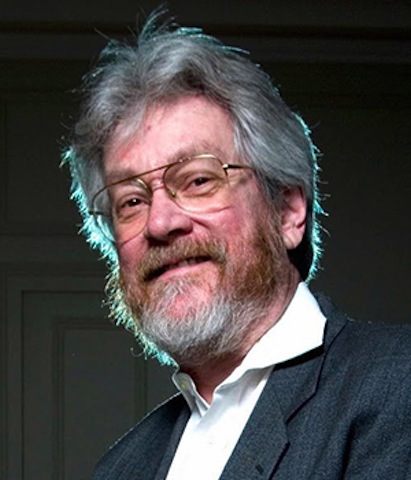
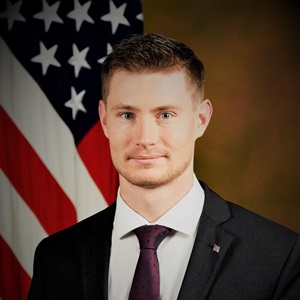
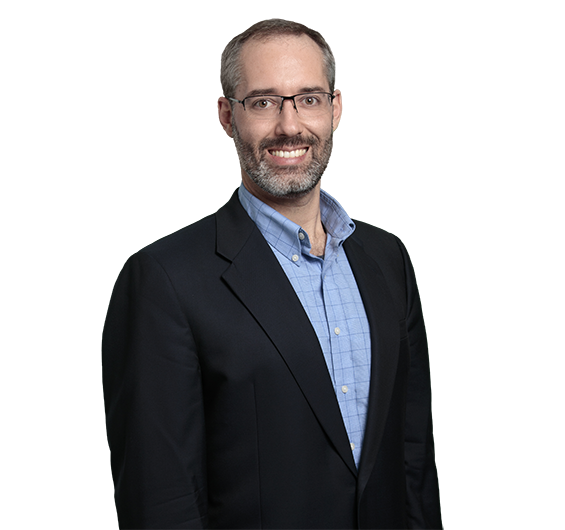
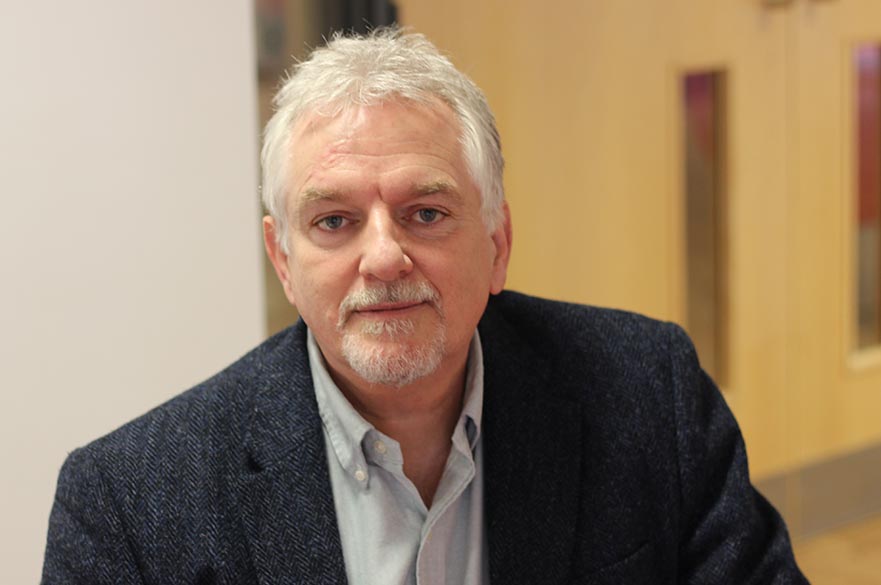
Alex 'Sandy' Pentland is the Toshiba Professor of Media Arts & Sciences at MIT, leading the Connection Science and Human Dynamics labs. A globally recognized pioneer in computational social science and AI ethics, he has advised over 60 PhD students and co-founded numerous ventures like the Data Transparency Lab. His work bridges academia, industry, and policy, focusing on network science, AI governance, and urban dynamics. Prof. Pentland’s research spans social physics, wearable computing (e.g., Google Glass), and privacy-preserving AI systems. He chairs advisory boards for tech giants and global institutions, advocating for data sovereignty and equitable AI frameworks. His books Social Physics and Honest Signals explore human behavior through data-driven lenses. Awards : Member of U.S. National Academy of Engineering, Forbes' '7 Most Powerful Data Scientists.' Labs : MIT Connection Science, Human Dynamics Lab, and co-founder of MIT Media Lab. Impact : Over 60 advisees now lead academia, industry R&D, and startups globally. His recent work addresses AI governance, digital economies, and pandemic-driven urban transformations. He advocates for transparent data cooperatives and regulatory frameworks to balance innovation with societal needs.
Margaret Gardel is a Professor of Physics at the University of Chicago, affiliated with the James Franck Institute, Institute for Biophysical Dynamics, and Director of the Materials Research Science and Engineering Center. Her research focuses on the biophysical mechanisms governing cell mechanics, cytoskeletal dynamics, and active matter systems. She combines experimental, computational, and theoretical approaches to study how living systems generate and respond to mechanical forces. Her work includes groundbreaking studies on actin-myosin networks, cell division mechanics, and the reconstitution of biological processes in vitro. Notable contributions include the discovery of self-organized cell division-like behavior in active liquid droplets, published in Proceedings of the National Academy of Sciences . Gardel also explores mechanosensitive proteins, tissue confinement effects, and adaptive materials inspired by biological systems. Gardel has been recognized with prestigious awards, including the Sackler Prize for Biophysics (2020). Her research is funded by the National Science Foundation, NIH, and the Sloan Fellowship. She actively collaborates with physicists, biologists, and engineers to bridge disciplines and advance understanding of life's fundamental physics. Her group's recent efforts span machine learning in biophysics, synthetic active materials, and quantitative analysis of cellular processes. She leads initiatives to translate biophysical principles into applications like artificial tissues and smart biomaterials.
Professor John Rossiter is an Honorary Professorial Fellow at the University of Wollongong's School of Business. A globally recognized expert in advertising and consumer behavior, he invented the C-OAR-SE measurement system, which has revolutionized social science measurement. His research spans advertising textbooks, creative testing frameworks, and psychometric innovations. He holds an H-index of 58 and over 28,000 Google Scholar citations, ranking among Australia’s top marketing scholars. Education & Positions: Full-time teaching roles at the University of Pennsylvania’s Wharton School, Columbia University, UTS, UNSW’s AGSM, and the University of Wollongong. Honorary positions at Charles Sturt University’s School of Psychology. Research Interests: Focuses on advertising effectiveness, consumer decision-making, and innovative measurement tools like C-OAR-SE. His work bridges theory and practice, emphasizing methodological rigor and practical application in marketing and psychology. Recent studies critique public health policies, advertising regulations, and AI ethics in psychological research. Awards & Recognition: Hansen Award for Excellence in Advertising Research (2015) Fellowships from multiple academies (ANZMAC, ASMR Society, APA) Best Paper Awards from leading journals (2016–2017) Grants & Collaborations: Includes ARC-funded projects on foster parent recruitment, cognitive models for measurement optimization, and pandemic risk communication. Supervised PhDs on web survey design and volunteer segmentation strategies. Labs & Teams: Contributes to interdisciplinary teams at UOW and Charles Sturt, focusing on marketing science and psychological measurement. Active in executive education programs globally.
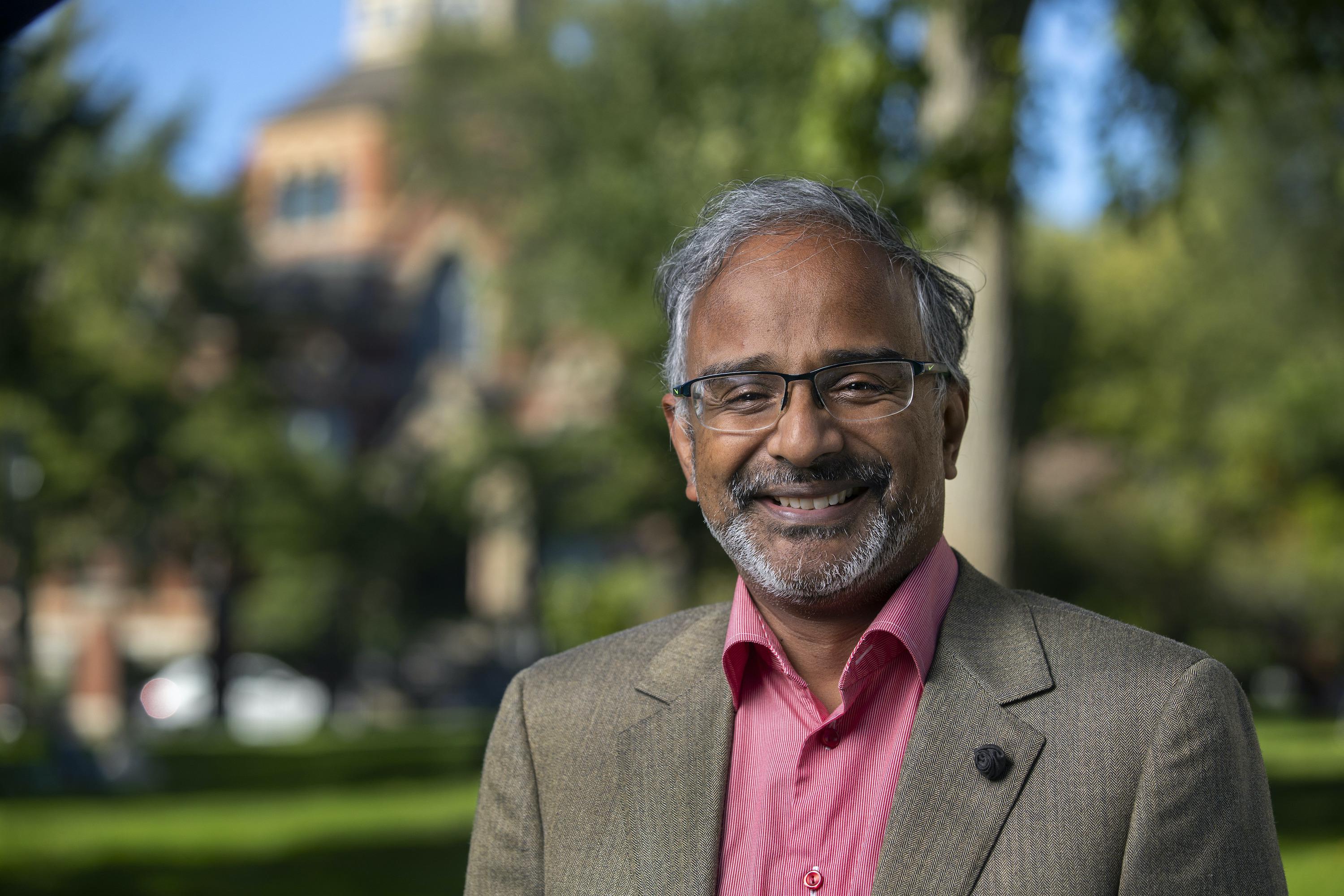
Suresh Venkatasubramanian is a Professor of Data Science and Computer Science at Brown University, with a secondary appointment in the Humanities. He serves as Interim Director of Data Science and directs the Center for Technological Responsibility, Reimagination, and Redesign (CNTR) within the Data Science Institute. His research focuses on algorithmic fairness, automated decision systems, and their societal impacts. He holds a PhD from Stanford University (1999) and previously served as an Assistant Professor at the University of Utah, where he held the John and Marva Warnock Endowed Chair. Key roles include co-authoring the White House’s Blueprint for an AI Bill of Rights during his tenure in the Biden-Harris administration. He has received prestigious awards like the NSF CAREER Award, ICDE 2017 Test-of-Time Award, and Fast Company’s AI20 List recognition. His work bridges computer science with ethics, law, and policy, addressing issues like privacy, bias in AI, and algorithmic accountability. Venkatasubramanian has advised numerous organizations, including the ACLU, NYC’s FTA Council, and Pennsylvania’s Judicial District, emphasizing interdisciplinary collaboration. Teaching includes CSCI 1951Z on Fairness in Automated Decision Making. His research spans topics such as disparity estimation in unobserved contexts, generative AI governance, and financial precarity modeling. Recent publications highlight his focus on mitigating algorithmic bias, ethical design in technology, and policy frameworks for AI regulation. Notable achievements include advancing transparency in automated systems, combating dialectal bias in NLP, and advocating for equitable voting access through network analysis. His work underscores the importance of community-driven approaches to technology and society challenges.
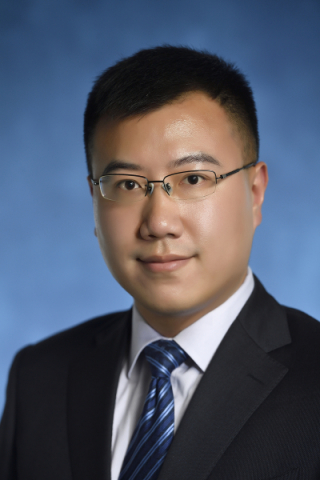
Dr. Hanchen Jiang is an Assistant Professor of Economics at the University of North Texas, specializing in labor economics, urban economics, and development economics with focus on low-income families and children. As part of the GEAR working group, his research examines housing affordability, economic mobility, and environmental impacts on well-being. His methodological approach combines quasi-experimental designs, causal inference techniques, and large-scale data analysis to investigate housing policy effects, intergenerational mobility, and air pollution impacts. Recent publications examine rent control effects in New York City, air pollution impacts on mental health, and methodological advances in mobility measurement. Current projects study immigrant experiences with rent regulation and sibling correlation approaches to mobility analysis. Research contributes to policy discussions on affordable housing, educational equity, and environmental justice.
Nestor M. Davidson is the Albert A. Walsh Chair in Real Estate, Land Use, and Property Law, and Faculty Director of the Urban Law Center at Fordham University School of Law. He joined Fordham in 2011 and was named to his endowed chair in 2017. His expertise spans administrative law, constitutional law, housing policy, and urban governance. Davidson holds an AB from Harvard College and a JD from Columbia Law School, with clerkships at the U.S. Court of Appeals and the Supreme Court. He previously served as Principal Deputy General Counsel at HUD and practiced commercial real estate law at Latham & Watkins. His research focuses on urban legal frameworks, affordable housing, and state-local relations. Key roles include Chair of NYC’s Rent Guidelines Board and board member of the New York State Housing Finance Agency. Davidson has authored/co-edited books such as Law and the New Urban Agenda and Global Perspectives in Urban Law , and contributes to debates on preemption, home rule, and urban legal innovation. Education: AB Harvard College, JD Columbia Law School Career Highlights: Co-founder of the Association for Urban Law Scholars (AULS) Former HUD Special Counsel and Principal Deputy General Counsel Lead scholar on urban governance and housing policy Davidson’s work bridges academia and practice, addressing contemporary urban challenges through legal analysis and policy advocacy.
Dr. Kathleen Mortimer is an Associate Professor in Marketing Communications at the University of Northampton, UK. Her research focuses on advertising, consumer behavior, integrated marketing communications (IMC), and advertising regulation. She is affiliated with the Marketing & Entrepreneurship department and multiple research centers including the Centre for Global Economic and Social Development and the Centre for Sustainable Business Practices. She holds editorial roles in the Journal of Marketing Communications and chairs the Marketing Communications SIG for the Academy of Marketing. Education: Holds a PhD in Marketing (details unspecified). Research interests include services advertising, sustainability practices in industries like leather and wheat supply chains, and the impact of social media on PR and advertising terminology. She supervises DBA and PhD students in IMC, brand crises, digital marketing, and sustainability. Teaching: Previously Course Leader for Advertising and Digital Marketing courses, teaching IMC, international marketing communications, and qualitative data analysis. Her work contributes to UN Sustainable Development Goals related to education and sustainability. Key contributions include studies on ad agency leadership (UK/US/Australia), place branding legitimacy, and circular economy practices in wheat supply chains. She has published over 45 research outputs and actively engages in academic conferences worldwide.
Dakota Roberson is Associate Professor of Electrical and Computer Engineering at University of Idaho and Associate at the Center for Advanced Energy Studies. He holds joint appointments with Idaho National Laboratory's National and Homeland Security directorate and as nuclear engineering affiliate faculty. His research addresses: Grid resilience against cyber-physical threats Distributed energy resource control Modern power system stability Recent publications demonstrate innovations in grid security architectures, control system synthesis, and critical infrastructure protection. His work has been recognized through national innovation awards and fellowships. Professor Roberson advises the U.S. Air Force Chief Scientist and served as White House Fellow at the Department of Defense. He holds a Ph.D. (2017) and B.S. (2013) in Electrical Engineering from University of Wyoming.
Teddy Henriksen is a Lecturer in Law at the School of Law and Society, University of the Sunshine Coast. He holds a Doctorate in Law, LLB (Hons), B.Pharmacy, and Graduate Diploma of Legal Practice. Registered as a pharmacist with AHPRA, he teaches Patent Law, Tort Law, Foundations of Australian Law, Criminal Law, and Corporations Law. Research Focus: Specializes in pharmaceutical law, intellectual property, and biosimilar regulation. Investigates legal frameworks affecting medicine accessibility and innovation incentives. Recent work analyzes data exclusivity policies and patent barriers in Australia's pharmaceutical sector. Publications: Articles predominantly examine intellectual property challenges in biologics, patent law reforms, and regulatory strategies for biosimilars between 2018-2024. Consistent themes include comparative analyses of Australian and international pharmaceutical regulations. Awards: Associate Fellow, Higher Education Academy Maintains active registration as a locum pharmacist while conducting legal research on healthcare access and intellectual property frameworks.
Jake Bernstein is an Adjunct Professor at Seattle University School of Law and a Partner at K&L Gates LLP, specializing in Technology Transactions, Data Protection, Privacy, and Cybersecurity. He holds a CISSP certification and co-hosts the Cyber Risk Management Podcast . His practice focuses on regulatory matters involving technology and the Internet, leveraging his prior experience as an Assistant Attorney General in Washington’s Consumer Protection Division. He contributes to thought leadership through podcasts and speaking engagements, addressing emerging cybersecurity and privacy trends. Certifications: CISSP (Certified Information Systems Security Professional) Key Focus Areas: Technology Sourcing, Privacy Compliance, Cybersecurity Risk Management
Sallam Abualhaija is a Research Scientist at the University of Luxembourg’s Interdisciplinary Centre for Security, Reliability and Trust (SnT), contributing to the Software Verification and Validation (SVV) group. She coordinates the FutureFinTech initiative and holds roles like Executive Guest Editor for the Information and Software Technology (IST) journal’s special issue on regulatory compliance. Her research focuses on the intersection of software engineering and AI, emphasizing regulatory compliance (especially GDPR) and quality assurance in software requirements. She promotes open science as the FOSS liaison in SVV, ensuring ethical licensing of research artifacts. Abualhaija has supervised four PhD students and teaches courses like Introduction to AI for Space and Software Engineering 2. She actively contributes to academic communities via conference roles (RE, ICSE, ASE) and reviewing for top journals (TSE, TOSEM). Notable awards include Best Paper Awards at IEEE Requirements Engineering Conferences and the Distinguished Reviewer Award (2024). Her outreach includes speaking at events like the FNR AI & Society Series and promoting women in science. She holds a PhD from TU Hamburg (2016) and earlier roles at institutions like Goodgame Studios and Jordan’s Ministry of Education.
Dr. Akshi Kumar is a Senior Lecturer (Associate Professor) in Computing at Goldsmiths, University of London, serving as Director of Postgraduate Research and Chair of Research Ethics in Computing. Her expertise spans AI, NLP, and their applications in healthcare, finance, and education. With over 15 years of academic experience, she has authored influential books like Language Intelligence: Expanding Frontiers in NLP (IEEE-Wiley, 2025) and contributed to UK parliamentary inquiries on AI ethics and mental healthcare. Education: PhD (Web Mining), University of Delhi, India (2011) MTech (CSE), GGSIPU, Delhi (2005) BE (CSE), MDU, Rohtak (2003) Research Interests: Her work focuses on AI-driven decision-making in high-stakes domains, explainable AI, and cybersecurity. Notable areas include NLP for healthcare diagnostics, fraud detection, and ethical AI policy. Professional Activities: Steering Group Member, Mayor of London’s Violence Reduction Unit (VRU) on Online Harms Contributor to UK Parliament POSTnotes on AI in mental healthcare and media literacy Consultant for NLP-powered job matching systems and educational feedback tools Awards: Top 2% Highly Cited Scientist, 2021–2024 13 Research Excellence Awards Royal Academy of Engineering Exceptional Talent Recognition (2022) Labs & Projects: Leads initiatives like ExplainED (NLP for education feedback) and collaborates on AI ethics frameworks for digital safety. Her work integrates computational linguistics with societal impact, addressing challenges in misinformation, healthcare, and policy.
Lene Tolstrup Sørensen is an Associate Professor at the Department of Electronic Systems, Aalborg University, affiliated with The Technical Faculty of IT and Design. Her research focuses on usable privacy, cybersecurity, and gamified learning platforms, with a strong emphasis on human-computer interaction and GDPR compliance. She leads projects like FGPE++ (Gamified Programming Learning) and contributes to initiatives such as the Danish-Japanese Network on Cybersecurity and the Nordic PROPHET ICT program. Education: Master and Ph.D. in Engineering from the Technical University of Denmark. Research areas include hybrid cloud computing, process mining, and digital transformation across healthcare and education sectors. She has supervised 2 Ph.D. students and actively participates in conferences/workshops on cybersecurity, privacy, and educational technology. Notable collaborations include the I3LUNG project (AI-driven cancer care) and the PISH initiative (STEM education innovation). Her work bridges technical systems with user-centric design, aiming to enhance privacy control and educational engagement through innovative interfaces and gamification strategies. Awards: Although no specific prizes are listed, her extensive publication record (94+ outputs) and international project leadership highlight significant academic contributions. She is actively involved in media discussions on cybersecurity and IT governance, reflecting her role as a thought leader in digital transformation.
Avanthika Vineetha Harish is an Industrial Researcher specializing in Penetration Testing at the University of Plymouth's School of Engineering, Computing and Mathematics. Her research investigates cybersecurity challenges in next-generation maritime technologies, including autonomous systems, offshore wind operations, and bridge networks. She contributes to teaching as a lab/tutorial assistant for the MSc Cyber Security module Cyber-Physical Systems Security (COMP5011), guest lectures for COMP0001, and develops maritime cybersecurity training through hackathons. Research outputs include vulnerability visualization tools, automated audit frameworks, and human-centered training methodologies. Recent publications (2022-2025) focus on: Maritime vulnerability analysis and visualization Automated security scanning for critical systems Pentesting methodologies for satellite communications Human-autonomy teaming risks Her work emphasizes practical security solutions for maritime infrastructure, with emerging attention to AI-enabled autonomous vessels and renewable energy installations.
John Groeger is a Professor of Psychology in the School of Social Sciences at Nottingham Trent University (NTU), appointed in June 2017. His roles encompass research leadership, management of Human Tissue work in Psychology, and direction of NTU's SleepWellScience sleep assessment service for trauma recovery. He actively teaches the final-year Psychology of Sleep module (PSY31010) and supervises undergraduate/postgraduate research. A Chartered Psychologist and Fellow of the British Psychological Society, Groeger's academic journey includes professorial appointments at University of Surrey (1995-2008), University College Cork (2008-12, also Head of School), and University of Hull (2012-2017). His educational background features a PhD from Queen's University Belfast (1984) and prior work at the MRC Applied Psychology Unit in Cambridge. His research centers on sleep-cognition interactions, investigating protective factors (sleep, aptitude, pharmaceuticals) and performance challenges (sleep loss, circadian disruption, brain injury) with real-world applications in driving, work, and daily activities. Recent work emphasizes disease-sleep bidirectional relationships, shift-work safety, and the neurological underpinnings of cognitive performance. His 80+ peer-reviewed publications and two books span sleep measurement, transport psychology, and neuropsychological assessment. Current research trends show strong interdisciplinary focus on sleep-health connections across populations—from sexual minorities to children—with growing emphasis on environmental impacts (air pollution, socioeconomic factors) and biological mechanisms. Recent publications integrate microbiome studies, circadian genetics, and large-scale epidemiological analyses from UK Biobank. Fellow of the British Psychological Society Former honorary General Secretary of the British Psychological Society President of Traffic & Transport Division, International Association of Applied Psychology Groeger provides expert consultation for Amazon, Continental AG, Manchester United FC, and others on sleep-performance relationships, while serving as an expert witness in transport accident cases involving fatigue and distraction. His SleepWellScience service bridges research and clinical applications for trauma recovery. He leads multidisciplinary teams exploring the biological bases of cognitive performance, with current projects examining gut-brain axis effects on sleep, circadian mechanisms in neurodevelopmental disorders, and socioeconomic determinants of sleep health across the lifespan.