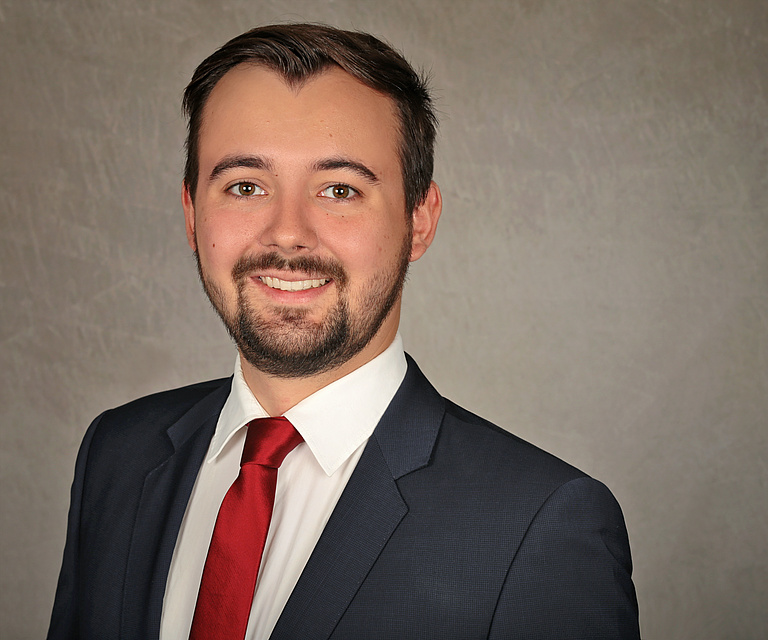
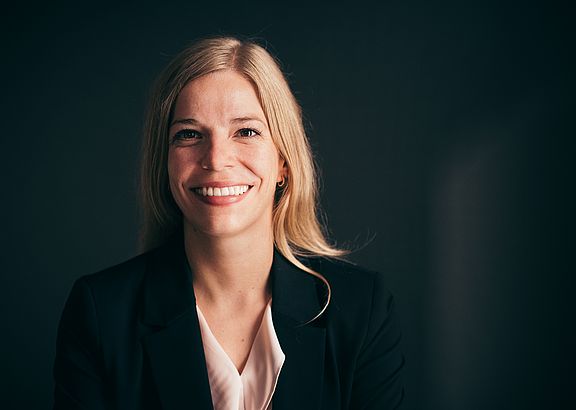
Dr. Ruben Schneider is a Lecturer in Law at the University of Bonn's Department of Civil Law, Information and Data Law. He holds a doctorate from the inter-university graduate program 'Information Society Law' and has been a legal trainee at the Bonn Regional Court since 2021. His research focuses on data protection law, intellectual property, and digital legal frameworks. He co-teaches Data Protection Law with Prof. Dr. Specht-Riemenschneider and actively contributes to ForTech eV, a research center for legal issues in new technologies. Education: Juris Doctor from University of Bonn (2019), internships at Cleary Gottlieb and German Bundestag, founding member of ForTech eV. Key academic activities include moderating certificate courses in IT/IP law, organizing working groups on obligations law, and publishing extensively on GDPR compliance, digital teaching, and copyright conflicts. His work bridges legal theory with practical challenges in emerging technologies. Notable collaborations include co-authoring the textbook Internet Law (Springer, 2020) and leading research on data trusts and cross-border data governance. He regularly presents at academic events such as the Bayreuth Talks on Consumer Law and Bonn Debates on Data Privacy.
Marlon Dumas is a leading researcher in business process management and process mining at the University of Tartu, Estonia. With over 467 publications spanning from 1997 to 2025, his work has significantly advanced methodologies in business process analysis, simulation, and optimization. His research bridges theoretical foundations with practical applications, developing tools and frameworks that enable organizations to analyze and optimize operational processes. Dumas's primary research interests include business process management, process mining, business process simulation, prescriptive process monitoring, and data-aware business processes. He has pioneered methods for modeling resource availability, activity delays, and waiting times in business processes. His work on prescriptive process monitoring addresses critical challenges such as resource constraints, uncertainty in predictions, and causal effect estimation for interventions. Recent publications reveal a strong trend toward integrating artificial intelligence with business process management, particularly exploring the application of large language models to process optimization, monitoring, and redesign tasks. His research demonstrates consistent innovation, with publications appearing in top venues including Information Systems, Data & Knowledge Engineering, and the International Conference on Business Process Management. Dumas has developed several influential tools including SIMOD for automated discovery of business process simulation models, Optimos for simulation-driven process optimization, and Kairos for prescriptive monitoring. His collaborative network is extensive, featuring frequent co-authorship with prominent researchers including Marcello La Rosa, Luciano García-Bañuelos, Fabrizio Maria Maggi, and Wil M. P. van der Aalst. His work on privacy-preserving process mining, particularly regarding differentially private release of event logs, addresses critical challenges in applying process mining techniques while maintaining data privacy and compliance with regulations like GDPR. Dumas's research continues to push boundaries, with recent work exploring the integration of large language models with business process management systems, suggesting an ongoing commitment to advancing the field through innovative applications of emerging technologies.
Jan Trzaskowski is a Professor at the Department of Law within The Faculty of Social Sciences and Humanities at Aalborg University. His research focuses on digital privacy law, platform regulation, and GDPR compliance. He is actively involved in interdisciplinary initiatives such as the MASSHINE network (Mission: Improved Wellbeing Among Children And Youth In Denmark) and the SSH Children and Youth Research Network. Trzaskowski's work addresses modern legal challenges in the digital era, including generative AI regulation, dark patterns in consumer interfaces, and ethical synthetic data usage. He co-leads the SE3D project (2024–2028), exploring ethical development of synthetic health data via deep learning. His publications span books, journal articles, and conference proceedings on topics ranging from EU internet law to behavioral regulation in technology. He has been frequently cited in media discussions on digital privacy, AI ethics, and platform governance. Trzaskowski chairs the Nordjysk GDPR-netværk and contributes to policy debates through 62+ press/media engagements.
Catherine Jasserand is an Assistant Professor specializing in Fundamental Rights and Technology at the University of Groningen's Faculty of Law. She holds a PhD in biometrics and privacy from Groningen, an LL.M. in IP and New Technology Law from UC Berkeley, and a Master’s in European Law from Université Panthéon-Sorbonne. Her research focuses on the intersection of AI, biometrics, and fundamental rights, with emphasis on governance frameworks for facial recognition systems and data protection laws. Previous roles include a Marie Curie postdoctoral fellowship at KU Leuven (2020–2023) researching facial recognition in public spaces, and work with the European Parliament, European Central Bank, and University of Amsterdam's IViR institute on IP law. Since 2024, she has been affiliated with STeP at Groningen. Key research areas include EU regulatory frameworks for biometric data, AI ethics, and privacy implications of emerging technologies. She has contributed to projects like INGRESS, TReSPAsS-ETN, and SOUNDS-ETN as an advisory board member. Active in technical conferences, she co-organized workshops on AI for the biometric community with the European Association for Biometrics. Recent work examines the EU AI Act’s impact on biometric data regulation, governance of facial recognition in public spaces, and legal challenges posed by deepfakes. She received an award in March 2024 for her contributions to digital governance research. Ancillary activities include LawTech Research and advising on EU-funded initiatives. Her teaching and research involve advancing interdisciplinary approaches to technology law and policy.
Rebecca Lilla Hassanová, PhD., is an Assistant Professor at the Faculty of Law, Pan-European University PEVŠ, affiliated with the Institute of International and European Law and the Institute of Public Law . She also collaborates with the Ferenc Madl Institute of Comparative Law in Budapest. Research Focus: Public international law, law of armed conflicts, child rights in international law, and EU legal frameworks. Key Themes: Modern warfare ethics, Brexit implications on mobility, environmental protections during conflicts, and digital privacy rights. Additional Roles: Active contributor to academic publications and international legal discourse.
Daniel Amo Filvà is an Assistant Professor at the Engineering Department of La Salle Digital Engineering School, Ramon Llull University. His academic work bridges engineering, education, and data science, with a strong emphasis on learning analytics, educational technology, data privacy, and the ethical integration of artificial intelligence in education. His research interests focus on Learning Analytics , Educational Technology , Data Privacy , GDPR in Educational Contexts , Data Literacy , and AI in Education . He explores how digital tools can support personalized, inclusive, and ethically sound learning environments, especially in K-12 and higher education. The recent publications reflect a clear trajectory toward data-driven education, urban mobility innovation, and ethical data use. His work combines empirical research, case studies, and tool development, often using systematic reviews and project-based methodologies. Themes such as GDPR-aware educational design, ChatGPT integration, and robotics for inclusive education recur across his outputs. Scientific Projects: IADE : Integrating AI and Data Literacy in Education for personalization. DIVINTECH : Robotics for students with Autism Spectrum Disorder. Visibilizar el aprendizaje con ChatGPT : Enhancing education through AI tools. InnovAI : Digital transformation in Catalan SMEs. Acciona y Conecta : Sustainable urban mobility in Barcelona. He advises students such as B. Donate-Beby and S. Aguayo-Mauri, and collaborates with national and international researchers. His work is supported by research grants from institutions like the Department of Education and ACCIÓ. He leads multiple funded projects and contributes to interdisciplinary teams focused on technology transfer and innovation. He is affiliated with research groups working on digital engineering, human-environment interaction, and inclusive technology development. These teams foster collaboration across education, engineering, and public policy sectors to address real-world societal challenges.
Dr. Dana Beldiman is a Professor of Law at UC Hastings College of the Law and Bucerius Law School, specializing in intellectual property (IP), international law, and technology policy. She holds academic roles including Academic Director of the Transnational Center for IP, Media and Technology Law and Policy, and co-directs the International IP Transactions Summer Program. Her expertise spans IP licensing, trademark protection, and the intersection of IP with human rights and global governance. Education: Dr. Juris (magna cum laude) from University of Bremen, LL.M. from Santa Clara University, J.D. from University of California, and advanced degrees from University of Bucharest and Academy of Economic Sciences. She is admitted to practice in California and holds memberships in numerous legal and professional organizations, including the International Trademark Association and the American Bar Association. Her research focuses on IP licensing, design law, digital rights, and global IP harmonization. Recent publications address spare parts protection under EU design law, the role of IP in shared knowledge environments, and challenges posed by digital innovation. She has authored over 20 books and articles, with a particular emphasis on comparative law and policy. Awards include Romania's Commander Order (2000) and AV Preeminent rating. She has advised governments, corporations, and international bodies on IP strategy, brand protection, and technology law. Beyond academia, she serves as Honorary Consul General of Romania and has held leadership roles in organizations such as the San Francisco Consular Corps and Women in International Trade.
Gilian Ponte is an Assistant Professor in the Department of Marketing Management at the Rotterdam School of Management , Erasmus University Rotterdam . Her research bridges the critical intersection of data protection, privacy regulations, and marketing applications, with a particular focus on the privacy-utility trade-off in marketing contexts. Her work is prominently centered on data protection and privacy in marketing , exploring how modern privacy regulations like GDPR impact marketing practices. She investigates synthetic data generation , anonymization techniques , and deep learning methods to balance privacy preservation with marketing utility. Her research also delves into managerial practices in implementing privacy-compliant marketing strategies. Her recent 2024 publication in the International Journal of Research in Marketing introduces a novel framework for quantifying the privacy-utility trade-off, demonstrating her expertise in developing practical solutions for marketing professionals navigating stringent data protection regulations. The work has garnered significant attention with 5 Scopus citations and 18 readers, highlighting its impact in the field. Currently, there are no listed students or awards in the provided information, and no email addresses are available in the text.
Prof. Dr. Julia Kreppmeier serves as a Junior Professor at Ostbayerische Technische Hochschule (OTH) in the Weiden Business School. Her academic position focuses on International Business with specialization in Finance, where she conducts research at the intersection of traditional finance and emerging digital technologies. Her research interests center on Digital Finance, with particular expertise in FinTech, Blockchain technology, and Tokenization. She also investigates Sustainable Finance practices and their implementation in modern financial systems. Her work bridges theoretical finance concepts with practical applications in the rapidly evolving digital financial landscape. Dr. Kreppmeier's recent publications demonstrate a strong focus on empirical analysis of digital financial instruments and market behaviors. Her research examines real estate security token offerings, data privacy issues within FinTech applications, signaling mechanisms in security token markets, and comprehensive analyses of the German FinTech industry. These publications appear in high-impact finance journals including Journal of Banking & Finance, Electronic Markets, and Journal of Business Economics. As a dedicated academic, she maintains regular office hours by appointment and is actively engaged in advancing knowledge in the field of digital finance through rigorous empirical research and scholarly contributions.
Timo Minssen is Professor of Law at the University of Copenhagen and Founding Director of the Center for Advanced Studies in Bioscience Innovation Law (CeBIL) . He holds affiliations as an Inter-CeBIL Research Affiliate at the Petrie-Flom Center (Harvard Law School) and an LML Research Affiliate at the University of Cambridge. His career spans roles such as TUM Global Visiting Professor (Technical University of Munich), Visiting Scholar at Harvard, Oxford, and Cambridge, and PI for the Novo Nordisk Foundation’s Inter-CeBIL research program. Education: German Staatsexamen (Göttingen), Swedish LL.M., LL.Lic., and LL.D. (Lund & Uppsala Universities). Specializations: Intellectual Property, Competition & Regulatory Law in health/life sciences; focuses on genome editing , AI , big data , and quantum technologies . His research bridges legal, ethical, and commercial challenges in biomedical innovation, emphasizing sustainable R&D regulation , open innovation , and technology transfer . He has published over 220 articles in journals like Science , Nature Biotechnology , and JAMA , with themes spanning pharmaceutical patent law, bioethics, and AI governance. Scientific awards : King Oscar Award (2014), Jorcks Foundation Prize (2017), Awapatent Research Prize (2009). Grants : Novo Nordisk Foundation (50 million DKK), EU Horizon, SSHRC, Wallenberg Project. He advises the WHO , WIPO , and EU Commission on digital health, AMR, and AI policy, and supervises PhD students in areas like CRISPR licensing , antimicrobial resistance , and pharmaceutical regulation . His work appears in media outlets such as The Economist , Politico , and The Lancet Digital Health .
Chih-hsing Ho is a tenured Associate Research Fellow (equivalent to Associate Professor) at the Institute of European and American Studies, Academia Sinica, Taiwan. Since February 2021 he has held a joint appointment at Academia Sinica’s Research Center for Information Technology Innovation (2021–2024) and has been a Research Fellow at the Centre for Medical Ethics and Law, University of Hong Kong since 2019. He also serves on several high-level government advisory committees in Taiwan, including the Advisory Committee on Digital Economy Development (Ministry of Digital Affairs, 2025–present) and the Technology Policy Advisory Committee (Ministry of Health and Welfare, 2023–present). Education Ph.D. in Law, London School of Economics and Political Science (LSE) J.S.M., Stanford Law School LL.M., Columbia Law School LL.B., College of Law, National Taiwan University Research Interests Dr. Ho’s scholarship integrates law, medicine, and emerging technologies. His core interests include: Legal aspects of translational medicine and biobanking – designing governance frameworks for large-scale genomic and health-data repositories. Big-data privacy and data-protection law – analysing GDPR compliance, cross-border data transfers, and secondary use of health data. AI governance and law – exploring regulatory strategies for generative AI in healthcare, algorithmic accountability, and human-robot interaction. Law, medicine and global health – comparative studies on genetic non-discrimination policies, data sovereignty, and equitable access. Law and anthropology – examining group-consent models informed by indigenous perspectives and socio-legal contexts. Publications Trajectory Between 2018 and 2024, Ho has published extensively on the intersection of data-protection law and biomedical research. His work traces an evolution from foundational analyses of GDPR challenges for biobanks (2018) to cutting-edge studies on generative-AI regulation (2024). Recurring themes include comparative governance of health-data infrastructures (FinnGen, NHS England, Taiwan Biobank), privacy-preserving legal architectures for AI, and consensus-building methodologies for genetic non-discrimination policies. His recent co-authored Delphi consensus statement in JAMA Network Open exemplifies his commitment to evidence-based policy design. Scientific Awards & Grants National Science and Technology Council Award for Outstanding Scholars, Taiwan (2024–2025; 2021–2022; 2019–2020) Ministry of Science and Technology Recruiting Outstanding Scholars Award, Taiwan (2014–2017) Academia Sinica Recruiting Outstanding Scholars Award, Taiwan (2014–2016) LSE Olive Stone Memorial Scholarship (2007–2009) LSE Morris Finer Award for Socio-Legal Studies (2007–2008) LSE Wedderburn Writing-Up Grant (2010–2012) Ministry of Education Studying Abroad Scholarship, Taiwan (2007–2009) Grants & Governance Roles Ho currently convenes the AI Governance Laboratory at IEAS (2023–present) and sits on more than a dozen national ethics and policy boards, including: Legal Affairs Committee, Academia Sinica (2025–present) Committee on Risk Assessment of Generative AI, Academia Sinica (2025–present) Ethics and Governance Council (EGC) of Taiwan Biobank (2019–present) Multiple Institutional Review Boards (IRB-BM, Academia Sinica; CDC Taiwan; Tri-Service General Hospital; Development Center for Biotechnology) Labs & Teams He leads the AI Governance Laboratory at the Institute of European and American Studies, fostering interdisciplinary collaboration among legal scholars, computer scientists, and medical ethicists to craft responsible AI policies. Previously, he convened the EU Core Research Group (2017–2020), promoting comparative European studies at Academia Sinica.
Karin Sein is a Professor of Civil Law at the University of Tartu, School of Law, where she has served since 2016. She also holds the position of Acting Head of the Private Law Department. Previously, she served as Associate Professor of Civil Law at the Institute of Private Law from 2009 to 2015, and has held various leadership roles including Deputy Head of the Institute of Private Law since 2011. Professor Sein earned her doctoral degree (dr iuris) from the University of Tartu in 2007, with her dissertation titled 'Foreseeability and the Purpose of the Obligation Theory as Grounds for Limitation of Damages in Contractual Relationships' supervised by Paul Varul. She completed her Master of Laws (LLM) at the University of Freiburg, Germany in 1999, and received her Bachelor of Arts in Law from the University of Tartu in 1997. Her research focuses on civil law with particular expertise in contract law, consumer protection, digital law, and data protection. Professor Sein has chaired the Contract Law Working Group of the Council of Europe during Estonia's EU Presidency in 2017, where the group handled drafts of directives on digital content and consumer sales contracts. Her work bridges traditional civil law concepts with contemporary challenges in digital markets and consumer protection. Professor Sein's recent publications (2023-2025) demonstrate a strong focus on consumer credit regulation, debt collection practices, data protection in digital services, and the intersection of traditional civil law with emerging technologies. Her scholarship shows consistent engagement with European regulatory frameworks while maintaining a strong national perspective on Estonian law implementation. The Prize of Büchner Foundation, Germany, 1999 Professor Sein serves on multiple editorial boards including the European Review of Contract Law (since 2023), Journal of Intellectual Property, Information Technology and E-Commerce Law (since 2017), and Juridica (since 2013). She is a member of the European Law Institute (since 2012) and represents Estonia in UNIDROIT (since 2010). Her administrative roles include serving as Deputy Head of the Institute of Private Law and coordinating private law research at the University of Tartu.
Franziska Weber is a Full Professor in Law and Economics at the Erasmus School of Law, Erasmus University Rotterdam. She is actively involved in multiple research initiatives, including AiPact and AICON, and serves as the Faculty Diversity Officer and local coordinator for the European Master in Law and Economics (EMLE) program. She is also a member of the Scientific Advisory Committee of the Erasmus Trustfonds and an associate partner in an EU-funded training program on competition law in the age of big data. Her research interests lie at the intersection of law and economics, with a focus on: Competition and antitrust law Private enforcement of EU law Data protection and digital markets Behavioral aspects of legal compliance Comparative and European private law Economic analysis of legal rules and institutions Her recent publications reflect a strong trend toward interdisciplinary analysis of legal issues using economic methodologies, particularly in digital and data-driven markets. She frequently examines incentive structures, enforcement mechanisms, and behavioral responses in legal contexts. Her scientific awards include the TPR-Wisselleerstoelhouder guest professorship at KU Leuven and a nomination for the 2022 Antitrust Writing Awards. She has also contributed to editorial work, including for the journal Wirtschaft und Wettbewerb (WuW) . Prof. Weber has supervised academic work, including doctoral theses, and is engaged in national and international collaborations. Her inaugural lecture in 2023, 'To Share or Not to Share – That is the Question,' highlights her ongoing research on data sharing behavior and regulation. She leads and participates in research teams focused on AI, digital governance, and competition law, and is involved in EU-level training and policy-oriented research projects.
Lasse Parvinen is a researcher at Åbo Akademi University's Faculty of Natural Sciences and Engineering, specializing in the Department of Industrial Economics. His work focuses on data privacy, health informatics, and ethical data use in healthcare contexts. Research interests include: Privacy concerns in digital health Personal data protection under GDPR Genomic data sharing mechanisms Information sensitivity in pandemic response In 2023, Parvinen co-authored an influential article on genomic data sharing challenges in healthcare, reflecting his expertise in balancing technological potential with regulatory compliance.
Dr Despoina Farmaki is a Lecturer in Law at City St George's, University of London, where she joined in January 2025. She previously served as a Lecturer at Brunel University London (2020–2024) and as a Visiting Lecturer at the University of Greenwich School of Law (2022). She is also the Chief Academic Officer at Esports Legal News and a Fellow of the Higher Education Academy. Her educational background includes: PhD in Law, Brunel University London LLM in International Commercial Law, Brunel University London LLB, Democritus University of Thrace, Greece Dr Farmaki's research centers on the intersection of Intellectual Property and Technology Law, particularly in the video game and esports industries. Her expertise spans Internet Law, Contract Law, AI regulation, and digital rights, with a strong emphasis on consumer protection, data privacy, and virtual asset governance. Her recent publications demonstrate a consistent focus on legal challenges in digital environments, especially around loot boxes, AI-generated content, smart contracts, data privacy (GDPR), and the regulation of esports and virtual influencers. These works reflect a deep engagement with evolving technological landscapes and their legal implications. She has been recognized with the following honor: Fellow of the Higher Education Academy (HEA) Dr Farmaki has advised on legal and academic strategy at Esports Legal News and has held research and academic roles at Brunel University London. While no specific grants are listed, her sustained publication record in specialized law journals indicates active research funding or institutional support. She is also a qualified practicing lawyer in Greece, contributing practical legal insight to her academic work. She is involved in academic and legal discourse through her role at Esports Legal News and her contributions to journals such as the Journal of Intellectual Property Law and Practice , Interactive Entertainment Law Review , and Journal of AI Law and Regulation .