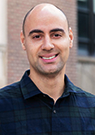
Christian P Petersen, PhD is a Professor in the Department of Cell and Developmental Biology at the Weinberg College of Arts and Sciences , Northwestern University Feinberg School of Medicine. His research focuses on molecular mechanisms underlying regeneration in planarians and other organisms. PhD: MIT (2006) Research Interests: Planarian regeneration and tissue patterning Wnt signaling pathway regulation Stem cell biology in regenerative contexts Neurogenesis and injury response Molecular mechanisms of tissue repair Affiliations: Center for Reproductive Science Robert H. Lurie Comprehensive Cancer Center
Dr. Thomas A. Hughes is an Associate Professor of Cancer Biology at the University of Leeds and Professor of Biosciences at York St John University. As a Group Leader at the Leeds Institute of Medical Research, he focuses on gene regulation, tumour microenvironment, and nanomedicine approaches to improve cancer outcomes. Specializes in breast cancer, colorectal cancer, and rare diseases Develops therapeutic strategies using microRNAs and biomarkers Collaborates with clinicians, engineers, and chemists for translational research His research integrates molecular pathology with clinical data through partnerships with Leeds NHS Trusts, aiming to identify novel biomarkers and targets for therapy. Recent work emphasizes cholesterol metabolism, oxysterol signaling, and nanomedicine-based drug delivery systems. Key contributions include: Over 80 peer-reviewed publications in cancer biology and molecular therapeutics Leadership in MSc programs in Molecular Medicine and Cancer Biology and Therapy Extensive experience in grant review, editorial work, and doctoral supervision Scientific awards include Fellowship of the Higher Education Academy. His lab has mentored 26 doctoral students and numerous alumni in academia, clinical practice, and industry.
Dr. Xi Chen is a Professor in the Department of Chemistry at the University of California, Davis, where he has been a faculty member since 2003. His research spans carbohydrate chemistry, glycobiology, and cancer biology, with notable contributions to chemoenzymatic methods for glycoconjugate synthesis. Dr. Chen's work focuses on developing hybrid chemical-enzymatic approaches to synthesize complex carbohydrates and glycoconjugates, characterizing glycosyltransferase mechanisms, and designing enzyme mutants for improved catalysis. He also investigates carbohydrate-based diagnostics and therapeutics, particularly in cancer and inflammatory diseases. His recent publications highlight interdisciplinary studies linking carbohydrate metabolism to p53 tumor suppression pathways and RNA-binding protein regulation in cancer. Awards include AAAS Fellow (2015), ACS Isbell Award (2012), and NSF CAREER Award (2006). He earned his Ph.D. at Wayne State University (2000) and B.S. at Xiamen University (1994). Scientific Awards American Association for the Advancement of Science Fellow (2015) Dean's Team Award for Excellence (2013) Carbohydrate Research Award for Creativity (2013) ACS CARB Horace S. Isbell Award (2012)
Dr. Christina Leslie is a Research Professor and Member of the Computational & Systems Biology Program at Memorial Sloan Kettering Cancer Center (MSK). She leads an active research laboratory focused on developing computational approaches to understand complex biological systems. Dr. Leslie earned her PhD from the University of California, Berkeley and has established herself as a leading computational biologist in cancer research and immunology. Computational & Systems Biology Program, Memorial Sloan Kettering Cancer Center Gerstner Sloan Kettering Graduate School of Biomedical Sciences Dr. Leslie's research focuses on developing novel computational methods to study cellular biological systems from a global and data-driven perspective. Her lab exploits diverse high-throughput functional and genomic data to understand molecular networks underlying fundamental cellular processes, including transcription regulation, pre-mRNA processing, signaling, and post-transcriptional gene silencing. Her algorithmic methods draw heavily on machine learning to build accurate predictive models from noisy and high-dimensional biological data. Key areas of interest include modeling cell-type specific transcriptional programs and dissecting co- and post-transcriptional regulation, particularly microRNA-mediated gene regulation. Analysis of Dr. Leslie's publication record over the last five years reveals a strong focus on computational approaches to cancer genomics, immunology, and epigenetics. Her work bridges multiple disciplines, with a particular emphasis on developing machine learning methods to interpret complex biological data. The publications demonstrate increasing sophistication in integrating multiple data types (genomic, transcriptomic, epigenomic) to understand cancer biology and immune responses. Recent work shows a growing emphasis on single-cell technologies and spatial analysis of tumor microenvironments. Introduction of string kernel methodology for SVM classification of biological sequences Development of algorithms for predictive modeling of gene regulation First systems-level analyses of competition between microRNAs and between target transcripts Dr. Leslie actively mentors numerous graduate students and research associates, with current lab members including Vianne Gao, Alireza Karbalaghareh, Erik Ladewig, and several others. Her lab has received significant research funding to support their work on computational approaches to cancer biology and immunology. The Leslie Lab maintains close collaborations with multiple experimental groups at MSK, facilitating the translation of computational insights into biological understanding. The Leslie Lab operates within the Computational & Systems Biology Program at MSK, with strong ties to both the research and clinical missions of the institution. The lab maintains state-of-the-art computational infrastructure for analyzing large-scale genomic and proteomic datasets and collaborates extensively with wet-lab researchers to validate computational predictions experimentally.
Dr. Markus Brinkmann is an Associate Professor in the School of Environment and Sustainability at the University of Saskatchewan, Canada, and Director of the Toxicology Centre. He holds the Centennial Enhancement Chair in Mechanistic Environmental Toxicology. His research focuses on exposure and risk assessment modeling, toxicokinetic modeling, and aquatic ecotoxicology, with an emphasis on understanding contaminant effects under realistic environmental conditions. Affiliations: Associate Professor, University of Saskatchewan Director, Toxicology Centre Member, Global Water Futures Program Member, Global Institute for Water Security Education: Ph.D. (Biology) - RWTH Aachen University, Germany (2015) M.Sc. (Ecotoxicology) - RWTH Aachen University, Germany (2011) B.Sc. (Biology) - RWTH Aachen University, Germany (2009) Research Interests: Dr. Brinkmann develops computational models to predict contaminant uptake, effects, and cross-species extrapolation. His work integrates toxicology, environmental chemistry, and hydrology to address challenges like flood-related contaminant remobilization and dioxin-like compound toxicity. Key areas include: Mechanistic toxicology of emerging contaminants (e.g., 6PPD-quinone, PFAS alternatives) Sediment toxicity and bioavailability Wastewater surveillance for public health monitoring Grant Highlights: Global Water Futures Program (2018-2023): Hydrological-exposure models for environmental risk assessment Genome Canada (2016-2020): EcoToxChip for chemical prioritization Banting Postdoctoral Fellowship (2016-2018) Awards: Friedrich-Wilhelm-Award (2016) SETAC GLB Young Scientists Award (2016 PhD, 2012 MSc) Borchers medal (2016) Leadership: He advises on strategic research partnerships between Canada and Germany and collaborates globally on projects like the EcoToxChip and Project House Water . His work bridges academic research with practical environmental management solutions.
Hong Han is an Assistant Professor in the Department of Biochemistry & Biomedical Sciences within McMaster University's Faculty of Health Sciences and a member of the Centre for Discovery in Cancer Research (CDCR). She holds a Canada Research Chair and leads the Han Lab, which focuses on cancer biology, RNA regulation, and innovative high-throughput technologies for therapeutic discovery. Dr. Han earned her Ph.D. from the University of Toronto (2010-2016) and has established herself as a leading researcher in glioblastoma and alternative splicing regulation. Her interdisciplinary research integrates cancer biology, RNA science, and multilayer gene regulation to uncover mechanisms underlying cancer progression and treatment resistance. Her laboratory pioneers integrated technological platforms for large-scale genetic/drug screening and ultra-high-throughput single-cell profiling. The research focuses on three main areas: alternative splicing regulation in cancer (particularly glioblastoma and prostate cancer), multilayer mechanisms of glioblastoma heterogeneity and microenvironment evolution, and multiplexed screening approaches for therapeutic discovery in treatment-resistant cancers. Analysis of Dr. Han's recent publications reveals a strong emphasis on single-cell technologies to characterize glioblastoma heterogeneity, minimal residual disease states, and tumor-immune interactions. Her work increasingly bridges basic RNA biology with translational applications, particularly in developing novel therapeutic strategies targeting splicing networks and immune evasion mechanisms. Canada Research Chair Dr. Han teaches Advanced Techniques in the Biomedical Sciences (BIOCHEM 734). Her research program is supported by multiple funding sources, as evidenced by her extensive publication record in high-impact journals including Nature, Cell, Molecular Cell, and Nature Communications. She employs a comprehensive approach combining in vitro, in vivo, and patient cohort studies with cutting-edge genomic technologies. The Han Lab has developed innovative multiplexed screening platforms that enable simultaneous interrogation of thousands of conditions, ranging from CAR-T cells to small molecule therapeutics. This approach accelerates the discovery of novel cancer targets and therapeutic strategies for treatment-resistant cancers.
Prof. Dr. habil. Katrin Giller leads the Department of Molecular Nutrition Science (140a) at the University of Hohenheim, Garbenstraße 30, Bio Building I, Room 151, Stuttgart. Her research focuses on livestock nutrition, with specific interests in methane mitigation, antioxidant mechanisms, and metabolic syndrome in agricultural animals. Department: Molecular Nutrition Science (140a) Contact: katrin.giller@uni-hohenheim.de Office Hours: By appointment Her work spans nutritional biochemistry , ruminal fermentation , and sustainable livestock systems , often examining interactions between dietary compounds (e.g., spirulina, polyphenols, n-3 fatty acids) and animal physiology. Recent studies investigate antioxidant gene expression , transgenerational metabolic impacts , and feed efficiency . Current advisees include B.Sc. Viola Gauly, Fernando Giugno, Jana Kornherr, Mira Kühn, Daniel Obermüller, and Helen Pötzsch. The department's website details research projects, teaching events, and publications.
Markus Heilig is a Professor of Psychiatry and Head of the Department of Biomedical and Clinical Sciences (BKV) at Linköping University. He serves as Director of the Center for Social and Affective Neuroscience (CSAN), integrating basic and clinical neuroscience to address addictive and affective disorders. His work bridges neuropharmacology, molecular psychiatry, and clinical trials. Linköping University (Current) Center for Social and Affective Neuroscience (CSAN) (Director) Wallenberg Center for Molecular Medicine (Collaborator) His research focuses on alcohol dependence mechanisms, stress-neurotransmitter interactions (e.g., CRF, substance P, endocannabinoids), and personalized medicine approaches. Using animal models and human neuroimaging (fMRI), his lab explores epigenetic changes in frontal lobe and amygdala neurons that drive compulsive alcohol use. Recent publications highlight his work on endocannabinoid modulation for PTSD treatment, neural correlates of reward choices, and pharmacological interventions targeting GABA and opioid receptors. His studies often combine brain imaging, behavioral analysis, and pharmacology. Scientific awards include the 2019 Wallenberg Clinical Scholar grant and 2017 CAN/Nordic Drugs prizes. Heilig's research is supported by Vetenskapsrådet (SEK 57 million center funding) and international donations like the Andrew J. Bock Memorial Fund.
Ying Ge is a Professor at the University of Wisconsin–Madison, jointly appointed in the Department of Cell and Regenerative Biology and the Department of Chemistry. Her research integrates chemistry, biology, and medicine, focusing on advanced mass spectrometry-based proteomic and metabolomic technologies to address cardiovascular diseases. Education: B.S., Peking University (1997) Ph.D., Cornell University (2002) Ying Ge's work centers on developing ultra high-resolution mass spectrometry platforms for top-down proteomics and metabolomics, applied to systems biology studies of heart failure and regenerative medicine. Key projects include myofilament protein modification mapping, stem cell therapy evaluation, and biomarker discovery for cardiac conditions. The 15 most recent articles highlight her lab's methodological innovations (e.g., photocleavable surfactants, native mass spectrometry) and biological discoveries in AMPK structural heterogeneity, RBM20-mediated cardiotoxicity, and sarcomere-metabolism cross-talk during regeneration. These publications span proteomics, metabolomics, structural biology, and clinical applications.
Ramesh Shanmughom Pillai is a Full Professor at the Department of Molecular Biology, University of Geneva, Switzerland. He holds additional roles as a Visiting Professor at the University of Kumamoto, Japan, and has been a Group Leader at EMBL Grenoble and a postdoctoral fellow at the Friedrich Miescher Institute. His research focuses on RNA modifications, epigenetics, and piRNA pathways in germline biology. Pillai has received prestigious awards including the ERC Consolidator Grant and The RNA Society Scaringe Award. Education: BSc Botany (University of Kerala, India) MSc Biotechnology (IIT Roorkee, India) PhD in Cell Biology (University of Bern, Switzerland) Research Interests: Pillai’s work centers on RNA biology, particularly the role of RNA modifications (e.g., m6A, m6Am) in development and fertility. He investigates piRNA biogenesis, transposon silencing, and the molecular mechanisms of RNA-protein interactions. His studies bridge biochemistry, genetics, and structural biology to elucidate how RNA molecules regulate critical biological processes. Teaching & Service: At the University of Geneva, he teaches Molecular Biology courses (BSc/MSc levels) and advises 5 PhD students and 4 postdocs. He chairs the ERC Consolidator Grant Review Panel and organizes major conferences like the PIWI/piRNAs Meeting and Swiss RNA Workshop. Pillai also serves on editorial boards for Nucleic Acids Research and RNA . Awards: ERC Consolidator Grant (2015) Best PhD Thesis Award (2003) RNA Society Scaringe Award (2005) Grants & Labs: Funded by ERC Starting and Consolidator Grants, his lab explores RNA modification networks in germ cells. Former trainees include Professors Simon Conn (Flinders University) and Hao Wu (CAS, China).
Sylvia Richardson is an MRC Investigator at the MRC Biostatistics Unit and holds a Research Professorship at the University of Cambridge, where she served as Director of the Biostatistics Unit from 2012 to 2021. She is affiliated with the Cambridge Mathematics of Information in Healthcare Hub (CMIH) at the Centre for Mathematical Sciences. Her work bridges advanced statistical methodology with critical healthcare applications, particularly in the analysis of complex biomedical data. Richardson's research spans multiple domains of biostatistics with a strong emphasis on Bayesian approaches. Her work has significantly advanced spatial modeling and disease mapping techniques, developed sophisticated methods for handling measurement error in epidemiological studies, and pioneered mixture and clustering models for integrative analysis of heterogeneous data sources. Her research addresses fundamental challenges in analyzing longitudinal health data, multimorbidity patterns, and complex disease trajectories. Her publication record demonstrates consistent methodological innovation applied to pressing healthcare challenges. Recent work focuses on traumatic brain injury outcomes, multimorbidity progression, genomic analysis, and statistical approaches to pandemic data. The articles reveal a strong pattern of methodological development driven by real-world healthcare challenges, with particular attention to longitudinal analysis, Bayesian computation, and integrative modeling approaches that can handle diverse and complex data structures. While specific awards are not detailed in the available information, Richardson's leadership as Director of the MRC Biostatistics Unit for nearly a decade and her continued Research Professorship reflect significant recognition of her contributions to the field. Her work with major international consortia like CENTER-TBI demonstrates her role in large-scale collaborative research efforts addressing critical health challenges. Richardson's research has substantial implications for healthcare policy and practice, particularly in understanding disease progression, developing predictive models for patient outcomes, and creating methodological frameworks that can integrate diverse data sources to generate meaningful clinical insights. Her work continues to influence both statistical methodology and healthcare applications through ongoing research and leadership in the field.
Igor Jurisica is a Professor at the University of Toronto and a Senior Scientist at the Krembil Research Institute’s Data Science Discovery Centre for Chronic Diseases. He also serves as Visiting Scientist at IBM CAS, Scientific Director of the World Community Grid, and Chief Scientist at the Creative Destruction Lab (Rotman School of Management). His research focuses on integrative computational biology, data mining, and AI-driven models for cancer mechanisms, drug discovery, and chronic disease management. Key affiliations include the Osteoarthritis Research Program, Schroeder Arthritis Institute, and leadership roles in open science initiatives like the World Community Grid, a global distributed computing platform with 810,000+ volunteers. Jurisica’s work bridges computational tools (e.g., NAViGaTOR visualization platform, MirDIP databases) and clinical applications, emphasizing explainable AI in healthcare. Research interests span proteomics, microRNA regulation, systems vaccinology, and multi-omics integration for disease stratification. Notable contributions include identifying prognostic signatures in cancer and osteoarthritis, machine learning models for drug repurposing, and sportomics analyses of athletic biomarkers. He has been recognized as a Thomson Reuters Highly Cited Researcher (2014-2016) and ranked among the Top 100 AI Leaders in Oncology (2023). His labs develop open-access tools like PathDIP, OsteoDIP, and miRAnno to advance translational research.
Prof. Dr. Urs F. Greber is an Ordinary Professor of Molecular Cell Biology at the Department of Molecular Life Sciences, Faculty of Mathematics and Natural Sciences, University of Zurich. His research focuses on understanding how viruses interact with host cells, particularly adenoviruses and rhinoviruses that cause human respiratory diseases. He leads the Greber Lab, which investigates viral entry mechanisms, replication processes, and the cellular responses to infection. Greber's research interests span virology, molecular cell biology, and infection mechanisms. His lab explores how viruses take control over membrane and lipid functions, cytoplasmic transport processes, and cellular metabolism to support their gene expression and progeny formation. They employ system-wide profiling, molecular cell biology approaches, light microscopy, and machine learning for image analysis to map the cell state underlying viral infections of cultured and primary human cells, including lung organoids and iPSC-derived macrophages. A key focus is understanding cell-to-cell variability in infection phenotypes and the mode-of-action of antiviral compounds. The Greber Lab has published extensively on adenovirus biology, including viral entry, uncoating, nuclear import, and assembly mechanisms. Their recent work has identified broad-spectrum antiviral compounds, elucidated alternative virus entry pathways, and developed innovative imaging and AI-based approaches for quantifying virus infectivity. Their research contributes to understanding how viruses break down host defense barriers and has implications for antiviral therapy development. Greber has supervised numerous PhD and Master's students including Cornelia Bircher, Alessandro Savi, Franziska Tomas, Alfonso Gomez-Gonzalez, Anthony Petkidis, and Dominik Olszewski. His lab has received funding from the Swiss National Science Foundation, including a grant for coronavirus research during the pandemic. The lab actively collaborates with other research groups at University of Zurich, ETH Zurich, and international institutions. Current projects include exploring how viral DNA interactions contribute to infection outcome variability, investigating adenovirus egress mechanisms, and developing high-throughput screening methods for antiviral compounds.
Professor Mirko Trajkovski leads the Laboratory of Metabolic Diseases at the Faculty of Medicine, University of Geneva. He completed his PhD at the International Max Planck School in Dresden (2005), followed by postdoctoral research at ETH Zurich, before establishing his lab at University College London (2012) and moving to Geneva (2013). His work focuses on adipose tissue plasticity , gut microbiota , and their roles in obesity , diabetes , and insulin resistance . Swiss National Science Foundation Professor (2014) ERC Starting Grant (2014) & Consolidator Grant (2019) Dr Walter Seipp Prize & Carl Gustav Carus Prize (2005) His lab investigates fat browning mechanisms , microbiota-host communication , and multi-tissue metabolic regulation using in vivo , in vitro , and human cohort approaches. Recent publications emphasize microbiome-based therapies , temperature effects on metabolism , and gut-bone-adipose crosstalk . Current advisees include PhD student Silas Kieser, with past members like Jing Xue, Salvatore Fabbiano, and Claire Chevalier contributing to immuno-metabolism and microbial engineering projects.
Christopher Lawson is an Assistant Professor in the Department of Chemical Engineering and Applied Chemistry at the University of Toronto, affiliated with the Faculty of Applied Science and Engineering. He serves as Principal Investigator of the Microbiome Engineering Lab and is part of BioZone – the Centre for Applied Bioscience and Bioengineering. His research focuses on engineering anaerobic microbiomes for resource recovery from waste streams using systems biology, synthetic biology, and machine learning approaches. B.A.Sc., M.A.Sc. (University of British Columbia) Ph.D. (University of Wisconsin-Madison) Postdoctoral Training (Berkeley Lab) Lawson's work addresses the challenge of controlling complex microbial interactions in engineered systems to enable scalable biotechnologies for renewable energy, chemicals, and materials. His lab develops high-throughput methods integrating automation and computational tools to optimize microbiome assembly and metabolic fluxes. Recent publications highlight advancements in metabolic modeling , isotope tracing , and systems-level analysis of anaerobic microbiomes, with applications in wastewater treatment , anammox granules , and bioenergy production . His research bridges fundamental microbiology with industrial-scale bioprocess engineering. Scientific Awards ISME/IWA BioCluster Rising Star Award (2022) Jacobs Engineering Group/AEESP Outstanding Doctoral Dissertation Award (2020) Wesley Eckenfelder Graduate Research Award (2019) WEF Canham Graduate Studies Scholarship (2018) NSERC Post-Graduate Scholarship – Doctoral (2014) Lawson actively mentors students and postdocs, emphasizing technical rigor, communication skills, and independence. His lab collaborates within BioZone and with industry partners to advance "team science" principles. Current projects focus on creating engineered microbiomes for commercial-scale waste valorization.