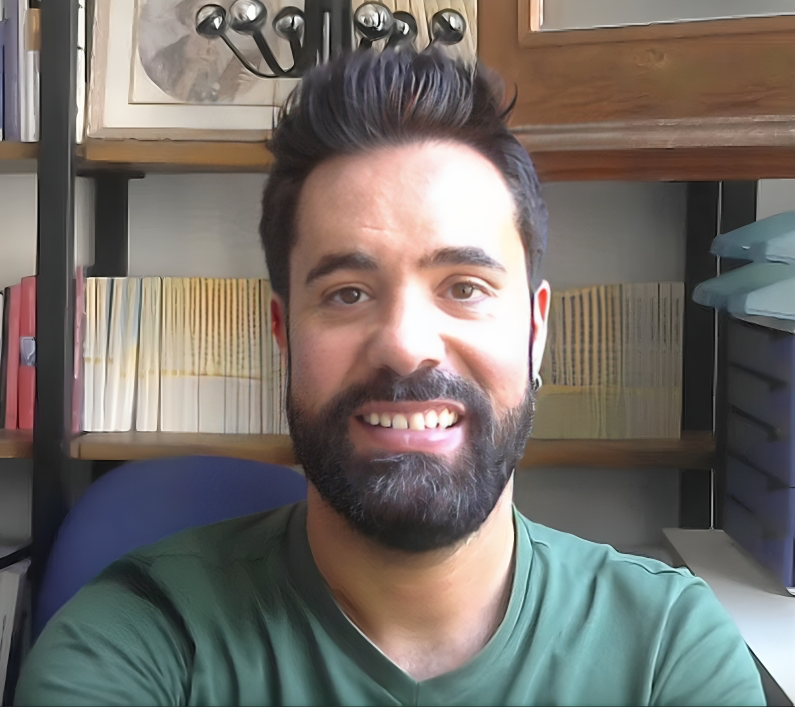
Dr. Andrew D. Eaton is an Assistant Professor at the University of Regina’s Faculty of Social Work (Saskatoon Campus) and holds a Status-Only Assistant Professorship at the Factor-Inwentash Faculty of Social Work, University of Toronto. He earned his PhD and MSW from the University of Toronto and his BSW from Toronto Metropolitan University. His research focuses on HIV/AIDS, mental health crises, aging populations, sexual health, and harm reduction, with a commitment to community-based participatory research. Eaton’s work addresses complex comorbidities affecting marginalized groups, particularly sexual and gender minorities. He leads projects such as the '3 Infections, 1 Fight Study' using geospatial tools to reduce harm from injection drug use, and the 'ReportNeedles.ca' initiative to map needle disposal hotspots. His studies also explore cognitive remediation therapies for aging HIV-positive populations and crisis mental health response models. He holds grants from CIHR, SSHRC, CTN, and OHTN. His publications emphasize innovative interventions, including cognitive training programs, civilian-led crisis response systems, and global comparative studies on sexual identities. Eaton’s lab (eaton-lab.com) fosters collaboration between academics, practitioners, and communities to translate research into actionable health policies and practices.
Leonora C Angeles is a Professor at the University of British Columbia's School of Community and Regional Planning (SCARP), serving as Admissions Chair with joint appointments as Associate Professor in Women's and Gender Studies and Director of the Institute for Gender, Race, Sexuality and Social Justice. Previously a Faculty Research Associate at UBC's Centre for Human Settlements, she conducted international development projects across Southeast Asia, Brazil, and Vietnam. Her academic credentials include a Diploma, Bachelor of Arts, Master of Arts, and Doctor of Philosophy from Queen's University, reflecting foundational training in interdisciplinary social sciences. Angeles' research critically interrogates community development through participatory planning, governance, and transnational feminist frameworks. She examines how gender, race, class, sexuality, and (dis)ability intersect in planning processes, with deep regional expertise in Southeast Asia. Her scholarship challenges conventional development paradigms by centering feminist participatory action research that prioritizes community agency and social justice, particularly in agrarian transitions and urban governance contexts. Analysis of her recent publications reveals consistent interdisciplinary engagement with political economy, disaster resilience, and feminist planning methodologies. Her work demonstrates methodological rigor in qualitative and participatory approaches while maintaining regional specificity in Philippine and Southeast Asian contexts. Key thematic threads include pandemic governance, food security, transnational marriage systems, and climate adaptation, all analyzed through intersectional power dynamics. As Graduate Program Advisor for the Centre for Women's and Gender Studies, Angeles mentors emerging scholars in critical methodologies. Her international research collaborations, particularly in the Philippines and Vietnam, have generated significant insights into participatory governance and capacity building, though specific grant mechanisms are not detailed in available sources. She actively shapes UBC's research ecosystem through leadership in the Institute for Gender, Race, Sexuality and Social Justice and Centre for Women's and Gender Studies, driving interdisciplinary scholarship at the nexus of planning, gender, and social justice while maintaining strong community-university partnerships in the Global South.
Dr. Yu Huang is an Assistant Professor in the Department of Computer Science at Vanderbilt University's School of Engineering, with a secondary appointment in the Department of Teaching and Learning at the Peabody School of Education. She is affiliated with the Institute for Software Integrated Systems, the Frist Center for Autism and Innovation, the Vanderbilt Lab for Immersive AI Translation (VALIANT), and the Vanderbilt LIVE Learning Innovation Incubator. Her academic journey began with a BS in Aerospace Engineering from Harbin Institute of Technology in China (2011), followed by an MS in Computer Engineering from the University of Virginia (2015), and culminated with a PhD in Computer Science and Engineering from the University of Michigan in 2021 under Professor Westley Weimer. Dr. Huang's research bridges human cognition and machine intelligence to enhance software development. Her work spans software, hardware, AI, medical imaging (fMRI/fNIRS), eye tracking, and mobile sensing through collaborations with Security, Education, Psychology, and Neuroscience researchers. She leads the MIND Lab (Mixed INtelligence Development for programming lab), investigating programming expertise formation, code comprehension processes, cognitive error patterns, and diversity in programming communities. Her innovative approach combines empirical human studies with AI model development to create more effective programming tools. Her recent publications reveal a growing emphasis on leveraging human attention data to improve code language models, analyzing cognitive biases in security contexts, and examining social factors in technical communication. The research shows strong interdisciplinary connections between neuroscience, psychology, and software engineering, with increasing applications of LLMs in developer tooling. Dr. Huang's work consistently demonstrates how understanding human cognition can inform better AI systems for programming tasks. Dr. Huang has received numerous prestigious recognitions including the 2025 ICPC Vaclav Rajlich Early Career Achievement Award and three ACM SIGSOFT Distinguished Paper Awards (ICSE 2019, FSE 2023, ICSE 2024). Her lab has earned the Best Presentation Award at GI2024, while her students have received the Richard Bennett/Dorothy Danforth Compton Prize scholarship and the C. F. Chen Best Paper award. She actively mentors a diverse team of graduate students (Yifan Zhang, Zach Karas, Zihan Fang, Yueke Zhang, Jiahao Zhang) and undergraduate researchers, with many former students advancing to top institutions (Stanford, Harvard, Duke, UC Berkeley) and organizations (NASA JPL). Her research is supported by a 4-year NSF grant, GitHub Tech for Social Good funding, and the Provost's Faculty Immersion Vanderbilt Grant, enabling comprehensive studies of human-AI collaboration in software engineering. The MIND Lab maintains a strong collaborative culture, frequently working with Professor Kevin Leach's research group and organizing retreats to locations like Radnor State Park and the Great Smoky Mountains. This environment fosters innovation at the intersection of human cognition and software engineering while supporting the professional development of emerging researchers in the field.
Dr. Tiffany Fairey is a Senior Research Fellow and visual sociologist at King's College London's Department of War Studies, where she specializes in participatory research and visual peacebuilding. With over two decades of experience, she previously co-founded the award-winning charity PhotoVoice and holds affiliations with the Visual Embodied Methodologies Network and Everyday Peace Indicators. Her research focuses on arts-based peacebuilding, conflict transformation, and ethical dimensions of visual methodologies. Current projects include the Leverhulme-funded Imaging Peace study examining photography's role in peacebuilding across multiple countries, and ESRC-funded work on intersectional gendered violence. Fairey's publications consistently explore participatory visual methods and peace photography, with recent work emphasizing community-centered approaches to reconciliation and strategic narrative development in post-conflict settings. Her 2025 monograph Imaging Peace represents a culmination of her multi-country empirical research. Her contributions have been recognized with prestigious awards including the Royal Photographic Society's Hood Medal and the SSPP Impact Prize. She actively consults on photovoice methodology and serves on advisory boards for organizations including the Post-Conflict Research Centre and Inclusive Rigour Co-Lab.
Dr. Nicholas A Smith is an Assistant Professor of Psychology at The University of Texas at Arlington, specializing in Industrial-Organizational Psychology and Workplace Diversity. He holds a PhD in Applied Psychology from Portland State University (2019), an MS in I/O Psychology from the University of Central Florida (2014), and a BS in Psychology from the same institution (2012). His research focuses on workplace diversity, mental health equity, and labor rights, with recent projects examining the impact of overtime legislation on Latinx agricultural workers and stigma reduction in service industries. He has secured grants totaling over $1.2 million, including a 2024 EPA grant for air quality advocacy in underserved communities and a Robert Wood Johnson Foundation-funded study on labor rights. Dr. Smith serves on editorial boards for Applied Psychology: An International Review and reviews for the Society for Industrial and Organizational Psychology. His teaching includes courses on Business Psychology and Research Methods. He actively engages in international collaborations, presenting at conferences in France, Spain, and Lithuania, and advocates for inclusive workplace policies through community-engaged research. His scholarly contributions span over 20 peer-reviewed articles, addressing topics from allyship strategies to stereotype content intersections. Despite no explicitly listed awards, his impactful grant-funded work reflects recognition of his research contributions.
Nidhi Singal serves as Professor of Disability and Inclusive Education at the University of Cambridge's Faculty of Education and holds the position of Vice President at Hughes Hall. Her academic leadership extends to roles as Trustee of the Cambridge Trust and UKFIET, alongside significant contributions to global education initiatives through the World Bank, UNESCO, and UNPRPD. Her educational background includes a PhD and MPhil from the University of Cambridge, complemented by an M.A. and B.A. (Honours) in Applied Psychology from the University of Delhi. This clinical psychology foundation informs her distinctive approach to educational research. Singal's research centers on educational equity for marginalized groups in Southern contexts, with particular emphasis on children with disabilities in South Asia and Africa. She pioneers culturally-sensitive methodological frameworks that challenge power imbalances in North-South research partnerships and prioritize ethical knowledge dissemination. Her work critically examines classroom teaching quality, schooling impacts, and the complex interplay between disability, poverty, and development. Analysis of her recent publications reveals consistent focus on inclusive education measurement (2024), pandemic impacts on disabled learners (2021-2022), and Southern perspectives on disability-inclusive schooling. Her scholarship bridges rigorous academic research with actionable policy development, evident in her leadership of the Global Disability Summit's International Statement of Action. Fellow of the Academy of Social Sciences (2022) President of the British Association for International and Comparative Education Technical Advisory Council member for World Bank's Inclusive Education Initiative Contributor to UNESCO's Foundations of Disability-Inclusive Education Sector Planning Course Singal mentors a vibrant cohort of postgraduate researchers through the Cambridge Network for Disability and Education Research (CaNDER) and South Asian Approaches to Researching Education (SaareNetwork). Her grant portfolio demonstrates exceptional partnership with international agencies including the World Bank, UNESCO, and MasterCard Foundation, focusing on projects like the Girls Education Challenge Fund evaluation and Ethiopia's Inclusive Education Resource Centres. Current initiatives explore teacher effectiveness in African secondary schools and disability-inclusive education during humanitarian crises. Her research infrastructure includes CaNDER, which connects Global South stakeholders to advance disability-inclusive education scholarship, and active collaboration with international networks like UKFIET and UNPRPD to shape policy frameworks that center lived experiences of disabled learners.
Maria Antoniak is a Visiting Professor in Computer Science at the University of Colorado Boulder, with an upcoming tenure-track appointment as Assistant Professor starting Fall 2025. She holds affiliations with both the Department of Computer Science and the Department of Information Science. Her research bridges Natural Language Processing (NLP), cultural analytics, and healthcare, emphasizing interdisciplinary collaboration with humanities and clinical fields. Education: PhD in Information Science from Cornell University (advisor: David Mimno), MA in Computational Linguistics from the University of Washington, and BA in Liberal Studies from the University of Notre Dame. She completed postdoctoral work at the Pioneer Centre for AI (Copenhagen) and was a Young Investigator at the Allen Institute for AI. Research focuses on narrative analysis (e.g., birth stories, online healthcare communities), NLP tool reliability, and ethical AI applications. Her work includes developing tools like Riveter for power dynamics analysis and Little Mallet Wrapper for topic modeling. Current projects explore cultural contexts in LLMs and maternal healthcare narratives. Teaching includes courses on NLP for Cultural Analytics and guest lectures globally. She organizes initiatives like the AI for Humanists workshop series and maintains resources for computational humanities. Maria advocates for inclusive academia through initiatives like Grads for Gender Inclusion in Computing and Ukrainian academic support efforts. Her upcoming roles include faculty appointments at CU Boulder and active participation in global conferences (e.g., ACL, COLING). Research spans computational humanities, healthcare informatics, and AI ethics, with a focus on societal impact and methodological rigor.
Ioana Jivet is a Research Professor and Head of the Learning Analytics Research Professorship at FernUniversität in Hagen, Germany. She leads interdisciplinary research focused on leveraging learning analytics to enhance educational practices through data-driven insights. Her role in the CATALPA Graduate School involves collaboration across disciplines to translate research into actionable educational strategies. Educational Background: PhD in Learning Analytics from Open Universiteit Nederland (2021) Postdoc at TU Delft (2019–2021) Research roles at DIPF (2021–2024) and studiumdigitale (2021–2024) Research Interests: Self-regulated learning mechanisms and feedback systems Cultural and ethical dimensions of learning analytics adoption Design of human-centered learning dashboards Privacy concerns in educational technology AI-driven educational decision support systems Her work emphasizes practical applications, such as developing adaptive feedback tools and investigating cross-cultural usage patterns of learning analytics platforms. Professional Contributions: Secretary of the Society for Learning Analytics Research (SoLAR) General Chair for the 2024 European Conference on Technology Enhanced Learning (EC-TEL) Co-editor of Springer volumes on technology-enhanced learning Lab & Teams: Active in the Learning Analytics research group at FernUniversität, focusing on translational research between academic theory and classroom practice.
Professor Amy Holdsworth holds the position of Professor of Television, Film and Cultural Studies at the University of Glasgow, where she also serves as Head of the Film and Television Studies Department and School Disability Officer. Her academic career includes roles at Leeds Metropolitan University and a PhD in Film and Television Studies from the University of Warwick. Her research focuses on interdisciplinary television studies, particularly exploring memory, childhood, disability, and care through media. She has published extensively, including the 2021 monograph On Living with Television and co-editing Discourses of Care: Media Practices and Cultures (2020). Holdsworth’s work bridges theoretical frameworks from memory studies, childhood studies, and disability studies. Recent projects investigate the disabled child in media, television’s role in care discourses, and the material heritage of children’s television in museums. She is an active editor for journals Screen and Memory Studies , and leads initiatives such as the Northern Television Studies Research Group. Her teaching spans undergraduate and postgraduate levels, covering topics like television analysis, gender studies, and advanced media theory. As a supervisor, she supports PhD candidates exploring television theory, disability media representation, and media historiography. Her academic leadership includes roles in institutional administration and editorial advisory boards, reflecting her commitment to fostering interdisciplinary dialogue in media and cultural studies.
Dr. Fiona Morrison is a Lecturer in Childhood Studies and Programme Director of the BA Childhood Practice at the University of Edinburgh's Moray House School of Education and Sport. She holds a PhD in Social Policy and MSc in Childhood Studies from the University of Edinburgh and a BA in Community Learning and Development from the University of Dundee. Dr. Morrison specializes in children’s human rights with a socio-legal focus, particularly addressing domestic abuse and participatory methodologies. Her research bridges academia and policy, influencing national and international frameworks. She leads projects funded by the Royal Society of Edinburgh and ESRC, collaborating with organizations like Children’s Parliament and the Children and Young People’s Commissioner Scotland. Dr. Morrison co-leads the CAHSS Childhood and Youth research theme and chairs ethics leadership for the Children and Young People Thematic Hub. Her work emphasizes ethical research practices, policy advocacy, and child participation in legal and social contexts. Education: PhD Social Policy, University of Edinburgh MSc Childhood Studies, University of Edinburgh BA Community Learning and Development, University of Dundee Research Interests: Children’s rights accountability, domestic abuse, participatory research methods, socio-legal frameworks, and policy implementation. Key Roles: Member, Children and Young People Thematic Hub Leadership Group Co-lead, CAHSS Childhood and Youth Research Theme Core member, Observatory of Children’s Human Rights Scotland Grants: Includes RSE Personal Fellowship, ESRC grants, and Legal Empowerment Fund projects. Her teaching focuses on the BA Childhood Practice program, and she supervises PhD students exploring children’s rights in domestic abuse and policy contexts. Dr. Morrison’s publications span children’s rights under pandemic conditions, legal frameworks, and participatory methodologies, reflecting her commitment to translating research into tangible societal impact.
Alicia Grandey is a Liberal Arts Professor in the Department of Psychology at Pennsylvania State University, specializing in Industrial-Organizational Psychology. She serves as the Area Coordinator and leads the Workplace Emotional Labor and Diversity (WELD) Lab. Education: Ph.D. in Industrial-Organizational Psychology from Colorado State University (1999) Interdisciplinary Initiatives: Founder of Penn State’s Healthy-Inclusive-Productive (HIP) Workplace Initiative Her research focuses on emotional labor, workforce diversity (gender, race, political/cultural), midlife women’s health in leadership roles, and the intersection of health, diversity, and productivity. She actively translates research into practice through executive education workshops and articles in Harvard Business Review and The Conversation . Recent publications and presentations highlight emotional labor dynamics, menopause in the workplace, and AI-driven accessibility for neurodiverse employees. Her work has been recognized with NSF grants, best paper awards, and Fellowships from SIOP and APS. Dr. Grandey advises doctoral students and postdoctoral scholars, including recent thesis defenders like Tayana Rich and Kayley Morris. She serves as Associate Editor for the Journal of Applied Psychology and engages with industry through advisory boards.
Will Beischel is an Assistant Professor in the Department of Psychology at Loyola University Chicago, specializing in Social Psychology. His interdisciplinary research bridges psychological science with queer and trans studies to develop inclusive frameworks for understanding gender and sexuality across diverse populations. Education: Postdoctoral Fellowship: Université de Sherbrooke Doctorate: University of Michigan Bachelors: Loyola University Chicago Dr. Beischel's research program focuses on three interconnected domains: (1) Positive experiences of gender and sexuality including gender euphoria and pleasure across identity spectra; (2) Methodological innovations like the Gender/Sex 3x3 framework for measuring beyond binaries; and (3) Developmental processes in gender identity formation, particularly during adolescence. His work employs mixed methods including surveys, interviews, and community-based approaches while centering intersectional perspectives on race, ethnicity, and social identity. He teaches PSYC 238: Sex and Gender: Similarities and Differences and actively seeks collaborators for social justice-oriented psychological research. Analysis of his 2022-2025 publications reveals a strong trajectory toward expanding psychological theory through non-binary gender frameworks, examining positive affect in gender experiences, and addressing health disparities among gender/sexual minorities. His work increasingly integrates biological markers with social identity constructs while developing practical tools for clinical and community settings. Scientific Awards: No awards were documented in the provided materials. Dr. Beischel is not recruiting Ph.D. students for Fall 2025. While specific grant details weren't provided, his research program demonstrates substantial external funding through national collaborations and community partnerships focused on LGBTQ+ health and methodology development. His work involves community-engaged research teams and interdisciplinary collaborations across psychology, gender studies, and public health. Current projects emphasize translating theoretical frameworks into practical tools for educators, clinicians, and policymakers while fostering spaces for gender and sexual diversity in academic settings.
Prof. Dr. Anne Lauscher is an Associate Professor of Data Science at the University of Hamburg Business School, specializing in fair, inclusive, and sustainable conversational AI systems. Her research focuses on improving algorithmic fairness through demographic factors in NLP systems and exploring ethical implications of large language models. She holds a PhD from the University of Mannheim, where her work on computational argumentation was awarded summa cum laude, and has conducted research at Grammarly and the Allen Institute for AI. Key contributions include gender-fair machine translation datasets (e.g., Building Bridges), bias detection frameworks (e.g., SHADES), and multilingual benchmarking tools like MultiQ. Her work has been recognized with the Maria Gräfin von Linden-Award and inclusion in the '100 Brilliant Women in AI Ethics' list. Research spans ethical NLP, multilingual AI, and societal impacts of AI technologies. Education: PhD in Data and Web Science (University of Mannheim, 2021), Postdoc at Bocconi University's NLP group (2021-2022). Academic roles include adjunct positions and international collaborations across Europe and the US. Research Interests: Conversational AI fairness, multilingual NLP systems, ethical AI evaluation, bias mitigation in LLMs, and interdisciplinary applications of machine learning in scientific discovery. Publications (select highlights): Over 55 peer-reviewed works in top-tier venues like ACL, EMNLP, and AAAI. Recent focus on LLM hallucination analysis, cross-cultural NLP benchmarks, and gender-neutral language resources. Awards: 2021 Maria Gräfin von Linden-Award (Baden-Württemberg), 2023 '100 Brilliant Women in AI Ethics', 2022 Dissertation Award Nominee (GI). Labs/Teams: Leads the UHH Data Science Research Group, collaborating with industry partners like Grammarly and academic institutions worldwide. Active in initiatives promoting gender equity in STEM and sustainable AI development.
Dr. Emma Magavern is a Clinical Lecturer and Clinical Pharmacology specialist at Queen Mary University of London's Faculty of Medicine and Dentistry, affiliated with the William Harvey Research Institute. She holds a unique academic-clinical position, splitting her time 50% between clinical work and research. Her PhD in pharmacogenomics explored genetic influences on drug response, and she now focuses on leveraging genomic medicine to address health disparities. Key roles include co-secretary of the Royal College of Physicians/British Pharmacological Society pharmacogenomics working group and co-lead for the NHS England Pharmacogenomics Network of Excellence. She also chairs the British Pharmacological Society SpR Committee and contributes to the Health Education England GeNotes initiative. Education: BA in English, MD, MSc in Bioethics, MSc in Genomics Research: Investigates how genetic variants affect medication efficacy/safety, particularly in underrepresented groups like British South Asians. Recent work highlights CYP2C19 variants reducing clopidogrel effectiveness in this population. Public Engagement: Develops patient/prescriber resources, surveys public attitudes on pharmacogenomics, and advocates for inclusive genomic medicine practices. Her research emphasizes translating genetic insights into clinical practice to improve personalized medicine while ensuring equitable access. Collaborators include Prof. Mark Caulfield and Prof. Damian Smedley, with funding from Barts Charity and the NIHR Biomedical Research Centre.
Antonio Terrón Barroso is a predoctoral researcher at the University of Barcelona's ADHUC Research Centre (Theory, Gender, Sexuality) and UNESCO Chair on Women, Development, and Cultures. He holds a Postgraduate Certificate in Social Science Research (Aston University), Master's in Teaching (PGCE, King Juan Carlos University), dual Bachelor's degrees in Translation Studies (University of Granada) and Communication (Open University of Catalonia), and a Tourism Diploma (University of Granada). Research Focus: Gender violence discursive normalization in 19th-century peninsular women's press through digital humanities methodologies. Key subfields include national/gender identity construction via literature and cinema, multilingual translation dynamics, and transnational reception studies. Teaching Experience: International roles at University of Birmingham (Spanish Teaching Fellow), Panthéon-Assas University (Spanish Lecturer), Aston University (Spanish/Translation Teaching Assistant), Cardiff University (Spanish Associate Tutor), and University of Massachusetts Amherst (Hispanic Studies Visiting Teaching Associate). Scientific Awards: FPI Predoctoral Researcher Contract (MINECO) Key Collaborations: Working with Dr. Elena Losada Soler and Dr. María Xesús Lama López on the Género, violencia y representación project. Affiliated with the consolidated research group 'Women's Creation and Thought' (2021 SGR 01097).