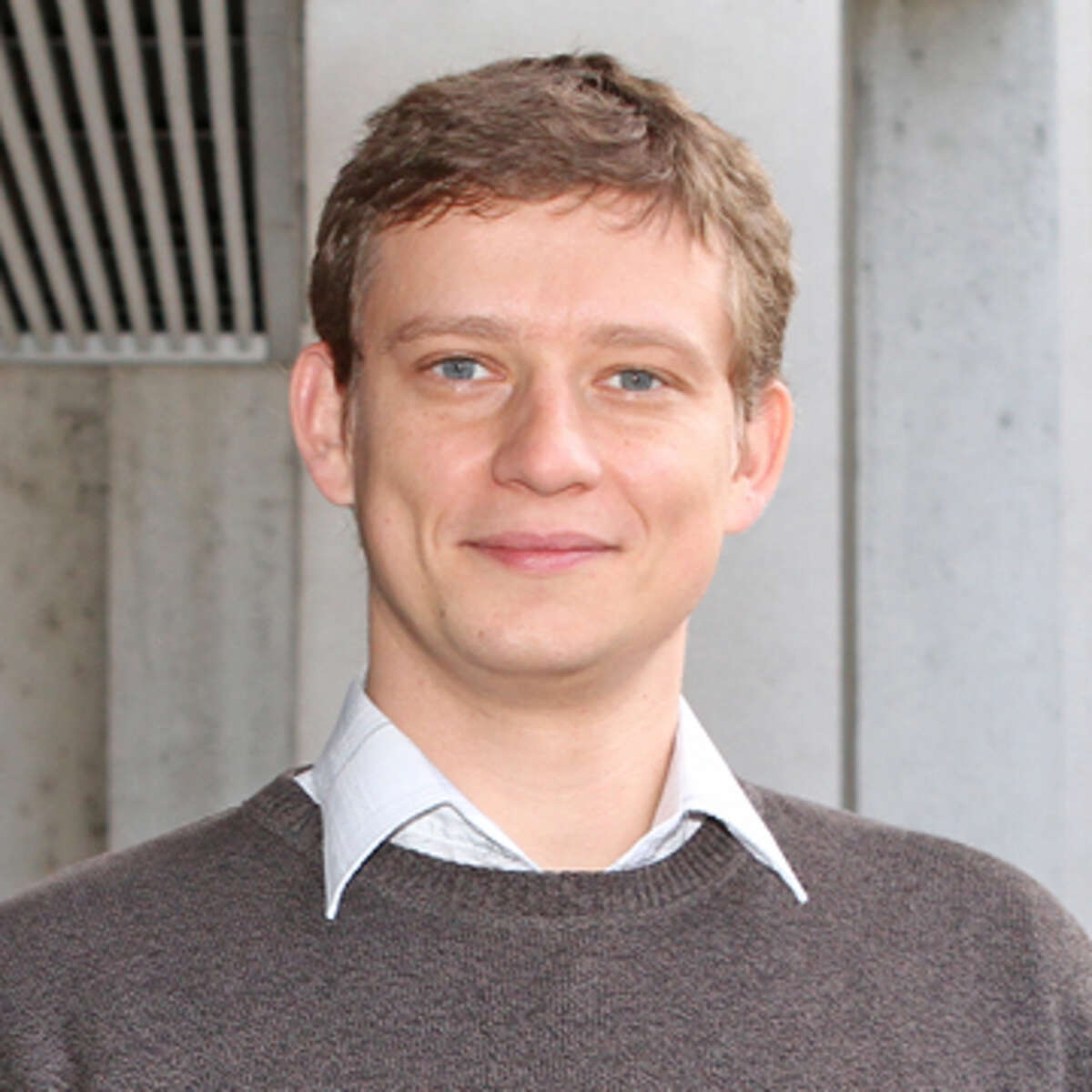
Prof. Ulrich W. Thonemann is a Full Professor and Director of the Department of Supply Chain Management & Management Science at the University of Cologne's Faculty of Management, Economics and Social Science. Since 2019, he has served as Dean of the Faculty and President of the University of Cologne Executive School since 2018. His research spans Supply Chain Management Optimization Behavioral Operations Information Systems . His recent work focuses on Incentive systems for forecast sharing Behavioral inventory metrics Contract design for newsvendor problems Demand information sharing Capacity rationing . He has served on the scientific advisory board of Bundesvereinigung Logistik and as Associate Editor for Production and Operations Management . Scientific Awards: Terman Fellow (1999-2000) Anderson Faculty Scholar (1998-2000) Outstanding Academic Achievements at Stanford (1992) Contact: ulrich.thonemann@uni-koeln.de | Research Group Website
Jennifer W. Caceres, M.D., F.A.C.P., is Vice Dean for Medical Education and Professor of Medicine at Florida Atlantic University's Charles E. Schmidt College of Medicine. She has held leadership roles in medical education and student affairs since joining FAU in 2014, previously serving at the University of Miami Miller School of Medicine's Regional Campus (2008-2014). Her work focuses on career advising, wellness programs, and quality improvement initiatives. 1999: B.S. in Biology with Highest Honors, Rutgers University 2002: M.D., University of Medicine and Dentistry of New Jersey (articulated BA/MD program with Rutgers) 2002-2005: Internal Medicine Internship and Residency, New York Medical College at Saint Vincent's Catholic Medical Center Dr. Caceres specializes in Quality Improvement and Patient Safety , with research on reducing hospital readmissions, developing educational curricula for internal medicine residencies, and addressing medical student wellness. She also explores social media impacts and infectious disease policy . Her recent publications highlight trends in opioid overdose mortality , medical student wellbeing , cyberbullying , vaccine hesitancy , and innovative discharge protocols . These works span public health, clinical research, and educational interventions. Scientific Awards 2023 Faculty Talon Leadership Award, FAU 2023 Michael L. Friedland Educational Leadership Award, FAU Medicine 2021 Palm Beach County Medical Society Heroes in Medicine Finalist 2019 Leonard Tow Humanism in Medicine Award 2016 Gold Humanism Honor Society Inductee 2014 University of Miami Teaching/Leadership Award 2011 Project Access Provider of the Year Dr. Caceres mentors medical students and residents in scholarly work, including peer-reviewed publications and national presentations. She also leads community initiatives like the Run for the Health of It, a 5K charitable event in Palm Beach County.
Lucca Geurts is a Senior Lecturer at the Faculty of Industrial Engineering Sciences at KU Leuven, where he is affiliated with the Department of Computer Science. He serves as chairman of the Leuven Centre for Accessible Health Technology, subdivision head of Subdivision 3, Campus Group T Leuven, and Head of Education of the OC Innovative Health Technology. Additionally, he is an active member of DigiSoc – KU Leuven Institute for Digital Society. His research focuses on Technology for Tangible and Playful Interactions, particularly in healthcare applications. Dr. Geurts leads numerous research projects including therapeutic games for children with visual disorders, flexible activity measurement systems, intimate interactive systems, and early-stage glaucoma screening platforms. His work bridges human-computer interaction with accessible health technology, emphasizing user-centered design principles and practical healthcare solutions. Dr. Geurts' publication record demonstrates a consistent trajectory from fundamental interaction techniques to applied healthcare contexts. His recent work shows increasing sophistication in squeeze interactions, emotion regulation through tangible interfaces, and medical applications of interactive technology. The research trends indicate a growing focus on accessible medical diagnostics, therapeutic applications, and user experience in healthcare technology. As an educator, Dr. Geurts teaches across multiple domains including Electronics, Computer Architectures, Health Entrepreneurship, Sensors and Circuits for Healthcare Applications, and Extended Reality. His educational leadership extends to Master's theses and internships in health engineering, reflecting his commitment to training the next generation of healthcare technologists. Committee for Culture, Art and Heritage Faculty Council of Industrial Engineering Sciences Evaluation Committee of the Faculty of Industrial Engineering Sciences POC Advanced Education Faculty of Industrial Engineering Sciences Secretary of the OC Innovative Health Technology Departmental Council for Computer Science Interfaculty Council for Global Development (as substitute member) Dr. Geurts maintains an active research profile with numerous publications in top-tier human-computer interaction conferences and journals. His work shows a clear progression toward increasingly impactful healthcare applications, with strong emphasis on accessibility and user experience in medical technology development.
Michael Henderson serves as a Lecturer at Monash University within the School of Curriculum, Teaching and Inclusive Education. His academic profile reflects deep engagement with contemporary educational challenges through research spanning adult learning, digital technologies, and pedagogical innovation. His research interests encompass: Adult and Vocational Education Higher Education Systems Educational Technology Integration Feedback Literacy and Assessment Practices Digital Literacy for Marginalized Populations Artificial Intelligence in Learning Environments Creativity in Educational Contexts Henderson investigates how generative AI transforms feedback mechanisms, with emphasis on student perceptions of AI-generated versus teacher feedback. His work critically examines digital empowerment frameworks for refugee and migrant learners, addressing systemic barriers in technology access. Recent publications reveal growing focus on decolonizing creativity research, ethical AI implementation in Australian policy contexts, and play-based digital safety education for young children. This trajectory demonstrates consistent attention to equity, cultural responsiveness, and practical applications of emerging technologies in diverse educational settings. His scientific recognition includes: Dean's Award for Programs that Enhance Learning (2019) Henderson currently leads the international research project "Active Learning about Academic Publishing through Collaborative Online International Learning" (2024-2025), examining cross-cultural academic skill development. His upcoming presentation at the 2025 Australian Association for Research in Education Conference will address collaborative learning frameworks. Though specific student mentoring details are unavailable, his project leadership suggests active involvement in guiding emerging researchers through international collaborations focused on educational technology and publishing practices.
Aris T. Pagourtzis is a Professor of Computer Science at the School of Electrical and Computer Engineering of the National Technical University of Athens (NTUA), where he also serves as the Head of the Computer Science Division. He is additionally a Lead Researcher at the Archimedes Research Center, Athena RC. His academic career includes positions at the University of Ioannina, the University of Liverpool, the ETH Zuerich, the University of Athens, and the Athens University of Economics and Business. Education: Diploma in Electrical Engineering (1989) and Ph.D. in Electrical and Computer Engineering (1999), both from the National Technical University of Athens Professor Pagourtzis's research spans multiple areas of theoretical computer science, with particular emphasis on computational complexity, graph algorithms, distributed algorithms, approximation algorithms, network algorithms, cryptography, and counting complexity. His work often bridges theoretical foundations with practical applications in network design, security protocols, and optimization problems. He has developed novel algorithms for problems ranging from community detection in networks to Byzantine fault-tolerant protocols and privacy-preserving voting systems. His recent publications show a continued focus on fundamental algorithmic problems while expanding into newer areas like temporal graph analysis, blockchain applications, and privacy-preserving technologies. There's a clear trend toward addressing real-world challenges through rigorous theoretical frameworks, particularly in distributed systems, secure computation, and optimization under constraints. Professor Pagourtzis has served on program and organizing committees for numerous theoretical computer science and cryptography conferences, co-chairing CIAC 2017 and FCT 2021. His research has received funding from diverse sources including US, UK, French, EU, and Greek national resources. He is actively involved in teaching both undergraduate and graduate courses at NTUA, including Algorithms and Complexity, Foundations of Computer Science, Computational Cryptography, and Network Algorithms and Complexity. He leads the Computation and Reasoning Laboratory (corelab) at NTUA, which focuses on theoretical computer science research.
Eleni Stai is an Assistant Professor at the School of Electrical and Computer Engineering, National Technical University of Athens (NTUA), affiliated with the Division of Communication, Electronic and Information Engineering. She holds advanced degrees in Electrical Engineering, Mathematics, and Applied Mathematical Sciences from NTUA and the National and Kapodistrian University of Athens. Her academic credentials include: Diploma in Electrical and Computer Engineering, NTUA (2009) B.Sc. in Mathematics, National and Kapodistrian University of Athens (2013) M.Sc. in Applied Mathematical Sciences, NTUA (2014) Ph.D. in Electrical Engineering, NTUA (2015) Dr. Stai's research integrates advanced optimization techniques with communications networks and energy systems. She develops stochastic and deterministic optimization frameworks for network resource allocation, data analytics on complex topologies, and smart-grid control applications. Her work bridges theoretical foundations with practical implementations in energy-harvesting networks, network slicing, and reinforcement learning for distributed systems. Analysis of her recent publications reveals dominant research thrusts in AI-driven network management (particularly O-RAN and network slicing), energy-integrated communications, and optimization of energy communities. A significant portion of her work addresses the convergence of 5G/6G networking with power systems, emphasizing real-time control and sustainability. Her scientific contributions have been recognized through prestigious awards: Chorafas Foundation Best Ph.D. Thesis award Thomaidis Foundation Best M.Sc. Thesis award Best Paper Award at ICT 2016 Best Presenter Award at IEEE ENERGYCON 2022 Dr. Stai serves on technical program committees for major international conferences and has co-authored the book "Evolutionary Dynamics of Complex Communications Networks". She teaches undergraduate courses in Queuing Systems, Computer Networks, and Social Network Analysis, reflecting her expertise in network theory and applications. Her research trajectory demonstrates continuous evolution from fundamental network optimization to AI-enhanced solutions for next-generation communication-energy systems. Her work builds upon her postdoctoral experience at EPFL (2016-2020) and ETH Zurich (2020-2023), where she developed advanced frameworks for communications networks and energy systems.
Dr. Alison Croasdale serves as a Lecturer in Digital Media: Education at University College London's Institute of Education, specifically within the Culture, Communication & Media department and based at the UCL Knowledge Lab. She teaches across both undergraduate and postgraduate programs, focusing on the intersection of digital media and educational practice. Dr. Croasdale holds an undergraduate degree in English Literature with specialization in Gothic literature, followed by two Master's degrees: Critical Theory from Manchester Metropolitan University (2008) and Digital Media, Culture and Communication from UCL's Institute of Education (2016). Prior to her academic career, she spent ten years as a secondary school middle leader and teacher of English and Media in East London, providing valuable practical experience that informs her research and teaching. Her research interests focus on the intersection of digital media and English teaching methodologies, particularly examining how digital approaches can enhance student engagement with challenging literary texts. She explores the evolution of teaching practices through a postdigital lens and investigates non-professional videogame design as both a creative process and analytical tool for education. Her work bridges traditional literary studies with contemporary digital practices, with particular attention to how game design principles can illuminate classic texts like Shakespeare's Macbeth. Dr. Croasdale has presented numerous conference papers on innovative teaching approaches, including 'Creating and Recreating Game Time' at the University of Exeter (2023), 'Full of sound and fury: Teaching Macbeth through Game Design' for BritGrad (2022), and 'GCSEs to Undergraduate: Managing Student Transition' at the University of Keele (2019). Her recent publications examine postdigital videogame literacies and the application of game design principles to educational contexts. As an educator, she serves as module leader for 'Moving Image Production' (postgraduate) and 'Media Education in Schools' (undergraduate), while also contributing to 'Digital Media: Enquiry' and 'Creativity: from Theory to Practice in English, Media and Drama.' She supervises dissertations and reports on the MA Digital Media: Education program, guiding students in exploring the creative and analytical potentials of digital media in educational contexts.
Sergey Anatolyevich Merzlyakov is an Associate Professor at the Department of Theoretical Economics , Faculty of Economic Sciences , National Research University Higher School of Economics (HSE) . He has been affiliated with HSE since 2006 and holds leadership roles as First Deputy Dean and Deputy Head of the International Laboratory of Macroeconomic Analysis . PhD in Economics (2010, HSE) Master's in Economics (2007, HSE) Bachelor's in Economics (2005, HSE) His research focuses on fiscal and monetary policy interaction in export-oriented economies , including central bank-government dynamics , optimal macroeconomic policy , and liquidity trap solutions . He has published extensively on monetary policy communication , cross-border policy transmission , and regional debt interdependencies . Recent studies emphasize anchored inflation expectations , hybrid inflation targeting , and verbal interventions by central banks. His work appears in journals like Panoeconomicus , Russian Journal of Economics , and Journal of Central Banking Theory and Practice . Awarded HSE Honorary Diplomas (2022), Medal 'Recognition - 10 Years of Successful Work' (2024), and Best Teacher (2017–2018). Supervised K. Anikeev 's dissertation on banking system heterogeneity. He coordinates network educational programs and inter-university research collaborations , including joint double-degree programs with Far Eastern Federal University and other regional institutions. His roles include faculty development, organizational restructuring, and academic partnership management.
Prof. Dr. Marek Basler is an Associate Professor of Infection Biology at the Biozentrum, University of Basel , leading a research group focused on the Type VI Secretion System (T6SS) in bacterial pathogens. His work bridges structural biology, molecular microbiology, and computational analysis to unravel the mechanisms of this contractile nanomachine. PhD in Microbiology (2007, Institute of Microbiology, CAS, Prague) Postdoctoral Fellow (2007–2013, Harvard Medical School) Assistant Professor (2013–2018) and Associate Professor (since 2018) at Biozentrum His research explores the structure, assembly, and therapeutic potential of the T6SS, a critical virulence factor in pathogens like Pseudomonas aeruginosa . Key themes include bacterial defense strategies , intermicrobial competition , and host-pathogen interactions . Recent projects highlight T6SS roles in antibiotic resistance and horizontal gene transfer . The most recent publications (2025–2024) reveal novel insights into T6SS activation by environmental stress , toxin diversity , and host cell targeting . Trends span microbial ecology , nanomachine dynamics , and computational modeling of bacterial interactions. Scientific Awards : EMBO Membership (2023) ERC Consolidator Grant (2019) EMBO Gold Medal (2018) Friedrich Miescher Award (2018) EMBO Young Investigator (2015) His lab (Basler Lab) utilizes state-of-the-art microscopy , biochemical techniques , and live-cell simulations (e.g., BacFighT6 ). Collaborations span institutions like Harvard Medical School and NCCR-AntiResist , with future work targeting antibacterial therapies .
Joost Raessens is Professor of Media Theory at Utrecht University's Faculty of Humanities, Department of Media and Culture Studies, where he leads research in Media and Performance Studies. He coordinates the Horizon Europe-funded project STRATEGIES: Sustainable transition for Europe's game industries (2024-2028), focusing on how games, AI, and extended reality impact the climate crisis. His research spans several interconnected areas focused on the intersection of digital media, gaming, and environmental sustainability. Raessens explores how immersive experiences like Games and XR for Change contribute to advancing UN Sustainable Development Goals through his Green Media Studies framework. His work examines the environmental impact of the gaming industry while investigating how games can foster ecological citizenship and climate awareness. He has pioneered research on "ecogames" - games designed to engage players with climate crisis issues through playful perspectives. Raessens' recent publications reveal a clear trend toward examining gaming's dual role in the climate crisis - as both a contributor to environmental problems and a potential solution. His work analyzes how games like Collapsus, SpaceBuzz, and Symbiosis create meaningful engagement with ecological issues, while also addressing the carbon footprint of the gaming industry itself. This research sits at the intersection of game studies, environmental humanities, and digital media theory. His notable recognition includes: Incentive for the development of an International Master Degree Game Studies (2011) Raessens actively supervises multiple PhD projects including 'The becoming-playful of warfare in the Netherlands' (2021-2025) and 'Experiencing the past: Bridging art, history, and young people's media environment through multisensory XR engagement' (2022-2026). He leads significant research initiatives including the NWO-funded project on "Long-term consumer and community empowerment in energy applications through inclusive Game design, Artificial Intelligence and system Modelling" (2022-2026) and previously directed the Utrecht University Graduate Programme "Game Research" (2015-2021). He co-founded and directed the Utrecht Center for Game Research (2014-2024), creating a hub for interdisciplinary game studies that connected humanities scholars with computer scientists. This center facilitated numerous collaborative projects examining the societal impact of games, from persuasive gaming to citizen science applications.
Dubravko Radic serves as Professor of Service Management at the University of Leipzig's Faculty of Business and Economics since 2009, while simultaneously holding the position of Deputy Head of the Price and Service Management group at the Fraunhofer Center for International Management and Knowledge Economics IMW since 2013. His academic career spans multiple institutions including the University of Wuppertal where he completed his habilitation, and the University of Frankfurt am Main where he earned his doctorate in statistics and econometrics. Doctorate (Dr. rer. pol. summa cum laude): Johann Wolfgang Goethe-Universität Frankfurt a.M. (2004) Habilitation: Bergische Universität Wuppertal (2009) Diplom-Volkswirt: Johann Wolfgang Goethe-Universität Frankfurt a.M. (1999) Research Stay: University of California Davis (2008) Professor Radic's research centers on the intersection of empirical methods and business management, with particular emphasis on service pricing modeling, applied microeconometrics, and social interactions in service contexts. His work bridges theoretical econometric approaches with practical business applications, especially in the healthcare sector where he has led multiple Fraunhofer IMW projects including ASARob, NurMut, and ATMoSPHÄRE. His research methodology combines quantitative modeling with real-world case studies to address strategic and operational decisions in service organizations. His recent publications demonstrate a consistent focus on discrete choice modeling, game theory applications in marketing, and service innovation frameworks. The 2025 paper "Discrete Games in Marketing Research" presented at the Global Marketing Conference in Hong Kong exemplifies his approach of applying advanced econometric techniques to practical marketing problems, particularly in digital service contexts. His work shows an evolving trajectory from foundational service management concepts toward increasingly sophisticated modeling of strategic interactions in service markets. Professor Radic has extensive experience advising major corporations including Metro AG, Lilly Deutschland, IMS Health, Berlin Chemie, and Augustinum gGmbH. His practical projects at Fraunhofer IMW focus on translating academic research into actionable business solutions, particularly in healthcare digitization and service innovation. He has led the TRAIN@MINE project developing training tools for Vietnam's mining sector and contributed to studies on Big Data applications in health insurance. At the University of Leipzig, he leads research activities through the Institute for Service and Relationship Management, supervising multiple research projects that connect academic inquiry with industry applications. His team collaborates with international partners including the University of California Davis, University of Maryland, Northwestern University, and the Technion Israel Institute of Technology, creating a robust research ecosystem focused on service management innovation.
Marisa Exter serves as Associate Professor of Learning Design and Technology within Purdue University's Department of Curriculum and Instruction since 2020, following promotion from Assistant Professor (2013-2020). With 15+ years of software design and development experience, she holds dual expertise in Computer Science (BS/MS) and Instructional Systems Technology (PhD). Her educational foundation includes: PhD in Instructional Systems Technology, Indiana University (2011) MS in Computer Science, Illinois Institute of Technology (2003) BS in Computer Science, Elmhurst College (1999) Dr. Exter's research pioneers transdisciplinary educational innovation , focusing on how design processes transform technology-creation fields like Instructional Design, Computing, and Engineering. She investigates formal and non-formal learning experiences to enhance undergraduate education through interdisciplinary programs, while simultaneously examining online graduate program structures that support adult learners' connection to faculty and peers. Her work integrates heutagogical principles for lifelong learning and rigorously documents design successes/failures through scholarly design cases. Analysis of her 15 most recent publications reveals accelerating focus on dispositional development in computing professions , competency-based curriculum models, and transdisciplinary experience design. Her methodological evolution includes increased use of Q methodology and collaborative autoethnography to capture diverse perspectives in educational innovation. As Purdue PI for a $3M multi-institutional computing competencies grant and co-coordinator of AECT's Summer Research Symposium, she drives national curriculum reform. Her mentorship approach cultivates the Exploring Disruptive Education research family group, which investigates interdisciplinary design processes across technology-rich learning environments. Professional service spans Computing Curriculum 2020 Task Force leadership and ACM/AERA membership. The Exploring Disruptive Education research collective she co-leads operates as an interdisciplinary incubator for educational innovation. This team examines how design thinking transforms learning experiences through technology integration, with particular emphasis on creating connections between formal education and industry practices in computing and engineering fields.
Konrad Burchardi is Professor of Economics at the Institute for International Economic Studies (IIES) at Stockholm University. His academic work focuses on understanding economic development processes and the social foundations of economic behavior, with significant contributions to development economics and migration studies. Professor Burchardi obtained his PhD in Economics from the London School of Economics (LSE), with prior studies conducted in Munich, Aix-en-Provence, and at LSE. His educational background reflects a strong international foundation in economic theory and development perspectives. His research primarily centers on productivity growth at early stages of economic development and the social underpinnings of economic interactions. Key contributions include field experiments on sharecropping contracts in developing countries, demonstrating how output-sharing rules affect agricultural productivity, and research showing how migration ancestry influences foreign direct investment patterns. His work spans agricultural economics, migration studies, experimental economics, and economic networks, often employing rigorous field and natural experimental designs to establish causal relationships. Analysis of Professor Burchardi's publication record reveals consistent contributions to top economics journals with a focus on development and labor economics. His work shows an evolution from examining micro-level economic behaviors in developing countries to broader questions about migration networks and their economic impacts. His recent publications indicate increasing attention to historical economic data and financial inclusion, with work scheduled through 2025.
Roman Sheremeta is an Associate Professor in the Department of Economics at Case Western Reserve University's Weatherhead School of Management . He also serves as a Research Affiliate at the Economic Science Institute and an Associate Fellow at Purdue University Teaching Academy. Sheremeta earned his Ph.D. in economics from Purdue University and has been affiliated with Case Western since 2013. Education Ph.D. in Economics from Purdue University (2009) MS in Economics from Purdue University (2006) Bachelor of Arts from Precarpathian National University (2004) Bachelor of Arts from National Technical University (2013) His research focuses on experimental economics and game theory , with applications in behavioral economics, conflict resolution, industrial organization, labor economics, and public economics. Sheremeta has published over 70 articles across economics, business, political science, and psychology journals, including Journal of Economic Behavior and Organization , Experimental Economics , and Economic Inquiry . Notable awards include the 2018 Smith Ascending Scholar Prize ("budding genius" in social science), Best 40 Under 40 Professors 2019 by Poets & Quants, and recognition as Top Economic Thinker of Ukrainian Descent by Forbes. His work has been featured in Wall Street Journal , Forbes , NPR , and Science Daily . Sheremeta teaches courses on negotiation, managerial economics, behavioral economics, game theory, and microeconomics . He received the Weatherhead Emerging Impact Award twice (2015, 2019) and maintains an average teaching evaluation of 4.9/5.0 . Additionally, he founded American University Kyiv during wartime and actively advocates for Ukraine through social media and humanitarian efforts.
NAKAJIMA, Tatsuo serves as a Professor at Waseda University's School of Fundamental Science and Engineering, Department of Computer Network Engineering. Holding a Doctor of Engineering from Keio University, he has been affiliated with Waseda since 1999 after positions at Japan Advanced Institute of Science and Technology (1993-1999), Cambridge University, and Carnegie Mellon University. His academic profile shows substantial research output with 433 papers and 3,338 citations on Scopus, and 7,604 citations with an h-index of 42 on Google Scholar. Dr. Nakajima's research focuses on Distributed Systems, Embedded Systems, and Ubiquitous Computing, with particular emphasis on virtualization architectures for embedded environments. His work bridges theoretical computer science with practical applications in information appliances, operating systems, and persuasive computing technologies. He has developed innovative systems including SPUMONE (a composition kernel for multi-OS environments), SIGMA System, and SPLiT (a performance optimization library for multicore processors). Analysis of his 15 most recent publications reveals a consistent research trajectory centered on enhancing reliability, security, and performance of embedded and pervasive computing systems. His work shows increasing integration of human factors, particularly in sustainable behavior applications through persuasive technology. The research spans from low-level system architecture to user-centered applications, demonstrating both technical depth and practical relevance. Nokia Research Center, Visiting Research Fellow (2005.04) Dr. Nakajima's research has produced numerous practical frameworks including SPUMONE for multi-OS environments, SPLiT for performance optimization, and persuasive applications like EcoIsland for sustainable behavior. His work on kernel monitoring, anomaly detection, and self-healing systems demonstrates strong focus on system dependability. Current research appears directed toward integrating human factors with embedded systems, particularly in environmental sustainability applications. His laboratory work centers around the SPUMONE project, a virtualization layer for multi-core embedded systems that enables multiple operating systems to coexist with minimal engineering cost. This research environment supports exploration of resource management, security monitoring, and performance optimization in embedded contexts. The work has practical applications in information appliances, smart homes, and pervasive computing environments.