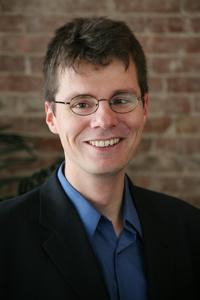
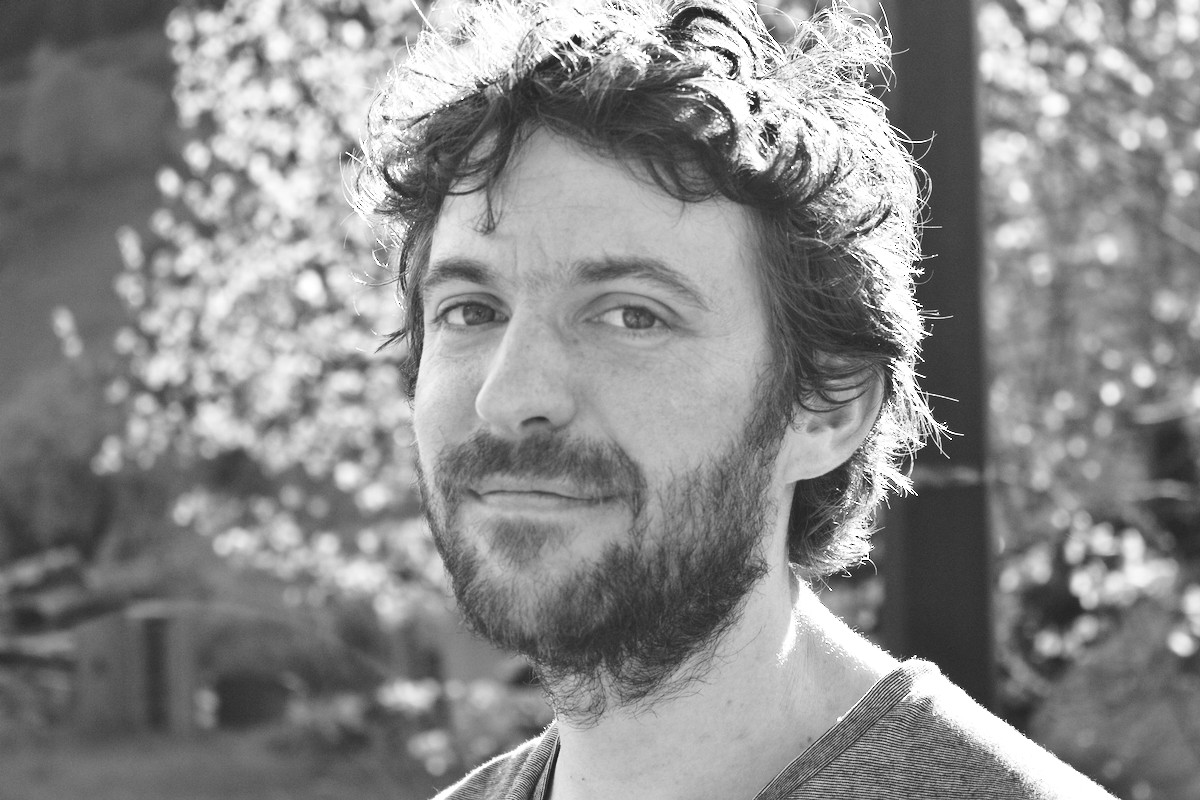
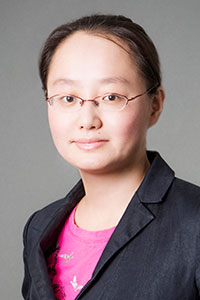
Dr. T. S. Mohan is a Principal Researcher at Infosys Technologies E&R’s ECom Research Lab with over 22 years of experience in academia and industry. His research focuses on distributed systems, high performance computing, cloud and grid computing, and software architecture/engineering. He holds a Masters and PhD in Computer Science from the Indian Institute of Science, Bangalore. Indian Institute of Science, Bangalore (Masters, PhD) Lab for Computer Science, MIT (Young Visiting Scientist, 1988) NEC Research Institute, Princeton (Visiting Scientist, 1994) His research explores synergies between cloud computing and grid computing, particularly in performance optimization and scalability of distributed systems. Recent publications highlight heterogeneous computing, control-flow integrity in cybersecurity, and software performance engineering. He has contributed to open-source cloud solutions like Eucalyptus and Hadoop interoperability frameworks.
Sergiy Pogorilyy is a Professor and Head of Computer Engineering Department at the Taras Shevchenko National University of Kyiv , Faculty of Cybernetics. With over 260 publications including 8 monographs and 14 textbooks, he specializes in High Performance Computing , Cluster Systems , and Parallel Algorithm Design . His work integrates Genetic Algorithms , Homogeneous/Heterogeneous Architectures , and Algebraic Real-Time Process Modeling . M.Sc. in Applied Mathematics (Donetsk Technical University, 1971) Ph.D. in Computer Systems Software (Glushkov Institute, 1977) Doct.Sc. in Engineering (Glushkov Institute, 1993) Research focuses on parallel algorithm formalization using Glushkov's modified systems and RTPA algebra. He explores cluster system optimization through genetic algorithms and GPGPU technology, with applications in load balancing and network flow problems. Recent publications include advancements in Johnson/Goldberg-Tarjan algorithm parallelization , parametric design systems for parallel algorithms, and cluster architecture optimization. These works emphasize computational efficiency and mathematical rigor. Council Ministry USSR Prize (Science and Technology field) Editorial board member of 7 international journals including Applied and Computational Mathematics Program committee member for conferences like COIA and TAAPSD Supervised 6 Ph.D. students in cluster computing and parallelization
Zhishan Guo is an Associate Professor in the Department of Computer Science at North Carolina State University, affiliated with the College of Engineering and the Operations Research Graduate Program. His research bridges real-time scheduling theory, machine learning theory, and cyber-physical systems. Ph.D., Computer Science, UNC-Chapel Hill (2016) M.Phil., Mechanical and Automation Engineering, The Chinese University of Hong Kong (2011) B.E., Computer Science and Technology, Tsinghua University (2009) Guo's work spans embedded and real-time systems, parallel/distributed systems, and healthcare information technology, with a focus on integrating machine learning into real-time scheduling and cyber-physical systems. Recent publications highlight advancements in neural network-based scheduling, adversarial defense mechanisms, and healthcare diagnostics for embedded systems. His scientific honors include the ACM SIGBED CAREER Award (2023), Best Paper Awards at RTSS (2023), ICIST (2023), and RTAS (2025), alongside the Humboldt Fellowship (2024). Guo's research is supported by grants from the National Science Foundation and NHK International Corporation, addressing scalable heterogeneous computing and intelligent robotics.
Dr Rhiannon Jones serves as a Lecturer in Experimental Particle Physics within the School of Mathematical and Physical Sciences at the University of Sheffield. She is an active member of the Particle Physics and Particle Astrophysics Research Cluster (PPPA), contributing to major international collaborations including the Deep Underground Neutrino Experiment (DUNE) and Short-Baseline Near Detector (SBND) project. Her work focuses on advancing liquid argon time projection chamber (LArTPC) technologies for neutrino detection, with responsibilities spanning detector development, data analysis, and physics interpretation across multiple experimental frameworks. Her research program centers on experimental neutrino physics, specifically targeting neutrino interaction measurements, detector response optimization, and background mitigation in LArTPC systems. Key investigation areas include scintillation light characterization for particle identification, reconstruction of low-energy electron events, simulation of detector performance using GPU-accelerated computing, and analysis of cross-section uncertainties affecting supernova neutrino studies. Her work bridges particle physics, nuclear physics, and computational science to address fundamental questions about neutrino properties, oscillation parameters, and potential sterile neutrino signatures. Analysis of her publication record from 2018-2024 reveals consistent contributions to neutrino experiment infrastructure and physics analysis. Early work established foundations in joint oscillation analyses (VALOR) and SBND detector construction, while recent efforts have driven DUNE Phase II development, vertical drift detector technology, and innovative data processing techniques using deep neural networks. Her publications demonstrate growing leadership in technical design reporting, white paper authorship, and cross-collaboration studies addressing sterile neutrino phenomenology and detector performance optimization. The Particle Physics and Particle Astrophysics Research Cluster (PPPA) provides Dr Jones's primary institutional framework at Sheffield, connecting her to a multidisciplinary team engaged in detector development, data acquisition systems, and physics analysis for both accelerator-based experiments and astroparticle physics. Within PPPA, she contributes specifically to the experimental neutrino program, working on near-detector calibration systems for SBND and far-detector technologies for DUNE, with strong operational ties to Fermilab and international partner institutions.
Andreas Paul Eberhard Kloeckner is an Associate Professor in the Department of Computer Science at the University of Illinois at Urbana-Champaign (UIUC), where he has been serving since 2013 (promoted to Associate Professor in 2019). He also holds an affiliate faculty appointment in the Department of Electrical and Computer Engineering since 2016. His academic journey includes a PhD in Applied Mathematics from Brown University (2010), an MSc from Brown University (2006), and a Diplom in Applied Mathematics from Universität Karlsruhe (2005). Prior to joining UIUC, he was a Courant Instructor at the Courant Institute of Mathematical Sciences at New York University. Dr. Kloeckner's research focuses on high-order accurate integral equation methods, fast algorithms for elliptic boundary value problems, and code transformation for high-performance scientific computing. His work bridges mathematical theory with practical implementation, with particular emphasis on GPU computing and parallel architectures. He has made significant contributions to the development of open-source scientific software, most notably PyCUDA and PyOpenCL, which have become widely used tools in the scientific computing community. His publication record shows a consistent focus on advancing numerical methods for scientific computing, with recent work emphasizing code generation techniques, fast integral equation solvers, and optimization of algorithms for modern hardware architectures. The trajectory of his publications reveals a progression from foundational work on GPU-based discontinuous Galerkin methods toward increasingly sophisticated approaches for integral equation methods and automatic code generation. Among his notable recognitions is the 2017 National Science Foundation CAREER Award, which supports his work on general-purpose, high-order integral equation methods for computer simulation in engineering. His research has been published in prestigious venues including SIAM Journal on Scientific Computing and has influenced both academic research and practical applications in scientific computing. Dr. Kloeckner has advised numerous graduate students through completion of their PhD and MS degrees, with alumni moving to positions at Apple, NVIDIA, Rice University, and other leading institutions. His research group maintains an active portfolio of open-source software projects that advance the state of scientific computing infrastructure.
Greg Herschlag is a Professor in the Department of Mathematics at Duke University, with research spanning gerrymandering, computational fluid dynamics, and high-performance computing. His work combines mathematical rigor with interdisciplinary applications. Affiliation: Duke University, Department of Mathematics Research Focus: Gerrymandering, Redistricting Algorithms, Lattice Boltzmann Methods, Monte Carlo Sampling Gregory Herschlag specializes in quantitative approaches to political redistricting and computational physics. His redistricting work employs Markov chain Monte Carlo methods, dimension reduction, and algorithmic fairness to analyze partisan bias. In fluid dynamics, he explores GPU optimization and memory access patterns for lattice Boltzmann simulations. Recent publications focus on redistricting algorithms, computational methods for gerrymandering, and fluid dynamics. He contributes to Duke's Data+ program through projects on topics like Durham school zoning, community safety, and climate resilience. Labs/Teams: Collaborates with Duke's Argus Lab on AI web scraping analysis and engages in interdisciplinary teams for climate and social impact projects.
Romain Vergne is an Associate Professor at the University of Grenoble Alpes, France, and a researcher affiliated with the Maverick team (Inria, LJK) since 2012. Previously, he conducted postdoctoral research at Justus Liebig University Giessen (Germany). His research focuses on the phenomenological links between shapes, light, and material perception, aiming to develop perceptually plausible computer graphics tools. Key interests include shape depiction, visual perception, texture synthesis, and appearance control via his GPU-centric node-based system Gratin for 2D/3D data manipulation. Best Paper Awards: AFIG 2018, Expressive 2018, AFIG 2015 Honorable Mentions: NPAR 2011, I3D 2010 Recent publications explore Gabor noise optimization, motion-coherent stylization, and non-photorealistic rendering frameworks. He also contributes to eco-feedback visualization systems and cartographic style extensions.
Thomas Engelhardt is a Researcher and PhD student at the Computer Graphics Group of the Karlsruhe Institute of Technology (KIT) , Germany. His work focuses on real-time rendering techniques, including global illumination, participating media, and visibility culling. Research Interests: Interactive 3D graphics High-quality lighting simulation GPU-based rendering algorithms Occlusion culling and visibility optimization Participating media rendering Environment mapping techniques Publications demonstrate expertise in virtual point lights, epipolar sampling, hierarchical buffers, and scalable final gathering for global illumination.
Dr. Haojin Yang is a Professor and group leader of the Multimedia and Machine Learning Research Group at the Hasso Plattner Institute for Digital Engineering in Potsdam, Germany. He works under the supervision of Prof. Dr. Christoph Meinel and leads research in efficient AI, edge computing, and deep learning applications. His research group includes several PhD students and scientific coworkers focusing on cutting-edge machine learning problems. Dr. Yang's research interests span Efficient AI systems with emphasis on edge computing, binary neural networks, deep model acceleration and compression, computer vision applications, and multimodal data retrieval. His work bridges theoretical advancements with practical applications in medical imaging, weather forecasting, and digital humanities. He has made significant contributions to the field of binary neural networks through frameworks like BMXNet and BITorch. His recent publications demonstrate a strong focus on optimizing neural networks for efficiency, particularly in binary and low-bit implementations, while maintaining performance. His work spans computer vision, natural language processing, and multimodal learning, with particular attention to real-world deployment constraints like computational efficiency and energy consumption. BEST PAPER AWARD at the 22nd IEEE International Symposium on Parallel and Distributed Processing with Applications (IEEE ISPA 2024) for 'Low-Bit CUTLASS GEMM Template Auto-Tuning Using Neural Network' Dr. Yang actively supervises numerous PhD and Master's students, with several having completed their degrees and moved to prominent positions at companies like Amazon AI, German Aerospace Center, and MILA-Quebec AI Institute. His research is supported by collaborations with SAP, Wildenstein Plattner Institute, and various academic institutions. He also contributes to the academic community as a reviewer and program committee member for top conferences including ICML, NeurIPS, and CVPR.
Jonas Unger is a Professor at Linköping University's Department of Engineering and Natural Sciences (ITN) and Media and Information Technology (MIT). As a research leader in computer graphics and image processing, he contributes to advanced visualization techniques, GPU computing, and AI applications in healthcare and climate adaptation. Specializes in BRDF modeling, spectral light field imaging, and augmented intelligence Active in AI4Climateadaptation and Wallenberg Autonomous Systems Program (WASP) Recipient of the 2023 Chester Carlson Research Prize Develops AI methods for medical imaging (SCAPIS dataset) and autonomous systems His recent work focuses on deep learning for material acquisition, real-time rendering optimizations, and visual analytics pipelines for disaster response systems. Current projects include multi-agent reinforcement learning for air traffic control and GPU-accelerated signal processing techniques. Scientific awards include: Chester Carlson Research Prize (2023) He collaborates with Visual Sweden's Augmented Intelligence platform, co-leads major visualization conferences, and contributes to Horizon 2020 Marie Skłodowska-Curie funded research. Contact: jonas.unger@liu.se
Yongluan Zhou is a Professor at the Department of Computer Science , University of Copenhagen , where he co-heads the Data Management Systems Lab (DMS Lab) and serves as Head of Studies for the MSc in Computer Science . His academic journey includes a PhD from the National University of Singapore (NUS) (2007), a postdoc at ETH Zürich (2007–2008), and prior roles as Associate Professor at University of Southern Denmark (SDU) (2008–2017). PhD in Computer Science, National University of Singapore (2002–2007) Postdoc, ETH Zürich (2007–2008) Zhou's research focuses on database systems and distributed systems , with recent emphasis on event-driven systems , scalable stream processing , and big graph analysis . His work bridges theoretical foundations and practical implementations, addressing challenges in data consistency, fault tolerance, and resource optimization in cloud and microservice environments. The trends in his 15 most recent publications (2025–2024) highlight advancements in asynchronous choreographies , blockchain consensus protocols , GPU-accelerated graph processing , and microservices data management . These works integrate formal methods with empirical validation, emphasizing scalability, security, and efficiency in distributed environments. He actively contributes to academic governance as a member of the DEBS Steering Committee (2024–), SSDBM Steering Committee (2022–), and the EDBT Association Executive Board (2020–).
Cosmin Eugen Oancea serves as an Associate Professor in the Programming Languages and Theory of Computation section at the Department of Computer Science (DIKU), University of Copenhagen, Faculty of Science. His academic profile shows active engagement in research, teaching, and collaboration within the computer science community. Education: PhD in Computer Science from Western University (completed November 20, 2005) Dissertation title: "Parametric Polymorphism for Software Component Architectures and Optimizations" Oancea's research spans multiple domains within computer systems, with primary focus on static, dynamic and hybrid techniques for automatic parallelization (optimizing compilers), programming language design and implementation, memory management, and computer algebra. His recent work demonstrates strong connections between functional programming, array languages, and high-performance computing, with applications in financial modeling, automatic differentiation, and time series analysis. He has made significant contributions to the Futhark programming language ecosystem, focusing on compiler optimizations and performance tuning for GPU architectures. His publication record shows consistent output in top-tier venues including SC (International Conference for High Performance Computing), IFL (Symposium on Implementation and Application of Functional Languages), and ARRAY (Workshop on Libraries, Languages and Compilers for Array Programming), with a notable concentration of publications from 2021-2023. His research demonstrates interdisciplinary connections between computer science theory and practical applications in finance, environmental data analysis, and machine learning infrastructure. Oancea maintains active international collaborations across multiple countries, as indicated by the network visualization of his research partnerships. His work bridges theoretical computer science with practical implementations, particularly in the domain of array programming and compiler optimization for parallel architectures.
Yue Shi serves as an Instructor in the Department of Computer Science at the University of Copenhagen, actively contributing to the Programming Languages and Theory of Computation (PLTC) section. This section drives research at the intersection of programming language theory and practical applications including security, privacy, and fintech. Research interests encompass: Programming Languages Theory of Computation Formal Verification Distributed Ledger Technology Compiler Technology Computer Security Within the PLTC ecosystem, Yue Shi engages with specialized research groups such as Decentralized Systems (blockchain/distributed ledgers), Security & Privacy, HOT Lab (higher-order typed languages), and FUTHARK (GPU-accelerated functional programming). The section supports BSc and MSc programs in Computer Science, Machine Learning, and related disciplines while maintaining industry collaborations in financial transparency and quantum programming.
Stefan Manegold is a Professor for Data Management (0.2 fte) at Leiden University's Faculty of Science within the Leiden Institute of Advanced Computer Science (LIACS), while also serving as a Senior Researcher (0.8 fte) and former Head (2011-2024) of the Database Architectures Research Group at Centrum Wiskunde & Informatica (CWI) in Amsterdam. His career spans over 27 years at CWI and 11 years as a professor at Leiden University, with prior experience at Humboldt-Universität zu Berlin. Professor Manegold's research focuses on innovative database architectures, particularly column-store systems and hardware-aware database technologies. His expertise spans database query optimization, parallel and distributed information systems, XML storage and processing, and scientific data management. He has pioneered work in adaptive indexing, progressive query processing, and main-memory database systems that leverage modern hardware capabilities. His research bridges theoretical database concepts with practical implementations, as evidenced by his involvement in the MonetDB open-source database system. His work shows a clear evolution from foundational database research toward addressing modern challenges in big data management, scientific data processing, and interactive analytics. Recent publications demonstrate his continued leadership in database indexing techniques, GPU-accelerated database operations, and geospatial data management. Professor Manegold has received significant recognition for his contributions to the database community, including the prestigious 2020 ACM SIGMOD Contributions Award, the VLDB'2011 Challenges & Visions Track Best Paper Award, and the VLDB'2009 10-year Best Paper Award. His work has had substantial impact on both academic research and practical database system design. He has been actively involved in the academic community through conference organization, particularly with SIGMOD and VLDB events, and has contributed to numerous workshops including the Data Management on New Hardware (DaMoN) series. His leadership extends to collaborative research projects such as SciLens, PROMIMOOC, and DAMIOSO, which address data management challenges in scientific domains. Professor Manegold leads the Database Architectures Research Group at CWI, which has been at the forefront of database system research for decades. The group's work on MonetDB has influenced modern column-store database systems and continues to push boundaries in areas like progressive query processing and hardware-aware database design.
Minlan Yu is the Gordon McKay Professor of Computer Science at Harvard University's John A. Paulson School of Engineering and Applied Sciences (SEAS). She leads the Harvard Theory and Systems group and co-leads the Harvard Power and AI initiative. Her research focuses on data networking, distributed systems, and software-defined networking, with recent emphasis on sustainable computing and AI-driven network management. She is also Assistant Director of the SRC/DARPA JUMP 2.0 ACE Center for Evolvable Computing. Key research interests include network optimization, edge AI serving, large-scale resource allocation, and fault tolerance in distributed systems. Recent work highlights include innovations in energy-efficient data centers, homomorphic encryption acceleration, and real-time network telemetry using FPGA coprocessors. Teaching responsibilities include advanced courses on networking (CS 145/243) and systems programming. She actively advises PhD students and postdocs across systems and networking domains. Her lab's work has led to impactful contributions in both academia and industry, with a focus on bridging theory and practical system implementations. Current research initiatives include the Harvard Power and AI initiative exploring energy-efficient AI workflows and the development of evolvable computing infrastructure through the ACE Center.