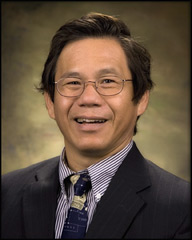
Matthew Yen serves as a Lecturer in the Department of Industrial Technology at California State University, Fresno's Jordan College of Agricultural Sciences and Technology. Courses Taught: Technology and Society (IT 20) Technical Writing (IT 198W) Research Methodology Senior Seminar Applied Spatial Technology Applied Imaging Technology Programming Fundamentals Electricity & Electronics CAD Research Profile: Current Focus: Visual programming frameworks, object-oriented business modeling, human-machine interface design, socio-technical implications of technology, and agricultural/commercial applications of GIS/Remote Sensing systems. Historical Research: Neural network architectures, fuzzy logic control systems, AI-driven manufacturing processes, computer-integrated manufacturing (CIM), and microwave vacuum dehydration techniques for food preservation.
James V Carnahan is an Adjunct Professor (10 % appointment) in the Department of Industrial and Enterprise Systems Engineering at the University of Illinois at Urbana-Champaign, a role he has held since December 2004. Previously he served as Lecturer and Adjunct Professor (50 %), Coordinator of Project Design Activity (100 %), Visiting Assistant Dean in the College of Engineering, and Assistant Professor in what was then the Department of General Engineering. Education Ph.D., Engineering Sciences, Purdue University (1973) M.S., Engineering Sciences, Purdue University (1970) B.S., Engineering Sciences, Purdue University (1968) Research Interests Carnahan’s scholarship is notable for its breadth. Core themes include probabilistic modeling and maximum-likelihood estimation—especially for Beta distributions—reliability engineering, and life-cycle cost analysis of infrastructure systems. He has applied these tools to pavement management, underground heat distribution networks, bulk-material conveyor design, and vehicular-accident injury analysis. Additional curiosity-driven projects span human factors in speed/distance perception, pedestrian-flow congestion, optimization of flavor manufacturing, and even statistical analysis of golf-putting performance. Publications & Trends Across more than three decades Carnahan has published extensively in journals such as Management Science , Accident Analysis & Prevention , ASCE Journal of Transportation Engineering , Decision Sciences , and ASME Journal of Mechanical Design . Early work focused on transportation safety and pavement maintenance optimization; mid-career contributions advanced fuzzy multi-attribute decision making and environmentally conscious design; recent studies shift toward medical and sports analytics, illustrating an evolving interdisciplinary trajectory grounded in rigorous statistical methods. Scientific Awards & Recognition Engineering Council (Accenture) Award for Excellence in Advising, UIUC College of Engineering (2001, 2002) Anderson Consulting Award for Excellence in Advising, UIUC College of Engineering (1990–93, 1999–2000) Department of General Engineering Outstanding Professor (1986, 1991, 2003) Finalist, All-Campus Award for Excellence in Undergraduate Teaching (1990) Everitt Award for Undergraduate Engineering Teaching Excellence (1989) Advising, Grants & Senior Design Leadership Carnahan has coordinated large-scale multidisciplinary senior design projects since 1993, guiding student teams working with industry partners such as Harger International, NTN-Bower, Marmon Industries, Magnetrol, and FONA International. These efforts have garnered multiple James F. Lincoln Engineering Awards and continuous corporate sponsorship, providing students with authentic design-build experiences in reliability, process optimization, and product redesign. Laboratory & Consulting Activity While no dedicated lab is explicitly named, Carnahan maintains active consulting practices through Carnahan Engineering and Surveying (principal, 1979-1983) and ongoing advisory roles with The PERTAN Group, FONA International, Ruhl Forensic, Inc., and the U.S. Army Construction Engineering Research Laboratory, focusing on reliability, forensic accident investigation, and energy-system life-cycle analysis.
Professor Yoon Jin-hee is affiliated with the Department of Mathematics and Statistics at Sejong University, where she leads the Mathematical Data Science Lab. Her research focuses on mathematical data science and soft computing theory, bridging fuzzy logic, neural networks, and statistical modeling. Her work spans fuzzy logic and its applications in behavioral and conflict modeling neural network design with fuzzy systems regression analysis for complex data chaotic dynamics in socioeconomic models time series forecasting in AI-driven environments Recent publications emphasize hybrid architectures like LSTM and self-organizing fuzzy neural networks, along with advanced moderation/mediation frameworks. The Mathematical Data Science Lab serves as a hub for developing evolutionary algorithms, attention mechanisms, and theoretical advancements in fuzzy inner products and polynomial classifiers.
Professor Mingsheng Ying (University of Technology Sydney) is a Distinguished Professor specializing in quantum programming , quantum verification , and the foundations of artificial intelligence . He leads the Centre for Quantum Software and Information and co-founded the Quantum Lab . His work bridges quantum computation with formal methods and reasoning under uncertainty. Education : Mathematics, Fuzhou Teachers College (1981) Research Interests His research spans: Quantum programming languages and verification techniques Model checking quantum systems and cryptographic protocols Quantum machine learning robustness Entanglement theory and distributed quantum computation Recent Publications Key contributions include: Quantum error correction verification frameworks Quantum register machine architecture Hamiltonian simulation parallelization Symbolic execution for quantum debugging Robustness tools like VeriQR Awards & Editorial Roles NSF China Distinguished Young Scholar Award (1997) China National Science Award (2008) Co-Editor-in-Chief, ACM Transactions on Quantum Computing Vice President, International Fuzzy Systems Association (2005) Leadership & Grants He oversees 14 active grants (2010–2029) from: Australian Research Council (ARC Discovery Projects) National Natural Science Foundation of China Sydney Quantum Academy Baidu Contract Research His grants fund research in quantum program verification, entanglement classification, and distributed quantum protocols.
Mostafa Shokrian Zeini is a researcher at the Leibniz Institute for Agricultural Engineering and Bioeconomy (ATB) , specializing in the Agromechatronics Department . His work bridges control theory, robotics, and agricultural technology, with a focus on Model-in-the-Loop (MIL) , Software-in-the-Loop (SIL) , and Hardware-in-the-Loop (HIL) systems. Research Interests: Agricultural Robotics Visual Servoing Nonlinear Control Synthesis Uncertain Complex Systems Recent Projects: foodChain – 5G integration in the Golßen-Mittenwalde-Schönefeld region Development of robotic harvesting systems for sweet peppers, apples, and blueberries Review of field robots for potato cultivation Collaborations: 43rd GIL Annual Conference Joint work with institutions like Shiraz University of Technology and Hamedan University of Technology
Dr. Baris Yuce is a Senior Lecturer and Program Lead for Engineering Management BEng/MEng at the Faculty of Environment, Science and Economy, University of Exeter. He holds a PhD in Engineering from Cardiff University and has previously worked as a Postdoctoral Researcher at Cardiff in sustainable engineering and machine vision. His academic background includes MSc and BSc degrees in Industrial Engineering from Sakarya University, Turkey. His research focuses on the integration of artificial intelligence, optimization, and data science into sustainable engineering systems. Key areas include smart cities, renewable energy management, sustainable supply chains, and Industry 4.0. He applies machine learning, multi-agent systems, fuzzy logic, and nature-inspired optimization algorithms to real-world engineering challenges in buildings, transportation, and manufacturing. Baris has contributed to a wide array of funded research projects, including EU FP7 initiatives like SPORTE2, KnoholEM, and MAS2TERING, as well as UKRPIF, KTP, STFC, and industry-funded efforts. These projects reflect a strong emphasis on digital twins, energy optimization, smart grids, and sustainable infrastructure. He is affiliated with the Environmental Intelligence @ Exeter research network, which aligns with his focus on data-driven sustainability solutions. His work bridges civil, mechanical, electrical, and manufacturing engineering domains with computer science and applied mathematics. Scientific Awards: No awards listed in the provided text. Baris Yuce has been involved in multiple research collaborations and grants, serving as Principal Investigator (PI) on an industrially funded project with Waterman Group and as Co-Investigator (Co-I) on several others including UKRPIF's CREWW ENZO, STFC Food Network+, KTP with Smart Manufacturing, RIVIC, SPORTE2, KnoholEM, EEO-Box, WANDA, and MAS2TERING. These roles highlight his leadership in interdisciplinary and applied research. While no formal advisees are listed, his role as Program Lead suggests academic leadership and mentorship responsibilities. He is part of the Environmental Intelligence @ Exeter initiative, a cross-disciplinary research network focused on leveraging data science and AI for environmental sustainability, indicating active participation in cutting-edge, team-based research.
Carlo Stefano Ragusa is a Full Professor in the Department of Energy (DENERG) at the Polytechnic University of Turin, where he leads research in applied electromagnetics and magnetic materials. He is a member of the Interdepartmental Center PEIC (Power Electronics Innovation Center) and has held various academic positions including Associate Professor at Turin Polytechnic University in Tashkent and Visiting Researcher at Ecole Normale Superieure de Cachan. Professor Ragusa's research interests focus on applied electromagnetics, electromagnetic devices, magnetic alloys and steels, and magnetic materials for electrotechnical applications. His work spans electrical engineering with emphasis on power components, magnetism, and simulation engineering. His research aligns with UN Sustainable Development Goals 4 (Quality education), 7 (Affordable and clean energy), 8 (Decent work and economic growth), and 10 (Reduced inequalities). Analysis of his recent publications reveals a consistent focus on magnetic loss characterization across various materials including soft magnetic composites, non-oriented steel sheets, and ferrites. His work addresses energy efficiency challenges in power electronics applications, with particular attention to complex induction waveforms, DC bias effects, and rotational losses. The research demonstrates both theoretical modeling and experimental validation approaches. Professor Ragusa has supervised numerous PhD students including Gulaly Khan, Uma Rajput, Song Huang, Francesco Moraglio, Michele Quercio, and Luigi Solimene. His research has been supported by various competitive calls including MetSuperCap (2024-2027), DYNANOMAG (2013-2016), SAVE (2007-2011), and multiple commercial contracts. He leads the CADEMA research group within DENERG and has served as Program Chair for the 13th International Workshop on 1&2 DIMENSIONAL MAGNETIC MEASUREMENT AND TESTING. His teaching contributions span the Electrical, Electronics and Communications Engineering PhD program at Politecnico di Torino across multiple academic years from 2005 to present.
Athanasios Vasilakos is a Professor at the University of Agder's Department of Information and Communication Technology. His research focuses on cutting-edge ICT domains including quantum computing, cybersecurity, and distributed systems. He maintains an extensive publication record with recent works concentrated in quantum machine learning, blockchain applications, and IoT security. Research interests span: Quantum computing architectures and cryptographic applications Secure federated learning frameworks for distributed networks AI-driven solutions for IoT and telecommunications systems Advanced cybersecurity techniques including steganalysis and homomorphic encryption Cross-domain applications in bioinformatics, smart grids, and autonomous vehicles Publication analysis reveals strong thematic focus on: security enhancements for emerging technologies (blockchain, quantum systems), privacy-preserving machine learning, and IoT optimization. Recent works demonstrate increasing attention to quantum-classical hybrid systems and their real-world implementations. Collaboration networks include extensive international partnerships across Europe and Asia, particularly in quantum computation, cybersecurity, and intelligent systems research.
Magdalena Turowska is a Researcher at the Department of Computer Science and Systems Engineering , Faculty of Information and Communication Technology , Wrocław University of Science and Technology . Her research focuses on computer networks, congestion control, and game theory applications in systems engineering. Research Interests : Network optimization, fuzzy logic control systems, game theoretic resource allocation, and adaptive congestion management in virtual networks. Publications (2007-2014) analyze road transport algorithms, multipath routing pricing games, network utility maximization, and fuzzy PID controller adaptations for congestion control. Contact : magdalena.turowska@pwr.edu.pl
Yifan Yu is an Assistant Professor at the Department of Information, Risk, and Operations Management, McCombs School of Business, The University of Texas at Austin. He holds a Ph.D. in Information Systems from the University of Washington and bachelor's/master's degrees in Management Science and Engineering from Tsinghua University. Research Focus: Economics of AI/ML, unstructured data analytics (text/images/video), and data-driven sustainable operations. Methodologies: Machine/deep learning, network analysis, econometric/game-theoretical modeling, and experiments. Publications: Appeared in top journals like Management Science , MIS Quarterly , and Information Systems Research . Awards: Best paper recognitions at INFORMS, CIST, WITS, and teaching awards from University of Washington.
Dr. Will Shepherd is a Researcher at the University of Sheffield 's School of Mechanical, Aerospace and Civil Engineering, affiliated with the Pennine Water Group. His work focuses on urban drainage systems, integrating artificial intelligence, GIS, and sensor technologies to enhance infrastructure resilience and performance. Rainfall radar integration for hydraulic modeling Contaminant ingress and transient analysis in water systems Thermal energy recovery from buried infrastructure Recent research includes the Pipebots EPSRC Programme Grant for robotic sensing in buried pipes and the CENTAUR Horizon 2020 project for autonomous flood control systems. Earlier projects span QUICS (uncertainty in catchment modeling), Cloud to Coast (pathogen risk prediction), and Cost-S (sewer asset management). Scientific Awards ‘Most Innovative New Technology of the Year’ at the 2018 Water Industry Awards (for CENTAUR)
Dr. Hadi Tabatabaee Malazi is an Assistant Professor at the University of College Dublin (UCD), leading the Sustainable Orchestration in Computing Continuum (SOC² Lab). He holds an Orcid identifier (0000-0002-2960-6896) and has extensive academic experience across institutions like Maynooth University, Shahid Beheshti University, and Trinity College Dublin. His research focuses on sustainable computing, edge-cloud continuum orchestration, AI/ML deployment (e.g., LLMs), and energy efficiency. He is a Senior Member of IEEE, serves as an Associate Editor for IEEE Access, and chairs the COST Action CA22151 (CYPHER) on decarbonizing energy-intensive industries. Education: PhD (2012): University of Isfahan (Computer Engineering) MSc (prior to 2012): University of Isfahan Research Visit (2010-2011): Delft University of Technology Research Interests: Sustainable edge-cloud systems, AI-driven workload optimization, carbon-aware resource management, distributed LLMs, and IoT interoperability. Key contributions include over 20 journal articles in IEEE, Elsevier, and Springer venues, with topics ranging from vehicular network security to smart city event processing. Professional Activities: Committee member of COST Action CA22151, IEEE Access Associate Editor, and Technical Program Committee member for IEEE conferences. Authored certifications on research leadership and research integrity from Epigeum. Labs/Teams: SOC² Lab (UCD), leading projects on edge-cloud sustainability and AI application deployment.
Janusz Kacprzyk is a Professor at the Systems Research Institute of the Polish Academy of Sciences in Warsaw, Poland, a position he has held since 1990. He also serves as an honorary professor at Yli Normal University (China) and as a visiting professor at the Tijuana Institute of Technology (Mexico), University of Trento (Italy), and University of Tennessee (USA). Additionally, he is president of the International Fuzzy Systems Association and the Polish Society for Operations and Systems Research since 2007, while maintaining membership in the Polish Academy of Sciences and the Royal Academy of Economic and Financial Sciences (RACEF) since May 15, 2008. He earned his PhD in systems analysis and computer science, establishing the foundation for his interdisciplinary research. His academic journey reflects deep engagement with computational decision-making frameworks and their real-world applications across industrial contexts. Professor Kacprzyk's research bridges fuzzy logic, operations research, and neuroeconomics, with pioneering work on multistage control systems and the neural basis of economic choices. His influential book "Multistage Fuzzy Control: A Model-Based Approach to Control and Decision-Making" demonstrates how fuzzy set theory enhances decision processes in complex systems. His speech "Neuroeconomics: from homo economicus to homo neuroeconomicus" highlights the integration of neuroscience into economic modeling, reflecting his commitment to transdisciplinary innovation. Through leadership roles in major international associations, he has significantly advanced collaborative research in computational intelligence. His industry contributions include designing information systems for Microsoft Windows and other sectors, showcasing the practical impact of his theoretical work on control systems and decision support technologies.
Craig Innes is a Research Fellow at the University of Edinburgh , affiliated with the Institute for Perception, Action and Behaviour (IPAB) . His research bridges symbolic logic and formal verification with black-box probabilistic models in cyber-physical systems , focusing on trustworthiness , risk assessment , and safety guarantees for autonomous vehicles and robotics . His work explores temporal logic specifications , adaptive experiment design , and probabilistic calibration to improve safety validation . Key trends in his publications include formal verification for machine learning systems , physics-informed simulation for soft robotics , and risk-driven perception system design . He also investigates unawareness in decision-making and scenario generation via large language models . Craig supervises PhD students in areas like hybrid AI for cyber-physical systems and autonomous robotics , with funding opportunities through EPSRC Doctoral Training Partnerships and Centre for Doctoral Training programs in Dependable Robotics and Machine Learning Systems . He emphasizes research proposal development and collaboration with industry in his supervision approach.
Dr. Saulius Maskeliūnas serves as a Researcher and Deputy Director at the Cybersocial Systems Engineering Group within Vilnius University's Institute of Data Science and Digital Technologies (formerly Institute of Mathematics and Informatics). His career at the institute spans from 1984 to present, progressing through positions from junior research associate to his current leadership role. Dr. Maskeliūnas earned his Doctor of Science degree in Informatics in 1996 with a dissertation on 'Knowledge base structuring method for heuristic and qualitative reasoning systems,' building upon his engineering education in automated control systems from Kaunas Polytechnic Institute (now Kaunas University of Technology) in 1984. His research expertise centers on information and knowledge-based systems, with significant contributions in Semantic Web technologies, ontology engineering, knowledge management, and workflow automation. Over his extensive career, his work has evolved from foundational research in knowledge representation to practical applications in environmental monitoring systems, water resource management, and national research data infrastructure. Dr. Maskeliūnas' scholarly output demonstrates a consistent trajectory of innovation across multiple domains, particularly in developing semantic technologies for environmental informatics and research data management systems. His recent publications focus on AI standardization, water resource monitoring systems, and research evaluation frameworks. He holds prominent leadership positions including President of the Lithuanian Computer Society (since 2010), Chair of the Technical Committee LST TK4 'Information Technologies' (since 2021), and member of the State Commission of the Lithuanian Language's Committee on Language Technologies (since 2012). Throughout his career, Dr. Maskeliūnas has successfully balanced theoretical research with practical implementation, contributing significantly to Lithuania's information technology infrastructure, research evaluation systems, and standardization efforts in computer science terminology.