Alfredo García Hernandez Diaz is a Professor at the Department of Economics, Quantitative Methods and Economic History in the Universidad Pablo de Olavide , Seville, Spain. His research focuses on Quantitative Methods for Business and Economics , with a strong emphasis on Operations Research , Multiobjective Optimization , and Computer Science applications. He has extensive collaboration networks and contributes to zbMATH Open as an author and reviewer. PhD in Mathematics from the University of Seville (2002) Specializes in Weighted Composition Operators and Hardy Spaces His work spans theoretical and applied domains, including Queueing Systems , Vehicle Routing , and Heuristic Algorithms . He has co-authored over 20 publications and contributed to software packages in Multiobjective Optimization . His email is agarher@upo.es .
Martín Fañanás-Mastral is a Full Professor in the Department of Organic Chemistry at the University of Santiago de Compostela (USC), where he leads the Sustainable Catalysis and Asymmetric Synthesis research group at the Centro Singular de Investigación en Química Biológica y Materiales Moleculares (CIQUS). His research program focuses on discovering and developing novel metal-catalyzed reactions for sustainable and atom-efficient synthetic methodologies using readily accessible materials while minimizing waste production. His primary research interests include Sustainable Catalysis , Asymmetric Synthesis , Methane Functionalization , and Transition Metal Catalysis . Fañanás-Mastral's work particularly emphasizes the selective functionalization of hydrocarbons and the development of catalytic enantioselective reactions for synthesizing bioactive compounds. His ERC Consolidator Grant project "BECAME" focuses on bimetallic catalysis for diverse methane functionalization, addressing one of chemistry's major challenges: converting abundant but inert methane into valuable organic molecules. His recent publications demonstrate significant advances in photocatalytic alkane functionalization, borylative coupling reactions, and enantioselective synthesis methodologies. The research trends show a strong focus on developing sustainable catalytic processes that eliminate traditional waste-generating steps, with particular emphasis on C-H activation, dual catalytic systems, and creating complex molecular architectures with high stereocontrol. Thieme Chemistry Journal Award (2015) Young Researchers Award from Royal Spanish Society of Chemistry (2016) Lilly Young Researcher Award (2018) ERC-Consolidator Grant (2019) José Barluenga Medal by GEQOR (2025) Second Ícarus Prize 2025 in Doctoral Theses Fañanás-Mastral actively mentors numerous PhD students and postdoctoral researchers, with several successful PhD defenses in 2025 alone. His research group has secured significant funding including multiple European grants such as the ERC-CoG "BECAME," MSCA Doctoral Network "CATALOOP," and MSCA Postdoctoral Fellowship "MePhoCAT." The group maintains strong industry partnerships through various European projects focused on sustainable chemistry and catalytic methodologies. The Fañanás-Mastral research team operates within CIQUS, a specialized research center at USC with CIGUS recognition from the Xunta de Galicia. The group regularly conducts research using flow chemistry techniques and maintains collaborations with other leading institutions including ICIQ for computational studies. Their work environment fosters innovation through regular group activities, summer BBQs, and collaborative events as documented in their group photos from 2024-2025.
Antonio Cuevas González is a Professor of Statistics and Probability at the Department of Mathematics, Faculty of Sciences, Autonomous University of Madrid. His office is located in Building 17, Room 503 at the university campus in Madrid (28049). He maintains an active research program in statistical methodology and has supervised numerous PhD students throughout his career. Professor Cuevas González specializes in several advanced areas of statistical theory, with primary research interests in set estimation, statistics with functional data, classification methods, and geometric approaches to statistical problems. His work bridges theoretical statistics with practical applications, particularly in high-dimensional and functional data settings. Over his career, he has developed novel methodologies for shape analysis, boundary estimation, and nonparametric classification that have become influential in the statistical community. An analysis of his recent publications reveals a strong focus on functional data analysis, with particular emphasis on regression models, classification techniques, and geometric approaches to statistical problems. His research increasingly integrates machine learning concepts with traditional statistical methodology, particularly through the use of reproducing kernel Hilbert spaces and other advanced mathematical frameworks. The trend shows growing interest in high-dimensional problems, dimensionality reduction techniques, and the development of computationally efficient statistical methods for complex data structures. SEIO-BBVA Foundation Award 2022 to the Best Methodological Contribution in the Statistics Field Medalla de oro 2025 de la Sociedad de Estadística e Investigación Operativa (SEIO) Professor Cuevas González has supervised numerous PhD students including Paloma Sanz (1988), Amparo Baíllo (2000), Alberto Rodríguez-Casal (2003), Alejandro Cholaquidis (2014), José L. Torrecilla (2015), Beatriz Bueno (2018), Luis A. Rodríguez (2024), and Antonio Coín (current). He is currently principal investigator for the research project 'Statistical techniques in high-dimensional spaces' (grant code PID2023-148081NB-I00) funded by the Spanish Ministry of Science, Innovation and Universities from September 2024 until September 2027, with Amparo Baíllo and Javier Cárcamo as main collaborators. As an active member of the statistical research community, Professor Cuevas González serves as Associate Editor for the journal ALEA and contributes to various research collaborations centered around functional data analysis, set estimation, and geometric statistics. His work often involves interdisciplinary collaborations, particularly with researchers in biomedical fields as evidenced by his publication on metabolic changes in mouse hearts.
Naroa Ibarretxe Bilbao is a Professor at the Department of Psychology, College of Health Sciences, University of Deusto. She earned her Psychology degree (2005) from the University of Deusto and a PhD in Medicine (2009) from the University of Barcelona, focusing on limbic brain changes in Parkinson's disease using MRI. She conducted predoctoral research at the University of Oxford (FMRIB) in 2007 and leads projects in the Neuropsicología de los trastornos médicos severos team at Deusto. Her research spans Neuroimaging in Parkinson's and multiple sclerosis Cognitive rehabilitation and brain connectivity Neuropsychological effects of prematurity Transcranial stimulation for creativity and language Quality of life in neurodegenerative diseases Her recent publications analyze fatigue networks in Parkinson's (2025), cortical thickness differences in preterm individuals (2024), and transcranial random noise stimulation effects on cognition (2023-2022). Awards include the 2010 Premio Lluis Barraquer (best thesis) and membership in Jakiunde Academy. She mentors students, including Eneritz Bengoetxea (2013 thesis on cognitive rehabilitation in schizophrenia), and directs the University of Deusto's Clinical Neuropsychology Master's program. Her work integrates MRI, neuropsychological assessment, and non-invasive brain stimulation across neurological and psychiatric populations.
Ainara Echezarraga Porto is an Associate Professor in the Department of Psychology within the Faculty of Health Sciences at the University of Deusto. She holds accreditation as both an Associate Professor in Social Sciences at the University of the Basque Country (UPV/EHU) and as a Doctoral Professor at Private Universities, demonstrating her academic standing across Spanish higher education institutions. Her research spans clinical psychology with specialized focus on bipolar disorder, adolescent mental health, and cyber violence prevention. Dr. Echezarraga's research interests center on resilience mechanisms in bipolar disorder, particularly how resilience moderates the relationship between mood episodes and mental health outcomes. She has extensively studied cyberbullying interventions for adolescents, developing growth mindset approaches to build resilience against online victimization. Her work also explores mindfulness applications in adolescent development, the role of temperament traits in depression, and emotional intelligence factors in adolescent dating violence. This multidisciplinary approach connects clinical psychology with developmental and educational contexts. Her publication record reveals a strong trajectory in both bipolar disorder research and adolescent mental health interventions. The most recent articles demonstrate increasing focus on qualitative approaches to family violence and cyber violence, while maintaining her foundational work on bipolar disorder resilience. She frequently collaborates with Esther Calvete Zumalde and other colleagues in the Deusto Stress Research group, showing consistent team-based research approaches across multiple domains. Scientific Recognition: Recognized six-year research period (Sexenio) by CNEAI for 2013-2019 GV Recognition for the 'Deusto Stress Research' team (IT982-16) Active participation in multiple competitive research projects funded by the Basque Government and national ministries Dr. Echezarraga serves extensively on thesis committees across multiple master's programs in Clinical Neuropsychology and General Health Psychology at the University of Deusto. She has participated in over 30 thesis defenses between 2016-2024, often serving as committee secretary. Her research portfolio includes significant funding from the Basque Government's Department of Education (STRESS-IT1532-22, 2022-2025), the Ministry of Science and Innovation (2023-2026), and prestigious foundations including BBVA and Alicia Koplowitz. She is an integral member of the Deusto Stress Research team, contributing to their collective work on adolescent mental health, bipolar disorder, and violence prevention. Her current projects address maternal depression impacts during the perinatal period, cyber victimization interventions for adolescents, and filio-parental violence dynamics in the digital age.
Dr. Olaia Lucas Jiménez is a Professor at the Universidad de Deusto , School of Health Sciences, Department of Psychology. She has coordinated the Master Universitario en Neuropsicología Clínica and served as Secretary of the Faculty of Health Sciences since 2017. Her academic training includes a PhD in Psychology (Cum Laude, 2019-2020), a specialization in Neuropsychology (2015), and a postgraduate in Health Psychology (2017). Graduated with Honors Program distinction (2010-2014) Erasmus exchange at National University of Ireland, Galway (2012-2013) Her research focuses on neuropsychological aspects of Parkinson's disease , particularly non-motor symptoms , brain connectivity , and cognitive rehabilitation . She explores retinal biomarkers , quality of life predictors , and neuroimaging techniques for diagnosing and monitoring neurodegenerative conditions. Recent trends in her publications highlight multimodal neuroimaging to study structural/functional brain changes in Parkinson's disease, sex differences in cortical thickness, and visual dysfunction as a cognitive impairment predictor. Her work often integrates resting-state connectivity and retinal thinning analysis to identify early disease markers. Ignacio Ellacuría Award for best doctoral thesis (2019-2020) Part of the Neuropsicología de los Trastornos Médicos Severos research team recognized by the Basque Government She has lectured on Psychology, Education, and Social Work degrees, and collaborated with the Fatigue Research Group and Feinstein Institute for Medical Research (New York). Her 15 most recent articles emphasize non-motor cognitive biomarkers , rehabilitation outcomes , and multisite neuroimaging harmonization .
Juan Francisco Lopez Paz is a Researcher at the University of Deusto within the Faculty of Education and Sports and Department of Education . His work focuses on neuropsychology, health psychology, and social gerontology with a strong emphasis on rare diseases and teleassistance interventions. Affiliation: University of Deusto Department: Education Research spans neurocognitive functioning in rare conditions (Chiari Malformation, Prader-Willi syndrome, myasthenia gravis), virtual reality applications for pediatric assessment, and psychosocial support for caregivers of individuals with neuromuscular diseases. Articles highlight expertise in social cognition , emotional recognition , and telehealth technologies . Recent studies include systematic reviews on Chiari Malformation cognition (2023), facial emotion recognition in rare syndromes (2024), and VR-based interventions for wheelchair basketball training (2025). Collaborations span multidisciplinary teams across Spain, Portugal, and Turkey. He has directed 10+ theses on topics including teleassistance for neuromuscular diseases , neuropsychology of phenylketonuria , and Williams Syndrome lateralization . His work extends to authored guides on myasthenia gravis and neuromuscular disease education .
Leire Zubiaurre Elorza is a Professor at the Faculty of Health Sciences, Department of Psychology, University of Deusto, where she teaches in the Psychology degree program. She holds a degree in Psychology from the University of Deusto and a PhD in Medicine from the University of Barcelona (2013). Her research focuses on neuroimaging and neuropsychology, particularly examining the neuroanatomical basis of prematurity and its impact on cognitive functions. Her educational background includes: Bachelor's degree in Psychology from University of Deusto PhD in Medicine from University of Barcelona (2013) Predoctoral research stay at The Robert Steiner MRI Unit, Hammersmith Hospital (Imperial College, London, UK) in 2010 Postdoctoral stay at The Brain and Mind Institute (Western University, London, Canada) from 2013-2015 Dr. Zubiaurre Elorza's research spans multiple domains including prematurity and brain development, transcranial stimulation techniques, schizophrenia, gender studies, cerebral palsy, and Parkinson's disease. Her work employs neuropsychology and neuroimaging techniques to investigate cognitive functions and brain structure across diverse populations. She has collaborated on numerous national and international research projects examining populations with schizophrenia, transsexual individuals, cerebral palsy, and normal aging. Analysis of her recent publications shows a strong focus on neuroimaging applications in developmental disorders, particularly prematurity, and the application of neuromodulation techniques like transcranial stimulation for cognitive enhancement. Her work bridges clinical applications with fundamental neuroscience, with increasing attention to Parkinson's disease and creativity research in recent years. The interdisciplinary nature of her work is evident in collaborations across psychology, medicine, and neuroscience. Dr. Zubiaurre Elorza is actively involved in multiple research projects including: 'Redes de conectividad cerebral de la fatiga y predictores del deterioro cognitivo y calidad de vida en personas con enfermedad de Parkinson' (2023-2026) 'Neuropsicología IT1545-22' (2022-2025) 'Funciones ejecutivas y prematuridad de bajo riesgo en la adolescencia y adultez temprana' (2018-2021) 'Neuropsychology of Severe Medical Disorders' research team She is a member of the Neuropsychology of Severe Medical Disorders research team at the University of Deusto, which focuses on understanding cognitive and neural mechanisms in various medical conditions. Her laboratory work integrates neuroimaging techniques with neuropsychological assessment to investigate brain-behavior relationships across the lifespan and in various clinical populations.
Miguel Acedo García serves as an Associate Professor in the Department of Applied Physics I, with a documented research career spanning 1995-2011. His academic profile centers on electrical insulation materials for power systems, evidenced by consistent publications in IEEE and Elsevier venues. Research expertise includes: Water tree degradation mechanisms in polyethylene cable insulation Temperature-dependent conduction processes in XLPE/LDPE Dielectric characterization of aged insulation materials Space charge dynamics in mid-voltage cable systems Development of conduction models for degraded insulation Analysis of his 16-year publication trajectory reveals sustained focus on polymer physics applications in electrical engineering. His work combines experimental measurements (absorption currents, dynamic analysis) with theoretical modeling to address cable reliability challenges, featuring notable international collaborations particularly with European researchers. No scientific awards are documented in the provided source material. While specific grant details are absent, his publication record indicates active research program management. As an Associate Professor, he likely supervises graduate students - evidenced by his own 2003 PhD thesis on water tree degradation - though no current advisees are listed in the available documentation.
Vicente Javier Díaz García is an Associate Professor at the Department of Art, City and Territory at the University of Las Palmas de Gran Canaria. He is affiliated with the GIR TIDES: URSCAPES research group and the Institute of Tourism and Sustainable Economic Development. His academic work focuses on architectural composition within the Engineering and Architecture branch of knowledge. His research interests span architectural heritage, urban landscape design, cultural tourism, sustainable development, and historical architecture preservation. Professor Díaz García has supervised 22 theses from 2019-2024 across Architecture, Tourism, and Heritage Management programs, demonstrating his commitment to mentoring the next generation of architects and urban planners. His recent work shows strong engagement with disappearing architectural heritage in Las Palmas de Gran Canaria, urban landscape transformations, and sustainable approaches to human settlements. The recurring theme across his supervised work is the relationship between architectural composition, urban development, and cultural heritage, with particular attention to the Canary Islands context. Research Areas: Architectural Heritage, Urban Landscape Design, Cultural Tourism, Sustainable Development Supervised 22 theses from 2019-2024 across multiple academic programs Active member of GIR TIDES: URSCAPES research group focusing on tourism and sustainable economic development Collaborates with Ricardo Javier Santana Rodríguez and other faculty on architectural research Professor Díaz García's academic contributions reflect a deep engagement with the architectural and urban challenges facing contemporary society, particularly in island contexts like the Canary Islands. His work bridges local architectural concerns with broader Mediterranean and African urban contexts, as evidenced by his supervision of projects related to urban development in Praia, Cape Verde.
Noemí Tejera Mujica is an Associate Professor at the University of Las Palmas de Gran Canaria , affiliated with the Department of Art, City and Territory and the research group GIR TIDES: URSCAPES . Her work bridges urban planning, landscape architecture, and sustainable development, particularly focusing on coastal and tourist territories. Research Focus: Urban regeneration, landscape integration, and sustainable spatial planning. Advising: Mentored 12 final degree projects in Architecture (2007-2024). Key Trends : Her recent projects (2022-2024) emphasize coastal landscapes, industrial reuse, and multifunctional urban spaces, aligning with her expertise in territorial planning and sustainable development. Labs/Teams : Member of the GIR TIDES: URSCAPES research group and affiliated with the IU of Tourism and Sustainable Economic Development .
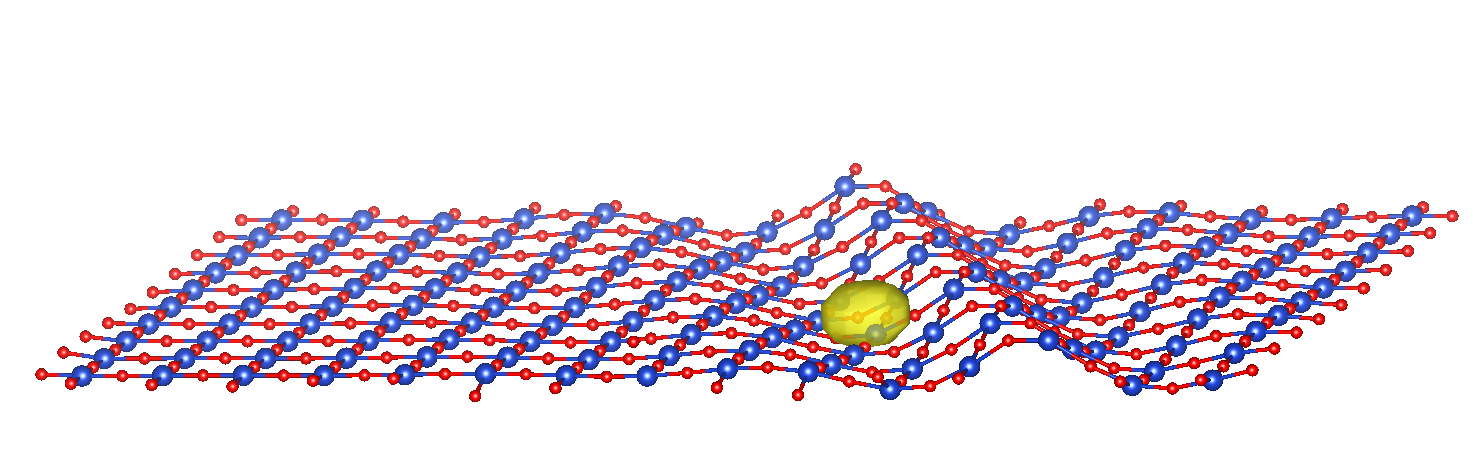
Pablo Garcia-Fernandez is a Professor and researcher at the University of Cantabria (Spain). He is actively involved in both teaching and research, with a focus on theoretical and computational physics. His current research emphasizes the development of second-principles Density Functional Theory (SPDFT) methods for simulating large systems with tens of thousands of atoms, particularly exploring phenomena like polar vortexes in PbTiO₃/SrTiO₃ superlattices and symmetry-breaking effects in materials. His teaching includes contributions to the European Master in Theoretical Chemistry and Computational Modelling , an Erasmus-Mundus awarded program, and lecture notes for the Fundamentals of Physics course in the Telecommunications degree at the University of Cantabria. These notes emphasize scientific notation, measurement errors, and vector/scalar physical magnitudes.
Dr. Daniel González Devesa is a Professor at the Faculty of Humanities and Education (Universidad Católica de Ávila), affiliated with the GIAFES Research Group on Physical Activity, Education and Health . His research focuses on exercise interventions, systematic reviews, and meta-analyses across diverse populations including children, veterans, and chronic disease patients. Education : PhD in Physical Activity and Sports Sciences (University of León, 2023), thesis: Re-warm-up strategies during halftime in basketball Research Trends : Recent articles analyze exercise effects on biomarkers, motor competence, and chronic conditions. Key areas include yoga for sleep disorders, CrossFit for obesity, bibliometric analyses of postpartum exercise, and test validation for pediatric populations. Systematic reviews dominate his methodology. Labs & Teams : Member of GIAFES, contributing to interdisciplinary research at the intersection of physical activity, education, and public health.
Dr. Antonio Pantoja Vallejo is a researcher affiliated with the University of Jaén in Spain, focusing on educational guidance, intercultural competence, and the integration of ICT in higher education. His work explores vocational training, student retention, and the impact of physical activity on cognitive functions, with a strong emphasis on European and Latin American educational contexts. University: University of Jaén, Spain Email: apantoja@ujaen.es His research spans fields such as: Educational Psychology (student satisfaction, dropout prediction, creativity) ICT in Education (digital tools, online learning, recommendation systems) Intercultural Competence (migrant minors, cultural integration, Spain-Morocco relations) Physical Activity and Cognition (executive functions, academic performance, creativity) The 15 most recent articles reflect his expertise in tutoring systems, vocational interests, and inclusive education. Notably, he leads the TIMONEL Project, a longitudinal study on university guidance tools, and contributes to understanding cyberbullying, blended learning, and parental involvement in academic success.
Antonio Ferrer-Montiel is a Professor of Biochemistry and Molecular Biology at Miguel Hernandez University, where he leads the Peripheral Neuropathies Research Group. His work focuses on sensory neurobiology, particularly the molecular and cellular mechanisms of pain transduction, antinociceptive drug discovery, and thermosensory ion channel studies. He has held leadership roles as Director of the Institute of Molecular and Cellular Biology (IBMC) and currently serves as Director of the Institute of Biomedical Research (IDiBE), both at UMH. Doctoral Program in Molecular Neurosciences, Institute of Neurosciences, University of Alicante (1989) Graduate in Chemistry, University of Alicante (1985) His research spans neuroscience, molecular biology, and pharmacology, emphasizing pain signaling pathways and ion channel functionality. He has mentored postdoctoral researchers and contributed to advancements in understanding sensory perception and neuropathic pain. Scientific awards and fellowships include: Ministry of Health Fellowship Ministry of Education Postdoctoral Fellowship NATO Postdoctoral Fellowship Best Thesis Award, University of Alicante, 1990 Prof. Ferrer-Montiel has held academic positions since 1986, including leadership roles at UMH's IBMC (2005–2011 as Deputy Director, 2011–2018 as Director) and IDiBE (2018–present as Director). He has collaborated extensively in interdisciplinary research involving physics, biology, and biochemistry.