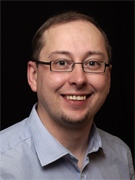
Dr. Frank Friedrich is a Researcher at the University of Hamburg , affiliated with the Faculty of Mathematics, Computer Science and Natural Sciences and the Department of Biology . He leads the Electron Microscopy and Morphological Structural Analysis group at the Institute of Animal Cell and Systems Biology . Insect Morphology and Phylogenomics are central to his research Specializes in Synchrotron Radiation Microtomography (SR-μCT) for 3D anatomical reconstructions Collaborates on Holometabola Evolution and Phylogenetic Systematics His work spans Trichoptera (caddisflies) , Mecoptera (scorpionflies) , and Zoraptera , with a focus on head and thoracic anatomy . He has contributed to resolving insect phylogeny through innovative imaging techniques. Publications highlight his expertise in synchrotron radiation-based imaging and larval/adult morphological studies .
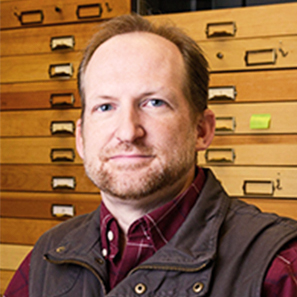
Dr. John Abbott is an Associate Professor and Chief Curator at the University of Alabama Museums , where he leads the Department of Museum Research & Collections. With a PhD in Entomology from the University of North Texas (1999), his career spans academic research, conservation initiatives, and public outreach. Education: PhD (1999), MS (1998) from University of North Texas; BS (1993) from Texas A&M Academic Role: Associate Professor at University of Alabama Museums since 2016 Research Leadership: Editor-in-Chief of International Journal of Odonatology Research Focus: Specializes in Odonatology (dragonfly and damselfly studies), combining systematics , biogeography , and conservation biology with innovative citizen science approaches. Key projects include: Conservation genetics of endangered dragonflies Population dynamics of American Burying Beetle Citizen science data collection networks Field guide development (Texas and North America) Wing evolution and digitization projects Scientific Contributions: Author of 4+ field guides, with 1500+ research photos documenting global insect diversity. His work appears in journals like Freshwater Biology and Biological Invasions . Awards: Notable recognition includes the Hamilton Book Award at UT Austin for his Damselflies of Texas publication. Outreach: Active nature photographer and science communicator, maintaining platforms like OdonataCentral and PondWatch for public engagement.
Dr. Christian Neumann is a paleontological researcher and Section Leader of Invertebrate Palaeozoology at the Museum für Naturkunde, Leibniz Institute for Evolution and Biodiversity Research in Berlin. As Curator of the Palaeozoological Collections, he specializes in Echinodermata, Arthropoda (including amber collections), Bryozoa, Graptolites, and Cretaceous/Mesozoic fossil assemblages. Role : Section Leader & Curator Institution : Museum für Naturkunde, Berlin Email : christian.neumann@mfn.berlin His research focuses on biotic interactions in marine benthic organisms, particularly symbiosis (commensalism, parasitism, mutualism) in deep time. He uses the fossil sea urchin Echinocorys as a model taxon to study parasite-host coevolution, bioerosion patterns, and survival through mass extinctions. His work combines neutron/X-ray tomography with ichnological analysis to reveal hidden symbiotic traces in fossils. Selected publications highlight his expertise in Cretaceous paleoecology, trace fossils (e.g., Oichnus halo ), and interdisciplinary applications like 3D magnetic resonance imaging. He contributes to evolving understanding of symbiotic relationships across geological timescales through studies on echinoid parasitism, bioimmuration in oysters, and fossil assemblages from glacial erratics.
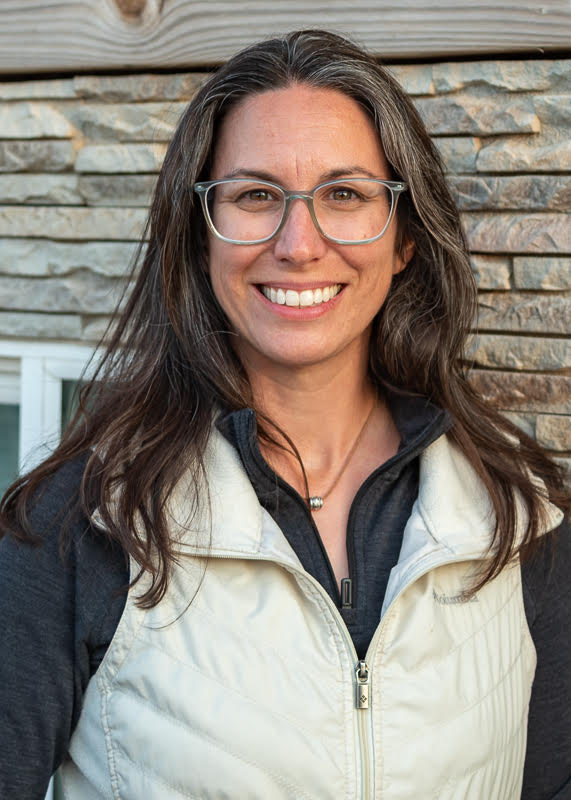
Charlotta Turner is a Professor at the Centre for Analysis and Synthesis , Lund University , and serves as Vice Dean of the Faculty of Science . Her research focuses on analytical chemistry for sustainable development , particularly the use of green solvents such as supercritical carbon dioxide and subcritical water in extraction and separation methods. UN Sustainable Development Goals (SDGs) contributor Manager of High Pressure Fluid Facility and Mass Spectrometry Infrastructure Principal Investigator (PI) for projects like Miljövänlig superkritisk process för växtoljor and Quantitative fingerprinting of chemical contaminants in pollinating insects Her work addresses sustainable extraction of valuable substances from food, forest, agricultural, and marine industries . Recent publications highlight advancements in phlorotannin characterization , berry bioactives , and lignin molecular weight analysis . She has supervised 12 research projects and leads teams in KILU/CAS infrastructure . Turner has received multiple awards, including the Svante Arrhenius Award (2017) and Herbert Dutton Award (2015) .
Dr. Nicholas Matzke is a Senior Lecturer at the School of Biological Sciences , University of Auckland, New Zealand. His research revolutionizes biogeography by integrating extinction, fossils, organismal traits, and paleogeography into computationally efficient frameworks. Education: PhD in Integrative Biology (2013), University of California, Berkeley MA in Geography (2003), University of California, Santa Barbara Double BSc in Biology and Chemistry (1998), Valparaiso University Dr. Matzke's research spans three major domains: phylogenetic biogeography (developing methods to model trait-dependent dispersal), bacterial flagellum evolution (collaborating on experimental and bioinformatic analyses), and macroevolutionary modeling (integrating fossils and morphological data). His work on the FBD-MSC model and trait-dependent dispersal has transformed divergence time estimation and biogeographical inference. Recent publications show consistent focus on: Integrating molecular and fossil data in phylogenies Quantifying trait-dispersal interactions in rails and crocodiles Modeling historical biogeography using BioGeoBEARS Reconstructing evolutionary timelines with Bayesian methods His 2021 work on Caninae phylogeny demonstrates the power of combined MSC-FBD approaches, while 2019 studies on crocodilian range expansion revealed unexpected trait-dispersal correlations. Scientific Recognition: 2015-2018: Discovery Early Career Researcher Award (DECRA) Fellow at Australian National University 2017: Associate Fellow of The Higher Education Academy As an accredited PhD supervisor with active Marsden Grant projects, Dr. Matzke trains students in phylogenetics, computational modeling, and paleogeographic reconstruction. His lab combines custom software development with empirical studies across diverse taxa, from Rana frogs to Crocodylus crocodiles.
Emily Baird is a Professor at the Department of Zoology, Stockholm University , leading interdisciplinary research at the intersection of sensory ecology , neuroethology , and comparative morphology . Her work focuses on how insects like dung beetles and bumblebees process visual information to guide behavior in diverse environments. Key Collaborations : Dlife Project with University of Southern Denmark and University of Kiel (Human Frontiers Science Project) INVISMO Project with Lund University (Swedish Research Council) Research Themes : 3D micro-CT analysis of insect eyes Neural mechanisms for straight-line orientation Flight control in cluttered environments Mechanical principles of dung beetle ball rolling Techniques : Behavioral experiments, X-ray microtomography, computational modeling, ray-tracing simulations.
Emanuel Duarte Ribeiro is a PostDoc researcher at the University of Basel , affiliated with the Faculty of Humanities and Natural Sciences and working within the Department of Environmental Sciences under the FG Salzburger research group. His research focuses on paleoenvironmental reconstruction using biotic indicators in lake sediments, climate change impacts on aquatic ecosystems, and experimental studies in alpine springs. Current projects include KUMiT (Climate, Environment, People in Thurgau), SNSF-funded work on remote mountain lake ecosystems, and laboratory experiments on pesticide effects. His recent publications address diverse topics including Alpine plant diversity dynamics Neolithic land-use impacts Methane cycling in meromictic lakes Tropical paleofire metrics Fish fossil records Multi-proxy climate reconstructions Collaborations span institutions including UNESCO Biosphere Engiadina Val Müstair , Swiss National Park , and multiple international research teams analyzing paleoenvironmental datasets from Europe, Africa, and South America.
Johan Edvard Ekroos is an Associate Professor at the Department of Agricultural Sciences , University of Helsinki, and a key figure in the Helsinki Institute of Sustainability Science (HELSUS) . He supervises doctoral programs in Wildlife Biology, Interdisciplinary Environmental Sciences, and Sustainable Use of Renewable Natural Resources. Primary Affiliation: University of Helsinki Secondary Affiliation: Centre for Environmental and Climate Science (CEC), Lund University (postdoc 2011–2013) His research integrates landscape ecology and environmental science to study biodiversity responses to land-use changes. Key areas include: Joint effects of landscape structure and land-use intensity on biodiversity Organic farming as a resilience tool Green infrastructure for ecosystem services Post-fire ecosystem recovery Recent publications focus on semi-natural grasslands, urban stressors, and agricultural biomass policies. He has supervised multiple PhD students and peer-reviewed for leading journals like Journal of Applied Ecology and Trends in Ecology and Evolution . Scientific Awards: Docent in Environmental Science, University of Lund (2021)
Prof. Dr. hab. Barbara Lis is a full professor at the Institute of Biology, University of Opole, specializing in taxonomic and phylogenetic research of Hemiptera: Heteroptera. Her work spans global zoogeographic regions and focuses on Polish faunistics, with significant contributions to insect identification keys and educational materials for young researchers. 1992: MSc in Biology, Pedagogical University 1999: PhD in Biological Sciences, Polish Academy of Sciences 2004: Habilitation thesis on Cantacader genus 2013: Awarded professor title Her research integrates traditional taxonomy with molecular methods (PCR, genotyping, bioinformatics), emphasizing Hemiptera systematics, ecological niche modeling, and biogeographic patterns. She co-organized a molecular entomology laboratory at the University of Opole, advancing phylogenetic studies. Recent publications (2020–2023) highlight discoveries of new species, faunistic surveys in Poland and globally, and molecular divergence analyses. Topics include lace bugs (Tingidae), burrower bugs (Cydnidae), and ecological adaptations in cave beetles. Recipient of an individual prize by the Minister of Education and Sport (2005) for her habilitation work Co-author of a widely used Polish zoology textbook Contributor to the Keys to the Identification of Polish Insects series Prof. Lis advises on taxonomic revisions and DNA barcoding applications, with a focus on resolving phylogenetic ambiguities in Pentatomoidea and Tingoidea superfamilies.
Dr. Brendon Boudinot serves as the Head of Entomology II at the Senckenberg Society for Nature Research, leading research in evolutionary and systematic morphology with a focus on insects, particularly ants. His work integrates advanced techniques like micro-CT scanning and phylogenetic statistics to study insect anatomy and evolutionary history. Dr. Boudinot is known for his contributions to understanding ant evolution through fossil analysis, including seminal studies on Cretaceous ants and their morphological adaptations. His research spans formicidae systematics, fossil insect morphology, and the evolutionary origins of parasitoid wasps and other hexapods. He frequently publishes in peer-reviewed journals and collaborates on interdisciplinary projects involving amber fossils, as seen in his co-hosting of the podcast 'Weird Species' discussing entomological curiosities. Dr. Boudinot’s expertise also extends to insect genital homology, functional morphology, and the application of phenomics in entomology. His work bridges paleontology and modern systematics, providing critical insights into the biodiversity of Mesozoic insects and their descendants.
John Conran is a Senior Lecturer in the School of Biological Sciences at the University of Adelaide's Faculty of Sciences, Engineering and Technology. His research integrates molecular and morphological approaches to study the evolution, palaeobotany, and biogeography of Australasian plants, particularly monocots, conifers, carnivorous plants, and weeds. He investigates how climate change has influenced diversification in ancient plant groups, especially in nutrient-poor environments. His work emphasizes character evolution in response to historical climate shifts, with major projects including collaborations with the University of Otago on Miocene fossil floras in New Zealand and with China's Xishuangbanna Tropical Botanic Gardens on tropical plant families. Research interests span palaeobotany, evolutionary biology, and ecology.
Dr. Julie Lesnik is an Associate Professor of Biological Anthropology at Wayne State University, affiliated with the College of Liberal Arts and Sciences. Her research focuses on human-animal interactions, ecology, evolution, and anti-colonial, multispecies anthropology. She holds a Ph.D. in Anthropology from the University of Michigan (2011), an M.S. in Kinesiology (2011), and a B.S. in Anthropology from Northern Illinois University (2003). Lesnik’s work emphasizes insects as a critical food source in human evolution, arguing that insects provided reliable nutrition for early hominins, particularly for women and families. Her 2018 book Edible Insects and Human Evolution synthesizes evidence from primatology, archaeology, and cultural anthropology. She is a 2018-2019 AAAS Leshner Leadership Institute Fellow, advocating for public engagement in anthropology through museum and nonprofit collaborations. Her recent articles explore nitrogen isotope analysis for diet reconstruction, barriers to insect consumption in Western cultures, and co-evolutionary patterns in Andean agriculture. Awards include grants from the AAUW (2015) and Leakey Foundation (2015). She teaches courses like Introduction to Biological Anthropology and Food and Culture , emphasizing inclusive pedagogy. Currently on sabbatical for 2024-2025, she continues to mentor graduate students interested in bridging academic research with public outreach.
Phil Barden is an Associate Professor in the Department of Biological Sciences at the New Jersey Institute of Technology (NJIT), where he leads the Barden Lab. His research integrates paleontology, genomics, X-ray imaging, and fieldwork to study the evolution and ecological success of social insects, especially ants and termites. His educational background includes: PhD from the Richard Gilder Graduate School at the American Museum of Natural History (2015), advised by David Grimaldi NSF Postdoctoral Fellowship at Rutgers University–Newark with Jessica Ware (2015–2017) BS in Life Sciences from Arizona State University, advised by Jennifer Fewell Barden's research focuses on understanding biodiversity, evolutionary relationships, and phenotypic-genomic dynamics across deep time. He specializes in amber-preserved fossils, which offer high-fidelity records of extinct species spanning over 100 million years. By combining cutting-edge CT-scanning with molecular data, his work advances reconstructions of phylogeny, divergence times, and biogeographic history. Although specific publications are not listed in the provided text, his research output likely centers on ant and termite evolution, morphological adaptation, fossil systematics, and integrative methods in paleoentomology. His interdisciplinary approach bridges organismal biology with modern technological and genomic tools. Notable recognition includes: National Science Foundation Postdoctoral Fellowship Barden actively mentors students in the Barden Lab, supervising research in paleontology, imaging, and insect evolution. While no specific grants are mentioned, his past NSF fellowship indicates a strong record of competitive funding. His lab engages in outreach and media communication, reflecting a commitment to public science engagement. The Barden Lab is a multidisciplinary research group that brings together techniques in paleontology, imaging, and genomics to explore the evolutionary success of social insects. Current research themes include fossil discovery, functional morphology, and phylogenomic analysis of ants and termites.
Martin Qvarnström is a Researcher at the Department of Organismal Biology within Uppsala University . His work focuses on coprolite analysis , paleoecology , and evolutionary biology , utilizing advanced techniques like synchrotron microtomography to study ancient ecosystems and vertebrate diets. His research spans multiple geological periods, including the Triassic-Jurassic transition and Devonian-Cretaceous intervals. Key areas of investigation include: Trophic interactions inferred from fossilized feces Dinosaur dietary habits and herbivore diversity Paleoenvironmental reconstruction using geochemical proxies Pterosaur and archosaur feeding behaviors Placodermi evolution and phylogenetic implications Publications show a strong focus on coprolite taphonomy , vertebrate paleobiology , and trace fossil analysis , with collaborations across France , Poland , and Ireland . No scientific awards, formal students, or lab affiliations are explicitly mentioned in available texts.
Dr Simon Goodman is a Lecturer in Evolutionary Biology at the School of Biology, University of Leeds. His research spans population genetics, disease ecology, and conservation biology, focusing on marine mammals, emerging infectious diseases, and parasite-vector dynamics. He has led international projects on Caspian seal conservation, Galápagos biosecurity, and turtle dove declines, resulting in policy changes and the 2015 University of Leeds Vice-Chancellors Award for Research Impact. PhD in Genetics (University of Cambridge, 1996) BSc in Genetics (University of Sheffield, 1991) His work integrates theoretical and empirical approaches, including satellite telemetry for marine mammal tracking, comparative genomics for disease resistance, and environmental DNA for biodiversity monitoring. He emphasizes capacity building in developing countries and addresses human-wildlife conflicts like illegal fisheries and climate change impacts. Scientific awards: 2015 University of Leeds Vice-Chancellors Award for Research Impact Key collaborations include the IUCN Pinniped Specialist Group and the UK Cetacean eDNA network. His lab trains global researchers in evolutionary genomics, conservation disease ecology, and biosensor technologies.